For several decades, Europe regarded China as an economic partner whose rise contributed to its own prosperity. European companies found an immense market, a competitive manufacturing base and suppliers capable of reducing costs across their industrial supply chains. Consumers benefited from cheaper products, while major German, French and Italian corporations took advantage of China's expansion to sell automobiles, machinery, industrial equipment and luxury goods. This relationship, however, rested on an implicit division of labour: China would remain primarily the world's manufacturing workshop, while Europe would retain its advantage in advanced technologies, sophisticated equipment and high-value products.
That balance has gradually disappeared. China is no longer simply a supplier to European industry. It has become a direct competitor, sometimes a technological partner and, in several strategic sectors, a producer whose manufacturing capacity considerably exceeds the needs of its domestic market. Europe's trade deficit with Beijing reflects this profound transformation. Behind the figures lies a more fundamental question: can Europe maintain an autonomous industrial base against an economy that combines market scale, massive investment, integrated production chains and increasingly sophisticated technological capabilities?
The answer depends on far more than tariffs or trade negotiations. It involves energy prices, investment capacity, the organisation of the single market, the availability of skilled workers and the ability of European companies to manufacture at sufficient scale. The trade deficit has therefore become the visible symptom of an industrial competition whose consequences could permanently reshape Europe's position in the global economy.
A Structural Imbalance
In 2025, the European Union's merchandise trade deficit with China reached approximately €360 billion. In the second quarter of 2026, it stood at around €103 billion, an exceptionally high quarterly level. These figures reflect a persistent asymmetry: Europe imports substantially more goods from China than it exports to the country.
A bilateral trade deficit is not, in itself, a measure of industrial health. An economy can import large quantities of components to manufacture competitive products, while its companies generate substantial profits in other markets. Customs statistics also fail to capture fully the contribution of services, investment income or sales generated by European subsidiaries operating in China. Yet when a trade imbalance coincides with growing competition in high-value industrial products, it takes on a different significance.
This is precisely the transformation now underway. For many years, Chinese imports were primarily associated with textiles, consumer goods, assembled electronics and intermediate components. Today, Chinese companies hold major positions in electric vehicles, batteries, photovoltaic equipment, machinery, chemicals and numerous industrial technologies. They no longer merely supply European value chains; they increasingly manufacture finished products that compete directly with those produced on the continent.
China's industrial advance rests on a combination of factors. The country benefits from a vast domestic market, extensive logistics infrastructure, a deeply integrated manufacturing system and financing mechanisms that can sustain investment over long periods. Public industrial policies have encouraged the emergence of companies capable of producing at scale, absorbing initial costs and accelerating technological learning.
Chinese manufacturers have also benefited from intense competition within their domestic market. In several industries, this pressure has accelerated innovation, compressed margins and encouraged producers to seek foreign customers. When domestic demand slows or manufacturing capacity expands faster than consumption, international markets become essential to maintaining production volumes.
Europe consequently absorbs part of this expanding industrial output. The question is no longer simply how much it imports, but whether its own manufacturers can continue competing with Chinese producers.
The End of Industrial Complementarity
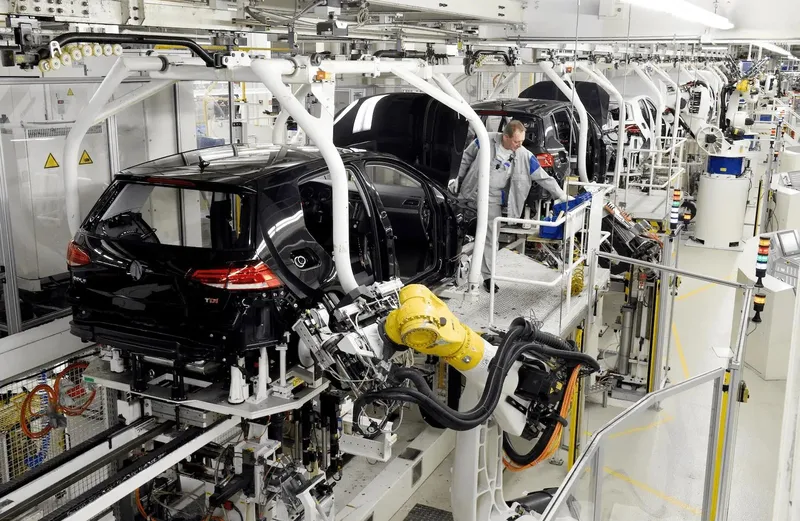
The automotive industry provides one of the clearest illustrations of this shift. For decades, European manufacturers regarded China as a major source of growth. German automotive groups, in particular, built part of their international expansion around the Chinese market, relying on local partnerships and the technological reputation of their brands.
The transition towards electric mobility has transformed this hierarchy. Electric vehicles depend on an industrial architecture different from that of internal combustion engines. Batteries, power electronics, embedded software and access to critical materials account for a substantial share of production costs and technological performance.
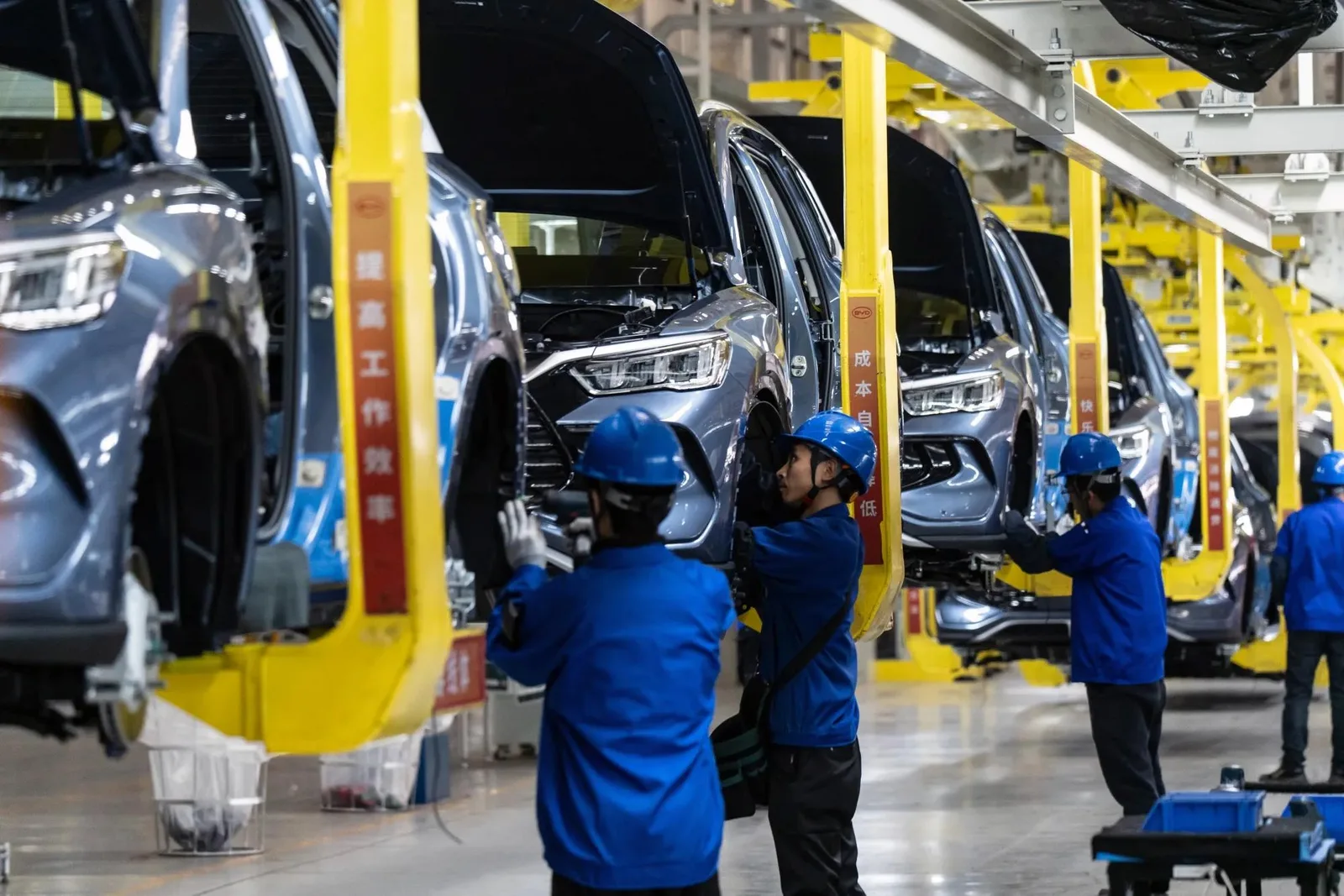
China invested early in these areas. Its manufacturers now operate within a dense industrial ecosystem connecting mineral processing, battery-cell manufacturing, battery assembly and vehicle production. This integration reduces certain costs, accelerates development cycles and facilitates large-scale manufacturing.
European carmakers now face competition on two fronts. In China, they must defend their positions against domestic brands that have become technologically credible. In Europe, they face the arrival of vehicles designed and manufactured by Chinese competitors, often operating with different cost structures.
The countervailing duties introduced by the European Union on certain battery-electric vehicles imported from China reflect these concerns. They seek to offset the effects of subsidies considered harmful to European industry. Yet tariff barriers alone cannot close an industrial gap. They may slow competitive pressure without automatically creating the manufacturing capacity, technical expertise or economies of scale needed to respond.
The challenge extends beyond automobiles. In solar photovoltaics, Europe developed technologies and innovative companies without preserving a manufacturing chain comparable to the one established in China. In batteries, ambitions for industrial sovereignty confront capital costs, investment complexity and competition from established producers. In chemicals and certain metallurgical industries, energy-cost disadvantages and weak demand further complicate the outlook.
This does not mean that European manufacturing is disappearing uniformly. Europe retains major positions in aerospace, specialised industrial equipment, pharmaceuticals, precision machinery, power semiconductors and several critical technologies. But these strengths should not obscure the gradual weakening of activities situated between the most sophisticated industries and standardised manufacturing.
Much of Europe's industrial power lies precisely within this intermediate space: specialised suppliers, medium-sized manufacturers, equipment producers and subcontracting networks that connect research, production and exports.
Europe's Cost Trap
Chinese competition would be less destabilising if European manufacturers operated in an environment conducive to investment. Instead, the continent faces several simultaneous constraints that weaken its capacity to respond.
The first concerns energy. Energy-intensive European industries have endured the consequences of the crisis that began in 2022 and the subsequent restructuring of natural gas supplies. Even when wholesale prices decline, companies continue to face cost disparities, hedging requirements and uncertainty that affects long-term investment decisions.
This constraint is particularly significant in chemicals, fertilisers, aluminium, steel and other processing industries. Competitiveness in these sectors depends as much on technological quality as on reliable access to abundant energy at predictable prices.
The second difficulty involves financing. Europe possesses considerable savings, but these resources are not always efficiently converted into long-term industrial capital. Fragmented financial markets, regulatory differences and uneven capital-market development complicate the financing of companies that must invest billions before generating substantial revenues.
Chinese manufacturers, by contrast, operate in an environment where public authorities, banks, local governments and national industrial objectives can be closely coordinated. This model has its own vulnerabilities, including overinvestment, debt accumulation and weak profitability. Nevertheless, it can mobilise considerable resources rapidly around priority industries.
Europe's third constraint is institutional. The European Union possesses a large single market, but industrial, energy and fiscal policies remain substantially organised at national level. Regulations, administrative procedures, infrastructure and public financing capacities differ considerably among member states.
This fragmentation limits economies of scale. It also favours countries with greater fiscal resources, potentially widening industrial disparities within the single market itself.
Mario Draghi's September 2024 report on European competitiveness highlighted these weaknesses, emphasising the scale of investment requirements and the technological gaps that had emerged in several strategic sectors. Its central diagnosis remains relevant: Europe does not simply lack industrial projects. It struggles to transform its scientific, financial and human resources into sufficiently powerful productive capabilities.
China Is Also Exporting Its Domestic Imbalances
The expansion of Chinese exports cannot be understood independently of developments within China's domestic economy.
The property-sector slowdown, financial difficulties affecting some local governments, deflationary pressures and household caution have weakened several traditional sources of growth. At the same time, Beijing has continued to place manufacturing modernisation and strategically important industries at the centre of its economic priorities.
This has created tension between expanding production capacity and domestic demand growth. In some sectors, the resulting imbalance produces intense price competition, margin compression and an increasing search for foreign markets.
Exports consequently become a mechanism of economic adjustment. Companies seek overseas customers for production that the domestic market cannot absorb under sufficiently profitable conditions.
This process is not necessarily synonymous with dumping. Genuine productivity gains, technological innovation and economies of scale can explain a substantial proportion of price differences. However, subsidies, financing conditions, access to industrial land, public procurement policies and regulatory disparities can also influence competitive conditions.
For Europe, the difficulty lies in distinguishing these mechanisms. A trade policy that treats every Chinese competitive advantage as a market distortion risks protecting domestic inefficiencies. Conversely, an approach that disregards public subsidies and excess capacity could accelerate the disappearance of industries that remain technologically viable.
The problem has become global. As the United States restricts access to certain segments of its market, Chinese manufacturers may have stronger incentives to seek alternative destinations. Europe, with its substantial purchasing power and integrated market, becomes particularly attractive.
The continent therefore faces two overlapping pressures: competition from Chinese manufacturing and the reorganisation of international trade under the influence of American industrial and tariff policies.
Germany at the Centre of the Transformation
The evolution of economic relations between Germany and China offers one of the clearest indicators of this changing industrial landscape.
Germany's manufacturing model traditionally relied on three advantages: relatively competitive energy, specialisation in capital goods and automobiles, and extensive access to international markets. China played a central role in this structure, both as a destination for exports and as a production platform.
These advantages now face simultaneous pressure. Energy restructuring has altered manufacturing costs, trade tensions have complicated access to certain markets, and Chinese companies increasingly compete directly with German exporters in their traditional areas of expertise.
The transformation extends beyond major automotive brands. Machinery manufacturers, component suppliers, equipment producers and chemical companies face Chinese competitors capable of delivering increasingly sophisticated industrial products.
The issue is particularly important for the Mittelstand, the network of often family-owned industrial companies that forms an essential part of Germany's productive economy. Their competitiveness depends on accumulated expertise, technical specialisation and long-standing relationships with customers.
As competitors progressively master similar technologies while benefiting from lower costs or larger domestic markets, differentiation becomes more difficult.
The risk is not simply a decline in German exports to China. It also concerns the loss of market share in third countries, where European and Chinese manufacturers compete directly.
This development challenges the foundations of Europe's export-oriented industrial model. German industry can no longer regard Chinese economic growth as an almost automatically favourable external driver. It must now confront a China that is developing its own industrial champions in sectors where Europe built much of its prosperity.
Deindustrialisation as a Cumulative Process
The disappearance of an industrial activity cannot be measured solely through factory closures or job losses. Its consequences spread throughout the productive system.
When a manufacturer stops producing in a particular location, suppliers lose orders, engineers seek employment elsewhere and training institutions may reduce specialised programmes. Maintenance companies, testing laboratories, logistics providers and subcontractors experience the consequences of this contraction.
Over time, reconstruction becomes more expensive. Skills disperse, equipment becomes obsolete and the investment required to restore production capacity increases.
This dynamic explains why certain industrial losses are difficult to reverse, even when economic conditions improve.
It also reveals the limitations of an approach based exclusively on immediate value added. A manufacturing activity may appear insufficiently profitable in isolation while remaining an indispensable link in the production of more sophisticated goods.
Batteries, advanced materials, electronic components, industrial machinery and energy equipment illustrate these interdependencies. The ability to design a product does not guarantee mastery of its large-scale manufacture. Production itself generates knowledge, process improvements and innovations that contribute to subsequent technological generations.
Europe could therefore retain sophisticated research centres while becoming increasingly dependent on manufacturing capacity located elsewhere.
This does not imply that every import represents a strategic weakness. International specialisation remains an important source of productivity and prosperity. But when dependencies involve activities that are difficult to replace, essential to infrastructure or exposed to significant geopolitical risks, they become questions of economic resilience.
Industrial policy consequently intersects with economic security.
Sovereignty Cannot Simply Be Declared
Faced with these developments, the European Union has introduced numerous initiatives intended to strengthen its capabilities in semiconductors, critical raw materials, clean technologies and strategic industries.
These policies reflect growing awareness of the problem. Yet they confront a fundamental difficulty: industrial sovereignty does not emerge merely from a political decision to manufacture domestically.
A competitive factory requires a sufficiently large market, reliable suppliers, appropriate infrastructure, skilled workers and demand prospects capable of justifying substantial investment.
The multiplication of competing national projects can even undermine the intended objective if it prevents the emergence of European producers capable of reaching critical scale.
The battery industry illustrates this challenge. Establishing European production capacity involves more than financing gigafactories. It also requires secure access to materials, mastery of cell chemistry, specialised equipment, workforce training and reliable industrial customers.
Without coordination across the entire value chain, projects remain vulnerable to price fluctuations and competition from already integrated manufacturers.
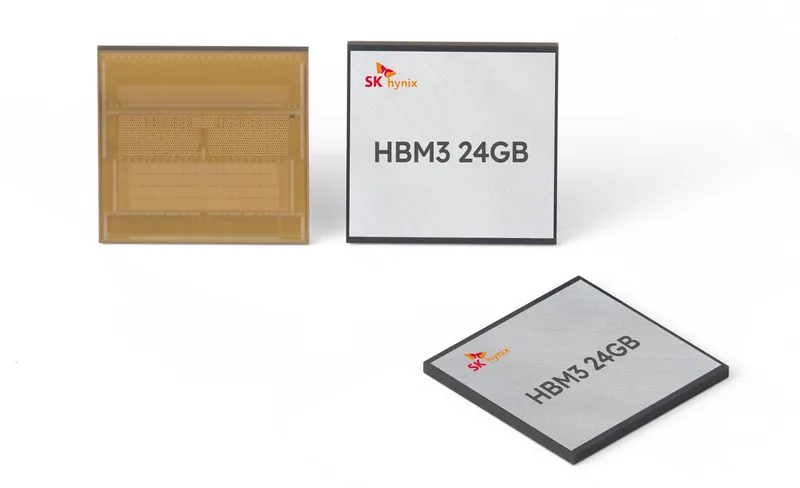
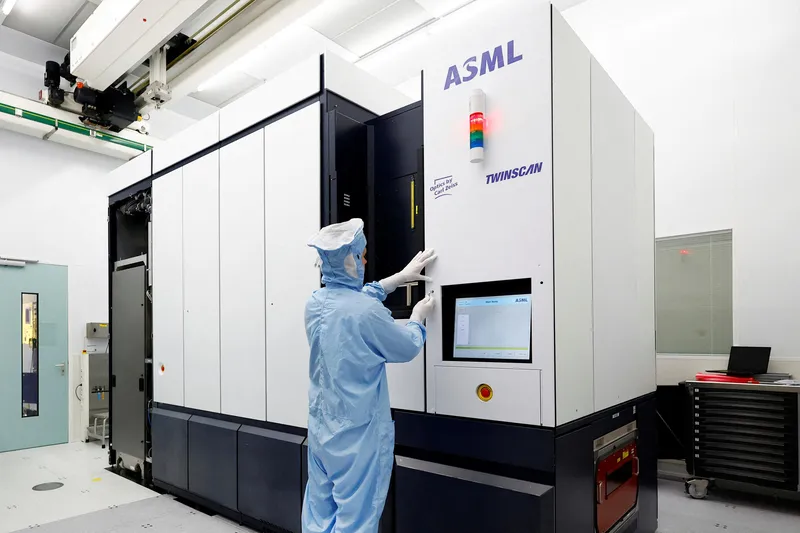
The same principle applies to semiconductors. Europe possesses companies that are indispensable to certain segments of the global industry, particularly lithography equipment, specialised materials and components. But it cannot reproduce the entire Asian manufacturing ecosystem in the short term.
A credible industrial policy must therefore identify genuinely strategic capabilities, distinguish manageable dependencies from critical vulnerabilities and concentrate resources where Europe can preserve or develop lasting competitive advantages.
Sovereignty does not necessarily mean self-sufficiency. It is better understood as control over essential technologies, diversification of supply and the ability to maintain vital economic functions during disruptions.
The Dilemma of Trade Protection
Protectionist pressures increase as Chinese competition intensifies. Trade defence instruments can address unfair practices, mitigate certain distortions and provide European manufacturers with time to adapt.
But their effectiveness depends on what happens during that period.
Tariffs can increase import prices without improving the productivity of domestic companies. They may also raise the cost of equipment required for the energy transition or trigger retaliatory measures affecting European exporters.
Industrial interdependence makes the situation even more complicated. Many European companies manufacture in China, purchase components from Chinese suppliers or rely on Chinese industrial equipment. Broad restrictions could therefore weaken some of the very companies they are intended to protect.
China also remains an important market for several European industries. A sudden commercial rupture would affect their sales, investments and production networks.
The challenge is not to choose between unrestricted openness and comprehensive closure. It is to develop a differentiated policy capable of addressing documented distortions while preserving trade relationships that strengthen European competitiveness.
Such an approach requires far more detailed sectoral analysis than simply examining the bilateral trade balance.
In some industries, diversifying suppliers may be the priority. In others, developing European manufacturing capacity, cooperating with external partners or applying targeted trade instruments may prove more appropriate.
The political difficulty concerns timing. The benefits of protection are often immediately visible, while industrial investment takes years to deliver results. Conversely, the costs of gradual deindustrialisation may remain dispersed for a long period before becoming difficult to reverse.
Competition for the World's Markets
The economic confrontation between China and Europe extends far beyond the European Union's internal market. It also unfolds across Africa, Latin America, the Middle East and emerging Asian economies.
These regions represent important destinations for machinery, vehicles, electrical equipment, energy infrastructure and transport technologies.
Chinese companies often benefit from integrated commercial offerings that combine industrial products, financing, engineering and project implementation. Their ability to provide comprehensive solutions can create advantages over European competitors whose offerings are sometimes more fragmented.
Competition therefore concerns industrial organisation as much as product pricing.
For Europe, losing market share in these regions would have an additional consequence: it would reduce the production volumes needed to amortise investments and maintain technical capabilities at home.
A manufacturer of industrial machinery cannot necessarily preserve its competitiveness by relying exclusively on European demand. It needs sufficiently large international markets to finance research, renew equipment and support its supplier network.
Chinese competition in third countries can therefore indirectly weaken Europe's domestic industrial base.
This dimension is essential to understanding why the bilateral trade deficit does not capture the full challenge. Even if trade between Europe and China became more balanced, the expansion of Chinese companies in other markets could continue reducing growth opportunities for European manufacturers.
The underlying issue concerns the relative positions of the two economies within global value chains.
Europe Confronts Its Own Contradictions
Europe's debate over China ultimately exposes much older internal contradictions.
The European Union seeks to accelerate the energy transition while preserving industries burdened by high energy costs. It wants to reduce certain external dependencies while maintaining open international trade. It aims to develop industrial champions without always accepting the consolidation, common investment or difficult trade-offs required for their emergence.
It also aspires to compete with powers capable of mobilising substantial public resources, while its own fiscal capabilities remain fragmented between European institutions and national governments.
These tensions are not insurmountable. They do, however, require clearer priorities.
Industrial competitiveness cannot depend indefinitely on market protection alone. It requires appropriate energy infrastructure, deeper financing channels, predictable regulation, investment in training and the ability to transform research into production rapidly.
It also requires acknowledging that not every manufacturing activity can be preserved in its present form. Some industries will need to move into higher-value segments, others will have to restructure, and entirely new production chains will need to emerge.
The decisive question is less about preserving every individual factory than maintaining an industrial system capable of renewal.
From this perspective, China acts as a revealing force. Its rise exposes weaknesses accumulated within Europe, while also demonstrating the importance of industrial continuity, coordinated investment and control over manufacturing supply chains.
Europe's response will therefore depend as much on its own reforms as on the future of its commercial relationship with Beijing.
The Risk of an Industrially Peripheral Europe
Europe's economic power will not automatically disappear because of its trade deficit with China. The European Union retains a vast market, a highly skilled workforce, established institutions, advanced scientific capabilities and companies that remain global leaders across numerous industries.
But these advantages do not guarantee their own preservation.
An economy can remain wealthy while progressively losing the capacity to manufacture certain technologies, develop new industrial sectors and control the equipment essential to its operation. It can retain prestigious brands, research centres and sophisticated service industries while becoming increasingly dependent on external suppliers for its industrial infrastructure.
The danger lies less in sudden collapse than in cumulative erosion. Postponed investments, factories that are not modernised, disappearing suppliers and dispersed technical skills can gradually transform the productive structure of an economy.
As these changes accumulate, external dependency becomes increasingly difficult to reverse.
Europe's trade deficit with China must be understood in this context. It is neither the sole cause of Europe's industrial difficulties nor sufficient evidence of industrial decline. It nevertheless reveals a transformation in the balance of power between two economies whose roles were once more complementary.
China has progressively developed the capacity to compete with Europe across a growing share of its traditional industrial specialisations. Europe, meanwhile, must demonstrate that it can finance, organise and renew its productive system in an environment where established technological advantages are no longer permanent.
The question is no longer simply how to reduce Chinese imports. It is what Europe still intends to manufacture, which technologies it wants to control and what investments it is prepared to make to achieve those objectives.
An industrial power is not defined solely by what it invents or consumes. It is also measured by what it remains capable of producing.
And that capacity has become the central issue behind the growing trade imbalance between Europe and China.
Main Sources
- Eurostat, China–EU International Trade in Goods Statistics, merchandise trade data for 2025–2026. https://ec.europa.eu/eurostat/statistics-explained/index.php?title=China-EU_-_international_trade_in_goods_statistics
- European Commission, The Future of European Competitiveness, Mario Draghi report, September 2024. https://commission.europa.eu/topics/eu-competitiveness/draghi-report_en
- European Commission, anti-subsidy investigation and countervailing measures concerning battery-electric vehicles originating in China, 2024. https://policy.trade.ec.europa.eu/
- European Commission, European Economic Forecast, 2025–2026 editions, analyses of competitiveness, trade and investment. https://economy-finance.ec.europa.eu/economic-forecast-and-surveys/economic-forecasts_en
- International Monetary Fund, World Economic Outlook, October 2026, global economic prospects and external imbalances. https://www.imf.org/en/Publications/WEO
- World Trade Organization, Global Trade Outlook and Statistics, October 2026, developments in international merchandise trade. https://www.wto.org/english/res_e/publications_e/global-trade-outlook-and-statistics_e.htm
Atlas Limits Research Desk
Atlas Limits’ editorial and analytical desk.