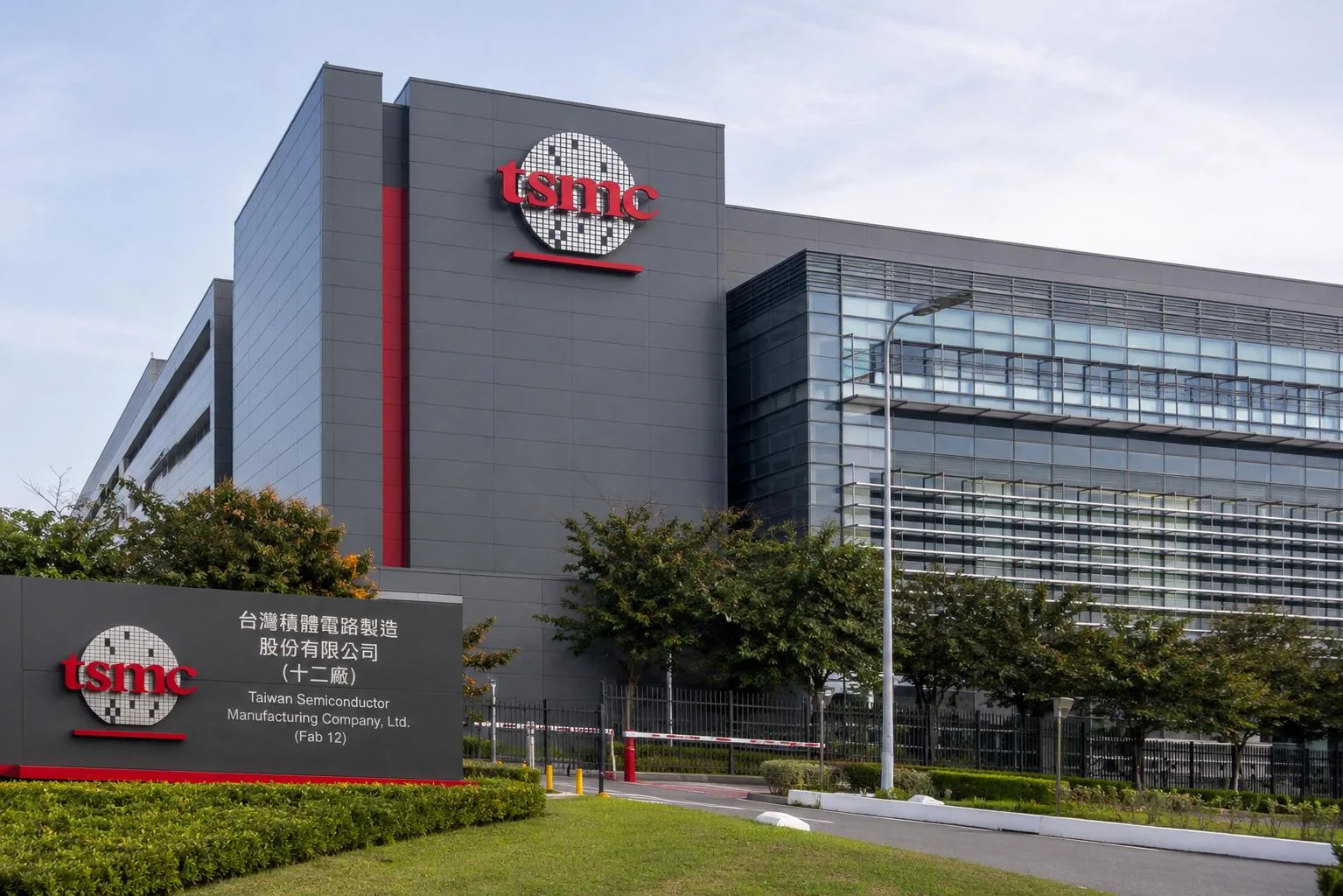
In Taiwan, semiconductor factories are operating at the pace of an industrial transformation whose ultimate limits remain unknown. Major technology companies are multiplying their processor orders, data centers are absorbing extraordinary amounts of capital, and the most advanced manufacturing capabilities are becoming strategic resources. At the center of this expansion, Taiwan Semiconductor Manufacturing Company (TSMC) is generating unprecedented profits. Yet behind this prosperity lies a more fundamental question: does the spectacular growth of artificial intelligence infrastructure herald a new era of sustained economic productivity, or does it precede an eventual adjustment in investment?
On October 15, 2026, the world's leading semiconductor foundry reported results illustrating the scale of this transformation. Its third-quarter net profit increased by 68.7% year over year, reaching NT$763.1 billion, approximately US$23.6 billion. Revenue climbed 50.9% to NT$1.494 trillion. Its net profit margin reached 51.1%, an exceptional level for an industrial company whose operations require continuous investment in some of the most complex manufacturing equipment ever developed.
These figures demonstrate an undeniable industrial achievement. They also reveal TSMC's distinctive position within the artificial intelligence economy: that of an indispensable supplier to an expansion whose ultimate profitability remains largely unproven.
The Manufacturer at the Center of the New Computing Economy
TSMC's dominance rests on a combination that is extraordinarily difficult to replicate: mastery of advanced manufacturing processes, large-scale production capacity, industrial yields, and close relationships with the world's leading chip designers. The company does not directly commercialize the artificial intelligence systems used by businesses or consumers. It manufactures the components that make those systems possible.
This distinction explains much of its economic power. Processor designers, cloud computing providers, and data center operators may compete on prices, performance, and applications. Yet all require access to sufficiently advanced manufacturing capabilities to produce the circuits necessary to fulfill their ambitions.
Manufacturing technologies at 7 nanometers and below now account for 79% of TSMC's wafer revenue. This concentration on the most sophisticated processes reflects a structural shift in demand. Industrial value is increasingly moving toward components capable of performing more operations while optimizing energy consumption and silicon area.
Processors designed for training and running artificial intelligence models require increasingly complex architectures. Their production depends not only on advanced semiconductor fabrication processes but also on packaging technologies capable of integrating multiple components into exceptionally dense computing systems.
Competition is therefore no longer limited to transistor miniaturization. It extends across the entire industrial chain that transforms a computing architecture into usable processing capacity.
TSMC benefits from this transformation at several levels. Demand for its advanced manufacturing processes supports revenue growth, while capacity constraints reinforce the importance of its investments and technological expertise. The company consequently occupies a position in which expanding global technology expenditure translates directly into industrial activity, regardless of the commercial success of individual applications.
Profitability That Arrives Before Its Customers' Returns
The economic paradox emerges precisely here. TSMC's profits are already being recorded, while a substantial portion of the revenue its customers expect from their investments remains uncertain and lies in the future.
Major digital platform operators are building data centers, purchasing accelerators, and developing energy infrastructure to meet anticipated demand. Chip designers benefit from this wave of orders. Further upstream, TSMC converts those orders into industrial production and revenue.
But strong demand for equipment does not guarantee that the services relying on that equipment will generate margins sufficient to provide sustainable returns on the capital invested.
A company may invest heavily in artificial intelligence infrastructure to defend its competitive position, accelerate product development, or avoid dependence on external providers. Such motivations can be individually rational without necessarily producing equivalent profitability across the industry.
The distinction between strategic necessity and economic return therefore becomes central. Investment can continue growing for several years because companies believe they cannot afford to remain outside a technological transformation. This does not mean that every facility will operate at its anticipated utilization rate, or that service prices will sustainably cover the associated costs.
Industrial history provides numerous examples of this divergence. Railways, telecommunications networks, and successive generations of digital infrastructure have experienced periods of expansion during which equipment suppliers prospered before operators encountered the economic limitations of their investments.
Artificial intelligence has distinctive characteristics, particularly its potential to automate cognitive tasks and increase productivity across multiple sectors. These possibilities may justify a sustained expansion of computing infrastructure. They do not, however, eliminate the need to measure actual revenue, cost savings, and realized investment returns.
The central question is therefore not whether artificial intelligence has economic value. It is how quickly that value can be converted into financial returns sufficient to support the current scale of capital expenditure.
The Industrial Frontier Is Shifting Toward Manufacturing Capacity
For TSMC, the immediate challenge remains industrial execution. The company must expand production capacity while continuing to develop increasingly demanding manufacturing technologies.
The expansion of 2-nanometer technology represents another stage in this evolution. It requires extremely expensive equipment, greater manufacturing precision, and close coordination with circuit designers. Each technological generation demands substantial investment before production reaches sufficient maturity to realize its full economic potential.
TSMC expects capital expenditure of between US$60 billion and US$64 billion in 2026. This amount illustrates the extraordinary capital intensity of advanced semiconductor manufacturing. It also demonstrates that current growth cannot continue without committing increasingly substantial financial and industrial resources.
Building a new semiconductor fabrication facility involves considerably more than purchasing machinery. It requires electricity and water infrastructure, specialized treatment facilities, sophisticated logistics networks, and a highly qualified workforce. Lithography systems, materials, and manufacturing components depend on an international network of suppliers whose capacities cannot be expanded overnight.
This complexity creates a formidable barrier to entry for competitors, but it also imposes constraints on TSMC itself. Additional manufacturing capacity becomes economically attractive only when utilization remains sufficiently high over an extended period.
Current demand reduces this risk in the near term. It does not eliminate it over a multiyear horizon, when newly constructed facilities reach full production and customers' investment strategies may have changed.
A Technological Expansion Becomes a Geopolitical Issue
TSMC's growth now extends far beyond the digital economy. It forms part of a geographical redistribution of industrial capacity driven by competition between the United States and China, economic security policies, and concerns about the concentration of advanced semiconductor manufacturing in Taiwan.
Washington is seeking to develop domestic advanced semiconductor manufacturing capabilities to reduce its dependence on East Asia. Japan is similarly strengthening its industrial base, while Europe is attempting to preserve and expand its capabilities across several strategic segments.
For TSMC, this international expansion creates commercial and political opportunities, but it also changes the economics of its industrial model. Overseas production may involve construction, operating, and recruitment costs that differ substantially from those in Taiwan. It also requires the company to establish supplier networks and specialized teams across multiple continents.
TSMC must therefore reconcile two priorities that do not always align: industrial optimization, historically supported by the geographical concentration of expertise and infrastructure, and the diversification demanded by customers and governments.
This transformation could become a lasting feature of the semiconductor industry. The most advanced chips are no longer merely commercial components. They are strategic assets whose location, availability, and control directly concern national governments.
TSMC's prosperity consequently depends on exceptional technological demand, but also on an international environment whose fragmentation may increase costs and complicate investment decisions.
The Next Phase of AI Will Be Defined by Returns
The company's immediate outlook remains particularly strong. TSMC expects fourth-quarter 2026 revenue of between US$52.3 billion and US$54.3 billion and anticipates annual revenue growth of approximately 44% in US dollar terms.
These projections confirm that industrial demand is showing no major reversal at this stage. They do not, however, establish that the current pace of investment can continue indefinitely.
The next phase of artificial intelligence may be determined less by the ability to train ever-larger models than by the economic diffusion of their applications. Businesses will need to demonstrate that deployed systems genuinely reduce costs, improve products, or generate new revenue streams.
This evolution could alter the composition of semiconductor demand. Requirements for accelerators used in model training may develop differently from those associated with inference, embedded applications, or specialized computing systems. Energy efficiency, cost per operation, and architectural optimization will become increasingly decisive variables.
More efficient computing can reduce the cost of a service and encourage adoption, but it can also change hardware requirements. The ultimate effect will depend on demand elasticity: if lower costs produce a sufficiently large increase in usage, total computing requirements may continue expanding. Otherwise, certain segments could experience slower equipment orders.
This uncertainty does not necessarily represent an immediate threat to TSMC. The company serves a diversified customer base, and its advanced technologies address needs extending well beyond artificial intelligence. Smartphones, computer processors, communications equipment, and numerous industrial applications continue to support demand.
Nevertheless, the growing importance of AI infrastructure in expectations for future growth makes TSMC increasingly sensitive to changes in capital expenditure budgets among major technology companies.
Management's caution regarding the macroeconomic environment in 2027 serves as a reminder that even a dominant industrial position cannot provide complete protection against fluctuations in customers' investment cycles.
The Economic Value of AI Has Yet to Be Distributed
TSMC's results illuminate a broader transformation of the global economy. The value created by artificial intelligence is not distributed evenly among companies developing models, those operating computing infrastructure, and those supplying the underlying components.
At this stage, manufacturers occupying the most difficult-to-replicate positions in the industrial supply chain enjoy a particular advantage. Their ability to provide indispensable equipment allows them to benefit immediately from competition among investors and infrastructure operators.
Companies commercializing artificial intelligence services face a different reality: pricing pressure, rapid technological change, energy costs, and the challenge of converting technical capabilities into sufficiently profitable applications.
It would nevertheless be excessive to contrast a permanently profitable semiconductor industry with inevitably unprofitable AI applications. Productivity gains may spread gradually, certain business models may achieve substantial profitability, and current investments may create infrastructure that remains useful for many years.
The difficulty lies in the timing and distribution of those benefits. Expenditure is being committed today, while expected gains will materialize at different speeds across industries and companies.
This asymmetry is precisely what TSMC's results reveal. The company is already generating extraordinary profits by supplying the physical foundations of a transformation whose ultimate economic consequences remain uncertain.
Its 68.7% increase in net profit demonstrates the strength of current industrial demand. It does not demonstrate the future profitability of every investment being made in artificial intelligence.
As data centers multiply and equipment spending reaches historic levels, the central question will gradually shift from the availability of processors to the economic value generated through their use.
TSMC stands at the center of this expansion. Its factories manufacture the components on which an increasing share of the global digital economy depends. But the next stage will not unfold exclusively inside semiconductor fabrication plants in Taiwan, the United States, or Japan. It will also be determined by the businesses, public institutions, and productive sectors that must transform computing power into measurable economic results.
The industry has already demonstrated its ability to build the machines of artificial intelligence. Together with its customers, it must now demonstrate how far their use can sustainably transform the economy.
Main Sources
- TSMC, Third Quarter 2026 Earnings Release, October 15, 2026 — Financial results, margins, revenue by manufacturing technology, and quarterly outlook.
https://investor.tsmc.com/english/quarterly-results/2026/q3
- TSMC, Third Quarter 2026 Earnings Conference, October 15, 2026 — Capital expenditure, manufacturing capacity, and industrial outlook.
https://investor.tsmc.com/english/quarterly-results/2026/q3
- Reuters, October 14–15, 2026 — TSMC earnings, artificial intelligence demand, and growth prospects.
https://www.reuters.com/world/asia-pacific/tsmc-expected-report-sixth-straight-quarter-record-profit-thanks-ai-boom-2026-10-14/
- Focus Taiwan, October 15, 2026 — TSMC revenue outlook and investment strategy.
https://focustaiwan.tw/business/202610150018
Atlas Limits Research Desk
Atlas Limits’ editorial and analytical desk.