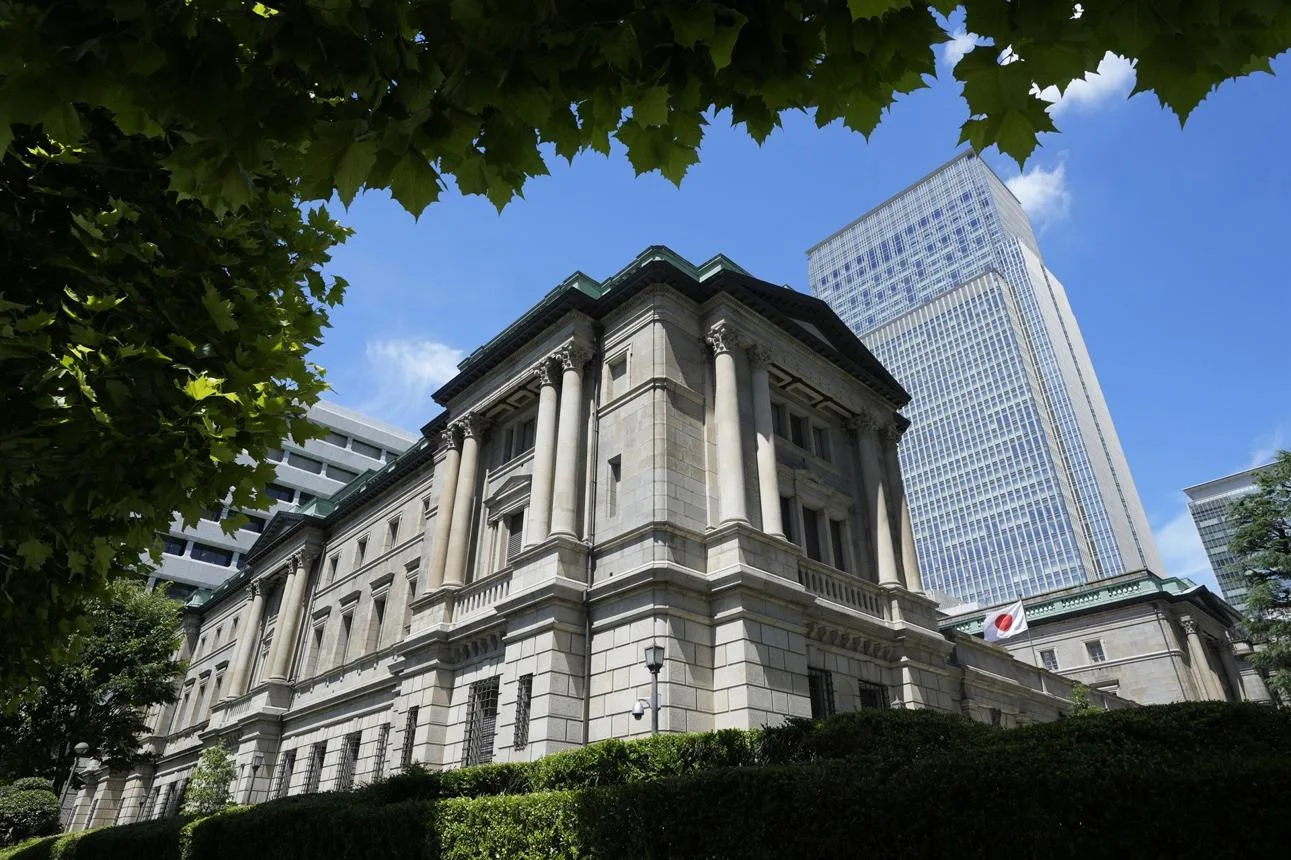
For nearly three decades, Japan operated within a financial environment that the rest of the world regarded as an anomaly. Money was almost free, inflation was largely absent, and growth expectations were sufficiently modest for capital preservation to often take precedence over capital appreciation. This monetary exceptionalism gradually shaped the behaviour of banks, corporations, households and international investors. It also transformed Japanese real estate into an asset class whose attractiveness partly depended on the persistence of exceptional financing conditions.
That equilibrium is now disappearing. The Bank of Japan is continuing to normalise its monetary policy, government bond yields are rising, and investors must reintroduce into their calculations a variable that had long been relegated to the background: the cost of capital.
The paradox is that this transformation comes at a time when Japanese real estate is experiencing renewed international interest. Capital continues to flow into the country even as the financial conditions that contributed to its attractiveness become less favourable. Behind this apparent contradiction lies a deeper transformation of the Japanese economy and the mechanisms through which it creates value.
The end of monetary exceptionalism
Japan’s modern financial history remains inseparable from the collapse of its real estate and equity market bubble in the early 1990s. The correction in land prices, the deterioration of bank balance sheets and corporate deleveraging ushered in a prolonged period of subdued growth and deflationary pressures.
In an attempt to escape this environment, the Bank of Japan progressively pushed beyond the boundaries of conventional monetary policy. Near-zero interest rates, large-scale asset purchase programmes, the introduction of negative interest rates in 2016 and yield curve control represented successive stages of a strategy designed to restore sustainable inflation and support economic activity.
This financial architecture had consequences extending far beyond monetary policy. It altered the relationship between savings and investment, supported asset valuations and enabled financial strategies whose profitability would have been considerably less certain under conventional interest rate conditions.
In March 2024, the Bank of Japan ended its negative interest rate policy. The normalisation process accelerated over the following years, bringing the policy rate to 1.25% in September 2026, a level maintained at the October meeting.
Meanwhile, the yield on ten-year Japanese government bonds rose above 3%, compared with approximately 0.75% in March 2024. This represents a considerable transformation for a country whose financial environment had accustomed generations of investors to treating the cost of money as a relatively stable and marginal consideration.
The monetary policy meeting scheduled for December 17 and 18, 2026, could mark another step in this transition. A Reuters poll published on November 19 indicated that 86% of surveyed economists expected the policy rate to rise to 1.50%.
The Bank of Japan has not necessarily embarked on a restrictive monetary policy in the conventional sense. Its primary objective is to reduce the degree of accommodation inherited from the deflationary era. For real estate markets, however, this distinction does not alter the direction of travel: financing, holding and refinancing assets are becoming progressively more expensive.
International capital continues to flow
Rising interest rates have nevertheless failed to trigger a widespread withdrawal of real estate investors. In the third quarter of 2026, according to CBRE data reported by Reuters, Japanese commercial real estate transactions reached a quarterly record of ¥2.21 trillion, equivalent to approximately $13.9 billion, representing a 4% year-on-year increase. Foreign investors accounted for ¥775 billion in acquisitions, up 30% from the previous year.
International investors therefore represented nearly 35% of quarterly transaction volumes.
These capital flows reflect a changing perception of the Japanese economy. The return of inflation, rising wages, corporate governance reforms and prospects for rental income growth now provide investment arguments that extend beyond monetary advantages alone.
In the most sought-after districts of Tokyo and Osaka, the scarcity of prime locations, corporate demand and the concentration of economic activity continue to support occupier demand. Hospitality benefits from international tourism, while logistics and digital infrastructure are responding to changing patterns of consumption and production.
The continued presence of international capital does not mean that investors are disregarding rising interest rates. Rather, it suggests that some believe improving economic fundamentals can compensate for the gradual disappearance of previous financing advantages.
Japanese real estate investment is entering a phase in which income growth is becoming as important as acquisition conditions.
The financial mechanics of asset valuations
Understanding the consequences of this transition requires returning to one of the fundamental principles of real estate investment: the value of an asset depends on its ability to generate future income and the return required by those providing the capital.
The capitalisation rate, commonly known as the cap rate, is one of the most widely used instruments for assessing this relationship. It expresses a property's annual net operating income as a percentage of its market value.
An asset generating $10 million in annual net operating income therefore has a theoretical value of $250 million when valued at a 4% capitalisation rate. If the required return increases to 5%, its valuation falls to $200 million. At 6%, it declines further to approximately $166.7 million.
Yet the building itself has not changed. Its tenants may remain the same, its rents unchanged and its location just as desirable. The only variable that has changed is the return demanded by capital providers.
An increase in the capitalisation rate from 4% to 5% results in a theoretical 20% decline in asset value, assuming constant income. An increase to 6% produces a 33.3% correction.
This mechanism explains why monetary transformations can significantly affect real estate portfolios even before the operating performance of individual properties deteriorates.
Policy rates and capitalisation rates should not, however, be mechanically equated. Real estate yields also depend on expected rental growth, risk premiums, market liquidity, tenant quality and asset scarcity.
In the third quarter of 2026, CBRE's real estate yield survey indicated that expected capitalisation rates for prime Tokyo assets remained at historical lows despite rising financing costs.
This resilience in valuations is precisely one of the central challenges facing the Japanese market: investors continue to accept low property yields while alternative fixed-income investments are becoming increasingly remunerative.
The narrowing real estate yield premium
Commercial real estate possesses characteristics that distinguish it fundamentally from government bonds. It requires maintenance expenditure, exposes owners to vacancy risk and commits capital to relatively illiquid assets.
In return, investors may benefit from rental growth, land appreciation and opportunities to improve operational performance. Nevertheless, the spread between current real estate yields and government bond yields remains a central indicator when allocating capital between these asset classes.
According to an analysis published by Oxford Economics in September 2026, the spread between prime Tokyo office yields and ten-year Japanese government bond yields had narrowed to just 10 to 15 basis points, compared with approximately 140 basis points in January and more than 300 basis points in 2022.
The additional current income return associated with owning a commercial property has therefore become particularly limited.
This does not necessarily mean that government bonds offer superior total returns. A property generating steadily increasing income may remain more attractive than a fixed-coupon bond. But that income growth must now materialise. It can no longer simply be assumed within valuation models.
As the yield premium contracts, acquisition prices become more consequential, rental growth assumptions require stronger evidence, and less favourable exit valuations must be incorporated into investment decisions from the outset.
Real estate is gradually ceasing to be merely a destination for capital seeking yield. It is once again becoming an economic asset whose performance must be demonstrated.
Financial leverage loses part of its power
During the period of exceptionally low interest rates, investors could significantly enhance returns on equity by financing acquisitions through debt.
When a property's yield sufficiently exceeds its financing cost, leverage amplifies the performance of invested equity. This relationship has formed one of the foundations of international real estate fund strategies.
Consider a property acquired for $100 million and generating annual net operating income of $4 million. The acquisition is financed through $60 million of debt and $40 million of equity.
With an annual borrowing cost of 1%, interest expenses amount to $600,000. Income remaining after interest payments reaches $3.4 million, equivalent to an annual cash return of 8.5% on invested equity.
When the cost of debt increases to 3%, annual interest expenses rise to $1.8 million. The return on equity falls to 5.5%.
At a borrowing cost of 5%, the return declines to just 2.5%, even though the property's operating income remains unchanged.
This illustrative calculation, which excludes debt amortisation, taxation and capital expenditure, demonstrates the vulnerability of an investment strategy whose performance depends primarily on the spread between asset yields and financing costs.
Financial leverage does not disappear as interest rates rise. Its nature changes. From a relatively predictable instrument for amplifying returns, it can become a source of vulnerability when debt becomes more expensive or the value of real estate collateral declines.
Refinancing: the next balance sheet test
The most significant consequences of monetary normalisation may not necessarily emerge when new assets are acquired. They could become apparent when financing arrangements established during the low-interest-rate era mature.
Investors who secured fixed-rate debt remain temporarily protected against rising financing costs. That protection, however, expires when their existing loan agreements reach maturity.
When financing must be renewed, lenders reassess the value of the underlying asset, the borrower's ability to service its debt and the property's future income prospects.
An asset initially valued at $100 million and financed through $60 million of debt has a loan-to-value ratio of 60%. If its valuation falls to $80 million, that ratio mechanically increases to 75%, even without additional borrowing.
If the lender requires the original 60% loan-to-value ratio to be maintained, the new financing cannot exceed $48 million. The owner must therefore contribute an additional $12 million in equity to repay the existing debt.
Across a real estate portfolio, the multiplication of such situations can absorb considerable liquidity, restrict distributions to investors and trigger asset disposals.
Monetary normalisation therefore affects not only the profitability of new transactions but also the financial stability of portfolios assembled during previous years.
This prospect concerns private real estate funds, property companies, Japanese real estate investment trusts, known as J-REITs, and, indirectly, the financial institutions that supported their expansion.
It could also favour investors with readily available capital, capable of acquiring assets from owners facing refinancing constraints.
Value creation shifts towards operations
The changing financial environment is reshaping the strategies favoured by institutional investors.
Acquiring a stabilised office building occupied by financially sound tenants and financed under favourable conditions could previously generate satisfactory returns without requiring substantial changes to the asset. Yield compression and rising financing costs are progressively reducing the effectiveness of this approach.
Core-plus and value-add strategies are consequently gaining importance. These approaches rely on building improvements, operational optimisation, energy efficiency upgrades, the reconfiguration of space and tenant selection.
In such transactions, value creation derives less from the simple ownership of an asset than from increasing its capacity to generate income.
Fuji Media Holdings' proposed disposal of Sankei Building illustrates the interest of major international financial groups in this transformation. The potential transaction, which could be valued at approximately ¥1 trillion including debt, has attracted bids from Blackstone, Bain Capital, Warburg Pincus and BGO, according to Reuters. At this stage, it remains a prospective transaction.
For these investors, acquiring a real estate portfolio represents more than a conventional asset allocation decision. It can provide opportunities to redeploy assets, improve their operations, restructure their financing and unlock the economic potential of underutilised locations.
This dynamic is consistent with the corporate governance reforms underway in Japan. Numerous industrial and commercial groups own longstanding real estate portfolios that are not directly required for their core businesses. Disposing of these assets can release capital for productive investment, industrial modernisation or shareholder returns.
Corporate balance sheet reform is therefore becoming a potential source of real estate transactions for institutional investors.
The changing geography of Japanese real estate
The transformation of the market will not affect the entire country uniformly.
Tokyo remains the principal centre of capital concentration, service-sector activity and corporate headquarters. Osaka also benefits from a diversified economic ecosystem, developed infrastructure and considerable tourism appeal.
In these major metropolitan areas, the difficulty of developing new high-quality assets in central districts may provide lasting support for certain rental income streams. Rising construction costs, while detrimental to developers, can under certain circumstances reinforce the scarcity of existing buildings.
Logistics facilities represent another strategic segment. The expansion of e-commerce, the modernisation of supply chains and the requirements of urban distribution are supporting demand for infrastructure adapted to new operational standards.
Data centres occupy a distinctive position within this transformation. Their value depends increasingly less on land alone and more on access to electricity, telecommunications networks, cooling equipment and digital infrastructure.
They operate at the intersection of real estate, the energy industry and information technology. Their financing involves substantial upfront expenditure, equipment exposed to technological obsolescence and growing environmental and geographical constraints.
Hospitality follows a different economic logic. Its ability to adjust prices daily allows operators, when demand is sufficiently strong, to pass through inflation more rapidly than properties governed by long-term leases. This flexibility nevertheless comes with greater exposure to fluctuations in tourism, international purchasing power and operating costs.
By contrast, regions experiencing sustained demographic contraction have more limited adjustment mechanisms.
Japan's ageing population and declining number of inhabitants are accentuating the differences between attractive metropolitan centres and areas where residential and commercial demand is weakening.
The Japanese real estate market cannot therefore be understood as a homogeneous national cycle. Monetary normalisation reinforces the need to distinguish between locations capable of generating autonomous income growth and those whose financial equilibrium depends more heavily on a low cost of capital.
The yen: a second source of risk
For international investors, the transformation of Japanese real estate extends beyond domestic interest rates. The currency represents an essential component of ultimate investment performance.
The weakness of the yen has enabled numerous investors holding dollars or other international currencies to acquire Japanese assets under relatively favourable conditions.
However, investment performance also depends on the exchange rate at which rental income and disposal proceeds are converted into a fund's reference currency.
A foreign investor may therefore complete a profitable transaction in yen while recording a considerably weaker, or even negative, return in its own currency.
Hedging instruments can reduce this exposure. Their cost, renewal conditions and effectiveness nevertheless depend on interest rate differentials and the structure of financial markets.
The evolution of the yen also represents an important macroeconomic factor for Japan. A weaker currency benefits certain export-oriented industries and supports the country's tourism appeal, but it also increases the cost of imported energy, materials and certain construction equipment.
Japanese monetary policy therefore operates at the intersection of several competing objectives: stabilising prices, preserving growth, containing the consequences of currency volatility and guiding the financial system towards a less accommodative environment.
Banks and the return of credit discipline
For Japanese financial institutions, rising interest rates may provide an opportunity to improve net interest margins after a prolonged period of compressed profitability.
This development nevertheless comes with a counterpart. Borrowers' repayment capacity, collateral valuations and the quality of loan portfolios become more sensitive to economic and monetary conditions.
Financial institutions must also manage the effects of rising yields on their own bond portfolios. An existing bond carrying a low coupon loses market value when newly issued securities offer higher returns.
The Japanese banking system is entering this transition with capitalisation levels that the Bank of Japan assessed as broadly robust in its October 2026 Financial System Report. This does not, however, rule out the emergence of localised pressures, particularly among highly leveraged borrowers or assets generating insufficient income growth.
In real estate, credit selection could consequently become more demanding. Income prospects, debt service coverage ratios and future capital expenditure requirements will progressively regain a central role in financing decisions.
Over time, this development could improve capital allocation. It nevertheless implies an adjustment period during which certain business models will need to be restructured.
Japan and the reconfiguration of global capital flows
The consequences of Japanese monetary normalisation extend beyond the country's borders.
For decades, low domestic yields encouraged Japanese banks, insurers, pension funds and other investors to seek opportunities in international markets.
The yen also served as a funding currency for carry trade strategies, which involve borrowing in a low-yielding currency to invest in assets offering higher returns.
Rising Japanese interest rates are altering the parameters of these strategies. They can narrow yield differentials, increase the cost of yen-funded positions and make domestic government bonds more attractive to certain institutional investors.
It would be premature to conclude that a massive repatriation of Japanese capital is inevitable. International investment strategies also respond to diversification objectives and the management of long-term liabilities. Nevertheless, the return of meaningful domestic yields introduces an alternative that had long occupied a secondary position in capital allocation decisions.
Japan, once one of the world's major sources of low-cost capital, could progressively assume a different role in the equilibrium of international financial markets.
From financial appreciation to economic value creation
The distinctive feature of Japan's current transition lies in the coexistence of two developments that financial markets generally associate with different phases of the economic cycle. The cost of money is rising while income growth prospects are improving in certain sectors.
The end of deflation can support rents, wages and corporate revenues. It can also reduce the real value of existing fixed-rate debt. Yet it simultaneously increases operating expenses, acquisition costs and refinancing requirements.
The question, therefore, is not whether rising interest rates will be uniformly beneficial or detrimental to Japanese real estate. It is whether individual assets can generate sufficient economic growth to absorb the new cost of capital.
Owners benefiting from desirable locations, growing income streams, sound balance sheets and genuine operational capabilities may be well positioned to navigate this transition. Those whose profitability depends primarily on leverage and yield compression will probably need to reconsider their ambitions.
After several decades during which monetary conditions blurred the distinction between the quality of an asset and the quality of its financing, Japan is rediscovering a form of economic discipline.
Money is no longer free. Buildings will increasingly have to justify their price through what they produce, rather than merely through what it costs to acquire them. That may ultimately be the most profound transformation of Japanese real estate capitalism.
Atlas Limits Research Desk
Atlas Limits’ editorial and analytical desk.