The deadly attack in Karak has exposed the vulnerabilities of a kingdom that has long made stability its defining strength. Caught between regional conflicts, economic constraints, communal balances and geopolitical pressures, Jordan remains one of the Middle East's most exposed states, but also one of those that have proved most resilient to the crises surrounding it.
On October 23, 2026, in the village of Hammoud in southern Jordan, a funeral ceremony turned into a scene of violence. Armed men opened fire on people gathered at a Greek Orthodox church, killing seven and injuring dozens. The first images broadcast by Jordanian media showed the surroundings of the church, emergency responders and security forces deployed around a building that had become, within minutes, the scene of a national tragedy.
King Abdullah II visited the area. The government declared three days of national mourning. Authorities condemned the attack as an act of terrorism, while security services launched an operation to identify and apprehend those responsible. In the immediate aftermath, the attackers' identities, precise motivations and possible affiliations remained to be established. No credible claim of responsibility had emerged.
The attack struck a country that, for decades, has distinguished itself through its ability to preserve relative stability in a profoundly unstable regional environment. Jordan has endured the Arab–Israeli wars, successive Palestinian crises, the conflicts in Iraq, the Syrian civil war and the political upheavals of the Arab world without experiencing the institutional collapse that has affected several of its neighbors.
Yet this continuity should not be mistaken for an absence of tensions. It is the product of a complex equilibrium maintained by the Hashemite monarchy, the security institutions, international alliances and a society whose cohesion remains essential to the kingdom's survival.
Karak is a stark reminder that this stability is neither natural nor permanently guaranteed.
A Kingdom Built Amid Regional Fault Lines
Jordan's modern history began with the territorial transformations that followed the collapse of the Ottoman Empire. Established under British administration in the early 1920s, the Emirate of Transjordan gained independence in 1946 under the Hashemite dynasty. The new state possessed limited resources, a relatively small population and a largely arid territory situated at the intersection of the Middle East's principal centers of tension.
The 1948 war and the creation of Israel profoundly altered its trajectory. The arrival of Palestinian refugees, followed by the annexation of the West Bank in 1950, transformed the kingdom's demographic composition, political balances and national identity. The June 1967 war brought the loss of the West Bank and another wave of displacement. In 1988, King Hussein announced the severance of Jordan's administrative and legal ties with the territory, opening a new chapter in the definition of the Jordanian state.
The Palestinian question nevertheless remains inseparable from Jordan's domestic political life. A substantial proportion of the population has Palestinian origins, while tribal communities and populations historically established east of the Jordan River continue to play major roles in public institutions, the armed forces and traditional structures of authority.
These communities are neither homogeneous nor necessarily opposed. Their relationships, however, contribute to the complexity of Jordan's social and political equilibrium.
Over time, the monarchy has built its legitimacy around several foundations: dynastic continuity, institutional authority, the protection of communities, territorial stability and a diplomatic strategy capable of maintaining relations with actors whose interests frequently conflict.
The peace treaty signed with Israel in 1994 strengthened Jordan's international position, while remaining politically sensitive in a society deeply attached to the Palestinian cause. Jordan also maintains close strategic relations with the United States, the Gulf monarchies and major European powers. This diplomatic architecture provides external security, financial support and international recognition, but simultaneously exposes the kingdom to the contradictions inherent in its alliances.
Jordan therefore occupies a distinctive position. It is sufficiently integrated into regional security arrangements to constitute an indispensable partner, yet sufficiently close to the region's conflicts to experience their consequences directly.
Religious Coexistence as a National Foundation
Jordan is overwhelmingly Muslim, but it is also home to an ancient Christian community whose presence predates the establishment of the modern state. Greek Orthodox, Catholic and other Christian traditions have participated in the country's social, economic and cultural life for generations.
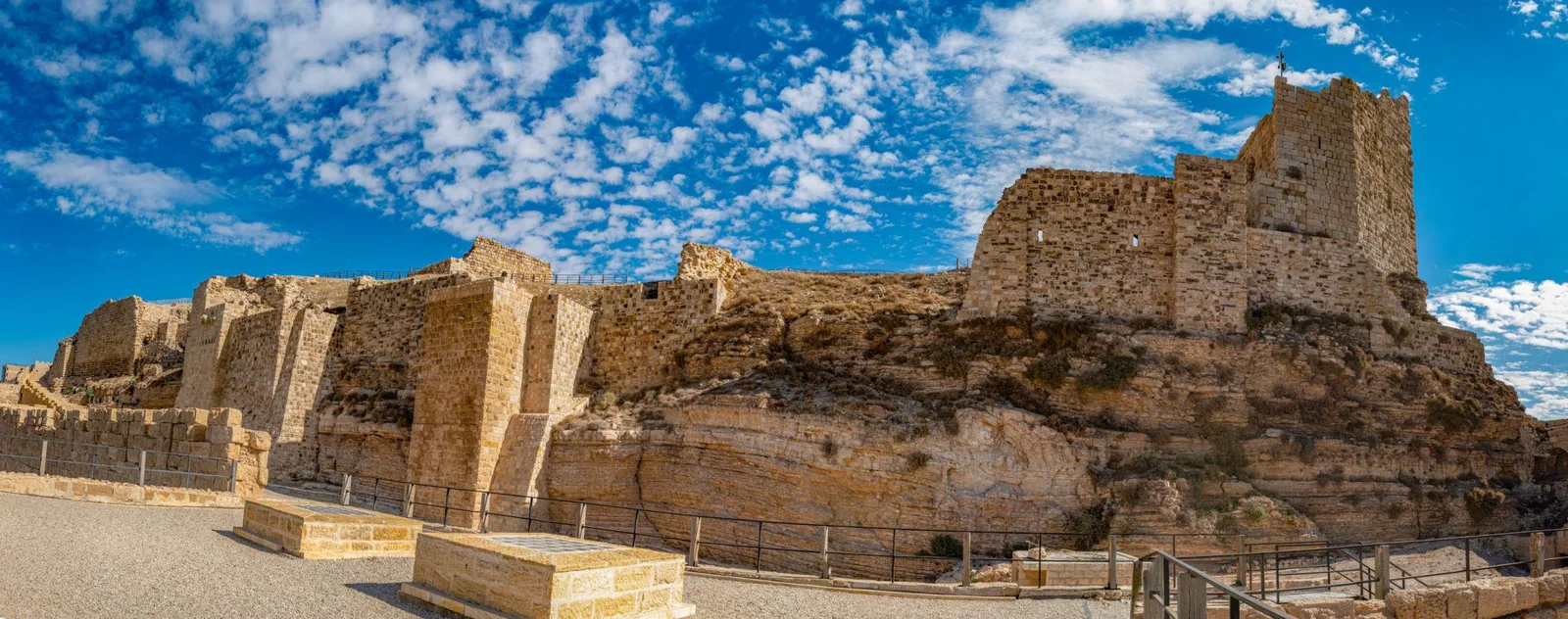
Karak holds a particular place in this history. Known for its medieval fortress and its historical importance along the routes of the Levant, this mountainous region is home to deeply rooted Christian communities. Relationships between families, tribes and religious groups reflect local continuities that extend beyond strictly confessional identities.
An attack against a funeral ceremony therefore carries significance far beyond the number of casualties. It strikes a religious setting, but also a moment of family and communal solidarity. In a society where funeral rites are major collective occasions, violence directed against mourners possesses a particularly traumatic dimension.
The fact that the victims were gathered in a church does not, by itself, definitively establish the attackers' sectarian motives. Investigators must determine their precise intentions. Nevertheless, the choice of location and circumstances inevitably places the protection of religious minorities at the center of the national debate.
The Hashemite monarchy has historically presented religious coexistence as one of the defining characteristics of Jordanian identity. King Abdullah II has repeatedly participated in international initiatives promoting interfaith dialogue, while the kingdom claims a special role in safeguarding Muslim and Christian holy sites in Jerusalem.
This dimension is also diplomatic. In a Middle East where several Christian communities have suffered the consequences of war, forced displacement and extremist violence, Jordan has preserved the image of a place of continuity and protection.
The Karak attack therefore strikes at one of the most sensitive elements of the country's national identity and international standing.
Yet a state's commitment to coexistence does not automatically eliminate tensions. The durability of such an equilibrium depends on institutions, social relationships and the ability of authorities to prevent violence from developing into lasting communal divisions.
Internal Security Tested by Regional Crises
Jordan has never been entirely spared extremist violence. In November 2005, coordinated bombings against several hotels in Amman killed dozens of people. The attacks, claimed by Al-Qaeda in Iraq, profoundly affected Jordanian society and accelerated the strengthening of counterterrorism arrangements.
In December 2016, Karak itself was the scene of a deadly assault involving armed attackers and security forces. The Islamic State organization claimed responsibility. Ten years later, renewed violence in the same region inevitably recalls that episode, although no operational connection between the two events can be presumed.
The kingdom has developed one of the region's most experienced security establishments. Its intelligence services, armed forces and internal security institutions possess extensive expertise, particularly in monitoring extremist networks and cooperating with international partners.
This capacity is also shaped by geography. Jordan borders Syria, Iraq, Saudi Arabia, Israel and the occupied West Bank. It lies immediately adjacent to territories that have experienced prolonged wars, arms trafficking, cross-border criminal networks and the activities of armed organizations.
The Syrian civil war significantly transformed the kingdom's security environment. Population displacement, smuggling networks and instability along parts of the northern frontier required a sustained mobilization of Jordanian forces. Authorities have also confronted the trafficking of narcotics and weapons across the Syrian border.
Internal security consequently depends on a combination of territorial surveillance, intelligence capabilities, regional cooperation and social cohesion. An effective security apparatus can considerably reduce threats without eliminating the possibility of an attack.
The October 23 assault raises several questions that remain unanswered. Did the perpetrators belong to an organized network? Did they receive external assistance? Was the operation driven by domestic radicalization, a transnational organization or another criminal dynamic?
The answers will determine the broader significance of the event.
At this stage, it would be premature to interpret the attack as proof of an organized terrorist resurgence in Jordan. It would be equally imprudent, however, to dismiss it as an isolated incident without structural consequences.
A Resilient Economy Under Permanent Pressure
Jordan's political stability rests on an economy with limited room for maneuver. The kingdom possesses few conventional energy resources, suffers from severe water scarcity and relies heavily on imports to meet several essential needs.
Its population is approaching 11.6 million in 2026, while nominal gross domestic product is estimated by the International Monetary Fund at approximately 46 billion Jordanian dinars, equivalent to nearly $65 billion. Real economic growth, estimated at 2.8% in 2025, was projected to reach approximately 2.7% in 2026 according to the IMF's June assessments.
These figures demonstrate genuine macroeconomic resilience, but they remain insufficient to rapidly transform social prospects. Unemployment remains high, particularly among young people, and job creation represents one of the kingdom's most pressing challenges.
Jordan's economy depends on services, trade, transportation, tourism, financial activities, pharmaceuticals, fertilizers and exports of phosphate and potash. Its geographical position could allow it to play a larger logistical role between the Gulf, the Levant and Mediterranean markets, but regional crises repeatedly disrupt these opportunities.
Tourism is particularly sensitive to security developments. Petra, the Dead Sea, Wadi Rum, religious landmarks and archaeological sites attract international visitors whose decisions depend heavily on perceptions of safety. A spectacular attack, even when geographically localized, can produce economic consequences extending far beyond the immediate area.
The fiscal situation also remains demanding. In June 2026, the IMF projected a current account deficit of approximately 7.4% of GDP for the year, alongside gross public and publicly guaranteed debt equivalent to about 108.7% of GDP. After deducting the holdings of the Social Security Corporation, the corresponding debt ratio was approximately 82.5%. These indicators reflect different accounting perimeters and should not be treated as interchangeable.
Jordan benefits from substantial international financial support, notably through IMF programs, American assistance, multilateral financing and contributions from Gulf and European partners. These resources help maintain fiscal and external balances, but they also underline the importance of international relationships to the kingdom's economic functioning.
The challenge is therefore not simply to preserve financial stability. It is to translate that stability into productive growth, employment and lasting improvements in living standards.
Water, Refugees and the Limits of the Jordanian Model
Beyond fiscal constraints, two structural realities shape Jordan's future: water scarcity and demographic pressure.
Jordan ranks among the countries with the lowest renewable freshwater resources per inhabitant. Urban expansion, agricultural demand, droughts and the effects of climate change are intensifying an already difficult situation. Groundwater reserves are heavily exploited, while supplying major cities requires expensive infrastructure and particularly careful management.
The national water conveyance and desalination project, designed to transport desalinated water from Aqaba toward the kingdom's principal consumption centers, illustrates the scale of the investments required. It is not merely another infrastructure project, but a central component of Jordan's long-term economic and social security.
The refugee question constitutes another fundamental dimension.
For generations, the kingdom has received populations displaced by regional conflicts, particularly Palestinians, Iraqis and Syrians. Their administrative classifications, legal statuses and generational histories differ considerably, making direct numerical comparisons difficult.
These populations have contributed profoundly to the transformation of Jordanian society, its urban development and its economic activity. Their presence simultaneously creates additional demands for housing, infrastructure, public services and employment.
Jordan has made the reception of displaced populations an important component of its regional role and its relationships with international donors. Yet the sustainability of this commitment depends on its capacity to finance infrastructure and preserve social cohesion.
Water scarcity, demographic growth and employment constraints therefore form an interconnected set of pressures. They do not necessarily produce an immediate crisis, but they progressively narrow the state's room for maneuver.
A Monarchy at the Center of Middle Eastern Balances
Jordan occupies a diplomatic position disproportionate to its economic and demographic weight. Its border with Israel and the West Bank, proximity to Syria and Iraq, and relationships with the Gulf monarchies give it enduring strategic importance.
For the United States, the kingdom represents an essential partner in security, military cooperation and regional stability. For European countries, it is an important interlocutor on migration, humanitarian and security issues. For Arab states, it remains a diplomatic actor and a source of institutional continuity.
This position nevertheless contains significant contradictions.
The peace treaty with Israel is a central element of Jordan's foreign policy, but developments in the Israeli–Palestinian conflict place constant pressure on bilateral relations. Jerusalem, the status of its holy sites and the political future of the Palestinians directly affect the monarchy's regional standing and domestic legitimacy.
The war in Gaza and the wider regional confrontations have intensified these tensions. Jordan must simultaneously defend its security interests, maintain diplomatic commitments, respond to the expectations of its population and avoid being drawn into a broader conflict.
This equation is particularly difficult because the kingdom lacks the economic and energy resources available to several other regional states. Its influence rests less on autonomous power projection than on diplomacy, institutional stability, alliances and geography.
Amman's role is therefore not primarily to impose a regional order, but to prevent external imbalances from destabilizing its own territory.
Jordan's geopolitical importance is also inseparable from its custodial role in Jerusalem. The Hashemite monarchy's historical responsibilities toward Muslim and Christian holy sites provide it with religious and diplomatic legitimacy, while simultaneously exposing it to the consequences of every major escalation in the Israeli–Palestinian conflict.
In this respect, Jordan is more than a neighboring state. It is one of the countries whose domestic equilibrium is most directly connected to the unresolved political architecture of the Levant.
The Real Significance of Karak
The October 23 attack does not mean that Jordan is entering a new period of generalized instability. Nothing established in the immediate aftermath demonstrates a systemic deterioration of national security. The institutional response, the mobilization of the monarchy and the condemnations expressed across the country instead reflect the continuity of the state.
But the event exposes a fundamental vulnerability: in a country where stability is simultaneously a political reality, an economic advantage and a diplomatic instrument, an attack against a religious community carries significance far beyond its immediate location.
The authorities' response will need to meet several requirements. Investigators must identify the perpetrators and their possible supporters, ensure the protection of communities, avoid confessional generalizations and preserve confidence in public institutions. Transparency surrounding the investigation's conclusions will also be essential to prevent uncertainty from fueling rumors and political manipulation.
More broadly, Jordan must continue an economic and social transformation that has become indispensable.
Security cannot depend exclusively on surveillance and coercive capabilities. It also rests on opportunities available to younger generations, the quality of public services, the management of scarce resources and the strength of relationships between the different components of society.
The Hashemite kingdom has demonstrated, over nearly eight decades of independence, a remarkable capacity to adapt to regional upheavals. This continuity remains one of its greatest assets. It does not, however, remove the need to confront the profound transformations of its environment.
Karak is no longer merely the name of a city struck by violence. It is a reminder that the stability of a state cannot be measured solely by its ability to withstand external crises, but also by its capacity to protect the human relationships and social balances on which it rests.
In a Middle East where political boundaries, alliances and power relations continue to evolve, Jordan remains an essential anchor.
Its strength has long consisted in surviving the storms surrounding it. Its challenge now is to transform that resilience into lasting security, prosperity and collective confidence.
Main Sources
- Reuters, October 23, 2026 — Attack at the church in Hammoud, Karak; casualties, investigation and official statements.
- Associated Press, October 23, 2026 — Casualty reports and national and international reactions.
- Petra, Jordan News Agency, October 23, 2026 — Announcement of three days of national mourning.
- International Monetary Fund, June 17, 2026 — Fifth review of Jordan's Extended Fund Facility program and economic outlook.
- Deutsche Welle, October 23, 2026 — Karak attack, communal context and initial investigation developments.
Atlas Limits Research Desk
Atlas Limits’ editorial and analytical desk.