In the vast interior of Asia lies a country whose borders tell a story of historical contradiction. Mongolia was once the center of the largest contiguous land empire in history. Eight centuries later, it is a nation of approximately 3.5 million people, enclosed between two powers that shape much of its strategic environment: Russia to the north and China to the south. Its steppes stretch beyond the horizon, its mountains rise above sparsely inhabited landscapes, and its underground resources are increasingly sought after by the world's industrial economies. Yet despite the immensity of its territory, Mongolia has no direct access to the sea and almost no possibility of trading with the outside world without crossing the territory of its neighbors.
This geography is simultaneously its inheritance, its wealth, and its greatest vulnerability.
Since the collapse of the Soviet Union, Ulaanbaatar has pursued an unusual trajectory: preserving a pluralist democracy between two authoritarian powers, developing a mining economy without surrendering sovereignty over its natural resources, and attracting Western investment without compromising its relations with Beijing and Moscow. The balance is fragile, but it has so far allowed Mongolia to maintain a degree of political independence that its geographical position might otherwise have made difficult to sustain.
In 2026, this equation is acquiring a new dimension. Global demand for copper, competition over uranium, changes in China's energy system, and growing rivalries between major powers are gradually placing Mongolia at the intersection of several strategic value chains. The country possesses considerable advantages. Whether it can transform them into lasting economic strength remains an open question.
From Imperial Center to Continental Periphery
Mongolia's history begins long before the emergence of the modern state. In the thirteenth century, Genghis Khan united the tribes of the steppe and founded an empire whose successors extended their rule from East Asia toward the borders of Europe. Mongol power rested on remarkable military organization, exceptional mobility, and the ability to control the great commercial routes of Eurasia.
The empire profoundly transformed exchanges between civilizations. Goods, technologies, religions, and knowledge circulated with unprecedented intensity across territories brought under Mongol authority. But this immense political structure eventually fragmented. The different khanates followed their own trajectories, while China gradually recovered its independence under the Ming dynasty.
From the seventeenth century onward, Mongolia came under the authority of the Qing dynasty. Its territory became a peripheral region of the Chinese empire, although local social, religious, and political institutions retained important distinctive characteristics.
The collapse of the Qing dynasty in 1911 opened an initial period of independence. Yet that independence remained uncertain, caught between Chinese ambitions and political upheaval in Russia. In 1921, with Soviet military support, Mongolian revolutionaries consolidated their position. Three years later, the Mongolian People's Republic was proclaimed.
For nearly seven decades, Mongolia developed within the Soviet sphere of influence. Industrialization, urbanization, education, and infrastructure advanced, but under a tightly controlled political system. Collectivization transformed traditional livestock farming, while the political and religious purges of the 1930s destroyed much of the country's Buddhist institutional structure.
Mongolia became a buffer between the Soviet Union and China. This function acquired particular importance after the Sino-Soviet split, when the two communist powers emerged as strategic rivals.
The democratic revolution of 1990 marked a fundamental break. Mongolia abandoned its one-party system and began transitioning toward a market economy. The Constitution of 1992 established the foundations of its contemporary democracy.
The country discovered new political freedoms, but also the difficulties of an economy suddenly deprived of its principal external supporter. The disappearance of the Soviet Union triggered a severe contraction in economic activity, disrupted trade networks, and caused a sharp deterioration in living standards.
Political independence now had to find its own economic foundations.
A Geography That Sets Its Own Conditions
Covering approximately 1.56 million square kilometers, Mongolia is among the least densely populated countries in the world. Its territory is almost three times the size of metropolitan France, yet its population is comparable to that of a large European metropolitan area.
Distance is a decisive economic reality. Railways and roads must cross enormous territories exposed to extreme temperatures and exceptionally low population density. Transportation, maintenance, and distribution costs are structurally high.
Mongolia's geography is organized around several major regions. To the north and west, the Altai Mountains, the Khangai range, and forested landscapes extend toward Siberia. In the center, the steppes have supported pastoral activities for centuries. To the south, the Gobi Desert forms an immense mineral landscape containing several of the country's most important deposits.
This territorial organization explains some of Mongolia's contemporary economic contrasts.
Traditional livestock farming occupies vast areas but generates relatively limited added value. Mining operations, by contrast, concentrate investments worth billions of dollars in regions often located far from major urban centers.
The capital, Ulaanbaatar, accommodates close to half the national population, depending on the statistical boundaries used. It concentrates government institutions, universities, financial services, businesses, and much of the country's modern infrastructure.
Mongolia therefore operates around a dominant capital and an immense territory where economic activity remains geographically dispersed.
This concentration is not simply the result of industrialization. It also reflects the gradual weakening of traditional pastoral livelihoods.
The Underground Promise
Mongolia possesses one of the most significant mineral resource bases in Central and East Asia. Its deposits include coal, copper, gold, uranium, iron ore, and several strategically important minerals.
The development of these resources has profoundly transformed the national economy since the beginning of the twenty-first century.
Coal has long been the principal engine of exports. Its proximity to China's major industrial regions allows Mongolia to supply Chinese steelmakers and energy producers directly.
Yet this specialization contains a major weakness: it exposes public finances and the trade balance to fluctuations in Chinese demand and international commodity prices.
In 2024, coal accounted for approximately 55% of Mongolian exports, compared with 21% for copper, according to figures reported by the International Monetary Fund. China absorbed approximately 91% of the country's total exports.
These figures summarize one of Mongolia's central economic contradictions: considerable mineral wealth combined with exceptionally concentrated commercial dependence.
Copper development could gradually alter this balance.
In the southern Gobi Desert, the Oyu Tolgoi complex represents one of the world's major contemporary mining projects. Developed through a partnership between the Mongolian state and Rio Tinto, it includes open-pit facilities and an extensive underground operation.
Oyu Tolgoi's strategic importance extends far beyond Mongolia. Copper is indispensable to electrical grids, energy infrastructure, industrial equipment, and numerous digital technologies.
The electrification of economies, expansion of data centers, and modernization of electricity distribution networks support long-term demand prospects.
Mongolia could therefore benefit from a structural transformation in global industrial requirements.
But mining raises a politically sensitive question: how much of the wealth generated should accrue to the state, foreign investors, and local communities?
Negotiations surrounding Oyu Tolgoi have repeatedly generated controversy over project costs, financing arrangements, profit distribution, and taxation.
These debates reflect a familiar difficulty in resource-dependent economies. The capital, technologies, and expertise required to exploit major deposits often come from abroad, while the resources themselves belong to the national territory.
Legal sovereignty over underground resources does not automatically guarantee economic control over their exploitation.
Copper Has Not Yet Replaced Coal
Mongolia's recent economic performance illustrates this ambivalence.
According to the IMF, real economic growth reached 6.8% in 2025, supported by agricultural recovery and expanding mining production. For 2026, the institution projects growth of 5.8%.
Mining activity remained particularly dynamic at the beginning of the year, notably because of increasing copper concentrate production at Oyu Tolgoi.
Yet this expansion does not mean that the country's economic vulnerabilities have disappeared.
In 2025, coal export prices declined by 38% year on year, according to the IMF's 2026 consultation report. The fall reduced government revenues despite historically high export volumes.
Mongolia thus discovered that it could sell more raw materials while receiving less revenue.
This situation reveals the fundamental difference between increasing production and achieving lasting improvements in national wealth.
Copper development provides relative diversification, but it has not yet transformed the economy's underlying structure. Exports remain dominated by raw or minimally processed resources, while manufacturing activities and internationally competitive services remain insufficiently developed.
The global energy transition introduces another uncertainty. Over the longer term, the decarbonization of China's economy could reduce demand for Mongolian coal, even if the steel industry's requirements will not disappear immediately.
Copper demand offers favorable prospects, but it guarantees neither price stability nor sufficient economic diversification.
For Mongolia, the challenge is therefore not simply to replace one commodity with another. It is to reduce the country's dependence on the extractive cycle itself.
China: An Indispensable Partner and a Permanent Dependency
No analysis of Mongolia's economy can avoid China's central position.
Beijing is overwhelmingly the country's largest export market. The main export corridors cross Mongolia's southern border, connecting its mines to Chinese industrial facilities.
This relationship rests on an obvious economic complementarity.
Mongolia possesses abundant natural resources but a small domestic market. China has an enormous industrial base, extensive processing infrastructure, and substantial demand for raw materials.
Geographical proximity reduces transportation costs compared with more distant markets.
Yet this complementarity creates an asymmetry.
For China, Mongolia is one supplier among many. For Mongolia, the Chinese market remains extraordinarily difficult to replace.
Changes in customs procedures, import restrictions, a slowdown in construction, or a contraction in Chinese steel production can rapidly affect Mongolian revenues.
The dependency is also infrastructural.
Railway projects connecting Gobi mines to the Chinese border aim to reduce logistics costs and increase export capacity. They can improve the competitiveness of Mongolian producers, but they also deepen the physical integration of the national economy into Chinese industrial networks.
This contradiction lies at the heart of Mongolia's development strategy.
The more Mongolia modernizes its export infrastructure toward China, the more it can increase revenues. Yet the more specialized those infrastructures become, the harder it is to redirect commercial flows toward alternative markets.
Economic diversification thus encounters the logic of the investments that offer the most immediate returns.
Russia: Historical Influence and Energy Dependence
To the north, Mongolia's relationship with Russia follows a different logic.
Russian influence rests on shared political history, transportation networks inherited from the Soviet period, and continuing dependence on certain energy supplies.
Mongolia imports most of its petroleum products, primarily from Russia. This represents a major vulnerability for transportation, agriculture, industry, and price stability.
The war in Ukraine and Western sanctions against Moscow have complicated Mongolia's strategic environment.
Ulaanbaatar has nevertheless declined to join the Western sanctions regime against Russia. Its authorities seek to preserve essential supplies and diplomatic relations while maintaining ties with Western democracies.
This position does not necessarily imply that Mongolia shares Russia's geopolitical objectives.
It primarily reflects a material constraint: a landlocked country cannot rapidly change the geography of its supply chains.
Relations with Moscow and Beijing therefore illustrate two distinct forms of dependence. China dominates Mongolia's export markets, while Russia retains considerable influence over its energy security.
Mongolian foreign policy consists largely of preventing these economic dependencies from becoming instruments of political subordination.
The Third Neighbor Strategy
Faced with these constraints, Mongolia has developed an original diplomatic doctrine since the 1990s: the Third Neighbor Policy.
The expression does not refer to any single country. It encompasses external partners capable of contributing to Mongolia's political, economic, and strategic autonomy.
The United States, Japan, South Korea, the European Union, India, and several other partners occupy important positions within this approach.
The strategy rests on a simple principle: since Mongolia cannot change its geography, it must expand its diplomatic space.
This opening has produced economic partnerships, military cooperation programs, mining investments, academic exchanges, and active participation in international organizations.
Mongolia has contributed to international peacekeeping operations and developed military cooperation with several Western countries.
These commitments do not constitute an alliance directed against Russia or China. Their purpose is to multiply external relationships and reduce the risks of isolation.
The distinction is essential.
Unlike states seeking security through formal military alliances, Mongolia favors cautious diversification of its relationships.
It possesses neither the demographic depth nor the military capabilities required for confrontation with its neighbors.
Its security depends more on regional stability, international recognition of its sovereignty, and the shared interest of major powers in preserving its independence.
This diplomacy nevertheless requires considerable continuity.
Every confrontation between Washington, Beijing, and Moscow reduces Mongolia's room for maneuver. The country must maintain relations with partners whose interests are becoming increasingly contradictory.
Its relative neutrality is therefore not an absence of strategy. It is a permanent exercise in geopolitical balance.
Uranium and the New Dimension of Diversification
Uranium development provides a concrete illustration of Mongolia's Third Neighbor ambitions.
In January 2025, the Mongolian government and the French group Orano signed an investment agreement concerning the Zuuvch Ovoo project in Dornogovi Province.
The project builds on several decades of cooperation and aims to establish a new uranium extraction industry.
In June 2026, a ceremony marked the beginning of its construction phase.
For Mongolia, the initiative offers several advantages.
It broadens the national mining base beyond coal and copper, attracts European capital, and strengthens economic relations with France.
For European partners, it contributes to the diversification of potential uranium supplies at a time when nuclear supply-chain security occupies an increasingly important place in energy policy.
Yet this diversification also involves risks.
Uranium extraction raises environmental questions, particularly regarding water resources, extraction methods, and long-term monitoring of mining sites.
In the arid regions of the Gobi, water management is particularly sensitive for local communities and pastoral activities.
The social acceptance of such projects will therefore depend as much on their economic benefits as on the credibility of environmental oversight.
Uranium could strengthen Mongolia's diplomatic autonomy. But it will not resolve the structural weaknesses of its economy if processing activities, technical expertise, and industrial benefits remain primarily located abroad.
A Democracy Confronting Its Own Contradictions
Mongolia's uniqueness does not derive solely from geography. It also lies in the nature of its political system.
Since 1990, Mongolia has organized competitive elections and experienced political alternation. The media, civil society organizations, and protest movements enjoy spaces for expression that distinguish the country from its two neighbors.
This democratic experience represents an important achievement.
It has not, however, prevented recurring institutional tensions, corruption scandals, and considerable public distrust toward political elites.
Mining wealth occupies a central position in these controversies.
Concessions, investment agreements, state-owned enterprises, and revenue redistribution create numerous opportunities for economic and political interests to overlap.
The coal industry has notably generated protests against corruption and allegations involving the diversion of public resources.
Political tensions intensified during 2025 and 2026.
Following the departure of Prime Minister Luvsannamsrai Oyun-Erdene in June 2025, amid demonstrations and corruption allegations, his successor Gombojav Zandanshatar also left office in March 2026.
Parliament subsequently appointed Nyam-Osor Uchral as head of government, making him Mongolia's third prime minister in nine months.
This instability comes as the authorities must simultaneously manage inflationary pressures, investment requirements, and negotiations with major mining companies.
It reveals a deeper institutional difficulty.
Mongolian democracy allows political conflicts to be expressed, but sometimes struggles to provide the continuity required for long-term economic strategies.
Investors seek stable rules. Citizens demand a fairer distribution of wealth. Governments must reconcile these expectations with public revenues dependent on commodity prices.
The balance becomes particularly difficult when economic growth does not immediately translate into visible improvements in living standards.
Ulaanbaatar: Capital of an Unfinished Transition
Mongolia's economic transformations are also visible in the streets of Ulaanbaatar.
The capital juxtaposes modern buildings, shopping centers, administrative districts, and extensive areas of traditional housing.
The ger districts, named after the Mongolian word for yurt, reflect rapid urbanization that has not always been accompanied by adequate infrastructure development.
Part of this internal migration results from the search for employment, education, and medical services. It also reflects the gradual weakening of pastoral livelihoods.
Extreme winters, droughts, and episodes of dzud—severe climatic events capable of causing massive livestock losses—regularly force herding families to leave rural areas.
In peripheral districts, limited access to centralized heating, sanitation, and distribution networks aggravates inequality.
Winter air pollution is among the most visible manifestations of this transition.
The use of solid fuels for heating, combined with the capital's climatic and topographical conditions, can produce exceptionally high concentrations of fine particulate matter.
Modernizing Ulaanbaatar therefore represents a major economic, public health, and social challenge.
It requires investment in housing, public transportation, energy networks, and public services.
But it also raises a more fundamental question: what model of urbanization is appropriate for a country whose historical identity rests so heavily on mobility and open spaces?
Mongolia cannot return to an exclusively pastoral economy. Nor can it assume that urban concentration will automatically resolve the difficulties of rural society.
Its development requires a new relationship between territories, traditional activities, and modern economic sectors.
Nomadic Traditions and the Mining Economy
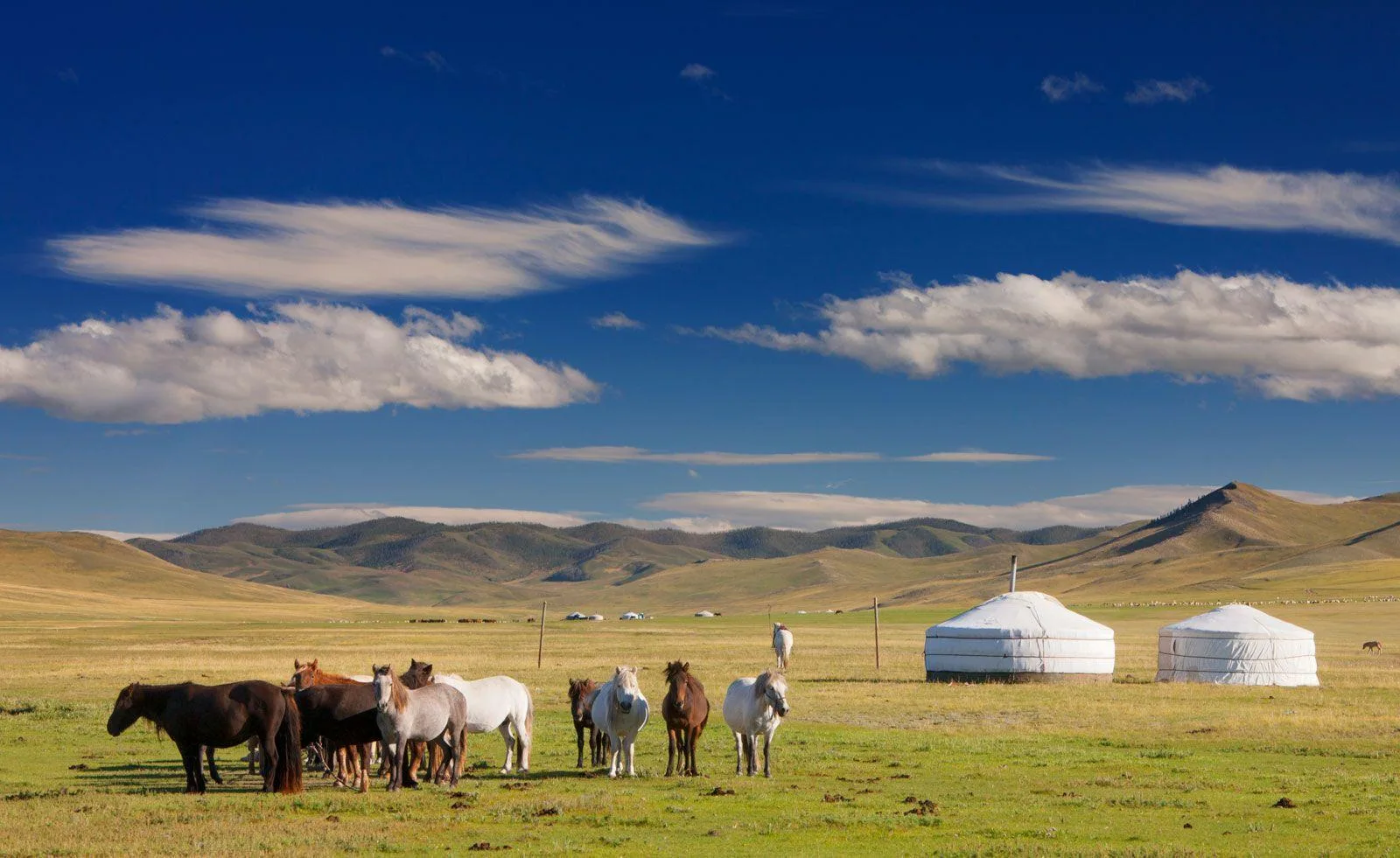
Pastoralism remains an essential component of Mongolian society, far beyond its contribution to gross domestic product.
The breeding of horses, sheep, goats, cattle, and camels continues to shape much of the country's territorial organization and social traditions.
The horse occupies a particularly important place in the national imagination. It recalls the history of conquest, the mobility of steppe societies, and older forms of autonomy.
Yet this pastoral culture is evolving under growing economic and environmental pressures.
Climate change is intensifying certain risks affecting pastures and water resources. Extreme weather events can destroy in a matter of weeks the productive capital accumulated by a family over many years.
Mining expansion creates additional tensions over land and water use.
In the Gobi, industrial projects require infrastructure, roads, energy installations, and water resources in an already fragile environment.
Mining companies and pastoral communities can consequently find themselves competing for resources essential to their respective activities.
This opposition should not, however, be oversimplified.
Mines create employment, finance infrastructure, and generate public revenues. They can contribute to improving local living conditions.
But the benefits are unevenly distributed, while some environmental consequences are concentrated in extraction areas.
The central issue becomes one of compensation, community consultation, and the sustainable distribution of economic value.
Mongolia must prevent its mining development from turning national wealth into territorial division.
The Industrial Challenge: Moving Beyond Extraction
The principal limitation of Mongolia's economic model lies in its relatively weak industrial processing capacity.
The country extracts important resources, but much of their subsequent value creation takes place beyond its borders.
This reduces opportunities for skilled employment, technological development, and integration into higher-value segments of global supply chains.
The challenge is particularly visible in copper.
Mining and concentrating copper ore are complex industrial activities, but they represent only part of the production chain.
Refining, metallurgy, electrical component manufacturing, and copper-consuming industries can generate additional forms of economic value.
Developing these activities in Mongolia would nevertheless require overcoming several obstacles.
The first concerns energy. Metallurgical facilities require abundant, reliable, and competitively priced electricity.
The second concerns infrastructure. Distance, logistics costs, and separation from major markets limit the profitability of certain domestic processing activities.
The third involves skills and capital. Sustainable industrialization requires technical education, engineering capabilities, strong financial institutions, and a predictable regulatory environment.
Finally, Mongolia's domestic market remains too small to absorb large-scale industrial production.
Any manufacturing strategy must therefore incorporate an export dimension from the outset.
Proximity to China offers a potential advantage, but it also exposes Mongolian producers to competition from a much larger and more integrated industrial system.
The challenge is to identify activities in which Mongolia can develop specific competitive advantages rather than attempting to reproduce the entire industrial structure of its neighbors.
Processing selected minerals, providing technical services to the mining sector, producing higher-value agricultural goods, developing technologies adapted to extreme climates, and expanding certain digital activities could all contribute to diversification.
None of these possibilities represents an immediate solution.
They require a coherent development strategy sustained beyond changes of government and commodity cycles.
An Economy Exposed to External Shocks
Mongolia's vulnerabilities are also visible in its macroeconomic balances.
The IMF emphasizes that mining-led growth can coexist with fiscal pressures, external deficits, and high inflation.
In June 2026, annual inflation reached 12%, notably reflecting increases in meat and energy prices.
These pressures directly affect household purchasing power.
Dependence on imported energy, industrial equipment, and numerous consumer goods makes the economy sensitive to international price movements and exchange-rate fluctuations.
Mining revenues are inherently volatile. They can increase rapidly during periods of high prices and then contract even while public expenditure continues to rise.
This instability complicates fiscal planning.
It can also encourage redistribution policies based on exceptional revenues that become difficult to sustain when the commodity cycle reverses.
Building financial reserves, strengthening fiscal institutions, and diversifying tax revenues are therefore priorities.
Mongolia has already undertaken several initiatives intended to improve the management of mining revenues, including sovereign savings mechanisms.
But their effectiveness will depend on governance, transparency, and the ability to withstand short-term political pressures.
The question is not simply how much the country can earn from its resources.
It is how much of those revenues can be transformed into productive capital, infrastructure, and durable public services.
Sovereignty Through Infrastructure
Mongolia possesses a characteristic that fundamentally distinguishes its trajectory from that of many other resource-rich economies.
It cannot freely choose its commercial routes.
To export toward Europe, East Asia, or the world's maritime markets, goods must cross Russian or Chinese territory.
This constraint reduces bargaining power and increases logistics costs.
Infrastructure consequently becomes an instrument of foreign policy as much as an economic asset.
A railway, border crossing, transshipment terminal, or electricity transmission line can transform the development prospects of an entire region.
But its geographical orientation also determines the partners on whom future economic activity will depend.
This reality explains the importance Mongolia attaches to transportation corridors and regional connectivity projects.
It participates in discussions concerning economic links between China, Russia, and Central Asia while seeking to preserve opportunities for exchanges with other partners.
Diversification cannot, however, completely eliminate transit dependence.
Even when Mongolian minerals are destined for European, Japanese, or American companies, their transportation remains subject to continental geography.
Mongolian economic sovereignty therefore cannot rest on absolute material independence.
It must instead seek to multiply available routes, export markets, financial partners, and negotiating options.
From this perspective, diversification is less a promise of self-sufficiency than a strategy for reducing risk.
Between the Energy Transition and Great-Power Competition
Transformations in the global economy could reinforce Mongolia's strategic importance.
Copper is indispensable to electrification. Uranium contributes to nuclear power generation. Several other mineral resources attract interest from technology industries and governments seeking secure supplies.
Major powers are increasingly attempting to reduce specific dependencies and diversify their sources of raw materials.
This development can create new opportunities for producing countries.
Mongolia possesses an advantage: it maintains diplomatic relationships with partners belonging to different geopolitical groupings.
It can accommodate Chinese, Russian, European, Japanese, or American investment without belonging exclusively to any of these blocs.
But this position becomes more difficult to maintain when natural resources are increasingly treated as instruments of national security.
Investment decisions no longer respond exclusively to profitability. They incorporate political, technological, and strategic considerations.
Governments seek to secure supply chains, control certain technologies, and reduce their industries' exposure to decisions taken by rival powers.
In this environment, Mongolia could become increasingly attractive.
It could also face contradictory pressures.
An industrial partnership with a Western company may strengthen economic diversification while raising questions among neighboring powers. Greater cooperation with China may accelerate infrastructure development while increasing the concentration of export markets.
Mongolia will therefore have to choose between projects whose immediate economic advantages may conflict with its long-term sovereignty objectives.
The wealth beneath its territory increases its attractiveness. It does not guarantee greater strategic freedom.
The Mongolian Paradox
Mongolia possesses several attributes that states ordinarily seek to acquire: an immense territory, abundant natural resources, an ancient national identity, and a position at the heart of a major continental region.
Yet each of these advantages carries a corresponding limitation.
Territorial immensity increases infrastructure costs. Mineral wealth exposes the economy to international commodity cycles. Its central Eurasian position creates dependence on corridors controlled by neighboring powers. Its small population limits the domestic market and the country's economic mobilization capacity.
Mongolia does not lack wealth. It lacks sufficient means to transform that wealth into lasting autonomy.
This contradiction makes the country a particularly revealing case in contemporary political economy.
It demonstrates that sovereignty cannot be measured solely by territorial extent, the quantity of available resources, or diplomatic recognition.
It also depends on a state's ability to finance its choices, organize its infrastructure, develop its skills, and maintain several economic options.
Mongolia has succeeded in preserving political independence in an exceptionally constrained regional environment.
It has built a pluralist democracy, attracted international investment, and developed a diplomacy capable of engaging with competing powers.
But its next transformation will probably be more difficult.
The challenge is no longer simply to preserve the state between Russia and China. It is to build an economy sufficiently diversified that decisions taken in Moscow or Beijing do not immediately determine growth prospects, government revenues, and the population's living standards.
Copper, uranium, and new infrastructure can contribute to this transformation. They can also reproduce older dependencies in a modernized form.
The difference will depend less on the resources discovered than on the institutions built around their exploitation.
Eight centuries after dominating the routes of Eurasia, Mongolia no longer seeks to conquer the territories surrounding it. It is attempting to preserve, between two continental powers, the freedom to determine its own future.
And in this part of the world, that freedom may be its most valuable resource.
Main Sources
International Monetary Fund — Mongolia: 2026 Article IV Consultation, August 2026. Economic outlook, growth, inflation, public finances, foreign trade, and industrial diversification.
International Monetary Fund — Mongolia: 2025 Article IV Consultation, 2025. Export structure, commercial dependence on China, and public debt developments.
World Bank — Mongolia: Economic Data and Country Analysis. Economic development, infrastructure, poverty, human capital, and climate vulnerabilities.
Orano — Mining Activities in Mongolia. January 2025 investment agreement and development of the Zuuvch Ovoo uranium project.
World Nuclear News — Orano Starts Construction at Mongolia Uranium Project, June 8, 2026. Development of the Zuuvch Ovoo project.
Congressional Research Service — Mongolia: In Brief, September 2026. Political institutions, foreign policy, relations with major powers, and recent political developments.
Reuters and Associated Press, March 2026. Government crisis and the appointment of Prime Minister Nyam-Osor Uchral.
Atlas Limits Research Desk
Atlas Limits’ editorial and analytical desk.