In Rabat, the formation of a new government is never simply a redistribution of ministerial portfolios. It takes place within an institutional system in which major strategic orientations are embedded in the continuity of the state, while successive parliamentary majorities assume responsibility for translating those orientations into public policy. In October 2026, this relationship has acquired particular significance. Morocco is entering a period in which industrial investment, infrastructure development and international ambitions must increasingly deliver tangible improvements in employment, incomes and the quality of public services.
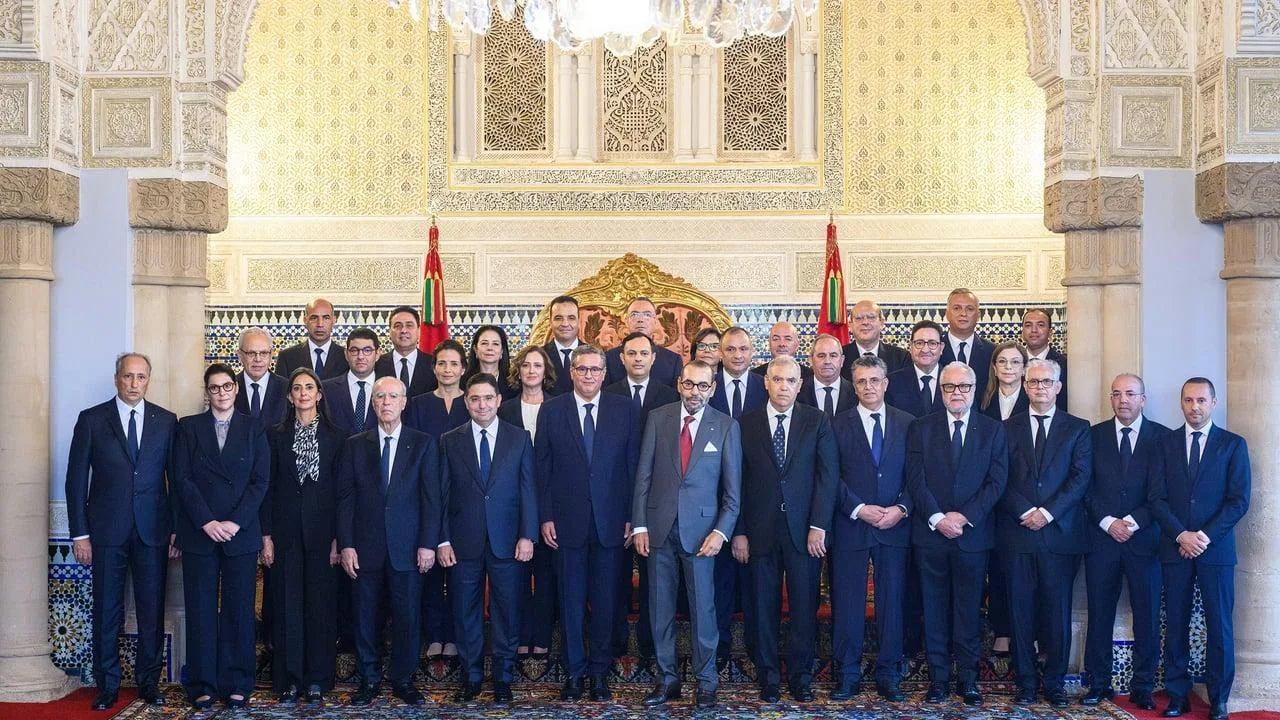
The appointment of Fatima Ezzahra El Mansouri as head of government, under the cabinet configuration announced on October 16, represents a major political and symbolic development. Yet the significance of this transition extends beyond the identity of the new prime minister. It lies in the composition of the coalition supporting her, the institutional balances within which it must operate and the economic constraints that limit the scope for immediate action.
Morocco lacks neither projects nor ambitions. It has a developing industrial base, substantial logistics infrastructure, growing integration into international value chains and an energy strategy designed to reduce external dependence. Yet these transformations coexist with persistent difficulties: youth unemployment, territorial disparities, pressure on water resources and social expectations concerning education, healthcare and housing.
The question facing the new executive is therefore not simply whether major development projects will continue. It is how the economic capabilities accumulated over recent decades can translate into a more widely shared improvement in living standards.
A Broad Coalition Within a System of Institutional Continuity
The coalition bringing together the Authenticity and Modernity Party (PAM), the Istiqlal Party, the Socialist Union of Popular Forces (USFP) and the Party of Progress and Socialism (PPS) combines four political formations with distinct historical trajectories and ideological traditions.
The PAM, which holds the largest number of seats within the coalition, has developed around an approach emphasizing institutional and territorial modernization. Istiqlal retains its nationalist heritage and extensive experience in government. The USFP and PPS contribute traditions rooted in Morocco's political left, particularly regarding social policy, public services and redistribution.
Their alliance responds first to a parliamentary necessity. With 207 seats in the 395-member House of Representatives, the coalition holds an absolute majority, but one that remains relatively narrow. This configuration provides the parliamentary basis for governing without automatically guaranteeing agreement on the most sensitive policy decisions.
Differences among its components could become apparent in debates over public expenditure, taxation, social reforms and relations between the state and private enterprise. Party traditions do not mechanically determine government positions, but they establish political reference points against which ministers will be judged by their respective constituencies.
The coalition must also operate within a defining feature of Morocco's political system: the continuity of major state policies beyond changes in government.
The monarchy retains decisive constitutional prerogatives, particularly in strategic, diplomatic and security matters. The government's responsibilities are concentrated on preparing and implementing public policies, managing administrative structures, making budgetary decisions and carrying out reforms.
This distinction is essential to understanding both the possibilities and the limitations facing the new majority. Its performance will depend not only on the priorities it announces, but also on its ability to coordinate ministries, public institutions, local authorities and economic operators.
Ministerial Restructuring Between Stability and Redistribution of Responsibilities
The announced cabinet composition reflects this dual logic.
The retention of experienced officials in several strategic departments emphasizes administrative and diplomatic continuity. Abdelouafi Laftit remains at the Interior Ministry, Nasser Bourita retains Foreign Affairs and Abdellatif Ouahbi continues as Justice Minister. Nizar Baraka also remains responsible for Equipment and Water, while Ryad Mezzour continues to oversee Industry.
These appointments limit disruption to policies developed over several years. They also preserve established relationships among government departments, public enterprises, international partners and investors.
At the same time, the redistribution of certain portfolios points to new organizational priorities.
The appointment of Fouzi Lekjaa to a ministry combining Economy, Finance and Public Performance places budgetary management and the evaluation of government action at the center of attention. His experience in public finance and major project management may facilitate coordination between investment expenditure, social commitments and financing constraints.
However, concentrating responsibilities within a single department does not automatically produce greater efficiency. Public-sector performance depends on reliable data, transparent objectives, managerial accountability and the ability to revise programs that fail to achieve their intended results.
The return of Nabil Benabdallah to the Ministry of National Education places education policy within an explicitly political framework.
The challenges facing Morocco's education system cannot be reduced to budgetary resources alone. They also concern foundational learning, teacher training, disparities between schools and the relationship between qualifications and the needs of the economy.
The establishment of a portfolio covering artificial intelligence, digital transformation and administrative reform further highlights the importance assigned to state modernization.
Digital technologies can shorten processing times, improve access to public services and simplify economic procedures. Their benefits will nevertheless remain limited if government departments retain fragmented structures, incompatible information systems or unnecessarily complex administrative requirements.
Employment: Where Economic Transformation Meets Social Expectations
Morocco has substantially expanded its productive capabilities over the past two decades.
Automotive manufacturing, aerospace, phosphates, food processing and logistics have helped diversify an economy historically dependent on agriculture, tourism and remittances from Moroccans living abroad.
This transformation has enabled the country to integrate several international industrial value chains. The Tanger Med port complex, automotive manufacturing facilities in Tangier and Kenitra, and investments in energy infrastructure are among the most visible expressions of this development.
Yet the expansion of industrial capacity does not automatically resolve the employment challenge.
Export-oriented industries can generate substantial added value while employing a relatively limited workforce. Some activities require specialized skills that the education and training system does not always produce in sufficient numbers. Conversely, many graduates struggle to find employment corresponding to their qualifications.
The problem also has a territorial dimension.
Regions benefiting from major infrastructure and industrial investment concentrate a significant share of economic opportunities, while other areas remain more dependent on agriculture, local services and public-sector employment.
The new government will therefore need to act simultaneously on vocational training, the development conditions facing small and medium-sized enterprises, the integration of domestic suppliers into industrial value chains and mobility between employment centers.
The challenge is to move beyond an understanding of industrial policy based primarily on investment volumes and installed production capacity.
Economic development must also be assessed through the distribution of income, the emergence of domestic businesses capable of expanding and sustained improvements in productivity.
This issue is particularly important in an economy where a substantial share of activity remains informal.
Formalization cannot advance sustainably through regulatory enforcement alone. Businesses and workers must perceive concrete advantages in entering the formal economy, particularly through access to financing, social protection and administrative procedures adapted to their circumstances.
Public Services at the Center of Government Accountability
Healthcare and education occupy a central place in public expectations of the state.
Both sectors directly determine living standards, while also shaping Morocco's capacity to sustain economic development.
In healthcare, the expansion of social protection represents an important institutional transformation. It nevertheless raises a familiar challenge: broader financial coverage does not necessarily produce an equivalent expansion in medical services.
Effective access to healthcare depends on the availability and geographical distribution of medical professionals, hospital equipment, the quality of healthcare facilities and reimbursement mechanisms.
A population with broader insurance coverage may therefore continue to face difficulties if the capacity of the healthcare system does not expand at a comparable pace.
Reform must also account for differences between major urban centers and less densely equipped territories.
The concentration of specialists, private clinics and hospital infrastructure in certain cities creates inequalities that insurance mechanisms alone cannot eliminate.
Education presents a comparable challenge.
Expanding access to schooling is a necessary condition for development, but the quality of learning largely determines the economic prospects of future generations.
Improving educational outcomes requires continuity in teaching methods, regular assessment of student achievement and teacher-training policies extending beyond changes in parliamentary majorities.
It also requires stronger connections between general education, vocational training and higher education.
For the new government, results in these areas will be particularly important because they directly affect households.
Unlike industrial infrastructure, whose benefits may be indirect or delayed, the quality of a school, the availability of a doctor or the time required to complete an administrative procedure represents an everyday experience of public policy.
Fiscal Constraints and the Allocation of National Priorities
The government takes office at a time when investment requirements remain substantial.
Transport infrastructure, water programs, hospital facilities, education, social protection and preparations for the 2030 FIFA World Cup all require significant financial resources.
These commitments come as the state must preserve fiscal sustainability, manage financing costs and maintain its ability to respond to external shocks.
The challenge is not necessarily to choose between major infrastructure projects and social expenditure.
Infrastructure can stimulate economic activity, improve territorial connectivity and strengthen the country's attractiveness to investors.
However, its benefits depend on economic returns, future utilization and alignment with the needs of the population.
Rail, port and road investments can improve competitiveness when they reduce logistics costs and facilitate trade. Their economic effects may be more limited when local businesses lack the capabilities needed to take advantage of the new infrastructure.
Preparations for the 2030 FIFA World Cup illustrate this tension.
Hosting the tournament alongside Spain and Portugal creates demanding requirements in transport, accommodation, sports facilities and public services.
The event can accelerate projects with long-term development value, but it also raises questions about maintenance costs and the use of infrastructure after the competition.
The fiscal challenge is to distinguish investments that generate lasting economic and social benefits from those whose utility could diminish after 2030.
In this context, public-sector performance should not be reduced to accounting controls over expenditure.
It should also provide a means of measuring actual effectiveness, territorial distribution and the contribution of public spending to stated objectives.
Water Scarcity as a Structural Constraint on Development
The increasing scarcity of water resources is among the most profound transformations to which Morocco must adapt.
Repeated droughts, pressure on groundwater reserves, growing urban demand and agricultural requirements are gradually changing the conditions under which economic development takes place.
This constraint extends beyond the technical management of dams and distribution networks.
It affects territorial planning, agricultural choices, industrial investment and relations among competing water users.
The expansion of desalination and interregional water transfers can strengthen supply security, particularly in coastal areas.
These solutions nevertheless require substantial capital investment, significant energy consumption and careful management of environmental consequences.
Agriculture remains particularly sensitive.
The sector accounts for an important share of rural employment and supports the economic balance of numerous territories. Yet it depends on a resource whose availability is becoming increasingly unpredictable.
Modernizing irrigation, adapting crop selection and improving water productivity can help reduce this vulnerability.
Such measures also require difficult choices between export objectives, food security, agricultural incomes and resource conservation.
The retention of Nizar Baraka at the Ministry of Equipment and Water provides administrative continuity in this area.
The challenge will be to combine major water infrastructure projects with sufficiently effective demand management to prevent existing imbalances from worsening.
An Open Economy in an Uncertain International Environment
The new government must also operate within an external environment that directly influences Morocco's economic prospects.
The European Union remains a central commercial and industrial partner.
Changes in Europe's automotive industry, environmental requirements, trade policies and supply chains will affect businesses operating in Morocco.
The transition toward electric vehicles creates opportunities in batteries, components and industries associated with strategic materials.
It also requires substantial technological investment and rapid adaptation of workforce skills.
Morocco is simultaneously seeking to diversify its economic relationships with the United States, China, Gulf countries and African economies.
Such diversification can reduce certain dependencies without eliminating the country's exposure to fluctuations in international markets.
Energy prices, financing conditions, trade tensions and external demand will continue to influence macroeconomic balances.
On the diplomatic front, the Sahara question remains central to Moroccan foreign policy.
It forms part of a strategy conducted at the highest level of the state, with the government responsible for certain economic, administrative and international dimensions.
Development in the southern provinces, Atlantic infrastructure and African connectivity projects illustrate how diplomatic priorities and investment policies can intersect.
Continuity in foreign policy does not, however, eliminate new constraints.
Morocco must continue managing its relationships with European partners, regional neighbors and major powers amid intensifying geoeconomic competition.
Coordination and Implementation: The Administrative Challenge
The principal difficulty facing the new government may ultimately lie less in defining objectives than in implementing them.
Morocco possesses sectoral strategies, investment programs and specialized public institutions.
Their proliferation can strengthen the state's capacity to act, but it also creates substantial coordination requirements.
Industrial policy depends on infrastructure, energy, training, financing and regulation.
Healthcare reform requires human resources, buildings, equipment, information systems and coherent financing mechanisms.
Water policy simultaneously involves agriculture, urban development, industry and environmental protection.
None of these challenges can be addressed effectively by a single ministry.
The new coalition will therefore need to establish decision-making and coordination mechanisms capable of overcoming administrative fragmentation and competing sectoral interests.
This requirement will be particularly important because the parties represented in government have different political traditions and priorities.
Advanced regionalization adds another dimension.
Local and regional authorities are expected to play a greater role in economic development and the provision of certain services, but their financial and administrative capacities remain uneven.
Effective decentralization requires more than transferring responsibilities.
It also depends on adequate resources, qualified personnel and a clear division of authority among different levels of government.
Much of the government's ability to turn commitments into results will be determined by this everyday organization of public action.
A New Political Phase Rather Than a Complete Change of Direction
The formation of the El Mansouri government comes at a moment when Morocco is seeking to consolidate economic transformations undertaken over several decades while responding to persistent social expectations.
The appointment of a woman to lead the executive marks a historic development in political representation.
The composition of the coalition introduces new partisan balances, while the restructuring of certain ministries highlights priorities involving administrative performance, education and digital transformation.
Yet the constraints facing the country extend beyond changes in political leadership.
They arise from structural transformations: the evolution of the labor market, pressure on natural resources, urbanization, the energy transition, industrial competition and growing demand for public services.
The government will have to operate across different time horizons.
Social expectations call for rapid improvements, while reforms involving education, healthcare, administration and productivity often take years to produce measurable results.
This difference between political time and economic time represents one of the central challenges of governing.
The first budgetary decisions, the presentation of the government program before Parliament and the arrangements for coordination among ministries will provide a clearer indication of the direction chosen.
Results will subsequently need to be assessed through concrete indicators: employment, learning outcomes, access to healthcare, investment efficiency and the reduction of territorial inequalities.
Morocco is entering a phase in which the accumulation of infrastructure and productive capacity must increasingly be accompanied by a broader distribution of their benefits.
The question is no longer simply how to build the instruments of economic transformation, but to what extent those instruments can durably change the country's economic and social conditions.
It is through this relationship between institutional continuity, government accountability and measurable public outcomes that the significance of the new political phase will become clear.
Main Sources
- Kingdom of Morocco — Official Portal, October 16, 2026. Royal ceremony appointing the members of the new government. Maroc.ma
- Kingdom of Morocco — Official Portal, October 2026. Formation of the parliamentary majority comprising the PAM, Istiqlal, USFP and PPS. Maroc.ma
- Reuters, October 16, 2026. Morocco's new government appoints a new finance minister while retaining key foreign affairs and interior officials. Reuters
- Médias24, October 16, 2026. Official composition of the El Mansouri government. Médias24
- High Commission for Planning (HCP), Morocco. National employment, labor-market and regional economic statistics. HCP
- Bank Al-Maghrib. Monetary policy reports and Moroccan macroeconomic assessments. Bank Al-Maghrib
Atlas Limits Research Desk
Atlas Limits’ editorial and analytical desk.