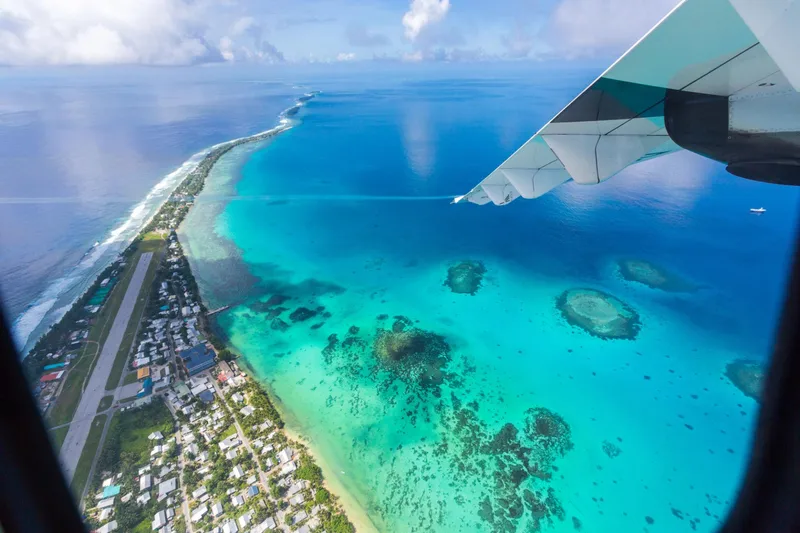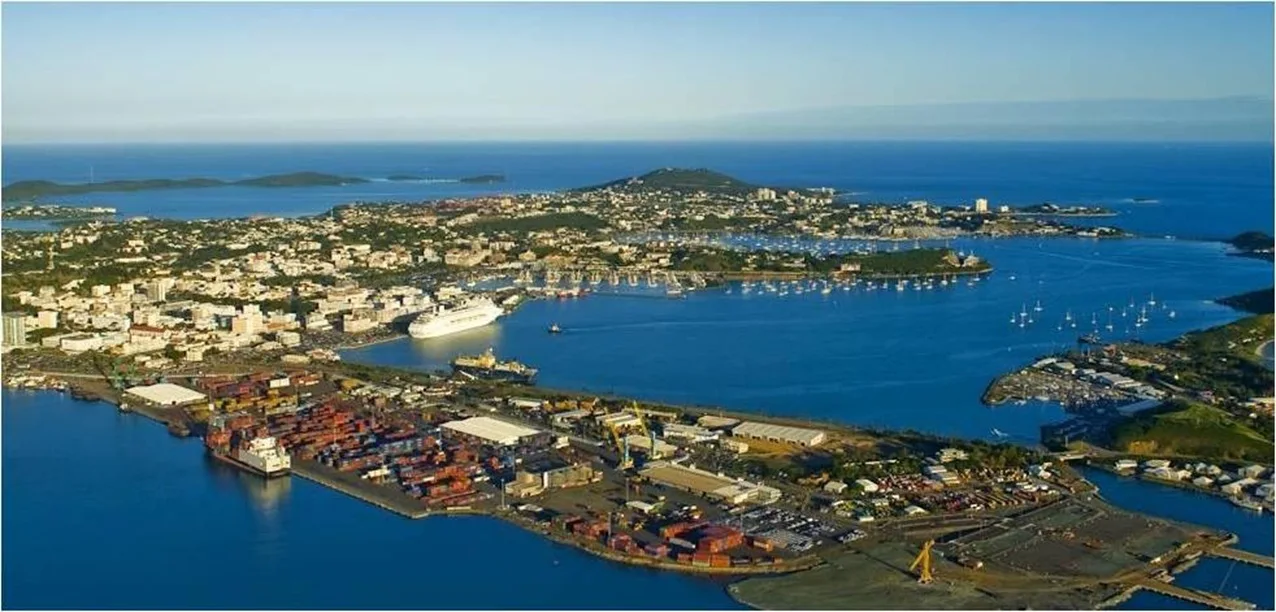
In Nouméa, the smokestacks of the Doniambo metallurgical plant have dominated the industrial landscape for generations, telling a story that is inseparable from New Caledonia's history. Nickel has shaped the territory's infrastructure, trade relations, social structures, and political ambitions. For decades, it represented the promise of prosperity capable of supporting greater economic autonomy and, perhaps eventually, political sovereignty. Yet that promise now confronts a fundamental contradiction: New Caledonia possesses a strategic resource sought by industries around the world, while its own productive apparatus struggles to survive in an increasingly competitive global market.
The crisis is particularly profound because it extends far beyond industry. It is unfolding in a territory where sovereignty remains unresolved, where institutional arrangements inherited from decades of negotiations have become increasingly fragile, and where the violence of May 2024 left considerable economic and social damage. The challenge of producing nickel competitively has become inseparable from the question of defining the political framework within which that production might recover.
The archipelago consequently faces an unusual equation. For independence supporters, control over natural resources remains inseparable from decolonization and the ability to establish a sovereign economy. For those favoring continued membership in the French Republic, financial, institutional, and security support from Paris provides an essential guarantee. Yet both perspectives confront the same economic reality: no political settlement, however ambitious, can by itself restore the competitiveness of an industry burdened by high production costs and dependent on decisions made thousands of kilometers away.
New Caledonia thus stands at the intersection of three crises that can no longer be addressed separately: the future of its nickel industry, the legitimacy of its political institutions, and its place within a Pacific region undergoing profound strategic transformation.
When Natural Wealth Becomes Vulnerability
New Caledonia's economic history has been built around nickel since the nineteenth century. Société Le Nickel, established in 1880, became one of the defining institutions of this early industrialization. Mines, metallurgical facilities, ports, and transport networks gradually formed a productive system that gave the territory a distinctive position within international commodity markets.
For much of its history, this specialization was considered an advantage. Nickel is essential to stainless steel production, industrial alloys, and several battery technologies. Its importance in modern manufacturing appeared to guarantee producing territories a favorable position in the energy transition.
But possessing a strategic resource does not mean controlling the economic conditions under which it is extracted and processed.
According to the United States Geological Survey, New Caledonia accounted for approximately 3.1% of global nickel production in 2024, ranking fifth among producers. Nickel and its derivatives represented nearly 90% of the territory's export value. This concentration illustrates the industry's central role in trade revenues, employment, electricity consumption, transportation, and public finances.
It also reveals a structural weakness. When an economy depends so heavily on a single industry, declining international prices spread rapidly through the entire productive system. Companies postpone investments, subcontractors lose orders, employment contracts, and local governments experience declining fiscal revenues. An industrial downturn gradually becomes a territorial economic crisis.
New Caledonia has experienced this transformation with particular severity.
Even before the unrest of 2024, several metallurgical operations faced profound financial difficulties. International competition, high energy costs, and the capital expenditure required to modernize aging facilities had progressively undermined profitability.
The political crisis did not create these industrial weaknesses. It intensified an economic imbalance that had been developing for years.
Indonesia Changed the Rules of the Market
Understanding New Caledonia's difficulties requires looking toward Indonesia.
Over approximately fifteen years, Jakarta fundamentally transformed the global nickel industry. By restricting and eventually banning exports of unprocessed nickel ore, the Indonesian government sought to compel foreign investors to establish processing facilities within its territory.
The strategy attracted enormous investment, particularly from Chinese companies, and encouraged the emergence of integrated industrial complexes combining mining, refining, metallurgy, energy generation, and logistics infrastructure.
Indonesia did not merely increase production. It transformed the industrial organization of the market.
Large facilities benefiting from economies of scale, integrated supply chains, and dedicated energy infrastructure progressively strengthened the country's competitiveness. Rapidly expanding supply contributed to downward pressure on international nickel prices, weakening producers operating with substantially higher costs.
New Caledonia belongs precisely to that category.
Some of its industrial facilities are relatively old, its labor and energy costs are high compared with several Asian competitors, and its geographical isolation complicates certain supply chains. The richness of its mineral deposits cannot automatically compensate for these disadvantages.
The contrast with Indonesia illustrates a broader transformation in the global resource economy.
Increasingly, industrial value lies not simply in possessing raw materials but in mobilizing capital, infrastructure, technology, and energy to process them at competitive scale.
This shift challenges a New Caledonian economic model developed under international conditions that no longer exist.
The implications extend beyond the archipelago. They demonstrate how a resource-rich territory can lose industrial influence even while the strategic importance of its natural resources increases.
Three Plants, Three Uncertain Futures
New Caledonia's industrial crisis is reflected in the contrasting trajectories of its three major metallurgical operations.
Société Le Nickel, historically established at Doniambo, has undertaken extensive restructuring to reduce costs and preserve production capacity. Following an exceptionally difficult year in 2024, ferronickel production reached 36,184 tonnes of contained nickel in 2025, compared with 32,861 tonnes the previous year, according to company figures.
This improvement indicates a partial recovery, but it does not mean that the industry's structural problems have disappeared.
In 2026, management has pursued further production increases and examined the reopening of certain mining sites. Sustainable profitability nevertheless remains dependent on international prices, ore availability, industrial efficiency, and lower operating costs.
In the northern province, Koniambo Nickel SAS represents another dimension of the crisis.
The project was never exclusively industrial. It was also political.
Its development formed part of a broader effort to rebalance economic opportunities between New Caledonia's provinces, allowing the predominantly pro-independence Northern Province to participate directly in a major industrial enterprise.
The suspension of operations in 2024, following Glencore's decision to withdraw financial support, therefore represented considerably more than the loss of metallurgical capacity.
It weakened one of the economic instruments associated with the construction of a more autonomous political future.
In the south, Prony Resources has faced its own operational and financial difficulties, compounded by the consequences of the 2024 unrest.
The Goro facility, producing intermediate nickel and cobalt products, occupies a different position within international supply chains, particularly those associated with batteries. Yet its technological orientation does not shield it from market volatility, technical constraints, or financing challenges.
These three operations demonstrate that New Caledonia's nickel industry is not a homogeneous system.
Their technologies, products, ownership structures, and political significance differ considerably. Nevertheless, they share dependence on reliable energy, investment capital, infrastructure, and institutional stability.
That interdependence makes industrial recovery particularly difficult. 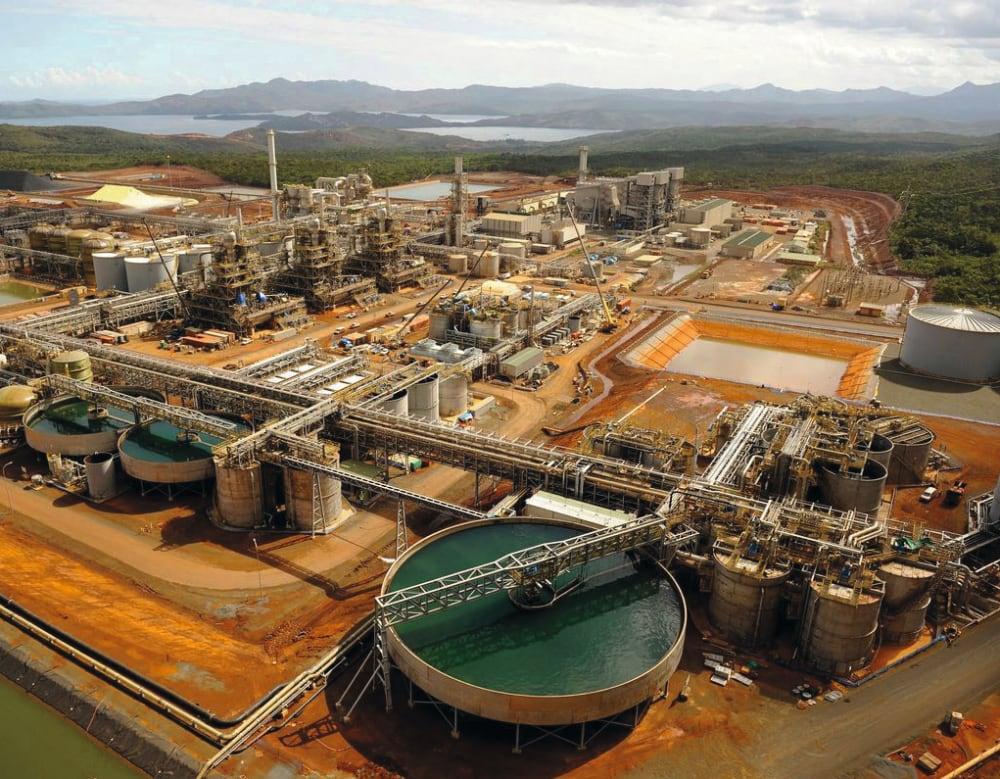
The Political Crisis Destroyed More Than Infrastructure
The violence that erupted in May 2024, against the background of a proposed reform of the electoral rules governing provincial elections, marked a major rupture in New Caledonia's recent history.
The electoral question goes directly to the institutional balance established through the Matignon Agreements of 1988 and the Nouméa Accord of 1998.
Restrictions on participation in provincial elections were designed, in part, to protect political arrangements in a territory shaped by colonization, demographic change, and the historical claims of the Indigenous Kanak people.
For opponents of electoral reform, expanding the electorate threatened to alter the political balance permanently and undermine guarantees associated with the decolonization process.
For supporters, the prolonged exclusion of certain long-term residents raised questions concerning political equality and democratic representation.
The failure to establish a broadly accepted compromise transformed an institutional disagreement into a major crisis.
Its economic consequences were severe.
According to the Institut d'émission d'outre-mer, New Caledonia's real gross domestic product contracted by 13.5% in 2024.
Private-sector employment declined by approximately 20% from its peak in the third quarter of 2023, representing nearly 13,000 jobs lost. New bank lending fell by 49% in 2024.
These figures describe much more than a temporary economic slowdown.
They reflect the destruction of productive capacity, interrupted investment projects, weakened household finances, and a deterioration in confidence.
A business destroyed during unrest does not necessarily reopen when violence subsides. Skilled workers may leave the territory, investors may postpone decisions, and banks may tighten lending conditions.
The crisis has consequently created the risk of a lasting contraction in New Caledonia's productive base.
It has also intensified a central political contradiction.
The weaker the local economy becomes, the more dependent it is on financial assistance from the French state, even as the relationship with that state remains one of the principal sources of institutional disagreement.
Sovereignty Is More Than a Constitutional Status
Since the Matignon Agreements and the Nouméa Accord, New Caledonia has followed a distinctive institutional trajectory based on the progressive transfer of powers and recognition of Kanak identity.
Three referendums on accession to full sovereignty were held in 2018, 2020, and 2021.
None resulted in independence.
Yet the third referendum, held amid the COVID-19 pandemic and boycotted by the principal pro-independence movement, failed to bring political closure to the question.
Negotiations following the 2024 violence sought to establish a new institutional compromise.
The Bougival agreement of July 2025, followed by discussions at Élysée-Oudinot in January 2026, proposed a new political architecture.
However, opposition from the Kanak and Socialist National Liberation Front, or FLNKS, prevented the emergence of a durable consensus.
By October 2026, the institutional situation remained uncertain. The constitutional implementation of the proposed settlement had been rejected by the French National Assembly, while discussions concerning possible adjustments continued without a definitive agreement.
This impasse reveals the limitations of an exclusively legal approach.
Sovereignty can be defined through constitutional provisions, administrative powers, and electoral arrangements.
But its practical exercise also depends on the capacity to finance public services, guarantee energy supplies, maintain infrastructure, and sustain a productive economy.
Political independence accompanied by excessive financial dependence could substantially restrict the effective freedom of a future state.
Conversely, continued membership in the French Republic without credible economic prospects or an institutionally accepted compromise risks perpetuating instability.
The question is therefore not simply who will exercise sovereignty.
It is also what economic foundations will make that sovereignty meaningful.
Electricity: The Hidden Constraint on Industrial Recovery
One of the least visible dimensions of New Caledonia's nickel crisis concerns energy.
Metallurgy is an exceptionally electricity-intensive activity. In New Caledonia, this gives the sector extraordinary weight within the local energy system.
According to figures presented by Enercal for 2025, metallurgical companies consumed approximately 1,327 gigawatt-hours out of total electricity consumption of 2,018 gigawatt-hours.
That represents nearly two-thirds of the territory's electricity consumption.
The proportion helps explain why industrial difficulties directly affect the financial equilibrium of the electricity sector.
When metallurgical plants reduce production, electricity demand falls, while a significant proportion of generation and network costs remains fixed.
Conversely, an industrial recovery requires energy that is sufficiently abundant, reliable, and competitively priced to allow local facilities to compete with international producers.
The energy question is therefore inseparable from the industrial question.
Investment in renewable generation, storage, infrastructure modernization, and efficiency improvements could progressively strengthen competitiveness.
But these measures alone cannot guarantee a return to profitability.
Ore quality, metallurgical yields, capital requirements, and international nickel prices remain decisive.
New Caledonia must consequently solve two problems simultaneously: preserving a financially viable electricity system and supplying industry with energy compatible with global market conditions.
This challenge extends beyond what temporary financial assistance can achieve.
It requires a long-term industrial and energy strategy supported by institutions capable of providing continuity.
The Pacific Is No Longer a Strategic Periphery
New Caledonia's difficulties acquire another dimension when placed within the broader transformation of the Pacific.
The archipelago lies in a region where strategic competition involving the United States, China, Australia, and European powers has become increasingly visible.
Maritime routes, mineral resources, ports, telecommunications infrastructure, and diplomatic partnerships have acquired growing importance.
For France, New Caledonia represents considerably more than an overseas territory.
It contributes to France's political, maritime, and military presence in the Pacific and supports its position as a state with permanent interests in the Indo-Pacific.
For European industrial partners, New Caledonian nickel may also offer opportunities to diversify access to critical raw materials.
But this strategic perspective requires careful qualification.
Possessing mineral resources within a territory linked to France does not automatically mean those resources can be produced competitively or supplied in forms that meet European industrial requirements.
Supply security may justify targeted investment, but geopolitical interest does not eliminate economic constraints.
European discussions concerning New Caledonian nickel also intersect with the territory's institutional future.
For independence leaders opposing recent political agreements, decisions that commit the territory's resources over the long term cannot be separated from the prior determination of its political status.
Nickel thus becomes simultaneously an industrial commodity, a negotiating instrument, and a question of political legitimacy.
This reflects a broader phenomenon in resource-rich territories.
The global energy transition can increase major-power interest in critical minerals without necessarily resolving the economic inequalities or political disputes of the places where those minerals are extracted.
A territory can become more strategically valuable to the outside world while remaining economically vulnerable at home.
The Risk of Permanent Financial Dependence
France has mobilized substantial financial support to preserve businesses, public services, and economic continuity in New Caledonia.
These interventions respond to genuine emergencies.
They seek to prevent cascading bankruptcies, preserve employment, maintain essential infrastructure, and limit the social consequences of the crisis.
Yet they also raise a long-term question.
An economy can receive public support during a period of transition. It cannot regain durable productive autonomy if its principal industries remain structurally unprofitable.
The danger is the emergence of a system in which public assistance increasingly compensates for lost competitiveness without enabling the construction of a viable economic model.
New Caledonia nevertheless possesses assets extending beyond nickel.
Its maritime domain, biodiversity, industrial expertise, infrastructure, and geographical position offer opportunities for diversification.
Marine industries, specialized services, tourism, and economic activities connected to environmental knowledge could progressively broaden its productive base.
These opportunities should not, however, be exaggerated.
They cannot quickly replace the export revenues, skilled employment, and fiscal contributions associated with metallurgy.
Diversification is a strategic necessity, not an immediate substitute.
It also requires sufficient political stability for businesses to invest and institutions to plan over several years.
The challenge is therefore not merely to identify new sectors.
It is to create the political and economic conditions in which those sectors can develop.
Rebuilding the New Caledonian Compromise
New Caledonia now stands at the intersection of three profound transformations.
The first is industrial.
The global nickel market has shifted toward producers capable of mobilizing massive capital investment and processing minerals at scale. New Caledonian facilities must adapt to this environment or accept a permanently reduced position within global production.
The second is political.
The institutional compromise established at the end of the twentieth century no longer provides a framework accepted by all major political forces.
The question of decolonization remains unresolved, while the violence of 2024 profoundly damaged the conditions necessary for dialogue.
The third is geopolitical.
The archipelago now belongs to a Pacific region whose resources, territories, and infrastructure are increasingly integrated into the strategic calculations of major powers.
These transformations cannot be addressed independently.
An industrial policy that disregards the political aspirations of a significant part of the population risks lacking legitimacy.
An institutional settlement that neglects the collapse of productive capacity could create sovereignty without the economic means to sustain it.
And a geopolitical strategy that regards New Caledonia merely as a French or European strategic outpost would fail to account for the territory's social realities and historical experience.
The central challenge is therefore to rebuild a compromise through which the population can determine its political future while gaining credible economic prospects.
Nickel may still play a role in that reconstruction, but probably not under the conditions that supported its development during the previous century.
For decades, New Caledonia's mineral wealth sustained the belief that an exceptional natural resource could guarantee economic prosperity and eventually support political sovereignty.
Global industrial transformation has overturned that equation.
The territory still possesses its nickel, but it does not control international prices, the strategies of competing producers, or the capital required to transform its resources competitively.
That may be the fundamental rupture confronting New Caledonia.
Sovereignty can no longer be understood simply as control over the mineral wealth beneath its soil. It must increasingly be built upon the capacity to produce, invest, negotiate, and preserve social cohesion in a global economy that has become far more demanding.
New Caledonia does not lack resources.
What remains uncertain is whether it can establish the political and economic conditions necessary to turn those resources into a sustainable future.
Main Sources
- Institut d'émission d'outre-mer (IEOM), New Caledonia Annual Economic Report 2024, July 2025; 2024 Balance of Payments Annual Report, May 2026.
- United States Geological Survey (USGS), New Caledonia — Minerals Yearbook 2024, data on nickel production, exports, and metallurgical operations.
- Société Le Nickel (SLN), 2025 industrial results and 2026 production outlook.
- Enercal, 2025 electricity and energy figures, presented in February 2026.
- Prony Resources, strategic conference on New Caledonia's nickel industry, November 2025.
- Les Nouvelles Calédoniennes, reporting on the nickel crisis, employment, and metallurgical operations, 2025–2026.
- Le Monde, coverage of institutional negotiations and European discussions concerning New Caledonian nickel, October 2026.
Methodological note: Economic figures refer to the latest documented periods available in the cited sources. Company-reported production figures are distinguished from institutional statistics. Profitability projections, potential mine reopenings, and future constitutional arrangements remain uncertain and are not presented as established outcomes.
Atlas Limits Research Desk
Atlas Limits’ editorial and analytical desk.