For decades, the global oil market has been understood through a relatively straightforward equation: production, consumption, and inventories determined most price movements. That framework is becoming increasingly inadequate. Tanker availability, insurance costs, international sanctions, and the vulnerability of major shipping routes now play a more visible role in determining the effective cost of crude oil. Behind this shift lies a deeper structural transformation: oil is no longer valued solely according to its scarcity, but also according to the ability to transport it.
Oil Prices Are No Longer Determined by Oil Markets Alone
Global oil trade depends on a maritime infrastructure whose economic importance has long been underestimated.
Every day, tens of millions of barrels of crude oil and petroleum products move between production regions, export terminals, refineries, and major consumption centers.
These flows form one of the foundations of global energy integration.
Middle Eastern producers supply Asian refineries. African exporters serve European and Asian markets. The United States ships part of its production overseas, while European refiners import crude grades suited to their processing facilities.
This system relies on one essential condition: hydrocarbons must be transportable at a sufficiently low cost to preserve commercial arbitrage between regions.
When that condition deteriorates, traditional pricing mechanisms come under pressure.
A barrel may be available on the international market without being economically attractive to a refinery thousands of kilometers away.
Conversely, crude oil that is more expensive to produce may become competitive simply because it is located closer to the end consumer.
Maritime transportation costs are therefore no longer merely a secondary variable. They are becoming a decisive component of oil's economic value.
The tensions observed in October 2026 illustrate this transformation.
On certain routes connecting the United States and Asia, transportation costs have reached exceptional levels. According to market information reported by Reuters, shipping expenses on some particularly costly voyages approached $40 per barrel.
This figure does not represent a global average. It reflects specific chartering and transportation conditions.
Nevertheless, it demonstrates how substantial the difference can become between the price of crude oil at its point of origin and its actual delivered cost.
For refiners, traders, and importing countries, this difference fundamentally changes procurement decisions.
I. Maritime Transport: The Invisible Infrastructure of the Oil Market
Oil functions as a global commodity because it can be transported in enormous quantities over long distances.
This mobility depends primarily on several categories of vessels.
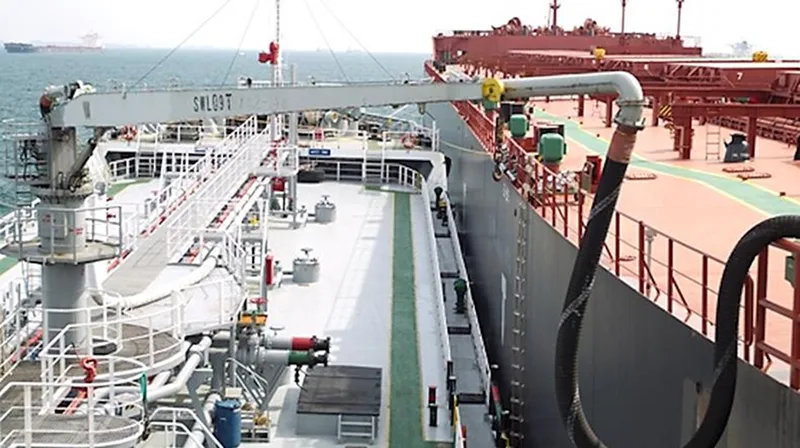
Very Large Crude Carriers, or VLCCs, represent one of the main components of intercontinental crude transportation. These supertankers typically carry approximately two million barrels.
Suezmax tankers have smaller capacities, often around one million barrels, while Aframax vessels transport more modest volumes and serve numerous regional routes.
Vessel size determines operating economics.
A VLCC distributes the fixed costs of a voyage across a substantial cargo, generating significant economies of scale when port infrastructure and trading volumes allow its use.
However, this efficiency depends on several factors: vessel availability, voyage duration, bunker fuel prices, port charges, insurance premiums, and the risks associated with the chosen route.
When charter rates increase, these advantages can deteriorate rapidly.
Consider a simplified example.
A tanker carrying two million barrels represents substantial commercial capacity. If its voyage requires several additional weeks, the shipowner must incorporate that extended deployment into chartering conditions.
An increase of several hundred thousand dollars in daily chartering costs can translate into millions of dollars in additional expenses over an entire voyage.
Distributed across the cargo, these expenses become an additional cost per barrel.
Maritime transportation therefore has a distinctive characteristic: its costs can rise sharply even when the amount of oil available worldwide remains unchanged.
Scarcity does not necessarily concern oil itself. It may concern the means required to move it.
This distinction is fundamental to understanding emerging energy-market tensions.
II. Longer Shipping Routes Reduce Effective Global Capacity
The oil tanker market does not depend exclusively on the number of vessels in existence.
It also depends on how much transportation those vessels can provide over a given period.
This capacity is commonly assessed through ton-miles: the quantity transported multiplied by the distance traveled.
When shipping routes become longer, ton-mile demand increases even if the volume of oil transported remains unchanged.
This produces a mechanical effect.
A tanker that previously completed several voyages within a given period may now complete fewer.
It remains physically present in the global fleet, but its commercial availability declines.
The phenomenon can be amplified by port congestion, additional inspections, navigation restrictions, and diversions imposed by security risks.
Disruptions affecting major maritime corridors illustrate this mechanism particularly clearly.
The Suez Canal and the Red Sea form a critical route connecting Asia, the Middle East, and Europe.
When this corridor becomes too dangerous, some vessels choose to sail around the Cape of Good Hope.
The resulting journey can be considerably longer.
This increases fuel consumption, operating expenses, and the time during which vessels remain committed to individual voyages.
At the same time, it reduces the number of trips the fleet can complete.
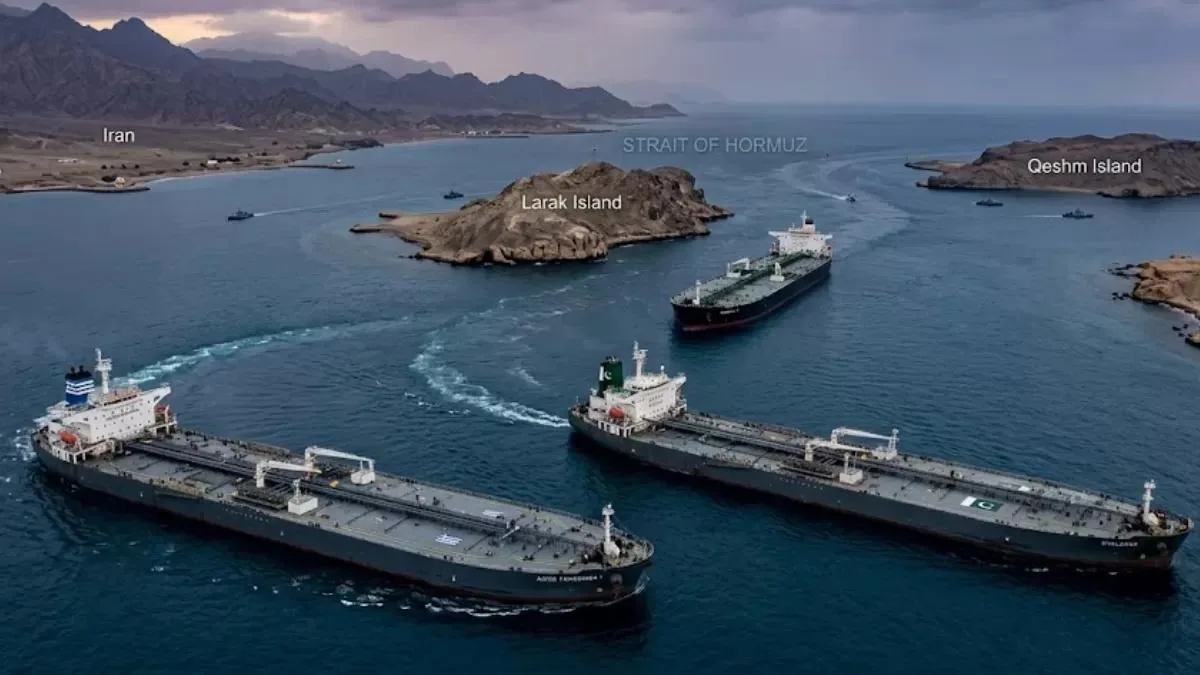
Similar considerations apply to tensions affecting the Persian Gulf and the Strait of Hormuz.
This strategic passage concentrates a substantial share of international oil flows.
Any significant restriction on its operation can affect exports, delivery schedules, insurance costs, and chartering conditions.
However, several situations must be distinguished.
An effective closure of a strait can physically prevent certain volumes from reaching the market.
An increase in maritime risk, by contrast, can raise transportation costs without completely interrupting flows.
In the first case, the market faces a supply constraint.
In the second, it primarily faces higher logistics costs and uncertainty.
Both developments can occur simultaneously, but their economic consequences are not identical.
III. Insurance Is Becoming an Instrument of Price Formation
Maritime security has become an essential component of oil economics.
Shipowners do not determine their rates solely according to operating expenses.
They must also account for war risks, attacks against vessels, restrictions imposed by insurers, and the potential consequences of prolonged immobilization.
In certain areas, insurers may impose additional war-risk premiums.
These premiums depend on factors including the insured value of the vessel, the area being crossed, and the assessment of potential threats.
They can change rapidly.
A deterioration in security conditions may trigger an adjustment in insurance terms even before a major physical disruption occurs.
Anticipated risk then becomes an actual commercial expense.
This mechanism converts geopolitics into a direct transportation cost.
A tanker may remain technically capable of crossing a maritime zone while becoming economically less attractive to operate.
Traders must then decide whether to absorb additional expenses, change routes, or seek alternative suppliers.
These developments also affect banks financing cargoes, classification societies, insurers, and port operators.
Oil transportation is supported by a complex network of financial and contractual relationships.
The availability of a vessel alone does not guarantee that a transaction can be completed.
Its insurance, financing, certification, and operating arrangements must also be acceptable to the relevant parties.
Security of supply therefore depends as much on the financial and legal architecture of maritime trade as on the physical capacity of oil tankers.
This reality becomes particularly significant in an environment shaped by international sanctions.
IV. Sanctions Are Gradually Fragmenting the Global Tanker Fleet
Sanctions targeting certain oil producers and operators have contributed to changes in the structure of international maritime transportation.
Restrictions imposed on Russian oil trade, particularly since 2022, have encouraged the development of separate transportation networks.
Some transactions now involve vessels, trading companies, and insurance arrangements operating under conditions different from those prevailing in conventional international markets.
The expansion of what is commonly described as the shadow fleet illustrates this fragmentation.
The term refers to a heterogeneous group of vessels, often older tankers, involved in trade subject to sanctions or commercial restrictions.
Not all these vessels share the same legal or operational characteristics.
Some operate through complex ownership structures, frequently change flags, or rely on less transparent insurance arrangements.
This raises concerns about maritime safety, environmental liability, and regulatory oversight.
But the phenomenon also has major economic implications.
When part of the global fleet becomes difficult for certain traders or destinations to access, theoretical transportation capacity no longer corresponds to the capacity effectively available to each market.
Two vessels with comparable technical specifications are no longer necessarily interchangeable.
Their commercial eligibility may depend on ownership, operating history, insurers, and applicable sanctions.
This segmentation reduces market flexibility.
It can create substantial differences between freight rates across trading networks.
It may also contribute to the aging of certain fleets when older vessels continue operating in segments subject to different financial and regulatory constraints.
The global oil trade consequently faces a contradiction.
On the one hand, hydrocarbons remain internationally traded commodities.
On the other, the infrastructure enabling their circulation is becoming increasingly segmented along geopolitical lines.
Oil globalization is not disappearing. It is becoming less uniform, more expensive, and more dependent on international power relationships.
V. Crude Oil Prices Are Splitting Into Different Economic Realities
Understanding the consequences of this transformation requires distinguishing benchmark oil prices from the costs actually borne by buyers.
International markets rely on benchmarks such as Brent, West Texas Intermediate, and Dubai/Oman.
These references provide a basis for comparing broad market conditions.
However, they do not necessarily represent the final procurement cost paid by a refinery.
That cost depends on crude quality, loading location, contractual terms, and transportation.
Under a Free on Board, or FOB, arrangement, the buyer generally organizes and pays for maritime transportation from the loading port, subject to the specific contractual terms.
Under a Cost, Insurance and Freight, or CIF, arrangement, the seller pays the agreed freight and insurance costs to the destination port, although the transfer of risk follows specific rules.
These distinctions become particularly important when maritime freight rates are unstable.
A refinery may purchase crude oil at an attractive discount to Brent but lose that advantage once transportation expenses are included.
Conversely, crude oil that is initially more expensive may become economically preferable because it benefits from a shorter and less risky shipping route.
The underlying logic can be expressed through a simplified relationship:
Delivered crude cost = purchase price + transportation + insurance + applicable logistics expenses.
This is not a universal pricing formula.
It nevertheless captures the economic arbitrage facing refiners.
Consider two hypothetical supplies.
The first crude grade costs $65 per barrel at loading and requires $15 in transportation and related expenses.
Its delivered cost reaches $80.
The second costs $72 at loading but requires only $4 for delivery.
Its delivered cost is therefore $76.
The crude oil that initially appeared more expensive becomes the cheaper option for the buyer.
This example illustrates a fundamental development.
Oil competitiveness increasingly depends not only on extraction costs and selling prices, but also on the total cost of delivery.
When freight differentials reach several tens of dollars per barrel, they can fundamentally alter commercial relationships between producers and refiners.
VI. A New Geography of Oil Competitiveness
Rising maritime transportation costs redistribute competitive advantages between producing regions.
Countries located closer to their principal markets may benefit from a stronger geographical advantage.
Producers able to use pipelines, export terminals outside high-risk areas, or shorter shipping routes may also improve their relative positions.
However, these developments do not create permanent winners and losers.
Their consequences depend on crude quality, refinery configurations, available infrastructure, and contractual conditions.
The United States: Production Strength, Long-Distance Exposure
The United States possesses substantial oil production and export capacity.
The development of shale oil has fundamentally transformed its position in global energy trade.
However, American exports to Asia require long maritime voyages.
When supertanker charter rates increase sharply, the competitiveness of certain American crude grades in Asian markets can deteriorate.
Exporters may need to adjust selling prices, seek alternative destinations, or negotiate different logistics arrangements.
Abundant production therefore does not guarantee equal competitiveness across all markets.
The Middle East: Asian Proximity and Strategic Vulnerability
Persian Gulf producers enjoy an important geographical advantage in supplying Asia.
Their transportation distances are generally shorter than those faced by American exporters serving the same destinations.
However, this advantage comes with a major vulnerability: the concentration of oil flows around the Strait of Hormuz.
Increased risks in this area can reduce or eliminate some of the benefits associated with proximity.
Producers possessing alternative export infrastructure may consequently gain additional flexibility.
Saudi Arabia, for example, has infrastructure allowing part of its oil production to be transported toward the Red Sea.
These alternatives nevertheless face limitations involving capacity, destination, and security.
They cannot be treated as complete and immediately available substitutes for normal Persian Gulf exports.
Africa: Commercial Opportunities and Structural Constraints
Africa occupies a distinctive position in this changing landscape.
West African producers benefit from relative proximity to European markets.
Certain African crude grades also possess characteristics valued by international refiners.
When intercontinental transportation becomes more expensive, this proximity may strengthen the commercial attractiveness of African supplies to Europe.
Exports toward Asia, however, remain exposed to longer distances and higher chartering costs.
The consequences vary considerably among Nigeria, Angola, Libya, Algeria, and other producers.
Crude qualities, export destinations, and infrastructure differ substantially.
Africa therefore cannot be treated as a homogeneous oil-producing region.
For some exporters, the reorganization of maritime routes may create opportunities.
For others, it may intensify pressure on selling prices.
These developments reinforce an often-overlooked reality: possessing natural resources is not sufficient to guarantee their optimal economic value.
Access to infrastructure, markets, and logistics capacity remains decisive.
VII. Refineries Are Becoming the Main Arbitrators of the New Oil Geography
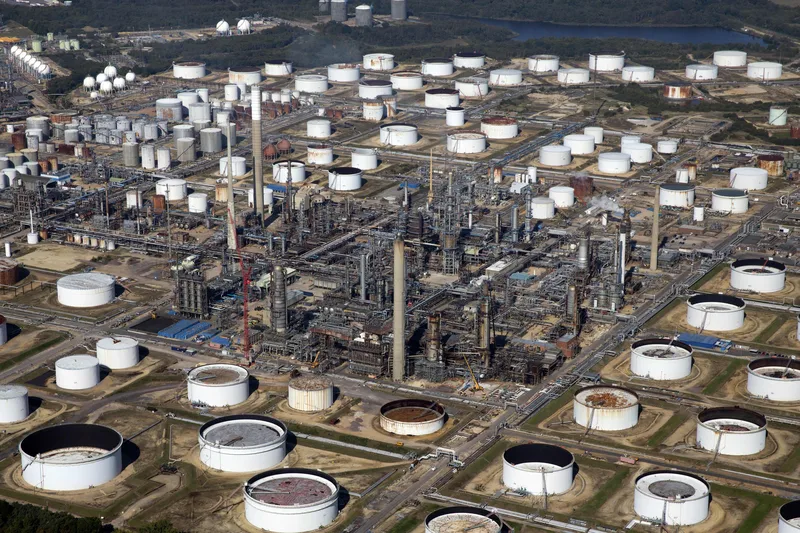
Refineries stand at the intersection of crude oil markets and logistics constraints.
Their procurement decisions depend on a combination of technical and economic factors.
A refinery cannot necessarily replace one crude grade with another without consequences.
Crude oils differ in density, sulfur content, composition, and the yields they produce.
Refining facilities are designed to process particular categories of feedstock with varying degrees of flexibility.
A cheaper crude grade may therefore become less attractive if processing it increases operating costs or reduces output of high-value fuels.
Procurement decisions must integrate three dimensions:
- The delivered price of crude oil.
- Its technical compatibility with refining facilities.
- The commercial value of the refined products obtained.
When maritime transportation becomes exceptionally expensive, refineries generally seek to reduce their exposure to the most costly routes.
They may favor regional suppliers, renegotiate contracts, adjust inventories, or accept certain substitutions between crude grades.
These decisions generate consequences throughout the market.
An Asian refinery reducing purchases of American crude may leave additional volumes available for other destinations.
A producer losing access to a traditional buyer must seek alternative customers.
Price differentials then adjust to restore commercial equilibrium.
The global market continues to function, but through increasingly complex adjustments.
The result may be a partial regionalization of trade.
Markets do not become independent of one another, but the cost of arbitraging differences between them increases.
VIII. Maritime Transportation Can Change Prices Without Creating a Global Oil Shortage
One of the most important implications of this transformation concerns how oil prices should be interpreted.
An increase in Brent is commonly associated with reduced supply, stronger demand, or heightened geopolitical risks.
However, maritime disruptions can produce more complex outcomes.
Global oil volumes may remain sufficient while certain crude grades or destinations experience significant pressure.
Under such circumstances, local prices and physical premiums may increase even when international benchmarks move more moderately.
Higher transportation costs can also create discounts at the point of origin.
A producer located far from its customers may need to reduce its selling price to preserve the competitiveness of delivered crude.
Downward pressure on certain loading prices can therefore coexist with upward pressure on delivered prices.
This divergence is essential.
It means that rising maritime freight costs do not automatically translate into equivalent increases in Brent.
Part of the shock may be absorbed by producers, traders, shipowners, or refiners.
The distribution depends on contracts, market conditions, and the bargaining power of individual participants.
Maritime transportation therefore directly influences physical prices and commercial margins without necessarily causing uniform increases across oil benchmarks.
The question is no longer simply how much oil exists on the market, but at what price each region can actually access it.
IX. Consequences for Oil-Importing Economies
For countries dependent on imported oil, this transformation introduces another source of vulnerability.
Importing economies traditionally monitor international crude prices, exchange rates, and refining margins.
They must now pay closer attention to maritime transportation conditions.
Higher shipping costs can increase energy import bills even when international crude prices remain relatively stable.
These pressures may subsequently affect fuel prices, industrial costs, and transportation expenses.
The extent of this transmission depends on several factors, including import structures, taxation, subsidies, procurement contracts, inventories, and changes in refining margins.
Asian economies are particularly exposed because of their dependence on maritime hydrocarbon imports.
However, European and African importing countries may also experience the indirect consequences of changing trade flows.
For a country such as Morocco, which remains heavily dependent on imported hydrocarbons, the issue extends beyond movements in Brent.
The cost of imported petroleum products also depends on refining markets, transportation, commercial arrangements, and exchange rates.
The country may therefore face international logistics pressures even without a major increase in global crude benchmarks.
This reality reinforces the relevance of energy diversification, improved port infrastructure, and more resilient supply chains.
It also demonstrates the limitations of energy-security strategies based exclusively on monitoring international oil prices.
X. Shipowners Are Becoming Strategic Players in Energy Markets
Growing logistics pressures are strengthening the economic role of maritime transportation companies.
Shipowners control an essential asset: the capacity to physically move hydrocarbons between markets.
When vessels are abundant, their bargaining power is relatively limited.
When available capacity becomes scarce, charter rates can rise rapidly.
This is characteristic of a market in which supply cannot adjust immediately.
Building a new tanker generally requires several years between ordering, construction, and delivery.
Shipyards also face capacity constraints and must allocate their order books among different vessel categories.
The global tanker fleet therefore cannot respond instantly to an increase in transportation demand.
In the short term, adjustment occurs mainly through freight rates, vessel speeds, route changes, and the redistribution of available capacity.
This rigidity can amplify market fluctuations.
It can also create substantial revenue opportunities for shipowners when conditions are favorable.
However, these revenues remain cyclical.
Exceptionally high freight rates can be followed by rapid corrections if risks decline, shipping routes normalize, or transportation demand weakens.
It would therefore be misleading to interpret every freight-rate surge as a permanent change in maritime industry profitability.
The structural transformation lies elsewhere: in the growing importance of transportation availability for the entire oil supply chain.
XI. Governments Are Rediscovering the Maritime Dimension of Energy Security
National energy policies generally focus on several objectives: guaranteeing supply, diversifying suppliers, building strategic reserves, and developing production capacity.
Maritime tensions demonstrate that these instruments are not always sufficient.
A country may possess strong procurement contracts without being able to guarantee that contracted volumes will arrive on schedule.
Energy security therefore also requires adequate management of logistics risks.
This does not necessarily mean that every country should establish a nationally owned tanker fleet.
Such a strategy would be expensive and would not eliminate the risks associated with maritime routes.
Governments can, however, diversify import terminals, improve storage capacity, strengthen receiving infrastructure, and secure selected transportation contracts.
Investment in pipelines and alternative energy infrastructure can also reduce exposure to certain strategic passages.
These solutions nevertheless involve their own economic and geopolitical constraints.
A pipeline is a fixed asset dependent on the territories it crosses and the relationships between governments.
A maritime route provides greater geographical flexibility but exposes cargoes to navigation risks.
Energy security therefore depends on a combination of infrastructure rather than a single solution.
In this environment, maritime power is regaining a central economic dimension.
Protecting commercial routes, securing strategic straits, and preserving freedom of navigation are becoming essential conditions for the functioning of energy markets.
Oil thus remains closely connected to international power relationships.
XII. Toward a Lasting Regionalization of the Oil Market?
The central question is whether current maritime tensions represent an exceptional episode or the symptoms of a lasting transformation.
Several forces are pushing toward greater fragmentation.
International sanctions limit the interchangeability of vessels and commercial networks.
Geopolitical tensions increase the cost of certain routes.
Energy-security strategies encourage countries to favor suppliers considered reliable.
Refineries seek to reduce their exposure to uncertain procurement channels.
Finally, infrastructure investment may gradually reinforce particular regional trading relationships.
However, opposing forces continue to support global integration.
Oil remains a broadly substitutable commodity within certain quality categories.
Price differentials create powerful incentives to redirect cargoes.
International trading companies retain substantial capacity to arbitrage between regions.
Producers seek to diversify customers, while refiners seek to diversify suppliers.
The global market is therefore unlikely to fragment automatically into completely independent blocs.
Instead, it may evolve toward a system in which interregional trade remains possible but becomes more expensive and more sensitive to geopolitical developments.
This distinction matters.
Complete regionalization would imply a profound breakdown in global arbitrage mechanisms.
Partial regionalization simply means that distance, insurance, and political constraints carry greater weight in commercial decisions.
The latter provides a more useful framework for understanding current tensions.
XIII. Three Scenarios for the Coming Years
The future of oil transportation will depend primarily on geopolitical risks, demand growth, and renewal of the global tanker fleet.
Scenario One: Gradual Normalization of Shipping Routes
A reduction in tensions across major maritime corridors would allow risk premiums to decline and certain commercial routes to reopen.
Vessels could complete more voyages.
Effective transportation capacity would increase without immediately requiring new ships.
Charter rates would likely decline, although their trajectory would also depend on vessel supply and transportation demand.
Under this scenario, international oil arbitrage would regain some flexibility.
Regional price differentials could narrow.
Scenario Two: Persistent but Manageable Fragmentation
Geopolitical risks would remain elevated without causing a major breakdown in supply.
Operators would continue adapting routes and contracts.
Sanctions would maintain partial segmentation of the tanker fleet.
Maritime costs would remain more volatile, with recurring episodes of pressure.
Under this scenario, refiners and producers would increasingly incorporate logistics risks into commercial strategies.
Maritime transportation would become a lasting factor differentiating crude oil supplies.
Scenario Three: A Major Shock to a Strategic Shipping Corridor
A prolonged interruption of an essential maritime passage could simultaneously reduce available exports, increase transportation distances, and trigger a surge in insurance premiums.
The market would then face a combined shock involving physical oil availability and transportation capacity.
Strategic reserves could temporarily mitigate some pressures without necessarily resolving logistics difficulties.
Crude benchmarks, regional differentials, and transportation costs could move sharply, although not always in the same proportions.
This scenario would carry the greatest economic risks.
It would particularly affect importing economies with limited energy-security buffers.
XIV. What Energy Markets Must Monitor
Oil-market analysis can no longer be limited to production statistics and decisions by major exporters.
Maritime indicators are becoming indispensable.
Charter rates for VLCCs, Suezmax, and Aframax vessels provide information about pressures affecting different transportation segments.
Route-specific freight indices reveal differences between regions.
Insurance premiums indicate the risks associated with particular maritime areas.
Traffic volumes through strategic straits help measure physical disruptions.
Voyage distances and ton-mile demand provide insight into the effective utilization of the tanker fleet.
Finally, regional physical crude differentials reveal how logistics costs are transmitted into oil markets.
These indicators must be interpreted together.
A high charter rate does not automatically mean that oil is scarce.
An increase in physical premiums does not necessarily indicate a reduction in global production.
And a decline in Brent does not guarantee an equivalent reduction in procurement costs for every refinery.
Analysis must now distinguish three levels: resource availability, transportation capacity, and the economic cost of access for the final buyer.
The interaction between these dimensions increasingly shapes market outcomes.
Conclusion — Oil's Value Now Depends as Much on Accessibility as on Availability
The global oil market is undergoing a transformation that extends beyond ordinary price fluctuations.
For decades, the dominant question concerned the balance between production and consumption.
How many barrels could producers extract? How much would industrial economies consume? How much oil remained in inventories?
These questions remain essential.
But they are no longer sufficient.
Transportation geography, maritime capacity, insurance, and geopolitical constraints now play a much more visible role in determining the economic value of hydrocarbons.
This does not mean that maritime transportation is replacing production and demand as the fundamental determinants of Brent.
It means that benchmark prices and the actual cost of accessing oil can diverge considerably.
A global market may possess sufficient resources while imposing exceptionally high procurement costs on certain regions.
Conversely, a producer may be forced to offer substantial discounts because its traditional markets have become more difficult to reach.
The consequences extend far beyond the oil industry.
They affect refinery competitiveness, industrial policy, trade balances, energy security, and relationships between major powers.
Above all, they highlight a fundamental characteristic of the global economy: commodities do not possess an economic value entirely independent of the infrastructure that enables their circulation.
Oil must be extracted, but it must also be transported, insured, financed, received, and processed.
As these operations become more complex, their economic importance increases.
The real change is therefore not that maritime transportation influences oil prices: it always has. The change is that its cost and availability can now fundamentally alter the commercial hierarchy of producers, refinery procurement strategies, and price differentials between regions.
In a world where energy resources remain abundant but their circulation is becoming politically more uncertain, power is no longer measured solely by the ability to produce oil.
It is also measured by the ability to deliver it.
Atlas Limits — Understanding the structures shaping the world's balance of power.
Sources and References
U.S. Energy Information Administration (EIA) — Short-Term Energy Outlook, October 2026; statistics and analysis of international oil trade.
International Energy Agency (IEA) — Oil Market Report; analysis of global production, consumption, inventories, and trade balances.
Reuters — October 2026 market reporting on tanker charter rates, transportation costs between the United States and Asia, and refinery procurement decisions.
S&P Global Commodity Insights — Analysis of physical crude markets, regional price differentials, and maritime chartering conditions.
Lloyd's List — Coverage of tanker markets, maritime risks, global fleet developments, and freight-rate movements.
UNCTAD — Review of Maritime Transport; structural data on global shipping, transportation capacity, and the economic consequences of logistics disruptions.
Methodological note: The exceptional transportation costs mentioned in this article refer to specific market observations reported in October 2026. They are neither global averages nor permanent forecasts. The scenarios presented are analytical frameworks rather than quantified projections.
Atlas Limits Research Desk
Atlas Limits’ editorial and analytical desk.