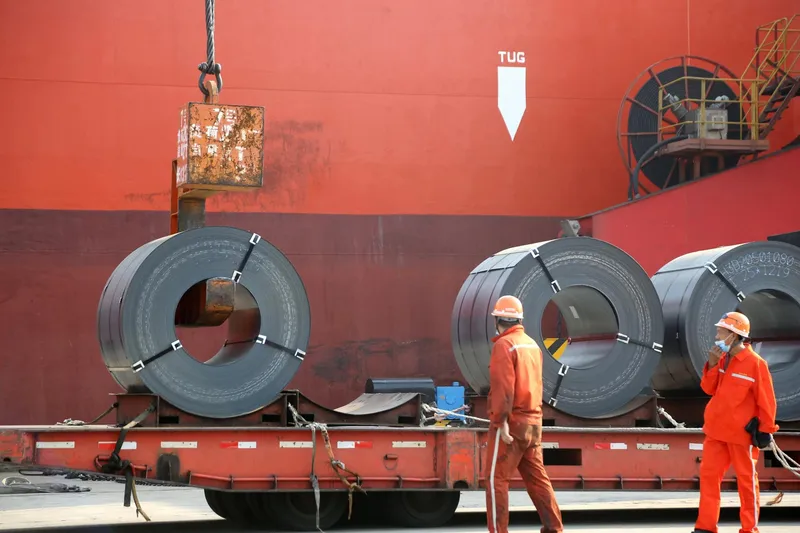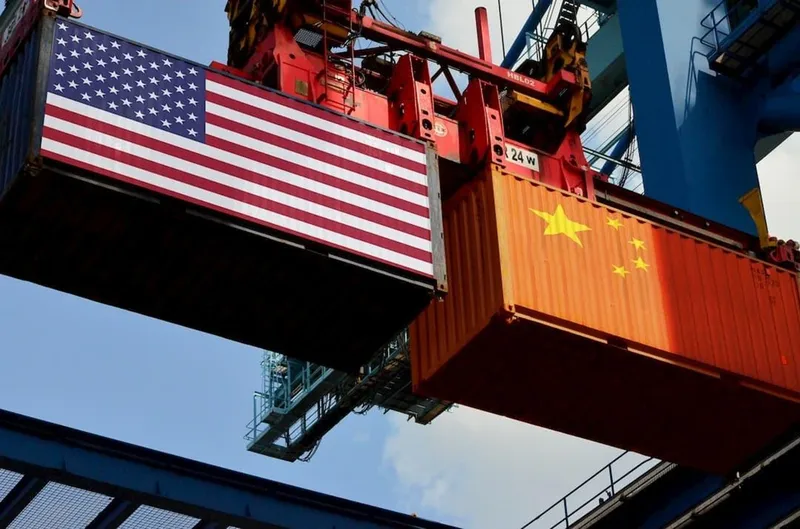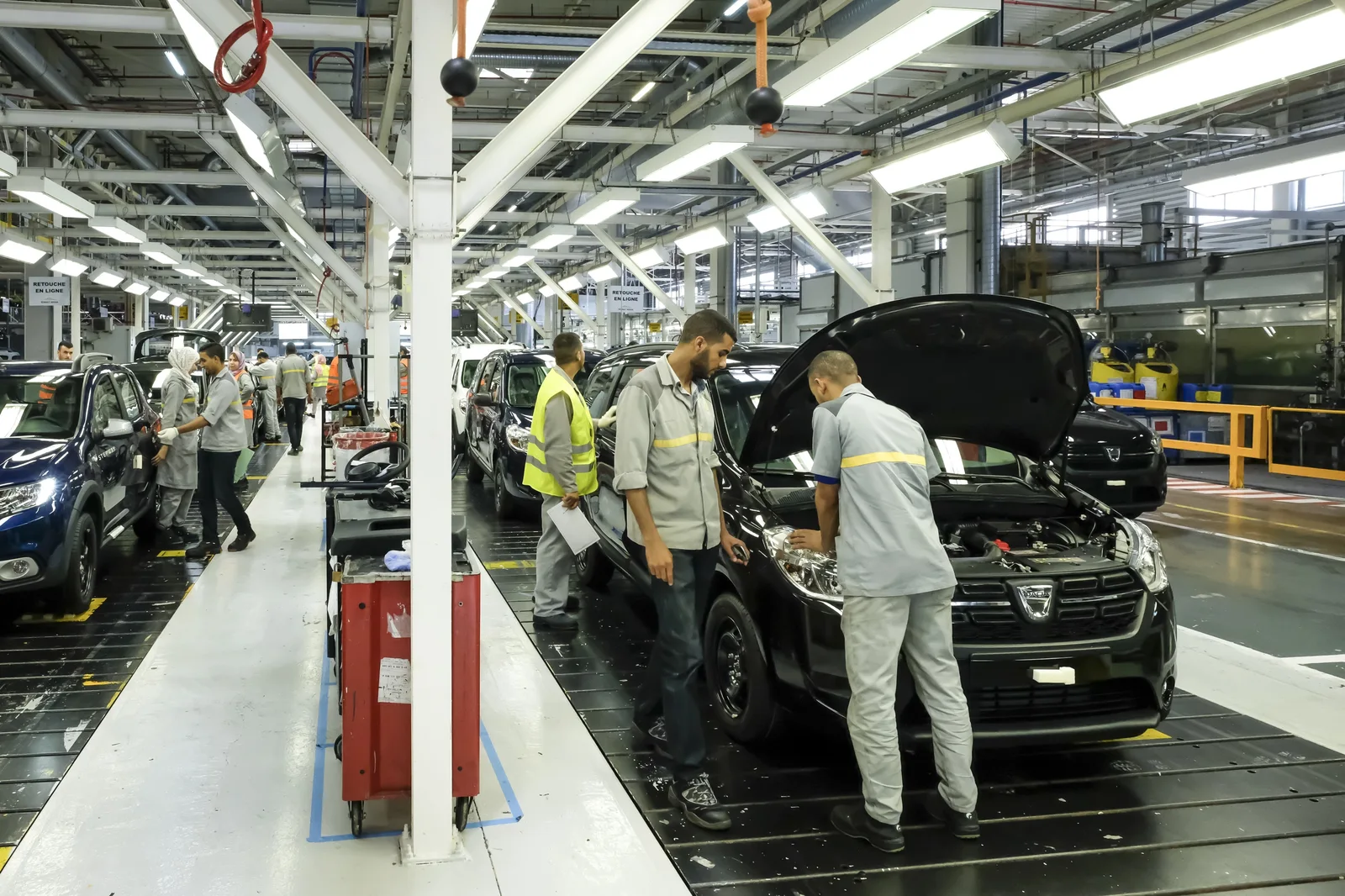
A factory opens. Machines arrive, recruitment begins, and the first components roll off the production lines. The government announces the investment, the international group celebrates a new industrial site, and national statistics soon record higher production and exports. At first glance, the equation seems straightforward: a company has relocated part of its industrial capacity to another country; that country has gained jobs, capital and new productive capabilities. But a factory does not yet tell us where the value is.
In the global economy, manufacturing a product, owning the technology required to make it, setting its price, financing its production, controlling the brand under which it is sold and recording the resulting profit can involve five different companies located in five different jurisdictions.
This is precisely what makes industrial agreements, foreign direct investment and international outsourcing strategies far more difficult to assess than they appear.
The question is no longer simply how much a country exports. It is how much it keeps of what it exports.
In 2025, global foreign direct investment reached approximately $1.6 trillion. Yet UNCTAD itself stresses that FDI contributes to development when it builds productive capacity, creates employment, develops skills and facilitates technological progress. The world’s twenty largest recipient economies captured more than 80% of global flows that year. Investment has not disappeared; it has become more contested, more strategic and more selective.
Behind that competition lies another, much less visible struggle: the distribution of value. 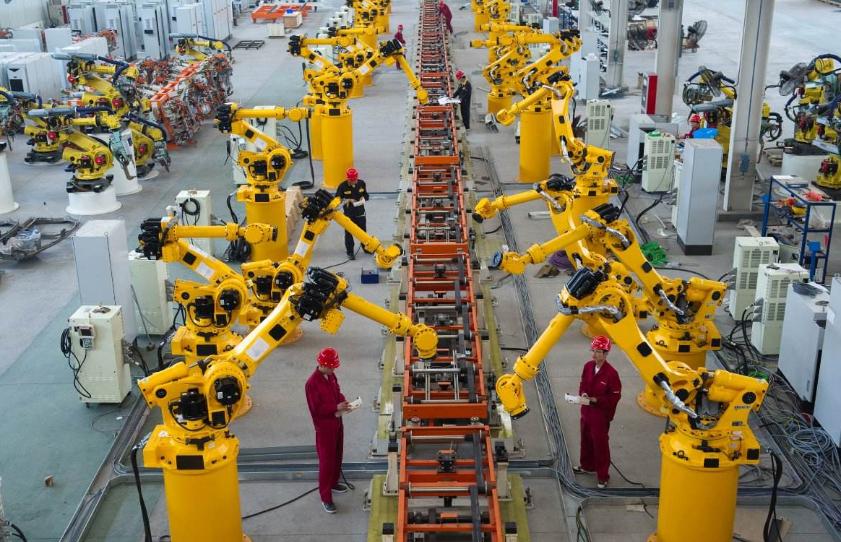
The Factory and Everything Around It
Consider an industrial subsidiary established in a host country.
It owns a factory, employs several thousand people and generates substantial revenue. Yet its income statement tells only part of the story.
It may purchase components from another company within the group. It may use software developed by the parent company. It may pay licensing fees for patented technology, royalties for the use of a brand, centralized IT expenses, engineering services, management fees or interest on intragroup debt.
Taken individually, each of these flows may be entirely legitimate.
A parent company genuinely provides services. Technology has value. Intellectual property deserves remuneration. A company lending money to a subsidiary would normally receive interest. A global IT platform represents a real cost.
The economic issue lies elsewhere: when most high-value functions remain outside the producing country, that country can host a large share of the physical activity without hosting an equivalent share of the profit.
The multinational operates globally. The state still taxes primarily through national jurisdictions.
Between the two sits intragroup accounting.
Transfer pricing determines the value assigned to transactions between companies belonging to the same group. The international reference principle remains the arm’s-length standard: transactions between related companies should, in substance, be priced as they would have been between independent companies under comparable circumstances.
The distinction is essential. A low local margin is not, by itself, evidence of artificial profit shifting.
Assembly may genuinely be less profitable than designing a processor, developing software, owning a patent or commercializing a global brand. It would therefore be a mistake to treat every intragroup payment as fiscal leakage.
But the opposite assumption would be equally mistaken: that every intragroup invoice necessarily reflects the true geography of value creation.
This is precisely why tax administrations scrutinize transfer pricing, intangible assets, intragroup services, cost-sharing arrangements and financial transactions between related entities.
Globalized manufacturing has therefore produced a peculiar situation: the machines are highly visible; the flows determining where the profit ultimately appears are much less so.
The Export Illusion
This distinction changes how a country’s industrial performance should be read.
A vehicle exported from a territory does not mean that its entire value was created there.
Imported components, machinery, certain services, intellectual property and other foreign intermediate inputs must first be considered. What ultimately matters to the domestic economy is the value added locally.
Two countries exporting the same amount can therefore derive radically different benefits from their industrial sectors.
The first imports most components, assembles them locally and re-exports the finished product. The second has developed a supplier network, produces some strategic components, conducts engineering work, develops software, trains technicians, performs R&D and has begun to own intellectual property.
Their gross exports may be identical.
Their industrialization is not.
The World Bank has repeatedly emphasized that integration into global value chains can increase productivity, employment and living standards, but that development also depends on the ability to move towards higher-value activities and incorporate greater technological and knowledge content into domestic production.
The relevant measure of industrial policy should therefore not simply be exports, but the progression of domestic value added per unit exported.
Technology Transfer That Does Not Happen Automatically
The same ambiguity surrounds technology.
Building a modern factory in a country does not necessarily mean transferring the technology on which that factory depends.
There are several levels of mastery.
At the first, a country assembles.
Then it manufactures.
Later, it learns to modify production processes, manufacture critical machinery or components, perform engineering work, develop products, create intellectual property and, eventually, determine the direction of technological development itself.
The distance between the first and last stages is enormous.
An economy can therefore become a remarkably efficient industrial producer while remaining dependent on decisions, patents, machinery, software or components developed elsewhere.
Yet this is also where outsourcing can become extraordinarily powerful.
A foreign factory introduces quality standards, production methods, logistical requirements, certifications, engineers and sufficient demand to allow local suppliers to reach an entirely new scale.
Knowledge is not always transferred by contract.
Sometimes it diffuses.
A technician learns. An engineer moves to another company. A domestic supplier obtains an international certification. A small company begins by producing a simple component and later manufactures a complex one. A subcontractor becomes a systems supplier. Employees establish their own businesses. Universities adapt their curricula. Research laboratories emerge.
Foreign investment gradually stops being an enclave.
It becomes an ecosystem.
That transformation separates an outsourcing platform from an industrial base.
Employment Cannot Be Measured by Headcount Alone
Employment creates the same measurement problem.
One thousand jobs are not economically identical to another thousand jobs.
A labor-intensive assembly plant can constitute a major social achievement in a region with high unemployment. It generates income, formalizes employment, develops skills and supports consumption.
It would be absurd to dismiss these effects merely because the company operates on thin margins.
Over time, however, the nature of those jobs becomes decisive.
An economy that progressively attracts advanced maintenance, industrial engineering, procurement, design, IT, research, finance, international logistics and regional management functions retains more knowledge and becomes increasingly capable of producing the next generation of products itself.
The relevant indicator is therefore not merely the number of jobs created, but their technological and decision-making density.
The question can be expressed differently: if the foreign group disappeared tomorrow, how many of the capabilities it created would remain usable elsewhere in the domestic economy?
That question measures the industrial legacy of an investment better than the number of access badges distributed at the factory gate.
Then Comes the Tax Authority
This is probably the least visible part of the equation.
Suppose an industrial subsidiary produces at very large scale but retains a relatively narrow operating margin. Its local taxable profit will consequently remain limited.
The state may still collect social contributions, taxes on wages and consumption, and other direct and indirect revenues. It also benefits from income generated among domestic suppliers and employees.
But corporate income tax depends on what remains after expenses.
And this is where intragroup transactions become crucial.
Intellectual-property royalties, management fees, technical services, component purchases, financing, internal insurance and digital services all raise the same fiscal question: do their pricing and economic substance accurately reflect the functions performed, assets employed and risks assumed by the respective companies?
A factory can therefore be economically important while generating relatively little corporate income tax.
There is no necessary contradiction.
The economic impact of an investment and its direct fiscal return are two different things.
But a state that measures only announced investment and jobs risks seeing only half of the balance sheet.
The Host State Is Not Powerless
This is where public policy enters the equation.
For years, international competition for multinational investment was sometimes presented as an auction: lower taxes, land, infrastructure, energy, subsidies and accelerated procedures in exchange for industrial investment.
That model is insufficient.
A capable host state does not simply seek to attract capital. It seeks to organize its spillovers.
The first line of defense is fiscal.
Tax administrations can strengthen their transfer-pricing expertise, verify the substance and valuation of intragroup services, scrutinize hard-to-value intangibles, limit the deductibility of certain financial expenses, apply withholding taxes where domestic law and tax treaties allow them, require documentation of related-party transactions and use international information-sharing mechanisms.
The objective is not to inflate domestic taxable profit artificially. It is to ensure that the profit reported locally corresponds to the functions, assets and risks actually located in the country.
The second lever concerns incentives.
A state can support an investment. But it can seek to purchase something more durable than an inauguration ceremony.
Incentives can be designed around measurable objectives: sustainable employment, investment in particular regions, training, decarbonization, technologically advanced activities, research or the development of domestic suppliers — subject to the constraints of international trade rules and applicable agreements.
Morocco provides an interesting illustration of this evolution. Its Investment Charter does not focus exclusively on the amount of capital invested. Its stated objectives include stable employment, future-oriented activities, replacing certain imports with domestic production, exports and sustainable development. Under the applicable mechanisms and criteria, investment support can reach 30% of eligible investment expenditure.
The philosophy is fundamentally different: public support no longer needs to reward merely the capital that arrives; it can reward the economic transformation that capital produces.
The Contract After the Contract
A third mechanism is even more important: supplier policy.
Simply forcing a multinational to purchase locally does not create competitive suppliers. If domestic companies lack the required technology, quality or production scale, a local-content requirement can simply raise costs.
Some mandatory local-content measures are also incompatible with WTO disciplines governing trade-related investment measures. International investment agreements can further constrain governments’ ability to impose certain requirements concerning local content, technology transfer, employment or R&D.
Modern industrial policy must therefore be more sophisticated.
Governments can finance the certification of domestic SMEs, establish technical centers, develop training programs aligned with investors’ requirements, facilitate voluntary joint ventures, support collaborative R&D, build industrial platforms, assist domestic companies capable of becoming tier-two and eventually tier-one suppliers, and condition certain forms of public support on commitments compatible with international obligations.
The objective is no longer simply to decree a percentage of domestic content.
It is to make domestic content economically preferable.
The distinction matters.
A regulatory obligation can disappear when the rules change.
A domestic company that has become cheaper, more reliable and technologically capable remains in the supply chain because the multinational has an economic reason to keep it there.
Regulation as a Permanent Negotiation
There is another dimension that is often overlooked: the original investment agreement is only the beginning of the relationship between the investor and the host country.
The state retains leverage through competition policy, taxation, labor law, vocational training, energy policy, environmental regulation, infrastructure, public procurement, investment screening in sensitive sectors, intellectual-property policy and access to public incentives.
The global trend is, in fact, towards greater selectivity. In 2025, governments adopted 229 investment-policy measures, a record according to UNCTAD. Incentives accounted for half of the measures favorable to investors, while the number of economies operating investment-screening mechanisms had risen from 21 in 2016 to 52 by 2025.
This does not mean the end of globalization.
It means that governments are once again negotiating what they expect to obtain from globalization.
That negotiation becomes even more important as investment moves into semiconductors, batteries, artificial intelligence, data centers, energy and other sectors where the gap between the value of physical capital and the value of intellectual property can be enormous.
The Hidden Cost of the Welcome Package
One calculation is still rarely made publicly: the complete return on an investment from the host country’s perspective.
Suppose a government provides a subsidy, develops an industrial zone, builds a road, finances training and temporarily forgoes certain tax revenues.
The relevant comparison is not between those costs and the headline value of the investment.
It is between those costs and the additional economic benefits actually produced.
Wages distributed.
Direct and indirect tax revenues.
Social contributions.
Domestic value added.
Orders placed with local suppliers.
Exports net of imported intermediate inputs.
Skills accumulated.
R&D established locally.
Patents eventually developed.
Domestic companies integrated into the supply chain.
Infrastructure effects.
And finally, the fiscal cost of the incentives themselves.
The result begins to resemble a national income statement for foreign investment.
One column is still missing: time.
An investment that appears mediocre after five years may prove exceptional after twenty if it creates an industrial ecosystem. Conversely, a spectacular factory can remain a productive enclave for three decades, entirely dependent on foreign technologies, components and decisions.
The real test of an industrial strategy is therefore not the photograph taken in the year the factory opens.
It is the trajectory that follows.
The Ladder That Must Be Climbed
Economic history offers several ways of using this first step.
An economy often begins by selling what it immediately possesses: relatively inexpensive labor, geographic proximity, energy, a domestic market or privileged access to larger markets.
That is not necessarily a weakness.
The problem begins when it is selling exactly the same advantages twenty years later.
Success consists in progressively changing the source of comparative advantage.
Yesterday: labor costs.
Then: logistics.
Then: suppliers.
Then: skills.
Then: engineering.
Then: technology.
Then: capital and intellectual property.
As this progression occurs, the relationship with foreign companies also changes. The country is no longer selected merely because it is cheaper. It becomes difficult to replace because an entire ecosystem has developed around production.
That is probably the most important boundary between outsourcing and industrialization.
A Good Deal or a Bad One?
The answer therefore depends less on the original agreement than on what it ultimately sets in motion.
A low-margin foreign subsidiary can represent an excellent economic outcome for a country if it employs large numbers of people, trains workers, purchases domestically, increases net exports, creates suppliers, transfers capabilities and gradually moves the economy towards more complex activities.
Conversely, a very large investment can deliver disappointing collective returns if it remains isolated, imports almost everything, leaves the most valuable functions abroad, permanently consumes public subsidies and creates neither technological capabilities nor competitive domestic suppliers.
The debate between “attracting multinationals” and “protecting domestic industry” therefore misses the essential point.
Both can belong to the same strategy.
Foreign investment can provide the market, technology, standards and scale that domestic companies could not initially achieve alone. Public policy must then convert that presence into domestic capabilities.
The effective state is therefore neither the one that opens every door nor the one that closes them.
It is the one that knows what it is negotiating when it opens them.
A factory can leave.
A tax exemption can expire.
An outsourcing contract can be transferred to another continent.
But a trained engineer, a supplier that has become internationally competitive, a laboratory capable of innovating, a domestic company integrated into global supply chains and a technology that is now locally mastered belong to a different category of wealth.
The real question, then, is not who manufactures the product.
It is who learns how to manufacture it, who eventually learns how to design it, who owns what makes its production possible — and, once the entire chain has been paid, who keeps the value.
Main sources
UNCTAD — World Investment Report 2026: International Investment in a Turbulent Era; data and analysis on foreign direct investment and investment policy.
OECD — Transfer Pricing Guidelines for Multinational Enterprises and Tax Administrations; arm’s-length principle, intragroup transactions and protection of national tax bases.
World Bank — research on global value chains, productivity, employment and movement towards higher-value activities.
World Trade Organization — Agreement on Trade-Related Investment Measures (TRIMs), including disciplines relevant to certain local-content requirements.
UNCTAD — research on performance requirements, technology transfer and constraints arising from international investment agreements.
Moroccan Ministry of Investment, Convergence and Evaluation of Public Policies / AMDIE — Investment Charter and investment-support mechanisms.
Atlas Limits Research Desk
Atlas Limits’ editorial and analytical desk.