Washington has approved a potential $2.1 billion sale of 500 Patriot interceptor missiles to Ukraine. The financing brings together Canada, Germany, Norway and Ukrainian resources supported by the European Union, while Lockheed Martin is designated as the principal contractor. Beyond the immediate military requirements, the transaction raises a broader question: as Europe increases its defence expenditure, how much of that financial mobilisation is actually being converted into European industrial power?
An American authorisation, a Ukrainian necessity
On October 30, 2026, the US State Department approved a potential sale of 500 Patriot PAC-3 MSE interceptor missiles to Ukraine, with an estimated value of $2.1 billion. The decision comes as Kyiv seeks to strengthen its interception capabilities against continuing Russian strikes, particularly those targeting energy infrastructure and civilian facilities ahead of winter.
The political timing gives the announcement particular significance. Days earlier, Ukrainian President Volodymyr Zelensky had publicly referred to an almost month-long wait for the American authorisation required for certain missile supplies. The availability of military equipment therefore depends not only on production capacity or financial resources. It also remains subject to political and administrative decisions in Washington.
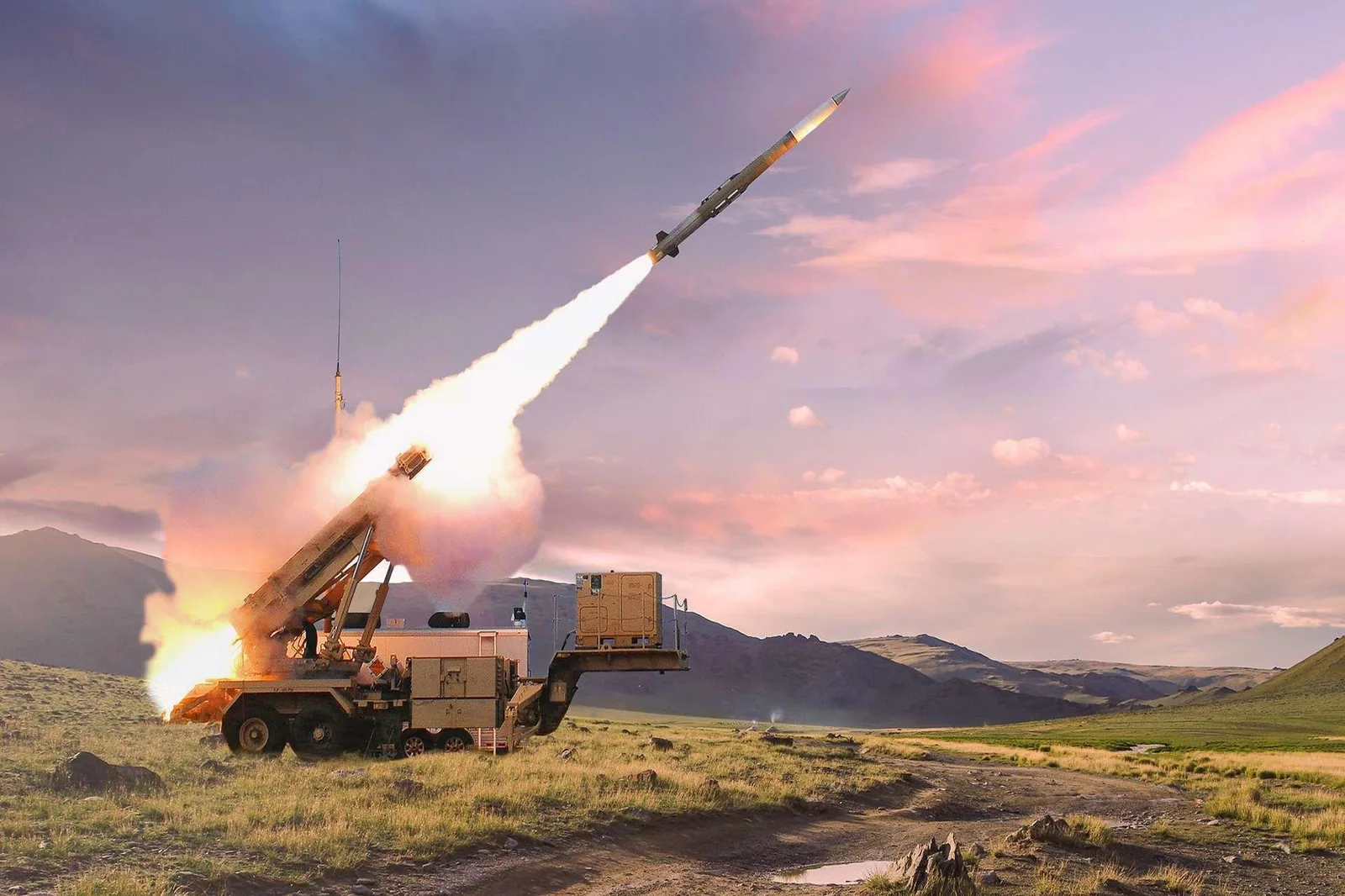
The proposed sale covers PAC-3 MSE interceptors, designed in particular to counter ballistic missile threats, together with spare parts and logistical support. Lockheed Martin has been designated as the principal industrial contractor.
It is essential, however, to distinguish the political significance of the announcement from its commercial execution. The $2.1 billion figure represents an official estimate of the proposed programme. It does not yet constitute a fully executed industrial contract or revenue definitively secured by Lockheed Martin. The transaction remains subject to the applicable American foreign military sales procedures, and no precise delivery schedule has been announced.
That distinction matters. Government authorisation may create the conditions for an order without immediately resolving the industrial constraints governing its fulfilment. In missile defence, where equipment is technologically complex, supply chains are highly specialised and production capacity is limited, the decision to sell does not necessarily mean the ability to deliver quickly.
It is precisely within this gap between political decisions, financing and manufacturing that one of the transaction's central strategic implications emerges.
European financing, American production
The announced financing structure reveals much about the evolving architecture of Western support for Ukraine. Canada, Germany and Norway are expected to contribute through the American JUMPSTART mechanism, while Ukrainian resources financed through European Union support loans complement the arrangement.
According to the American information accompanying the announcement, no US federal budget funding is expected to be required for this particular acquisition.
The result is a distinctive configuration: Ukraine's partners assemble the financial resources, the United States authorises and organises the sale, and American industry supplies the military capability.
This division of responsibilities is not an anomaly. It reflects decades of transatlantic military integration, during which European governments have variously relied on American systems, industrial cooperation and nationally developed capabilities.
The war in Ukraine has nevertheless magnified the consequences of those historical choices. Military requirements are immediate, the quantities involved are substantial, and replenishment schedules are difficult to compress. Under such conditions, countries that already possess the relevant technologies, production lines and export authorisations enjoy a decisive advantage.
Financial resources can be mobilised relatively quickly. Sovereign industrial capacity cannot be created at the same speed.
For European governments, purchasing American equipment therefore follows an understandable operational logic. Patriot systems are already integrated into several allied defence architectures, and PAC-3 MSE missiles address specific requirements that not every European alternative can immediately satisfy.
Yet this short-term rationality carries a longer-term consequence: part of the expenditure committed to European security supports industrial capacity located outside the European Union.
Canada and Norway are not EU members, so the entire financing package cannot accurately be described as European Union expenditure. Nevertheless, the arrangement remains significant for European industrial policy, particularly where German contributions and EU-backed Ukrainian resources help finance American-manufactured equipment.
The real choice is therefore not between solidarity with Ukraine and European autonomy. It is how to meet immediate military needs without indefinitely reproducing existing industrial dependencies.
Lockheed Martin and a demand cycle becoming structural
For Lockheed Martin, the authorisation forms part of a deeper transformation in the global missile defence market.
Demand for interceptors is no longer driven exclusively by conventional military modernisation cycles. It is increasingly sustained by prolonged conflicts, the actual consumption of sophisticated munitions and the determination of numerous governments to replenish or expand their strategic reserves.
This development changes the economic character of the sector.
Historically, major weapons programmes could be assessed primarily through development expenditure, initial procurement volumes and associated maintenance contracts. The multiplication of military engagements has brought another dimension back to the forefront: the ability to manufacture complex, expensive and expendable equipment continuously.
A missile defence system is not simply a technological infrastructure purchased once and retained indefinitely. Its effectiveness depends on the continuing availability of interceptors, spare parts, software, trained personnel and operational supply chains.
This dependence on replenishment changes the relationship between manufacturers and their customers. Strategic value no longer resides exclusively in technological sophistication, but also in the ability to produce equipment at a rate consistent with military requirements.
The American framework contract announced in July 2026, potentially worth up to $58.6 billion for PAC-3 missiles, illustrates this shift towards expanding industrial capacity. Lockheed Martin has outlined substantial ambitions to increase production over the coming years.
It would, however, be incorrect to mechanically add that maximum contract value to the $2.1 billion potential sale to Ukraine. The first figure represents a contractual ceiling associated with a major American programme; the second is an estimated foreign military sale authorisation. Actual orders, financing arrangements, delivery schedules and possible industrial overlaps must be assessed separately.
The strategic significance lies elsewhere. The United States is seeking to expand its manufacturing capacity at a time when demand from its own armed forces, Ukraine and numerous allies is placing simultaneous pressure on available supplies.
This accumulation of requirements improves the programme's industrial visibility without eliminating execution risks. Increasing production rates requires investment, specialised components, qualified suppliers, technical expertise and sustained coordination with public authorities.
A growing order book therefore guarantees neither proportionate margin expansion nor immediate equipment availability.
It nevertheless strengthens the position of manufacturers capable of converting demand into additional productive capacity.
When manufacturing capacity becomes a form of power
The Patriot transaction illustrates a fundamental reality of defence economics: military power is measured not only by the sophistication of available equipment, but also by the ability to replace it.
An armed force may possess technologically advanced systems yet face operational constraints if its interceptor inventories are insufficient or if replacement deliveries take longer than the pace of military operations permits.
The war in Ukraine has made this problem particularly visible. Demand for ammunition, air defence systems, drones and electronic warfare equipment has placed pressure on production networks, some of which were organised around considerably lower assumptions of consumption.
Companies controlling critical technologies possess an obvious competitive advantage. But those capable of increasing output, securing suppliers and maintaining industrial quality acquire an additional strategic importance.
Manufacturing capacity consequently gains value beyond its contribution to corporate revenue.
A factory capable of producing sophisticated interceptors becomes an element of national security. Its suppliers contribute indirectly to military resilience. Its production constraints may influence procurement decisions made by several governments.
Industrial capacity becomes a source of negotiating power.
Customer governments can finance equipment without necessarily controlling the allocation of production between domestic and international orders, export approvals or every aspect of delivery prioritisation.
In the case of Patriot interceptors intended for Ukraine, this asymmetry is particularly clear. Partners can assemble the necessary financial resources without possessing all the instruments determining when the equipment will actually arrive.
The problem is not transatlantic cooperation itself, which remains central to European security. It is the potential concentration of critical capabilities and the consequences of that concentration when partners' interests, schedules or priorities diverge.
Europe confronts its industrial paradox
Since Russia's full-scale invasion of Ukraine in 2022, European governments have undertaken a profound reassessment of their defence policies.
Higher budgets, replenished inventories and the search for additional military capabilities reflect recognition of a security environment that has deteriorated over the long term.
But higher expenditure does not automatically translate into greater industrial capacity.
When a European government purchases an American-manufactured system, it may strengthen its military capabilities, but the direct industrial benefits are distributed differently from those generated by a programme manufactured in Europe.
Some value may still accrue to European suppliers, integrators or industrial partners. American contracts can also involve local maintenance, training, integration or licensed production. It would therefore be misleading to suggest that every euro spent on American equipment leaves the European economy entirely.
The essential question concerns control over the decisive elements: intellectual property, critical technologies, manufacturing capacity, modification rights, access to components and export freedom.
Industrial autonomy is measured at this level.
Europe itself possesses major air and missile defence companies, including MBDA, Thales and Leonardo, alongside several national and cooperative programmes. The SAMP/T system and its successive developments demonstrate the existence of a European technological base capable of addressing part of the demand for high-performance air defence.
It would therefore be inaccurate to portray the continent as lacking the necessary expertise.
The difficulty lies more in fragmented procurement, the diversity of national systems, available production capacity and the time required to industrialise new programmes at scale.
A more integrated European market could provide manufacturers with greater visibility over future volumes, justify additional investment in production and reduce some of the costs associated with fragmentation.
But such a transformation requires difficult political decisions. Governments must agree to coordinate operational requirements, share industrial responsibilities and, in some cases, abandon national preferences.
Industrial autonomy cannot be established simply by announcing larger budgets. It depends on continuity of orders, consolidation of supply chains and the emergence of programmes large enough to achieve competitive scale.
The urgency of Ukraine's requirements makes this transformation more necessary while simultaneously complicating it. The greater the immediate military need, the stronger the incentive to purchase systems already available. The more procurement is concentrated on those systems, the harder it may become to mobilise the resources and volumes required to develop alternatives.
This mechanism can create cumulative dependence without dependence itself being anyone's deliberate strategic objective.
Sovereignty extends beyond ownership
One of the most important lessons of the transaction concerns the distinction between owning military equipment and controlling all the conditions necessary to operate and replenish it.
A government can own weapons systems without fully controlling their maintenance, software updates, essential components or replacement supply chains.
This does not mean that imported equipment necessarily requires continuous permission from its country of origin before it can be used. Restrictions vary considerably according to the systems, contracts and export regimes involved.
It does, however, demonstrate that military capability depends on a network of industrial and institutional relationships extending far beyond the original purchase.
In complex systems, dependencies may involve spare parts, software, certification procedures, technical data and future supplies.
Sovereignty therefore becomes a question of operational continuity.
For Europe, this distinction requires moving beyond a simplistic opposition between American and European equipment. A coherent strategy can combine foreign procurement, transatlantic industrial cooperation and the development of indigenous capabilities.
But such a combination must be based on a clear hierarchy of acceptable dependencies.
Not every technology requires complete autonomy. Not every production chain can be duplicated at a reasonable cost. Certain systems, components and areas of expertise may nevertheless be sufficiently critical to justify long-term public investment.
Missile defence is precisely one of the fields in which this assessment is becoming increasingly important.
European governments must therefore balance three imperatives: obtaining credible capabilities quickly, maintaining interoperability with allies and reducing industrial vulnerabilities that could constrain future freedom of action.
None of these objectives can be pursued in isolation without consequences for the others.
A transatlantic partnership changing its economic structure
The American authorisation of October 30 also illustrates an evolution in the distribution of responsibilities between Washington and its partners.
Under the announced arrangement, the United States provides the authorisation framework and industrial capability, while financing comes from partner governments and Ukrainian resources supported by the European Union.
This configuration can be understood from two complementary perspectives.
From Washington's standpoint, it enables the provision of defensive capabilities to Ukraine without directly allocating federal budget funding to this particular acquisition. It also supports activity within a strategic industrial base whose products are increasingly sought after by allied governments.
From Europe's perspective, it offers a way to convert financial commitments into military equipment addressing specific operational needs without waiting for new manufacturing capacity to be established.
The mechanism therefore serves a rational purpose for the parties involved.
It does not, however, provide a complete answer to the question of transatlantic industrial balance.
If this model becomes more widespread, European partners could assume a growing share of the financial burden of collective security while continuing to depend, in certain critical segments, on American decisions and manufacturing capacity.
Such a development would not necessarily produce a rupture between the two sides of the Atlantic. It could instead encourage new forms of industrial cooperation, cross-border investment, coproduction agreements and mechanisms for allocating manufacturing capacity.
But it requires European governments to clarify what they expect from higher defence expenditure.
Is the primary objective to acquire more equipment, or also to rebuild a productive base capable of sustaining a prolonged military effort?
The distinction becomes decisive when defence spending ceases to be an exceptional response to crisis and becomes part of a lasting transformation in security policy.
The limits of an industry facing multiple emergencies
Rising global demand for interceptors creates substantial commercial opportunities, but it also exposes the limitations of an industry whose capacity cannot expand instantaneously.
The United States must meet the requirements of its own armed forces, support allies and preserve inventories compatible with its international military commitments.
Ukraine represents a particularly urgent source of demand, but it is not the only one.
Across several regions, the proliferation of ballistic missiles, cruise missiles and drones is strengthening interest in layered air defence systems.
This development places simultaneous pressure on manufacturers, specialised suppliers and authorities responsible for export decisions.
Delivery schedules consequently become as important as prices.
An order may be financed and politically approved while remaining dependent on future manufacturing capacity. Conversely, urgent deliveries may sometimes be organised from existing inventories, but at the cost of temporarily reducing reserves available to other users.
These mechanisms are not interchangeable.
In the case of the authorisation granted to Ukraine, the absence of a public delivery schedule makes it impossible to determine how many of the 500 missiles could arrive quickly and how many would require new production.
It also prevents any conclusion that the authorisation alone resolves Ukraine's immediate missile defence requirements.
For Lockheed Martin, the challenge is to convert demand into actual output. For Washington, it is to balance commitments against domestic requirements. For the financing partners, the objective is to secure deliveries within a timeframe consistent with operational urgency.
The same transaction therefore brings together three different timescales: that of war, that of political decision-making and that of industrial production.
These timescales do not necessarily advance at the same speed.
Can defence expenditure become an investment in power?
The significance of this case ultimately extends beyond Lockheed Martin and the Patriot programme.
It raises a central question for European economies: to what extent can public expenditure on security simultaneously contribute to military protection, technological innovation and stronger industrial capabilities?
Defence spending can generate several effects. It purchases equipment, supports industrial employment, finances research, develops expertise and structures supply chains.
But those effects do not necessarily materialise in the same country.
When a government finances imported equipment, it benefits from the acquired military capability, while a substantial share of the industrial returns may accrue to the producing economy.
Such a distribution is not inherently disadvantageous. International trade and military alliances are built precisely on specialisation and interdependence.
It becomes strategically consequential, however, when the equipment involved is difficult to substitute, production is concentrated and availability directly affects national security.
Under those circumstances, the immediate effectiveness of procurement must be considered alongside its longer-term consequences for national or regional capabilities.
For Europe, the challenge is to avoid two opposing mistakes.
The first would be to regard every foreign purchase as a surrender of sovereignty, potentially delaying access to indispensable military capabilities.
The second would be to assume that increasing budgets automatically guarantees autonomy, without examining where equipment is manufactured, who controls the technology and how supply chains are organised.
Between these positions lies an industrial policy that distinguishes immediate requirements from strategic dependencies and progressively reduces those dependencies where doing so is necessary and achievable.
The war in Ukraine has made such a policy more urgent. It has not made its implementation easier.
The test of industrial time
The potential sale of 500 Patriot interceptors to Ukraine represents an important decision for the country's defence and an additional commercial opportunity for Lockheed Martin. It also demonstrates the ability of Western partners to mobilise considerable financial resources around a clearly identified military requirement.
But its deeper significance cannot be reduced to the number of missiles or the announced $2.1 billion.
It lies in the distribution of responsibilities and capabilities within the transatlantic system.
Canada, Germany, Norway and Ukrainian resources supported by the European Union contribute to the financing. Washington retains the authorisation mechanisms. Lockheed Martin occupies the central industrial position. Ukraine awaits the equipment required for its defence.
Each participant contributes to the transaction, but they do not all possess the same ability to determine its timing and execution.
This asymmetry is not new. What has changed is its importance in an environment where prolonged conflicts, high rates of ammunition consumption and competition between military requirements have restored manufacturing to the centre of strategic power.
For Europe, the question is therefore no longer simply how much it is prepared to spend on defence. It is what those expenditures will enable it to control ten or fifteen years from now.
Higher budgets can strengthen immediate security without fundamentally transforming the industrial structure. Conversely, a sovereignty policy that neglects operational urgency risks producing capabilities too late to address present threats.
The difficulty is to pursue both transformations simultaneously.
The American authorisation of October 30 does not settle that debate. It provides a particularly clear illustration of it.
As European governments mobilise increasing resources for their security, the decisive question will not only concern the equipment they can afford to purchase, but also the capabilities they have learned to manufacture, maintain and replenish.
Because in a defence economy under sustained pressure from conflict, power no longer resides solely in the ability to finance an order. It also resides in the capacity to manufacture what is needed when the requirement becomes urgent.
Atlas Limits Research Desk
Atlas Limits’ editorial and analytical desk.