In the strait, the ship slows. On the bridge, the officers watch the vessels ahead. Containers rise above the deck in long, stacked rows. They carry automotive parts, electrical equipment, clothing, perhaps medicines. For those awaiting delivery, this crossing is one stage in a production schedule. For the crew, it is a navigation task. Yet almost the entire architecture of global power is already present around this ship.
The cargo has been financed. The vessel is insured. Its movement depends on fuel purchased in a port, engines maintained with parts supplied from elsewhere, charts, communications and satellite signals. Its owner, its operator and the state whose flag it flies may belong to three different countries. The goods may have been sold in a currency that belongs to neither trading partner. Beyond the strait, a terminal must accept the vessel, a bank execute the payment and an authority permit the products to enter. The voyage depends on this arrangement holding together.
No single actor commands the whole. Several, however, can interrupt part of it. An authority can close a port. An insurer can change the terms of coverage. A bank can refuse a transaction. A military force can make the crossing dangerous. The owner still has the ship, the buyer the contract and the seller the goods, but the rights they hold no longer suffice to guarantee what they can do.
A geography of power begins in this gap between possession and action.
Political maps show borders, capitals and sovereign territories. They reveal less about the relationships that allow those territories to function. An economy may possess factories without controlling the equipment that keeps them running. An energy-exporting country may depend on foreign technologies to exploit its resources. A government may decide to build infrastructure and discover that its financing, components or insurance are subject to decisions made beyond its jurisdiction. Sovereignty establishes authority. It does not, by itself, provide all the means to exercise it.
Understanding who holds the world therefore requires following these relationships to the points where they become binding constraints. It means examining resources alongside the conditions of their transformation; flows alongside the possibilities of replacing them; institutions alongside their ability to enforce decisions. It also requires distinguishing what an actor possesses, what it can threaten to do and what it actually achieves.
The Power to Act and the Power to Prevent
Power first reveals itself as freedom of action. The ability to supply cities, finance expenditure, maintain communications or protect a territory allows an actor to pursue objectives without seeking someone else’s agreement at every stage. That freedom remains relative. It depends on the period under consideration, the intensity of the effort and the price society is willing to pay. A country may endure several weeks of disruption by drawing on stocks, then become vulnerable once they run out. It may replace a supplier at a cost that weakens its industry. Autonomy is measured under specific conditions.
Power also appears in the ability to alter the options available to others. Providing an essential technology, guaranteeing financing or opening a market can shape a decision as much as a threat. Those who grant an advantage may acquire lasting influence because others organise their investments and expectations around its availability. Power then develops through the ordinary workings of relationships. It becomes visible when the terms change.
Dependence does not always produce domination. Two partners may need each other while both retain alternatives. The relationship becomes more unequal when one can withdraw at little cost while the other would need several years to adapt. Time thus enters the measure of power. An inexpensive part can immobilise a costly machine if it cannot be replaced quickly. A modest supplier can occupy a decisive position within an enormous industry. An item’s economic value and its strategic importance sometimes follow very different paths.
This distinction prevents power from being reduced to the sum of wealth, population or armaments. These resources matter, but their effectiveness depends on how they are organised. A large population offers the potential to work, create and consume; people must also have access to education, healthcare and productive employment. A mineral deposit offers the possibility of wealth; exploiting it requires infrastructure, expertise and markets. A military budget finances assets whose actual availability depends on maintenance, training and logistics.
Between resources and results lies the entire machinery of institutions.
This conversion lies at the heart of the history of great powers. States that projected their authority over long periods had to raise revenue, obtain credit, organise supplies and coordinate people across vast distances. Even territorial conquest depended on circulation: food, information, soldiers and money. Holding a position required keeping it supplied. Controlling an area required transmitting decisions and checking that they were carried out. Military power already rested on a combination of economic and administrative capabilities.
Globalisation extended these relationships while encouraging increasingly specialised roles. Essential functions became concentrated in territories, companies and infrastructures on which many users depend. This organisation generates substantial efficiency gains. It also allows certain actors to exert influence beyond what their size would suggest. A company can operate a service essential to several governments. A relatively small country can host an industrial capability that is difficult to reproduce. A financial centre can organise transactions between economies far larger than its own.
Control over an essential function nevertheless differs from control over the whole. An actor able to interrupt a service cannot necessarily dictate every choice made by its users. Pressure may fail, provoke resistance or accelerate the search for alternatives. It may also inflict losses on whoever applies it. The power to prevent is a specific capability; exercising it begins a sequence whose consequences can never be fully controlled.
Power must therefore be judged by its political effects, as well as by the damage it can inflict. Stopping a delivery is one thing. Securing a change in government policy is another. The outcome depends on the importance that government attaches to its objective, its ability to distribute the losses and the support it can mobilise. A society may endure very high costs when it believes its security or independence is at stake. Superior means never remove the need to understand the resolve of those against whom they are used.
The ship moving through the strait thus passes through several forms of power: the power that makes its voyage possible, the power that sets some of its conditions, the power that could interrupt it and the power that guarantees its protection. How these powers interact matters more than an abstract ranking of those who hold them.
Before following them into banks, digital networks or military headquarters, however, we must return to what makes them materially possible. The ship burns fuel. The ports consume electricity. The machines required metals. The crews must be fed. Every ambition, even when it takes the form of an algorithm or a financial decision, rests on this physical reality. Power begins with the ability to put it to work.
II. Power Begins with the Physical World
At the other end of the cable supplying a data centre lies a power station, a dam or an electricity grid whose supply and demand must remain balanced at every moment. Between them are copper wires, transformers, switching equipment and people responsible for keeping the system running. The answer appearing on a screen seems to belong to an immaterial world. Producing it requires buildings, machines, cooling and electricity. Even the most advanced digital activity begins with the ability to mobilise physical resources.
The International Energy Agency estimated that data centres consumed around 415 terawatt-hours of electricity in 2024, approximately 1.5% of global electricity consumption. In its baseline projection, that figure rises to around 945 terawatt-hours by 2030. These estimates cover all data centres, with artificial intelligence a major driver of growth. They give a physical scale to ambitions usually expressed in computing performance, investment announcements or technological breakthroughs: those ambitions also require electricity to be generated and delivered.
The strategic question is therefore whether energy can reach the right place, at the right time, at an acceptable cost. A company may have the capital to build a data centre and access to the processors needed to equip it, yet still wait for a grid connection. The same IEA report notes that building new transmission lines in advanced economies can take four to eight years. The pace of digital expansion consequently depends on infrastructure whose planning, approval and construction follow a different timetable.
This constraint extends far beyond computing. Steelmaking, food refrigeration, water pumping, fertiliser production and hospital care all depend on reliable energy. Interruptions impose costs through backup generators, idle equipment, spoiled goods and activities that never develop because reliable supply cannot be guaranteed. An electricity system helps determine which industries a territory can sustain, which services its population can rely on and how much uncertainty its businesses must absorb.
Energy strength rests on a chain of capabilities. Oil reserves must be connected to extraction equipment, transport networks, refineries and customers. Electricity generation must be matched by transmission, distribution and the ability to balance fluctuations. Renewable resources acquire their practical value through equipment, connections and arrangements that keep supply dependable as conditions change. Throughout these systems, repair workshops, spare parts and trained workers matter as much as the installations that attract public attention. Capacity on paper becomes power through sustained operation.
Further upstream lie the materials from which these systems are built: copper for electrical networks, metals for batteries, rare earth elements for certain high-performance magnets. Their strategic importance depends both on where they are found and on where they can be processed into usable industrial inputs. A deposit establishes a possibility. Turning that possibility into a reliable supply requires an entire sequence of activities.
Ore must be extracted, concentrated, transported and processed to precise specifications. Each stage calls for equipment, knowledge, financing and customers willing to purchase the output. A country hosting a mine may remain dependent on foreign capital, overseas refining and a limited number of buyers. Its bargaining position strengthens when it develops capabilities that allow it to capture more of the activity surrounding extraction, negotiate among customers and retain skills that remain useful beyond a single project.
The geography of processing is particularly concentrated. For six major mineral categories—copper, lithium, nickel, cobalt, graphite and rare earths—the IEA reported that the average share of the three largest refining countries rose from around 82% in 2020 to 86% in 2024. The leading countries differ across these minerals; the figure describes an average concentration across their respective markets. It nevertheless points to a recurring feature of industrial dependence: resources may be distributed across numerous territories while the capacity to make them usable remains concentrated in far fewer places.
Such positions are built over time. A processing industry brings together specialised workers, equipment suppliers, laboratories, transport services and customers with demanding requirements. Experience accumulates through repeated production, the resolution of defects and improvements in efficiency. An established producer benefits from this surrounding network. A new entrant must build a facility while also assembling enough of that network to operate reliably and compete.
Geological abundance and industrial availability therefore measure different things. A manufacturer needs a material of the required purity, delivered in a usable form, in sufficient quantities and with consistent quality. Qualifying a new supplier can take time because a variation in an input may affect an entire production process. The existence of another deposit does little to resolve an immediate shortage if the facilities and expertise needed to process its output are still years away.
Market prices can make diversification harder. Lower prices benefit buyers while weakening the commercial case for new projects, particularly those with higher initial costs. The IEA’s 2025 assessment highlights the difficulty of financing more diverse supplies amid price uncertainty. A government may consider an alternative source strategically valuable even when private investors doubt that it will be profitable. Supporting that alternative then requires decisions about who pays, for how long and in exchange for what capacity.
Dependence is consequently shaped by time. A contract can sometimes be changed quickly; a refinery, electricity network or skilled workforce takes much longer to develop. Stockpiles provide a temporary buffer. Recycling can recover materials already in circulation, subject to collection systems and processing capacity. Substitution can reduce demand for a particular input, though it may require redesigning products or accepting different performance. Each response addresses a different horizon. A country’s room for manoeuvre depends partly on whether its alternatives can become available before a disruption exhausts its reserves.
Water brings these questions into everyday life. According to the Food and Agriculture Organization’s data for 2023, agriculture accounted for around 72% of global freshwater withdrawals. This measure concerns water withdrawn from rivers, lakes and aquifers; it does not include all the rainwater used by crops. It nevertheless shows how closely the allocation of accessible freshwater is tied to food production.
During drought, that allocation becomes a series of choices among crops, households, industry and ecosystems. Additional pumping may protect a harvest while accelerating the depletion of an aquifer. More efficient irrigation can improve water use at the farm level, though its wider effects depend on how much land is cultivated and how withdrawals are regulated. Desalination can expand supply in coastal areas, provided that energy, financing and infrastructure are available. Each response changes the balance of constraints. Securing more water may increase the need for electricity or long-term capital.
Importing food can be a rational way to manage these limits. A water-scarce country may preserve resources by purchasing grain grown elsewhere. Its food security then depends more heavily on foreign currency, dependable suppliers, transport and storage. Domestic production and imports can support one another within a system designed to withstand disruption. Their value ultimately depends on whether food reaches people at prices they can afford. Adequate supplies at a port offer limited protection to households whose incomes no longer cover basic needs.
Across energy, minerals, water and food, the same challenge recurs: turning physical availability into a continuous service. That transformation requires institutions able to maintain equipment, organise investment, enforce workable rules and resolve competing claims. Decisions about water allocation, electricity capacity and mining projects extend beyond an electoral term or a budget year. Their effects accumulate through years of maintenance, training and adaptation.
Durability is part of strength. An aquifer can support expanding production while being depleted. An electricity network can continue operating as maintenance is postponed. A mine can generate revenue while leaving future costs unresolved. For a time, output may conceal the erosion of the conditions that sustain it. Assessing power therefore requires looking at what a system can provide today and what it will still be able to provide after years of use.
These foundations give material substance to political ambition. They determine how much activity a society can sustain, how long it can absorb a shock and which choices remain available under pressure. Yet their value also depends on movement. Minerals must reach factories, crops must reach cities and fuel must reach power stations. The possession of resources leads directly to another question: who controls the passages through which they travel?
III. Those Who Control the Passage
On a shipping company’s map, changing a route takes only a moment. A line that once ran through the Red Sea bends south, rounds the Cape of Good Hope and turns north again towards Europe. At sea, that adjustment means additional days of sailing, more fuel, longer crew rotations and vessels returning later for their next departure. On land, it changes delivery schedules, warehouse requirements and production plans. A geographical detour becomes an economic constraint long before the cargo reaches its destination.
This is where the importance of a passage becomes visible. Its value comes from the activities organised around the expectation that it will remain available. Factories schedule deliveries, shipping companies allocate vessels and importers manage inventories according to established transit times. When those assumptions fail, the effects spread through a system built to keep goods moving with limited delay. The more widely a route is used, the further its interruption can reach.
The Suez Canal illustrates this concentration. According to UNCTAD, around 22% of global maritime container trade passed through the canal in 2023. As attacks on shipping in the Red Sea prompted diversions, average spot container freight rates from Shanghai rose by 122% between early December 2023 and early February 2024. That increase concerned a particular freight indicator over a specific period. It did not mean that all transport contracts, or the prices paid by consumers, rose by the same amount. It nevertheless showed how quickly insecurity along a major route could alter the cost of moving goods.
The effects extend beyond ships directly exposed to danger. A longer voyage keeps a vessel occupied for more days, reducing the transport capacity available elsewhere unless additional ships are brought into service. Containers return later to the ports where exporters need them. Calls become harder to coordinate, and congestion can build when vessels arrive in groups after irregular journeys. A disruption in one corridor thus absorbs resources throughout a wider network. Distance matters through the time and capacity required to overcome it.
Nor does a passage need to be physically closed for these effects to appear. A sufficiently credible threat can persuade shipping companies to divert, insurers to raise premiums or crews to demand additional protection. Commercial decisions respond to expected losses as well as actual damage. An actor capable of making transit dangerous may therefore impose costs far beyond the immediate reach of its weapons.
Yet the ability to disrupt a route differs from the ability to administer it or guarantee its use. Attacking a ship requires fewer capabilities than protecting merchant traffic over a sustained period. Keeping a corridor open may involve surveillance, escorts, logistics, diplomatic coordination and rules governing the use of force. Disruption can be comparatively cheap, while restoring confidence demands a continuing commitment. Even then, the actor causing the disturbance may struggle to turn the costs it imposes into the political concessions it seeks.
The Strait of Hormuz reveals another dimension of this imbalance. US Energy Information Administration estimates put oil flows through the strait at around 20 million barrels per day in 2024, equivalent to roughly one-fifth of global petroleum liquids consumption. Around one-fifth of global liquefied natural gas trade also passed through it. These are flows of different commodities, carried by different vessels and connected to different infrastructure. Their shared dependence on a narrow passage concentrates several forms of exposure in the same location.
Alternative routes provide only partial relief. In its June 2025 assessment, the EIA estimated that Saudi Arabia and the United Arab Emirates together had around 2.6 million barrels per day of available capacity in pipelines that could bypass Hormuz. That capacity concerned oil, offering no equivalent substitute for the LNG moving through the strait. Its scale also remained far below the petroleum volumes normally passing through the waterway. The existence of a bypass therefore says little on its own. Its usefulness depends on what it can carry, how much spare capacity it has and whether the threatened supplies can actually reach it.
This distinction applies across transport systems. A second port helps only if it can handle the relevant vessels and cargo, and if roads, railways, customs procedures and storage facilities can accommodate the additional traffic. A railway drawn across a continent becomes a practical alternative through compatible equipment, dependable border crossings and commercially workable transit times. Infrastructure creates possibilities; operating capacity determines which of them can be used under pressure.
Ports themselves bring together several kinds of authority. Public institutions set rules and provide access, while terminal operators, shipping lines, freight forwarders and inland carriers organise the movement of goods. A country may possess a well-positioned harbour yet capture limited value if connections are poor or procedures unpredictable. Another can strengthen its position through reliable handling, rapid clearance, repair services and links to industrial areas. Geography establishes an advantage that institutions and investment must make usable.
Private companies also shape the importance of particular routes. Their choices about services, alliances, terminal calls and vessel deployment determine which places become central to trade. Governments influence those decisions through infrastructure, regulation and security, but cannot simply decree that a port will become indispensable. Commercial networks must find reasons to use it repeatedly. A passage acquires lasting importance when it fits the needs of those who depend on it.
The same logic extends beneath the sea. International digital communication relies heavily on submarine cables connecting landing stations across continents. In February 2025, the International Telecommunication Union described a network of more than 500 cables spanning over 1.7 million kilometres and carrying more than 99% of international data traffic. Messages, financial instructions and cloud services travel through physical infrastructure laid across the seabed. Their apparent immediacy rests on routes that must be installed, monitored and repaired.
The ITU also reported around 150 to 200 cable faults each year. Damage is therefore a recurring operating problem, rather than automatic evidence of hostile action. Resilience depends on whether traffic can be rerouted, whether alternative cables have enough capacity and how quickly repair vessels can reach the fault. Permits, spare equipment, weather and the availability of specialised crews all affect recovery. A cable on a map represents a connection; maintaining that connection requires an industry.
Redundancy must also be examined closely. Several cables may offer less protection than their number suggests if they share a landing area or pass through the same vulnerable corridor. A network can have multiple connections while remaining exposed to a common point of failure. Satellite links provide additional options for certain services, but bring their own requirements: ground equipment, operating permissions, available capacity and access to the companies running the systems. Diversification changes the structure of dependence; its value lies in which failures it allows users to withstand.
Across maritime and digital networks, efficiency and security pull investment in different directions. Concentrating traffic can lower costs, support frequent services and justify better infrastructure. Maintaining spare capacity or alternative routes costs money even when they are rarely used. Their value becomes apparent during a disruption, precisely when building them would take too long. Decisions about resilience therefore involve paying in advance for options whose future usefulness remains uncertain.
Control over a passage also changes the behaviour of those who use it. If access becomes persistently expensive or politically unreliable, customers begin to seek alternatives. They may change suppliers, increase inventories, move production or finance competing infrastructure. These adjustments take time and can be costly, which gives the holder of a critical position immediate leverage. Over a longer period, repeated pressure can weaken the dependence on which that leverage rests.
Those who control passages consequently hold a form of power that requires constant attention to the network around them. Their influence depends on the volume of activity passing through, the difficulty of finding substitutes and the confidence of users that access will remain workable. They can extract value from their position, protect it through dependable service or undermine it through excessive demands. The route and the relationships built around it evolve together.
When a ship finally reaches its berth, the visible journey appears complete. Cranes lift the containers, customs officials examine the documents and trucks carry the goods inland. Yet another passage still has to be crossed. The seller expects payment. A bank must accept the transaction, a currency must be available and the financial institutions involved must agree to move the funds. The cargo has cleared the strait. Its value must now travel through a different network. 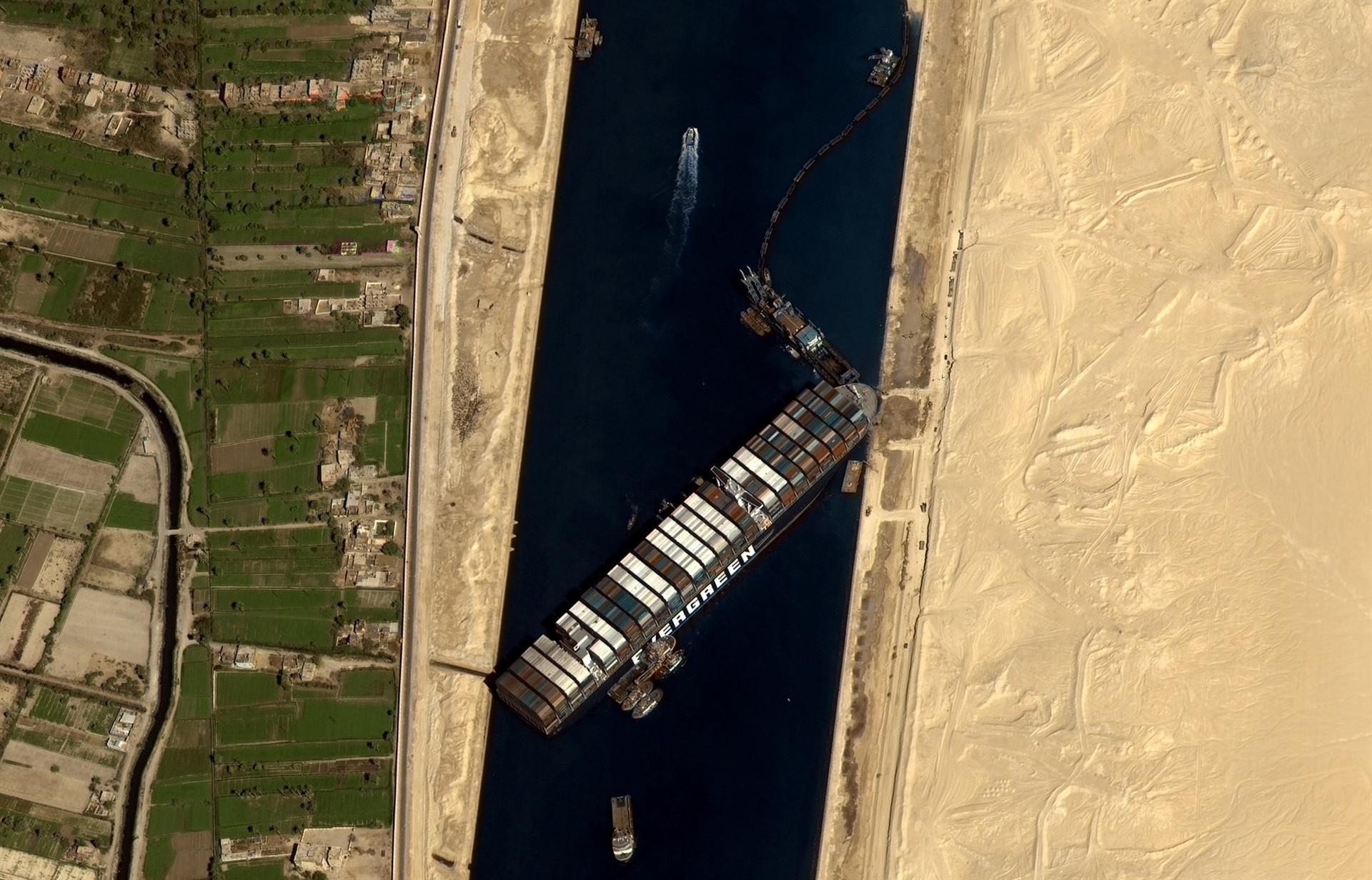
IV. The Currency That Opens Doors
The cargo has been unloaded. The documents confirm that it arrived, and the buyer has instructed its bank to pay. Yet the seller is still waiting. Between the two companies stand financial institutions that must verify the transaction, exchange currencies if necessary and move funds through accounts they hold with one another. A shipment can complete its physical journey while its payment remains suspended. The ability to trade depends on access to a financial network as surely as it depends on access to a port.
Most of the time, that network remains invisible. A company sees an invoice, an exchange rate, fees and a payment confirmation. Behind these familiar operations lies a hierarchy of currencies and institutions. Some currencies are readily accepted far beyond the jurisdictions that issue them. Others must first be exchanged into a currency that suppliers will accept and banks can readily obtain. This difference affects borrowing costs, commercial choices and the reserves a country needs to withstand pressure.
An international currency gains strength through repeated use. Companies invoice in it because their suppliers, customers or competitors already do. Banks develop the services required to finance those transactions. Investors hold assets denominated in it because they can buy and sell them in large markets. Central banks accumulate reserves partly to meet the needs arising from this activity. Each use supports the others, making an established currency difficult to displace even when governments have reasons to reduce their dependence on it.
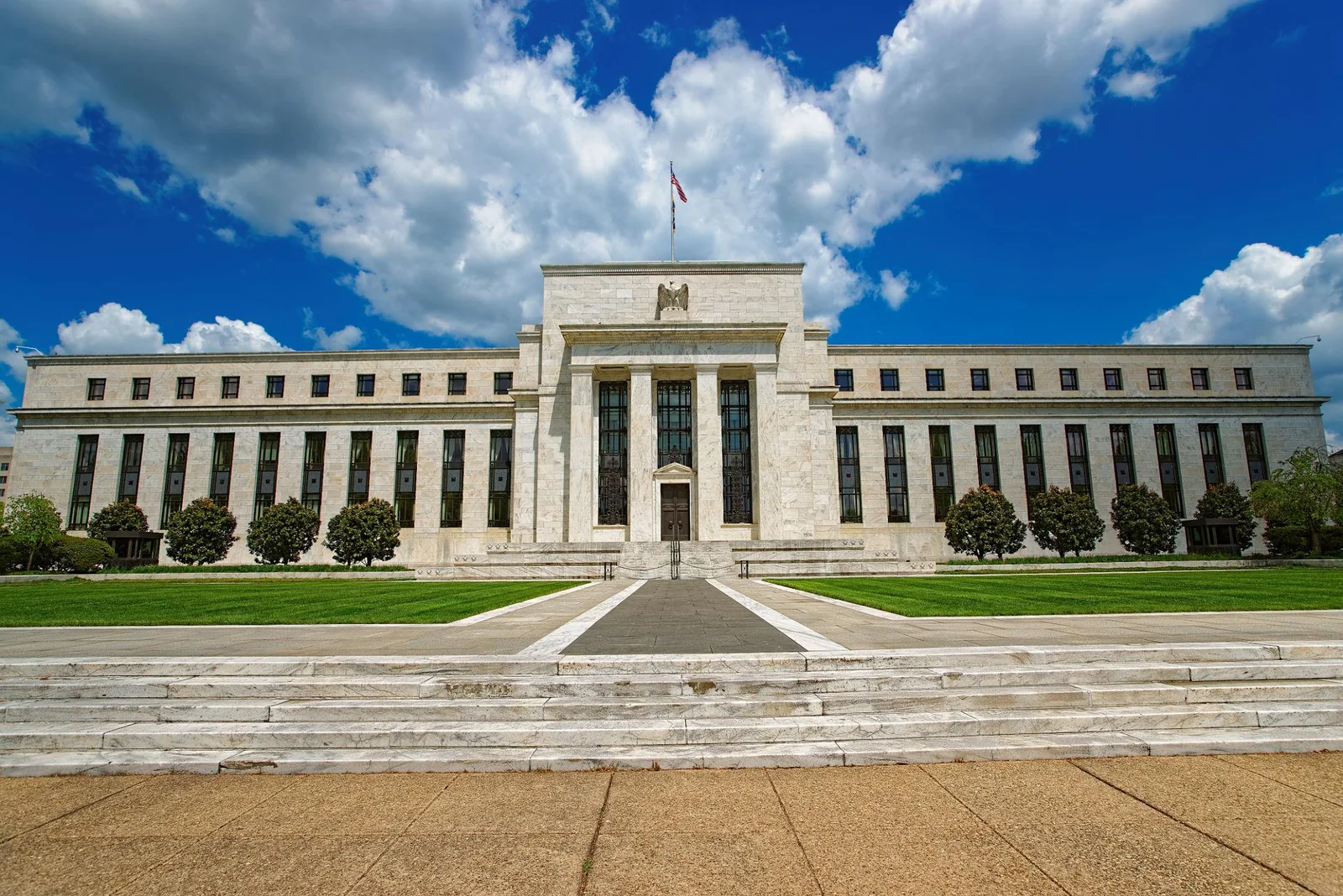
The dollar occupies the central position in this system. In its July 2025 assessment, the Federal Reserve reported that the US currency accounted for around 58% of disclosed global foreign exchange reserves in 2024, compared with approximately 20% for the euro and 2% for the Chinese renminbi. These figures concern the currency composition of disclosed foreign exchange reserves. They do not measure the dollar’s share of all financial assets or international payments. They nevertheless show the continuing preference of reserve managers for assets denominated in the American currency.
Foreign exchange trading reveals another dimension of that position. According to the Bank for International Settlements, the dollar appeared on one side of 89.2% of transactions in April 2025. Because every foreign exchange transaction involves two currencies, their individual shares add up to 200%. The figure therefore measures the dollar’s involvement in currency trading, rather than the proportion of world trade invoiced in dollars. It reflects the currency’s role as an intermediary through which many other currencies are exchanged.
That role rests on more than economic size. Users need financial markets capable of absorbing large transactions, instruments with different maturities and institutions through which assets can be held, financed and sold. The US Treasury market supplies a vast pool of securities used as reserves, investments and collateral. Around it sits a broader system of banks, dealers, funds and payment arrangements. The convenience of using the dollar emerges from this combination of depth, liquidity and accumulated practice.
For the United States, the result is a wider pool of demand for dollar assets and substantial freedom to borrow in its own currency. For other economies, using the dollar can facilitate trade and lower transaction costs while creating exposure to financial conditions they do not control. A company earning revenue in a domestic currency but owing dollars must obtain those dollars when payments fall due. If its currency depreciates, the burden increases even when the amount borrowed has not changed.
The same vulnerability can appear across an entire financial system. Banks may finance dollar assets with funding that must be renewed frequently. Exporters may depend on trade credit, and governments may face foreign-currency debt repayments. During periods of stress, the need for dollars can rise just as lenders become less willing to provide them. A disturbance originating in financial markets then affects businesses whose underlying activity remains viable but whose access to funding has narrowed.
The Federal Reserve’s swap lines illustrate the importance of having access to the issuer of the currency. Through these arrangements, participating foreign central banks obtain dollars from the Fed and lend them to institutions in their jurisdictions. During the market turmoil of spring 2020, outstanding drawings reached roughly $450 billion at the end of May. The mechanism helped address dollar funding pressures outside the United States. It also made visible a hierarchy that normal market conditions tend to obscure: access to emergency liquidity depends partly on institutional relationships established before the crisis.
Providing that support serves American interests as well. Dollar funding problems abroad can feed back into US markets through forced asset sales, disrupted credit and reduced economic activity. Monetary centrality brings exposure to the difficulties of those using the currency. The institution at the centre has reasons to stabilise the wider network, even when the immediate shortage appears elsewhere.
This network also creates channels for financial coercion. If a transaction requires a bank account, an intermediary or a market subject to a particular jurisdiction, the authorities of that jurisdiction may be able to restrict it. The effectiveness of a measure depends on the legal rules involved, the institutions through which the payment passes and the alternatives available to the parties. Power emerges from the practical need to keep using services that a government can influence.
SWIFT is often treated as if it were the institution moving money around the world. Its function is to provide standardised financial messaging through which institutions communicate payment instructions and other information. It does not itself hold or transfer the funds underlying those messages. When designated Russian banks were disconnected in 2022 under European Union regulations, the measure restricted access to an important communications network. Its consequences interacted with other sanctions, banking decisions and payment arrangements.
US restrictions on correspondent banking operate through a different mechanism. A foreign bank may rely on accounts with other banks to conduct transactions in a currency or jurisdiction where it lacks direct access. Losing such relationships can make ordinary international business much harder. The precise scope of a restriction matters: which institution is designated, which transactions are prohibited, which exceptions apply and whether the activity falls within the relevant jurisdiction. Financial centrality gives authorities substantial reach, though each measure works through identifiable legal and operational connections.
Private institutions can amplify these effects. A bank may decide that a transaction is too costly to investigate or that serving a particular market creates more compliance risk than commercial value. Businesses can then struggle to obtain services even where some transactions remain legally permitted. The practical boundary of financial access is shaped by the decisions of intermediaries as well as the wording of official rules.
These vulnerabilities explain efforts to diversify reserves, settle trade in local currencies and develop alternative payment arrangements. Such initiatives can reduce dependence for particular transactions. Their broader significance depends on what happens after payment. An exporter receiving a partner’s currency must be able to use it to buy goods, repay obligations, invest or exchange it on acceptable terms. If trade is persistently unbalanced, the party accumulating that currency needs assets it is willing and able to hold.
A payment mechanism can make a transfer faster or cheaper without resolving these questions. International use also requires confidence in convertibility, predictable treatment of assets and sufficient market liquidity. Businesses must consider what they can do with a currency during normal conditions and whether those options will remain available under stress. Building the infrastructure for payment is one part of building a monetary alternative.
Diversification therefore proceeds unevenly. A currency can gain ground in bilateral trade while remaining less attractive for reserves or borrowing. A country can hold fewer dollars yet still depend on dollar funding for important sectors. Different functions change at different speeds because each rests on its own contracts, markets and habits. The durability of a monetary system comes partly from the effort required to alter these arrangements together.
For countries and companies, financial autonomy consequently involves managing exposure across currencies, maturities and funding sources. Reserves provide time during a shock. Longer borrowing maturities can reduce the need to refinance under pressure. Domestic capital markets can widen the range of available funding. None of these measures removes every external constraint, but they can preserve choices when access becomes more expensive or uncertain.
The seller finally receives its money. The banking network has accepted the transaction, the required currency was available and the funds have reached the account. Yet payment completes only one stage of the relationship. If the purchase concerns an advanced machine, production still depends on the supplier’s ability and willingness to deliver it, install it and keep it working. Financial access opens a door. Beyond it lies another concentration of power: the knowledge and equipment required to make what others need.
V. The Machines Others Need
Inside a semiconductor factory, the machinery stands behind glass, beneath filtered air, in rooms where contamination too small to see can compromise production. Wafers move through successive stages of deposition, exposure, etching and inspection. The finished chips will occupy little space in a telephone, a vehicle or a server. Making them requires an industrial system spread across countries, companies and specialised disciplines. The compactness of the product conceals the scale of the cooperation behind it.
A factory gives this system a visible address. Its operation depends on capabilities located far beyond its walls. Designs arrive through specialised software. Manufacturing equipment incorporates components from numerous suppliers. Chemicals and gases must meet exacting specifications. Once processed, chips may travel elsewhere for packaging and testing. Owning the building, financing its construction or hosting it within national borders provides influence over part of this chain. Keeping production running requires access to the rest.
The semiconductor industry combines several distinct activities. Some companies design chips, others manufacture them for customers, and others specialise in memory, equipment, materials, packaging or testing. Their importance varies according to the product and the manufacturing process. A shortage at one stage can prevent the whole chain from delivering. Understanding technological power therefore means identifying which capabilities are difficult to replace and how long a substitute would take to become usable.
The scale of an established manufacturer helps explain that difficulty. TSMC reported manufacturing 12,682 products for 534 customers using 305 process technologies in 2025. Behind those figures lie relationships with designers, repeated production cycles and accumulated knowledge about how different products behave during manufacturing. A new facility must learn to produce reliably across the requirements of its customers. Constructing cleanrooms and installing equipment establishes the conditions for that learning; it does not complete it.
The distance between a successful prototype and dependable mass production is particularly important. A process must deliver sufficient quantities of functioning chips at a cost customers can accept. Engineers identify defects, adjust parameters and improve yields through repeated observation. Some of this knowledge can be documented and transferred. Much of it develops through the interaction of teams, tools and particular production conditions. Industrial experience accumulates in organisations as well as in patents.
Equipment suppliers occupy other critical positions. ASML’s extreme ultraviolet lithography systems use light with a wavelength of 13.5 nanometres to help produce extremely fine patterns on semiconductor wafers. Their performance rests on a complex combination of optics, light sources, precision motion, measurement and software. Zeiss supplies the specialised optical systems on which this capability depends. A machine associated with one manufacturer thus embodies the work of a wider network whose components cannot easily be substituted.
This interdependence complicates the idea that technological leadership belongs entirely to a single country. A company may hold an exceptional position in one segment while depending on partners elsewhere for essential components or access to customers. Its government can exercise influence through that position, but must also consider the relationships that sustain it. The power to restrict a sale and the ability to preserve a productive industrial network can pull policy in different directions.
The relationship also continues after delivery. Advanced equipment requires installation, calibration, maintenance, replacement parts and periodic improvements. ASML reported research and development spending of €4.7 billion in 2025, while services and field upgrades generated €8.2 billion in sales. These figures reflect two dimensions of the business: the continuing effort to develop new capabilities and the work needed to support machines already operating at customer sites. Purchasing equipment establishes an ongoing relationship with its supplier.
That relationship can be valuable to both sides. Customers gain access to expertise that improves performance and limits downtime. Suppliers learn from operating conditions and develop services around an installed base. It can also become a source of vulnerability. A machine may remain physically present while becoming harder to use if access to parts, technical assistance or software is restricted. The practical value of an industrial asset depends partly on whether the relationships required to sustain it remain available.
Software extends this dependence into the organisation of everyday work. An application becomes embedded through databases, procedures, employee training and connections to other systems. Over time, a company’s operations adapt to its structure. Replacing it can require migrating data, rewriting integrations, retraining staff and running systems in parallel while checking that essential functions still work. The purchase price of an alternative captures only part of the cost of changing suppliers.
Cloud computing develops this relationship further. It gives organisations access to infrastructure and services they would otherwise have to build and maintain themselves. This can lower barriers to entry and allow a small team to operate at considerable scale. As customers adopt more specialised services, their applications may become closely tied to the provider’s technical environment. Flexibility in expanding capacity can coexist with substantial difficulty in moving that activity elsewhere.
In its July 2025 cloud services investigation, the UK Competition and Markets Authority reported that fewer than 1% of customers switched providers each year in the market it examined. Low switching can reflect satisfaction, the complexity of moving systems and the costs or technical barriers involved. The figure does not establish that every customer is trapped. It does, however, direct attention towards a question that matters for both competition and strategic autonomy: how credible is the option to leave?
A credible alternative must be usable. An organisation may have a contractual right to recover its data while lacking the staff, compatible software or time required to rebuild its services elsewhere. Keeping that option practical involves technical preparation, clear terms and an understanding of which functions would be hardest to move. Dependence is shaped by choices made throughout the life of a system, often long before anyone considers changing suppliers.
Artificial intelligence adds another layer. A company using a model through an application programming interface depends on the provider’s availability, pricing, usage rules and decisions about future versions. A change in the service can affect applications built around its behaviour. Operating a model directly can provide more control over some of these conditions, while shifting responsibility towards computing infrastructure, engineering, maintenance and security. Different arrangements distribute control and effort differently.
The relevant question is therefore which decisions an organisation needs to retain. Some users may accept substantial dependence in exchange for convenience and performance. Others may need to preserve the ability to operate through a disruption, modify a system independently or move sensitive processes. Those needs should shape procurement and technical design. An aspiration to autonomy becomes useful when translated into specific capabilities that can be exercised.
Standards and interoperability influence how much room users have to make those choices. Widely supported formats and interfaces can make it easier to exchange data, connect systems and replace components. Their value depends on actual implementation: a nominally open format helps little if important information is lost during export or essential functions rely on proprietary extensions. Technical details that appear secondary at the time of purchase can later determine the cost of regaining control.
Public procurement can strengthen alternatives by creating dependable demand, supporting skills and requiring workable exit arrangements. It can also entrench a supplier when successive contracts deepen reliance on the same environment. The strategic effect depends on whether public spending develops a broader capacity to operate, maintain and improve systems. A domestic provider offers limited autonomy if the service itself remains dependent on components or expertise that users cannot readily access.
Technological power ultimately rests on the ability to do difficult things repeatedly, at the required scale and with dependable results. Scientific knowledge matters, as do capital, industrial experience, skilled labour and relationships with demanding customers. These capabilities reinforce one another over time. Their concentration gives certain companies and countries influence because others cannot quickly reproduce what they provide.
That influence carries a tension. Suppliers benefit from broad markets, continuing service relationships and confidence in their reliability. Governments may see the same position as a means of limiting another country’s capabilities. A licence can be withheld, a shipment delayed or technical support restricted. At that point, a dependency built through commercial cooperation becomes an instrument of pressure. The next question is how effectively that pressure can change another actor’s behaviour. 
VI. Turning Dependence into a Weapon
The machine is ready to leave the factory. The customer has paid, the transport has been arranged and the receiving team expects installation to begin the following week. Then an export licence fails to arrive. The equipment remains where it is. At the other end of the transaction, a production schedule starts to unravel. Nothing has been destroyed, yet an administrative decision has changed what another company, and perhaps another country, can do.
This is the moment when dependence becomes an instrument of coercion. A relationship that normally enables activity is used to constrain it. Access to finance, technology, energy or transport becomes conditional on decisions taken elsewhere. The actor imposing the restriction seeks to exploit an asymmetry: it expects the recipient to suffer more from the interruption, or to have fewer ways of absorbing it, than it does itself.
That expectation must be tested against the objective. Preventing the acquisition of a particular capability differs from persuading a government to change its policy. An export restriction may delay a weapons programme by making components harder to obtain. Whether it also induces political concessions depends on the importance the targeted government assigns to the disputed policy, the alternatives it can find and the costs it is willing to bear. Material damage and political success are separate outcomes.
Coercion also requires a comprehensible demand. The recipient needs to understand what change is being sought, what consequences will follow from refusal and what relief would accompany compliance. If restrictions appear permanent regardless of behaviour, their value as a bargaining instrument diminishes. They may continue to constrain resources, but the targeted actor has less reason to make concessions in the hope of restoring access.
Credibility operates on both sides of this exchange. A threat has weight when the actor issuing it is able and willing to carry it out. A promise of relief has weight when compliance is likely to produce the stated result. Alliances, domestic politics and legal procedures can complicate both. A government may announce a bargain whose implementation depends on institutions or partners it cannot fully control.
The language used to justify sanctions does not by itself establish their effectiveness. Authorities may describe measures as intended to change behaviour, restrict financing, discourage further action or signal opposition. Assessing the results requires examining those objectives separately. A reduction in access to equipment can be observable even when its contribution to a later political decision remains uncertain. Claims of success need to account for other pressures, incentives and developments occurring at the same time.
The distribution of costs matters just as much as their size. A government may protect the institutions and groups essential to its survival while passing much of the burden to households or less influential businesses. Scarcity can enrich intermediaries with privileged access to foreign currency, import licences or informal trading networks. Economic pressure then changes the internal distribution of resources without necessarily weakening those responsible for the targeted policy.
Even when humanitarian exemptions exist, practical obstacles can remain. Banks, insurers and transport companies may avoid transactions they consider legally complex or commercially unattractive. Permitted trade can become difficult to arrange because the intermediaries required to complete it are unwilling to participate. Understanding the effects of sanctions therefore requires following their operation through institutions and businesses, rather than stopping at the list of prohibited goods.
The target’s political priorities are another decisive variable. A government may accept substantial economic losses to preserve a policy it considers essential to national security, territorial control or its own survival. Its opponent may have greater economic resources while being less willing to sustain the costs of confrontation. Relative resolve can alter the outcome of an apparently unequal contest. The relevant question is how pressure interacts with what each side believes it has at stake.
The 2015 nuclear agreement with Iran illustrates both the possibilities and the fragility of a negotiated exchange. Under the Joint Comprehensive Plan of Action, restrictions and verification measures concerning Iran’s nuclear programme were linked to sanctions relief. On 16 January 2016, the International Atomic Energy Agency confirmed that Iran had completed the nuclear steps required for Implementation Day. The arrangement translated a political bargain into specified actions and a mechanism for checking them.
It would be difficult to attribute that agreement to sanctions alone. Diplomacy, security calculations, domestic decisions and the terms of the proposed exchange all contributed to the outcome. The sequence nevertheless shows why a route towards relief matters. Pressure became part of a negotiation in which the parties could identify what had to be done and what would follow.
The United States withdrew from the agreement on 8 May 2018 and reimposed sanctions. On 8 May 2019, Iran announced that it would begin reducing its implementation of nuclear commitments. These events exposed a central weakness of bargains extending across political cycles: one government cannot fully guarantee the decisions of its successor. The experience of a reversed agreement can affect how future promises are valued, even when new negotiators believe they can offer credible terms.
Military power raises related questions under more direct and destructive conditions. Armed forces can protect a route, destroy equipment, defend territory or make an attack more costly. These tasks require different capabilities. A force designed for a short strike may be poorly suited to a prolonged campaign. The ability to seize territory does not automatically supply the personnel, institutions and political relationships needed to govern it.
Deterrence is particularly difficult to measure because its intended result is an action that does not occur. An adversary may refrain from attacking because of an expected military response, but also because of logistical weakness, domestic constraints or a lack of interest at that moment. Effective deterrence combines capability with an adversary’s belief that it will be used under identifiable conditions. Ambiguity can sometimes preserve flexibility; it can also produce miscalculation.
Military spending provides an indication of the resources committed, rather than a direct measure of usable force. SIPRI estimated global military expenditure at $2.887 trillion in 2025, an increase of 2.9% in real terms over the previous year and 41% over 2016–2025. Those totals capture a substantial rise in financial effort. They do not reveal, on their own, the readiness of units, the availability of ammunition or the length of time operations could be sustained.
Budgets become military capability through recruitment, training, procurement, maintenance and logistics. Equipment must be delivered, crews must learn to operate it and stocks must be replenished as they are consumed. Industrial capacity determines how quickly losses can be replaced. NATO’s updated Defence Production Action Plan of February 2025 emphasised demand aggregation and industrial cooperation, reflecting the practical importance of predictable orders and coordinated production. Money has strategic value when the institutions receiving it can turn it into usable capacity.
The adversary also adapts. It disperses assets, changes tactics, searches for new suppliers and exploits weaknesses in the opposing coalition. A plan based on the initial balance of forces may become less effective as the conflict develops. Sustained power requires learning while operating, including the ability to recognise when assumptions have failed. Suppressing unwelcome information can be as damaging as a shortage of equipment.
Even a successful military operation leaves the question of the political order that follows. Destroying a capability may remove an immediate threat while generating demands for reconstruction, policing or long-term protection. Civilian harm can weaken cooperation and make local partners less willing to support the intervening power. The costs of an operation include the relationships it alters and the obligations it creates, alongside the resources used to conduct it.
Economic and military coercion therefore share a demanding requirement: they must connect a means of imposing costs to an achievable political result. The ability to cause disruption is real power, but its exercise can encourage evasion, resistance and the search for substitutes. Each use changes the environment in which the next threat will be assessed.
An order maintained through repeated pressure requires constant expenditure and attention. Its participants look for ways to reduce their exposure, while those enforcing it must continually demonstrate that resistance will be costly. Power becomes easier to sustain when others find reasons to cooperate, accept its rules or regard its institutions as legitimate. Beyond the capacity to compel lies another source of influence: the ability to make an order worth accepting.
VII. Making an Order Acceptable
A student arrives at a university abroad. Over the following months, she learns the vocabulary of a discipline, the methods considered rigorous and the references expected in a serious argument. She also discovers how people question a lecturer, apply for a research position or disagree in public. When she leaves, she carries more than a qualification. She takes with her habits, relationships and a sense of how institutions can work. No government needs to instruct her to become an intermediary for that experience.
The influence produced through education is rarely direct or predictable. A student can admire a university while opposing the foreign policy of its host country. Familiarity can deepen criticism as readily as attachment. Yet the experience establishes connections through which ideas, professional practices and opportunities continue to circulate. Years later, a research partnership or commercial relationship may draw on trust formed in a classroom.
The scale of these exchanges gives them structural importance. The Institute of International Education’s Open Doors 2025 report counted around 1.18 million international students in the United States in the 2024–2025 academic year. That total included approximately 294,000 people participating in Optional Practical Training, a programme allowing eligible international students to gain work experience related to their studies. India accounted for roughly 363,000 students and China for 266,000. These figures describe educational and professional connections, not a population whose political loyalties can be assumed.
Their significance lies partly in the relationships that survive the initial stay. Graduates enter companies, laboratories, public administrations and universities in different countries. Some remain in the host economy, contributing skills and building careers. Others return home or move elsewhere while retaining collaborators and professional reference points. An attractive educational system thus creates a dispersed network that no central authority fully directs.
Culture works through similarly open processes. A film, a novel or a musical form can make another society familiar before its institutions are understood. Audiences encounter landscapes, social expectations, conflicts and ways of speaking. Repeated exposure can make a language easier to learn or a place more desirable to visit. It can also reveal inequalities and contradictions that official communication would prefer to leave aside.
That independence is part of the appeal. A cultural sphere capable of criticising its own society can convey vitality and confidence. Its influence often comes from the freedom of artists to describe experiences that do not fit a national promotional campaign. Governments can support translation, exchanges, museums and artistic production, but attempts to dictate the message may weaken the credibility that made the work attractive in the first place.
Attraction, however, does not automatically produce political agreement. People can consume another country’s entertainment, buy its products and reject its strategic objectives. Cultural familiarity creates opportunities for influence without guaranteeing their outcome. Its effects depend on how they interact with lived experience, historical memory and the conduct of institutions. A persuasive image loses force when repeated encounters contradict it.
The same applies to the legitimacy of an international order. Governments and societies may accept rules because they consider them useful, fair or sufficiently predictable. They may also comply because alternatives are costly. These motivations can coexist, but they imply different degrees of durability. An arrangement supported by practical benefits and a measure of consent requires less continuous pressure than one maintained mainly through fear of exclusion.
Legitimacy grows partly from the experience of participation. Can weaker members make claims and expect them to be heard? Are rules applied with enough consistency to make planning possible? Can disputes be settled without the strongest actor deciding every outcome? An order need not eliminate inequalities to secure cooperation. It must give enough participants reasons to believe that its procedures offer something they would struggle to obtain outside it.
The circulation of information shapes how those questions are understood. Newspapers, broadcasters, publishers and universities have long selected which events receive attention and which interpretations gain authority. Digital platforms add systems that rank, recommend and distribute content across enormous audiences. Their influence lies in the conditions under which information becomes visible: what is recommended, what spreads easily and what users are likely to encounter repeatedly.
The Reuters Institute’s Digital News Report 2026, based on an online survey across 48 markets, found that 54% of respondents used social or video networks for news each week, compared with 51% using news publishers’ own websites or applications. The groups overlap, and the survey should not be read as a census of the entire world population. The comparison nevertheless indicates the importance of intermediaries between those producing journalism and those consuming it.
That position affects producers as well as audiences. News organisations, public figures and institutions adjust their formats and publishing practices to the systems through which they reach people. Decisions about recommendation, moderation or monetisation can alter the visibility and economic viability of particular kinds of content. These effects can arise from commercial priorities and technical choices without requiring a coordinated political intention.
The structure of attention becomes a source of power because visibility is scarce. An issue that receives sustained exposure can become a public priority, while another remains difficult to place on the agenda. Repetition can establish familiarity before evidence has been examined. Emotional intensity may attract engagement more easily than qualification or uncertainty. The resulting environment influences which arguments public actors believe they must address.
Artificial intelligence introduces another intermediary. A user asking a question may receive a synthesised answer before opening any original source. The system selects, combines and presents information in a form that can appear coherent and authoritative. Choices about training data, retrieval, evaluation and presentation influence which perspectives are represented and which assumptions remain implicit. The interface can make a complex selection process feel like a simple answer.
The same Reuters Institute report found that 10% of respondents used AI chatbots for news each week in 2026, up from 7% in 2025. These figures describe a developing practice within the surveyed markets. They do not establish that chatbots have replaced other sources. They do suggest that the systems producing answers are becoming part of the infrastructure through which people interpret public affairs.
Their outputs can also reproduce social patterns embedded in the material from which they learn. A UNESCO study published in March 2024 found gender stereotyping in the language models it examined; in its analysis of Llama 2, women were associated with domestic roles four times as often as men. This was a finding about particular models and tests at a particular time. It cannot be generalised to every subsequent system. Its wider relevance lies in showing how apparently neutral responses can carry inherited assumptions.
The political implications extend beyond overt misinformation. Categories, examples and omissions shape understanding even when individual statements are factually correct. A system may consistently foreground certain institutions, treat one experience as typical or present a contested interpretation without making the dispute visible. Influence can operate through the background against which a question is answered.
Audiences still interpret what they encounter through their own experience. Historical memory affects the credibility of messages about freedom, security or development. Promises are assessed alongside remembered interventions, unequal treatment and earlier disappointments. A principle presented as universal can lose persuasive force when its application appears selective. Communication cannot indefinitely compensate for a gap between stated commitments and observable conduct.
Credibility therefore depends on the capacity to acknowledge failure and permit correction. Institutions that publish inconvenient findings, protect criticism and revise decisions provide evidence that their principles have practical consequences. These processes can be slow and contentious. They nevertheless help establish that authority is subject to standards beyond the preferences of those temporarily exercising it.
The student eventually leaves the university. What remains with her may include the quality of its laboratories and the prestige of its diploma, but also smaller experiences: whether a disputed grade received a fair hearing, whether a teacher could criticise the government, whether advancement seemed open to talent. Such encounters give substance to abstract claims about a society.
The ability to make an order acceptable begins in these connections between principle and practice. External influence draws on institutions that people can observe, use and judge. To understand how long that influence can endure, it is necessary to turn inward, towards the education, administration, finances and social relationships that allow a country to sustain its ambitions.
VIII. What Sustains a Power
The industrial project has been announced. The financing is secured, the site selected and the construction schedule displayed beside an image of the future factory. Between that announcement and the first products leaving the gates lie less visible tasks. The electricity connection must be completed. Suppliers must meet specifications. Technicians must be trained, permits processed and disagreements resolved. A national ambition becomes real through thousands of decisions made by institutions and people whose names rarely appear at the inauguration.
This ability to carry a project through is one of the foundations of power. Capital and political determination can launch an initiative. Sustaining it requires an administration capable of coordinating responsibilities, businesses able to deliver and a workforce with the necessary skills. Where these conditions are weak, projects take longer, cost more or remain dependent on outside support. The gap between announced capacity and usable capacity reveals something that rankings of economic size often miss.
Population provides an important starting point, but its implications vary. A large population can support a substantial domestic market, a broad workforce and a significant tax base. Whether these possibilities are realised depends on health, education, employment and productivity. Numbers acquire economic and strategic meaning through the conditions in which people live and work.
The United Nations’ World Population Prospects 2024 described increasingly divergent trajectories. In 63 countries and areas, including China, Germany, Japan and Russia, population size had already peaked before 2024. In another 126, populations were projected to continue growing through at least 2054. These projections rest on assumptions about fertility, mortality and migration. They describe different demographic conditions within which governments must make decisions.
A young population creates potential when expanding cohorts can acquire skills and find productive work. Schools, housing, transport and businesses must develop quickly enough to accommodate them. If employment remains scarce, the same demographic growth can intensify pressure on public services and household resources. The demographic dividend emerges from the relationship between population structure and economic opportunity.
Ageing societies face a different set of adjustments. A smaller share of people of working age can increase pressure on pensions, healthcare and recruitment. The consequences depend on productivity, participation in the labour market, retirement patterns, health and immigration. Older populations can remain prosperous and technologically capable, provided their institutions adapt. Demography changes the constraints; policy and accumulated capacity influence how binding they become.
Education connects these long-term trends to the ability to act. Industrial upgrading requires technicians who can maintain equipment, managers who can organise production and researchers who can develop new methods. These capabilities depend on foundations laid much earlier. Difficulty reading a simple text affects access to training, the ability to follow technical instructions and participation in an economy whose tasks increasingly require learning throughout a career.
A 2022 World Bank assessment estimated that around 70% of ten-year-olds in low- and middle-income countries could not read and understand a simple text, compared with an estimated 57% before the pandemic. The post-pandemic figure was a simulation based on the evidence then available, rather than a direct measurement of every child or a current rate for all countries. Its significance lies in the scale of the educational disruption it sought to capture and the long period over which those losses could affect skills.
Building an advanced sector therefore requires attention to the wider system supplying it with people. A highly equipped laboratory can recruit specialists from abroad, yet depend on a narrow pool of technicians or struggle to retain younger researchers. Training takes time, and expertise develops through sustained practice. If careers are unpredictable, equipment remains unavailable or advancement depends more on connections than competence, investment in education may benefit other economies when skilled workers leave.
Research capacity has similar requirements. A grant can finance a project; a durable scientific community needs institutions that support successive projects, allow failure and preserve knowledge between them. Researchers must be able to obtain materials, collaborate and devote time to their work. Continuity matters because results often emerge from years of incremental progress. Interruptions can disperse teams whose accumulated experience would be expensive to rebuild.
These systems must be financed. Tax collection gives a state resources with which to provide services, maintain infrastructure and respond to shocks. Its effectiveness depends on administrative reach, the structure of the economy and the perceived fairness of enforcement. A narrow base can place a disproportionate burden on easily monitored workers and businesses while leaving influential groups outside it. The resulting imbalance can weaken both revenue and willingness to comply.
The relationship between taxation and public services shapes consent. People may accept substantial contributions when they receive dependable education, healthcare, security and infrastructure. They may resist smaller demands when expenditure appears wasteful or privileges seem protected. Trust does not remove disagreements over distribution, but it affects whether citizens believe that shared obligations are being applied with reasonable consistency.
Borrowing can expand the resources available for investment and help absorb a crisis. Its consequences depend on the currency, interest rate, maturity and use of the funds. Debt financing a productive system may strengthen future repayment capacity. Debt used to cover persistent losses without correcting their causes can narrow future choices. A headline debt ratio reveals only part of the exposure; the timing and terms of payments determine how pressure develops.
The World Bank’s International Debt Report 2025 reported that developing countries paid $741 billion more in principal and interest on external debt than they received in new financing over 2022–2024. The measure includes relevant private-sector borrowing as well as public obligations, so it cannot be read directly as a loss of government budget resources. It nevertheless indicates the scale of net outward debt flows during those years and the financing pressure facing many economies.
Under such pressure, governments may defer expenditure whose consequences are not immediately visible. Maintenance is especially vulnerable. A road remains open after repairs are postponed, and a water network can continue operating while leaks worsen. The savings appear in the current budget; the deterioration accumulates elsewhere. Eventually, breakdowns become more frequent and replacement more expensive. Present activity can conceal the consumption of past investment.
Institutional trust is another resource that can erode gradually. In the OECD’s 2023 survey across 30 member countries, 39% of respondents reported high or moderately high trust in their national government, while 44% reported low or no trust. These responses describe attitudes in the participating countries, rather than a universal measure of state capacity or a direct prediction of instability. They nevertheless show the difficulty many governments face in persuading people that institutions are responsive and dependable.
That difficulty becomes consequential when a society must accept sustained costs. Energy transitions, defence programmes, fiscal adjustments and infrastructure projects distribute burdens unevenly and often deliver benefits slowly. Their implementation depends partly on whether people believe that sacrifices are justified and fairly shared. Inequality can weaken that belief when influential groups appear able to avoid obligations or capture the gains.
Corruption also damages capacity through the decisions it distorts. Contracts awarded through patronage can leave infrastructure poorly built. Appointments made without regard to competence can weaken entire organisations. Officials may learn that concealing a problem is safer than reporting it. The loss extends beyond the money diverted: it affects the quality of information on which future decisions depend.
Political systems face different risks in this respect. Concentrated authority can accelerate decisions and mobilise resources, while making it harder for unwelcome evidence to reach the top. Democratic institutions can expose failures and permit correction, while polarisation or fragmented responsibilities can obstruct action. Formal categories alone do not establish how effectively a system learns. The practical question is whether errors can be identified, acknowledged and corrected before their costs become overwhelming.
Durable power requires both continuity and revision. Institutions need enough stability to preserve skills and carry investments across political cycles. They also need the capacity to abandon ineffective methods and respond to changing conditions. Excessive instability prevents learning from accumulating; rigidity prevents accumulated knowledge from being updated.
At the factory site, these qualities appear in ordinary forms. A technical problem reaches someone able to solve it. A training programme supplies the missing skills. An inspection identifies a defect before it becomes a failure. The project begins to operate because the surrounding institutions make competent action possible. Much of a country’s strength resides in this unremarkable reliability.
Such foundations also explain why countries with fewer resources can sometimes secure considerable room for manoeuvre. Dependable institutions, specialised skills and well-chosen investments can give them positions that larger economies need. Their influence grows from the value they provide and the alternatives they preserve. The next question is how those who remain dependent can use these advantages to enlarge their freedom of action.
IX. Room for Manoeuvre in a World of Dependence
At Tanger Med, containers move between ships, storage areas and inland transport networks. Some will continue towards factories and distribution centres in Morocco. Others will leave on another vessel, bound for markets elsewhere. The port serves both the national economy and shipping networks whose decisions are made across several continents. Its importance lies in its ability to connect these movements reliably, at a place where major maritime routes meet.
In 2025, Tanger Med handled approximately 11.1 million twenty-foot equivalent units, an increase of 8.4% over the previous year, alongside around 535,000 international road transport trucks. These figures describe different flows through the port complex. Container throughput includes transshipment and cannot be treated as a measure of Moroccan exports. It nevertheless gives a sense of the scale of activity concentrated at an infrastructure that makes Morocco useful to economic actors far beyond its borders.
That usefulness is a source of influence. A country does not need to dominate an entire industry to occupy a position that others value. It can offer a dependable logistics platform, specialised production, technical services or access to a market. Its room for manoeuvre expands when replacing those functions would impose meaningful costs on partners. Dependence then becomes reciprocal, even if the relationship remains unequal.
Reciprocity is built through capabilities. A favourable location attracts attention, but businesses also consider reliability, transport connections, skills and the consistency of administrative decisions. When these conditions improve together, an initial investment can draw in suppliers and additional customers. Over time, the location becomes more deeply embedded in production networks. The host country gains more than a single facility: it develops a set of relationships that can support further activity.
This process also changes the terms of negotiation. Before an investment is made, a government may compete with other locations through infrastructure, incentives or market access. Once a productive cluster develops, existing skills and supplier relationships give investors reasons to remain. The government’s bargaining position can strengthen, provided that the surrounding environment continues to function. Abruptly exploiting that position can undermine the confidence that made the cluster valuable.
Morocco’s automotive industry illustrates the scale such integration can reach. According to the Office des Changes, automotive exports amounted to 157.6 billion dirhams in 2024, out of total goods exports of 456.3 billion dirhams—roughly one-third of the total. These are export values. They do not measure domestic value added or establish Moroccan control over design, technology and commercial decisions. They show how strongly one industrial sector has become connected to the country’s external earnings.
The strategic question is what accumulates around that activity. Assembly can generate employment, export revenue and demand for local services. Its longer-term contribution depends on whether suppliers improve their capabilities, workers acquire transferable skills and domestic firms gain access to more demanding markets. An industrial base becomes more resilient when its knowledge and equipment can serve several customers and adapt to changes in demand.
This matters because a successful export sector can create its own concentration of risk. Dependence on a small number of manufacturers, destination markets or technologies can expose a country to decisions taken elsewhere. A plant closure or a change in product strategy may affect an entire local network. Diversification therefore involves developing capabilities that can be redeployed, alongside attracting additional investment.
The supporting conditions remain decisive. Factories need reliable electricity, water, transport and access to finance. Suppliers need working capital to fulfil larger orders. Training institutions must respond to evolving requirements without becoming narrowly tied to one employer’s immediate needs. Industrial policy gains substance through this wider environment. An export platform draws strength from the domestic economy that sustains it.
Resource-producing countries face a related challenge. Selling an unprocessed material can generate revenue while leaving much of the industrial activity elsewhere. Governments may seek to retain more value by encouraging domestic processing, negotiating investment conditions or restricting raw-material exports. Their ability to do so depends on the importance of the resource, the alternatives available to buyers and the practical conditions for processing it locally.
Indonesia’s nickel policy offers a clear example. Its ban on nickel ore exports took effect on 1 January 2020 as part of an effort to expand domestic processing. The development of refining capacity changed the location of industrial activity and attracted substantial investment. It also created new relationships of dependence around capital, equipment, technology and customers.
The IEA’s 2025 assessment reported that Chinese companies accounted for around 75% of nickel refining capacity in Indonesia. This distinction between location and ownership matters. Capacity installed within a country can provide employment, infrastructure and tax revenue while strategic decisions remain substantially influenced by foreign investors. Assessing the resulting power requires looking at who owns the facilities, who operates them and who controls access to finance and markets.
A host government can still gain meaningful benefits from that arrangement. The outcome depends on the terms of participation and on what the country builds with the opportunity. Training, domestic supplier development and the ability of local firms to enter more sophisticated activities can deepen the gains. Environmental damage, weak oversight or incentives that absorb much of the public benefit can reduce them. Gross investment figures capture only part of the balance.
Resource income also creates a question about time. A period of strong demand can finance infrastructure, education and a broader productive base. It can also encourage expenditure that becomes difficult to sustain when prices fall. The strategic value of a resource boom depends partly on whether it leaves behind capabilities that remain useful after the initial advantage weakens. Revenue becomes durable influence through the assets, skills and institutions it helps create.
Countries with limited natural resources can build influential positions through services and coordination. Singapore handled 44.66 million twenty-foot equivalent units in 2025 and recorded 56.77 million tonnes of marine fuel sales. These volumes reflect its role in shipping networks and the services surrounding them. The port’s value rests on the repeated decisions of companies that find it useful for moving, supplying and managing vessels and cargo.
Such a position depends on confidence. A hub must make complex activity predictable enough for others to organise their operations around it. Administrative competence, commercial services and infrastructure reinforce geographical advantages. Its success also leaves it exposed to changes in the networks it serves. A country deeply integrated into global trade gains influence through that integration while retaining a strong interest in the system’s continued functioning.
Diversification can reduce some of these vulnerabilities, but the number of partners provides an incomplete guide. Several suppliers may depend on the same upstream producer. Different transport routes may converge at a single port. Investments from several countries may all serve one destination market. Effective diversification requires identifying the shared points through which apparently separate relationships could fail together.
Diplomacy serves a similar purpose when it preserves workable relationships across several centres of power. Countries can cooperate with different partners in trade, security, technology and infrastructure according to their needs. This requires clarity about commitments and an understanding of where partners’ expectations conflict. Flexibility becomes harder to sustain when rival powers demand exclusive choices or when an arrangement in one field constrains decisions in another.
Regional cooperation can enlarge the available options. Larger markets can support investments that would be difficult to justify within a single national economy. Shared infrastructure can connect landlocked areas to ports, pool electricity resources and make supply networks less dependent on one route. These gains require agreements that remain workable when costs and benefits are unevenly distributed. Coordination creates influence only when participants can rely on the arrangements they establish.
For countries operating between larger powers, strategy therefore involves choosing where to become especially capable and where to preserve alternatives. Trying to reproduce every part of a global industrial system can exhaust resources. Excessive concentration can leave essential activities exposed to a narrow set of external decisions. The balance depends on the functions a country needs to sustain under pressure and the capabilities it can realistically develop.
At Tanger Med, another container leaves the quay. Its passage contributes to a larger system, but the deeper measure of national progress lies beyond the port’s throughput. It lies in whether nearby firms can take on more demanding work, whether skills spread through the economy and whether the country gains more choices about its next stage of development. Openness expands autonomy when participation leaves behind the capacity to decide and adapt.
Those choices remain costly. Infrastructure must be maintained, skills renewed and relationships sustained. The same is true, on a larger scale, for the powers that provide finance, technology or security to others. Every position of influence carries obligations and consumes resources. Understanding who holds the world therefore leads to a final question: what does it cost to keep holding it?
X. The Cost of Holding the World
The port remains open through the night. Pilots guide arriving vessels, technicians inspect equipment and crews prepare the next departure. Beyond the harbour, other institutions sustain the movement: banks provide financing, insurers assess exposure and maritime authorities monitor the approaches. What looks from a distance like a position of strength is, at close range, a continuing effort. Infrastructure and relationships must be maintained every day if others are to keep relying on them.
The same requirement applies to the larger systems through which power operates. A military presence needs trained personnel, supplies, maintenance and replacement equipment. A technological lead requires research and the renewal of industrial skills. An international currency depends on functioning markets and institutions capable of responding when liquidity disappears. Centrality brings influence because others depend on these services. It also creates expectations that the actor providing them will remain capable and willing to do so.
Those expectations can become obligations. An ally organises its defence around a security commitment. A company invests on the assumption that a technology will remain available. Financial institutions build balance sheets around access to a currency. When the provider changes course, the consequences travel through decisions already made. Withdrawal may reduce an immediate burden while weakening confidence in commitments elsewhere.
This is one reason power can be difficult to relinquish. A government may conclude that a particular deployment or guarantee costs more than it returns, yet fear that ending it will alter how all its promises are assessed. The reputation accumulated through previous commitments becomes part of the calculation. Continuing an arrangement can appear necessary even after its original purpose has weakened.
Overextension develops when these obligations grow faster than the resources available to sustain them. Each commitment may have a plausible justification when considered separately. Together, they compete for the same personnel, industrial capacity, public funds and political attention. The problem lies in the combined demand they place on a limited base. A state can remain exceptionally powerful while becoming less able to meet all the expectations attached to its position.
The costs reach the domestic foundations of strength. Expenditure abroad competes with maintenance, education, research and other needs at home. The relationship is not always a simple trade-off: defence investment can support industrial capabilities, and international stability can benefit domestic prosperity. But resources devoted to one purpose cannot automatically fulfil every other purpose. Strategy requires judging which commitments reinforce the capacity to act and which gradually consume it.
Past investment makes that judgement harder. Institutions develop around existing missions, businesses depend on contracts and political leaders attach their credibility to earlier decisions. Abandoning a programme can make its accumulated costs visible all at once. Continuing it spreads those costs across future budgets. The desire to protect what has already been spent can therefore sustain commitments whose future value has become doubtful.
The use of economic pressure creates another long-term cost. Restricting access to a market, currency or technology may exploit an immediate advantage. It also encourages those exposed to seek substitutes. They may accept higher costs, build inventories, finance competing suppliers or change the systems on which they rely. These responses seldom eliminate dependence quickly. Over time, however, they can reduce the leverage available to the actor that first applied the pressure.
Reliability is consequently part of the value of a central position. Users accept dependence more readily when they believe access will remain predictable. If interruption becomes a recurring possibility, they begin to pay for alternatives that previously seemed unnecessary. The provider must weigh the political benefit of a particular restriction against its effects on the relationships supporting future influence.
The search for resilience has costs of its own. Spare capacity, larger inventories and alternative suppliers require resources even when no disruption occurs. Domestic production may reduce exposure to an overseas interruption while increasing exposure to local electricity shortages, extreme weather or a concentrated national supplier base. The effectiveness of a precaution depends on the failure it is intended to address.
The OECD’s Supply Chain Resilience Review in 2025 illustrated the potential cost of broad relocalisation. In its modelling, a scenario involving extensive shifts towards domestic production could reduce global trade by more than 18% and global real GDP by more than 5%. More than half of the economies examined would also experience greater GDP volatility. These are conditional model results, rather than a forecast or a finding that every effort to develop domestic capacity is harmful. They show why reducing international connections does not automatically produce greater stability.
Resilience requires more precise choices. A country needs to identify the functions that must continue during a disruption, how long they can operate with existing stocks and which alternatives can become available in time. Medical supplies, electricity systems and industrial inputs present different problems. Some risks can be managed through inventories, others through supplier diversity, repair capacity or cooperation with partners.
Those choices also need revision. A subsidy justified by a genuine vulnerability can persist after the market changes. A protected supplier may become expensive or unreliable if support is detached from performance. Measures adopted in the name of security should be assessed against the capacity they actually deliver. Otherwise, the language of resilience can protect interests without reducing exposure.
National decisions interact across borders. If many governments subsidise the same industries, restrict the same exports or compete for the same specialists, the combined result can differ from what each intended. Investment may be duplicated in some places while essential capacity remains scarce elsewhere. Countries with less fiscal room can find themselves disadvantaged in a competition whose entry price keeps rising.
The International Monetary Fund’s 2023 work on geoeconomic fragmentation examined how such divisions could affect trade, capital flows, migration, technology diffusion and the provision of global public goods. These channels matter because the gains from international exchange extend beyond the immediate price of an imported product. Knowledge travels with investment and professional movement. Markets support specialisation. Shared institutions make some cross-border problems easier to address. Fragmentation can weaken these mechanisms at the same time as governments seek protection from external risk.
The burden is unlikely to be evenly distributed. Large economies can support activities that smaller domestic markets struggle to sustain. Wealthier governments have more resources to finance redundancy and assist affected firms. Countries dependent on imported technology, food or capital may face higher costs while having little influence over the decisions producing them. The pursuit of autonomy by powerful states can narrow the options available to others.
This makes cooperation a practical requirement even among rivals. Financial instability, disease, environmental damage and disruptions to shared infrastructure can cross political boundaries. Agreements addressing these problems need identifiable benefits, credible monitoring and workable procedures for disagreement. Cooperation can endure within a competitive relationship when each side has reasons to preserve it and some means of checking the other’s conduct.
Interdependence offers no automatic guarantee of peace. Governments can decide that territorial, political or security objectives justify severe economic costs. Commercial relationships may continue for years without resolving those conflicts. Yet the failure of interdependence to prevent confrontation does not make its disruption costless. It means that political decisions can override shared material interests.
The world described throughout this dossier has no single holder. Authority is distributed across states, businesses and institutions whose capabilities overlap without fully coinciding. Some control resources, others the means of processing them. Some provide liquidity, others the machines or routes through which production becomes possible. Their positions differ greatly in strength, and the freedom available to those relying on them is profoundly unequal.
Power lies partly in the ability to impose constraints while preserving alternatives for oneself. Its durability depends on the capacity to renew the resources supporting that advantage and to sustain enough cooperation for the surrounding system to function. The exercise of influence continually changes both. A decision that secures a concession today may weaken a relationship needed tomorrow. A commitment that appears burdensome may preserve conditions from which the provider also benefits.
The ship is still moving through the strait. On the bridge, the crew checks its course, the condition of the engines and the messages arriving from shore. The voyage depends on fuel already purchased, equipment kept in working order and a destination prepared to receive the cargo. Beyond the horizon are the factories that made the goods, the banks financing their movement and the people expecting delivery.
None of those actors sees the whole system from where they stand. Each performs a task whose completion allows another to proceed. Around them, governments draw boundaries, negotiate access and prepare for the possibility of interruption. The ship advances through this combination of ordinary cooperation and unequal authority.
Several actors could interrupt its journey. None could, alone, assemble everything required to make it possible. Power unfolds between those two realities: the capacity to exert pressure on others, and the capacity to preserve the world on which one still depends.
Principal Sources
Energy, Minerals and Water
*International Energy Agency — Energy and AI (2025).* Data centre electricity consumption, projected demand and constraints on electricity infrastructure. Executive summary.
*International Energy Agency — Global Critical Minerals Outlook 2025.* Concentration of mineral processing, investment conditions and supply diversification. Executive summary.
Food and Agriculture Organization of the United Nations — SDG Indicator 6.4.2: Level of Water Stress. Freshwater withdrawals, agriculture and pressure on water resources. Data and methodology.
Trade Routes and Communications
*UN Trade and Development — Navigating Troubled Waters (2024).* Disruptions in the Red Sea, Black Sea and Panama Canal, and their effects on shipping capacity and freight costs. Report.
*US Energy Information Administration — Amid Regional Conflict, the Strait of Hormuz Remains Critical Oil Chokepoint (June 2025).* Oil and LNG flows through Hormuz and available pipeline bypass capacity. Analysis.
International Telecommunication Union — Submarine Cable Resilience Summit (February 2025). The scale of submarine cable networks, recurring faults and repair requirements. Official release.
Currencies and Financial Networks
*Federal Reserve — The International Role of the U.S. Dollar: 2025 Edition.* Reserve currencies, international dollar use and the financial infrastructure supporting its position. Analysis.
Bank for International Settlements — April 2025 Triennial Central Bank Survey. Currency shares in foreign exchange trading and the structure of international financial markets. Analysis of survey findings.
*Federal Reserve — Credit and Liquidity Programs and the Balance Sheet: Recent Developments (August 2020).* Central bank swap lines and dollar liquidity provision during the pandemic shock. Report.
SWIFT — Information on Restrictions Affecting Russian and Belarusian Institutions. Financial messaging and the implementation of disconnection requirements. Institutional information.
US Department of the Treasury, Office of Foreign Assets Control — Correspondent and Payable-Through Account Restrictions. The operation of restrictions affecting foreign banks’ access to US banking relationships. Official guidance.
Technology and Industrial Dependence
*TSMC — Annual Report 2025.* Manufacturing scale, process technologies and customer relationships. Annual report.
*ASML — Annual Report 2025 and EUV Technology Documentation.* Lithography systems, supplier relationships, research expenditure and support for installed equipment. Strategic report, financial information and EUV systems.
*UK Competition and Markets Authority — Cloud Services Market Investigation: Summary of Final Decision (July 2025).* Switching, technical barriers and competition in cloud services. Report.
Sanctions, Defence and Coercion
*Council of the European Union — Why the EU Adopts Sanctions.* Stated objectives and principles of EU restrictive measures. Policy overview.
International Atomic Energy Agency — JCPOA Implementation and Verification. Verification of Iran’s implementation steps in January 2016 and subsequent monitoring of nuclear commitments. Implementation Day statement and June 2025 report.
US Department of the Treasury, Office of Foreign Assets Control — Archived JCPOA Information. Sanctions arrangements and the US withdrawal from the agreement. Official archive.
*Stockholm International Peace Research Institute — Trends in World Military Expenditure, 2025 (2026).* Global military expenditure and changes over time. Fact sheet.
*NATO — Updated Defence Production Action Plan (February 2025).* Industrial capacity, demand aggregation and defence production cooperation. Official text.
Education, Information and Influence
*Institute of International Education — Open Doors 2025.* International students in the United States, countries of origin and Optional Practical Training participation. Principal findings.
*Reuters Institute for the Study of Journalism — Digital News Report 2026.* News consumption through publishers, social and video platforms, and AI chatbots. Executive summary.
*UNESCO — Generative AI: UNESCO Study Reveals Alarming Evidence of Regressive Gender Stereotypes (March 2024).* Gender stereotyping in the language models examined. Study findings.
Demography, Institutions and Public Resources
*United Nations — World Population Prospects 2024.* Population trajectories, demographic divergence and long-term projections. Principal findings.
*World Bank and Partner Organisations — The State of Global Learning Poverty: 2022 Update.* Foundational reading skills and estimates of pandemic-related learning losses. Report and methodology.
*World Bank — International Debt Report 2025.* External debt and net debt outflows from developing countries during 2022–2024. Principal findings.
*OECD — Survey on Drivers of Trust in Public Institutions: 2024 Results.* Public trust and perceptions of institutional responsiveness and reliability. Report.
Industrial Strategies and Room for Manoeuvre
*Tanger Med Port Authority — Port Activity Report for 2025.* Container throughput, international road transport and port activity. Official release.
*Office des Changes, Morocco — Foreign Trade Report 2024.* Moroccan merchandise exports and the contribution of the automotive industry. Report, in French.
International Energy Agency — Critical Minerals and Investment in Southeast Asia. Indonesia’s nickel export restrictions, processing expansion and ownership of refining capacity. Mineral supply analysis and World Energy Investment 2025: Southeast Asia.
Maritime and Port Authority of Singapore — Port Performance in 2025. Container throughput, marine fuel sales and maritime services. Official release.
Resilience and Fragmentation
*OECD — Supply Chain Resilience Review (2025).* Supply diversification, resilience policies and modelling of extensive relocalisation. Principal findings.
*International Monetary Fund — Geoeconomic Fragmentation and the Future of Multilateralism (2023).* Fragmentation through trade, finance, migration, technology and global public goods. Staff Discussion Note.
Methodological note: figures refer to the periods and definitions specified in the dossier. Projections and modelled scenarios are distinguished from observed data. Official policy documents establish institutional objectives and measures; they do not, by themselves, demonstrate their effectiveness. The interpretation connecting these sources is the responsibility of Atlas Limits.
Atlas Limits Research Desk
Atlas Limits’ editorial and analytical desk.