Qatar built its energy power on one of the world's largest natural gas reserves. But the agreements signed with two American producers in October 2026 reveal a deeper evolution: Doha now intends to secure supplies originating beyond its own territory. Behind this strategy lies a transformation of the global gas trade, in which ownership of resources is no longer sufficient to guarantee control over markets.
For several decades, Qatar's energy power rested on a relatively straightforward equation. A small territory, a limited population, immense natural gas reserves, and the industrial capacity to transport that resource to the world's major importing economies. This model transformed a small state on the Persian Gulf into a central player in global energy security, while providing it with the financial means to exercise diplomatic and economic influence far beyond what its geographical size might suggest.
On October 29, 2026, an agreement with Australian company Woodside Energy illuminated a new stage in this trajectory. QatarEnergy, the state-owned group that dominates the country's energy industry, committed to purchasing liquefied natural gas produced in Louisiana, United States, for twenty years. Volumes could reach three million tonnes annually, with initial deliveries expected from 2030.
The transaction might appear paradoxical. Why would one of the world's leading exporters of liquefied natural gas need to secure supplies from a foreign producer? Why undertake commercial commitments extending over two decades when Qatar is already investing heavily to expand its domestic production capacity?
These questions become less surprising once gas is no longer considered merely a resource extracted from beneath the ground. In an international market organised around contracts, terminals, LNG carriers, and competing destinations, power also depends on the ability to deliver the right volume, to the right place, at the right time. Qatar is not abandoning its geological advantage. It is seeking to add a commercial dimension that could progressively transform the nature of its energy power.
A fortune born of an exceptional territory
Qatar's modern history is inseparable from the North Field, the immense offshore gas reservoir discovered in 1971 and geologically connected to Iran's South Pars field. Together, they form one of the largest known accumulations of natural gas in the world. Exploiting this resource gave Qatar an extraordinary production base, but converting that wealth into international influence was never automatic.
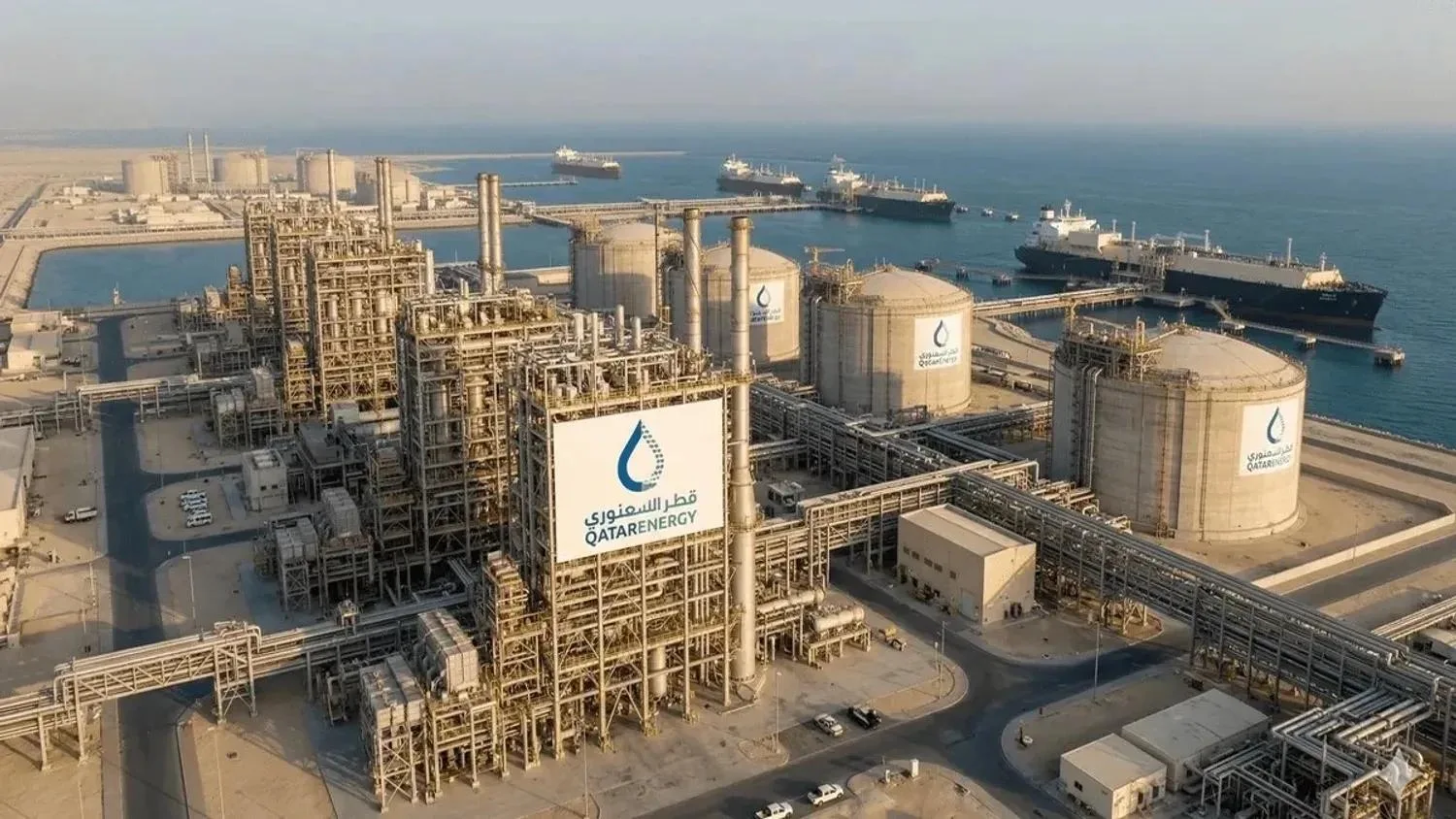
Natural gas presents a difficulty that oil does not face to the same extent: maritime transportation requires an additional industrial transformation. To reach distant markets, gas must be cooled to approximately minus 162 degrees Celsius, liquefied, loaded onto specialised vessels, and subsequently regasified at its destination. Every stage requires substantial investment, complex infrastructure, and long-term commercial coordination.
Qatar built its competitive advantage by mastering this industrial chain. From the 1990s onwards, the development of liquefaction facilities, port infrastructure, and a specialised shipping fleet allowed it to transform a geographically concentrated resource into a commodity traded worldwide.
This strategy was accompanied by lasting contractual relationships with major Asian economies, particularly Japan, South Korea, India, and, more recently, China. Europe also became an important destination, especially following the progressive disruption of its traditional Russian gas supplies.
Qatar's power therefore already depended on more than ownership of a gas field. It emerged from a combination of reserves, infrastructure, financing, diplomatic relationships, and commercial commitments. Nevertheless, its centre of gravity remained predominantly domestic: gas was produced in Qatar, liquefied in Qatar, and exported from Qatari facilities.
It is this geographical concentration that the new strategy seeks to move beyond.
North Field expansion: producing more, but not only more
Even before the American agreements of October 2026, QatarEnergy had embarked on one of the largest industrial expansions in the history of liquefied natural gas.
The North Field East, North Field South, and North Field West projects are intended, according to the group's announced targets, to increase national liquefaction capacity from 77 million to 142 million tonnes per year over time. This would represent an increase of approximately 84% compared with the historical production base.
The ambition is considerable. It requires new liquefaction trains, processing facilities, additional maritime capacity, and commercial commitments designed to secure buyers for growing volumes over several decades.
It also reveals a strategic conviction: despite electrification, the expansion of renewable energy, and decarbonisation policies, Qatar believes natural gas will retain an important role in the international energy system.
That conviction, however, is not universally shared. Consumption trajectories differ across regions. In Europe, climate policies, electricity grid investment, and efforts to reduce dependence on fossil fuels may constrain long-term demand. In Asia, industrialisation, electricity generation, and the substitution of gas for coal may continue to support imports. Price developments, environmental constraints, and competition among suppliers will ultimately determine the profitability of new capacity.
Qatar is therefore pursuing an industrial expansion whose horizon extends far beyond immediate market fluctuations. Yet producing more does not solve every problem. Additional capacity concentrated in the same geographical area remains exposed to the same territorial and maritime vulnerabilities.
This is where the limitations of an exclusively domestic production model become apparent.
Hormuz and the vulnerability of an exporting power
The geography that enabled Qatar to become an energy power is also one of its principal weaknesses.
Located on the Persian Gulf, the country depends on the Strait of Hormuz to transport most of its maritime LNG exports to international markets. This narrow passage between Iran and Oman has long represented a major source of tension in global energy trade.
The regional disruptions of 2026 provided a forceful reminder of this reality. Attacks against Qatari energy facilities, navigation difficulties, and restrictions affecting maritime flows exposed the vulnerability of an industrial system that remains among the most advanced in the world.
According to information reported by Reuters, two liquefaction trains at Ras Laffan sustained damage affecting approximately 17% of Qatar's export capacity, with repairs potentially extending over several years. The crisis also caused production interruptions and difficulties in fulfilling commercial commitments.
It would be excessive to conclude that QatarEnergy's international strategy emerged solely from this crisis. Its American investments, industrial partnerships, and development of trading activities predate these events. The disruptions of 2026 nevertheless reinforced the relevance of a geographical diversification strategy already under way.
The problem facing Doha is structural. A state may possess immense reserves, operate sophisticated facilities, and sign contracts with the world's largest economies without being able to guarantee the uninterrupted physical delivery of its exports.
Security of supply does not depend exclusively on the quantity of gas available underground. It also depends on the integrity of facilities, freedom of navigation, vessel availability, and the stability of commercial routes.
For Qatar, this distinction fundamentally changes how energy power must be understood.
The American route
The two agreements concluded by QatarEnergy in October 2026 illustrate this evolution with particular clarity.
On October 22, the Qatari group announced two contracts with American producer Cheniere Energy, covering a combined volume of up to four million tonnes of LNG annually. Supplies will originate from the Sabine Pass facilities in Louisiana and Corpus Christi in Texas. Deliveries are expected to begin in 2031 and continue through 2054.
One week later, on October 29, QatarEnergy concluded an additional twenty-year agreement with Woodside for the purchase of LNG from the Louisiana LNG project near Lake Charles. The contract provides for deliveries beginning in 2030, with volumes gradually increasing to three million tonnes annually following the commissioning of the relevant liquefaction trains.
At their full contractual levels, these commitments would represent up to seven million tonnes of American LNG annually. They are not, however, volumes immediately available or guarantees of complete delivery. The timetable depends in part on the completion of industrial projects, while one million tonnes per year under the Cheniere agreements remains subject to a final investment decision concerning the Sabine Pass expansion.
These distinctions matter. A long-term contract provides commercial visibility, but it does not eliminate construction risks, commissioning delays, or execution constraints.
The strategic significance of these agreements remains substantial.
Gas purchased in the United States can be loaded on the American Gulf Coast without passing through the Strait of Hormuz. It therefore provides QatarEnergy with a source of supply geographically separate from its domestic facilities.
The agreements are structured on a free-on-board, or FOB, basis, meaning that the contractual transfer takes place at the loading port under the agreed terms. Such arrangements can give the buyer greater control over shipping arrangements and cargo marketing, subject to other contractual provisions.
Qatar is therefore no longer limiting itself to selling what it produces. It is progressively assembling a portfolio of volumes whose geographical origins, economic conditions, and marketing possibilities may differ.
The distinction may appear technical. Yet it lies at the heart of the transformation under way.
From production to a global portfolio
In the traditional model of a gas exporter, performance depends primarily on production costs, plant availability, and the prices obtained from customers.
In an international portfolio model, other variables become decisive. The company must compare prices across regions, anticipate buyers' requirements, organise transportation, manage contractual risks, and optimise the use of volumes originating from multiple sources.
An LNG carrier loaded in the United States may have a different economic value depending on whether it is destined for a European or Asian terminal. The decision depends on destination-market gas prices, transportation costs, port charges, voyage times, and contractual obligations. It may also be influenced by geopolitical constraints or the availability of regasification capacity.
This logic brings QatarEnergy closer to the major international energy trading companies, for which value creation arises not exclusively from extraction but also from coordinating production, transportation, and consumption.
The Cheniere agreement introduces an additional dimension. Its pricing is indexed to the American Henry Hub benchmark, plus a fixed fee. This structure exposes the buyer to pricing dynamics different from those associated with contracts traditionally indexed to oil or negotiated according to destination markets.
It can therefore create arbitrage opportunities when differences between American, European, and Asian prices are sufficiently large to cover liquefaction, transportation, and other commercial costs.
Such opportunities should not, however, be confused with guaranteed profits. Price differentials can narrow, shipping costs can rise, and contractual conditions can limit the actual flexibility of cargoes. The financial terms of the Woodside agreement have not been publicly disclosed.
QatarEnergy's strategy is less about betting on a particular price differential than about multiplying the commercial configurations through which it can serve global demand.
From this perspective, geographical diversification becomes a form of economic diversification. It reduces certain dependencies while opening new commercial possibilities.
Golden Pass: an industrial presence beyond Qatar
QatarEnergy's internationalisation is not limited to purchasing gas from foreign producers.
In the United States, the group also holds a 70% majority interest in Golden Pass LNG, alongside ExxonMobil, which owns the remaining 30%. Located in Texas, this liquefaction project represents an important step in establishing a Qatari industrial presence beyond its national territory.
The distinction between Golden Pass and the contracts concluded with Cheniere or Woodside deserves particular attention.
In the first case, QatarEnergy directly participates in the ownership of an industrial facility. In the others, it acquires contractual rights to future volumes produced by facilities operated by third parties.
These approaches involve different risks and capital requirements. An industrial equity investment exposes its owner to construction costs, operational performance, and asset profitability. A long-term purchase contract primarily creates commercial obligations and exposure to market conditions and the supplier's ability to deliver.
Their combination nevertheless allows QatarEnergy to develop a more diversified international presence.
Qatar can continue expanding domestic capacity while participating in foreign projects and purchasing cargoes from independent producers. It is moving towards a model in which energy power is measured as much by the breadth of a commercial portfolio as by the volume extracted within national borders.
Over time, this evolution could change how major energy companies are compared. Production capacity remains essential, but marketed volumes, trading margins, geographical diversification, and delivery reliability are becoming complementary indicators of influence.
A new competition among gas powers
QatarEnergy's international expansion is taking place in a global market undergoing profound restructuring.
The United States has fundamentally altered the balance of gas trade through the development of shale gas and the multiplication of export terminals. Australia remains a major producer, while other countries, including Canada and several African exporters, are seeking to strengthen their positions in international markets.
Competition no longer concerns reserves or liquefaction capacity alone. It increasingly involves contractual terms, destination flexibility, logistics costs, and the ability to respond quickly to importers' requirements.
For buyers, this evolution may provide greater opportunities for diversification. A supplier capable of offering volumes from several regions can be particularly attractive to companies seeking to limit their exposure to a single production basin.
Yet diversification does not eliminate interdependence. American LNG remains exposed to domestic gas-market conditions, Gulf Coast infrastructure, extreme weather events, and regulatory decisions. Maritime transportation remains vulnerable to geopolitical tensions, port constraints, and changing insurance costs.
By spreading its sources of supply, QatarEnergy does not make risk disappear. It changes its composition.
This transformation also introduces a new form of competition. Qatar and the United States can simultaneously be rivals in LNG exports and partners in its commercial distribution. American producers may supply a Qatari company that subsequently markets volumes in the same destinations targeted directly by other American exporters.
The boundary between producer, buyer, investor, and trader becomes increasingly fluid.
This development does not eliminate competition between states. It partially shifts that competition towards control over commercial chains and contractual relationships.
Energy as an instrument of power
For Qatar, the implications extend beyond the gas industry.
For decades, hydrocarbon revenues have enabled the country to develop infrastructure, accumulate international assets, and conduct an exceptionally active foreign policy. Its sovereign wealth fund, the Qatar Investment Authority, contributes to this economic projection by investing in companies, infrastructure, and financial assets around the world.
Energy power has therefore helped create an international influence that does not directly depend on the size of the country's territory or population.
QatarEnergy's current evolution extends this logic through different instruments.
By becoming a significant buyer of American LNG, the group strengthens its commercial relationships with the United States while consolidating its presence in a strategically important industry. By maintaining investment in the North Field, it preserves the advantage derived from domestic reserves. By developing its international portfolio, it seeks to expand its ability to serve customers regardless of the physical origin of individual cargoes.
This combination may strengthen Qatar's economic resilience, but it does not guarantee geopolitical immunity. Relations between states, regional conflicts, and commercial tensions can continue to affect infrastructure, contracts, and maritime flows.
International diversification does not therefore replace territorial security. It becomes a complement to it.
It would also be premature to describe the transformation as complete. New American volumes have yet to be delivered, industrial projects must meet their schedules, and the profitability of these commitments will depend on market conditions over several decades.
The strategic direction is nevertheless clear: Qatar is seeking to become less dependent on the geographical concentration of its own exports without abandoning the exploitation of its national resources.
Power no longer lies only underground
The Qatari model has long illustrated how a state can transform natural wealth into economic power. The discovery of an immense gas field was not enough. Facilities had to be built, a shipping fleet financed, buyers convinced, and commercial exchanges embedded in lasting contractual relationships.
The next stage extends this logic beyond national borders.
The Woodside agreement is not, by itself, an industrial revolution. Three million tonnes annually remain modest compared with the production capacity Qatar intends to develop. But its significance exceeds its volume. It demonstrates that a major exporter may regard the purchase of gas produced elsewhere as strategically valuable, not necessarily because it lacks resources, but because it seeks broader control over its commercial supply portfolio.
The disruptions of 2026 have given this orientation particular urgency. They demonstrated that geological abundance protects neither industrial facilities nor maritime routes, and that a production powerhouse can become vulnerable when its exports depend on a single strategic passage.
Qatar is responding by adding a more extensive commercial geography to its industrial model. It is seeking not only to extract more gas, but also to expand its options for purchasing, transporting, and selling it.
This evolution may signal a broader transformation in the global resource economy. Ownership of a gas field remains a considerable advantage, particularly when production costs are competitive. But the strategic value of a resource also depends on the infrastructure that makes it accessible, the contracts governing its movement, and the capacity to guarantee delivery when international conditions deteriorate.
Qatar built its first form of power through the gas it owned. It now seeks to strengthen the next through the gas whose movement it can organise.
In this transition, geology remains the starting point. It is no longer necessarily the boundary of ambition.
Atlas Limits Research Desk
Atlas Limits’ editorial and analytical desk.