The inauguration of two lithium production facilities in Argentina’s Catamarca province reflects a deeper transformation of the global mining industry. Beyond Rio Tinto’s investment lies an intensifying competition among countries to attract capital, develop industrial capacity, and secure positions in the strategic supply chains underpinning electrification. Yet controlling mineral resources is no longer enough. Competitiveness increasingly depends on technology, production costs, and the ability to deliver reliable output over time.
A New Stage in Rio Tinto’s Industrial Expansion
On October 28, 2026, Rio Tinto officially inaugurated two lithium production facilities in Catamarca, northwestern Argentina, in the presence of President Javier Milei, provincial Governor Raúl Jalil, and Rio Tinto Chief Executive Simon Trott.
Together, the two projects represent approximately $1.4 billion in industrial investment.
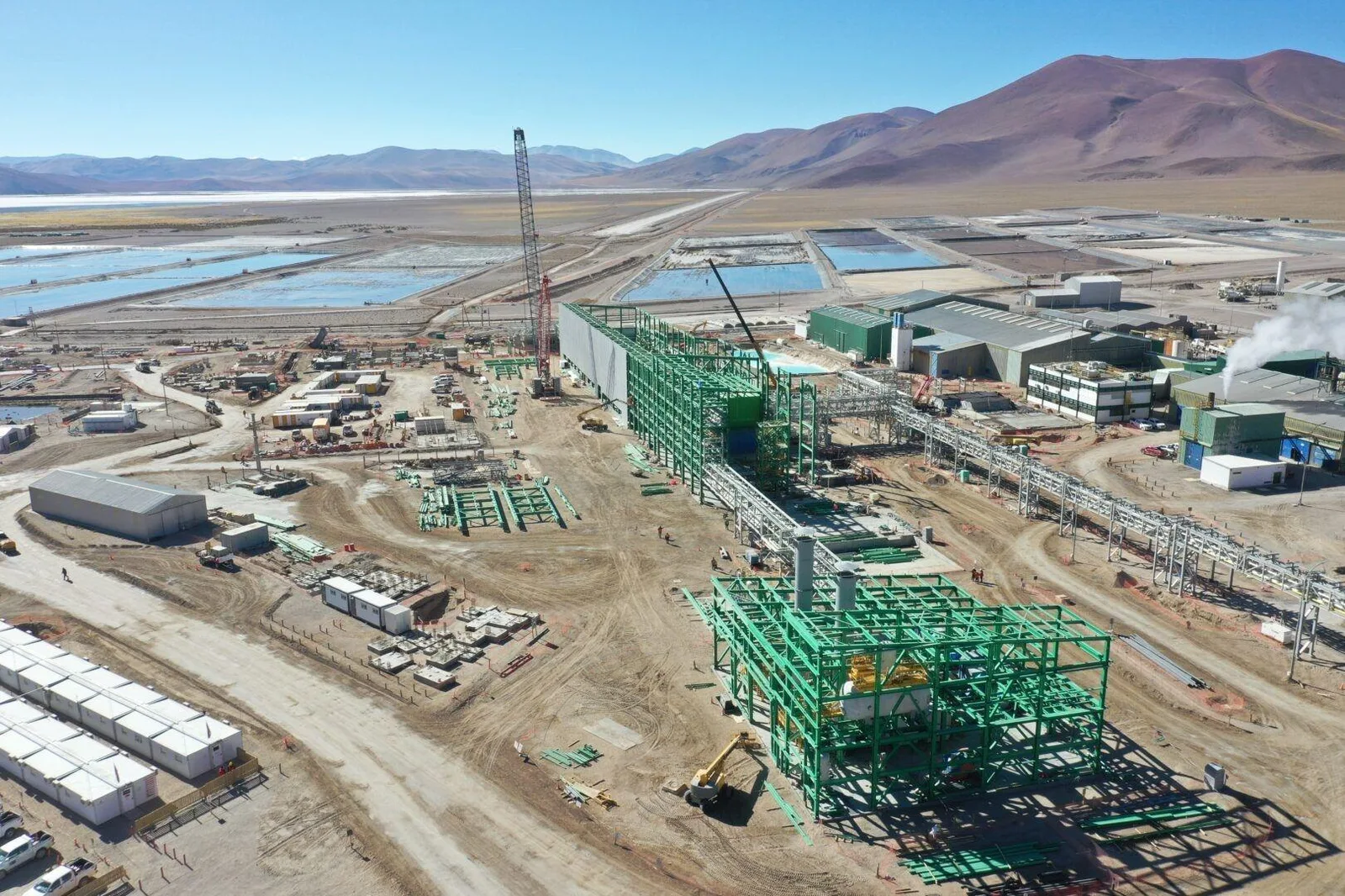
The first, Fénix 1B, expands an established lithium operation that began production in 1997. The extension is designed to add 10,000 tonnes of annual lithium carbonate equivalent capacity, bringing the Fénix operation’s targeted capacity to approximately 40,000 tonnes.
The second, Sal de Vida, is a new production facility located roughly 20 kilometres northeast of Fénix. Its nominal annual capacity is expected to reach 15,000 tonnes.
Combined, the projects are expected to contribute an additional 25,000 tonnes of annual production capacity once their ramp-up phases are completed.
This distinction matters.
Both facilities began producing lithium in the second quarter of 2026, ahead of their original schedules. The October inauguration therefore does not mark the beginning of production, but rather the formal recognition of two investments that have already entered their operational phase.
The decisive challenge now lies ahead: converting installed capacity into consistent, commercially viable, and economically competitive production.
Lithium Becomes a Strategic Pillar of Mining Diversification
For Rio Tinto, the Argentine investments form part of a strategy extending well beyond the country itself.
Historically associated with iron ore, copper, aluminium, and other industrial commodities, the group has been expanding its exposure to materials essential to batteries, electrification, and the energy transition.
Lithium occupies a particularly important position in this transformation.
Unlike more mature mining markets, its development remains closely tied to industrial changes still unfolding: electric vehicle adoption, evolving battery chemistries, stationary energy storage, decarbonisation policies, and the geographic reorganisation of manufacturing supply chains.
These developments create substantial long-term opportunities, but also structural uncertainty.
Growing demand does not guarantee continuously rising lithium prices. The simultaneous commissioning of new production facilities can generate periods of oversupply, compress margins, and undermine projects with relatively high operating costs.
Rio Tinto’s strategy is therefore not simply to increase output. It is to build a portfolio capable of remaining competitive through commodity cycles.
The group is targeting approximately 200,000 tonnes of global annual lithium carbonate equivalent production capacity by 2028.
This remains an industrial objective rather than an achieved production level. Its realisation depends on project execution, successful commissioning, and the ability to reach planned operating rates.
Argentina is central to that ambition.
Beyond Fénix and Sal de Vida, Rio Tinto is developing the Rincon project in Salta province, with a targeted annual capacity of 60,000 tonnes.
Together, these investments illustrate a strategy of geographic concentration.
Rather than relying exclusively on scattered minority interests, Rio Tinto is seeking to establish large industrial platforms capable of sharing infrastructure, technical expertise, logistics, and supplier relationships.
The objective is not merely to secure access to lithium resources, but to develop an integrated operational presence capable of supporting long-term competitiveness.
Argentina Seeks to Convert Geological Resources into Economic Advantage
Argentina forms part of the so-called Lithium Triangle, an Andean region shared with Chile and Bolivia that contains substantial lithium resources in its salt-flat brines.
Yet geological abundance does not automatically translate into industrial development.
Building a competitive lithium industry requires significant capital, suitable extraction technologies, energy and transport infrastructure, predictable regulation, and reliable access to international markets.
These conditions increasingly determine competition among resource-producing countries.
Argentina has adopted a model relatively open to private investment and international mining groups.
Under President Javier Milei, this orientation has been reinforced through policies designed to attract large-scale projects, notably the Incentive Regime for Large Investments, known by its Spanish acronym RIGI.
The framework seeks to provide greater regulatory and economic predictability for projects requiring substantial long-term capital commitments.
Chile, by contrast, has pursued a model involving a stronger strategic role for the state, including partnerships between public institutions and private industrial operators.
Bolivia continues to favour an approach characterised by extensive public-sector involvement in the development of its lithium resources.
These differences do not automatically establish one model as superior.
They do, however, highlight a fundamental question: which institutional arrangements are best equipped to transform geological potential into productive industrial capacity?
Rio Tinto’s investments represent a positive signal for Argentina.
They demonstrate that a major international mining company is prepared to commit substantial capital to the country.
But they do not prove that Argentina’s macroeconomic vulnerabilities, infrastructure constraints, or regulatory uncertainties have disappeared.
The country's ability to attract additional investment will depend on whether current reforms deliver durable improvements in operating conditions.
Technology Is Becoming as Important as Access to Resources
Competition in the lithium industry increasingly extends beyond control over deposits.
It also involves extraction technologies, operating efficiency, product quality, environmental performance, and the ability to scale production economically.
The brines found in Andean salt flats differ in their chemical composition, lithium concentration, impurities, and geological conditions.
Their exploitation therefore requires technologies adapted to each deposit.
Direct lithium extraction, commonly known as DLE, is becoming increasingly important in industrial development strategies.
The term encompasses several technologies designed to selectively recover lithium from brines, potentially complementing or replacing certain conventional evaporation-based processes.
These technologies offer significant industrial potential, but their performance cannot be generalised across all projects.
Recovery rates, energy consumption, water requirements, treatment costs, and residual brine management vary depending on the technology and the characteristics of the resource.
DLE should therefore not be treated as a universal solution to the economic and environmental challenges of lithium extraction.
For Rio Tinto, the objective is to establish production systems that remain competitive at industrial scale, rather than simply demonstrate technological feasibility.
This is why commissioning and ramp-up periods are particularly important in mining economics.
Earlier in October, Rio Tinto indicated that Sal de Vida was ramping up more slowly than expected, contributing to its expectation that 2026 lithium production would be towards the lower end of its guidance range.
The official inauguration thus comes at a moment when operational performance still needs to be consolidated.
The difference between installed capacity and sustained commercial output remains one of the central risks facing the industry.
Four Billion Dollars and the Question of Local Value Creation
The significance of Rio Tinto’s Argentine expansion cannot be measured solely through additional lithium output.
The company has indicated that approximately 70% of the roughly $4 billion in growth capital expenditure planned for its Argentine lithium operations is expected to be directed towards local suppliers.
If realised, this would represent approximately $2.8 billion in expenditure through Argentina-based suppliers.
However, this figure is a projection, not an amount already fully spent.
Nor does procurement from local suppliers necessarily translate into an equivalent amount of domestic value added.
Companies operating in Argentina may themselves rely on imported machinery, technologies, components, or specialist services.
This distinction is essential when assessing the developmental impact of foreign direct investment.
A mining project can generate exports, fiscal revenues, and employment without necessarily producing substantial industrial diversification.
Conversely, a major investment can become the foundation of a broader ecosystem encompassing engineering, maintenance, logistics, specialised services, and technical expertise.
For Argentina, the critical question is therefore the depth of local industrial integration.
Will the expansion of lithium production help develop competitive suppliers capable of serving multiple mining operations and eventually exporting their expertise?
Or will the industry remain predominantly organised around extractive facilities integrated into the international value chains of multinational companies?
The answer will depend less on the headline value of announced investments than on the economic capabilities created around them.
Global Supply Chain Diversification Goes Beyond China
Argentina’s lithium expansion also forms part of a broader restructuring of critical mineral supply chains.
Governments and manufacturers are seeking to diversify sources of supply in order to reduce dependence on a limited number of countries, companies, and industrial processes.
Yet geographic diversification of extraction does not automatically mean diversification of industrial control.
The lithium value chain encompasses several distinct stages: resource extraction, chemical processing, cathode material manufacturing, battery cell production, and final integration into energy storage systems or electric vehicles.
A country can strengthen its position in lithium carbonate production while remaining dependent on processing capabilities, industrial customers, or technologies located elsewhere.
This fragmentation gives mining investment an increasingly important geoeconomic dimension.
For battery manufacturers, access to multiple reliable suppliers can reduce certain procurement risks.
For resource-producing countries, attracting investment can increase exports, public revenues, and participation in international trade.
For major mining companies, controlling a diversified portfolio of productive assets can strengthen competitiveness and commercial negotiating power.
Rio Tinto is positioning itself within a market in which supply security, operational efficiency, and financial discipline are becoming as important as the volume of resources under corporate control.
Argentina stands to benefit from this reorganisation.
However, its advancement within global battery supply chains will depend on more than the amount of lithium produced within its borders.
The Real Test Is Long-Term Competitiveness
The two facilities inaugurated in Catamarca illustrate the difference between an investment decision and its ultimate economic outcome.
The $1.4 billion represents industrial capital expenditure rather than a new fundraising transaction or a change in corporate control.
The profitability of these assets will now depend on several variables: actual production volumes, unit costs, international lithium prices, infrastructure reliability, process efficiency, and operating stability.
Environmental constraints add another layer of complexity.
In the arid landscapes of the Andean highlands, water management, hydrological balances, ecosystem protection, and relations with local communities can materially influence the long-term viability of mining operations.
Industrial expansion therefore cannot be assessed exclusively through announcements of production capacity.
It must also be evaluated through economic, environmental, and social sustainability.
For Argentina, the challenge is to convert its current attractiveness to international mining investors into a durable competitive advantage.
For Rio Tinto, it is to demonstrate that the combination of asset ownership, technological investment, and operational scale can generate satisfactory returns despite volatile commodity markets.
These objectives are complementary, but they are not necessarily identical.
A project may be financially attractive to its shareholders without maximising the wider economic benefits captured by the host country.
Equally, a government may seek greater domestic industrial integration in ways that affect the economics of private investment.
Managing these competing priorities will be an important determinant of the sector’s long-term development.
A New Industrial Geography Is Taking Shape
The inauguration of Fénix 1B and Sal de Vida marks a tangible step in the transformation of the global lithium industry.
It confirms Argentina’s growing importance in the investment strategies of major mining companies and illustrates the central role of private capital in developing new production capacity.
But its significance extends beyond these individual projects.
The economic geography of critical minerals is no longer determined solely by the location of natural resources.
It is shaped by investment decisions, technological capabilities, institutions, infrastructure, and calculations of long-term profitability.
In this competition, countries possessing abundant mineral resources will not automatically capture the greatest economic value.
Those capable of combining institutional stability, industrial competitiveness, environmental management, and the development of domestic expertise will be better positioned to establish lasting advantages.
Argentina’s lithium sector is becoming a testing ground for this broader transformation.
Its success will depend not simply on how much lithium it can extract, but on how effectively it converts international investment into productive capacity, economic resilience, and industrial development.
The global lithium race is ultimately becoming a competition over something more consequential than mineral ownership: the ability of states and companies to transform strategic resources into enduring industrial power.
Atlas Limits Research Desk
Atlas Limits’ editorial and analytical desk.