Ukraine's expanding campaign against Russian oil refineries is turning the war of attrition into a confrontation over industrial endurance. Behind the sharp decline in crude processing lies a more consequential vulnerability: the growing difficulty of protecting critical energy infrastructure, maintaining domestic fuel supplies and preserving export capacity when geographical depth no longer guarantees economic security.
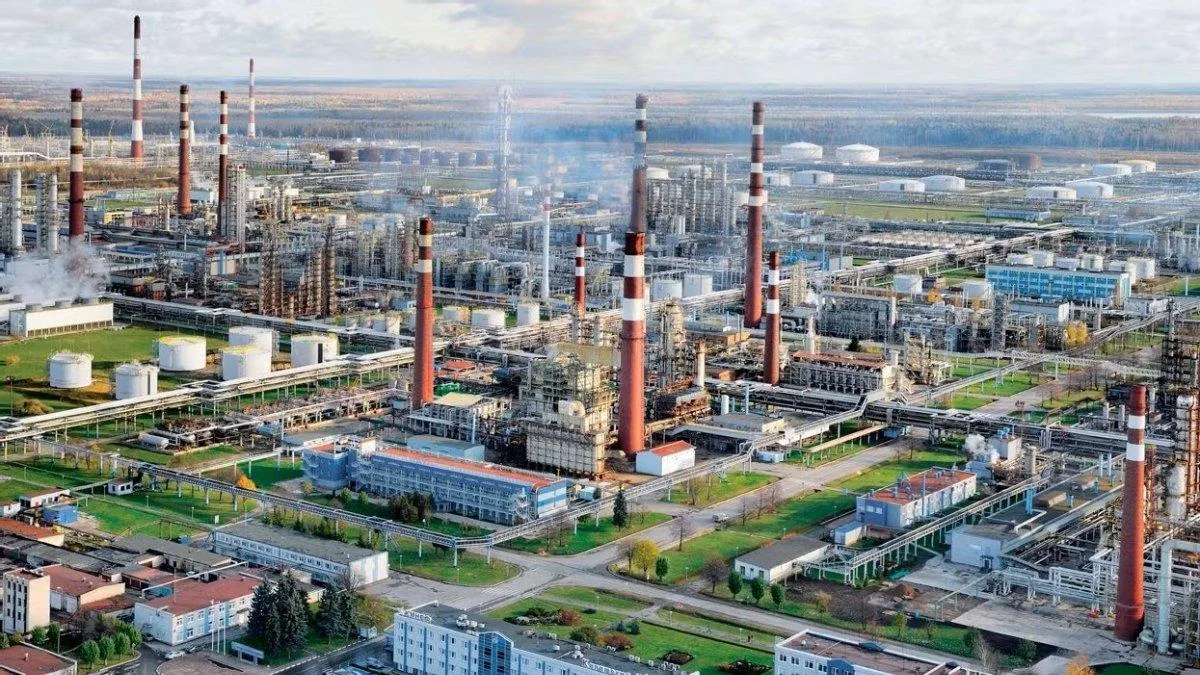
Russia possesses one of the world's largest petroleum systems. Its energy industry extends far beyond crude oil extraction and exports, encompassing an extensive network of refineries, pipelines, storage facilities, ports and distribution infrastructure. Together, these assets support domestic economic activity, supply transportation and agriculture, sustain industrial production and contribute to government revenues.
For decades, the geographical scale of this system represented a strategic advantage. Major industrial facilities located deep inside Russian territory appeared relatively insulated from direct military disruption. The country's territorial depth, combined with its substantial natural resources and industrial capabilities, reinforced its ability to withstand external pressure.
Ukraine's development of long-range strike capabilities is challenging that assumption.
By targeting oil infrastructure hundreds or even thousands of kilometres from the front line, Kyiv is seeking to extend the economic consequences of the war into the industrial networks that sustain Russia's economy and military operations. The objective is not necessarily to eliminate Russian oil production, but to make the processing, distribution and export of petroleum products increasingly difficult, expensive and unpredictable.
Figures reported by Reuters on November 18, 2026, suggest that this strategy has produced a particularly severe disruption. According to two industry sources, Russian refineries' daily crude processing declined from more than 700,000 metric tonnes in late October to approximately 400,000 tonnes following nearly three weeks of repeated Ukrainian drone strikes. The estimated contraction amounts to roughly 45%.
The same sources indicated that operations had been disrupted or halted at 15 of Russia's 35 major refineries, compared with nine only days earlier.
These figures require careful interpretation. The 45% decline describes an estimated reduction in daily crude throughput at a particular point in time, not the permanent destruction of an equivalent share of Russian refining capacity. Facilities affected by strikes account for approximately 54% of the nominal primary refining capacity covered by the Reuters estimates, but damaged plants may retain partial operations. November's average processing volume remains above 500,000 tonnes per day, approximately 5% to 10% below September and October levels.
Nevertheless, the distinction between temporary disruption and permanent destruction does not diminish the strategic significance of the attacks. It identifies the central challenge facing Moscow: a refining system capable of recovering from individual strikes, but increasingly exposed to repeated interruptions that undermine operational continuity.
An industrial war of attrition
Ukraine's campaign against Russian petroleum infrastructure did not emerge suddenly in November 2026. It developed progressively following Russia's full-scale invasion in February 2022 and intensified substantially throughout 2025 and 2026.
Its evolution reflects advances in Ukrainian drone technology, operational planning, intelligence collection and long-range targeting. These capabilities have enabled Kyiv to strike facilities that previously lay beyond the practical reach of its conventional military operations.
In a September 2026 assessment, the International Energy Agency reported that Russian refineries had been struck on average once every three days during the first eight months of the year. By late August, only five major Russian refineries remained untouched by Ukrainian drones, all located in distant eastern regions.
The July 7 attack against the Omsk refinery, approximately 2,500 kilometres from the Ukrainian border, demonstrated the geographical expansion of Ukraine's strike capabilities. It also illustrated the growing difficulty of treating industrial facilities far from the battlefield as inherently secure.
The strategic logic of these operations rests on the particular vulnerabilities of refining infrastructure.
An oil refinery is not a single industrial machine but an interconnected system of processing units. Crude distillation separates petroleum into intermediate streams, while more sophisticated secondary units transform those streams into commercially usable fuels and improve their quality.
Damage to one critical component can therefore interrupt production far beyond the physically affected area. A refinery may retain some ability to process crude while losing the capacity to produce gasoline, diesel or aviation fuel to required specifications. Disruption to storage, utilities or safety systems can also force otherwise functional units to reduce output.
This creates opportunities for targeted industrial attrition.
According to the IEA, relatively limited damage to a crude distillation unit may be repaired within one or two weeks. Serious damage to complex secondary equipment, including catalytic crackers, hydrocrackers and reformers, can require six to eight months to repair or replace. Sanctions, restricted access to specialised suppliers and growing demand for replacement equipment can extend these timelines.
The cumulative effect is potentially more significant than the immediate consequences of any individual strike.
A refinery restored after weeks of repairs may be attacked again before returning to stable operation. Maintenance teams, replacement components and financial resources are repeatedly diverted toward restoring existing capacity rather than improving efficiency or expanding production.
The industrial system becomes trapped in a cycle of damage, repair and renewed disruption.
The strategic value of the campaign therefore depends not simply on how many facilities are struck, but on whether repeated attacks can prevent the refining network from recovering its normal reliability.
The paradox of an oil-rich country facing fuel shortages
Russia's substantial hydrocarbon resources do not guarantee an uninterrupted supply of refined petroleum products.
Crude oil must be processed, stored, transported and distributed before it can meet the needs of consumers, businesses and public institutions. Each stage depends on specialised infrastructure, and disruption at one stage can create shortages despite continued production elsewhere.
This distinction is essential to understanding the consequences of Ukrainian strikes.
A major oil producer can continue extracting large quantities of crude while struggling to supply gasoline to motorists, diesel to agricultural producers or fuel to transportation networks. Once refining capacity becomes constrained, the economic effects extend beyond export revenues into the functioning of the domestic economy.
The pressures observed throughout 2026 demonstrate that this vulnerability is no longer theoretical.
The IEA reported in September that Russian gasoline production had declined by approximately 20% compared with 2025, while diesel production had fallen by nearly 30%. In June, refinery throughput reached its lowest level in more than two decades. Fuel shortages spread across large parts of the country, prompting regional authorities to introduce rationing measures and restrictions on retail purchases.
Moscow responded through increasingly extensive market interventions.
Gasoline export restrictions were reinforced, followed by measures affecting other petroleum products. Diesel exports, historically an important component of Russia's international energy trade, were also restricted. Authorities introduced temporary changes to fuel-quality standards and sought additional supplies through imports.
These measures reveal an increasingly difficult allocation problem.
The government must simultaneously preserve domestic fuel availability, maintain strategically important reserves and protect the commercial revenues generated by petroleum exports. Restricting exports may improve domestic supply, but it also reduces the ability of refiners to earn revenue abroad. Importing fuel can alleviate immediate shortages, but introduces additional costs and logistical dependencies.
Relaxing product-quality standards may increase the volume of fuel available for distribution, yet it cannot fully compensate for the loss of sophisticated refining equipment.
The resulting paradox is striking. Russia does not face a fundamental shortage of crude oil resources. It faces growing difficulties ensuring that those resources can be transformed into the products required by its economy under conditions of sustained military pressure.
The economic consequences of industrial disruption
Oil and gas remain central to Russia's fiscal and external economic position. Hydrocarbon revenues contribute to the federal budget, support foreign trade and help sustain the country's access to foreign currency.
Yet the economic impact of refinery strikes cannot be calculated by assuming that a decline in crude processing produces an identical reduction in total oil revenue.
Some crude that can no longer be refined domestically may instead be exported, provided pipeline capacity, port access, commercial demand and sanctions conditions permit. The resulting financial effects depend on international prices, transportation costs, refinery margins and the availability of alternative markets.
The immediate damage is therefore concentrated in the refining industry's value added, the supply of finished petroleum products and the revenues associated with their sale.
However, these disruptions occur against a broader background of fiscal pressure.
According to figures examined by the IEA, Russia's oil and gas budget revenues during the first eight months of 2026 were nearly 17% below the corresponding period in 2025. The federal budget deficit had reached approximately 5.8 trillion roubles, exceeding the shortfall recorded for the entirety of the previous year.
These developments reflect multiple economic forces and cannot be attributed exclusively to Ukrainian drone attacks. Nevertheless, they illustrate the increasingly constrained financial environment in which Moscow must absorb additional industrial losses.
The direct costs of repairs represent only part of the burden.
Refineries require enhanced surveillance, air defences, emergency response capabilities, spare equipment and more elaborate business-continuity arrangements. Protecting dispersed industrial infrastructure also competes with other demands on Russia's military and security resources.
Kyiv is attempting to exploit an asymmetry between the resources needed to conduct attacks and those required to prevent or recover from them.
A comparatively inexpensive drone may force an adversary to deploy costly defensive systems or interrupt industrial equipment whose replacement requires substantial investment. The advantage is not automatic: it depends on strike effectiveness, drone expenditure, the severity of damage and Russia's capacity to adapt.
Nevertheless, the strategic calculation is clear. Ukraine seeks to impose economic and defensive costs disproportionate to the resources it commits.
The effectiveness of this approach must ultimately be assessed through sustained production losses, repair expenditure, changes in export capacity and the additional defensive burden placed on Russia, rather than through strike counts alone.
Energy infrastructure becomes a strategic battlefield
The refinery campaign illustrates a broader transformation of the Russia-Ukraine war.
The confrontation increasingly extends beyond contested territory and military positions into the industrial systems that enable both states to sustain prolonged conflict.
For Ukraine, this approach responds to a structural imbalance.
Russia possesses a larger population, substantial natural resources, considerable industrial capacity and greater geographical depth. Ukraine cannot eliminate these advantages through conventional military operations alone. Long-range drones offer a means of challenging selected elements of Russian economic power without requiring control of Russian airspace or the deployment of ground forces deep inside its territory.
The campaign also forces Moscow to distribute protective resources across a much larger geographical area.
Defending refineries, storage facilities, ports and other energy infrastructure requires Russia to reconcile competing priorities. It must protect economically essential installations while continuing military operations and maintaining domestic security.
The geographical expansion of vulnerability is therefore itself a strategic consequence.
Russia's territorial depth has not disappeared, but its defensive value has changed. Industrial facilities once considered distant from the battlefield can now become targets of repeated attacks.
This development is not confined to Ukrainian operations.
Russia has also conducted extensive attacks against Ukraine's energy infrastructure, including electricity generation and distribution networks. The two campaigns differ in their targets, consequences and scale, and their legal and humanitarian implications must be assessed according to the specific facilities involved and the foreseeable effects on civilians.
Strategically, however, they demonstrate how energy systems have become central to the contest over national endurance.
Energy infrastructure is no longer merely an economic asset that supports military power indirectly. Its availability, reliability and protection have become direct determinants of each country's ability to withstand a prolonged war.
A new source of pressure on international fuel markets
The consequences of reduced Russian refining extend beyond the immediate conflict.
Russia remains an important supplier of refined petroleum products, particularly diesel. A sustained decline in its export capacity can alter trade flows, increase transportation distances and intensify supply constraints in importing markets.
The distinction between crude oil and refined products is particularly important internationally.
Additional crude supplies cannot immediately compensate for a shortage of diesel if alternative refineries lack available processing capacity or if logistical and product-quality requirements prevent rapid substitution.
Refined fuel markets depend on specialised industrial infrastructure. Production capacity, geographical location, product specifications and shipping arrangements all influence the ability of suppliers to respond to disruptions.
The IEA warned in September 2026 that declining Russian diesel exports were contributing to pressure on international middle-distillate markets. These constraints coincided with reduced supplies from the Middle East, creating additional vulnerability in global fuel distribution.
Diesel refining margins had risen sharply in several markets, reflecting the growing scarcity of finished products relative to crude oil.
The renewed disruption reported in November therefore comes at a particularly sensitive moment.
If Russian refining interruptions persist, importers may need to obtain additional supplies from producers in Asia, the Americas or other regions. The resulting impact on prices will depend on inventories, demand conditions, available refining capacity and the duration of the disruption.
The broader lesson is that oil production and refining capacity are not geographically interchangeable.
A country may possess substantial crude resources while lacking sufficient operational refining capacity. Similarly, the global market may have adequate crude supply without enough immediately available industrial capacity to transform it into the fuels demanded by consumers.
A prolonged disruption at a major refining centre can consequently reshape commercial flows far beyond the location of the attacks.
Russia's industrial resilience faces a cumulative test
The Ukrainian campaign does not establish that Russia's refining industry is approaching irreversible collapse.
Moscow retains significant repair capabilities, industrial resources, logistical infrastructure and the ability to redirect some petroleum flows. Refiners can postpone maintenance, restore previously inactive units, adjust production schedules and prioritise the equipment that remains operational.
Developments in October demonstrated this capacity for recovery.
Reuters reported on October 27 that Russian refineries had increased crude processing by approximately 25% during the second half of the month compared with its beginning, following a relative pause in attacks. The recovery showed that significant industrial disruption does not necessarily translate into permanent capacity losses.
Yet the subsequent November decline illustrates the limits of that resilience.
Production can recover when attacks diminish, only to contract again when strikes resume at greater intensity.
The central question is therefore whether Russia can restore damaged facilities faster than Ukraine can disrupt them.
Three different timelines now interact.
The first is the frequency of Ukrainian attacks, which may occur within days of one another. The second is the duration of industrial repairs, ranging from relatively short interventions to months of complex reconstruction. The third is the longer-term process of adaptation, involving investment in defences, equipment replacement, changes in logistics and operational reorganisation.
If repeated attacks consistently outpace repairs, temporary production losses may develop into persistent reductions in industrial availability.
Conversely, more effective defences, improved repair capacity or a sustained decline in attacks could permit a meaningful recovery.
Neither outcome can be established solely from the latest throughput figures.
The future trajectory will depend on the capacity of both sides to sustain their respective efforts, the availability of critical industrial components and the effectiveness of Russia's protective measures.
A war of attrition with a changing geography
The estimated 45% decline in Russia's daily crude refining since late October represents a significant industrial shock. Its importance, however, lies less in the headline percentage than in the vulnerabilities it exposes.
The figure does not mean that nearly half of Russia's refining industry has been permanently destroyed. Nor does it demonstrate that Moscow has lost the economic capacity to continue its military operations.
It indicates that Ukraine has succeeded, at least temporarily, in imposing substantial disruption on one of Russia's most strategically important industrial systems.
The broader consequences are cumulative.
Repeated strikes force Moscow to devote additional resources to protecting infrastructure, repairing damaged equipment, managing domestic fuel supply and adjusting petroleum exports. They introduce operational uncertainty into an industry whose efficiency depends on continuity, scale and predictable maintenance cycles.
For Kyiv, the strategic objective is not necessarily to eliminate Russian fuel production altogether. It is to make the country's energy system more expensive to operate, more difficult to defend and less reliable as a foundation of economic and military endurance.
For Moscow, the challenge is to prevent successive temporary disruptions from becoming a lasting deterioration of industrial capacity.
The conflict is consequently entering a phase in which the resilience of infrastructure matters as much as its nominal scale.
An economy can possess abundant natural resources, extensive industrial facilities and considerable production potential without being able to guarantee their uninterrupted operation under repeated attack.
The gap between installed capacity and reliably available capacity has become a strategic variable in its own right.
The decisive question is no longer simply how much oil Russia can extract, but how much of its energy-industrial system it can keep operating, at what cost and for how long.
Principal sources
[1] Reuters, Drone attacks nearly halve Russia's November oil refining, sources say, November 18, 2026. View link
[2] International Energy Agency, Russian refining sector struggles amid intensifying Ukrainian attacks, September 17, 2026. View link
[3] Reuters, Russian oil refineries boost output as drone attacks halt after US-brokered deal, sources say, October 27, 2026.
[4] bne IntelliNews, Missile War Monitor: Ukrainian drones cut Russia's refinery runs by 45%, Reuters sources say, November 19, 2026. View link
Atlas Limits Research Desk
Atlas Limits’ editorial and analytical desk.