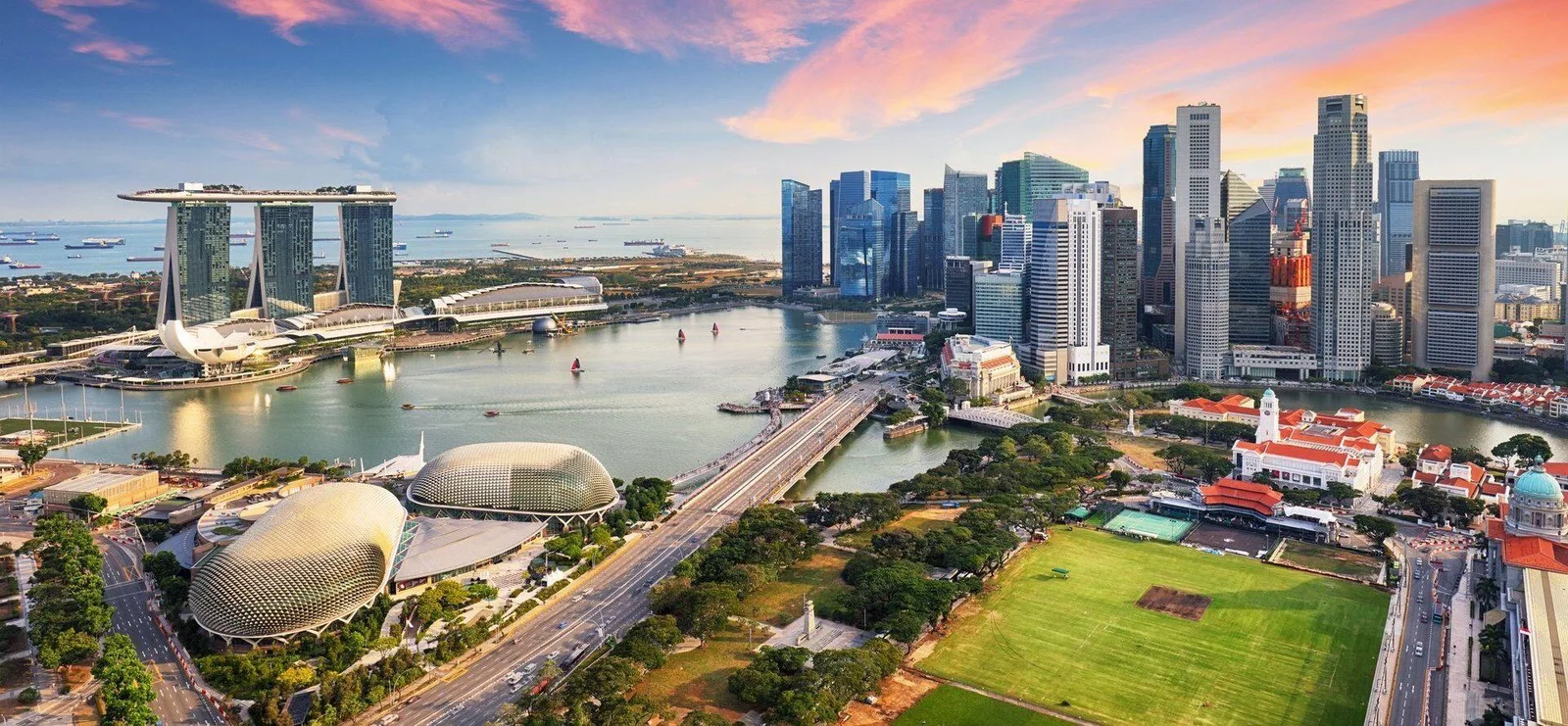
As financial markets question the sustainability of technology valuations and the profitability of the hundreds of billions of dollars committed to artificial intelligence, Singapore offers a different perspective. The city-state, whose economy is deeply integrated into global value chains, is benefiting from accelerating investment in digital infrastructure. Its projected gross domestic product growth has now reached 6% for 2026, illustrating how a technological transformation initially concentrated on the balance sheets of major American corporations is gradually spreading across the global productive economy.
This momentum highlights a fundamental distinction. The future profitability of artificial intelligence remains uncertain, but the expenditure committed to expanding its capabilities is already an economic reality. Even before businesses adopting AI can accurately measure their productivity gains, technological investment is filling industrial order books, mobilizing capital, stimulating international trade and reshaping the geography of production.
Singapore stands at the heart of this transmission process.
From Technology Spending to Industrial Production
The expansion of artificial intelligence relies on physical infrastructure whose importance contrasts with the intangible nature of the services it enables. Behind generative models, digital assistants and enterprise applications lies an extensive industrial ecosystem encompassing semiconductors, high-bandwidth memory, manufacturing equipment, servers, optical networks, cooling systems and electrical infrastructure.
Investments by Microsoft, Alphabet, Amazon and Meta are therefore not limited to software acquisition or research funding. They generate demand for thousands of suppliers across North America, Europe and Asia.
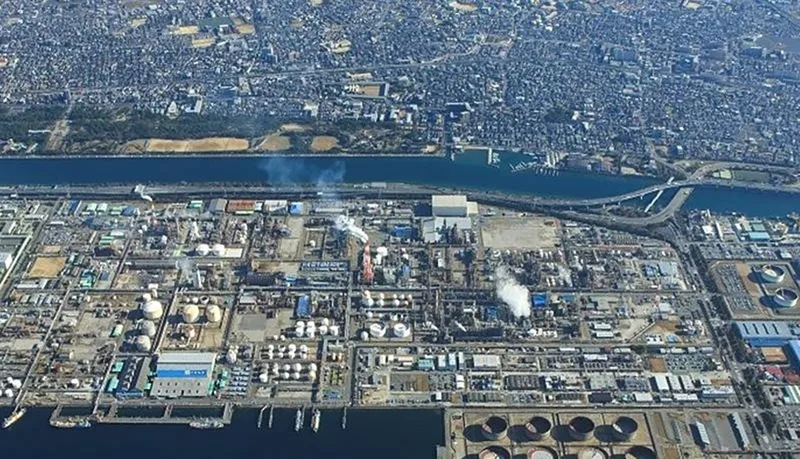
Singapore occupies a distinctive position within this architecture. The country accounts for approximately 10% of global semiconductor production and hosts a significant share of the international semiconductor manufacturing equipment industry. Companies such as Micron Technology, GlobalFoundries, Applied Materials, STMicroelectronics and Infineon maintain industrial or technological operations in the city-state.
Singapore's specialization extends beyond the manufacturing of advanced processors. It encompasses memory products, specialized components, industrial equipment, assembly and testing operations, as well as research and engineering activities. This diversification allows the country to capture part of the demand generated by expanding computing infrastructure without necessarily depending on a single category of components.
In January 2025, Micron announced an investment of approximately $7 billion in a new Singapore facility dedicated to the advanced packaging of high-bandwidth memory, a critical component of artificial intelligence accelerators. The facility, whose production capacity is expected to expand progressively, is intended to strengthen the country's position in one of the most strategic segments of the technology value chain.
The investment illustrates the industrial depth of a revolution frequently assessed through the market capitalizations of its leading companies. 
The Economic Multiplier of AI Investment
The transmission of technology expenditure into the real economy occurs through several successive mechanisms. When a company increases its capital expenditure, it converts part of its financial resources into productive assets. Building a data center mobilizes construction companies, electrical equipment suppliers, component manufacturers and specialized service providers. Its subsequent operation generates recurring expenditure on energy, maintenance, connectivity and technical services.
For an export-oriented economy such as Singapore, a significant share of these effects can materialize independently of where the infrastructure is ultimately located. A data center built in the United States may incorporate components manufactured or packaged in Asia, use equipment produced in Singaporean factories and rely on financial or logistics services coordinated from the city-state.
Transmission therefore takes place through international value chains. Capital expenditure by major digital platforms becomes revenue for their suppliers, which increase production, compensate employees, undertake their own investments and generate additional orders for their subcontractors.
This succession of transactions constitutes a mechanism through which initial demand propagates across the economy. Its intensity, however, depends on the proportion of value added actually generated within the national territory. In an economy as open as Singapore's, an increase in gross exports does not automatically translate into an equivalent rise in GDP: some of the components, raw materials and equipment used in production are themselves imported.
The actual contribution to economic growth must therefore be assessed through domestic value added, income distribution, local investment and spillover effects across other sectors.
This distinction is particularly important for Singapore, where external trade amounts to several times the size of the domestic economy. Trade openness amplifies the transmission of international economic cycles, but it also increases exposure to their reversals.
An Industrial Strategy That Predates Artificial Intelligence
Singapore's ability to benefit from this transformation is not the result of an improvised response to the emergence of generative models. It reflects an industrial strategy pursued over several decades, based on attracting foreign investment, developing human capital, maintaining regulatory stability and integrating the country into international production networks.
The city-state has progressively developed an environment in which multinational corporations can combine industrial operations, applied research, financial management and regional coordination. This concentration of complementary functions enhances Singapore's ability to capture economic value beyond the manufacturing of components alone.
In February 2024, the government announced the allocation of more than S$1 billion over five years to strengthen national artificial intelligence capabilities, including computing infrastructure, skills development and the broader technology ecosystem. The initiative builds on Singapore's second National AI Strategy, unveiled in December 2023.
The approach seeks to combine two positions within the emerging digital economy: that of a supplier of the infrastructure required for its development and that of a user of technologies capable of improving domestic productivity.
This dual specialization is critical. An economy positioned exclusively around component manufacturing remains exposed to global industrial investment cycles. An economy capable of integrating the technologies it helps produce may, by contrast, extend the benefits of the investment phase through a more lasting transformation of its own productive capabilities.
The Energy Constraint Behind Digital Growth
The expansion of artificial intelligence nevertheless exposes the physical limitations of Singapore's economic model. Within a territory of approximately 735 square kilometers, the proliferation of data centers competes directly with other uses of land, electricity and water.
Singapore generates nearly 95% of its electricity from natural gas. Rising energy consumption by digital infrastructure therefore raises questions concerning security of supply, production costs and decarbonization.
In 2024, the authorities unveiled a roadmap providing for at least 300 megawatts of additional data center capacity in the near term, with the possibility of further expansion supported by more sustainable energy solutions.
This approach reflects an evolution in industrial policy. The objective is no longer simply to attract the largest possible volume of technology investment, but to select projects according to their economic contribution relative to the resources they consume.
Digital growth thus imposes new trade-offs between value creation, energy consumption and economic sovereignty. Far from diminishing the importance of traditional infrastructure, artificial intelligence reinforces the strategic significance of electricity, networks and industrial capacity.
Real Economic Growth Does Not Necessarily Validate Financial Valuations
Singapore's experience also provides an important perspective on the debate surrounding a potential artificial intelligence financial bubble.
Overvaluation of technology companies can coexist with a genuine expansion of industrial activity. The two phenomena operate through different mechanisms. Equity valuations reflect expectations of future cash flows, while suppliers' economic activity depends, in the short term, on actual orders and realized investment expenditure.
A company may commit several billion dollars to infrastructure whose eventual profitability falls short of initial expectations. During the construction phase, however, that expenditure will still have generated industrial revenues, employment, exports and economic value added.
Economic history offers several precedents. In the late nineteenth century, railway expansion permanently transformed transportation capacity despite the financial crises that accompanied certain investment programs. More recently, the dot-com bubble led to a substantial accumulation of telecommunications infrastructure, some of which remained underutilized following the market downturn of the early 2000s.
The destruction of financial value did not eliminate all the physical capacity that had been created. Some of these assets were subsequently repurposed, sometimes at costs significantly below the original investment, contributing to the expansion of new digital services.
Artificial intelligence could experience comparable mechanisms, although the analogy does not establish the potential scale of any future adjustment.
Economies supplying the equipment required for this expansion can benefit from the capital accumulation phase even if the investors initiating the expenditure fail to achieve their expected returns. They nevertheless remain vulnerable to a subsequent contraction in orders, the impairment of industrial assets and a slowdown in capital expenditure.
From Investment to Productivity
The central question for Singapore, as for the global economy, now concerns artificial intelligence's ability to generate productivity gains sufficient to justify the capital committed to its development.
Capital expenditure contributes immediately to aggregate demand. Productivity gains, by contrast, require an effective transformation of production processes, corporate organization and labor allocation.
In financial services, logistics, manufacturing and public administration, the integration of artificial intelligence can reduce certain operating costs, improve decision-making accuracy and accelerate information processing. These benefits, however, often require complementary investments in data infrastructure, workforce training, cybersecurity and organizational restructuring.
The economic return on technology therefore depends as much on the institutional and organizational transformations it induces as on its technical performance.
For Singapore, where demographic aging and territorial constraints limit the scope for quantitative economic expansion, this dimension is particularly significant. Productivity improvement represents one of the principal mechanisms capable of sustaining national income growth over the long term.
The challenge is to convert the revenues generated by building the artificial intelligence economy into capabilities that allow the country to benefit from its use.
Singapore's economic growth already demonstrates the industrial reality of this technological revolution. It does not yet establish its ultimate economic return. Physical capital accumulation, corporate financial valuations and actual productivity improvements operate across three distinct but overlapping time horizons.
The question remains whether the economies prospering today from the construction of artificial intelligence infrastructure will also be those that capture the value generated by its operation tomorrow.
Atlas Limits Research Desk
Atlas Limits’ editorial and analytical desk.