Fifty years ago, South Korea was building steel mills, shipyards and petrochemical complexes to lift itself out of an economy that was still poor. In the 1990s, it invested in electronics, telecommunications and semiconductors to enter the digital economy. In 2026, Seoul is opening a new chapter. This time, the objective is no longer simply to produce more, but to rebuild part of the productive system around a constraint that has become strategic: energy.
On October 7, the South Korean government unveiled its Korea-Green Transformation program, or K-GX. The scale immediately reveals the ambition: 1 quadrillion won mobilized between 2026 and 2035, equivalent to roughly $745–747 billion at current exchange rates. The framework combines around 200 trillion won in budgetary spending with more than 790 trillion won in climate and policy financing. On top of this, roughly 220 trillion won in private investment is expected for identified projects.
Taken in isolation, the figure could suggest a gigantic climate plan. That would miss the essential point. South Korea is not merely trying to reduce its emissions. It is attempting to use decarbonization to trigger another transformation of its industrial economy.
That distinction is fundamental.
Electricity First
The first battle is electricity.
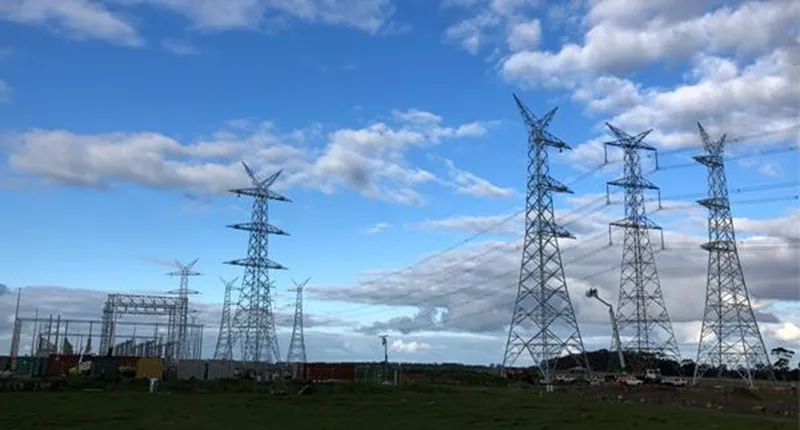
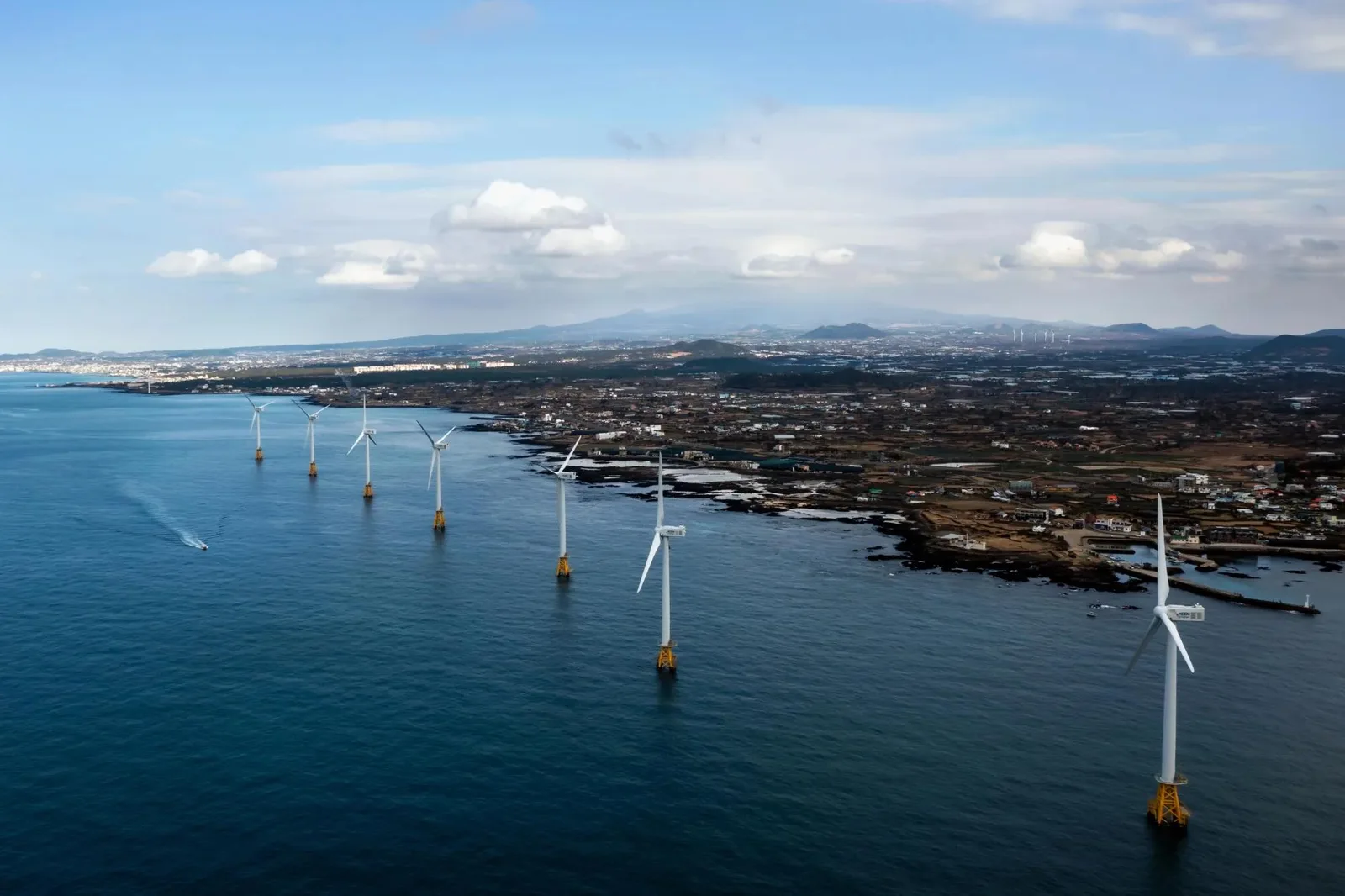
Seoul wants to increase renewable capacity to 100 GW by 2030, simultaneously expanding solar, wind and the grid infrastructure required to absorb this generation. The program is designed to accompany a much broader electrification of the economy: transportation, industrial processes, buildings and emerging technological activities. By 2035, more than 70% of new vehicle registrations are expected to consist of electric or hydrogen-powered vehicles.
This shift comes as electricity is gradually ceasing to be merely an infrastructure operating in the background of the economy.
It is becoming one of its most strategic factors of production.
Electric vehicles transfer part of the energy previously supplied directly by oil onto the power grid. Heat pumps electrify heating. Industrial processes are beginning to replace gas or coal with electricity. Batteries require substantial charging and storage capacity. Semiconductor manufacturing depends on abundant and exceptionally reliable power. Artificial intelligence is now adding another category of consumer to the equation: data centers whose electricity requirements can be measured in gigawatts.
The energy transition is therefore becoming a transformation of the productive system itself.
For a country such as South Korea, whose prosperity has depended for decades on large export-oriented industries, securing tomorrow's electricity increasingly means securing tomorrow's industry.
Decarbonizing Steel Without Abandoning Steel
The Korean approach is perhaps clearest in the steel industry.
Seoul does not regard steel as an old industry destined to disappear under the weight of climate constraints. Instead, it wants to preserve that industrial capacity by profoundly changing its technology.
The program includes the development of hydrogen-based iron reduction. An initial demonstration at a scale of 300,000 tonnes is expected around 2030, before capacity rises toward approximately 2.5 million tonnes by 2035. At the same time, production using electric furnaces is expected to expand, reaching around 3.5 million tonnes by that date. The longer-term ambition is to move the entire Korean steel industry toward decarbonized production by 2050.
The reasoning extends far beyond climate policy.
South Korea is one of the world's major manufacturing nations. Automobiles, shipbuilding, machinery, electronics, infrastructure and defense all depend directly or indirectly on access to industrial materials. Gradually abandoning steelmaking would weaken the very ecosystem that enables the country to manufacture.
Seoul is therefore choosing another path: transforming heavy industry rather than replacing it with imports.
It is climate policy, but it is also industrial sovereignty.
Transforming the Processes
The same principle extends to other major emitting sectors.
In petrochemicals, one objective is to gradually electrify processes currently powered by fossil fuels. Steam crackers, which transform naphtha into molecules essential to plastics and countless chemical products, are among the main areas of experimentation. Large-scale industrial demonstrations are envisaged for the next decade, ahead of commercialization beginning around 2040.
In refining, the transformation includes sustainable aviation fuels. South Korea is targeting a blending rate of up to 5% by 2030 and 10% by 2035.
In cement, the share of blended cements, which are less carbon-intensive, is expected to rise from roughly 16% today to 40% by 2035.
In semiconductors and displays, two industries central to the Korean economy, efforts will include replacing some of the gases used in etching and deposition operations whose global warming potential is particularly high.
Taken separately, each initiative could appear to be a sector-specific environmental policy.
Taken together, they tell a different story.
Seoul is gradually attempting to change the physical processes through which its economy transforms matter.
Hydrogen as Industrial Infrastructure
That transformation, however, requires new infrastructure.
Hydrogen-based steelmaking, certain chemical processes and several activities that are difficult to electrify directly could require substantial quantities of low-carbon hydrogen. The government therefore plans to develop large electrolyzers connected to renewable power, including facilities of 50 MW or more, alongside a demonstration project for electrolysis linked to nuclear energy.
Producing hydrogen is only part of the challenge. Pipelines, storage facilities, logistics infrastructure and machinery capable of using it at industrial scale must also be built.
In other words, the transition creates an industry of its own.
This is probably one of the most important bets behind K-GX. Each decarbonization constraint is treated as an opportunity to develop a domestic technological sector: electrical equipment, grids, batteries, electrolyzers, turbines, advanced materials, storage systems, heat pumps and nuclear reactors.
South Korea does not simply want to buy the technologies required for its transition.
It wants to manufacture them.
The Chinese Challenge
That ambition has an obvious competitor: China.
In solar power, batteries and a growing share of the equipment required for the energy transition, Chinese industry has accumulated formidable advantages in cost, scale and supply chains.
The Korean response is therefore less about replicating China's existing capacities than positioning itself in the next technological generation.
In solar power, Seoul wants high-efficiency tandem cells to reach commercialization and mass production from 2028.
In wind power, the country aims to develop its own turbines of 20 MW or more.
In batteries, Korean manufacturers are expected to accelerate work on solid-state technology and alternatives to conventional lithium chemistries, including sodium-ion. The government also wants to expand domestic demand through grid-scale storage while developing specialized cells for defense, shipping and robotics.
The logic is familiar in Korean economic history: enter a technology, industrialize it rapidly, achieve scale, and then use exports to transform domestic productive capacity into a global position.
What has changed is the range of industries involved.
The energy transition itself is becoming the arena for industrial policy.
Nuclear Power Returns to the Equation
The program also contains an element that distinguishes the Korean strategy from some climate policies pursued elsewhere: nuclear power is not placed outside the energy transition.
It is part of it.
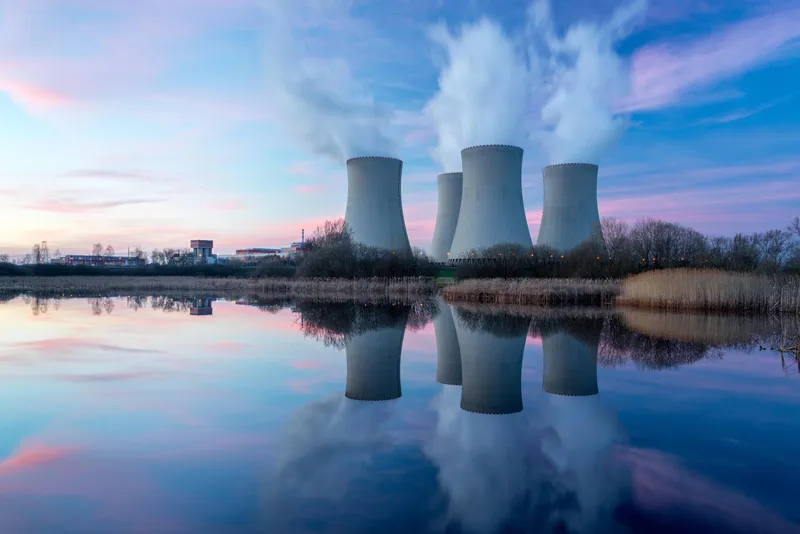
Seoul is continuing development of its i-SMR modular reactor while preparing programs for more advanced small-reactor technologies. Dedicated industrial capacity — including the concept of an SMR “foundry” in the country's southeast — is intended to position Korean industry for a potential increase in global orders during the 2030s.
Once again, energy policy immediately converges with industrial policy.
South Korea already possesses expertise in nuclear engineering, heavy construction, electrical equipment and large international projects. SMRs could combine those existing capabilities into a new export industry.
The country is therefore not choosing between renewables, nuclear power and electrification.
It is attempting to build a system in which these technologies answer different needs while serving the same productive strategy.
The Developmental State Changes Its Target
The method itself is not entirely new.
South Korea built much of its economic power through successive phases of industrial upgrading.
During the 1960s and 1970s, the state promoted exports, steel, shipbuilding, petrochemicals and heavy industry. In subsequent decades came automobiles, electronics, telecommunications, semiconductors, displays and batteries.
K-GX reuses some elements of this architecture.
The state provides financing, absorbs part of the technological risk, directs credit, deploys tax incentives, establishes market objectives and coordinates with large corporations capable of industrializing new technologies. POSCO, Samsung Electronics, LG Electronics and Hanwha Qcells are among the groups directly associated with projects presented when the program was launched.
The government is not replacing the private sector.
It is attempting to change the conditions under which the private sector invests.
That is precisely what the hundreds of trillions of won in announced climate financing represent: turning investments that remain uncertain, expensive or insufficiently profitable into industrial capacities capable of reaching scale.
Public capital therefore becomes less a substitute for private capital than a multiplier of it.
A Transition of Power
The $747 billion figure must consequently be handled with care. It does not represent a single check that the Korean government will directly spend. It combines public expenditure, financial instruments and capital mobilized through different channels over a decade. The roughly 220 trillion won of announced private projects constitute another layer.
But that accounting distinction does not diminish the program's significance.
On the contrary, it helps explain its nature.
K-GX is not merely a budget. It is an attempt to redirect national capital.
The question will now be whether this financial mass actually produces physical capacity: gigawatts of generation and transmission, tonnes of steel produced through different processes, battery factories, turbines, solar cells, reactors, electrolyzers, hydrogen infrastructure and new supplier networks.
Because this is where the distinction between investment policy and industrial policy ultimately lies.
The first mobilizes money.
The second builds something.
The Return of the Physical World
That distinction extends far beyond South Korea.
After several decades during which parts of the global economy appeared capable of organizing themselves around services, finance, intellectual property and geographically dispersed value chains, the major powers are simultaneously rediscovering the constraints of the physical world.
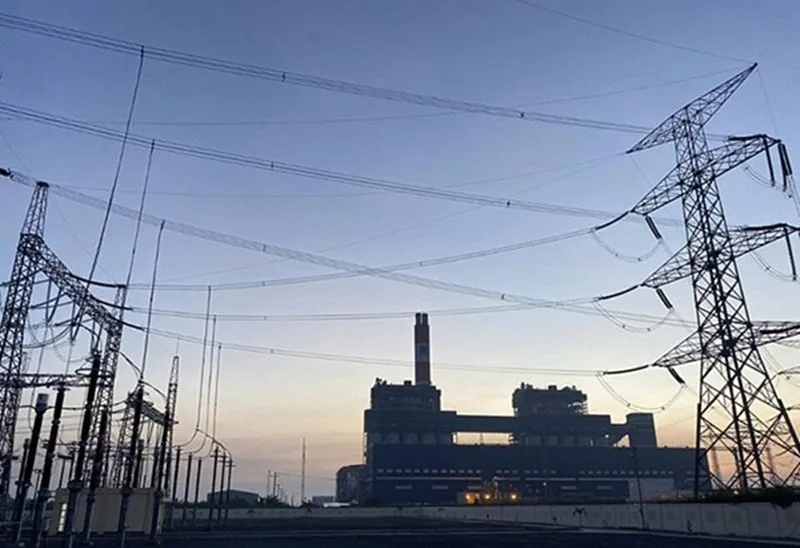
Power plants are required to run artificial intelligence. Grids are needed to carry that electricity. Mines and refineries are needed to produce metals. Steel mills are needed to build infrastructure. Shipyards are needed to construct ships. Factories are needed to manufacture batteries, transformers, turbines and semiconductors. And behind every one of these capacities stand engineers, machine tools, suppliers, capital and time.
The energy transition does not eliminate this reality.
It magnifies it.
South Korea appears to be drawing a simple conclusion: in the world now taking shape, economic power will not depend solely on the ability to invent, finance or consume.
It will once again depend on the ability to build.
And Seoul has decided that the energy transition will be one of the places where that capacity is rebuilt.
Main Sources
Government of the Republic of Korea — Ministry of Climate, Energy and Environment, Korea-Green Transformation (K-GX) strategy, October 7, 2026.
Yonhap News Agency — Seoul to invest 1,000 tln won in carbon neutrality, sustainable growth, October 7, 2026.
Reuters — South Korea unveils $747 billion energy transition plan through 2035, October 7, 2026.
Seoul Economic Daily — sector data on hydrogen-based steelmaking, petrochemicals, batteries, solar power, wind power and SMRs, October 7, 2026.
Atlas Limits Research Desk
Atlas Limits’ editorial and analytical desk.