Globalization gradually established the belief that growing economic interdependence would reduce the risk of confrontation between major powers. International trade, cross-border investment and industrial specialization were expected to create interests so deeply interconnected that disruption would become prohibitively costly. That logic has not disappeared. But it is now confronting a more fundamental transformation: the dependencies that once sustained economic integration are becoming instruments of pressure, strategic vulnerabilities and reasons for direct state intervention.
The reorganization of the international system is therefore not driven solely by shifting alliances or multiplying conflicts. It is also unfolding inside semiconductor factories, supply chains, commodity markets, export-control regimes and industrial policy frameworks. A state's ability to secure access to a technology, guarantee the availability of a critical material or prevent a competitor from obtaining essential equipment can now carry strategic weight comparable to more traditional instruments of power.
This evolution does not signal the end of globalization. Rather, it marks a transition from interdependence organized primarily around economic efficiency toward interdependence increasingly governed by national security considerations.
Economic Security Enters the International Order
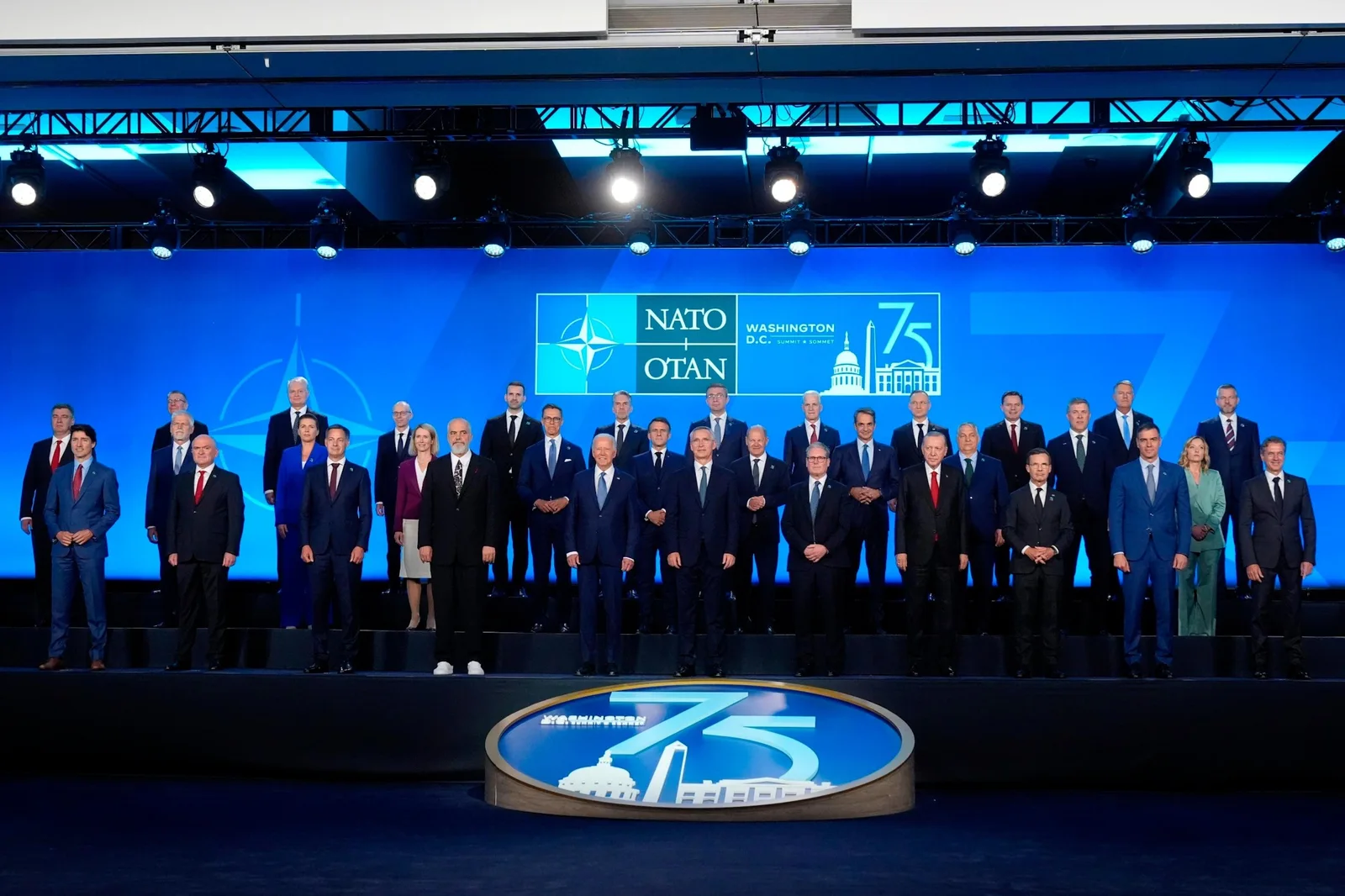
On July 10, 2024, NATO leaders adopted the Washington Summit Declaration, illustrating the expanding scope of strategic competition. The declaration identified China as a decisive enabler of Russia's war against Ukraine, particularly through its support for Moscow's defense industrial base. It also addressed the implications of China's ambitions for Euro-Atlantic security and reinforced the importance of Indo-Pacific partnerships in the Alliance's strategic outlook.
The declaration did not mark the beginning of rivalry between Western powers and China. It nevertheless represented another stage in the incorporation of economic, industrial and technological relationships into assessments of strategic threats.
Security is no longer defined exclusively by military capabilities deployed across a territory. It also depends on the origin of components, available manufacturing capacity, digital infrastructure and commercial relationships capable of sustaining a rival power's industrial efforts.
The distinction between economics and geopolitics is consequently becoming less clear. A company supplying advanced equipment, a country controlling a critical stage of industrial processing or a government financing strategic production capacity can influence the balance of power without participating directly in a conflict.
This transformation is also reshaping the geography of alliances. Traditional partnerships retain their military dimension, but increasingly extend into technology, resources and supply-chain resilience. Cooperation between Europe, North America and selected Asian partners is responding as much to the need for industrial security as to conventional diplomatic objectives.
The emerging international order is therefore not being structured solely around political blocs. It is also taking shape through networks of production, financing and resource access, within which governments seek to control their most sensitive dependencies.
Industry Becomes a Matter of State Again
On August 9, 2022, the United States enacted the CHIPS and Science Act, legislation designed in part to strengthen domestic semiconductor manufacturing and American research and innovation capabilities. The law provided approximately $52.7 billion for US semiconductor-related programs, including support for manufacturing and research.
The decision represented a significant turning point in American industrial policy. Washington no longer considered market forces alone sufficient to guarantee access to production capabilities regarded as essential to economic and national security.
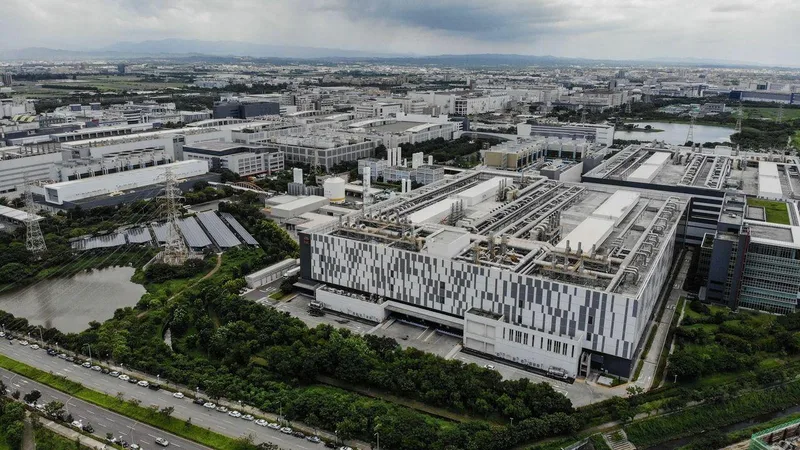
Semiconductors are embedded in military equipment, communications infrastructure, vehicles, industrial systems and computing facilities. Their production depends on an exceptionally concentrated value chain involving American chip designers, Asian manufacturers, European and Japanese equipment suppliers, and specialized companies operating across multiple economies.
For decades, this specialization generated substantial productivity gains. It allowed companies to focus investment on their most competitive activities while benefiting from considerable economies of scale. Yet it also created concentrations of production whose disruption could simultaneously affect numerous strategic sectors.
The American response has been to rebuild part of this industrial capacity domestically and reduce dependencies considered excessive. The European Union, Japan, South Korea and other industrial economies have pursued policies reflecting their own priorities to preserve or strengthen their positions within technological supply chains.
The multiplication of public interventions does not necessarily imply a general relocation of production. Costs, specialized skills, infrastructure requirements and existing industrial relationships make such a transformation difficult. Instead, it encourages selective diversification, under which governments may accept additional costs to reduce exposure to particular risks.
International trade remains essential, but its geography is increasingly shaped by subsidies, regulatory restrictions, security considerations and political rivalries.
Economic fragmentation does not mean that trade stops. It means that its organization is becoming less exclusively determined by the pursuit of the lowest possible cost.
Technology Becomes an Instrument of Restriction
On October 7, 2022, the Bureau of Industry and Security at the US Department of Commerce announced new export controls targeting certain Chinese capabilities in advanced semiconductors, high-performance computing and related manufacturing equipment.
The decision introduced another dimension into technological rivalry. The objective was no longer simply to develop strategic technologies faster than competitors, but also to restrict a competitor's access to the capabilities required to produce them.
American controls draw upon the position occupied by US companies and technologies at critical stages of the global semiconductor industry. Their reach can extend beyond American territory when foreign-produced items fall under US rules governing certain technologies or equipment.
Control over components, design software, industrial machinery and specialized expertise consequently becomes a source of regulatory power.
This strategy nevertheless has limitations. Restrictions can slow access to particular capabilities, but they may also encourage investment in substitutes, accelerate domestic research programs and prompt affected companies to reorganize their production networks.
China has sought for years to reduce its dependence on foreign technologies in sectors considered essential. American restrictions strengthen incentives to develop domestic alternatives, even when these involve higher costs or initially offer lower performance than solutions available internationally.
Technological competition is therefore evolving into a confrontation between two dynamics. On one side, powers holding dominant positions in particular technologies seek to preserve their advantages and capacity for control. On the other, states exposed to restrictions attempt to develop alternatives and reduce their vulnerabilities.
This confrontation extends well beyond semiconductors. It encompasses computing infrastructure, artificial intelligence, communications networks, quantum technologies and advanced industrial equipment.
It also changes corporate investment decisions. An investment no longer depends solely on commercial prospects or production costs. Companies must increasingly consider the possibility that a technology, customer, supplier or market could become inaccessible following a political decision.
Innovation remains global in its knowledge base and markets, but its industrial deployment is becoming more closely regulated by states. 
Resources Regain Strategic Importance
On July 3, 2023, China's Ministry of Commerce and General Administration of Customs announced export-control measures covering certain gallium and germanium products, effective August 1, 2023.
These materials are used in various electronic, optical and technological applications. Their importance does not necessarily derive from the size of their markets, but from their role within specialized industrial supply chains and the concentration of production or processing capacity.
The Chinese decision illustrates another dimension of economic competition: control over a resource or industrial processing stage can become a strategic instrument even when that resource represents a relatively small share of international trade.
The restrictions did not constitute a blanket prohibition on all affected exports. They introduced licensing requirements that gave authorities additional control over commercial flows.
That distinction matters. The ability to determine the conditions under which a material can be exported may be sufficient to alter corporate expectations, encourage stockpiling or accelerate investment in alternative suppliers.
Critical minerals are consequently assuming greater importance in industrial strategies. Rare earth elements, lithium, cobalt, nickel, graphite and other materials are essential to sectors as diverse as electronics, batteries, electricity networks, defense equipment and certain energy technologies.
Yet geological resources do not automatically translate into economic control. Between extraction and industrial use lie separation, refining, chemical processing and component manufacturing. These stages require capital, expertise, infrastructure and access to commercial markets.
A country may possess substantial mineral reserves without controlling the most profitable or strategically important segments of the value chain. Conversely, a state with limited natural resources can exercise considerable influence through its industrial processing capabilities.
This distinction explains why competition for resources extends beyond securing new deposits. It also concerns refining facilities, supply agreements, infrastructure investment, environmental standards and long-term industrial partnerships.
Africa, Latin America, Central Asia and several emerging economies may gain additional negotiating opportunities in this environment. But the strategic value of their resources will not automatically produce industrial upgrading. That will depend on their ability to develop infrastructure, attract productive investment and negotiate a larger role in downstream processing.
Competition between major powers can create additional opportunities for resource-producing countries. It can also increase their exposure to external rivalries and commodity price cycles.
Four Transformations, One Underlying Logic
American semiconductor legislation, technological export restrictions, Chinese controls on selected materials and the evolution of NATO's strategic doctrine belong to different institutional domains. Yet they form part of a common transformation.
Governments are increasingly seeking to identify dependencies that could restrict their freedom of action and change the conditions under which those dependencies are organized.
The reconfiguration of the international order provides the political framework for this transformation. Economic fragmentation reshapes commercial flows and industrial locations. Technological competition determines access to production and innovation capabilities. Competition for resources influences the availability of the materials required to sustain those capabilities.
These four dynamics do not develop independently.
A technological restriction can accelerate a domestic industrial policy. That policy increases demand for particular materials. Securing those materials generates new diplomatic partnerships and investment in third countries. Those partnerships can subsequently alter commercial and strategic balances.
The process also works in reverse. Geopolitical tensions can trigger supply-chain restructuring, encourage industrial subsidies and accelerate the search for technological alternatives.
The transformation of the international system therefore takes the form of interconnected decisions rather than a succession of isolated disruptions.
This evolution also requires a distinction between two objectives that are frequently conflated: resilience and autonomy.
Resilience means preserving an economy's ability to function despite disruption. It can be achieved through supplier diversification, strategic reserves or additional production capacity.
Autonomy seeks to reduce dependence on external actors in areas considered essential. It may require considerably greater investment and does not necessarily guarantee superior economic efficiency.
No major industrial economy possesses all the resources, expertise and capabilities needed to independently control every strategic technology. Attempts to reduce dependencies therefore often generate new forms of interdependence, sometimes concentrated among partners considered politically reliable.
The central question is no longer simply whether a country depends on the rest of the world, but on whom it depends, in which sectors, at what cost and with what capacity for substitution.
The Cost of a More Secure World
This reorganization carries an economic cost.
Duplicating industrial capacity, building strategic inventories, diversifying suppliers and investing in alternative technologies can improve supply security. Yet these measures also absorb capital that could have been allocated elsewhere and may reduce certain economies of scale.
Companies must navigate more complex regulations, potentially fragmented markets and growing uncertainty over access to technologies.
For governments, the risk is that economic security becomes a permanent competition of subsidies and restrictions without eliminating the vulnerabilities that originally justified intervention.
For emerging economies, the reconfiguration can create new industrial opportunities while also generating conflicting pressures. Attracting investment from several major powers becomes more difficult when supply chains are subject to incompatible political requirements.
The international system could consequently evolve toward an arrangement in which trade remains substantial, but technologies, financing and resources circulate under increasingly differentiated conditions.
Such an evolution would not necessarily produce two completely separate economic blocs. Industrial interests, commercial relationships and material constraints make that separation difficult. Instead, it could generate a multilayered globalization, with some sectors remaining broadly open, others subject to tighter controls and certain strategic activities organized around restricted partnerships.
The depth of this transformation will depend on future political decisions, corporate adaptation and the evolution of international rivalries.
Globalization did not eliminate power relations. It provided them with new instruments.
Industrial infrastructure, advanced technologies and critical resources now occupy a central position in how states define their security and influence. Controlling them does not guarantee independence, but losing access to them can severely constrain economic and political choices.
The world is therefore not ceasing to be interdependent. It is entering a period in which every major dependency becomes an object of strategic calculation, negotiation and, at times, confrontation.
The question shaping the coming decades may not be which powers succeed in escaping interdependence, but which manage to control its conditions without destroying the economic advantages it provides.
Main Sources
- NATO — Washington Summit Declaration, July 10, 2024.
- The White House — Remarks by President Biden at Signing of H.R. 4346, the CHIPS and Science Act of 2022, August 9, 2022.
- US Department of Commerce, Bureau of Industry and Security — Commerce Implements New Export Controls on Advanced Computing and Semiconductor Manufacturing Items to the People's Republic of China, October 7, 2022.
- Ministry of Commerce of the People's Republic of China and General Administration of Customs — Announcement No. 23 of 2023 concerning export controls on certain gallium and germanium products, July 3, 2023.
- International Monetary Fund — Geoeconomic Fragmentation and the Future of Multilateralism, Staff Discussion Note, 2023.
- International Energy Agency — Global Critical Minerals Outlook 2024.
Atlas Limits Research Desk
Atlas Limits’ editorial and analytical desk.