There are countries in the international economy whose strategic importance exceeds their apparent economic weight for decades. Vietnam has now entered this category. Known for its textile factories, electronics manufacturing and growing integration into Asian production networks, the country is attracting attention for an entirely different reason. Beneath its territory lie resources essential to military industries, semiconductors and energy technologies. As major powers seek to reduce their dependence on China, Hanoi is discovering that its mineral wealth could provide it with influence far greater than that derived from manufacturing competitiveness alone.
On October 14, 2026, internal European Union documents revealed by Reuters highlighted Brussels' intention to rapidly strengthen cooperation with Vietnam on critical minerals. The objective extends beyond commercial diversification. Europe is seeking to secure access to materials whose availability increasingly determines industrial production, defense capabilities and part of the energy transition.
The documents, prepared in June by the EU delegation in Hanoi, recommend financial support for mining activities and, above all, local processing capabilities. They also identify a less frequently discussed risk: Europe could lose access to certain Vietnamese resources to other Western partners, particularly American and Australian investors.
Competition for strategic minerals is therefore no longer limited to the confrontation between China and Western economies. It is also beginning to emerge among partners that officially pursue the same objective of supply-chain diversification.
An Industrial Geography Acquiring New Value
Vietnam occupies a distinctive position in the Asian economy. With a population of approximately 100 million, a strongly export-oriented manufacturing base and immediate geographical proximity to China, the country has become a preferred destination for companies seeking to diversify their industrial operations.
This development has been encouraged by Sino-American trade tensions, the search for competitive production costs and multinational corporations' desire to distribute geographical risks.
Yet the reorganization of supply chains reveals a fundamental limitation: relocating an assembly plant does not necessarily mean relocating the technologies, raw materials or processing capabilities on which it depends.
A company may manufacture its products in Vietnam while continuing to import components, industrial equipment and intermediate materials from China. The geographical diversification of factories is therefore insufficient to produce genuine economic autonomy.
It is precisely in this context that Vietnam's mineral resources acquire a new strategic dimension.
The country possesses deposits of tungsten, rare earth elements, antimony, bismuth and bauxite. These resources serve different industrial purposes, but they share one characteristic: their strategic value depends as much on processing capabilities as on extraction.
Tungsten is used in high-temperature-resistant alloys, cutting tools, industrial equipment and certain military applications. Antimony is incorporated into flame-retardant materials and products used by defense industries. Rare earth elements are essential to several categories of permanent magnets employed in electric motors, electronic equipment and military systems.
Bauxite, primarily used to produce aluminum, may also offer opportunities for recovering associated elements, including gallium, depending on mineral composition and processing technologies.
The existence of these resources does not, however, mean that Vietnam already possesses the industrial capabilities required to exploit them on a large scale. Geological reserves, commercially viable production and mastery of refining technologies are three different realities.
This distinction explains much of Europe's interest.
Europe Confronts the Limits of Its Dependence
For several decades, European industry operated in an environment where access to raw materials could be organized primarily according to price, quality and availability.
Industrial globalization encouraged the concentration of activities in territories capable of producing at lower costs. European companies retained design capabilities, advanced manufacturing and commercialization, while an increasing share of intermediate operations was performed elsewhere.
This model gradually created dependencies that have proved difficult to reverse.
China developed a dominant position in several segments of critical mineral extraction and, more importantly, refining. This advantage rests on accumulated investment, considerable industrial capacity, technical expertise and the integration of multiple production stages.
Europe's problem therefore concerns more than the geographical origin of minerals. It involves the concentration of the processes required to transform those resources into usable industrial materials.
The European Commission indicates that China supplies approximately 77% of the gallium consumed by the European Union and occupies a predominant position in the refining of rare earth elements used in permanent magnets.
These dependencies prompted Brussels to adopt the Critical Raw Materials Act, which entered into force in 2024.
The legislation establishes several objectives for 2030: meeting at least 10% of the EU's annual consumption of strategic raw materials through domestic extraction, 40% through processing and 25% through recycling, while ensuring that no single third country supplies more than 65% of European requirements for each strategic material at a relevant processing stage.
These targets do not represent industrial capabilities already available. They illustrate the gap between Europe's ambitions for industrial sovereignty and the existing structure of global supply chains.
From this perspective, Vietnam appears as a partner capable of reducing certain geographical concentrations.
But Brussels faces a contradiction: securing European supplies requires investment in industrial capabilities located outside the Union, even as Europe attempts to rebuild its own processing capacity.
Diversifying supply sources can reduce vulnerability without necessarily eliminating external dependence.
Tungsten Reveals a Less Visible Competition
Among Vietnam's mineral resources, tungsten occupies a particularly important position.
Unlike certain rare earth projects whose development remains limited, Vietnam already possesses an active industrial sector centered on this metal.
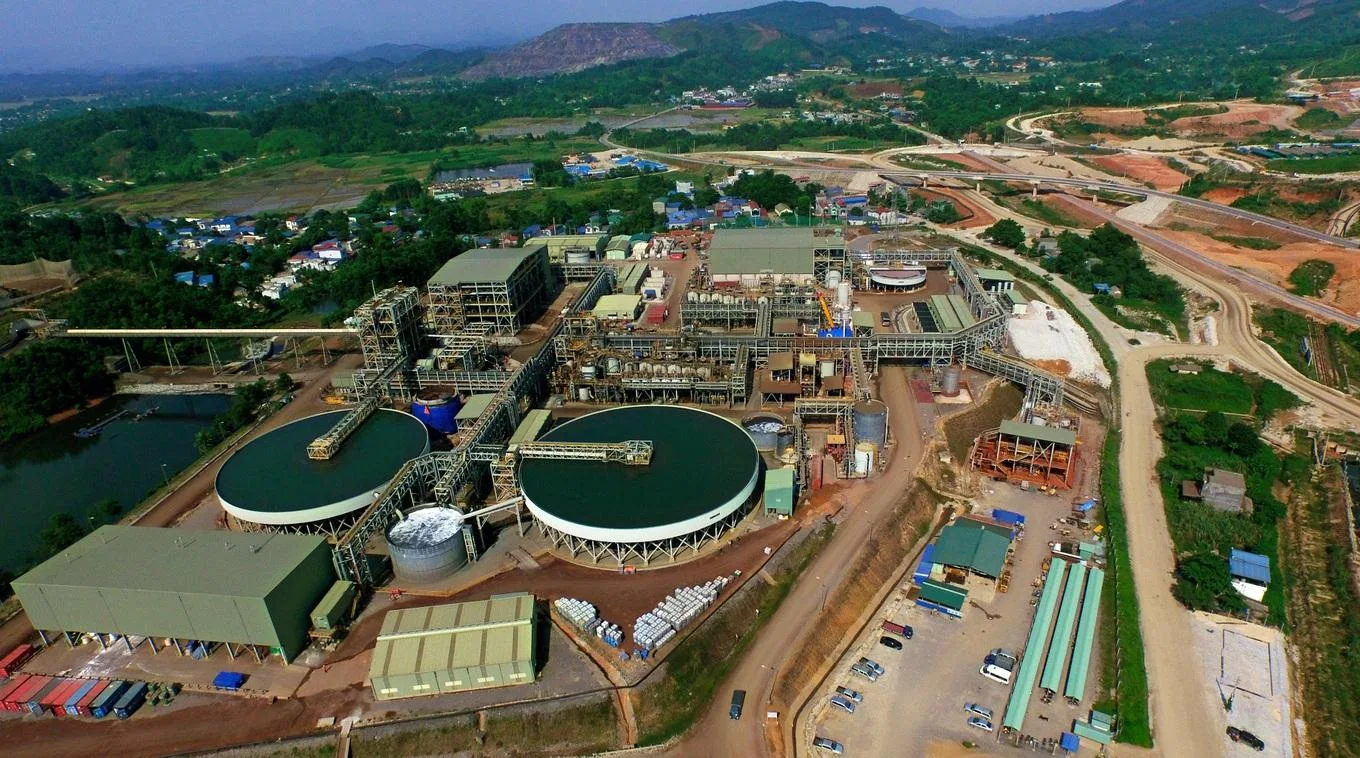
The Nui Phao complex, associated with Masan High-Tech Materials, represents one of the country's principal industrial assets in this field. It combines mining operations with processing activities, giving it an importance greater than that of a simple mineral deposit.
Germany is among the European destinations for this production.
Yet the European documents revealed in October indicate that this commercial relationship has become an issue of international competition.
A project involving Australian, American and Canadian investors reportedly considered acquiring a majority stake in Masan's Vietnamese tungsten operations in 2025. The transaction did not materialize, but it raised concerns in Brussels regarding the continuity of European supplies.
In September 2026, Masan High-Tech Materials sold a 4.99% stake to Elmet Group, a company associated with American tungsten supply chains and strategic US requirements.
According to Reuters, discussions were also underway concerning an additional 5% stake with another foreign investor.
These transactions illustrate a gradual transformation of competition.
Industrial actors are no longer merely purchasing minerals on international markets. They are seeking direct positions in companies controlling deposits, processing facilities and established commercial relationships.
Equity ownership is becoming an instrument for securing access to strategic resources.
For Europe, the issue is particularly sensitive. A Vietnamese company may continue producing the same mineral in the same facilities while progressively redirecting its output according to the interests of new shareholders or contracts concluded with other partners.
Physical access to a resource does not therefore guarantee its commercial availability.
This distinction could become decisive in defense industries, where the required quantities may be relatively modest but the absence of a particular material can interrupt entire production chains.
Rare Earths and the Processing Barrier
Rare earth elements constitute a second major area of interest.
Vietnam possesses identified resources, but their economic assessment remains complex. Geological estimates have undergone substantial revisions, and the quantities that can actually be exploited depend on technical, environmental and financial conditions.
It would therefore be misleading to equate the potential importance of these deposits with an immediate capacity to compete with China.
The rare earth industry requires a succession of highly specialized operations: extraction, concentration, chemical separation, purification, metal production and the manufacturing of alloys or magnets.
Some of these stages require expensive facilities, substantial chemical inputs and rigorous management of industrial waste.
Rare earth separation, in particular, represents a considerable technological and financial barrier.
China benefits from an advantage accumulated over several decades, one that cannot be overcome simply by opening new mines.
Vietnam must therefore choose among several industrial trajectories.
The first would involve developing extraction and exporting concentrates to countries already possessing the necessary refining capabilities. This approach could allow production to expand relatively quickly, but a substantial share of added value would remain abroad.
The second would involve progressively building a domestic separation and processing industry. It would generate greater economic benefits but require significant investment and initially depend on foreign technologies.
The third would consist of integrating mining activities more extensively into Vietnam's manufacturing industries, particularly electronics, components and certain energy technologies.
This final option would reflect a deeper industrial ambition: moving beyond hosting foreign factories toward progressively mastering the materials and processes that supply them.
The European documents place particular emphasis on processing capabilities, considered a potentially more politically acceptable area of cooperation than certain mining operations.
This orientation demonstrates that Brussels has identified the principal industrial bottleneck.
A mineral deposit is a resource. The ability to transform it is a source of economic power.
Competition Among Western Partners
The Vietnamese case is also distinguished by the growing number of interested actors.
The United States seeks to reduce its exposure to Chinese supply chains, particularly in defense industries and advanced technologies.
Australia possesses considerable mining expertise and is developing its own ambitions in critical minerals.
Japan and South Korea have long sought to secure industrial supplies, while several Asian companies are investing in processing technologies.
Reuters notably mentions a project involving Australia's Lynas Rare Earths and South Korea's LS Eco Energy to develop rare earth metal production in Vietnam using imported raw materials.
This configuration is particularly revealing: a Vietnamese facility could help diversify global processing capacity without necessarily exploiting minerals extracted in Vietnam.
The location of refining operations is becoming as important as the location of deposits.
For Brussels, the risk is twofold.
First, European companies could lose existing commercial positions to competitors capable of investing more rapidly.
Second, new industrial capabilities developed in Vietnam could become integrated into supply chains primarily oriented toward the United States or Asian economies.
Europe would then face a paradox: it might have contributed to promoting global diversification of critical minerals without necessarily benefiting from the resulting capacity.
This competition does not mean that Western partners are becoming economic adversaries in the traditional sense. Rather, it reveals that securing strategic resources increasingly follows national priorities that sometimes diverge.
Supplies guaranteed to an American industry are not automatically available to a European one.
Geopolitical alignment does not eliminate industrial competition.
Hanoi Refuses to Choose a Single Partner
Vietnam nevertheless possesses considerable diplomatic room for maneuver.
Its foreign policy is based on diversified relationships and the pursuit of balance among major powers.
China remains an essential economic partner, particularly for industrial components, equipment and regional trade. The United States represents a major destination for Vietnamese exports. Japan, South Korea and the European Union also play important roles in investment and commercial relations.
Hanoi therefore has no obvious interest in transforming its mineral resources into an exclusive instrument of a Western strategy of economic confrontation with Beijing.
This position requires caution when interpreting the European rapprochement.
Vietnam can seek Western capital, develop its technologies and expand exports without committing itself to an economic rupture with China.
Critical minerals instead provide an opportunity to strengthen its diplomatic autonomy by multiplying partnerships.
This strategy nevertheless contains its own contradictions.
Foreign investors generally seek stable access to resources, legal guarantees and sufficient freedom to organize production chains.
Vietnamese authorities, meanwhile, may prioritize technology transfers, domestic processing and the participation of national companies.
The European documents specifically mention regulatory difficulties, technology-transfer requirements and uncertainties surrounding the involvement of Chinese interests in certain projects.
These constraints are not necessarily anomalies in Vietnam's economic model. They reflect a desire to retain control over assets whose strategic value is increasing.
For Hanoi, selling more minerals is not a sufficient objective if those activities do not contribute to national industrialization.
The central question therefore becomes how the value created will be distributed.
An Established European Relationship
The current rapprochement does not begin from nothing.
The free trade agreement between the European Union and Vietnam, which entered into force in August 2020, has progressively strengthened commercial relations between the two economies.
On January 29, 2026, Brussels and Hanoi took another step by elevating their relationship to a Comprehensive Strategic Partnership.
The joint declaration covers critical raw materials, semiconductors, digital infrastructure, energy, transport and supply-chain diversification.
Minerals therefore form part of a much broader economic relationship.
This framework could allow Europe to offer Vietnam cooperation extending beyond extraction contracts.
European companies possess expertise in industrial equipment, engineering, specialized chemicals, materials processing, energy infrastructure and environmental technologies.
These capabilities could strengthen Europe's negotiating position with Hanoi, provided they are accompanied by financing and concrete industrial projects.
The documents revealed in October identify several possible instruments: loans, grants, technical assistance, export-credit guarantees and support for improving geological knowledge of mineral resources.
At this stage, however, they do not constitute a finalized European investment program.
The European Commission has confirmed that it is assessing opportunities for cooperation in this field without announcing specific new financial commitments.
The anticipated visit to Brussels by Vietnamese leader Tô Lâm around October 22, according to officials cited by Reuters, could provide a diplomatic opportunity to advance these discussions. As of October 19, any eventual outcomes of that meeting remain unconfirmed.
Another element complicates the relationship: the investment protection agreement signed in 2019 has not yet been ratified by all the relevant EU member states, including France.
This situation illustrates how European geoeconomic ambitions can encounter delays arising from the Union's own institutional procedures.
Defense Changes the Hierarchy of Priorities
Europe's interest in Vietnam comes amid a broader reassessment of military requirements.
For several years, European governments have sought to strengthen arms production capabilities, rebuild inventories and reduce certain industrial dependencies.
This development is changing how raw materials are evaluated.
Under a strictly commercial approach, companies can choose among suppliers according to prices and delivery schedules. Under an industrial-security approach, continuity of supply may become more important than immediate cost.
Tungsten and antimony illustrate this transformation.
Their military applications do not mean that all production is destined for defense. Both materials also have numerous civilian uses. Yet their presence in certain strategic manufacturing chains gives them an importance that exceeds their weight in global trade.
A material that appears relatively insignificant in commercial statistics can become indispensable to the production of high-value equipment.
Economic security is then measured less by the total quantity of available resources than by the ability to maintain every stage of an industrial chain.
This explains why governments increasingly seek to combine supply contracts, equity investments, processing capacity and strategic inventories.
Markets remain central, but they are no longer considered sufficient guarantees.
For Vietnam, this evolution increases the value of its resources while intensifying the external pressures it may face.
The Risk of Replacing One Dependence With Another
Supply-chain diversification is a rational response to the concentration of global industrial capacity. Nevertheless, it carries an often underestimated risk: replacing one dependency with another.
If Europe secures extraction contracts in Vietnam but the minerals must subsequently be processed in Chinese facilities, its vulnerability does not disappear.
If new Vietnamese processing plants depend exclusively on foreign technologies that are difficult to replace, another form of dependence may emerge.
If production capacity is reserved through long-term contracts for a limited number of major customers, geographical diversification does not necessarily guarantee actual market availability.
The challenge is therefore to build supply chains sufficiently complete to withstand commercial disruptions, diplomatic tensions and changes in industrial ownership.
This requires simultaneous investment in extraction, processing, infrastructure, training and research.
Environmental constraints cannot be ignored either.
Mining and chemical processing of certain critical minerals can generate hazardous waste, consume substantial water resources and create conflicts over land use.
The development of new capabilities must therefore incorporate requirements for oversight, transparency and industrial responsibility.
A supply chain does not become sustainable simply because it is less dependent on China.
It must also demonstrate economic, technical and environmental viability.
Vietnam Faces Its Own Industrial Choice
For Hanoi, international competition over critical minerals represents an opportunity to change its position in the global division of labor.
Vietnam's manufacturing model has developed largely through foreign investment and integration into international production networks.
This strategy has enabled considerable export growth and a progressive transformation of the economy.
Yet one central question remains: what proportion of industrial added value actually stays within the country?
The presence of high-technology factories does not, by itself, guarantee mastery of the technologies they employ.
Developing critical mineral industries could help overcome this limitation, provided it encourages the emergence of domestic expertise and more sophisticated industrial activities.
Vietnam could seek to connect its geological resources with its ambitions in semiconductors, electronics and energy equipment.
Such a transformation would take time.
It would also require investment in electricity, transport, industrial infrastructure and specialized workforce training.
Competition among foreign investors could help Hanoi secure better financing conditions and technology transfers. It could also complicate project coordination if each partner attempted to establish a separate supply chain.
The Vietnamese government must therefore balance the speed of investment, national control over resources and the ambition to develop domestic industries with greater added value.
Mineral wealth creates opportunities. It does not automatically define a development strategy.
A New Map of Industrial Power
The rapprochement between the European Union and Vietnam forms part of a broader transformation of the global economy.
Raw materials are no longer regarded solely as industrial inputs. They are becoming components of national security, instruments of diplomatic negotiation and increasingly sought-after financial assets.
This evolution is changing the position of resource-producing countries.
For decades, the international industrial hierarchy largely distinguished economies supplying raw materials from those mastering their transformation.
That separation remains widespread, but it is becoming increasingly contested.
Countries possessing strategic resources now seek more than export revenues. They want to attract the technologies, investments and industrial activities associated with those resources.
Vietnam could benefit from this gradual redistribution of bargaining power.
Its advantage lies not only in the presence of critical minerals. It also derives from its geographical position, manufacturing experience and ability to maintain economic relations with several major powers.
For Europe, the challenge is different.
Brussels must demonstrate that it can translate its diversification ambitions into investments sufficiently rapid to secure concrete industrial supply chains.
Diplomatic partnerships, joint declarations and regulatory objectives are necessary instruments. They cannot, however, replace factories, infrastructure or industrial expertise.
Competition over Vietnamese minerals could therefore become a test of European industrial policy.
It will reveal whether the Union can combine its commercial power with a coherent strategy of investment, processing and resource security.
For Hanoi, the challenge will be to benefit from this competition without losing control over its economic choices.
Because the question emerging behind negotiations between Brussels and Vietnam extends far beyond tungsten or rare earth elements.
It concerns the future distribution of industrial power.
For decades, resource-producing countries were often encouraged to open their deposits while value was created elsewhere. Today, some are finally acquiring the means to negotiate on different terms.
Whether they can transform this new strategic importance into lasting industrial strength remains to be seen.
Vietnam possesses the minerals the major powers are seeking. Its next challenge is to ensure that they also need its industry.
Main Sources
Reuters — October 14, 2026. EU seeks closer Vietnam ties on critical minerals in China hedge, documents show. Investigation based on internal documents prepared by the EU delegation in Vietnam in June 2026 and interviews with European and Vietnamese officials.
European External Action Service — January 29, 2026. EU and Viet Nam elevate relations to a Comprehensive Strategic Partnership. Official announcement detailing the upgrading of bilateral relations.
Government of Vietnam — January 29, 2026. Joint Statement on upgrading Viet Nam–EU relations to Comprehensive Strategic Partnership. Joint declaration outlining cooperation on critical raw materials, semiconductors and infrastructure.
European Commission — Critical Raw Materials Act. European regulatory framework governing critical raw material security, supply diversification and the development of European industrial capabilities.
Reuters — January 28, 2026. Reporting on the planned strengthening of economic relations between the European Union and Vietnam in critical minerals, semiconductors and digital infrastructure.
Atlas Limits — Independent Global Analysis
Atlas Limits Research Desk
Atlas Limits’ editorial and analytical desk.