The expiration of MINURSO's mandate has opened a new diplomatic chapter in the Western Sahara dispute. But the confrontation is not unfolding solely within the Security Council or on the ground. It is also playing out across the media, where competing actors seek to establish their interpretation of events. On November 4, 2026, Morocco's National Press Council denounced the narratives promoted by certain foreign media outlets and called for a national mobilization. Behind this initiative lies a broader question: when information becomes an instrument of sovereignty, how can the defense of facts be distinguished from the defense of a political position?
Beyond Resolutions, the Battle of Narratives
A diplomatic crisis does not end when diplomats leave the room. It continues through official statements, newspaper headlines, political declarations and interpretations that sometimes become almost as consequential as the decisions themselves.
Western Sahara offers a particularly revealing illustration.
On October 30, 2026, the United Nations Security Council failed to renew MINURSO's mandate. A US-sponsored draft supported by eleven members was blocked by a Russian veto. A competing proposal from Moscow failed to secure the required majority. The mission's mandate expired the following day, opening a phase of administrative and operational liquidation.
These developments constitute a set of institutional facts. Yet their political significance varies considerably depending on who interprets them.
For Morocco, the failure to renew the mandate marks a historic break with an international mechanism it considers outdated. For defenders of the previous UN framework, Russia's veto prevented a transformation of the process considered excessively favorable to Morocco's autonomy initiative. For the United Nations, the disappearance of a mission does not necessarily mean the disappearance of the political dispute it was established to address.
Each interpretation draws on part of the reality. None, taken in isolation, fully captures its complexity.
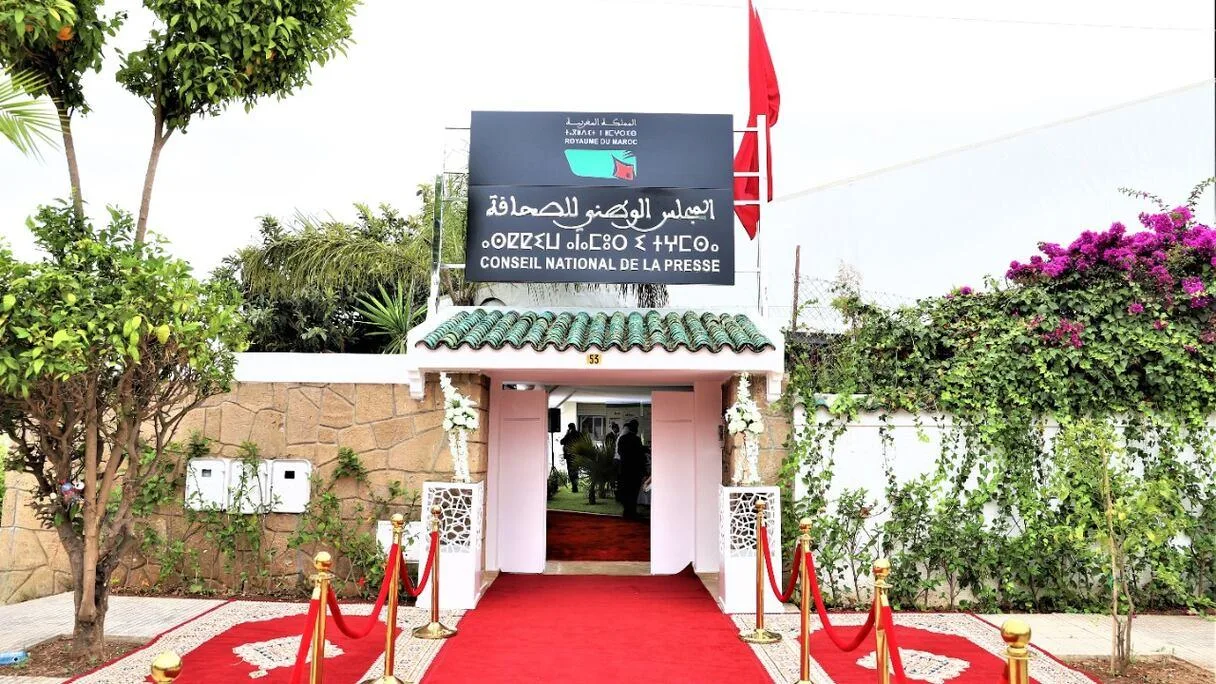
It was against this backdrop that Morocco's National Press Council took a public position.
On November 4, according to an article published by Le360, the Council welcomed Morocco's diplomatic advances and criticized the role of certain international media outlets in disseminating narratives it considers hostile to Moroccan territorial integrity. The institution called on national media organizations to mobilize against what it described as foreign disinformation.
The statement, as reported, therefore went beyond criticizing particular examples of journalism. It invited the media to regard information itself as an arena of strategic confrontation.
This approach raises an essential question: at what point does the defense of documented reality become an effort to mobilize support for an official interpretation?
An Old Confrontation in a New Information Environment
The battle of narratives surrounding Western Sahara did not begin with the October 2026 votes.
For decades, the dispute has involved competing conceptions of political legitimacy, history and international law.
Morocco places its sovereignty claim within a framework of historical, political and territorial continuity. It emphasizes the ties of allegiance that existed between certain Saharan tribes and the Moroccan central authority, the territory's administrative integration and the investments undertaken in its southern provinces.
The Polisario Front advances an interpretation grounded in the right to self-determination and the territory's international status. It maintains that a settlement must allow the Sahrawi people to determine their political future. Algeria supports this position and presents the dispute as an issue of decolonization.
These narratives are not based solely on diplomatic preferences. They draw on historical evidence, international decisions, legal interpretations and contemporary realities whose significance remains contested.
The advisory opinion delivered by the International Court of Justice in 1975 illustrates this difficulty.
The Court acknowledged the existence of certain legal ties of allegiance between the Sultan of Morocco and some tribes of the territory, as well as other legal ties involving the Mauritanian entity. It did not, however, establish territorial sovereignty ties capable of overriding the application of the principle of self-determination.
Both dimensions belong to the same opinion.
Selecting only one makes it possible to construct a coherent political argument, but it does not faithfully represent the Court's complete legal reasoning.
The same standard must apply to contemporary diplomatic developments.
American recognition of Moroccan sovereignty, the evolution of France's position and the growing support expressed by several states for Morocco's autonomy initiative are significant diplomatic facts. They alter the balance of power and the prospects for negotiation.
But these national positions do not, by themselves, constitute a definitive international settlement of the dispute.
Conversely, pointing out that Western Sahara remains on the United Nations list of Non-Self-Governing Territories does not adequately describe the full extent of diplomatic changes that have taken place in recent years.
Rigorous reporting must be capable of holding these realities together, even when they do not align with the conclusions favored by the parties.
When the Choice of Words Becomes Political
In territorial disputes, vocabulary is never entirely neutral.
References to "Moroccan Sahara," "Western Sahara," "southern provinces," "disputed territory" or "Non-Self-Governing Territory" do not invoke exactly the same interpretative framework.
These expressions have different histories and functions. Some belong to the official language of a state, while others reflect United Nations terminology or international journalistic conventions.
The problem does not necessarily lie in using one expression rather than another. It emerges when terminology replaces an explanation of what the words actually mean.
A media outlet may use the term "southern provinces" when presenting Morocco's administrative position. It may use "Western Sahara" when referring to the territory within the UN framework. It may also explain why both designations coexist.
Such contextualization requires more intellectual discipline than the pursuit of absolute lexical neutrality.
The events of October 2026 also demonstrate that words can precede decisions.
The American draft rejected by the Security Council envisaged changing MINURSO's name by removing the reference to the referendum. This would have carried considerable political significance, formally transforming the way the United Nations defined the mission.
But the draft was not adopted.
Presenting that change as an accomplished fact would therefore have been inaccurate, even though a majority of Council members had supported it.
Similarly, the terms "expiration," "liquidation," "withdrawal" and "closure of the dispute" refer to distinct realities.
The expiration of a mandate concerns the legal authorization of an operation. Liquidation refers to an administrative and material process. Effective withdrawal requires personnel and equipment to leave. The political closure of a dispute involves an entirely different set of decisions.
Conflating these stages makes it easier to construct a simple and dramatic narrative. But that simplification erases precisely the distinctions needed to understand the event.
In an international crisis, information can therefore be factually correct while becoming misleading through the significance attributed to it.
The National Press Council and the Mobilization of Information
The statement by Morocco's National Press Council came at a time when Rabat considered itself to have secured major diplomatic advances.
According to the excerpts reported by Le360, the Council criticized sections of the international press for promoting narratives hostile to Morocco's territorial integrity. The institution referred to a lack of understanding of historical realities and accused certain outlets of serving the interests of actors supporting separatism.
It also called on Moroccan media organizations to mobilize in response to these representations.
It would be reductive to interpret this initiative merely as an emotional reaction to foreign reporting.
It reflects a broader concern among contemporary states: their ability to secure recognition for their positions, respond to influence campaigns and prevent unfavorable representations from becoming dominant internationally.
Governments have always sought to explain and defend their policies. Public diplomacy, institutional communications and cultural initiatives all contribute to that function.
The difficulty arises when an institution responsible for professional matters relating to the press adopts the language of national mobilization.
The defense of territorial integrity is a political and institutional position of the Moroccan state. Journalism serves a different function: establishing facts, verifying claims, contextualizing decisions and enabling the public to understand what is at stake.
These functions can sometimes converge.
A rigorous investigation may demonstrate that a claim directed against a state is false. Documentary verification may confirm a decision favorable to its position. Reporting may uncover manipulation or significant omissions.
But convergence should not become a prior obligation.
Journalists should not have to determine whether information serves a national interest before establishing whether it is accurate.
This distinction protects the credibility of the press, including when it covers issues to which a society attaches exceptional importance.
Disinformation Is Not Defined by Disagreement
Accusations of disinformation now occupy a central place in international political confrontations.
They respond to a genuine problem.
Conflicts are accompanied by forged documents, images removed from their original context, manipulated statistics, coordinated narratives and assertions whose authors may sometimes know them to be false.
But the term loses its meaning when it is applied indiscriminately to factual errors, questionable interpretations and unfavorable opinions.
False information can be disproved. A disputed interpretation can be examined alongside alternative readings. A political opinion can be criticized. These are three different intellectual exercises.
Calling a media outlet propagandistic because it reproduces a position contrary to that of a government does not, in itself, demonstrate that its reporting is false.
Conversely, invoking press freedom does not exempt any news organization from verifying its sources or correcting its mistakes.
In the Western Sahara dispute, this distinction is particularly important because historical and legal evidence is frequently selected to reinforce positions that have already been established.
International coverage that ignored changes in the positions of major powers, investments in the territories administered by Morocco or the evolution of diplomatic language would produce an incomplete representation.
Coverage presenting those developments as having eliminated every outstanding legal or political question would be equally incomplete.
Accuracy therefore does not depend on mechanically balancing two competing narratives. It depends on the quality of evidence and the precision with which its significance is established.
There is no need to assign equal credibility to every assertion in order to treat the actors making those assertions fairly.
There is, however, a need to apply the same standards of verification to everyone.
The International Media Are Not a Single Bloc
The expression "foreign press" can suggest a homogeneous collection of organizations pursuing common objectives.
The reality is considerably more fragmented.
An international news agency, a public broadcaster, a television news network, a privately owned newspaper, an activist platform and an anonymous social media account do not operate under the same rules or obligations.
Their funding structures, verification practices, editorial constraints and relationships with political authorities differ substantially.
Some outlets may reproduce official talking points without sufficient scrutiny. Others favor perspectives shaped by their political or cultural environments. Some publish documented investigations that contradict the positions of several governments simultaneously.
There are also influence operations that adopt the appearance of journalism without respecting its methods.
Conflating these realities makes criticism less effective.
Identifying a coordinated campaign requires evidence of specific mechanisms: simultaneous dissemination of content, networks of accounts, concealed common sources, repeated falsifications, opaque financing or artificial amplification.
An unfavorable editorial orientation is not sufficient to establish the existence of an organized operation.
The strongest response to a journalistic error remains a precise demonstration: which claim is being challenged, which source contradicts it, which document can establish the facts and what correction is necessary?
This approach may appear less dramatic than a general denunciation.
It nevertheless possesses a decisive advantage: it allows readers to verify the conclusion themselves.
Platforms Accelerate the Transformation of Facts Into Positions
Social media has changed the circulation of diplomatic narratives.
In the past, an international resolution was initially interpreted by governments, news agencies and specialists. Today, its contents are immediately fragmented into posts, images, excerpts from statements and political reactions.
The result is a permanent competition to establish the first interpretation.
The events of October 30 provide an example.
The Russian veto can be presented as a diplomatic victory against the American proposal. It can also be described as the obstruction of a transformation supported by eleven Security Council members.
Both formulations refer to real elements of the event. But they illuminate different dimensions.
The Russian proposal also failed. Yet its rejection for lack of a majority is less easily accommodated within a narrative centered exclusively on the confrontation between Moscow and Washington.
On digital platforms, this complexity becomes a disadvantage.
Posts that immediately assign victory or defeat are easier to circulate than those explaining the difference between a veto, an abstention and the absence of a majority.
The same phenomenon applies to statements by foreign political figures.
When an American lawmaker calls for sanctions against Algeria or for the Polisario Front to be designated a terrorist organization, the intervention can be presented as evidence of an imminent change in American policy.
Yet a parliamentary statement is not an executive decision. A proposed sanction is not an adopted sanction. An allegation of support for terrorism does not, by itself, constitute proof.
The speed at which such statements circulate tends to erase institutional distinctions.
Platforms do not necessarily invent these distortions. They give them a speed, visibility and capacity for repetition that can eventually transform a political hypothesis into an apparent certainty.
Influence Also Depends on Credibility
In an international confrontation, mobilizing national media around a common message may appear advantageous.
But this strategy has a limitation.
Repeating a position is not enough to convince audiences that do not already share it.
Foreign readers, policymakers, researchers and investors assess not only the content of a message but also the credibility of its source.
A media organization that acknowledges the limitations of a decision favorable to its own country may, paradoxically, make that decision more convincing.
It demonstrates an ability to distinguish analysis from promotion.
Conversely, an outlet that transforms every development into a definitive victory risks losing credibility when subsequent events reveal contradictions.
This question is particularly important for Morocco.
The diplomatic developments favorable to its autonomy initiative are substantial enough to warrant analysis without exaggeration. Their significance deserves to be explained through official documents, voting records, government positions and concrete consequences.
The objective should not be to produce the most enthusiastic narrative, but the one that best withstands verification.
International credibility is built through the ability to document progress without denying the limitations that remain.
It is a long-term strategic asset, difficult to acquire and easily lost.
Western Sahara as a Reflection of a Global Transformation
The confrontation over information is not unique to Morocco.
In many countries, sovereignty is now defended across several arenas simultaneously: military, economic, technological, legal and informational.
States invest in public diplomacy, develop international communications strategies and seek to challenge representations they consider unfavorable.
This evolution responds to a reality: international perceptions influence political decisions, economic partnerships, national reputations and sometimes diplomatic balances of power.
But it also creates a contradiction.
The more governments regard information as an instrument of power, the greater the risk that they will ask the media to perform a function that is not their own.
Yet journalism derives its distinctive value precisely from its ability to produce information independently of whether that information serves a political authority.
An independent press can contribute to the strength of a state by exposing mistakes, correcting inaccurate narratives and documenting realities that official communications alone cannot establish.
It can also contradict that same state.
This is not necessarily a weakness. It is one of the conditions of its credibility.
Information sovereignty therefore cannot be reduced to controlling a national narrative. It also requires institutions, media organizations and methods capable of producing reliable knowledge in an environment saturated with competing assertions.
What Narratives Cannot Decide
The MINURSO crisis has opened a period in which political interpretations sometimes evolve faster than institutional decisions.
Morocco considers the mission's non-renewal to mark the end of a historic chapter. The Security Council did not adopt the American draft that would have transformed its mandate. The United Nations Secretariat distinguishes the operational consequences of the mandate's expiration from the possible continuation of its diplomatic efforts.
These realities are not interchangeable.
They do not become more or less accurate depending on how many media organizations repeat them.
The battle of narratives can influence perceptions of a conflict, strengthen diplomatic support and prepare the ground for new decisions. It cannot, however, replace legal decisions, the balance of power on the ground or the political agreements required for a lasting settlement.
This is precisely why journalism retains a particular responsibility.
Its role is not to declare victories before their consequences have been established, nor to artificially preserve old assumptions when the facts demonstrate that circumstances have changed.
Its role is to make those transformations intelligible.
Western Sahara is today an arena in which competing conceptions of legitimacy, sovereignty and the role of international institutions confront one another. It is also becoming a reflection of how contemporary societies understand information: as a public good intended to inform decisions, or as a strategic resource intended to strengthen political positions.
These two conceptions can sometimes intersect. They should not be confused.
A narrative can accompany a diplomatic victory. It can even help make that victory possible. But it cannot create one on its own. And the strength of information is not measured by its loyalty to a cause. It is measured by what remains true when that cause is no longer at the center of the story.
Atlas Limits Research Desk
Atlas Limits’ editorial and analytical desk.