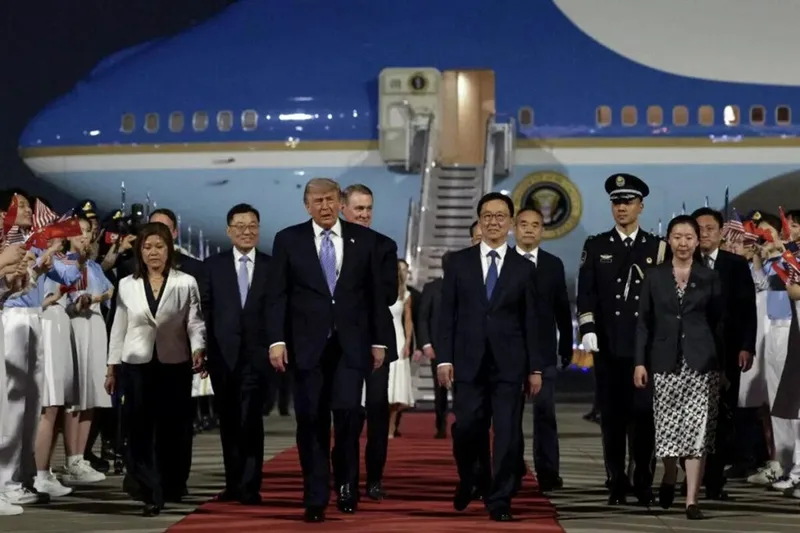
Mike Waltz's visit to Rabat on November 17, 2026, comes at a moment when the Western Sahara dispute is undergoing a transformation whose consequences extend far beyond relations between Morocco and the United States. For the first time since the establishment of the United Nations framework in 1991, the territory is without a Security Council-mandated peacekeeping mission. The expiration of MINURSO's mandate, following unsuccessful negotiations among the Council's permanent members, has brought an end to a central instrument of international monitoring and stabilization without an agreed replacement mechanism. Against this background, the visit by Washington's permanent representative to the United Nations cannot be understood merely as another reaffirmation of American diplomatic support. It forms part of a broader effort to reorganize the political and institutional conditions for resolving a dispute long confined to the management of its own stalemate.
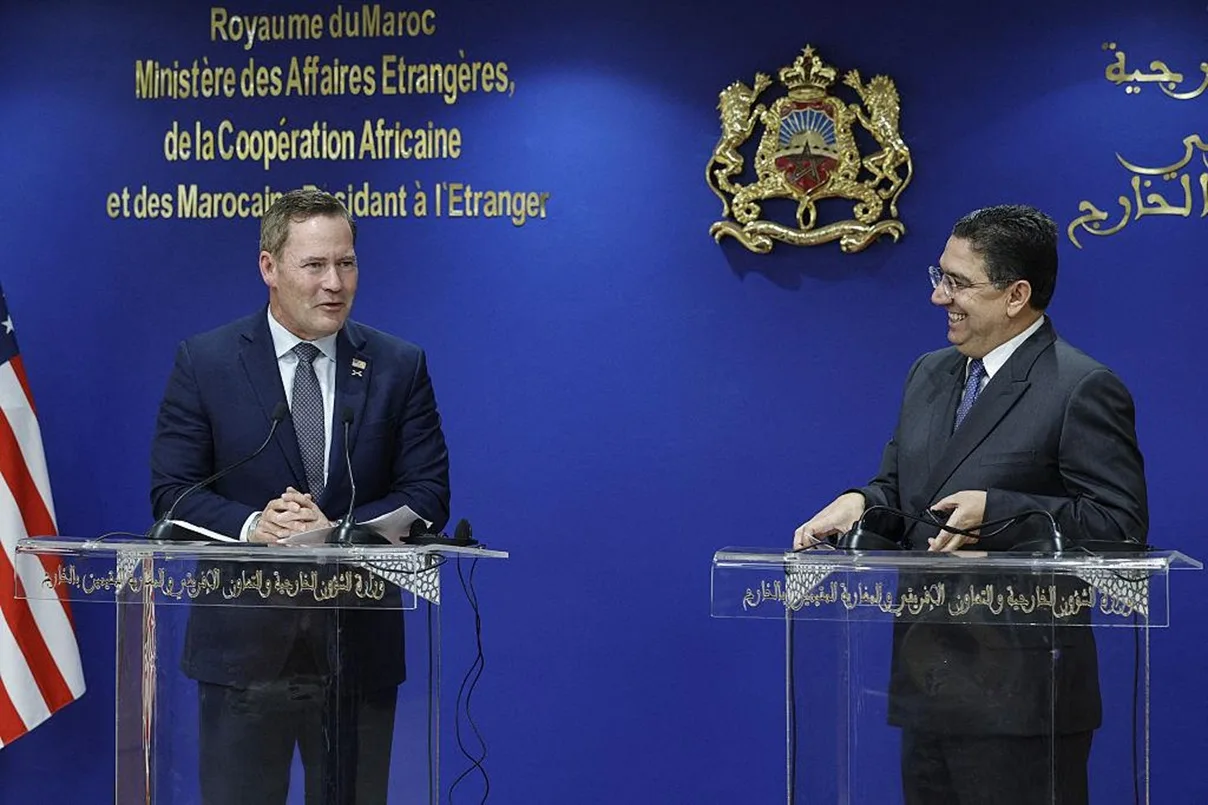
In Rabat, Waltz held discussions with Moroccan Foreign Minister Nasser Bourita and Head of Government Fatima Ezzahra El Mansouri. Their exchanges addressed Western Sahara, regional security, and the expansion of the strategic partnership between the two countries. The American diplomat reaffirmed Washington's recognition of Moroccan sovereignty over the territory and its support for the autonomy initiative proposed by Rabat. This position continues the policy established by the United States in December 2020, but its significance has changed. Washington is no longer simply defending a political position within the existing international framework. It is attempting to reshape the framework itself.
The End of a Framework That Had Become Inseparable from the Status Quo
The United Nations Mission for the Referendum in Western Sahara was established in April 1991 following the settlement plan accepted by Morocco and the Polisario Front. Its mandate rested on two complementary objectives: helping monitor the ceasefire and preparing a consultation intended to determine the territory's future status. The referendum was never held, primarily because of disagreements over voter eligibility and, more fundamentally, over the political options that could be submitted to the electorate.
Over the following decades, this failure gradually altered the mission's practical function. MINURSO remained in place even as the objective that had justified its creation became increasingly remote. It retained monitoring and liaison responsibilities without converting its continued presence into a political settlement. The breakdown of the 1991 ceasefire in November 2020 further weakened the relevance of the original arrangements. The mission continued to operate in a security and diplomatic environment that no longer fully corresponded to the assumptions underlying its establishment.
This contradiction became central to discussions within the Security Council. Washington increasingly regarded the repeated renewal of a mandate historically associated with an unimplemented referendum as a mechanism that institutionalized diplomatic paralysis. Moscow, by contrast, defended the preservation of a United Nations framework whose transformation should not prejudge the outcome of the self-determination process. Behind this disagreement lay a fundamental question: can an international mission be substantially redefined without agreement among the parties on the political purpose of that transformation?
On October 30, 2026, the United States submitted a draft resolution to the Security Council intended to extend and transform the United Nations presence in Western Sahara. The proposal included removing the reference to a referendum from the mission's designation and placing Morocco's autonomy initiative at the center of negotiations. Eleven Council members voted in favor, while Russia exercised its veto. China, Pakistan, and Somalia abstained. A competing Russian proposal also failed to secure sufficient support.
The absence of an agreement resulted in MINURSO's mandate expiring on October 31. From November 1, the United Nations began procedures to wind down the mission. This development does not mean that the dispute has disappeared or that the organization has relinquished its diplomatic responsibilities. It does, however, mark the disappearance of the operational instrument that accompanied the issue for thirty-five years.
For Rabat, the end of this arrangement confirms the exhaustion of an architecture associated with a referendum that Morocco no longer considers a viable settlement mechanism. For the Polisario Front and Algeria, it raises questions about the international guarantees surrounding self-determination and territorial security. For the United Nations, it creates an additional difficulty: maintaining political mediation while losing an institutional presence that contributed to monitoring conditions on the ground.
Washington Seeks to Translate Political Support into a Negotiating Framework
American policy toward Western Sahara now reflects a continuity extending across several dimensions of its foreign relations. In December 2020, the administration of Donald Trump recognized Moroccan sovereignty over the territory alongside the normalization of relations between Morocco and Israel. That decision represented a departure from Washington's traditional approach, which had supported the United Nations process without explicitly determining the question of sovereignty.
Since then, the challenge for the United States has been to transform recognition into a sufficiently broad diplomatic process capable of supporting a settlement. The distinction is essential. Bilateral recognition changes the position of an individual state and may influence the policies of its partners, but it does not, by itself, resolve a dispute on the United Nations agenda. Nor does it eliminate disagreements among the parties or the need for negotiations, political representation, and institutional guarantees.
Morocco's autonomy initiative, presented in 2007, proposes a territorial political arrangement under which local institutions would exercise extensive responsibilities while the central state retained sovereign powers, including defense and foreign policy. Its practical implementation would nevertheless require precise arrangements governing the distribution of authority, constitutional oversight, budgetary resources, political representation, and guarantees for the populations concerned.
It is toward these institutional questions that American diplomacy is now attempting to redirect negotiations. Rather than concentrating primarily on the renewal of a referendum-based process, discussions would increasingly address the conditions for a negotiated settlement centered on autonomy. This approach corresponds to Rabat's position, which regards Moroccan sovereignty as non-negotiable and autonomy as the framework within which political compromise can be reached.
It does not, however, eliminate the objections of the Polisario Front, which continues to defend the right to self-determination and the possibility of independence. Algeria, which supports the movement and hosts Sahrawi refugee camps around Tindouf, likewise rejects an outcome imposed without the agreement of Sahrawi representatives. The diplomatic challenge is therefore to transform growing support for the Moroccan proposal into a negotiating process capable of producing commitments that can be accepted and implemented.
In Rabat, Waltz emphasized the need to prevent renewed hostilities and highlighted the human consequences of indefinitely prolonging the dispute. His statements also drew attention to the conditions facing populations living in the Tindouf camps. This humanitarian dimension occupies an important place in the American approach. Washington is seeking to present a settlement not only as a question of sovereignty and regional stability but also as a response to prolonged displacement whose consequences have affected several generations.
The effectiveness of this approach will nevertheless depend on whether political commitments can be supported by credible implementation mechanisms. A durable settlement cannot rest solely on recognition of a territorial principle. It also requires a clearly defined institutional structure, verifiable commitments, and a credible prospect of security for all affected populations.
Russia's Veto Exposes the Limits of International Convergence
The Security Council episode reveals a significant transformation in the diplomatic balance surrounding Western Sahara, but also the limits of that transformation. Support from eleven Council members for the American proposal demonstrates substantial convergence around the need to modify existing arrangements. It does not, however, constitute a Security Council decision, because the veto of a permanent member prevented the resolution from being adopted.
The distinction between political majority and legal authority is decisive. The United States possesses considerable influence over this issue, particularly because it has traditionally served as the penholder responsible for drafting Security Council resolutions concerning Western Sahara. Washington can shape negotiations, assemble diplomatic coalitions, and propose new mechanisms. It cannot, however, impose a resolution on the Council against the opposition of another permanent member.
Russia therefore retains considerable institutional leverage. Its veto does not necessarily indicate the existence of a fully developed alternative settlement strategy. It nevertheless demonstrates Moscow's unwillingness to allow Washington to determine the parameters of the United Nations process unilaterally. Within a Security Council increasingly shaped by competition among major powers, Western Sahara remains a regional dispute whose management is also influenced by broader international rivalries.
China occupies a different position, traditionally emphasizing sovereignty, stability, and negotiated settlements while avoiding automatic alignment with American initiatives. Its abstention illustrates the limits of the coalition assembled around Washington's proposal. Pakistan and Somalia also declined to support the text, demonstrating that diplomatic positions cannot be reduced to a simple division between Western powers and Russia.
This configuration introduces a constraint for American diplomacy. Negotiations driven primarily by Washington might advance through bilateral or regional channels, but their translation into a multilateral framework would require broader agreement. Conversely, a return to the previous institutional arrangements without substantive changes could reproduce the obstacles that ultimately contributed to MINURSO's mandate expiring.
The challenge is therefore to reconcile two requirements: preserving Washington's capacity for political initiative while maintaining sufficient international legitimacy to sustain future commitments. The mission's disappearance does not remove this tension. It makes it more visible.
Morocco Faces a New Diplomatic Responsibility
For Morocco, the current sequence represents an important development in its international environment. American recognition in 2020, France's explicit support in 2024, and the positions adopted by several European, Arab, and African partners have progressively strengthened the place of the autonomy proposal in international discussions. The American draft resolution of October 2026 attempted to translate this evolution into the institutional architecture of the United Nations process itself.
Yet the expansion of international support does not relieve Rabat of the responsibility to define the practical conditions of the settlement it proposes. On the contrary, the more autonomy becomes the central subject of negotiations, the more decisive its institutional content becomes. The credibility of any arrangement will depend on the precision of devolved powers, the effectiveness of representative institutions, judicial guarantees, the financing of autonomy, and the mechanisms through which displaced populations could participate in the political settlement.
This dimension also involves the economic development of Morocco's southern provinces. Over recent years, Rabat has invested in port, road, energy, and urban infrastructure, seeking to strengthen the region's integration into African and Atlantic trade networks. The Dakhla Atlantic Port, renewable energy projects, and transport corridors form part of this strategy. Such investments may contribute to the economic viability of a future territorial arrangement, but they cannot substitute for the political agreements necessary to establish its legitimacy and functioning.
The changing environment also requires particular attention to security. MINURSO's disappearance removes an international presence and monitoring mechanism whose capacities were limited but which contributed to incident management and the exchange of certain information. In a context where the original ceasefire has already been undermined since 2020, the absence of a replacement arrangement could increase the risks associated with misinterpreted military movements and localized deterioration.
Morocco has reaffirmed its commitment to restraint and stability. The effectiveness of that commitment will also depend on the conduct of other actors and the existence of communication channels capable of preventing escalation. Managing military risks has therefore become a prerequisite for diplomatic progress.
Algeria Remains an Indispensable Actor
The new American approach cannot be assessed independently of Algeria's position. For decades, Algiers has provided political and diplomatic support to the Polisario Front, hosted the Tindouf refugee camps, and regarded Western Sahara as a question of decolonization and self-determination. Rabat, meanwhile, considers Algeria's involvement a central dimension of the dispute and maintains that no durable settlement can be constructed without its neighbor's engagement.
This divergence explains part of the difficulty facing the diplomatic process. Morocco advocates negotiations leading to autonomy under its sovereignty. Algeria emphasizes the right of the Sahrawi people to determine their own future. The Polisario Front claims to represent the Sahrawis and rejects the exclusion of independence from the political framework in advance. The United States is seeking to advance a solution it considers more achievable, but acceptance by the other parties remains uncertain.
The implications extend beyond competing legal interpretations. Rivalry between Rabat and Algiers shapes much of the Maghreb's strategic environment, constrains regional economic integration, and influences defense policies, external partnerships, and energy relations. The prolonged closure of the land border, the suspension of diplomatic relations, and competition for international partnerships have substantially narrowed the opportunities for compromise.
An American initiative that disregarded this regional dimension could reinforce existing positions rather than produce a settlement. Conversely, a process capable of addressing security guarantees, regional relations, and the institutional conditions of autonomy simultaneously might alter the incentives facing the parties. Such an approach would, however, require negotiations considerably more complex than diplomatic convergence around the territory's final status.
Mauritania's position also deserves attention. As an immediate neighbor of the territory, an economic partner of Morocco, and a state directly exposed to the consequences of instability in the Sahara, Nouakchott has a substantial interest in the security of commercial corridors and the stability of its borders. Any durable regional architecture would need to incorporate these geographical and economic constraints.
The Abraham Accords Within a Broader Regional Strategy
Waltz's visit was not confined to Western Sahara. The American mission to the United Nations explicitly situated the trip within continued cooperation associated with the Abraham Accords and efforts to strengthen regional security. This connection illustrates Washington's tendency to view Morocco through several strategic regions simultaneously: North Africa, the Atlantic, the Sahel, and the Middle East.
The normalization of relations between Morocco and Israel, announced in December 2020, was accompanied by deeper diplomatic, economic, and security cooperation. Subsequent regional developments have nevertheless made this relationship more politically sensitive, particularly because of the war in Gaza and its consequences. For Rabat, the challenge is to preserve strategic partnerships while maintaining its diplomatic positions on the Palestinian question and taking account of domestic public opinion.
For Washington, Morocco is a partner with established relationships across Europe, sub-Saharan Africa, the Gulf states, and Israel. This network gives the country particular diplomatic relevance in a region where security crises, strategic competition, and economic realignments increasingly overlap.
Waltz's regional itinerary, which took him to Lebanon before Morocco, reflects this approach. In Lebanon, discussions addressed the transition of international security arrangements and the responsibilities of the Lebanese state. In Morocco, they concerned the end of another United Nations mission and the conditions for a political settlement. The two situations differ profoundly, but they reflect a common question within American diplomacy concerning the future of international mechanisms inherited from longstanding conflicts.
This orientation does not necessarily indicate an American intention to withdraw from conflict management. Rather, it suggests an effort to redefine the instruments of engagement, favoring political and security arrangements more directly connected to Washington's strategic priorities.
From Diplomatic Partnership to Strategic Interdependence
Discussions in Rabat also addressed the economic and industrial prospects of the Moroccan-American partnership. Defense, energy, and advanced technologies are occupying an increasingly important place in this relationship. This diversification reflects a broader transformation in American foreign policy, in which alliances are assessed not only through military and diplomatic cooperation but also through their contribution to supply chains, industrial capabilities, and technological security.
Morocco possesses several characteristics that may interest Washington: geographical proximity to Europe, expanding logistics infrastructure, automotive and aerospace industries integrated into international markets, and substantial renewable energy potential. Its Atlantic position and African partnerships also enable it to participate in connectivity projects whose implications extend beyond its domestic economy.
Deeper cooperation in defense industries could strengthen local manufacturing capabilities and relationships between American and Moroccan companies. In energy, opportunities include electricity infrastructure as well as production and storage technologies. Artificial intelligence and digital systems represent another potential area of cooperation as control over data, computing capacity, and critical infrastructure becomes increasingly important to economic sovereignty.
Nevertheless, political declarations must be distinguished from industrial commitments that have actually been concluded. An announcement of cooperation is neither a financed investment program nor a guaranteed technology transfer. Its economic effects will depend on contracts, market-access conditions, local industrial capacity, and policy continuity.
For Rabat, the strategic objective would be to translate diplomatic proximity to Washington into lasting economic capabilities without creating excessive dependence on a single partner. For the United States, Morocco could serve as a regional platform for manufacturing, logistics, and security cooperation. This convergence of interests gives the partnership a depth that extends beyond Western Sahara, even though the dispute remains one of its major political determinants.
A New Phase, but No Settlement Yet
Waltz's visit therefore comes at the intersection of two developments. The first concerns the exhaustion of a United Nations mechanism designed to accompany a referendum that never took place. The second reflects Washington's determination to convert its support for Moroccan autonomy into an operational negotiating framework. These developments reinforce one another, but they are not identical. The disappearance of MINURSO does not amount to international adoption of a definitive territorial status, just as American support does not guarantee that every party will accept a compromise.
The next stage will depend on several conditions: the ability of the United States to maintain a sufficiently broad diplomatic coalition, the possibility of preserving a meaningful role for the United Nations, the development of precise institutional guarantees surrounding autonomy, and the participation of regional actors in a process capable of reducing security risks. Russia and China will remain influential if a new Security Council decision becomes necessary.
For Morocco, the current sequence changes the nature of the diplomatic work ahead. Consolidating international recognition remains important, but it must increasingly be accompanied by an institutional demonstration of how autonomy could function, how its authorities would be represented, how its finances would be organized, and how its guarantees would be enforced. The credibility of the proposal will depend as much on its mechanisms as on the support it receives.
For Washington, the challenge is to demonstrate that a policy combining recognition and diplomatic pressure can produce a settlement rather than merely relocate the stalemate. For the United Nations, the priority is to preserve a meaningful mediation capacity in a dispute whose historic operational presence has disappeared.
Mike Waltz's visit to Rabat does not bring the Western Sahara dispute to an end. It takes place at a moment when the instruments that governed its management are being reconsidered and the principal actors are seeking to define what might replace them. The question is no longer simply which diplomatic framework can be preserved, but what political architecture can effectively succeed a status quo that has endured for decades.
Principal sources
[1] United States Mission to the United Nations, announcement of Mike Waltz's visit to Lebanon and Morocco, November 15–17, 2026. Coverage by Le Desk. View link
[2] Al Jazeera, November 1, 2026, expiration of MINURSO's mandate, Russia's veto, and the United Nations Secretary-General's position. View link
[3] Le360, November 17, 2026, statements by Mike Waltz and Nasser Bourita in Rabat. View link
[4] LeBrief, November 17, 2026, meeting between Mike Waltz and Fatima Ezzahra El Mansouri. View link
[5] Al-Monitor, November 17, 2026, American diplomacy following the expiration of the United Nations mission. View link
Atlas Limits Research Desk
Atlas Limits’ editorial and analytical desk.