As geopolitical tensions disrupt energy routes and major powers seek to secure their strategic industries, global trade is experiencing an unexpected acceleration. Behind this resilience lies a new industrial geography built around semiconductors, servers, and the infrastructure required for artificial intelligence. Yet the countries manufacturing this equipment are not necessarily those capturing the greatest share of its economic value.
In Taiwan's semiconductor factories, production lines are operating to meet global demand that now extends far beyond traditional computing and smartphone markets. In South Korea, advanced memory manufacturers are expanding capacity to supply artificial intelligence accelerators. In the Netherlands, lithography equipment remains an essential component of the world's most sophisticated chipmaking processes. Meanwhile, in the United States, major technology companies are committing enormous amounts of capital to building the data centers that will accommodate these components.
These activities belong to different industries, reflect sometimes competing national strategies, and operate within supply chains increasingly exposed to technological restrictions. Yet they are part of the same transformation: the global industrialization of artificial intelligence.
On October 8, 2026, the World Trade Organization provided statistical evidence of the scale of this shift. In its updated Global Trade Outlook and Statistics, the WTO raised its forecast for global merchandise trade volume growth to 3.9% in 2026, compared with 1.9% in its March projection. For 2027, it now expects growth of 4.1%, conditional in particular on an easing of disruptions caused by the conflict in the Middle East.
This two-percentage-point upward revision comes amid persistent tariff tensions, technology controls, and energy disruptions. It reflects both the adaptability of global supply chains and the extraordinary strength of investment in AI infrastructure.
The most revealing figure lies elsewhere. According to the WTO, AI-enabling goods accounted for 47% of the increase in the value of global merchandise trade during the first half of 2026. Trade in these products rose by 67% year on year, following increases of 31% in 2025 and 16% in 2024.
In other words, a relatively narrow category of industrial goods now accounts for almost half of the increase in the value of global merchandise trade.
This concentration changes how globalization should be understood. International trade continues to expand, but its growth drivers, beneficiaries, and dependencies are increasingly organized around a limited number of technologies and territories.
A New Wave of Industrial Investment Is Reshaping Globalization
Artificial intelligence is often described as an essentially intangible transformation, driven by algorithms, data, and software. Yet deploying it at scale depends on an exceptionally demanding physical infrastructure.
Advanced models require specialized processors, high-bandwidth memory, high-speed communications networks, extensive storage capacity, and electrical installations capable of continuously powering large computing systems.
Every data center therefore represents the final destination of an industrial chain involving dozens of sectors: semiconductor manufacturing equipment, electronic components, server assembly, cooling systems, transformers, cables, networking equipment, and industrial construction.
According to projections cited by the WTO, global spending on AI infrastructure is expected to increase by at least 30% in 2026. Market forecasts suggest a further rise of 10% to 20% in 2027.
This expansion has an important characteristic. Unlike certain digital services, whose production can be concentrated in a small number of technology hubs, AI infrastructure requires the international movement of physical goods.
A chip may be designed in the United States, manufactured in Taiwan, combined with memory produced in South Korea, integrated into a server assembled elsewhere in Asia, and ultimately installed in an American or European data center.
The final equipment's value results from a succession of industrial, commercial, and logistical operations distributed across several economies.
AI is therefore not bringing industrial globalization to an end. It is intensifying certain dimensions of it while changing the hierarchy of the sectors sustaining international trade.
Taiwan, South Korea, and the Netherlands: The Indispensable Industrial Centers
The first geography of this new globalization is organized around semiconductor manufacturing capabilities.
Taiwan occupies a decisive position through TSMC, whose facilities manufacture a substantial share of the advanced processors designed by international technology companies. This specialization places the island at the center of global demand for AI accelerators while exposing technology supply chains to a particularly concentrated geopolitical risk.
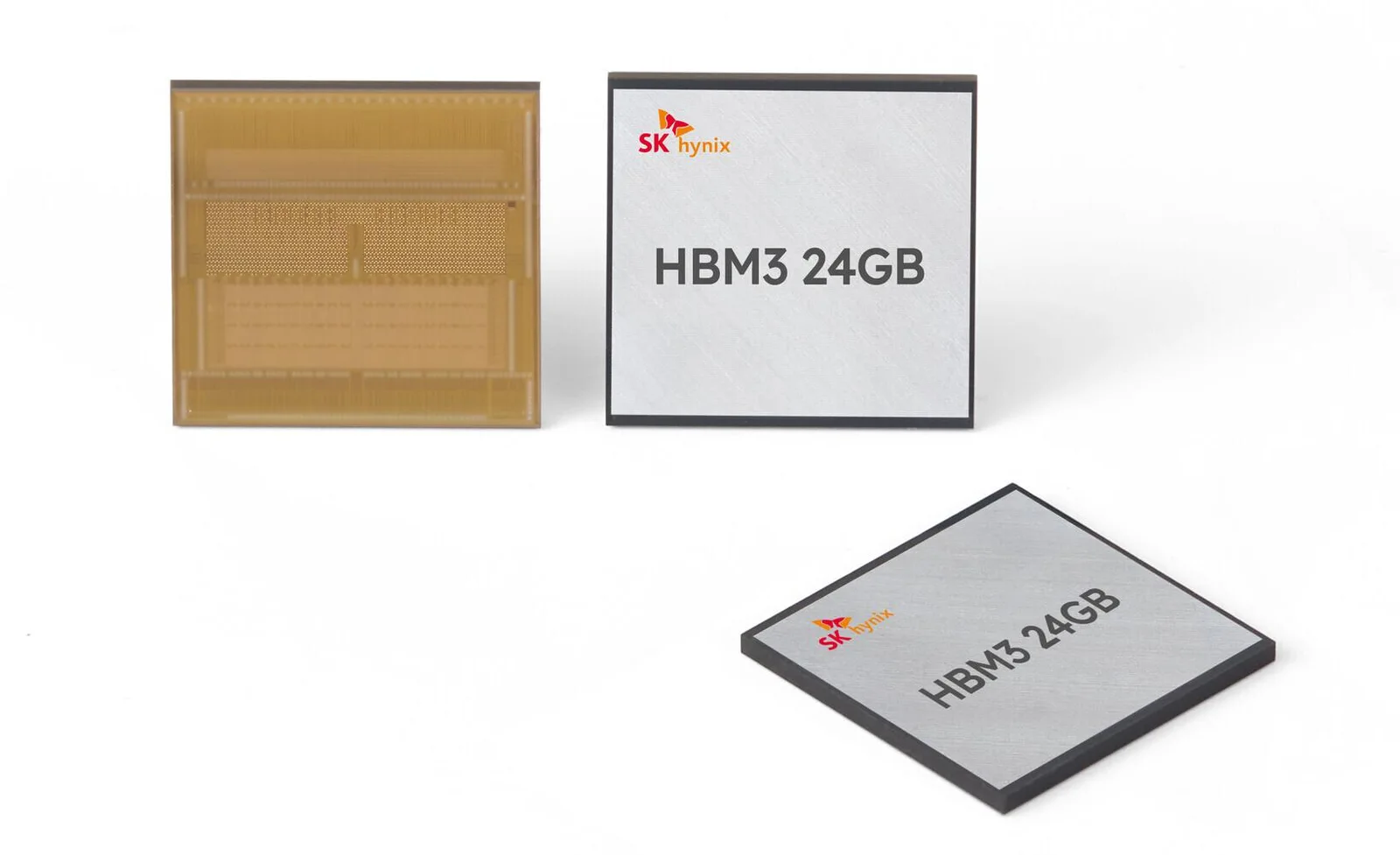
South Korea operates at another strategic level. Samsung Electronics and SK Hynix hold major positions in memory manufacturing, particularly high-bandwidth memory, which is essential for supplying AI processors with data at extremely high speeds.
The expansion of AI is consequently increasing the strategic importance of an industry segment traditionally exposed to the cyclical dynamics of electronics markets. The availability of advanced memory can now determine both the production volumes and performance of the most sought-after accelerators.
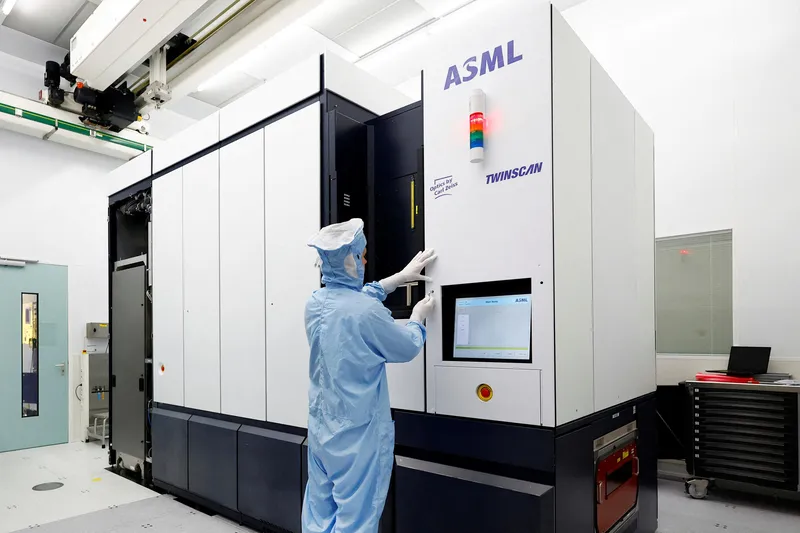
The Netherlands possesses a different but equally important specialization. Through ASML, it supplies advanced lithography systems used to manufacture the most complex integrated circuits. Extreme ultraviolet lithography equipment represents one of the most difficult technologies to replicate within the semiconductor production chain.
This position does not mean that the Netherlands manufactures most AI chips itself. Rather, it gives the country influence over the production capabilities of those that do.
Japan also retains an important role in materials, manufacturing equipment, specialty chemicals, and precision instruments. The United States, through several semiconductor equipment suppliers and electronic design automation companies, controls additional critical segments.
These specializations reveal a fundamental characteristic of the industry: no single country controls the entire production chain.
Technological power depends on mastery of complementary industrial segments, some of which are exceptionally difficult to replace.
The United States Captures a Decisive Share of Economic Value
While physical production remains extensively internationalized, a considerable share of economic value is concentrated among companies that design components, develop software, and control computing platforms.
Nvidia illustrates this structure. The company designs accelerators, but its influence extends beyond the technical specifications of its processors. Its software ecosystem, interconnect technologies, and system architectures are central to its competitive position.
AMD and Broadcom also participate in this transformation, particularly through specialized processors, networking components, and custom integrated circuits developed for large-scale computing infrastructure.
American cloud providers, including Microsoft, Amazon, and Google, occupy another strategic position. They finance a substantial share of the infrastructure and commercialize access to computing capacity.
The distinction between manufacturing and value capture becomes essential here.
Trade statistics record the international movement of goods. They do not, by themselves, reveal how profits are distributed among designers, manufacturers, assemblers, software suppliers, and data center operators.
A processor exported from an Asian economy may incorporate American intellectual property, European manufacturing equipment, and components sourced from several other countries.
The value declared at the border therefore corresponds neither to the value added domestically nor to the profits ultimately retained by each participating company.
It is also necessary to distinguish design revenues, industrial margins, software licensing income, and recurring cloud-service revenues. These activities operate under different economic models.
Global trade growth can consequently strengthen Asian exports and the revenues of American technology groups simultaneously, without distributing the resulting gains proportionally to physical production volumes.
China Confronts a Globalization It Is Trying to Reshape
China occupies a distinctive position in this transformation.
It retains extensive capabilities in electronics assembly, electrical equipment, industrial infrastructure, and numerous components required to operate data centers. Its domestic market also represents a major source of demand for digital equipment.
However, American restrictions on exports of certain advanced semiconductors and manufacturing technologies limit Chinese access to several critical capabilities.
These constraints encourage the development of domestic alternatives.
Huawei, SMIC, and Chinese memory and equipment manufacturers are seeking to strengthen local computing and production capabilities. The objective is not necessarily to reproduce the performance of the most advanced foreign technologies immediately. It is also to establish an industrial ecosystem sufficiently comprehensive to reduce dependencies considered strategically dangerous.
This development creates tension between two opposing forces.
On one side, global demand for AI strengthens international trade and industrial specialization. On the other, technological restrictions encourage certain economies to develop parallel supply chains.
The WTO also observes that trade decoupling between the United States and China has accelerated since 2025, even as broader trade fragmentation between geopolitical blocs has not intensified at the same pace.
The distinction matters. Globalization is not uniformly splitting into two closed systems. It continues to function through multiple interdependencies, even as certain bilateral relationships contract sharply.
AI is becoming an arena in which global industrial cooperation and strategic rivalry advance simultaneously.
Asia Dominates Trade Growth, but Not Necessarily Profits
The WTO's regional forecasts confirm the shift in commercial momentum toward Asia.
For 2026, the organization expects Asian merchandise export volumes to increase by 9.9%, while imports are projected to grow by 9.5%.
These performances significantly exceed the global average.
North American exports are expected to rise by 5.7%, while Africa's exports are projected to grow by 5.6%. By contrast, European exports are forecast to decline slightly, by 0.1%, while Middle Eastern exports are expected to fall sharply because of regional disruptions.
These differences cannot be attributed entirely to artificial intelligence. They also reflect energy developments, changing trade routes, variations in demand, and the sectoral structures of individual regions.
Nevertheless, they demonstrate the central position of Asian economies in the expansion of merchandise trade.
That position encompasses several industrial models.
Taiwan concentrates advanced semiconductor manufacturing. South Korea supplies critical components. Japan controls important production technologies and specialized materials. Malaysia and Singapore participate in assembly, testing, component manufacturing, and logistics. Vietnam is expanding its role in electronics production and integration into international supply chains.
But increasing exports does not guarantee an equivalent increase in domestic value added.
Economies specializing in assembly can record substantial trade flows while retaining relatively narrow margins. Conversely, companies controlling scarce technologies, software architectures, or components that are difficult to substitute can capture a disproportionate share of final economic value.
The industrial challenge is therefore not simply to participate in the global AI supply chain, but to move toward its most profitable and least replaceable segments.
Global Trade Growth Is Becoming Increasingly Concentrated
The WTO's latest outlook highlights a remarkable degree of concentration.
The share of AI-enabling goods in global merchandise trade increased from approximately 7% to 8% between 2016 and 2023 to 14.8% in the first half of 2026.
In 2025, the ten leading trading economies in this category accounted for approximately 85% of global exports and 80% of imports.
This geographical concentration is roughly twice as high as that of merchandise trade overall.
These figures give additional significance to the 67% increase in trade in AI-related goods during the first half of 2026.
Demand is expanding rapidly, but the industrial capabilities required to satisfy it remain concentrated in a limited number of economies.
This structure has several consequences.
First, it reinforces the position of territories already integrated into advanced technology supply chains. Accumulated expertise, infrastructure, suppliers, and investment create competitive advantages that are difficult to reproduce quickly.
Second, it increases global trade's sensitivity to investment decisions made by a small number of major technology companies. A slowdown in infrastructure spending could spread to component manufacturers, equipment suppliers, and export-dependent economies.
Finally, it widens the gap between countries participating directly in this industrial expansion and those remaining primarily suppliers of raw materials, consumers of technology, or importers of finished equipment.
Global trade can therefore accelerate even as its principal growth drivers become less diversified.
Energy Exposes the Limits of the New Expansion
The acceleration of technology trade is occurring while energy infrastructure faces major disruptions.
According to the WTO, Middle Eastern crude oil exports declined by approximately 24% during the first half of 2026, while liquefied natural gas exports fell by 47%.
Increased supplies from other regions limited the global decline in exports to approximately 6% for crude oil and 1% for LNG.
This adaptation provides another major explanation for the resilience of world trade.
But the two developments are closely connected.
Data center construction requires increasing supplies of electricity, cooling capacity, and grid infrastructure. Higher energy costs can therefore simultaneously affect semiconductor production, the operation of digital facilities, and investment profitability.
Advanced chip manufacturing depends on exceptionally complex industrial installations requiring reliable electricity, ultrapure water, and resilient logistics networks.
Artificial intelligence does not escape the material constraints of the global economy. It creates additional ones.
The availability of accelerators alone cannot guarantee their profitable deployment if electricity infrastructure, grid connections, and cooling capacity fail to keep pace.
The next major constraint may therefore emerge less from processor design than from the ability of territories to accommodate and power the systems using those processors.
The Services Paradox: A Digital Economy Initially Driven by Physical Goods
Another important finding in the WTO report concerns the divergence between merchandise trade and services trade.
While the organization raised its forecasts for goods, it lowered its projection for commercial services trade volume growth to 3.3% in 2026, compared with 4.8% previously.
Transportation and tourism are being affected by disruptions in the Middle East, particularly higher energy costs and the reorganization of international routes.
Computer services nevertheless show a more favorable trajectory. Their exports increased by 18% in value during the first quarter of 2026 and by approximately 12% in the second quarter, according to the organization's estimates.
This divergence illustrates an important economic transformation.
Artificial intelligence is expected to increase productivity in services, but its initial deployment is generating exceptionally strong demand for industrial goods.
Before delivering productivity gains at scale, AI requires a massive phase of physical capital accumulation.
Investment in chips, servers, and data centers precedes a significant share of the future revenues expected from their use.
This sequence introduces a fundamental economic uncertainty: will growth in installed computing capacity be followed by sufficiently profitable demand to justify the capital committed?
Trade statistics can measure the expansion of infrastructure. They cannot yet demonstrate that future AI revenues will sustainably cover the costs of that expansion.
Emerging Economies Face a New Industrial Hierarchy
For emerging economies, this transformation creates opportunities while raising the requirements for entering the most advanced value chains.
Leading-edge semiconductor manufacturing demands enormous investment, specialized skills, reliable electricity, qualified suppliers, and access to technologies frequently subject to restrictions.
Few countries can assemble all these conditions quickly.
Other segments remain more accessible: electronics assembly, testing, electrical component manufacturing, cabling, thermal equipment, energy infrastructure, industrial construction, and associated technical services.
These activities may allow additional economies to participate in the expansion of digital infrastructure.
Their development potential, however, depends on the ability to progressively build skills, local supplier networks, and higher-value-added activities.
Africa illustrates this distinction. The projected growth of its merchandise exports in 2026 does not mean that the continent already occupies a significant position in the most sophisticated segments of the AI industry.
Its prospects depend partly on mineral resources, energy capabilities, infrastructure improvements, and the possibility of developing intermediate industrial activities.
The availability of strategic minerals can provide an advantage without guaranteeing control over the technologies that use them.
The risk is the reproduction of an international division of labor in which some territories supply resources and basic infrastructure, while a limited number of companies and economies concentrate design capabilities, critical technologies, and the highest revenues.
The central question of industrial development is therefore shifting from access to international trade toward the actual position occupied within global value chains.
A More Resilient but More Dependent Globalization
The WTO's forecasts suggest that international trade retains a greater capacity to adapt than the multiplication of geopolitical tensions might imply.
Trade routes change, suppliers diversify, and new investment compensates for some disruptions.
But this resilience should not be confused with a general reduction in vulnerabilities.
The growing importance of AI-related goods introduces a new dependence on technology investment cycles. Decisions made by a handful of major companies, the availability of critical components, and changing energy constraints can now influence a substantial share of global trade growth.
The risk extends beyond a potential financial correction in the technology sector. A prolonged slowdown in investment could affect industrial orders, production capacity, electronics exports, and highly specialized economies.
Conversely, continued expansion could intensify bottlenecks in advanced memory, manufacturing equipment, electricity networks, and certain industrial infrastructures.
The WTO forecasts merchandise trade growth of 4.1% in 2027, exceeding projected global GDP growth of 2.9%. That outlook nevertheless remains conditional on developments in the Middle East conflict and the continuation of investment.
Global trade is consequently entering a phase in which its expansion increasingly depends on the interaction between advanced technologies, industrial capacity, and energy security.
AI is becoming a driver of globalization precisely when governments are seeking to reduce their strategic dependencies.
That is the central paradox of this new period.
Governments want to secure supply chains, companies are seeking to diversify suppliers, and major powers are multiplying restrictions on sensitive technologies. Yet building artificial intelligence infrastructure continues to require international industrial cooperation of exceptional complexity.
Trade growth therefore does not signal a return to an undifferentiated form of globalization. Instead, it reveals the emergence of a system in which interdependencies remain profound but become more selective, more concentrated, and more strategic.
The decisive question is no longer simply how many goods will cross international borders.
It is which countries will control indispensable technologies, which territories will host production capacity, and which companies will retain the revenues generated by this new global infrastructure.
Because behind the acceleration of international trade, a more demanding economic hierarchy is emerging: manufacturing the equipment required for artificial intelligence allows countries to participate in its growth; controlling the technologies and systems that make that equipment indispensable allows them to capture its value over the long term.
Main Sources
- World Trade Organization (WTO) — Global Trade Outlook and Statistics, October 2026 update, October 8, 2026. https://www.wto.org/english/res_e/publications_e/global-trade-outlook-and-statistics_e.htm
- WTO — AI boom and trade resilience to Middle East crisis lift outlook, but gains to be uneven, official release and statistics, October 8, 2026. https://www.wto.org/english/news_e/news26_e/stat_08oct26_510_e.htm
- WTO — Global Trade Outlook and Statistics, Executive Summary, October 2026. https://www.wto.org/english/res_e/publications_e/global-trade-outlook-and-statistics_execsum_e.htm
- WTO — Global Trade Outlook and Statistics, full publication, October 2026. https://www.wto.org/english/res_e/booksp_e/gtos1026_e.pdf
Methodological note: Trade growth forecasts refer to volumes, whereas the 47% contribution and growth rates for AI-enabling goods refer to trade values. Export statistics do not directly measure domestic value added or corporate profits. The 2027 projections remain conditional.
Atlas Limits Research Desk
Atlas Limits’ editorial and analytical desk.