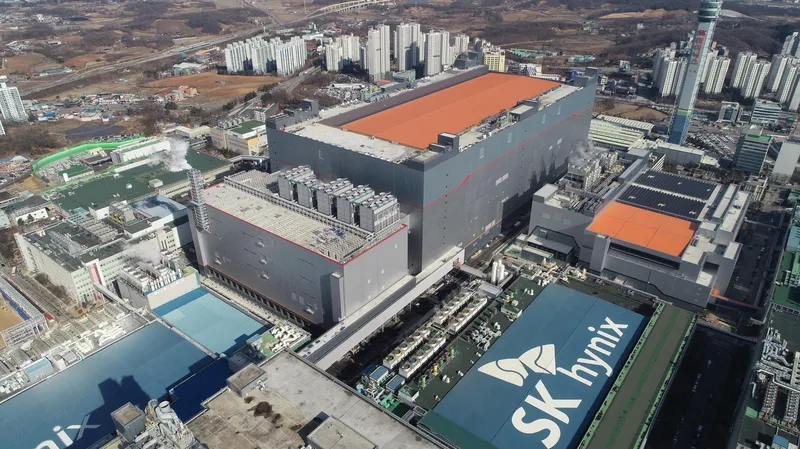
Artificial intelligence is transforming the architecture of global finance. Behind the spectacular investments of technology giants, a complex system of long-term debt, special-purpose vehicles, financial guarantees, and contractual commitments is emerging. The risks associated with this expansion are gradually extending beyond the technology sector. A study published by the Bank for International Settlements on October 27, 2026, reveals the scale of this transformation. The question is no longer simply whether AI will deliver its promised economic benefits, but who will bear the losses if those benefits fail to generate sufficient returns on the capital already committed.
A Technological Revolution Enters Its Credit Cycle
Major industrial revolutions have rarely been financed exclusively by the companies that initiated them.
Railways, electricity, telecommunications, and digital infrastructure required enormous amounts of capital long before their economic models had fully matured.
Artificial intelligence is now following a comparable trajectory.
During the early stages of its development, a substantial share of AI investment could be financed through the exceptional cash flows generated by America's largest technology companies.
Their established businesses — digital advertising, software, e-commerce, cloud services, and subscriptions — produced enough revenue to support rapidly growing investment in data centers, specialized processors, and computing infrastructure.
That model is evolving.
The acceleration of capital expenditure is increasingly exceeding the internal financing capacity, or preferred financing structure, of certain companies. Bond markets, private credit, and specialized financing vehicles are becoming increasingly important to the industry's expansion.
In a study entitled Building AI on Credit: Structures and Spillovers, published on October 27, 2026, Mathias Drehmann and Egemen Eren of the Bank for International Settlements (BIS) examine this transformation.
Their central finding is that the expansion of artificial intelligence is accompanied by the development of an increasingly complex and interconnected credit system.
This does not necessarily mean that a financial crisis is approaching.
It does, however, reveal a fundamental shift: the financial risks associated with AI development are no longer borne exclusively by technology companies and their shareholders.
They are beginning to spread across a much broader segment of the financial system.
$800 Billion: The Scale of the Transformation
The extraordinary volume of investment is the first indication of this shift.
According to the data and projections compiled by the BIS researchers, combined capital expenditure by Alphabet, Amazon, Meta, Microsoft, and Oracle is expected to exceed $800 billion in 2026.
That represents approximately 2.5% of US gross domestic product.
Importantly, this figure does not refer exclusively to artificial intelligence. It also includes other technological and industrial investments undertaken by the five companies.
Nevertheless, it illustrates the exceptional concentration of resources being directed toward digital infrastructure.
Building a data center capable of supporting advanced AI applications involves far more than purchasing processors.
Companies must acquire or develop land, construct buildings, install electrical systems, develop cooling capacity, secure energy supplies, and deploy computing equipment that can cost billions of dollars.
These initial expenditures are accompanied by operating costs, maintenance requirements, telecommunications infrastructure, and recurring equipment replacement.
The result is an extraordinarily capital-intensive industry.
This characteristic increasingly distinguishes the economics of artificial intelligence from those of traditional software.
Conventional software can often be replicated and distributed at scale at relatively low marginal cost.
Advanced AI services, by contrast, require substantial physical infrastructure. Their operation consumes electricity, relies on specialized hardware, and demands continuous investment.
AI retains the economic characteristics of a digital technology, but its productive infrastructure increasingly resembles that of heavy industry.
This evolution is fundamentally changing its financing requirements.
AI Financing Moves Beyond Big Tech Balance Sheets
The BIS study identifies a remarkable acceleration in debt financing.
By September 22, 2026, gross bond issuance by the five hyperscalers examined in the study had reached approximately $222 billion since the beginning of the year.
A significant share of these securities carried long maturities.
At the same time, the researchers report market estimates suggesting that between $75 billion and $100 billion in bonds and asset-backed securities had been placed in 2026 through specialized financing structures operating outside certain technology companies' consolidated balance sheets.
These two financing channels are fundamentally different.
The first involves debt issued directly by the companies themselves.
The second relies on arrangements in which a legally separate entity borrows money to finance infrastructure and subsequently receives contractual payments associated with its use.
This distinction is essential.
It explains how a company can support the financing of an infrastructure project without necessarily recording the entire associated borrowing on its own balance sheet.
However, the absence of accounting consolidation does not imply the absence of economic risk.
A company may retain contractual obligations, provide guarantees, or remain indirectly exposed to the value of the assets being financed.
In other words, risk does not necessarily disappear when it moves outside a company's balance sheet.
It changes form and ownership.
Special-Purpose Vehicles: A New Financial Architecture
At the center of the system described by the BIS are special-purpose vehicles, commonly known as SPVs.
The underlying principle is relatively straightforward.
A dedicated entity is established to own or finance a data center.
It raises capital from investors, borrows money, and acquires the necessary infrastructure.
A technology company subsequently signs an agreement allowing it to use some or all of the facility's computing capacity.
Contractual revenues are then used to compensate investors and repay creditors.
This structure offers several advantages.
For technology companies, it enables rapid expansion of computing capacity without necessarily requiring them to finance the full cost of the underlying assets directly.
For investors, it provides exposure to physical infrastructure supported by contractual commitments from companies that often possess strong credit profiles.
For banks and specialized investment funds, it creates new financing opportunities.
But the arrangement introduces a fundamental vulnerability.
The financial stability of the vehicle depends simultaneously on the value of its assets, its expected revenues, and the ability of its counterparties to honor their commitments.
The existence of a building, computing equipment, and a lease agreement does not guarantee that debt can be repaid under all circumstances.
The central risk lies in the potential mismatch between the duration of financial commitments and the economic life of the underlying equipment.
The Paradox of AI Infrastructure
Data centers are unusual industrial assets.
Their buildings, electrical connections, and cooling infrastructure may retain economic value for several decades.
The specialized processors they contain follow a very different trajectory.
Their value depends on technological performance that can be rapidly surpassed by successive generations of equipment.
This creates tension between two economic timelines.
On one side, investors seek long-term financing arrangements compatible with the real estate and energy characteristics of data centers.
On the other, a critical share of productive capacity depends on equipment whose competitiveness may deteriorate much more quickly.
A data center can therefore remain physically operational while becoming economically less attractive.
If new processors deliver substantially greater computing power at lower energy consumption, older installations may experience accelerated depreciation.
This becomes particularly important when financing arrangements rely on computing equipment itself as collateral.
The BIS emphasizes that processors provide less robust collateral than buildings and associated infrastructure.
The vulnerability could become more pronounced if several operators attempted to sell similar equipment simultaneously.
Under those conditions, resale values could decline precisely when creditors needed to liquidate collateral.
The financial protection offered by the underlying assets could then prove weaker than initially anticipated.
Meta and Hyperion: An Emerging Financing Model
The BIS study examines the financing of the Hyperion data center project, developed through a joint venture involving Meta and funds managed by Blue Owl.
The transaction illustrates the growing sophistication of financing arrangements used to support artificial intelligence infrastructure.
The project was supported by a $27.3 billion private placement of A+-rated senior secured bonds.
The financing structure relies partly on Meta's contractual lease commitments.
The leases are scheduled to begin in 2029, with an initial four-year term and renewal options potentially extending the arrangement to twenty years.
The structure also includes certain limited protections relating to the residual value of the assets.
The joint venture is not consolidated in Meta's financial statements.
This arrangement separates the legal ownership of the infrastructure from the company that will use its computing capacity.
It also demonstrates how the creditworthiness of a major technology company can help finance assets held by a legally distinct entity.
For investors, the presence of a financially strong tenant improves visibility over future revenues.
But it also creates concentration risk.
If multiple financing vehicles depend on commitments from the same technology company, investors may become exposed to that company through several different channels.
The resulting concentration may not be immediately apparent from an examination of the company's outstanding corporate bonds.
The issue is therefore not simply the amount of debt involved.
It is identifying who ultimately supports the capacity to repay it.
$1.2 Trillion in Lease Commitments
The scale of contractual commitments is among the most significant findings highlighted by the BIS.
According to a Moody's Ratings estimate cited by the researchers, major hyperscalers had accumulated approximately $1.2 trillion in data center lease commitments by mid-2026.
Of that amount, roughly $820 billion related to leases that had not yet commenced.
These figures require careful interpretation.
They do not represent $1.2 trillion in immediately payable financial debt.
Lease commitments may extend over many years, depend on specific contractual conditions, and receive different accounting treatment.
Some future leases are not yet recognized as financial liabilities on corporate balance sheets.
Other obligations may be conditional.
It would therefore be misleading to simply add lease commitments, corporate bond issuance, and structured financing volumes together to calculate a single figure for hidden debt.
Nevertheless, these commitments represent substantial potential economic obligations.
They may constrain the financial flexibility of the companies involved and create long-term dependencies between computing-capacity users, infrastructure owners, and creditors.
The issue becomes particularly important when multiple commitments ultimately depend on the future revenues of a small number of companies.
A system can appear legally diversified while remaining economically concentrated.
Risk Does Not Disappear. It Spreads.
One of the BIS study's most important contributions is its examination of financial interconnectedness.
AI infrastructure financing no longer consists simply of a relationship between a company and its creditors.
It increasingly involves a network of participants whose financial exposures may reinforce one another.
Hyperscalers lease computing capacity.
Specialized operators construct and manage infrastructure.
Processor manufacturers supply equipment and may provide financial support to selected customers.
Banks extend loans to financing vehicles.
Private credit funds purchase their securities or participate in their financing.
Insurance companies and other institutional investors hold long-term bonds.
These relationships create multiple channels through which financial stress could spread.
A processor manufacturer may simultaneously sell equipment to an operator, hold an equity stake in that company, purchase some of its computing capacity, and provide financial guarantees.
If the operator experiences difficulties, the manufacturer may be affected through several different exposures.
Similarly, a bank may finance the construction of a data center directly while also lending to an investment fund that holds debt issued by the infrastructure vehicle.
An exposure that appears limited when examined individually can become considerably larger when all related financial relationships are considered together.
The problem is therefore not simply the volume of credit.
It is the correlation between risks.
Different assets, contracts, and financial instruments may ultimately depend on the same underlying demand for computing power and the solvency of the same technology companies.
The Growing Role of Private Credit
The expansion of artificial intelligence is taking place in a financial environment where non-bank institutions have become increasingly important.
Private credit funds, asset managers, insurers, and institutional investors can finance digital infrastructure directly or indirectly.
Their participation offers clear advantages.
It mobilizes long-term savings, diversifies funding sources, and distributes investment requirements across different categories of capital providers.
But it can also make financial risks more difficult to monitor.
Compared with traditional bank lending, some private market exposures are less transparent to outside observers.
Information about guarantees, refinancing conditions, counterparty concentrations, and contractual protections may be distributed across multiple entities.
Supervisory authorities can consequently face difficulties reconstructing the total economic exposure to a particular company or infrastructure network.
This complexity should not be confused with a complete absence of regulation.
Banks, insurance companies, and many asset managers remain subject to regulatory or prudential requirements.
The more significant challenge concerns consolidated visibility and the interconnectedness of different financial market segments.
The BIS notes, for example, that an insurance company may simultaneously hold bonds issued by a hyperscaler and securities issued by several financing vehicles whose revenues depend on that same hyperscaler.
Such an arrangement can create greater economic concentration than the apparent diversification of securities would suggest.
A Financial System Dependent on AI's Future Profitability
Beyond the legal and financial structures, one question dominates the entire system.
Will the infrastructure being constructed today generate sufficient revenues to cover its costs?
The answer depends on several variables.
The first is future demand for artificial intelligence services.
Companies are investing heavily in computing capacity because they anticipate expanding adoption of AI by households, governments, and businesses.
That adoption may indeed generate substantial productivity improvements.
But technological demand does not automatically translate into financial returns proportional to the capital invested.
The second variable is pricing.
If computing capacity expands faster than paying demand, prices for AI computing services could come under downward pressure.
Users would benefit from lower costs, while some infrastructure owners might struggle to achieve their expected returns.
The third variable is capital intensity.
Technological performance is improving rapidly, but that progress may also require costly equipment replacement cycles.
The fourth variable is energy.
AI infrastructure depends on access to reliable, available, and competitively priced electricity.
Grid connection costs, network constraints, and construction delays can directly influence profitability.
The fifth variable concerns the distribution of economic value.
Artificial intelligence could generate enormous benefits across the wider economy without those benefits necessarily being captured by the companies that financed the initial infrastructure.
This is one of the central paradoxes of major technological transformations.
An innovation can be extraordinarily beneficial to society while producing inadequate returns for some of its earliest investors.
Technological success does not guarantee the financial success of every investment made to support it.
Bond Markets Are Beginning to Feel the Effects
The BIS study extends beyond the risks associated with individual data centers.
It also examines the potential consequences of AI-related borrowing for financial markets more broadly.
The mechanism is relatively straightforward.
Technology companies and specialized financing vehicles are issuing increasing volumes of long-term debt.
These securities are purchased by institutional investors that also hold sovereign bonds and high-quality corporate debt.
As the supply of long-duration securities increases, investors may demand additional compensation for absorbing interest-rate risk and committing capital over extended periods.
That additional compensation can contribute to higher bond yields.
US Treasury securities play a central role in determining global borrowing costs.
Their yields serve as benchmarks for numerous financing instruments, including mortgages, corporate bonds, and certain international loans.
Sustained upward pressure on long-term yields could therefore affect sectors with no direct connection to artificial intelligence.
To investigate this mechanism, the BIS researchers examined movements in the term premium on ten-year US Treasury securities during eighteen trading sessions associated with AI financing announcements between January and September 2026.
They identified an estimated additional increase of approximately 1.53 basis points on those days, after controlling for several financial variables.
The effect was statistically significant in their main specification.
However, its magnitude was modest.
The researchers also found that the effect generally dissipated within two trading sessions.
Investment-grade corporate bond spreads did not exhibit a statistically significant response.
These findings do not demonstrate that AI financing is currently causing a sustained increase in interest rates.
Instead, they suggest the existence of a potential transmission channel that could become more important if borrowing volumes continued to expand.
The authors explicitly caution that the statistical associations identified in their analysis do not establish causality.
A New Competition for Global Capital
The transformation becomes particularly significant when examining the position of technology companies within corporate bond markets.
According to the BIS, bonds with maturities of at least ten years issued by the five major hyperscalers represented approximately 24% of comparable US corporate bond issuance in 2026, compared with around 3% in 2024.
Relative to gross issuance of US Treasury securities with comparable maturities, their share reached approximately 13%, up from 1.5% two years earlier.
These ratios refer to the observation periods available when the study was prepared, rather than the entirety of the 2026 calendar year.
Nevertheless, they illustrate a dramatic change in scale.
A small group of technology companies is becoming a major source of long-term debt issuance.
This raises a question extending far beyond the digital sector.
If investors allocate an increasing share of their portfolios to artificial intelligence infrastructure, what could that mean for financing other economic activities?
Transport infrastructure, manufacturing, electricity networks, real estate, and governments also depend on long-term capital.
The relationship is not necessarily a zero-sum game.
Credit expansion can attract new investors and increase available financing capacity.
But financial resources are not infinitely elastic.
Under certain conditions, exceptionally strong demand for capital can alter risk premiums, portfolio allocations, and financing conditions.
Artificial intelligence could therefore influence the cost of capital well beyond its own industrial ecosystem.
The Risk of a Simultaneous Correction
The principal vulnerability does not necessarily lie in the failure of an individual data center.
It could emerge if several economic assumptions were challenged simultaneously.
Consider a scenario in which growth in computing demand slows, AI service prices decline, and new generations of processors accelerate the depreciation of existing equipment.
Some operators could experience falling revenues.
The vehicles owning their infrastructure might struggle to refinance debt or secure new tenants on the terms originally anticipated.
Collateral values could decline.
Investors might demand higher yields.
Funds exposed to these assets could suffer valuation losses.
Banks that financed the affected vehicles directly or indirectly could also experience financial pressure.
In such a scenario, the strongest technology companies would likely retain greater loss-absorption capacity than highly leveraged specialized operators.
But the financial strength of individual companies would not necessarily eliminate contagion risks.
Concentrated commitments and similar business models could amplify a broader correction.
This is a risk scenario, not a forecast.
The BIS does not conclude that an AI-related financial crisis is imminent.
Indeed, it emphasizes that the predominance of long-term financing reduces the likelihood of liquidity crises driven by excessive reliance on short-term borrowing.
The vulnerabilities may instead materialize through credit losses, asset impairments, and prolonged valuation adjustments.
Why Historical Technology Bubbles Offer an Imperfect Comparison
Economic history provides several examples of industrial transformations accompanied by rapid credit expansion.
Railways fundamentally reshaped national economies while also generating bankruptcies and financial crises.
Telecommunications created enduring infrastructure, but some investments made during the industry's expansion delivered disappointing returns.
The collapse of the dot-com bubble did not prevent the subsequent digital transformation of the global economy.
These precedents illustrate a fundamental distinction between the economic value of a technology and the profitability of the capital invested to deploy it.
Historical analogies, however, must be treated carefully.
Today's leading hyperscalers operate diversified businesses, hold established market positions, and possess substantial cash-generating capabilities.
They do not necessarily share the financial characteristics of speculative companies that dominated previous technology cycles.
Furthermore, some infrastructure built today could retain considerable economic utility even if initial profitability expectations were revised downward.
The risk is therefore not that artificial intelligence lacks economic value.
It is that certain investments may have been undertaken at valuations, through financial structures, or on revenue assumptions that ultimately prove unsustainable.
A technology can succeed while some of its investors fail.
The Central Question: Who Ultimately Bears the Losses?
The most important issue raised by the BIS study concerns the final allocation of financial risk.
In conventional lending arrangements, creditors can generally identify their borrowers relatively clearly.
In the complex structures emerging around AI infrastructure, several entities may stand between the ultimate investor and the underlying economic activity.
A financing vehicle owns the assets.
An operator manages the computing infrastructure.
A hyperscaler signs a lease agreement.
A processor manufacturer may provide financial support.
An investment fund holds the debt securities.
A bank finances the fund.
An insurer may invest at several levels of the structure.
The system's ability to absorb losses depends on the quality of the contracts, the value of collateral, and the financial strength of the different counterparties.
Such arrangements can distribute risk efficiently when exposures are properly identified, valued, and compensated.
But they can also concentrate risk indirectly when multiple instruments depend on the same underlying revenue streams.
The existence of guarantees does not eliminate this vulnerability.
A guarantee may be capped, conditional, or dependent on the financial capacity of a counterparty exposed to the same economic cycle.
The multiplication of contractual protections does not necessarily create genuine diversification.
In some circumstances, it can conceal underlying concentration.
This distinction between legal dispersion and economic concentration deserves particular attention.
Toward Financial Oversight of AI Infrastructure
The BIS findings suggest that artificial intelligence infrastructure should increasingly be treated as a subject of macrofinancial surveillance.
Until recently, public debate focused primarily on model capabilities, processor availability, energy consumption, industrial capacity, and geopolitical competition.
These dimensions remain essential.
But the scale of financing now being mobilized makes it necessary to examine the underlying structure of financial commitments.
Effective oversight would require better visibility into consolidated exposures to major hyperscalers, guarantees extended to specialized financing vehicles, concentrations held by institutional investors, and risks associated with the residual value of computing equipment.
It would also require clear distinctions between firm contractual obligations and conditional commitments, as well as between long-term financing arrangements and more immediate refinancing requirements.
The objective would not be to systematically discourage investment in a potentially transformative technology.
It would be to ensure that risks are sufficiently transparent for investors to evaluate them and for authorities to identify excessive concentrations.
Financial transparency is becoming a condition of sustainable industrial development.
A Transformation Extending Beyond the Technology Industry
Artificial intelligence is frequently described as a productivity revolution.
It could indeed transform the organization of work, industrial processes, scientific research, and economic value creation.
But building the infrastructure required to support that transformation is already mobilizing physical assets and financial commitments on a scale capable of influencing capital markets.
This marks the beginning of a new phase.
The AI economy no longer depends solely on the research capabilities of laboratories or the computing power of technology companies.
It increasingly depends on credit availability, investor confidence, refinancing conditions, and the ability of infrastructure assets to generate sustainable revenues.
This interdependence can accelerate development.
By mobilizing financial markets, companies can construct infrastructure far more rapidly than if they relied exclusively on retained earnings.
But the same mechanism can amplify imbalances when economic expectations become excessively optimistic.
The implications therefore extend beyond technology company valuations.
They concern the way a major industrial transformation changes the allocation and circulation of capital throughout the global economy.
Future productivity gains could be substantial.
However, they will not necessarily materialize immediately, nor will they automatically accrue to the investors financing today's computing capacity.
That uncertainty lies at the heart of the financial risk.
Conclusion — The AI Revolution Will Have Its Creditors
The study published by the Bank for International Settlements does not demonstrate that artificial intelligence is a financial bubble.
Nor does it predict an imminent crisis.
Instead, it reveals a deeper transformation: AI development increasingly relies on a network of debt, guarantees, and contractual commitments whose potential consequences extend well beyond the technology sector.
Financing computing infrastructure is becoming a significant component of corporate bond markets and institutional credit.
This evolution raises a fundamental question.
Who will benefit from the economic gains generated by artificial intelligence, and who will bear the losses if the infrastructure built to produce those gains fails to generate the expected revenues?
The two groups will not necessarily be the same.
Users may benefit from more powerful and affordable services.
Businesses may achieve productivity improvements.
The global economy may gain from a new generation of digital infrastructure.
Yet some investors could simultaneously suffer losses if data center revenues prove insufficient to compensate the capital committed.
This is the enduring ambiguity of major industrial revolutions financed through credit.
They can generate extraordinary collective wealth while destroying part of the capital invested during their expansion.
The decisive question is therefore not simply whether artificial intelligence will transform the global economy. It is whether the financial architecture being built to accelerate that transformation will be capable of absorbing its inevitable disappointments.
Because while many of AI's technological promises still belong to the future, a substantial share of its financial commitments already belongs to the present.
Atlas Limits Research Desk
Atlas Limits’ editorial and analytical desk.