Saudi Arabia holds some of the world's largest oil reserves and possesses production capacity that gives it considerable influence over global energy markets. Yet recent disruptions to its infrastructure have exposed a fundamental reality: possessing oil does not guarantee the ability to export it. Between the oilfields of the Gulf, the pipelines crossing the Arabian Peninsula and the maritime terminals serving international markets, Saudi energy power depends on a logistical architecture in which every link can become a point of vulnerability. For Saudi Aramco, the challenge is no longer simply to produce more oil, but to ensure that barrels can reach their destinations when traditional export routes become uncertain.
An Oil Power Confronted by Its Own Infrastructure
Saudi Aramco occupies a distinctive position in the global economy. The company controls a substantial share of Saudi oil production, operates vast reserves and manages some of the most developed industrial infrastructure in the energy sector.
Its strength rests on a combination rarely found on such a scale: abundant resources, relatively low extraction costs, integrated processing facilities and the ability to adjust production, which contributes to Saudi Arabia's central role within OPEC+.
For decades, this structure has enabled the kingdom to combine commercial influence, government revenue and the capacity to shape international oil market balances.
But production represents only the first stage of a much longer chain.
Once extracted, crude oil must be stabilized, processed, stored, transported and eventually loaded onto vessels capable of reaching consuming markets. This sequence of operations transforms underground reserves into realizable revenues.
The distinction becomes essential when transport infrastructure is exposed to military, technical or geopolitical disruptions.
Available production capacity does not automatically translate into equivalent export capacity. When processing facilities, pipelines or maritime terminals are interrupted, production may have to be reduced even if the underlying oilfields remain fully operational.
Oil power then encounters a physical limitation: the infrastructure required to move crude beyond national borders.
The Strait of Hormuz: A Geographic Dependency
Geography represents one of the principal constraints facing Saudi Arabia's oil industry.
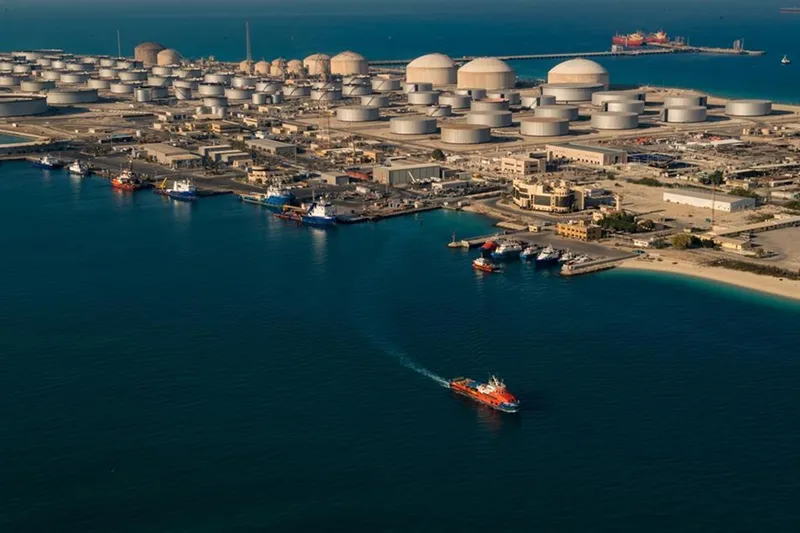
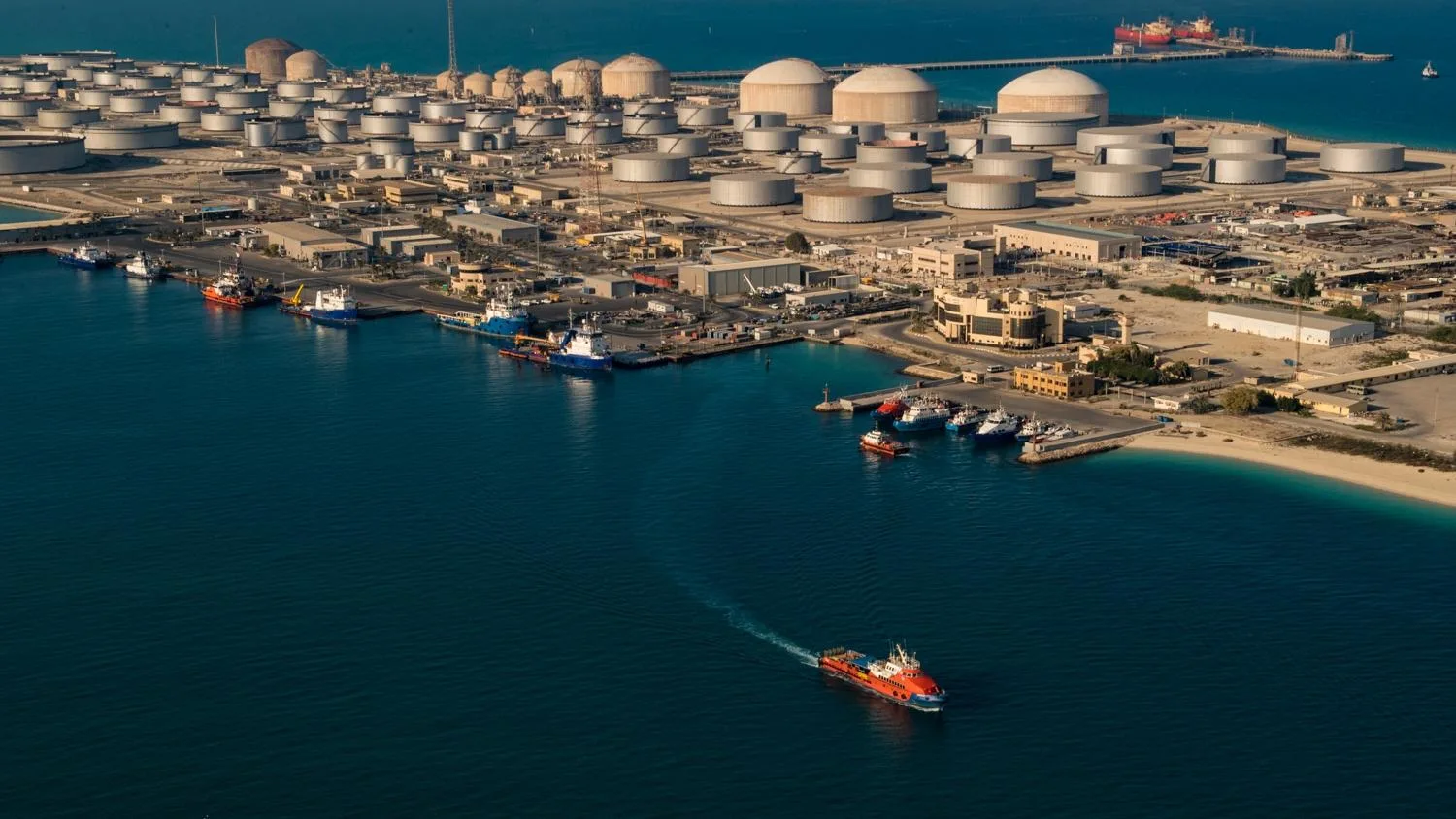
Much of the kingdom's production infrastructure is concentrated in its Eastern Province, near the Persian Gulf. Exports can depart from terminals along this coastline before passing through the Strait of Hormuz, the strategic waterway connecting the Gulf to the Indian Ocean.
This configuration provides direct access to major Asian markets, particularly China, India, Japan and South Korea.
It also concentrates a substantial share of energy flows within a relatively narrow maritime corridor whose security depends on relations among regional and international powers.
The Strait of Hormuz is more than a commercial passage. It is a point of convergence between the energy interests of Gulf producers, the requirements of importing economies and the strategic rivalries of the Middle East.
A prolonged disruption to navigation could therefore have consequences extending far beyond Saudi exports.
Marine insurers, shipowners, commodity traders and refiners would have to incorporate additional risks into their decisions. Transport costs could rise, delivery times could lengthen and some cargoes might need to be redirected.
The physical availability of oil would no longer be sufficient to guarantee its movement under normal commercial conditions.
This vulnerability explains why Saudi Arabia has progressively developed infrastructure designed to bypass some of the geographic constraints of the Gulf.
The East–West Pipeline: A Strategic Alternative
The East–West Pipeline, also known as Petroline, represents one of Saudi Arabia's principal responses to this dependency.
Connecting oil facilities in the east of the kingdom to the Yanbu region on the Red Sea, it allows crude oil to cross the Arabian Peninsula without passing through the Strait of Hormuz.
Its nominal capacity, expanded to approximately seven million barrels per day, makes it a major instrument of logistical flexibility.
The infrastructure enables Aramco to redirect part of its exports toward the country's western coastline, where cargoes can be loaded for international markets.
But the existence of an alternative route does not eliminate risk. It redistributes it.
A pipeline extending across hundreds of kilometres depends on pumping stations, electrical systems, monitoring equipment and loading terminals. Its theoretical capacity does not necessarily correspond to the volume that can be transported at any given moment.
Disruptions reported in September 2026 highlighted precisely this distinction.
Attacks affecting the East–West infrastructure reportedly interrupted operations temporarily before flows gradually resumed. By early October, transported volumes were reported to have reached approximately 5.5 million barrels per day.
The episode illustrates a paradox: infrastructure designed to reduce dependence on a sensitive maritime passage can itself become a concentration of risk.
Geographic diversification improves the resilience of an energy system, but it does not make that system invulnerable.
The relevant question is therefore one of genuine redundancy: how many independent routes can operate simultaneously, how much capacity can be mobilized quickly, and what proportion of exports can be maintained when a major installation becomes unavailable?
Strong Earnings Do Not Eliminate Operational Risks
Aramco's financial performance illustrates another characteristic of the oil industry: economic results and operational security can move in different directions.
On November 3, 2026, third-quarter results were reported to show net income of approximately $36.3 billion, an increase of 35% year on year.
This performance came against a backdrop of supply tensions and elevated oil prices.
It does not necessarily mean that logistical constraints have disappeared.
An oil company can report higher revenues when rising prices compensate for a decline in marketed volumes. Exceptional transactions, changes in operating costs and accounting effects may also contribute to reported earnings.
Conversely, improved transport capacity does not guarantee higher profits if international oil prices decline.
Understanding Aramco's position therefore requires distinguishing several indicators: actual production, available capacity, exported volumes, accessible inventories, realized prices and financial results.
These figures describe complementary but fundamentally different realities.
Accounting profit measures economic performance over a given period. It does not, by itself, indicate a company's ability to maintain exports during a crisis.
This distinction is particularly important for Saudi Arabia, where oil revenues remain central to public finances and the financing of the country's economic transformation.
Export Security Becomes an Industrial Strategy
Faced with these constraints, Aramco's response cannot be limited to protecting existing facilities.
It requires a gradual transformation of the company's logistical organization.
Developing overseas storage capacity, diversifying export terminals, improving transport networks and expanding supply arrangements are all ways of reducing exposure to localized disruptions.
International storage offers particular strategic advantages.
By maintaining oil inventories close to consuming markets, a producer can temporarily sustain certain deliveries when shipments from its own territory encounter difficulties.
This approach cannot replace exports over the long term. Inventories are finite and must eventually be replenished. Nevertheless, it creates a buffer between physical disruptions and their immediate commercial consequences.
For Aramco, major Asian markets occupy a particularly important place in this strategy.
The proximity of storage facilities, partner refineries and major customers can strengthen the continuity of commercial relationships while reducing certain delivery delays.
The company is therefore seeking to secure more than volumes. It must also preserve buyers' confidence in its ability to fulfil contractual commitments.
In an industry structured around long-term supply agreements, reliability represents an economic asset in its own right.
A supplier capable of maintaining deliveries during a crisis may retain a commercial advantage even when competitors possess comparable resources.
The Red Sea Is Not a Risk-Free Solution
Expanding exports through Yanbu allows Saudi Arabia to bypass the Strait of Hormuz, but it introduces another geopolitical dimension.
Cargoes leaving the Red Sea for Europe would normally pass through the Bab el-Mandeb Strait before reaching the Suez Canal or Egypt's energy infrastructure.
Yet this region has itself been exposed to security tensions and attacks against commercial shipping.
Disruptions to maritime traffic in the Red Sea have demonstrated that major energy routes cannot be considered independently of their regional security environment.
For cargoes destined for certain markets, rerouting around Africa through the Cape of Good Hope remains an option. However, this alternative increases distances, ties up vessels for longer periods and generally raises logistical costs.
The challenge is therefore not simply to choose between Hormuz and Bab el-Mandeb.
It is to build an architecture capable of functioning when several strategic passages become constrained simultaneously.
Resilience depends on the combination of pipelines, terminals, inventories, refining capacity, maritime routes and commercial agreements.
None of these components can independently guarantee the continuity of exports.
A Vulnerability Extending Across Global Markets
The constraints facing Aramco extend far beyond Saudi Arabia's borders.
The kingdom occupies a central position in global oil markets not only because of its production volumes, but also because of its historically significant ability to adjust supply.
This flexibility is one of the mechanisms through which certain imbalances between global production and consumption can be absorbed.
Its effectiveness, however, depends on the ability to convert available production capacity into barrels that can actually be delivered.
If a logistical disruption prevents additional crude from reaching international markets, part of that flexibility loses its immediate usefulness.
The consequences can then spread throughout the energy supply chain.
Refiners must seek alternative supplies, traders reorganize flows, shipping companies adjust routes and buyers may be forced to draw down inventories.
These adjustments carry costs.
They can also generate price differentials between crude grades and geographic markets.
The international oil market does not function as a single reservoir from which every barrel is instantly available everywhere.
It relies on a complex physical organization involving different crude qualities, specialized refining capacity, transport infrastructure and geographic constraints.
A localized interruption can therefore produce disproportionate effects when substitution possibilities are limited.
This reality calls for a broader understanding of energy security.
For decades, energy security was primarily approached through the availability of reserves, supplier diversification and price stability.
Logistical continuity is becoming an equally important dimension.
Saudi Arabia's Economic Transformation and the Oil Constraint
For Riyadh, the issue also has significant fiscal and industrial implications.
Vision 2030 aims to diversify the Saudi economy, develop new productive activities and gradually reduce the kingdom's structural dependence on hydrocarbons.
But this transformation requires substantial investment.
Revenues generated by Aramco continue to play an essential role in the state's financing capacity and its major economic development programmes.
The security of oil exports therefore becomes an indirect condition of economic transformation.
A prolonged disruption to export flows could affect government revenues, complicate fiscal planning and intensify trade-offs between investment, current expenditure and external financing.
This interdependence creates a distinctive situation.
Saudi Arabia is attempting to build an economy less dependent on oil while continuing to rely on secure oil exports to finance that transition.
Aramco stands at the centre of this contradiction.
The company must maintain its competitiveness in hydrocarbons, invest in infrastructure security, develop new activities and contribute to the evolution of the national economic model.
These objectives are not necessarily incompatible, but they require considerable financial and industrial resources.
Protecting energy infrastructure is therefore no longer merely an operational management issue. It has become an integral part of the kingdom's economic strategy.
From the Power of Reserves to the Power of Networks
Aramco's situation illustrates a broader transformation in the balance of power within the global economy.
Natural resources remain fundamental instruments of economic and geopolitical influence. Yet their strategic value increasingly depends on the networks through which they are extracted, processed and commercialized.
This logic applies to oil, but also to liquefied natural gas, critical minerals, industrial metals and major supply chains.
A country may possess considerable reserves without controlling all the infrastructure required to generate value from them.
Conversely, an actor controlling storage, transport, processing and distribution capacity can exercise substantial economic influence without owning the underlying resources.
International competition increasingly concerns both raw materials and the systems governing their circulation.
In the energy sector, this transformation gives growing importance to port terminals, pipelines, storage facilities and infrastructure located close to consuming markets.
It also reinforces the geopolitical significance of decisions that might otherwise appear purely industrial.
Building a new pipeline, acquiring overseas storage capacity or developing a maritime terminal also means reshaping the geography of economic dependencies.
Such investments can reduce certain risks, but they may create new interdependencies with transit countries, commercial partners and local authorities.
Energy resilience is therefore not about eliminating all dependencies, an objective that is largely unattainable in a globalized economy.
It is about preventing any single dependency from interrupting the entire system.
Considerable Power, but Never Absolute
Saudi Arabia will retain major influence over international oil markets thanks to its reserves, production capacity and Aramco's industrial position.
Recent disruptions do not negate that power. They clarify the conditions under which it can be exercised.
The ability to extract millions of barrels per day is insufficient when the infrastructure required to transport them becomes vulnerable.
Pipelines, ports, maritime routes and storage facilities are now integral components of energy power.
For Aramco, the challenge is to transform exceptional production capacity into durable delivery capacity, including in an unstable regional environment.
This transformation requires investment in infrastructure redundancy, geographic diversification and operational continuity.
It also demands recognition that no export route, however strategic, can be considered permanently secure.
Saudi oil power is therefore no longer determined solely by the depths of its reservoirs or by production decisions made in Riyadh.
It is also determined by the thousands of kilometres separating Aramco's facilities from refineries and consumers across the world.
Saudi Arabia possesses the oil. Its strategic challenge is to secure the routes that allow it to sell it.
Principal Sources
- Saudi Aramco — Financial disclosures, quarterly results, annual reports and documentation concerning production and transport infrastructure.
- Reuters, November 3, 2026 — Aramco's financial results, revenue developments and adjustments to export infrastructure.
- Arab Gulf States Institute — September 2026 analyses of Saudi oil infrastructure vulnerabilities and the limitations of alternative transport capacity.
- U.S. Energy Information Administration (EIA) — Studies of strategic chokepoints in global oil trade, particularly the Straits of Hormuz and Bab el-Mandeb.
- International Energy Agency (IEA) — Oil market analysis, production capacity and energy supply security.
- OPEC — Oil market reports and member countries' production capacity.
Atlas Limits Research Desk
Atlas Limits’ editorial and analytical desk.