Southeast Asia occupies a distinctive position in the rivalry between the United States and China. Its economies are deeply integrated into Asian industrial supply chains, its maritime routes are among the most important in global trade, and several of its states maintain close security relations with Washington while remaining economically dependent on Beijing.
This situation might appear contradictory. In reality, it forms the foundation of a regional strategy: maintaining sufficiently broad relations with major powers to avoid becoming entirely dependent on any one of them.
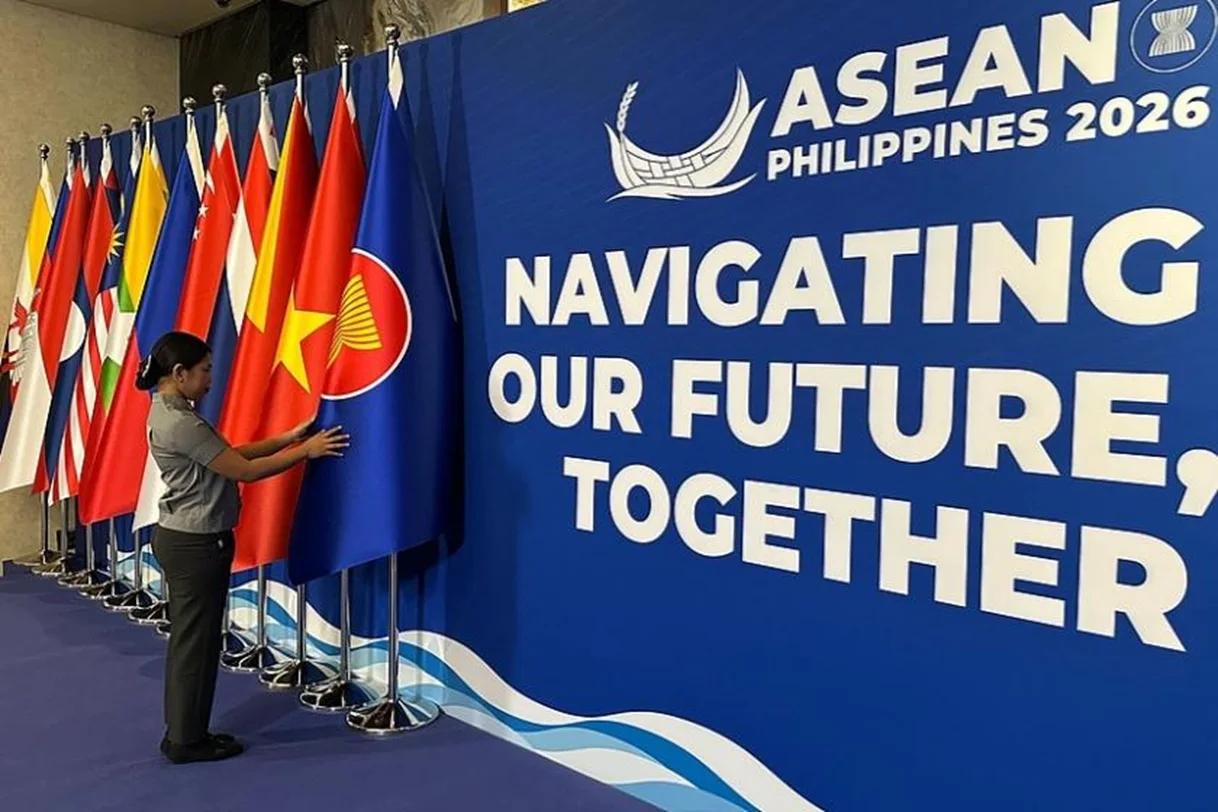
As the Association of Southeast Asian Nations prepares for its 49th summit in the Philippines in November 2026, that strategy is facing mounting pressure. Sino-American competition now extends from trade to semiconductors, from energy infrastructure to digital data, and from maritime routes to military technology.
ASEAN must defend its collective autonomy even though its members do not share identical perceptions of threats or economic priorities.
An Organization Built on Diversity
ASEAN now comprises eleven states following Timor-Leste's accession. It represents a region of more than 650 million people, characterized by considerable differences in income, industrial development and institutional capacity.
Singapore occupies a central position in finance, logistics and advanced services. Vietnam has established itself as a major manufacturing platform. Indonesia possesses a vast domestic market and strategic resources. Malaysia and Thailand have important manufacturing bases, while other members are still developing their infrastructure and productive capabilities.
This diversity explains both the organization's strength and its limitations.
It allows ASEAN to represent a major economic region without imposing a single development model. But it complicates the formulation of common positions when national interests diverge.
The organization traditionally favors consensus, non-interference and gradual agreement. This approach supports diplomatic continuity but can slow decision-making during crises.
The rivalry between Washington and Beijing is intensifying that difficulty.
China, an Indispensable Economic Partner
China occupies a decisive position in regional trade and production networks.
Companies operating in Southeast Asia import Chinese components, machinery, processed raw materials and intermediate goods. They then export finished or semi-finished products to China, the United States, Europe and other markets.
This integration cannot be dismantled quickly without substantial economic costs.
Chinese investment in infrastructure, energy, transportation and manufacturing also reinforces regional ties.
For several governments, cooperation with Beijing is therefore an economic necessity rather than an ideological choice.
But interdependence creates vulnerabilities.
Companies may become sensitive to Chinese trade restrictions, regulatory changes or geopolitical tensions. Governments must also manage the political consequences of infrastructure projects financed or implemented by foreign partners.
China represents both a source of growth and a potential source of dependence.
The United States: Security Power and Essential Market
Washington retains considerable influence over the region's security architecture.
The Philippines maintains a defense alliance with the United States. Other countries have military cooperation arrangements, technological partnerships or close strategic relationships with American institutions.
The US market also remains essential for Asian exporters.
Trade tensions, restrictions on advanced technologies and industrial reshoring policies can nevertheless change the conditions under which companies access that market.
International businesses are seeking to diversify their operations to reduce the risks associated with concentrating production in China. Southeast Asia benefits from some of these adjustments.
But diversification does not necessarily mean severing ties with Chinese supply chains.
A factory established in Vietnam or Malaysia may continue to depend on Chinese machinery, components and suppliers. The geography of final assembly changes more rapidly than the underlying geography of industrial capabilities.
ASEAN therefore benefits from great-power competition while remaining exposed to the decisions of those powers.
The South China Sea: The Limits of Balance
Maritime disputes constitute one of the main challenges facing regional diplomacy.
Several ASEAN members contest aspects of China's claims in the South China Sea. The Philippines is particularly exposed to maritime incidents and tensions concerning access to disputed areas.
These disputes involve sovereignty, resources, navigation rights and the application of international maritime law.
They test the organization's ability to defend a collective position.
Directly affected members often seek a firmer response. Others prefer caution to preserve their economic and diplomatic relations with Beijing.
Regional consensus can consequently produce joint declarations without necessarily enabling binding collective action.
ASEAN has long sought to negotiate a code of conduct with China. But its effectiveness will depend on its content, any legally binding provisions and the mechanisms established to prevent or manage incidents.
The fundamental difficulty remains: the organization wants to avoid confrontation without accepting that its most exposed members should lose the ability to defend their interests.
The Digital Economy as an Instrument of Autonomy
The November summit is also expected to address economic and technological initiatives.
The Philippines has notably emphasized the ASEAN Digital Economy Framework Agreement, intended to develop common rules for digital trade, data and technological cooperation.
This ambition responds to a structural problem.
Regional companies operate in different regulatory environments, with varying national rules governing electronic transactions, payments, data protection and cybersecurity.
Gradual harmonization could reduce transaction costs, facilitate trade and strengthen the region's attractiveness to investors.
But the digital economy has become an area of strategic competition.
Cloud infrastructure, semiconductors, payment systems and digital platforms can create new dependencies on foreign suppliers.
ASEAN must therefore pursue sufficient regional integration to influence the development of standards without necessarily reproducing American, Chinese or European regulatory models.
Energy as a New Condition of Integration
Philippine authorities also want to advance the ASEAN Power Grid initiative.
The project aims to strengthen electricity interconnections and facilitate power trading between countries with different resources and consumption patterns.
Such a system could improve energy security, support renewable-energy integration and reduce certain production costs.
Its implementation, however, requires substantial investment, compatible commercial rules and coordination among national operators.
It also raises questions of sovereignty. Governments may wish to benefit from electricity imports while remaining reluctant to depend permanently on a neighboring country's infrastructure.
Energy integration therefore reproduces the organization's broader strategic dilemma: cooperating enough to become more resilient without creating uncontrollable dependencies.
Autonomy Through Multiple Partnerships
ASEAN does not possess the characteristics of a unified military alliance. Nor does it have the degree of economic and institutional integration achieved by the European Union.
Its strength lies elsewhere: in its ability to maintain channels of dialogue between powers whose relations are deteriorating.
Partnerships with Japan, India, Australia, South Korea, the European Union and other actors allow members to diversify their options.
This multiplication of relationships does not guarantee independence. It can nevertheless reduce the costs associated with exclusive dependence.
Rather than attempting to establish itself as a third geopolitical bloc, ASEAN seeks to prevent the region from being entirely structured by the rivalry between two others.
That strategy becomes more difficult as major powers demand explicit commitments concerning technology, investment, sanctions and security.
The Choice Not to Choose
ASEAN will probably continue to favor a diplomacy of balance.
But this position should not be confused with absolute neutrality. Its members already make different decisions according to their interests, alliances and economic constraints.
The real question is whether that diversity can remain compatible with collective action.
An organization that preserves dialogue but cannot defend common rules risks losing influence. Conversely, an organization attempting to impose a single strategic orientation could undermine its internal cohesion.
ASEAN operates between these two risks.
Its future will depend on its ability to convert economic weight into concrete instruments: digital integration, energy infrastructure, trade coordination and diplomatic mechanisms sufficiently credible to manage tensions.
Southeast Asia does not want to choose between Washington and Beijing. It wants to preserve the ability to negotiate with both.
In a world where major powers increasingly seek to organize dependencies around themselves, that freedom may become the region's most difficult strategic resource to preserve.
Main Sources
- ASEAN, institutional documents concerning the Philippine chairmanship in 2026 and the 49th ASEAN Summit.
- Philippine News Agency, October 20 and November 6, 2026, summit preparations and priorities.
- ASEAN, documentation on the Digital Economy Framework Agreement and ASEAN Power Grid.
- United Nations Convention on the Law of the Sea, legal framework for maritime disputes.
Atlas Limits Research Desk
Atlas Limits’ editorial and analytical desk.