Position as of 11 October 2026. All figures retain their original reporting period and scope: calendar year, fiscal year, group or automotive division. Forward-looking assessments are analysis, separate from published results and announced targets.
The automotive industry is undergoing a transformation that reaches far beyond a change in propulsion. For decades, a manufacturer’s strength rested on its engines, factories, distribution network and brand reputation. These assets remain essential, but they are no longer enough. Batteries are reshaping costs, software is shifting part of the value, China is setting new standards for pricing and development, and governments are fragmenting markets through industrial and trade policies.
Today’s restructuring reflects this reordering. Some groups are shrinking industrial operations that have become too large. Others are abandoning poorly calibrated electric programmes, reorganising their brands or seeking partners able to supply technologies they can no longer develop alone. New entrants are also discovering that an attractive vehicle and rapid growth guarantee neither profitability nor survival.
The dividing line therefore does not simply run between established manufacturers and newcomers, European and Chinese companies, or combustion and electric power. It separates businesses that can finance their adaptation from those whose next step consumes more resources than it generates.
Part One — An Industry Caught Between Two Business Models
It would be a mistake to interpret manufacturers’ difficulties as evidence of a general failure of electric vehicles. According to the International Energy Agency, global electric car sales exceeded 20 million in 2025, an increase of 20%, accounting for roughly a quarter of the market. Under this definition, electric vehicles include battery-electric cars and plug-in hybrids. The IEA forecasts 23 million sales in 2026: this remains a projection, rather than an established annual result.
Yet a growing market can coexist with value destruction among its producers. A factory designed for excessive volumes, an expensive battery or a heavily discounted model can increase deliveries while weakening financial performance. Electrification does not abolish the rules of manufacturing; it changes which companies are best placed to meet them.
Established manufacturers are financing several generations of products simultaneously. They maintain combustion engines that still provide part of their profits, develop hybrids and invest in electric architectures. Software, driver-assistance systems, cybersecurity and distribution-network transformation add further expense. The transition requires a prolonged period of coexistence, particularly costly when expected volumes fail to materialise.
Pricing is another source of strain. During supply shortages, selling fewer cars at higher margins could appear to be a sustainable strategy. But profitability supported by scarcity becomes fragile when supply returns, financing costs weigh on households and new competitors offer more equipment at lower prices. Moving upmarket is not a universal solution: every manufacturer cannot simultaneously abandon customers who buy a car to travel at an affordable cost.
Finally, China is no longer simply a market where foreign groups sell their technology. It is a centre of design, production and exports whose companies help set the competitive pace. Western brands face a dual challenge: defending their positions in China while competing with Chinese manufacturers in their other markets.
Part Two — What Restructuring Is Really Intended to Fix
Job-cut announcements describe only part of the process. Automotive restructuring can affect industrial capacity, vehicle programmes, brand hierarchies, technology partnerships or the markets a company serves. These dimensions overlap, but they do not produce the same effects.
Reducing capacity lowers the break-even point. This may be necessary when factories remain persistently underused. But closing a production line does not refresh an ageing product range. The risk is that a company cuts visible expenditure while weakening the engineering, quality or service capabilities needed to win customers back.
Cancelling a programme can prevent further investment in a product without a profitable market. However, write-downs of assets already financed must be distinguished from future cash outflows. A multibillion-dollar charge does not necessarily mean that the entire amount leaves the company’s bank accounts on the day of the announcement. It nevertheless reveals that the original assumptions about volumes, prices or costs no longer hold.
Reorganising brands addresses another difficulty. A group may share platforms and components while maintaining numerous marketing budgets, distribution networks and product variants. Industrial sharing becomes insufficient when brands offer vehicles so similar that customers no longer understand their differences.
Partnerships are also becoming a form of restructuring. Buying technology or sharing an architecture reduces capital requirements. But dependence can shift value towards the partner. Manufacturers must therefore decide which capabilities they intend to retain, which they can share and which they are willing to purchase.
| Group | Main restructuring effort | Central problem |
|---|---|---|
| Volkswagen | Capacity, workforce, costs and technology organisation | A heavy structure facing lower margins and declining business in China |
| Stellantis | Programme revisions and clearer brand priorities | Commercial and technological assumptions that no longer hold |
| Nissan | Fewer factories and a smaller workforce | Global operations too large for profitable demand |
| Renault | Simplification, partnerships and faster development | Preserving its recovery despite pricing pressure |
| Ford | Reallocating EV capital towards more affordable programmes | The cost and market potential of large electric vehicles |
| Mercedes-Benz and BMW | Cost reductions and technological renewal | A weakening premium business model, particularly in China |
| Volvo Cars and JLR | Adjusting costs and transition schedules | An expensive transformation exposed to commercial and industrial shocks |
These situations differ in severity. A profitable business simplifying its organisation is not in the same position as a manufacturer cutting factories to restore positive cash flow. “Restructuring” can describe both preventive adaptation and a struggle for survival.
Part Three — Volkswagen: When Industrial Strength Becomes a Constraint
Volkswagen illustrates the paradox of scale. In 2025, the group recorded approximately 9 million vehicle sales and €321.9 billion in revenue. Yet operating profit fell 53% to €8.9 billion, representing a margin of 2.8%. Net cash flow in the automotive division remained positive at €6.4 billion. The group therefore retains substantial resources, but converts them into earnings less efficiently.
The December 2024 agreement in Germany already envisaged a reduction of more than 35,000 jobs by 2030 and a cut in technical production capacity of 734,000 vehicles. These figures described a programme to be implemented, rather than reductions already completed. They signalled that the inherited industrial organisation no longer matched anticipated needs.
Conditions continued to deteriorate. In September 2026, Volkswagen cut its annual margin forecast to no more than 1%. Reuters also reported an intensification of restructuring. This update supersedes the more favourable outlook presented around mid-year: the interim results alone no longer describe the group’s prospects in the autumn.
Volkswagen, Škoda, SEAT and Cupra: Four Different Positions
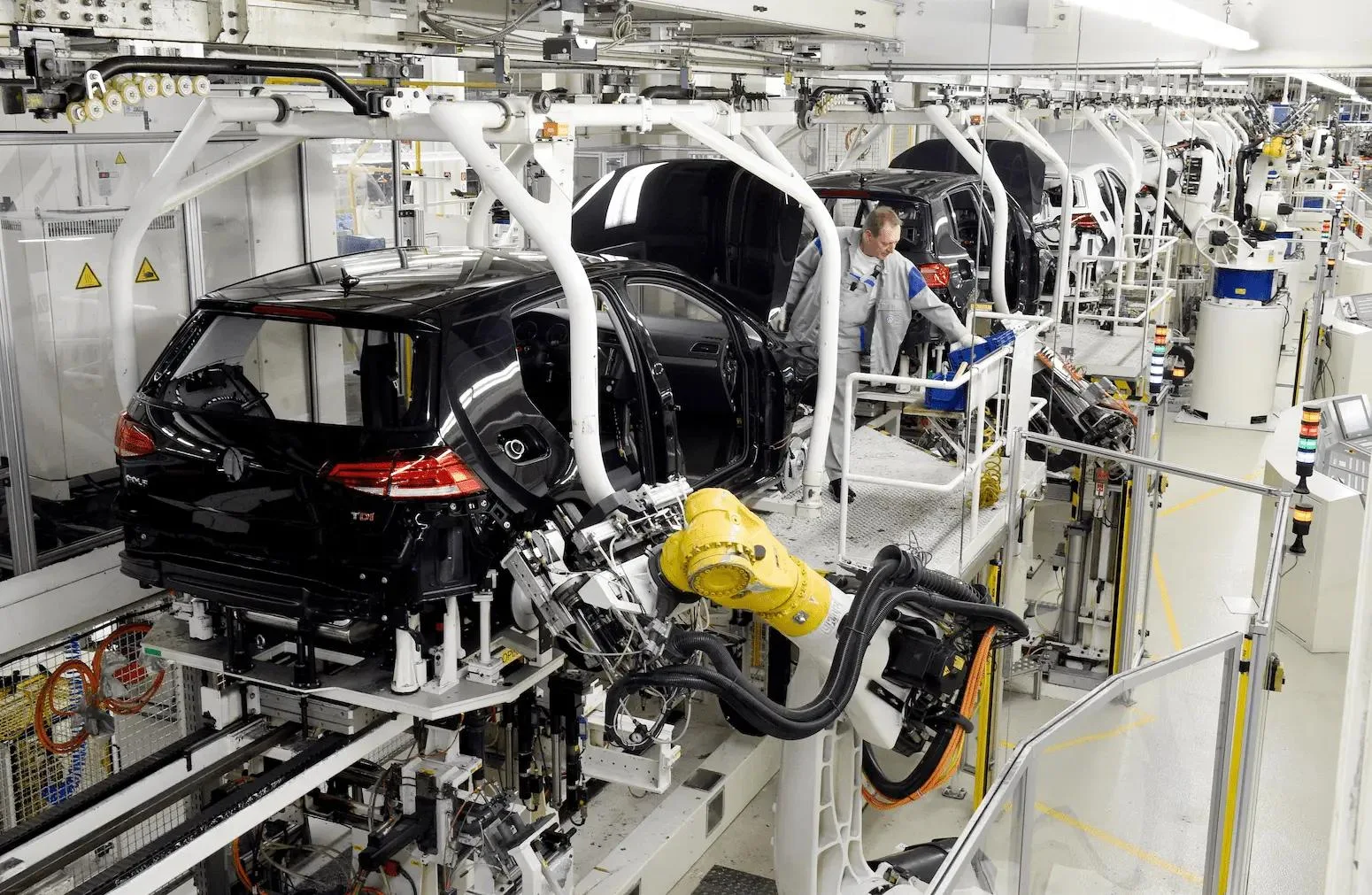
The Volkswagen brand still enjoys global recognition and a range covering many uses. The Golf, Tiguan and other core models represent a commercial asset that newcomers cannot reproduce overnight. But that breadth also increases the demands of product renewal. The group must make its electric cars competitive without abandoning the products that still finance the transition.
Škoda offers a different approach. Its positioning is more closely tied to space, practicality and perceived value. Cupra, by contrast, seeks to give shared technologies a more expressive identity. In 2025, Škoda and the combined SEAT/Cupra business increased deliveries, while Volkswagen Passenger Cars declined. The group’s difficulties therefore do not mean that all its brands are moving in the same direction.
SEAT’s challenge concerns its long-term place alongside Cupra. Growing a new brand can be a commercial success while making investment in the historic brand harder to justify. It would nevertheless be premature to equate this tension with an announced disappearance.
Audi: Rebuilding Differentiation
Audi must answer a more demanding question than simply how to launch new vehicles: what justifies its price premium when electric performance and digital interfaces are available from a growing number of competitors?
The answer may lie in execution, comfort, design, service and genuinely useful technology. It cannot rest solely on heritage. Audi’s 2025 deliveries remained below the previous year’s level, even as the group continued to renew its models.
Porsche: A Historic Success Facing a Severe Correction
Porsche long demonstrated that a sports-car brand could broaden its customer base through SUVs without entirely losing its identity. The Cayenne and Macan supported this transformation; the 911 remains central to the brand’s desirability.
But a strong image does not eliminate industrial risks. In 2025, Porsche reported €36.27 billion in revenue and just €413 million in operating profit, a margin of 1.1%. The company thus lost much of the financial cushion associated with its positioning.
The Taycan represents a measurable commercial setback: sales fell 40.2% in 2025 according to the annual report. This is not a verdict on all of its technical qualities. The problem is the gap between the economic potential expected from an expensive programme and the demand it actually attracts.
The plan presented on 7 October 2026 seeks to adapt Porsche to lower volumes, with a break-even point below 200,000 vehicles and a long-term margin target of 15%. The manufacturer aims to earn more from a narrower base. This is a strategic direction, rather than a demonstrated recovery.
Bentley and Lamborghini, meanwhile, underline the distinctive economics of the very top end of the market. The group has renewed their offerings, including hybrid versions of the Continental GT and Flying Spur, the Urus SE and the Temerario. Their economics cannot simply be extrapolated to mass-market brands: selling scarcity and financing millions of vehicles are different businesses.
Part Four — Stellantis: A Brand Portfolio Put to the Capital Test
Stellantis brings together several of the industry’s problems: brand complexity, technological transition, pricing, product renewal and customer relationships. In 2025, the group reported €153.5 billion in revenue, a €22.3 billion net loss and €25.4 billion in unusual charges. Adjusted operating income was itself negative, with a loss of €842 million. The crisis was therefore not confined to accounting effects.
The situation nevertheless improved in 2026. Second-quarter revenue reached €43.5 billion, net income €300 million and industrial free cash flow €1 billion. The adjusted operating margin remained low at 1.8%, with Enlarged Europe still loss-making. The group regained more favourable momentum without yet restoring robust profitability.
Restructuring now centres on capital allocation. The FaSTLAne 2030 plan, presented in May 2026, envisages €60 billion of investment over five years. Jeep, Ram, Peugeot and Fiat are the four priority global brands; together with the Pro One commercial-vehicle business, they are to receive 70% of investment in brands and products. Chrysler, Dodge, Citroën, Opel and Alfa Romeo are organised as regional brands. DS and Lancia become specialty brands, managed respectively by Citroën and Fiat. Maserati retains a separate trajectory.
This hierarchy explicitly raises the question the merger had left open: can every brand receive enough resources to remain relevant? A prestigious name can survive legally while losing the ability to renew a complete product range.
Strengths: Commercial Vehicles, Local Markets and Brands Built Around Clear Uses
Commercial vehicles are a business in which value extends beyond the product. Availability, financing, maintenance and vehicle downtime directly affect the professional customer’s economics. Sharing resources between Peugeot, Citroën, Fiat Professional and Opel can produce tangible efficiencies.
Fiat has an identity rooted in accessible mobility, particularly useful when households are weighing their spending. Peugeot can defend a more premium proposition, but must preserve the relationship between a higher price and a real benefit for the customer. Citroën has a role to play in comfort and affordability. Opel and Vauxhall must make their differences clear despite shared technology.
Jeep and Ram have strong North American identities. The return of powertrains and products aligned with local expectations is contributing to recovery. In the second quarter of 2026, Stellantis reported US sales growth for the Ram 1500, Jeep Grand Wagoneer, Dodge Durango and Chrysler Pacifica. The portfolio therefore still contains meaningful commercial opportunities.
Failures: Trust, Pricing and Product Continuity
The PureTech case shows the limits of sharing components when a common part becomes a source of distrust. Stellantis has extended coverage, subject to conditions, for previous generations of its 1.0- and 1.2-litre engines to ten years or 180,000 kilometres. These measures address documented problems; they do not remove the need to rebuild confidence in maintenance, repairs and resale values.
The strategic cost extends beyond the repairs themselves. Customers who doubt an engine may also question the dealer network, the asking price and the protection offered if something goes wrong. Reliability then becomes a matter of competitiveness, rather than warranty alone.
For DS and Lancia, the challenge is different. A revival cannot depend indefinitely on the memory of a name. It requires a recognisable product, a credible network and sustained investment. Their new organisation as specialty brands may reduce expenditure; it must still prove capable of supporting a viable commercial proposition.
Alfa Romeo retains a powerful sporting identity. But sustaining a brand requires more than occasionally launching a memorable model: it needs product renewal, customer support and volumes compatible with its costs.
Maserati faces the difficulty of selling luxury without automatically enjoying Ferrari’s scarcity economics. Its future will depend on consistency between its range, pricing, customer experience and investment. The new products announced for its future development are a commitment to be assessed when they materialise.
Abarth raises a question specific to electrification: how can it retain an emotional distinction when acceleration becomes less scarce? Its potential will depend on handling, weight, design and driving pleasure, rather than simply offering a more powerful derivative.
Stellantis will therefore be judged less by the number of brands it preserves than by their ability to generate enough value to finance their next product cycle.
Part Five — Renault, Dacia and Alpine: Making a Recovery Last
Renault’s trajectory differs from Stellantis’s. The group sold 2,336,807 vehicles in 2025, an increase of 3.2%. All three brands grew, supported by a commercial strategy more focused on value and private customers. But this success does not remove competitive pressure or exposure to equity holdings and partnerships.
Renault’s accounts illustrate the need to distinguish industrial performance from changes in accounting scope. A change in the treatment of its Nissan stake produced a large non-cash loss in 2025. In the first half of 2026, the group’s operating margin was 5.2%, compared with just 3% for the automotive business; Mobilize Financial Services contributed €753 million to operating margin. Financing therefore makes a substantial contribution to consolidated performance.
Dacia: A Success Built on Discipline
Dacia represents one of the most coherent responses to rising car prices. Its strength lies in concentrating expenditure on what matters to its customers: space, perceived robustness, practicality and price. The Sandero remained Europe’s best-selling model across all sales channels in the figures published for the first half of 2026.
This success does not imply uninterrupted growth. Dacia’s sales declined in the first half of 2026 while Renault’s increased. The brand must now broaden its offering without losing its economic discipline. Every additional feature, higher segment and more expensive powertrain raises the same question: does the customer receive extra value consistent with the promise of affordability?
Renault: Turning Successful Launches into a Repeatable Method
The Renault brand benefits from product renewal, hybrids and electric reinterpretations of historic models. The Renault 5 can draw on collective memory while offering a contemporary vehicle. But nostalgia does not provide lasting protection against costs, discounts or competition.
The futuREady plan presented in March 2026 is intended to turn product successes into a repeatable operating model through simplification, standardisation, faster development and cooperation. The real challenge is to launch competitive vehicles consistently, without requiring an exceptional effort for every programme.
Alpine: Identity Before Volume
Alpine has a recognisable sporting position, but its development must resolve a tension: broadening its customer base without diluting what makes it desirable. A larger range can spread costs; it also increases capital requirements and the competition the brand faces.
Alpine’s growth should therefore not be compared directly with Renault’s or Dacia’s. A low-volume brand can grow very quickly in percentage terms while remaining far below the scale needed to make a new architecture profitable.
Renault’s strength lies in the relative clarity of its three propositions: mainstream mobility, affordability and sport. Its potential weakness is the size of its resources compared with much larger competitors. Partnerships are a rational response, provided the group retains control over integration and the customer relationship.
Part Six — Mercedes-Benz and BMW: Premium No Longer Guarantees Margins
For a long time, Germany’s premium manufacturers enjoyed a cumulative advantage: reputation, mechanical performance, social status and the ability to charge for options. Electrification weakens part of this equation. Acceleration becomes more widely available, interfaces become comparable and Chinese brands offer extensive equipment.
Mercedes-Benz recorded adjusted operating earnings of €8.2 billion in 2025, down from €13.7 billion the previous year. Tariffs, exchange rates and competition in China weighed on performance despite cost savings. Premium positioning retains value, but no longer shields the group from shrinking earnings.
Mercedes-Benz: The Setback of the EQ Range
The S-Class, G-Class and other core products are built around relatively clear identities and uses. The electric EQ range has faced greater commercial difficulties in certain markets. In July 2025, Mercedes announced a pause in EQ deliveries to the United States and price reductions of 4% to 16% for several 2026 model-year vehicles.
These decisions show that technical sophistication does not guarantee acceptance of the price. Residual value also matters: substantial price cuts can reduce the brand’s appeal to owners and financing companies.
The situation nevertheless continues to evolve. In the third quarter of 2026, Reuters reported an 8% decline in Mercedes car sales but a 52% increase in electric-vehicle sales. A product range can therefore return to growth while overall performance remains under pressure.
BMW: Useful Flexibility That Is No Longer Enough on Its Own
BMW has long supported the coexistence of different powertrains, adapted to regional differences. This approach preserves several sources of demand, but does not provide immunity from shocks.
In the first half of 2026, operating earnings in the automotive division fell 45.6%. Its margin reached 2.3% in the second quarter, while an agreement on a workforce restructuring programme was announced. Neue Klasse represents a major technological renewal; its economic effects must still be assessed over time.
MINI must preserve the combination of compact dimensions, style and enjoyment that justifies its price. A broader range and electrification may attract new customers, but a small premium car becomes vulnerable if it loses its relative accessibility.
Rolls-Royce occupies the other end of the spectrum. Its value rests more heavily on exclusivity, personalisation and experience. It is no more a directly transferable model for BMW than Ferrari is a universal recipe for Fiat.
For Germany’s premium manufacturers, the central question is now proof: what tangible difference does the customer receive for the additional price? The answer will have to be renewed with every generation.
Part Seven — Toyota and Japan’s Manufacturers: Different Forms of Resilience
Toyota and Lexus: The Advantage of a Gradual Transition
Toyota has retained substantial earnings power. For the fiscal year ended March 2026, the group reported revenue of ¥50.684 trillion and operating income of ¥3.766 trillion, compared with ¥4.795 trillion a year earlier. Consolidated vehicle sales reached approximately 9.595 million. This scope should not be confused with worldwide sales across every related brand and entity.
Its success rests on the combination of disciplined manufacturing, a global footprint and a hybrid offering that has become relevant to many customers. Toyota benefits from demand for lower fuel consumption without requiring a complete change in infrastructure and habits everywhere.
Lexus applies this approach to the premium market, with a proposition more closely associated with comfort, reliability and continuity of use. This identity can withstand the wider availability of certain electric-performance features.
Toyota’s risk is that profitable caution could become a lasting technological delay. Hybrids can finance the transition; they do not guarantee future competitiveness in markets where battery-electric cars become dominant. The manufacturer must therefore prepare for that stage without destroying its existing advantages.
Nissan and Infiniti: A Technological Head Start Is Not Enough
Nissan has shown that pioneering electric vehicles does not guarantee retaining the advantage. The Leaf represents an important industrial milestone. But a lead must be maintained through product renewal, costs and regional adaptation.
The Re:Nissan plan calls for 20,000 job cuts and a reduction from 17 to 10 vehicle factories by fiscal 2027, with the aim of restoring automotive profitability and positive free cash flow. These are restructuring commitments whose execution remains decisive.
Reducing the footprint alone will not solve the problem. Nissan must restore a range capable of supporting volumes without excessive dependence on discounts. Infiniti adds another difficulty: a premium brand requires sustained product renewal and investment, which the group must weigh against its recovery needs.
The termination of integration discussions with Honda in February 2025 also demonstrated that consolidation is not automatic. Potential merger savings are insufficient when the parties cannot agree on control, governance and the future organisation.
Honda and Acura: The Cost of Revising a Bet
Honda retains a strong engineering identity and several businesses that support the group. But electric cars have required a major correction. In March 2026, Honda announced the cancellation of the development and launch of three electric models intended for North American production, together with losses associated with its revised strategy.
This setback concerns capital allocation and commercial timing. Historical mechanical expertise cannot compensate for mistaken assumptions about the pace of adoption and the conditions for profitability.
Acura must also justify its distinction in a crowded premium market. Its future depends on differentiated products and technologies, as well as the resources Honda can devote to renewing them.
Suzuki, Mazda, Subaru and Mitsubishi: Specialisation as a Response
Suzuki does not seek to win in every segment. Its strength rests on relatively affordable vehicles and its Indian presence. This concentration can remain an advantage as long as the group keeps pace with changing local expectations and powertrains. Its financial publications separately identify its automotive businesses in India, Japan and other regions.
Mazda defends an identity built around design and driving with more limited resources. Its Lean Asset strategy aims to reduce the capital intensity of electrification, including through cooperation. The risk would be financing too many architectures simultaneously for a relatively narrow sales base.
Subaru can draw on customers attached to its practical uses, all-wheel drive and safety image. Its partnership with Toyota allows part of the electric-development effort to be shared. The question is how to preserve a perceptible difference as the technical foundations converge.
Mitsubishi Motors places greater emphasis on markets and products where it has an advantage, particularly Southeast Asia. Its vision published in May 2026 confirms this focus. Such concentration may produce better economics than an expensive attempt to become a comprehensive global manufacturer again.
Part Eight — Hyundai, Kia and Genesis: Progress Through Execution
Hyundai and Kia have built their rise on a combination of rapid product renewal, improving quality, design and manufacturing capabilities. Their advantage lies in the ability to improve several dimensions of the product simultaneously.
Hyundai Motor reported an operating margin of 6.2% in 2025. Kia reached a record 3,135,873 worldwide sales and revenue of ₩114.1 trillion. These figures refer to the respective companies and should not be combined without considering the group’s reporting boundaries.
Hyundai can combine mainstream products, hybrids and a recognisable electric proposition through Ioniq. Kia is building an electric range whose visual consistency and breadth should help it reach different customer categories. Genesis seeks to convert the group’s industrial capabilities into premium credibility.
The record is favourable, but it should not be treated as risk-free. Local investment, changes in trade conditions and the cost of electric architectures impose the same constraints faced by competitors. A factory in a major market reduces certain exposures; it also increases fixed commitments that must be recovered.
The main test will be whether the group can maintain a better balance between price, quality and technology than its rivals. If moving upmarket gradually takes its brands away from that equation, they could reproduce the weaknesses they exploited elsewhere.
Genesis, in particular, must avoid confusing product excellence with brand maturity. Premium positioning requires time, a network, resale value and a consistent customer experience.
Part Nine — Chinese Manufacturers: A Real Offensive, an Unfinished Selection
BYD: Scale and Integration
BYD is the clearest demonstration of China’s new automotive power. In 2025, the group sold approximately 4.6 million new-energy vehicles, generated revenue of RMB804 billion and earned net profit of RMB32.6 billion. Overseas sales exceeded one million units. New-energy vehicles include battery-electric models and plug-in hybrids: this total therefore does not represent fully electric cars alone.
Integration of batteries and components supports its competitiveness. The range spans several price points, and the group can use scale to accelerate production cycles. But the next phase will be more demanding: building factories, networks and a lasting reputation abroad requires more than transferring a Chinese price list.
The BYD brand must establish confidence in service and resale values. Denza, Fangchengbao and Yangwang seek higher or more specialised positions; their international potential cannot automatically be inferred from that of high-volume models.
Geely: Rationalising a Constellation
Geely combines multiple brands and architectures. This diversity opens markets, but can also multiply expenditure and overlap. The integration of Zeekr and Lynk & Co shows that rationalisation affects Chinese groups too. Geely presented the operation as a way to improve synergies and reduce development, production and operating costs.
Geely and Galaxy can support volume, while Zeekr and Lynk & Co offer more premium propositions. At holding-company level, Volvo, Polestar, Lotus and Proton add distinct identities, geographical positions and constraints. Smart operates through a joint venture with Mercedes-Benz. These businesses do not constitute a single financial perimeter that can be added together without qualification.
Volvo Cars demonstrates that belonging to a Chinese group does not remove difficulties. Deliveries fell from 763,400 to approximately 710,000 vehicles in 2025; a programme to reduce 3,000 positions had been announced. The company must adjust costs and programmes while preserving an identity based on safety, comfort and design.
Polestar continues to face the challenge of financing its development. The conversion of $640 million of debt into equity, announced in 2026, improves its financial structure but does not replace the need to demonstrate sustainable automotive economics.
Lotus must balance its sports-car heritage against expansion into heavier, more expensive products. Proton can benefit more directly from a regional foothold. These trajectories show that a successful technical architecture does not resolve every brand question.
Chery, SAIC and MG: Different Routes to International Expansion
Chery reported 2,806,393 sales in 2025. Its strength includes a presence in numerous markets where price, equipment and access to car ownership remain decisive. But rapid expansion requires consistent standards for parts, repairs and dealer networks.
MG benefits from a familiar name in some markets while relying on SAIC’s industrial resources. The group reported that MG exceeded 300,000 European sales in 2025. This is a significant commercial achievement whose durability will be measured through model renewal and customer loyalty.
SAIC’s other brands—including Roewe, IM, Maxus, Wuling and Baojun—serve different uses and price points. Wuling illustrates how innovation can involve making a simple vehicle affordable; IM seeks a more technology-driven proposition. China’s automotive industry is therefore not limited to exporting electric SUVs.
Nio, Xpeng, Li Auto and Xiaomi: Four Different Bets
Nio must convert its premium proposition and battery-swapping system into lasting profitability. The group reported positive adjusted operating income in the fourth quarter of 2025. A favourable quarter is a milestone, but does not yet establish resilience through a full cycle.
Xpeng places greater emphasis on software, driver assistance and partnerships. Its challenge is to turn those capabilities into sales and revenue that cover the cost of continuing development. Technological value must benefit shareholders and customers, rather than industrial partners alone.
Li Auto demonstrated the commercial appeal of extended-range vehicles. Yet it recorded an operating loss of RMB2.3 billion in the second quarter of 2026. Even a formula well suited to demand remains exposed to product-renewal cycles and price competition.
Xiaomi brings an electronics brand, a user community and technological resources. Its documents report 104,199 vehicles delivered in the second quarter of 2026. This growth makes its entry significant; the next test concerns long-term quality, service and manufacturing profitability.
China is therefore producing winners, but also the conditions for a severe shakeout. The competitive pressure weakening foreign brands also weighs on Chinese companies’ margins and financing requirements.
Part Ten — The United States: Today’s Profits and Tomorrow’s Bets
General Motors: Large Vehicles Finance Adaptation
GM remains supported by pickups and SUVs, particularly under the Chevrolet and GMC brands. Cadillac is seeking to renew its premium proposition, while Buick retains a distinct regional role. The group benefits from an industrial presence and networks that newcomers still have to build.
In 2025, GM reported $2.7 billion in net income and $12.7 billion in adjusted operating earnings. The distinction between these measures matters: adjusted profitability alone does not describe the full cost of the changes under way.
The annual report identifies $7.7 billion in charges related to EV realignment in its cost analysis, alongside reduced expenditure associated with Cruise robotaxi operations. The group is therefore correcting several bets while retaining substantial earnings capacity.
Cruise highlights an important distinction: making a technology work under certain conditions and building a profitable service at scale are different objectives. Autonomous driving brings operational, regulatory and financial requirements that a technical demonstration alone cannot satisfy.
Ford and Lincoln: Prioritising the Businesses That Pay
Ford has strong franchises in pickups, commercial vehicles and services for business customers. Ford Pro illustrates a source of value that combines the vehicle with its management, financing and maintenance.
By contrast, large electric programmes revealed a problem of cost and demand. In late 2025, Ford announced approximately $19.5 billion in special charges associated with a strategic reallocation, including around $5.5 billion in expected cash effects. The group is redirecting investment towards hybrids, commercial vehicles, pickups and a more affordable electric platform; it targets Model e profitability in 2029.
The setback concerns, in particular, the assumption that a large electric vehicle could quickly reproduce the economics of a profitable combustion-engine pickup. Battery weight, price and usage requirements make that transfer difficult.
In Europe, Ford had also announced a reduction of 4,000 positions by the end of 2027. Withdrawal from certain activities or segments can improve financial performance, but must be assessed alongside its effect on the breadth of the customer base and the distribution network.
Lincoln, meanwhile, must preserve a credible premium proposition from a narrower base. Its challenge concerns not only the product but also the continuity of investment Ford can provide.
Tesla: An Industrial Success Dependent on a Few Products
Tesla transformed the automotive industry through its combination of electric vehicles, software updates, direct sales and charging. Model 3 and Model Y remain the main foundations of that success.
In the third quarter of 2026, Tesla delivered 486,532 vehicles, including 478,237 Model 3 and Model Y vehicles: these two families therefore accounted for just over 98% of deliveries. Quarterly financial results had not yet been published as of 11 October. Delivery growth cannot therefore be taken as evidence of an equivalent improvement in earnings.
This concentration provides both efficiency and vulnerability. It simplifies manufacturing, but leaves the group dependent on renewing a small number of products.
The Cybertruck illustrates the difference between visibility and economic importance. Tesla combines its volumes with those of other models, so attributing the entire category to Cybertruck would be incorrect. Recalls documented by the NHTSA add questions of quality and technical correction to the programme’s assessment.
Robotaxi and artificial-intelligence prospects must also be kept separate from the established automotive business. They may create new sources of value, but their economics should not be treated as proven before they have been demonstrated.
Part Eleven — Luxury and New Entrants: Desirability Meets the Accounts
Ferrari: Economics That Are Difficult to Replicate
Ferrari delivered 13,640 vehicles in 2025 and generated €7.146 billion in revenue. Revenue growth reflected, among other factors, the product mix and personalisation, with volumes deliberately constrained.
Its success comes from the ability to charge for managed scarcity. Customers are buying more than performance: they are acquiring a place within a brand’s world. These economics are difficult to reproduce for a manufacturer that must fill large factories and support an extensive network.
Ferrari’s technological transition will be assessed according to its own logic. Electrification will need to enrich the brand experience rather than simply respond to a competition over specifications.
Aston Martin: A Powerful Name, Fragile Economics
Aston Martin demonstrates that a globally recognised brand can remain financially vulnerable. In 2025, the manufacturer reported an operating loss of £259 million, free cash outflow of £410 million and net debt of approximately £1.38 billion.
Product renewal and desirability can support demand. But interest payments, investment and low volumes make it harder to stabilise the accounts. Success must therefore be measured by the ability to finance subsequent programmes through operations, rather than repeated injections of funding.
Jaguar, Range Rover, Defender and Discovery: Different Trajectories
JLR brings together very different positions. Range Rover and Defender have immediately recognisable propositions. Jaguar has embarked on a much more radical transformation towards an electric, very high-end positioning.
The 2025 cyberattack demonstrated how a digital interruption can become an industrial crisis. Production stoppages, tariffs and Jaguar’s transition weighed on activity.
In the first quarter of fiscal 2026–2027, JLR reported an adjusted operating margin of 2.8% and almost £1 billion in free cash outflow. New products were still being announced for the months ahead. The historical success of certain models should therefore not obscure the financial strain of the transition.
A definitive verdict on Jaguar would be premature. The bet is clear: replace a difficult market position with a narrower, wealthier customer base. Execution must still show whether the new offering can justify that break.
Rivian, Lucid and Fisker: Three Levels of Risk
Rivian has a strong product identity, but moving towards a broader volume base remains expensive. In the second quarter of 2026, the group reported an operating loss of $836 million, despite an improvement in its automotive gross loss. The launch and production ramp-up of R2 represent a decisive test.
Lucid demonstrates that technical excellence is insufficient to establish viable manufacturing economics. Its annual report continues to describe substantial costs, inventory write-downs and investment requirements. The challenge is to broaden demand while reducing the cost of each vehicle and the network supporting it.
Fisker represents an established failure: the group sought Chapter 11 protection in June 2024 after consuming its cash in the deployment of the Ocean. The case shows that outsourcing production does not outsource responsibility for the product, its distribution or its support.
New entrants should therefore not be judged solely on the vehicles they unveil. The decisive assessment concerns manufacturing, delivery, repairs and the financing of several generations of products.
Part Twelve — Suppliers and Industrial Regions Face the Shakeout Too
The automotive industry is more than a collection of manufacturers. Every reorganisation spreads to suppliers, transport companies, distributors and local employment.
Suppliers specialising in certain combustion-engine technologies may lose volumes before their new activities reach a profitable scale. Those investing in electronics or batteries face demanding requirements for cost, production rates and quality. They often have to finance the transition with less financial capacity than their customers.
Bosch has announced approximately 13,000 additional job reductions as part of adjustments to its operations, principally related to mobility. The group describes structural pressure on costs and margins. The crisis therefore extends to technology companies with global operations.
Northvolt’s bankruptcy in Sweden, announced on 12 March 2025, provides another warning. Producing competitive battery cells requires more than funding, industrial ambition and orders: manufacturing yields, quality, schedules and costs must converge. The failure does not condemn all European battery production, but demonstrates the difficulty of building this capability at scale.
Europe: Defending an Industrial Base While Transforming It
Europe must preserve a value chain without freezing its structures in place. Trade protection can buy time; it does not guarantee lower costs or faster vehicle renewal.
The political difficulty is to maintain production, jobs and skills while accepting that some capacity has become excessive. Useful industrial policy must address the conditions for competitiveness—energy, infrastructure, financing and training—as much as imports.
India: Growth on Its Own Terms
India offers a different market from economies where car ownership is already widespread. According to SIAM, domestic passenger-vehicle sales reached 4.64 million units in fiscal 2025–2026, an increase of 7.9%.
Maruti Suzuki, Tata Motors and Mahindra have local roots that matter as much as technology. Pricing, financing, vehicle adaptation and distribution networks make this a demanding market. A strategy that works in China or Europe cannot simply be reproduced there.
Morocco and Export Manufacturing Hubs
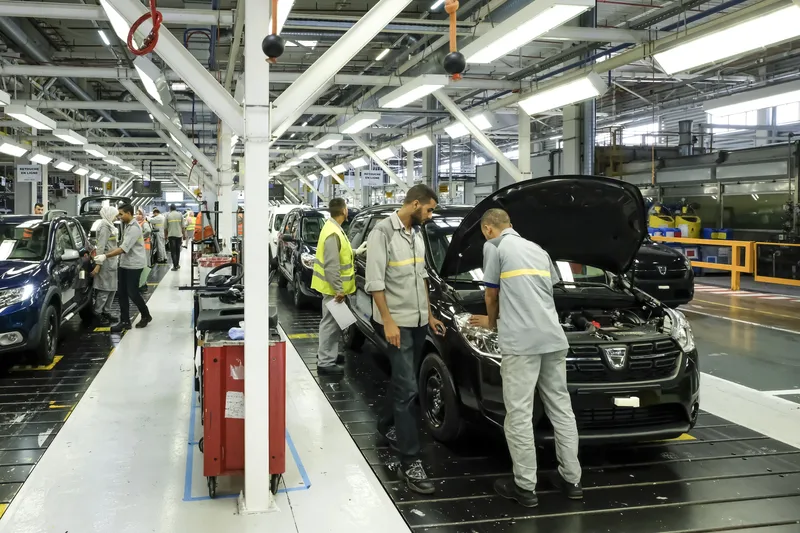
For Morocco, European restructuring represents both a risk and an opportunity. Renault’s and Stellantis’s operations place the country within global production decisions. Proximity to European markets, infrastructure and the industrial ecosystem are advantages.
But the objective cannot be limited to attracting more assembly lines. Lasting value depends on local content, skills, engineering, suppliers and the functions that remain in the country. Rising export volumes alone do not measure progress up the value chain.
Mexico, Türkiye and Central European countries face a similar question: hosting production can be a success, but dependence on a few markets and on corporate decisions remains. Trade fragmentation makes location more strategic while increasing the risk that investments lose part of their original rationale.
Part Thirteen — Successes, Failures and Bets Still to Be Proven
Rankings depend on the criterion. Dacia is a success in affordability and discipline. Ferrari is a success in scarcity and pricing. BYD is a success in scale and integration. Tesla succeeded in industrialising and spreading a small number of electric models. These companies are not winning the same competition.
Likewise, a setback can concern a vehicle, a technology, an organisation or capital allocation. The Taycan is not equivalent to Fisker: the former is a commercial programme under pressure within an established group; the latter is a corporate failure.
| Manufacturer or brand | Structural success | Main setback or vulnerability | Decisive test |
|---|---|---|---|
| Toyota / Lexus | Hybrids, manufacturing and global presence | Risk of falling behind in some EV markets | Financing and delivering the next generation |
| Volkswagen | Scale, network and portfolio | Costs, capacity and Chinese competition | Restoring margins sufficient to support investment |
| Škoda | Practicality and value | Growing pressure on mainstream brands | Maintaining its cost advantage |
| Cupra / SEAT | Cupra’s momentum and shared technical foundations | SEAT’s future role and overlap | Justifying two distinct propositions |
| Audi | Brand equity and premium expertise | Less obvious differentiation against new offerings | Charging for tangible value |
| Porsche | The 911 and diversification through SUVs | Collapsing margins and declining Taycan sales | Lowering break-even volumes without diluting identity |
| Stellantis | Strong regional brands and commercial vehicles | Complexity, trust and revised programmes | Allocating capital to businesses able to replenish it |
| Jeep / Ram | North American identities and uses | Pricing and product renewal | Restoring profitable growth |
| Peugeot / Fiat / Citroën / Opel | Coverage of European and regional needs | Differentiation and affordability | Making each brand promise clear |
| DS / Lancia / Alfa Romeo / Maserati | Distinctive heritage | Product continuity and limited resources | Turning a name into durable demand |
| Renault | Product renewal and a clearer strategy | Pressure on automotive margins | Repeating successes at lower cost |
| Dacia | Disciplined affordability | Risk of increasing complexity | Growing without losing the price promise |
| Alpine | Sporting identity | Cost of expanding the range | Preserving differentiation while scaling up |
| Mercedes-Benz | Premium brands and products | EQ difficulties and pressure in China | Restoring pricing power |
| BMW / MINI | Flexibility and identity | Margin compression | Delivering technological renewal |
| Nissan / Infiniti | Established products and global experience | An oversized footprint and renewal needs | Returning to positive cash flow with a credible range |
| Honda / Acura | Engineering and established franchises | Expensive revision of the EV bet | Reallocating capital without creating another delay |
| Suzuki / Mazda / Subaru / Mitsubishi | Specialisation and partnerships | Limited resources or concentrated exposure | Defending clearly defined positions |
| Hyundai / Kia / Genesis | Execution, design and technological breadth | Investment needs and moving upmarket | Preserving the balance between price and value |
| BYD | Batteries, integration and volume | Complexity of global expansion | Building lasting service and reputation |
| Geely / Zeekr / Lynk & Co | Technology and portfolio | Overlap and costs | Making rationalisation work |
| Volvo / Polestar / Lotus | Identity and technology | Financing and transition | Connecting desirability with profitability |
| Chery / SAIC / MG | International expansion | Networks and resale value | Retaining customers after the first sale |
| Nio / Xpeng / Li Auto / Xiaomi | Innovation and differentiated propositions | Price competition and financing | Stabilising economics across several cycles |
| GM / Ford | Pickups, SUVs, commercial vehicles and networks | Expensive EV corrections | Financing more affordable future products |
| Tesla | Model 3/Y, software and charging | Concentrated volumes and new bets | Renewing the car business and proving new activities |
| Ferrari | Scarcity and personalisation | Transition in the product experience | Preserving desirability |
| Aston Martin / JLR | Iconic brands and products | Debt, cash flow and industrial shocks | Funding renewal through operations |
| Rivian / Lucid | Products and technical capabilities | Costs and financing requirements | Reaching a profitable scale |
| Fisker | An initially attractive proposition | Corporate failure | An established case of failure |
This table is an analytical synthesis of the evidence discussed in the report, rather than a ranking of mechanical quality or a forecast of corporate survival.
Part Fourteen — What Comes Next for the Automotive Industry?
Three scenarios help frame the coming decade. None should be treated as certain.
The first is successful adaptation by established groups. Capacity is adjusted, ranges are simplified, electric vehicles become more affordable and hybrids finance part of the transition. Companies retain their brands but share more components and technology. Recovery comes from better execution, rather than necessarily from a major merger.
The second is regional fragmentation. The United States, China, Europe and major emerging markets impose different commercial and industrial structures. Groups must manufacture locally, adapt their vehicles and manage several supply chains. A global presence remains an advantage, but becomes more expensive to organise.
The third is more severe consolidation. Financially weaker businesses sell assets, abandon markets or seek shareholders able to finance their products. Brands may survive while technology, manufacturing and part of the value pass under another group’s control. A manufacturer’s legal disappearance is not the only form of industrial decline.
The most plausible trajectory combines elements of all three. Markets are not evolving at the same pace, brands do not have the same resources and governments do not accept the same dependencies.
Several indicators will distinguish a genuine recovery from a temporary reprieve. The first is industrial cash flow after investment. The second is the quality of sales: discounts, inventories, private customers, fleets and rental channels. The third is resale value, which reveals market confidence and influences financing costs. The fourth is launch quality: schedules, defects, recalls and the ability to manufacture at the planned cost. The last is product-range continuity, because one successful model can conceal an ageing portfolio.
The future of the automotive industry will not be determined by propulsion alone. It will depend on the ability to offer a useful, reliable and financeable vehicle, manufacture it at a sufficient margin and continue supporting it long after the sale.
Batteries, software and artificial intelligence are shifting the boundaries of competition. But they remove none of these obligations. The shakeout now under way will favour manufacturers that can turn technology into sustainable economics—and brands that give customers a specific reason to choose them.
Main Sources
International Energy Agency, Global EV Outlook 2026; Volkswagen Group, 2025 annual report and 2026 interim publications; Porsche, 2025 results and October 2026 strategy update; Stellantis, 2025 results, second-quarter 2026 results and FaSTLAne 2030 plan; Renault Group, 2025–2026 results and sales publications, futuREady plan; Toyota, results for the fiscal year ended March 2026; Nissan, Re:Nissan plan; Honda, electrification strategy revision; BMW Group and Mercedes-Benz Group, financial and commercial publications; Hyundai Motor and Kia, 2025 results; BYD, Geely, SAIC, Chery, Nio, Xpeng, Li Auto and Xiaomi, corporate publications; General Motors, Ford, Tesla, Rivian and Lucid, financial reports and releases; Ferrari, Aston Martin and JLR, published results; SIAM, Indian industry data for 2025–2026; Bosch and Northvolt, corporate communications; NHTSA, recall documentation; Reuters, industrial and commercial updates.
Atlas Limits Research Desk
Atlas Limits’ editorial and analytical desk.