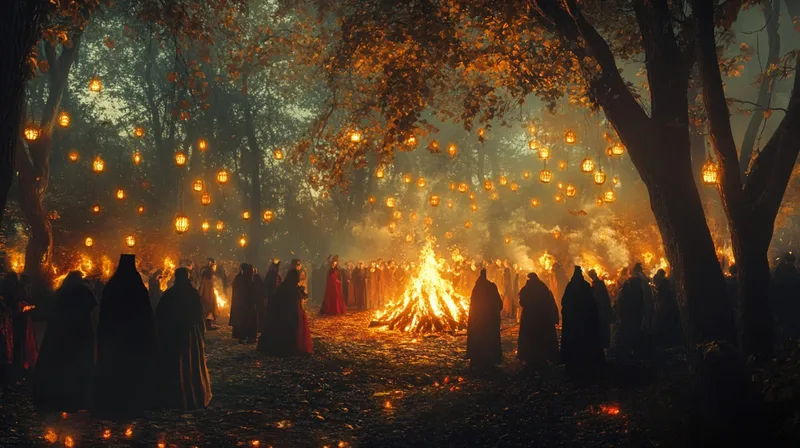
The release of federal records concerning Bigfoot has brought one of North America's most enduring mythical creatures back into public view. Behind the mysterious footprints, disputed sightings and ambiguous images lies a remarkable cultural history: that of a legend science has never substantiated, yet American society continues to reinvent.
In October 2026, the United States Forest Service made several historical records concerning Bigfoot publicly available. The legendary giant, hairy creature said to inhabit remote North American forests has occupied a distinctive place in the continent's popular imagination for generations. Released during Donald Trump's administration, the documents attracted renewed media attention, bringing together eyewitness accounts, photographs of alleged footprints and reports of official investigations. None established the existence of an unknown animal.
Their significance lies elsewhere. By making historical Bigfoot records accessible through a federal agency, the release highlights the unusual cultural standing of a creature whose existence remains scientifically unsubstantiated. Few legendary beings have inspired so many investigations, generated so many stories or crossed so persistently between oral traditions, fringe research, popular entertainment and contemporary belief.
Bigfoot is more than a monster from a familiar tale. It has become a collective cultural figure, shaped by changing representations of wilderness and by successive transformations in American society. 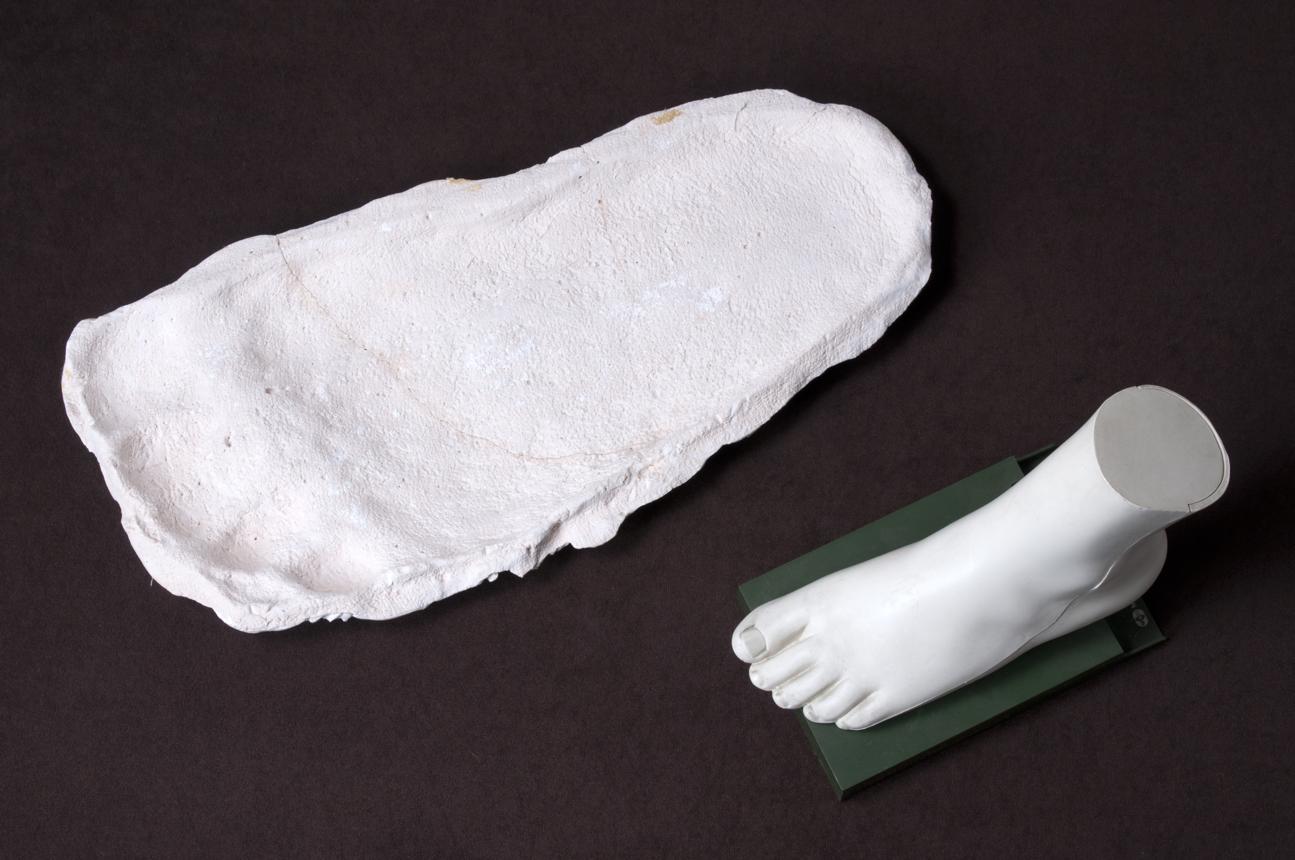
From Indigenous traditions to a modern legend
The history of Bigfoot did not begin with the blurred photographs of the twentieth century. Long before the creature became a fixture of American popular journalism, Indigenous communities across the Pacific Northwest maintained oral traditions involving powerful, mysterious beings associated with forests and remote landscapes.
Some of these traditions were subsequently connected to the modern Sasquatch narrative. Such comparisons, however, require considerable caution.
Indigenous traditions are neither uniform nor necessarily descriptions of the same being. Their meanings vary across peoples, languages and spiritual contexts. Treating them simply as ancient eyewitness reports of Bigfoot risks imposing a modern Western interpretation on distinct cultural traditions.
The name Sasquatch entered wider English-language usage during the first half of the twentieth century, particularly through accounts circulated in British Columbia. Its popularization is commonly associated with Canadian teacher and journalist J. W. Burns, who published stories during the 1920s and 1930s. The English term derives from an adaptation of a word associated with Halkomelem, a language of Coast Salish peoples.
The decisive transformation came in 1958, when reports of enormous footprints near a logging operation at Bluff Creek, California, attracted national media attention. The name Bigfoot rapidly gained prominence, offering a simple, memorable identity for the supposed creature.
The episode contained the essential ingredients of a successful modern legend: an isolated landscape, apparently credible witnesses, striking physical traces and a mystery resistant to immediate explanation.
Photographs circulated, newspapers amplified the story and the public encountered a figure that seemed sufficiently human to imagine but sufficiently mysterious to escape verification.
Subsequent revelations strongly supported the interpretation that the Bluff Creek footprints had been fabricated. Nevertheless, the episode became foundational to the modern Bigfoot mythology.
Wilderness and the survival of the unknown
Bigfoot's popularity cannot be understood without considering the geography associated with the creature.
The vast forests of the American Pacific Northwest, the Cascade Range and the remote landscapes of the Pacific coast have long occupied an important place in the cultural representation of wilderness.
In a society shaped by territorial expansion, resource extraction and infrastructure development, such landscapes acquired a contradictory symbolic meaning. They represented both territory to be conquered and a refuge for something presumed to have survived beyond industrial civilization.
Bigfoot embodies this contradiction.
The creature is described as humanlike in posture and movement, yet fundamentally outside human society. Its exceptional size, heavy covering of hair and supposed ability to avoid capture place it between familiar categories: animal, ancestor, monster and survivor of an earlier natural world.
It gives recognizable form to an enduring anxiety: the possibility that humanity does not fully understand the world it claims to have explored.
This symbolism helps explain why Bigfoot remains associated with remote forests even as modern mapping, satellite observation and biological research make the existence of an undiscovered population of large North American primates increasingly difficult to reconcile with available evidence.
The legend survives not simply because an unknown animal might theoretically be discovered, but because people continue to imagine landscapes beyond the reach of human knowledge.
The film that gave the legend a body
On October 20, 1967, Roger Patterson and Robert Gimlin recorded a short film near Bluff Creek in northern California. The footage shows a dark, hairy figure crossing an open area before briefly turning toward the camera.
Known as the Patterson-Gimlin film, the sequence became one of the most recognizable and disputed images in the history of alleged encounters with unknown animals.
Its cultural influence was profound.
Before the film, Bigfoot had largely existed through descriptions, drawings and reported footprints. The footage provided a visual identity that could be reproduced in illustrations, posters, television programs and fictional narratives.
Its authenticity remains contested. Supporters point to perceived anatomical details and the figure's movement. Critics emphasize the possibility of a costume, the limitations of the footage and the absence of independently verifiable evidence.
No scientifically accepted examination has established that the film depicts an unknown biological species.
Yet its significance extends beyond the question of authenticity.
The Patterson-Gimlin footage demonstrates how an image can become a lasting cultural reference without acquiring the status of scientific evidence.
Bigfoot's silhouette now belongs to a recognizable visual tradition alongside other legendary creatures, including the Loch Ness Monster and the Himalayan Yeti. Their cultural origins differ, but each demonstrates how uncertain observations can develop into enduring collective representations.
When government investigates a legend
The records published in October 2026 reveal another dimension of the phenomenon: the encounter between popular belief and the ordinary investigative procedures of public institutions.
One of the most significant documents concerns a June 1982 investigation in the Mill Creek watershed of Washington state's Umatilla National Forest.
Unusual footprints had been reported at several forest locations. Investigators measured the impressions, photographed them and produced plaster casts.
Some prints measured approximately fifteen inches in length. Their arrangement initially appeared compatible with the movement of a large bipedal creature. Closer examination, however, revealed important inconsistencies.
Wildlife biologist Rodney L. Johnson observed that his own boots sank more deeply into the ground than the alleged footprints of a substantially heavier creature. The regularity of the stride across different slopes also raised doubts.
Johnson concluded that the tracks were unlikely to have been made by the large, two-legged being described in Bigfoot accounts.
Other released materials included historical reports from Montana, among them an account concerning events in the 1940s and a newspaper article from 2003.
Their value is primarily documentary. They reveal how extraordinary experiences were interpreted, recorded and transmitted.
The existence of these files within federal archives does not mean the American government recognized Bigfoot as a real animal. It means public officials received reports, examined physical claims or preserved materials connected to a widely known legend.
That distinction is essential.
An official record can establish that a testimony was collected without demonstrating that the event described actually occurred.
The 2026 publication is therefore not a zoological revelation. It is evidence of a cultural phenomenon sufficiently persistent to leave traces within public institutions.
What science has never established
The scientific question is relatively straightforward: is there reliable physical evidence demonstrating that Bigfoot represents a distinct animal species?
At present, there is none.
No living or dead specimen has been authenticated. No skeleton, viable breeding population or consistent body of biological evidence has established the existence of an unknown large primate in North American forests.
The accumulated footprints, photographs and eyewitness accounts do not satisfy the verification standards required to recognize a new species.
Genetic examinations of hair samples attributed to mysterious creatures have generally identified known animals or produced findings insufficient to support extraordinary claims.
The absence of evidence is not, by itself, a logical demonstration of absolute nonexistence. Nevertheless, the hypothesis of a large primate population surviving undetected across generations raises substantial biological difficulties.
A sustainable population would require enough individuals to reproduce. Such animals would ordinarily leave multiple forms of evidence: organic remains, genetic material, carcasses, ecological interactions and observations capable of independent confirmation.
The difficulty is therefore not merely obtaining a clear photograph of an elusive animal. It is explaining how an entire breeding population could remain beyond the reach of modern biological investigation.
Under current scientific knowledge, Bigfoot belongs to folklore rather than recognized zoology.
From frightening monster to popular character
The lack of scientific confirmation has done little to diminish Bigfoot's cultural success. Its elusive character has instead made it particularly adaptable to fiction.
Cinema and television gradually transformed its image.
Sometimes portrayed as a threatening creature emerging from the forest, sometimes as a misunderstood solitary being, Bigfoot has accommodated markedly different narratives.
The 1987 film Harry and the Hendersons represented an important stage in this transformation. Its central creature is physically imposing but emotionally sympathetic, welcomed into the lives of an American family.
The potential monster becomes a sensitive outsider whose intimidating appearance contrasts with its behavior.
This reversal changes the cultural function of the legend. Bigfoot no longer necessarily represents a threat concealed within wilderness. It can symbolize difference, vulnerability, innocence or the difficulty of living alongside beings that do not conform to familiar human expectations.
Advertising, comics, animated television and video games subsequently expanded these interpretations.
The hairy silhouette and oversized feet became instantly recognizable visual symbols, sometimes entirely detached from the original accounts of alleged encounters.
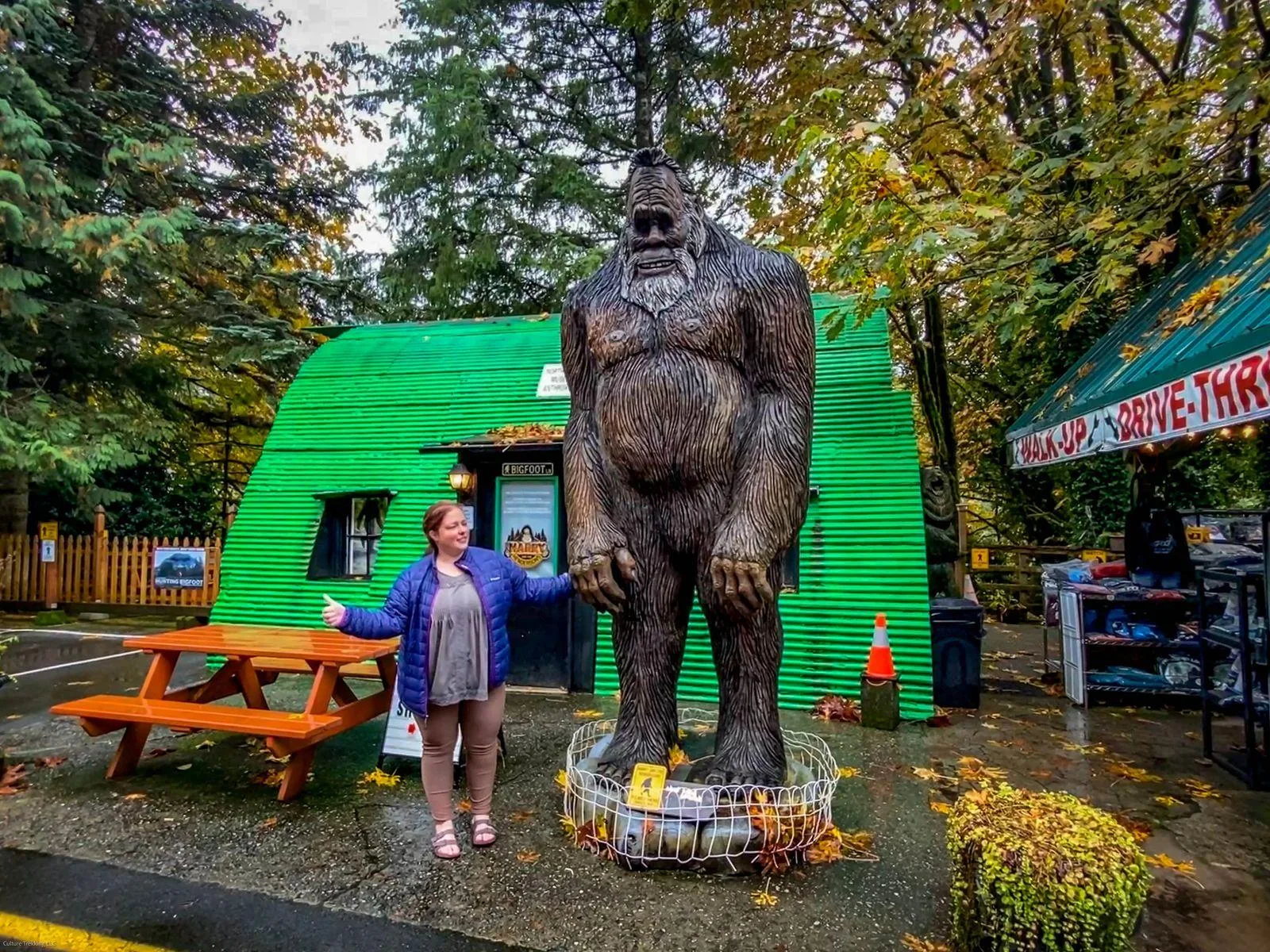
In parts of the Pacific Northwest, Bigfoot has also become a source of regional identity and tourism.
Large sculptures, festivals, souvenir shops and local events capitalize on its popularity. The character helps distinguish communities associated with forests and remote natural landscapes.
This cultural economy operates independently of the creature's biological existence. Visitors need only recognize the legend and be willing to participate temporarily in its fictional universe. 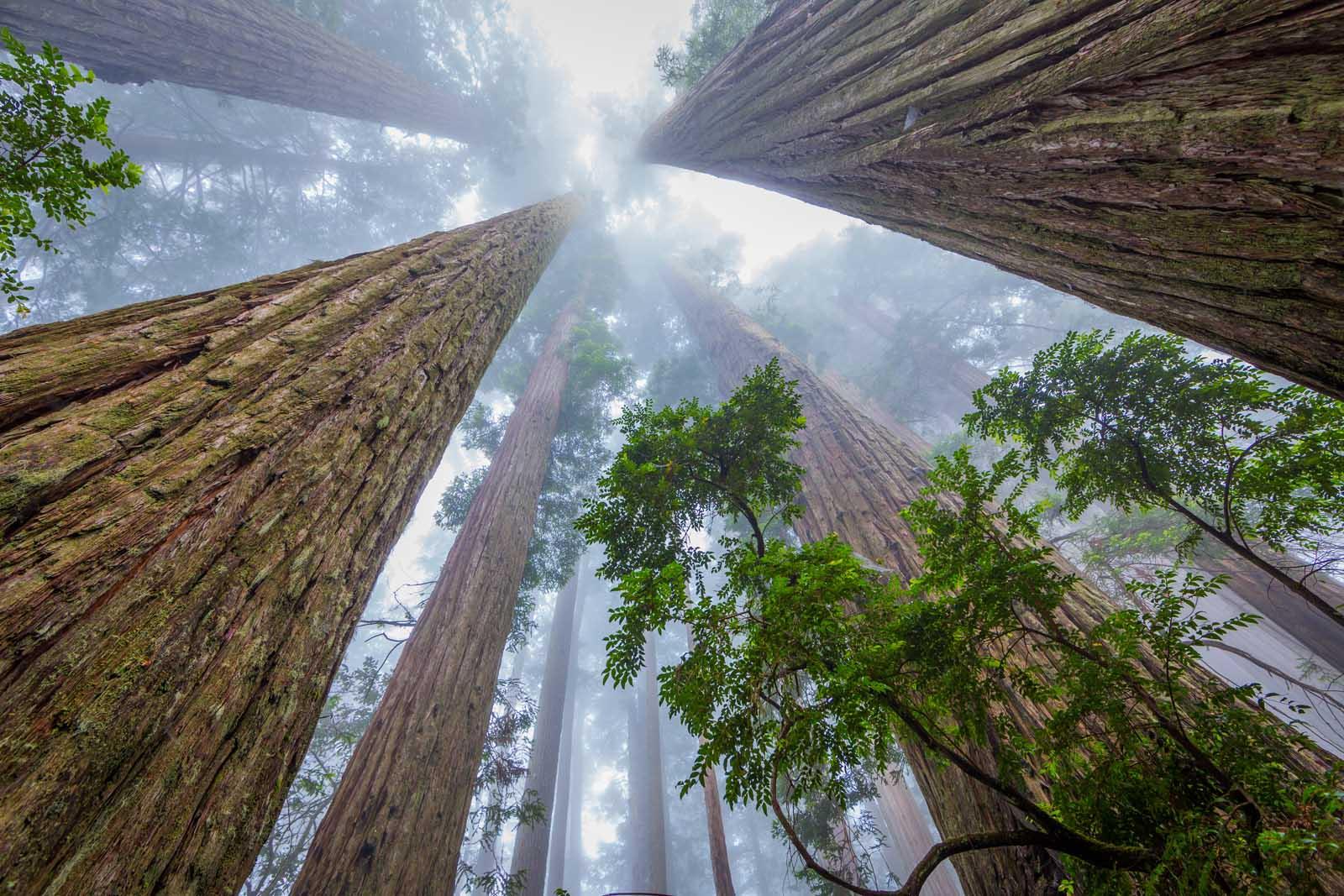
The internet and the reinvention of belief
The internet has given the Bigfoot phenomenon another dimension.
Enthusiast communities can now exchange testimonies instantly, examine photographs, debate recordings and organize investigations across considerable distances.
This accelerated circulation of information creates a paradox.
Digital tools make some claims easier to verify, but they also facilitate the distribution of misleading images, unverifiable stories and fabricated footage.
Social media platforms reward content that generates surprise, anxiety or curiosity. A vague figure appearing among trees can reach millions of viewers before anyone establishes what the recording actually shows.
Artificial intelligence adds a further complication.
The growing ability to generate realistic images and video means that visual plausibility alone can no longer establish that an event was genuinely recorded.
Bigfoot is particularly well suited to this environment because the modern legend has always depended heavily on ambiguous imagery.
The phenomenon also illustrates how contemporary beliefs develop through interactions between personal experience, distrust of institutions, online communities and the attention economy.
For some, Bigfoot remains a sincere subject of investigation. For others, it is entertainment, regional heritage or a collective game in which uncertainty is deliberately preserved.
These motivations can coexist without producing scientific confirmation.
Why legends outlive their evidence
Bigfoot's longevity ultimately reveals something fundamental about folklore: its function extends beyond explaining observable events.
A legend can survive the discrediting of its most famous evidence because it fulfills needs unrelated to scientific verification.
It can express the identity of a landscape, transmit emotion, embody uncertainty or create a shared cultural experience.
Bigfoot performs all these functions.
The creature symbolizes a natural world that might still resist human surveillance. It sustains the possibility that America's great forests conceal unknown forms of life. It also evokes an earlier age when geographical exploration and zoological discovery seemed capable of producing extraordinary surprises.
The release of federal records in 2026 illustrates this process with particular clarity.
The documents identify no unknown species. One of the most detailed investigations explicitly rejects the extraordinary interpretation of the footprints examined.
Nevertheless, their publication was sufficient to return Bigfoot to international headlines.
The mere existence of government records can be mistaken for official recognition, even when the contents provide no support for the claim.
It is precisely within this gap between documentary fact and public interpretation that part of the legend continues to flourish.
Bigfoot does not need to be discovered to remain present in American culture. It only needs to be retold.
More than half a century after becoming a media phenomenon, the creature remains absent from zoological inventories but firmly established in the collective imagination.
Its most enduring footprints may not lie in the mud of Pacific Northwest forests, but in the films, stories, images and memories of successive generations.
Science has never established that Bigfoot exists. Culture, however, has made it an unmistakably real figure of the modern imagination.
Atlas Limits Research Desk
Atlas Limits’ editorial and analytical desk.