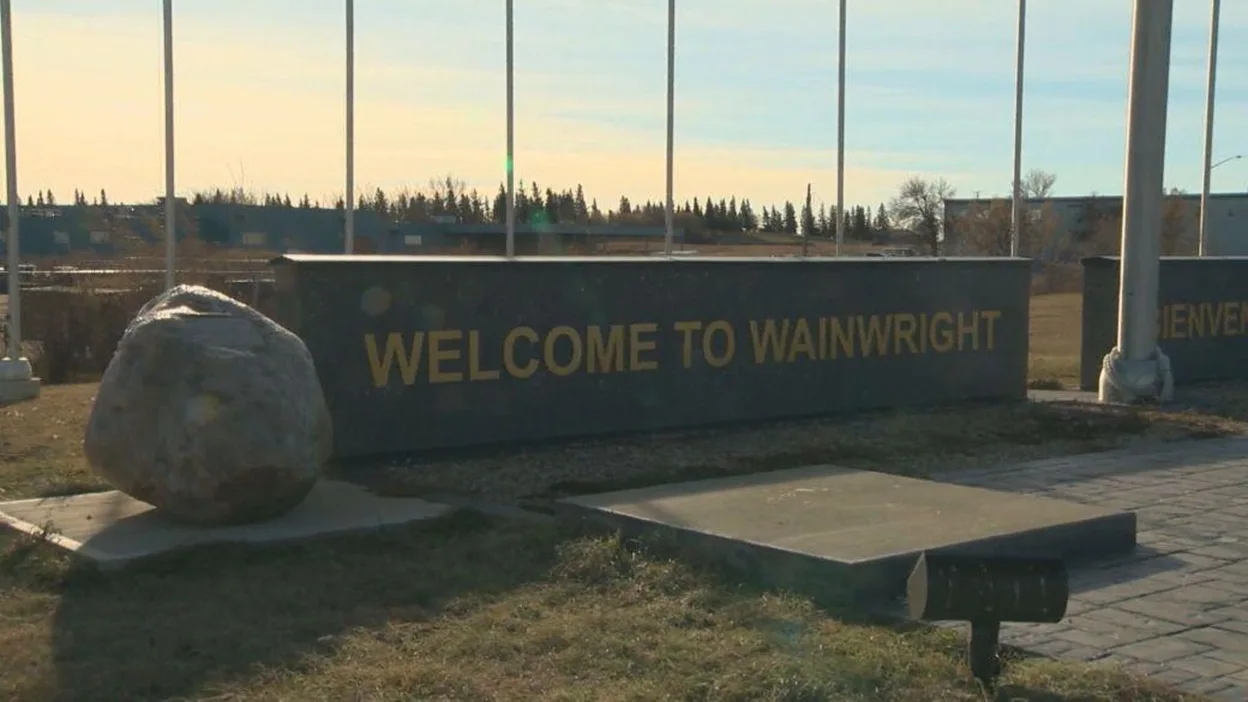
A serious incident at Canadian Forces Base Wainwright in Alberta on October 17, 2026, reportedly left several people dead and injured, triggering a major emergency response. As investigators work to establish the circumstances, the disaster raises broader questions about military training safety, operational risk management and the ability of civilian infrastructure to respond to emergencies originating within defence facilities.
Across the vast plains of Alberta, east of Edmonton, Canadian Forces Base Wainwright normally serves as a training ground where military personnel prepare for the demands of modern warfare. Exercises are designed to reproduce battlefield conditions, allowing soldiers to develop operational capabilities in environments that resemble those they may encounter during actual deployments. On Saturday, October 17, however, the installation became the scene of a disaster whose consequences rapidly extended beyond its military perimeter. A fire originating in a training area spread into surrounding territory, while emergency services struggled to respond to an exceptional number of casualties.
According to Canada's Department of National Defence, the fire began at approximately 4 p.m. local time. The Canadian Armed Forces confirmed fatalities and injuries but did not immediately release a detailed casualty count, allowing time for victims to be identified and their families notified. Defence Minister David McGuinty described the situation as particularly serious, while the Royal Canadian Mounted Police became involved in investigations aimed at establishing the circumstances of the incident.
At this stage, no official explanation has established whether the disaster resulted from a technical failure, a training accident or a deliberate act. This uncertainty remains central to understanding the event: its consequences are evident, but the sequence of events that produced them has yet to be reconstructed.
A Disaster Beyond the Military Perimeter
The severity of the incident cannot be measured solely by the fire itself. It is also reflected in the extraordinary pressure placed on regional healthcare infrastructure. Located approximately 180 kilometres from Edmonton, Wainwright is a small community of roughly 7,000 residents whose medical facilities are not designed to accommodate a sudden influx of critically injured patients.
According to information reported by the Associated Press, several Alberta hospitals activated a Code Orange emergency response, a procedure used when a mass-casualty incident requires exceptional coordination of medical resources. Helicopters, aircraft and ambulances were mobilised to transfer injured personnel to hospitals with greater treatment capacity.
The scale of this response highlights an often overlooked characteristic of major military installations: operational autonomy does not mean independence from civilian infrastructure. A military base may possess its own security, emergency response and medical capabilities without being able to manage the consequences of a major collective accident on its own.
When local capacity is overwhelmed, regional hospitals become an essential component of the emergency response. Distance, the availability of medical transport, surgical teams and intensive care facilities can then determine how quickly casualties receive treatment.
This interdependence becomes particularly significant in sparsely populated regions, where military installations may occupy extensive areas near communities with relatively limited healthcare resources.
Wainwright's Strategic Role in Canada's Armed Forces
Canadian Forces Base Wainwright occupies an important position within the Canadian Army's operational training system. It hosts the Canadian Manoeuvre Training Centre, which reproduces complex tactical environments, alongside training facilities associated with the 3rd Canadian Division.
These installations support exercises involving military units, vehicles and different training systems. Their purpose is to expose personnel to demanding operational conditions before they may be deployed in real-world missions.
Combat preparation, however, necessarily involves specific risks. Heavy equipment, the simultaneous movement of multiple units, live-fire activities and environmental constraints require particularly rigorous prevention and safety procedures.
It would be premature to conclude that any of these factors caused the Wainwright incident. Their presence nevertheless illustrates why training safety represents an operational challenge in its own right.
An army must prepare its personnel for dangerous situations while maintaining sufficient control to prevent training activities from producing casualties unrelated to their military objectives.
This apparent contradiction lies at the centre of modern military risk management. Excessively limiting exposure may undermine the realism of exercises, while accepting poorly controlled risks can turn operational preparation into a source of vulnerability.
Weather Conditions and the Spread of the Fire
Weather conditions reportedly complicated the emergency response considerably. On Saturday, parts of Alberta experienced strong winds, with gusts approaching 100 kilometres per hour.
Across open grasslands and prairie vegetation, such conditions can accelerate the spread of a fire, abruptly change its direction and restrict the ability of ground crews to intervene.
The flames reportedly moved beyond the boundaries of the training area, creating an additional threat: a military emergency with the potential to endanger neighbouring communities and civilian infrastructure.
By the evening, local authorities indicated that the fire had been contained and that essential infrastructure remained protected. No general evacuation order had been issued for nearby residents at that stage.
The distinction between the ignition of the fire and its subsequent development remains fundamental. Strong winds may explain rapid propagation without revealing what triggered the initial incident. Investigators will therefore need to distinguish between the event's origin, the mechanisms that allowed the flames to spread and the effectiveness of containment measures.
Their findings may also raise questions about how military training areas are adapted to extreme weather conditions, particularly when exercises take place near populated territory.
A Question of National Resilience
The incident comes at a time when Canada, like several of its Western partners, faces the challenge of reconciling its defence ambitions with the modernisation of military infrastructure and the requirements of operational readiness.
Military resilience now extends beyond protecting installations against external threats. It also encompasses the ability to prevent accidents, preserve essential functions during emergencies and rapidly mobilise civilian resources when military capabilities prove insufficient.
A defence installation may be strategically important without being fully protected against internal failures, industrial accidents or natural hazards. Its resilience depends not only on equipment but also on procedures, personnel training and the quality of coordination with regional authorities.
The Wainwright incident illustrates this systemic dimension. An emergency originating inside a military training area reportedly required the mobilisation of distant hospitals, civilian rescue services, provincial authorities and several components of the federal government.
Such mobilisation demonstrates the existence of cooperation mechanisms, but their effectiveness cannot be properly assessed until a consolidated account of the emergency response becomes available, including medical evacuation times, treatment capacity and the operational difficulties encountered.
One important question will be whether the emergency resources available were consistent with the risk scenarios anticipated for an installation of this scale.
A Disaster Amid Political Tensions
The fire also occurred during a politically sensitive period for Alberta. The province was approaching an October 19 referendum initiative that could potentially open a political and legal process concerning its future relationship with the Canadian federation.
Such a vote would not itself constitute an immediate declaration of independence. It nevertheless formed part of a broader climate of tension between the autonomist aspirations of some Albertans and the federal government's determination to preserve Canadian unity.
The disaster reportedly had practical consequences for this political period, with two advance polling locations in Lloydminster and Vermilion closing earlier than scheduled.
There is, however, no evidence establishing any connection between the military incident and the political tensions surrounding the referendum. The two developments belong to separate processes, even if their proximity in time adds another dimension to the authorities' response.
Prime Minister Mark Carney, Alberta Premier Danielle Smith and Conservative opposition leader Pierre Poilievre expressed support for those affected. Their reactions underscored the particular position occupied by the armed forces within Canadian institutions, beyond political disagreements between Ottawa and the provinces.
The management of the disaster could nevertheless become a matter of public accountability once its precise circumstances are established. The response provided to families, the conclusions of the investigation and any corrective measures adopted will determine the event's longer-term institutional significance.
The Investigation as a Turning Point
The authorities' immediate responsibility remains establishing a reliable casualty count and providing assistance to victims and their families. The second phase, however, will be equally important: determining whether the disaster resulted from an exceptional combination of circumstances or exposed deeper shortcomings in military safety systems.
Investigators will need to reconstruct the incident, identify the origin of the fire and examine the conditions under which it spread. Their work may also involve reviewing the safety procedures applicable to activities conducted in the affected training area and the coordination between different emergency services.
These questions do not imply that responsibility has already been established. They reflect the normal requirements of an investigation following an event involving loss of life at a military installation.
The findings could have implications beyond Wainwright. If structural weaknesses are identified, they may lead to a reassessment of training procedures, fire prevention systems or the medical emergency capabilities associated with Canada's principal military bases.
Conversely, if investigators determine that an exceptional sequence of events occurred despite correctly implemented safeguards, their conclusions could help define the operational limits of existing prevention systems.
In either case, the challenge extends beyond identifying the immediate cause. It concerns the military institution's capacity to transform a disaster into operational knowledge and subsequently translate that knowledge into practical improvements.
The Wainwright fire ultimately illustrates a fundamental reality: military strength cannot be measured solely through equipment availability, defence expenditure or the number of personnel trained. It also depends on an institution's ability to protect its members, anticipate the consequences of its activities and respond effectively when events exceed established expectations.
Across the Alberta plains, the flames have exposed the fragile boundary between preparing for war and maintaining safety in peacetime. Once emergency operations have ended and families have been informed, a more enduring question will remain: how can an institution designed to prepare armed forces for extreme situations ensure that the risks generated by that preparation remain manageable?
The answer will depend less on the first political statements than on the transparency of the investigation and the lessons ultimately drawn from it.
Main Sources
- Government of Canada — Department of National Defence, “Incident at Canadian Forces Base Wainwright,” October 18, 2026. https://www.canada.ca/en/department-national-defence/news/2026/10/incident-at-canadian-forces-base-wainwright.html
- Associated Press, “Major fire breaks out in Alberta after deadly incident at Canadian military base,” October 18, 2026. https://apnews.com/article/1a41899da5b6e797b000061fa4da9c6a
- Associated Press, “Canada's Carney makes final appeal against Alberta separation ahead of referendum,” October 16, 2026. https://apnews.com/article/df29951124a012a8897bd24fdc5c07b9
- Canadian Armed Forces, Defence Minister David McGuinty and local authorities, statements reported by the Associated Press, October 17–18, 2026.
Atlas Limits Research Desk
Atlas Limits’ editorial and analytical desk.