Climate change no longer belongs to the future. It has become a measurable transformation of the Earth system. The question is therefore no longer whether the planet is warming, but how far that warming could go, how quickly human societies can still alter its trajectory and, above all, how far they may ultimately be willing to intervene in their own environment to do so.
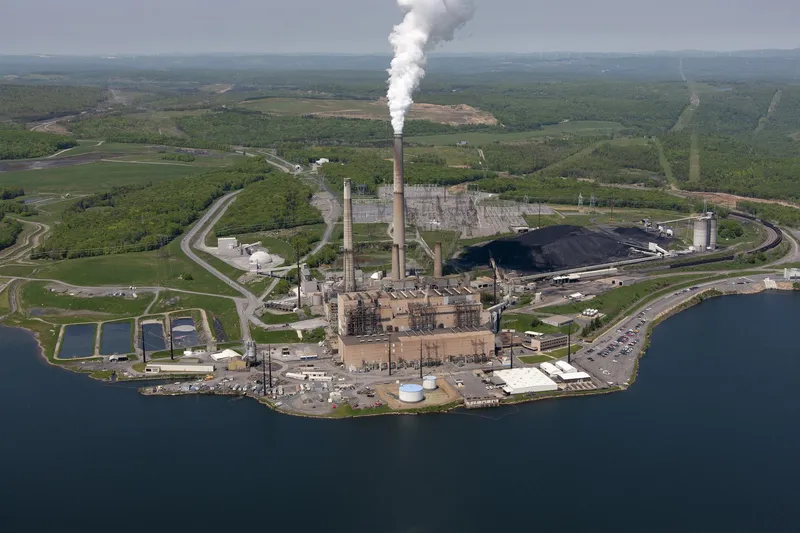
Since the Industrial Revolution, atmospheric carbon dioxide concentrations have risen from around 280 parts per million to more than 420. Over the long term, global average temperatures have increased by roughly 1.2°C compared with the pre-industrial period, while recent years have temporarily pushed annual or monthly global temperatures close to, and at times beyond, the symbolic 1.5°C threshold. The oceans are absorbing most of the excess heat, glaciers are retreating across much of the world, average sea levels are rising, and some extreme weather events are becoming more likely or more intense.
This does not mean that every consequence attributed to climate change is certain, uniform or directly caused by warming alone. The climate system remains complex, effects vary considerably between regions, and societies’ capacity to adapt matters as much as the physical hazard itself. But uncertainty surrounding the central mechanism has narrowed considerably: the accumulation of greenhouse gases, primarily resulting from the combustion of coal, oil and natural gas, is altering the planet’s energy balance.
Climate change has therefore become less a question of diagnosis than one of trajectory.
A 1.5°C World Is Not a 2°C World
The 1.5°C threshold is often interpreted as an absolute physical boundary separating a manageable climate from sudden catastrophe. Reality is different. Every additional fraction of a degree increases certain risks. There is no single cliff, but rather a progressive accumulation of probabilities, damage and transformations, some of which may be irreversible on human timescales.
As temperatures rise, heatwaves become more frequent and severe, the hydrological cycle changes, some regions experience greater drought while others face heavier extreme rainfall. Agricultural yields become harder to stabilize in certain areas, ecosystems are forced to shift rapidly, and coastal infrastructure must contend with sea-level rise that is expected to continue for a very long time.
A 2°C world is therefore not simply a 1.5°C world with another half-degree added to it. Risks accumulate, interact and can amplify existing economic, food-security, migratory and political vulnerabilities.
This is one of the fundamental difficulties of climate policy: the atmosphere does not respond to intentions, announced targets or diplomatic summits. It responds to the concentrations of gases accumulating within it.
And the global economy remains deeply carbon-intensive.
Decarbonizing an Industrial Civilization
The first family of solutions is also the least spectacular: producing the same energy, materials, transportation and services with far less carbon.
Solar and wind power have experienced dramatic cost reductions and now occupy a central position in new electricity-generating capacity. But their expansion requires a second, less visible revolution: the transformation of electricity grids.
A highly electrified economy requires more high-voltage transmission lines, cross-border interconnections, storage capacity and demand management. Lithium-ion batteries currently dominate many short-duration storage applications, but other technologies — sodium-ion batteries, thermal storage, pumped hydro, compressed air and alternative chemical systems — could play complementary roles.
Nuclear power represents another component of this equation. Conventional reactors provide dispatchable low-carbon electricity, while several companies are developing small modular reactors and Generation IV concepts. Their potential will depend less on technological elegance than on whether they can reduce costs, construction times and regulatory complexity.
Hydrogen may also have a role, although probably a more targeted one than some earlier projections suggested. Producing hydrogen, compressing it, transporting it and eventually converting its energy back into another form involves substantial losses. Its strongest applications may therefore lie in sectors that are difficult to electrify directly: steelmaking, chemicals, fertilizers, some forms of heavy transport and long-duration energy storage.
The challenge is not to discover a miraculous source of energy. It is to progressively rebuild the energy infrastructure of a civilization of eight billion people.
Capturing What We Have Already Emitted
Even a rapid reduction in emissions does not entirely solve the problem. The CO₂ already accumulated in the atmosphere persists for a long time, which explains the growing interest in carbon removal technologies.
The most intuitive approach is to strengthen natural carbon sinks: forests, soils, peatlands and mangroves. Their potential is significant but constrained by land availability, agricultural needs, wildfires, disease and the permanence of storage.
Hence the emergence of industrial solutions.
Direct Air Capture uses chemical processes to extract CO₂ directly from ambient air before concentrating it and storing it durably, including in suitable geological formations. Technically, the principle works. Economically, scale remains the problem.
Capturing thousands or millions of tonnes is an industrial achievement. Significantly altering atmospheric concentrations requires thinking in billions of tonnes.
The difference is enormous.
Facilities must be constructed, energy supplied, absorbent materials manufactured, carbon transported and storage secured over extremely long periods. Carbon capture should therefore not be understood as permission to continue emitting indefinitely, but as a potential complement for residual emissions and, eventually, a means of removing part of humanity’s historical carbon burden.
Another approach involves artificially accelerating natural geological processes. Silicate-rich rocks react with CO₂ and gradually transform it into stable carbonates. “Enhanced weathering” seeks to amplify this process by grinding and dispersing certain minerals across soils or other environments.
The oceans represent another frontier. Their alkalinity could theoretically be modified to increase their capacity to absorb atmospheric CO₂. But intervening on marine chemistry at large scale raises major ecological questions.
As solutions become more powerful, their potential side effects become systemic as well.
What If We Simply Cooled the Planet?
This is where the most controversial part of the climate response begins.
Instead of reducing the quantity of greenhouse gases, some technologies would seek to slightly decrease the amount of solar energy absorbed by the Earth.
The idea is not entirely foreign to the natural climate system. Major volcanic eruptions can inject particles into the stratosphere that reflect part of incoming sunlight and temporarily cool the planet.
Solar geoengineering would attempt to reproduce part of that effect artificially.
Stratospheric aerosol injection is the most widely studied approach. Specialized aircraft could disperse reflective particles at high altitude. In theory, a relatively small amount of material could alter the Earth’s radiative balance at a financial cost far below that of transforming the entire global energy system.
That is precisely what makes the technology both fascinating and dangerous.
It could act rapidly on global average temperatures, but it would not eliminate CO₂. Ocean acidification would continue. Regional effects on rainfall could differ from those of a naturally cooler climate. And nobody can guarantee that a planetary intervention would produce uniformly beneficial consequences.
Most importantly, dependence could emerge.
If humanity relied on solar geoengineering for several decades while greenhouse gas concentrations remained high, a sudden termination could produce rapid warming as the suppressed greenhouse effect re-emerged over a much shorter period.
At that point, the question ceases to be purely scientific.
Who Controls Earth’s Thermostat?
Geoengineering introduces an unprecedented geopolitical problem: a potentially accessible technology could generate transboundary effects on a planetary scale.
Imagine that a group of states concludes that 2°C of warming poses an existential threat and decides to finance a stratospheric program designed to reduce global temperatures.
Another group of states believes the intervention is altering its rainfall, agriculture or monsoon systems.
Who decides?
Who establishes causality?
Who compensates those affected?
And, perhaps most importantly, who has the authority to stop the program?
Control over climate intervention could become a new dimension of international power, comparable in some respects to nuclear capability but with a fundamental difference: its consequences would not be confined to a territory or even a region.
A global climate technology would therefore probably require global governance at precisely the moment when the international system already struggles to coordinate far less intrusive policies.
The climate challenge may not ultimately be technological alone.
It is institutional.
Fusion: The Old Promise of the Future
At the opposite end of the technological spectrum lies a solution that would not directly alter the climate but could profoundly transform the energy economy: nuclear fusion.
Fusion seeks to reproduce on Earth the reactions that power stars. Unlike fission, which splits heavy atomic nuclei, fusion combines lighter nuclei and releases enormous amounts of energy.
Recent experimental progress has demonstrated performance once considered beyond reach. But a successful scientific experiment is not yet a power station.
Reactions must be sustained, extreme heat loads managed, certain fuels produced and recycled, energy converted into electricity, equipment maintained and, above all, the entire system made economically competitive.
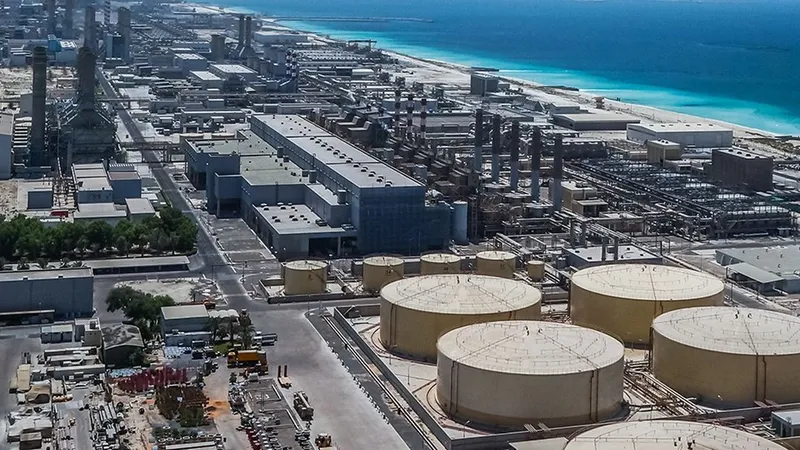
If these obstacles can be overcome, fusion could provide dispatchable low-carbon energy using highly abundant fuel resources. It could also power processes that are currently extremely energy-intensive: large-scale hydrogen production, desalination, synthetic fuels or atmospheric carbon removal.
Fusion would then become more than another source of electricity. It could alter the economics of climate solutions that are currently too energy-intensive to deploy at scale.
But fusion remains a future option, not a justification for postponing technologies available today.
Then Comes Space
At first glance, space has little to do with climate strategy.
On closer examination, the boundary is less obvious.
Concepts for space-based solar power have existed for decades. In orbit, enormous photovoltaic structures could receive solar radiation almost continuously and transmit energy back to Earth using microwaves or lasers.
The technical and economic obstacles remain formidable: launching thousands of tonnes of material, orbital assembly, energy transmission, safety, maintenance and the cost of terrestrial infrastructure. But falling launch costs are gradually changing the parameters of the equation.
Reusable launch systems developed notably by SpaceX are part of that transformation. If the cost of reaching orbit falls dramatically over the long term, infrastructure that once appeared economically absurd could become conceivable.
The argument can then be taken further.
Mineral resources could one day be extracted from the Moon or certain asteroids. Some heavy industrial activity could theoretically move beyond the terrestrial biosphere. Materials could be produced in space and used to construct orbital infrastructure without having to lift everything out of Earth’s gravitational well.
We are now entering a horizon measured in decades, perhaps generations. None of this constitutes climate policy for 2030 or 2050. But climate foresight should not confuse present-day improbability with physical impossibility.
And there is an even more radical idea.
The Space Sunshade
If slightly reducing incoming solar radiation can cool the Earth, why not intervene before that radiation reaches the planet?
For decades, scientists and engineers have considered different forms of shields, particle clouds or structures positioned in space to reduce the amount of solar energy reaching Earth by a small fraction.
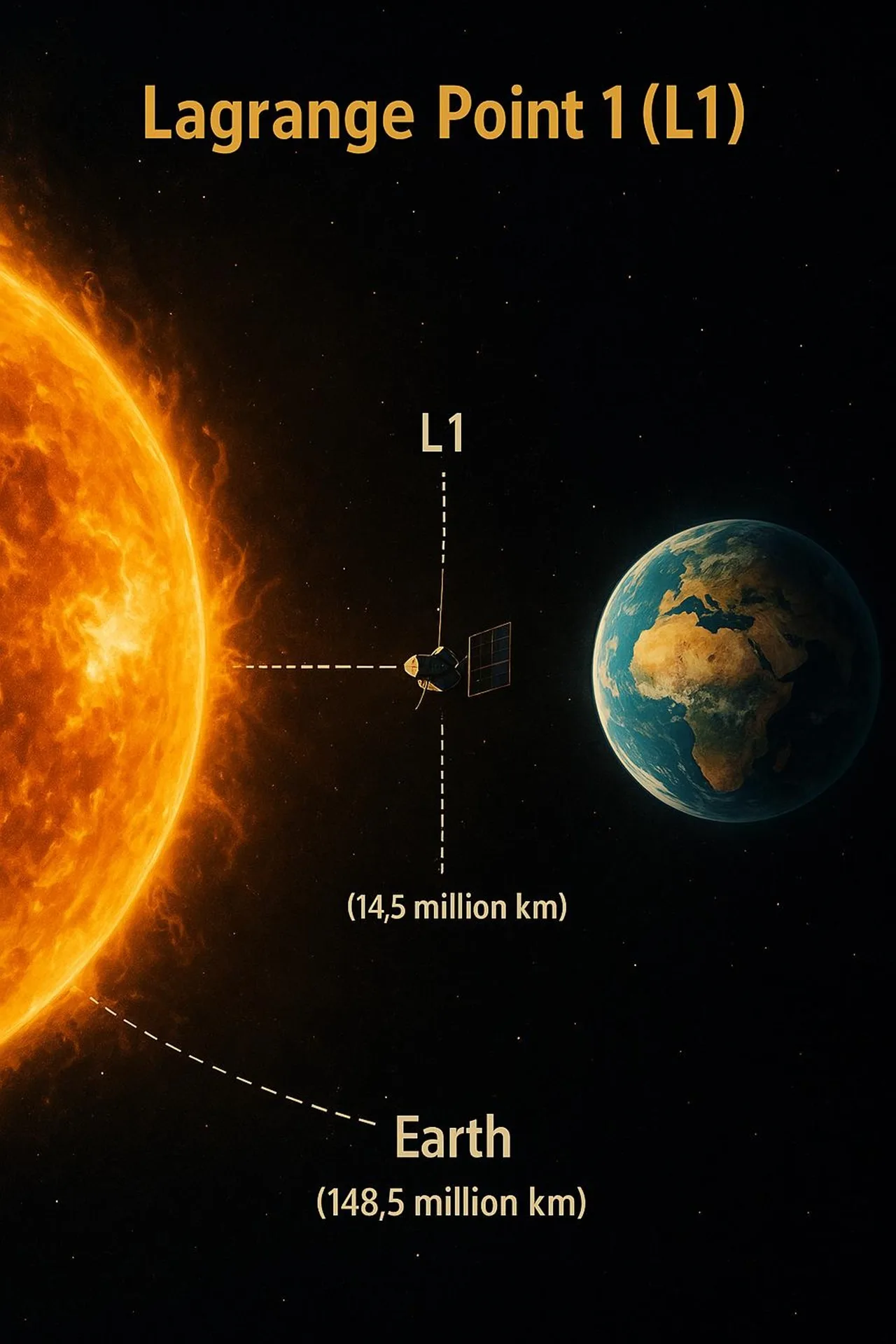
One proposed location lies near the Sun–Earth L1 Lagrange point. An enormous structure, or a vast distributed system of smaller elements, could theoretically reduce incoming sunlight.
Fundamental physics does not prohibit the idea.
Engineering makes it staggering.
Enormous quantities of material would need to be produced and positioned, the configuration continuously maintained, the radiative effect precisely controlled and a system on which the climate of billions of people might ultimately depend would have to remain operational.
Yet the concept reveals something important: once a civilization acquires sufficient control over energy, matter and space infrastructure, the boundary between adapting to its environment and engineering that environment begins to blur.
And Mars?
This is where the vision popularized by Elon Musk enters the picture: turning humanity into a multiplanetary civilization.
Mars, however, is not a solution to climate change.
Even a substantially warmer Earth would remain incomparably more hospitable. Mars has an extremely thin atmosphere composed primarily of CO₂, very low surface pressure, average temperatures far below freezing, virtually no global magnetic protection comparable to Earth’s, and no external environment in which an unprotected human being could survive.
Colonizing Mars to escape climate change would mean abandoning an exceptionally habitable planet because some of its parameters had deteriorated in order to settle on another where almost every parameter essential to human life is hostile.
The climate relevance of the multiplanetary vision lies elsewhere.
A civilization capable of routinely transporting hundreds or thousands of tonnes to other celestial bodies, exploiting extraterrestrial resources, constructing autonomous habitats and producing enormous amounts of energy beyond Earth would also possess extraordinary technological capabilities for intervening in its home environment.
Space expansion would therefore not replace climate policy. Over the very long term, it could dramatically expand civilization’s material toolbox.
More importantly, it introduces a philosophical break.
Throughout its history, humanity has lived within a closed system: one planet, one biosphere, a finite stock of accessible resources and a single naturally habitable environment.
A spacefaring civilization would gradually begin to move beyond that constraint.
From Energy Transition to Planetary Engineering
These technologies should obviously not be treated as equivalent.
Building additional electricity grids is not comparable to injecting aerosols into the stratosphere. Constructing a nuclear reactor is not comparable to deploying a solar shield between the Earth and the Sun. Capturing CO₂ is not comparable to colonizing Mars.
Their maturity, cost, risks and time horizons differ radically.
But placing them along the same technological continuum reveals the true depth of the climate problem.
The first stage is to reduce our impact on the Earth system.
The second is to repair part of the damage already accumulated.
The third could involve deliberately intervening in certain planetary mechanisms.
And the fourth, still hypothetical, would belong to a civilization capable of gradually moving beyond the material constraints of its home planet.
We would then move from energy transition to planetary engineering, and from planetary engineering to space expansion.
This progression is neither inevitable nor necessarily desirable. It simply describes the widening field of possibilities as technological capabilities increase.
Technology Does Not Eliminate Choice
It would be tempting to conclude that innovation will inevitably solve climate change.
Nothing guarantees that.
A technology can work in a laboratory and fail economically. It can become profitable but remain impossible to deploy quickly enough. It can solve one problem while creating another. It can also become technically available while no political institution is capable of governing its use.
Conversely, assuming that only technologies already mature today can matter would ignore the history of innovation itself.
A century ago, nuclear energy, satellites, semiconductors, modern computers and reusable launch vehicles would have belonged to the realm of scientific speculation. Some climate concepts that appear extraordinary today may follow a similar trajectory. Others will probably remain in the archives of engineering.
The true frontier, therefore, does not separate “realistic” solutions from “futuristic” ones.
It separates what works physically, what can work industrially, what can work economically and what societies are politically willing to deploy.
Climate change thus confronts humanity with an unusual situation. For the first time, a civilization possesses both the ability to alter its planet’s climate unintentionally and the beginnings of technologies that might allow it to intervene deliberately.
That power guarantees no mastery.
It creates a new responsibility.
Because the defining question of the twenty-first century may gradually cease to be simply: how do we prevent humanity from changing the climate?
It may become: how far are we willing to go to change it deliberately?
Main Sources
Intergovernmental Panel on Climate Change (IPCC) — Sixth Assessment Report and synthesis reports covering the physical science basis, impacts, adaptation and mitigation of climate change.
World Meteorological Organization (WMO) — State of the Global Climate reports covering global temperatures, oceans, the cryosphere and greenhouse gas concentrations.
Copernicus Climate Change Service (C3S) — observations and analysis of global and European climate trends.
NOAA — Global Monitoring Laboratory and datasets covering atmospheric CO₂ concentrations and long-term climate trends.
International Energy Agency (IEA) — research on energy pathways, electrification, renewable energy, hydrogen, nuclear power and carbon capture.
National Academies of Sciences, Engineering, and Medicine — research on carbon dioxide removal and climate intervention, including solar radiation modification.
U.S. Department of Energy / Lawrence Livermore National Laboratory — experimental results and research relating to inertial-confinement fusion.
ITER Organization — research and development relating to magnetic-confinement fusion.
NASA — Earth system observations and scientific resources covering Mars, Lagrange points and planetary environments.
SpaceX — institutional materials concerning reusable launch systems and the long-term objective of developing a multiplanetary human civilization.
Atlas Limits Research Desk
Atlas Limits’ editorial and analytical desk.