Canada is preparing to invest up to C$1.6 billion in Cohere as part of a financing round led by Germany’s Schwarz Group and targeting C$7 billion. Beyond the headline valuation, the transaction points to a larger ambition: bringing together public capital, European industrial infrastructure and Canadian artificial intelligence to build a credible alternative in the global AI economy. Yet the relationship between technological sovereignty, ownership and actual control remains far more complicated than the financial announcement might suggest. 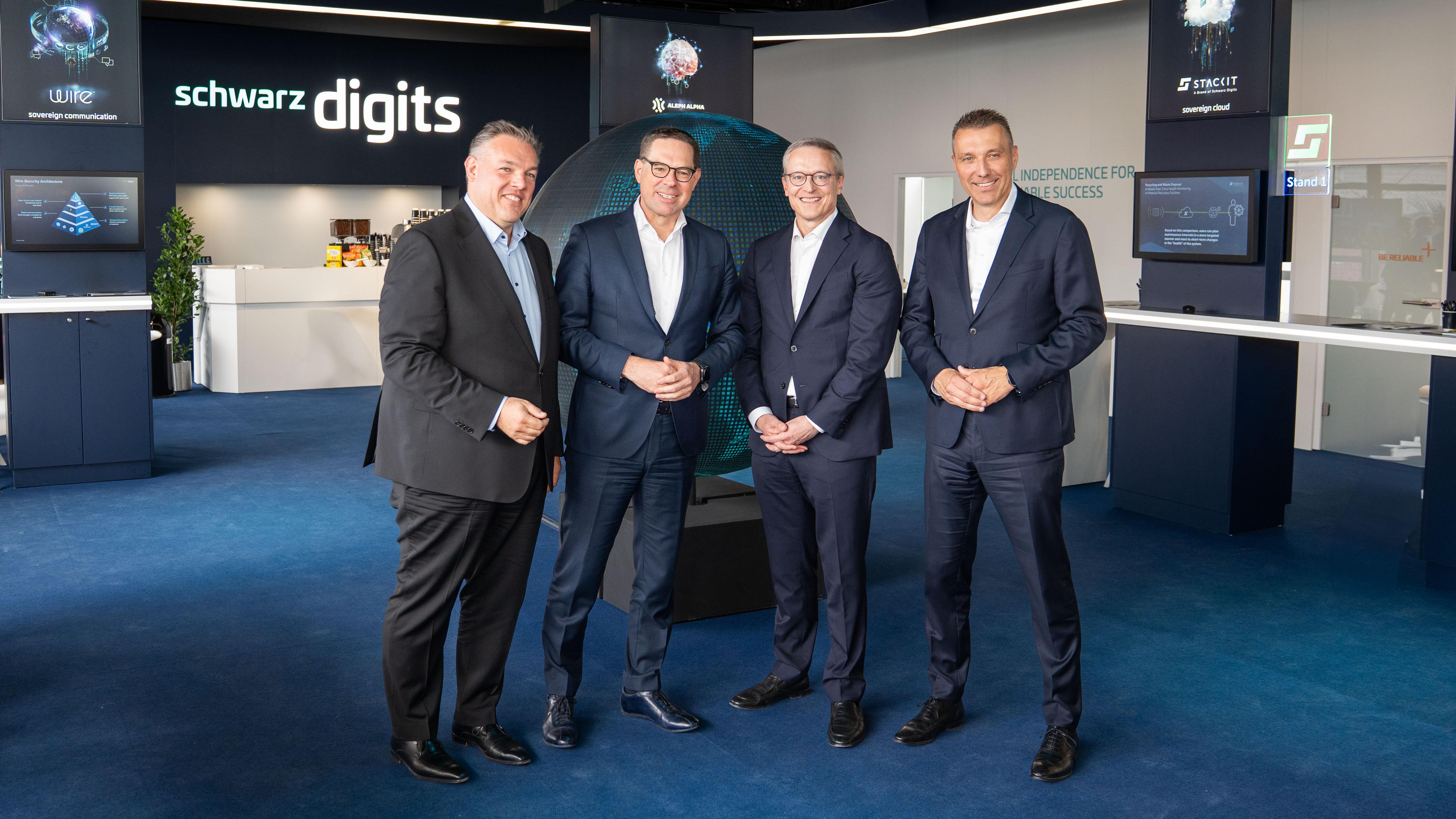
When the State Becomes a Shareholder
For decades, industrial policy in advanced technological economies operated according to a relatively familiar division of responsibilities. Companies developed technologies, private investors financed their expansion, and governments supported research, education and the infrastructure needed for innovation. The boundaries were never entirely clear, but they established a distinction between entrepreneurial initiative and public intervention.
Artificial intelligence is beginning to alter that balance.
Developing advanced AI systems requires substantial capital, sustained access to computing infrastructure, scarce scientific expertise and markets large enough to absorb investments whose returns remain uncertain. Companies capable of building sophisticated models are no longer merely promising technology businesses. They are increasingly becoming strategic industrial assets whose ownership and development may influence a country's ability to control its digital future.
It is against this background that Canadian AI company Cohere announced the first closing of its Series E financing on October 29, 2026.
The transaction targets up to C$7 billion in financing, equivalent to approximately US$5 billion, at an announced valuation of C$35.7 billion.
The round is led by companies belonging to Germany's Schwarz Group, the owner of Lidl and Kaufland and an increasingly significant participant in European digital infrastructure. Other investors include Bell Ventures, Bullhound Capital, Inovia Capital, Nvidia and Prosperity7 Ventures.
The most consequential announcement, however, came from Ottawa.
The Canadian government, led by Prime Minister Mark Carney, intends to invest up to C$1.6 billion directly in Cohere.
The financial distinction matters. Cohere has confirmed an initial closing but has not disclosed the amount actually raised at that stage. The C$7 billion figure represents the financing target, while Canada's participation is a maximum commitment expected to be deployed progressively. The C$35.7 billion valuation reflects the announced financing terms. It is neither a public-market capitalization nor an independently established measure of the company's economic value.
These qualifications do not diminish the significance of the transaction. They clarify what is actually changing.
Canada is choosing to become an equity investor in a domestic artificial intelligence company alongside a major European industrial group seeking to establish a position in the critical infrastructure of the digital economy.
This is no longer simply a question of supporting innovation.
It is a question of ownership.
Schwarz and the Quiet Transformation of an Industrial Group
At first glance, the Schwarz Group's leadership of a major artificial intelligence financing round may appear unexpected.
Its international identity remains closely associated with large-scale retail through Lidl and Kaufland, businesses built on purchasing power, logistics, cost discipline and the efficient movement of physical goods.
But that description no longer captures the full scope of the German group.
Modern retail has become an information-intensive industry as much as a business of physical distribution. Its operations depend on sophisticated forecasting systems, inventory management, logistics coordination, pricing mechanisms and resource optimization. At scale, competitiveness increasingly depends on integrating these functions into reliable digital architectures that are secure and sufficiently independent to avoid exposing the entire business to a single technology provider.
Schwarz has progressively extended this logic through Schwarz Digits, its technology division, and STACKIT, its cloud infrastructure platform.
The group is no longer seeking merely to digitize its own operations. It also aims to provide technology services to other companies and institutions, particularly in Europe.
This transformation helps explain its interest in Cohere.
In the digital economy, owning data centers or selling cloud capacity does not necessarily guarantee access to the most valuable layers of emerging technological markets.
Corporate customers increasingly seek integrated solutions combining hosting, data processing, artificial intelligence models, security and operational applications.
An infrastructure provider that does not influence the technologies deployed on top of its systems risks remaining dependent on the commercial and technical decisions of other companies.
Conversely, an AI model developer without reliable access to computing capacity may find its growth constrained by infrastructure costs, contractual arrangements and the priorities of its suppliers.
The relationship between Schwarz and Cohere is designed to narrow that separation.
The German group intends to make Cohere's models available through its European STACKIT infrastructure. This could combine cloud services operating under European jurisdictions with technologies developed by a Canadian company, creating an offering aimed at businesses, public administrations and highly regulated sectors.
The underlying strategy resembles progressive vertical integration, although it does not mean Schwarz owns or controls every component of the technological chain.
The objective is to bring the different layers of AI development, deployment and commercialization closer together, reducing selected dependencies while retaining a larger share of the value generated.
For a group historically built around retail distribution, the shift is substantial.
Schwarz is positioning itself not only as a consumer of digital technologies but also as a provider of infrastructure on which other economic activities may increasingly depend.
The development illustrates a broader transformation of industrial capitalism.
Companies already possessing financial resources, established customers and large-scale operational capabilities can become structural participants in artificial intelligence without having originated as technology companies.
Aleph Alpha and the European Connection
The October 29 announcement is not an isolated transaction.
It forms part of an industrial sequence that began earlier in 2026 with the proposed combination of Cohere and German artificial intelligence company Aleph Alpha.
On September 16, the two companies announced a definitive agreement to combine their operations and develop a transatlantic sovereign AI offering.
The combined organization is intended to operate globally under the Cohere name while maintaining research capabilities, leadership functions and operational activities in Canada and Germany.
Aleph Alpha contributes a European industrial and institutional presence, expertise in artificial intelligence systems for sensitive environments and familiarity with the requirements of German public and private organizations.
Cohere brings its AI models, enterprise products and international commercial relationships.
The technological complementarity is apparent.
Both companies operate in markets where confidentiality, deployment control and data governance represent important commercial considerations. Both also seek to distinguish themselves from larger general-purpose AI providers whose models and infrastructure are predominantly concentrated in the United States.
But technological complementarity does not automatically translate into successful industrial integration.
Combining research organizations, product portfolios and commercial cultures requires difficult decisions. Models must work effectively within the proposed infrastructure, research teams must coordinate their development priorities, and customers must see genuine improvements rather than a simple accumulation of brands and capabilities.
Regulatory completion must also be distinguished from strategic intent.
The September agreement remained subject to final regulatory approvals. The October financing announcement does not, by itself, establish precisely whether every remaining formality has been completed.
Schwarz had already announced a €500 million commitment in April in connection with its relationship with Aleph Alpha. That earlier commitment helps explain the continuity of the German group's strategy, but it should not automatically be added to the October financing as a newly confirmed, separate contribution.
Taken together, these developments nevertheless reveal a consistent industrial direction.
Schwarz is not merely participating in another venture financing round. It is helping organize a corporate combination, connect AI models to European cloud infrastructure and build a commercial proposition aimed at organizations with demanding operational and regulatory requirements.
The question is whether this architecture can achieve sufficient scale to become a durable alternative rather than another specialized provider competing within a market dominated by a small number of large ecosystems.
Canada Chooses to Retain a Share of the Value
The Canadian government's decision represents the other major dimension of the transaction.
Canada has long maintained an internationally recognized artificial intelligence research ecosystem. Its universities, research institutes and technology companies have contributed to important advances in the field.
Yet scientific excellence does not guarantee that a country will retain the companies, infrastructure and economic returns generated by the commercialization of its research.
This is a recurring problem for innovative economies of intermediate size.
They can educate researchers, develop technologies and produce promising companies, only to see a substantial share of their economic value captured by foreign corporations possessing larger markets and deeper financing capabilities.
The capital requirements of artificial intelligence make this challenge more acute.
A company capable of developing advanced models may need billions of dollars to finance infrastructure, recruit specialists and expand internationally.
As those requirements grow, pressure toward acquisition, partial relocation or increasing dependence on larger foreign partners may intensify.
Ottawa's proposed investment addresses this constraint directly.
By acquiring an equity interest in Cohere, the Canadian government is not merely supporting economic activity from which it hopes to collect indirect fiscal and social benefits.
It is also seeking ownership of a portion of the value that the company may create.
The distinction is important.
A public subsidy generally represents an expenditure intended to encourage activity considered economically or socially desirable.
An equity investment exposes the government to financial risk but also provides the possibility of benefiting from future appreciation in the company's value.
Both mechanisms can serve industrial policy objectives. They do not, however, produce the same consequences for the public balance sheet.
If Cohere continues to expand and its valuation rises sustainably, the Canadian state could benefit financially from its investment.
If the company encounters difficulties or its valuation declines, public finances could instead bear a loss.
This is therefore neither a costless intervention nor a risk-free commitment.
It is a decision to allocate public capital to an enterprise considered strategically important.
The Canadian government has associated its investment with several territorial commitments.
Cohere is expected to retain its incorporation and headquarters in Canada, create at least 1,000 additional technical jobs in the country by 2030 and invest at least C$1.7 billion in new Canadian computing infrastructure over the same period.
Ottawa also intends to deploy its investment progressively and monitor the company's fulfillment of its commitments.
These conditions are designed to reduce the risk that public financing primarily supports growth whose economic benefits are ultimately located elsewhere.
They do not, however, guarantee that all future employment, intellectual property or revenue will remain in Canada.
Ownership of a financial stake, location of corporate headquarters and control over strategic decisions are three distinct realities.
Sovereignty Is More Than a Corporate Address
Sovereignty has become a central concept in discussions about artificial intelligence.
It has also become an increasingly powerful commercial argument.
For companies and public administrations, the ability to keep certain data within a particular jurisdiction, control access to sensitive systems and limit unwanted transfers of information can represent a genuine operational requirement.
In financial services, healthcare, defense and critical industries, such considerations may determine whether advanced AI technologies can be adopted at all.
But digital sovereignty is not a single characteristic that an organization acquires simply by placing servers within national borders.
It involves several dimensions that do not necessarily coincide.
Legal sovereignty concerns the laws governing data, contracts and infrastructure.
Operational sovereignty concerns the ability to maintain, administer and secure systems without depending on indispensable external intervention.
Technological sovereignty requires sufficient control over models, software, tools and expertise to develop and modify systems independently when necessary.
Capital sovereignty concerns ownership and the rights through which shareholders can influence corporate strategy.
The Cohere–Schwarz transaction illustrates the difficulty of combining these different forms of autonomy.
A Canadian company can deploy its models through German cloud infrastructure, attract international investors and retain its headquarters in Canada.
Such an arrangement may diversify the available suppliers and provide customers with solutions better adapted to their regulatory requirements.
It does not mean that every component of the system is independent.
Computing infrastructure depends on advanced processors, networking equipment, specialized software and globally distributed supply chains.
Nvidia's participation in the financing also illustrates the importance of semiconductor suppliers within the artificial intelligence economy.
It would nevertheless be inappropriate to infer a specific contractual dependency from Nvidia's presence among the investors alone. Supply agreements, access conditions and commercial obligations must be assessed separately.
Genuine autonomy does not necessarily require producing every component domestically.
Such an objective would often be prohibitively expensive and technically unrealistic.
It requires sufficient alternatives, capabilities and substitution options to prevent a particular dependency from becoming an instrument of coercion.
Understood this way, sovereignty is less a permanent condition than a capacity to negotiate.
A Valuation Built on Significant Expectations
Cohere's announced C$35.7 billion valuation places it among companies whose future growth prospects play a decisive role in their financial assessment.
Such a valuation cannot be properly understood without examining the financing structure, revenue, margins, investment requirements and rights attached to the newly issued shares.
Several of these elements remain undisclosed.
Cohere reports that its annual recurring revenue grew by 165% year over year in the third quarter of 2026.
The company also reports approximately 300 customers, following a twentyfold increase in its global customer base over the preceding year.
These figures suggest substantial commercial acceleration.
They nevertheless require careful interpretation.
Revenue growth of 165% can represent a dramatic increase in absolute terms or rapid expansion from a comparatively small initial base.
Without the starting and ending amounts of recurring revenue, the actual scale of the business cannot be established.
Similarly, customer numbers alone reveal little about revenue concentration, average contract value, servicing costs or customer retention.
For an advanced AI model developer, profitability is particularly difficult to assess.
Research, training, inference, recruitment and infrastructure expenses can grow rapidly.
Revenue may increase without a corresponding improvement in operating margins, especially when a company must continue investing heavily to maintain the competitiveness of its models.
Institutional contracts and major industrial customers do not eliminate this constraint.
They may create additional requirements involving customization, security, availability, integration and technical support.
Cohere's valuation therefore embodies a financial expectation: that the company can convert its technology, industrial partnerships and commercial expansion into sufficiently large and durable revenue streams to justify the capital being committed.
That expectation may prove justified.
It remains an economic hypothesis rather than an established result.
Who Actually Controls Cohere?
The post-financing ownership structure represents one of the most important unresolved questions.
The fact that Schwarz is leading the financing does not establish that it is acquiring majority control of Cohere.
Likewise, Canada's proposed C$1.6 billion commitment does not reveal the exact percentage of equity Ottawa will ultimately own.
For illustration only, C$1.6 billion divided by a C$35.7 billion valuation would represent approximately 4.5%.
But this simple calculation is not a reliable estimate of the government's eventual stake without knowing the valuation applicable to each subscription, the share structure, financing conditions and any special investor rights.
The difference between economic ownership and decision-making power can be substantial.
In privately financed companies, some investors may possess preferred rights, board representation, anti-dilution protections or veto powers over significant corporate decisions.
Founders may also retain strategic influence disproportionate to their economic ownership, depending on voting arrangements and shareholder agreements.
Nothing in the publicly announced October 29 transaction establishes that Schwarz or the Canadian government is acquiring majority control of Cohere.
That absence of information should be treated as a limitation of the analysis, not as evidence that every investor possesses identical rights.
Understanding Cohere's future governance will require greater visibility into its board composition, the rights attached to new shares and the decision-making procedures governing investments, technology transfers and future corporate combinations.
These details will be essential to assessing the substance of the proposed transatlantic structure.
A company can be legally Canadian, have German industrial partners and serve international customers while concentrating its strategic decisions within a relatively narrow group of shareholders.
The geography of capital does not necessarily reveal the geography of power.
The Commercial Opportunity in Regulated Industries
One of the most important aspects of Cohere's strategy is its market positioning.
Global competition in artificial intelligence is frequently described as a race to build increasingly capable models.
Companies are compared according to technical benchmarks, reasoning performance, programming capabilities and their ability to process increasingly complex information.
These criteria matter.
But they do not necessarily reflect the primary concerns of every customer.
For a bank, public administration, insurer or industrial manufacturer, the value of an AI system also depends on its integration into existing processes, data security, operational traceability and compliance with regulatory obligations.
A technically impressive model may have limited commercial value if it cannot be deployed under the conditions required by the organization.
Cohere is seeking to occupy this market through its AI models and its North platform, which supports enterprise applications involving agentic artificial intelligence.
Its commercial proposition emphasizes systems that can operate within complex professional environments, where confidentiality and deployment control may matter as much as raw model performance.
The Schwarz partnership could strengthen this offering by adding a European infrastructure dimension.
The challenge will be converting that differentiation into a durable competitive advantage.
Major international AI providers are also developing solutions for regulated industries, offering specialized deployment arrangements and building partnerships with local cloud operators.
Sovereignty is therefore not a market reserved for Cohere and its partners.
The company will need to demonstrate measurable advantages in cost, security, performance, compliance and customer choice.
It will also need to convince customers that commitments made today can be maintained throughout the life of their contracts.
In critical infrastructure, trust develops over years.
It depends less on announcements than on the ability to maintain services, manage incidents and update technologies without compromising existing systems.
Competition Between Ecosystems
The Cohere–Schwarz transaction comes at a time when artificial intelligence is increasingly organized around large, integrated ecosystems.
Leading companies are no longer focused exclusively on developing models.
They are investing in data centers, securing access to processors, building software platforms, negotiating energy agreements and expanding their commercial partnerships.
Competition is shifting from individual technologies toward control over the industrial conditions required for their deployment.
In this environment, the United States possesses substantial advantages: deep capital markets, a concentration of major technology companies, leading cloud providers and highly developed investment ecosystems.
China is pursuing a different approach, characterized by close connections between industrial policy, domestic companies and technological security objectives.
Between these two poles, European countries and Canada are seeking to preserve their capacity for independent action without necessarily reproducing the entire industrial structure of either system.
The alliance surrounding Cohere offers one possible response.
It combines a Canadian model developer, a German technological presence, an industrial group with considerable financial resources, international investors and a government prepared to commit public equity capital.
Its distinctive feature lies in the distribution of responsibilities.
Canada contributes scientific expertise, a technology company and public investment.
Germany contributes an industrial base, cloud infrastructure and access to European markets.
Technology and financial investors contribute capital and connections to international value chains.
The objective is not necessarily to eliminate every external dependency.
It is to build an ecosystem sufficiently coherent to possess its own commercial credibility and meaningful freedom of action.
This distinction is fundamental.
Technological autonomy does not always require economic self-sufficiency.
It can emerge through alliances between countries willing to share capabilities while retaining safeguards for their essential interests.
But such an arrangement remains stable only as long as the interests of its participants remain sufficiently aligned.
The Contradictions of Shared Sovereignty
Transatlantic cooperation offers clear advantages, but it also creates potential tensions.
The Canadian government wants to preserve employment, research capabilities, computing infrastructure and economic value within its territory.
Schwarz seeks to expand its European technology offering, strengthen STACKIT and develop industrial synergies.
Financial investors expect growth capable of supporting the valuations at which they commit capital.
These objectives may reinforce one another.
They may also conflict.
If Cohere must choose between two locations for a new research center, Canadian and German territorial interests will not necessarily be identical.
If investment in Canadian infrastructure offers lower financial returns than an alternative deployment, public-policy objectives may diverge from the preferences of some private shareholders.
Similar tensions may emerge in data governance, product development and the selection of priority markets.
A transatlantic organization must therefore reconcile several forms of sovereignty that do not perfectly overlap.
Canadian sovereignty may focus on corporate location, employment, computing capacity and legal identity.
The sovereignty sought by European customers may instead concern hosting, system administration and the application of European law.
The success of the project will depend on making these objectives compatible without creating governance structures so complex that they undermine the speed of innovation.
Another contradiction concerns economic concentration.
Building an alternative to the dominant global providers could improve competition.
But if that alternative depends on close integration among a limited number of model developers, cloud operators and industrial investors, it could create new dependencies.
The challenge is therefore not merely to replace dependence on American technology companies with a transatlantic structure.
It is to ensure that the new structure gives businesses and governments genuine freedom to choose suppliers, move applications and retain control over their data.
A sovereignty model that locks customers into another closed ecosystem would risk reproducing part of the problem it claims to solve.
The State Investor and Technological Risk
Canada's entry into Cohere's capital raises a broader question: how far should governments commit public wealth to strategic technologies?
Public support for research and infrastructure follows a relatively established economic logic.
Some activities generate collective benefits that private investors cannot fully capture, potentially justifying government intervention.
Direct investment in a private company introduces another dimension.
The state accepts the commercial risk of a particular enterprise in the expectation that its growth will produce both financial returns and industrial benefits.
This approach may be justified when private capital markets do not adequately finance strategic capabilities or when domestic companies risk losing their independence because of insufficient funding.
But it involves several risks.
The first concerns valuation.
A company can be strategically important without every financial term offered to investors necessarily being attractive.
The national importance of a technology does not guarantee the investment return associated with owning shares in its developer.
The second concerns the selection of beneficiaries.
By investing heavily in one company, a government may strengthen its competitive position relative to other domestic firms that do not receive equivalent support.
The third risk is political.
A government that becomes a shareholder may be tempted to prioritize the preservation of its investment or particular employment commitments even when economic conditions would otherwise justify restructuring.
Liquidity is another important constraint.
An equity stake in a private company cannot necessarily be sold quickly, particularly when the investment is accompanied by territorial and strategic commitments.
The Canadian arrangement will therefore need to be evaluated according to two separate criteria: the industrial outcomes achieved and the financial performance of the capital invested.
Job creation, computing infrastructure and the maintenance of Cohere's headquarters in Canada will be important indicators.
They will not, however, establish by themselves that the transaction was financially advantageous for taxpayers.
Conversely, limited financial returns could still be accompanied by substantial economic spillovers.
Those benefits would need to be measured, including an assessment of how much resulted specifically from public intervention.
Governance quality, transparency and the ability to evaluate outcomes will therefore matter as much as the size of the investment.
The Real Test Begins After the Financing
The October 29 announcement marks an important stage in Cohere's development.
It does not yet demonstrate the long-term viability of its industrial model.
The first test will be financial.
The final amount raised, subscription terms, dilution of existing shareholders and rights granted to new investors will determine the actual consequences of the transaction.
The second will be industrial.
Canada's computing infrastructure commitments must translate into facilities that are built, operational and economically productive.
German investments must also enable STACKIT to offer competitive services capable of meeting European customer requirements.
The third test will be organizational.
The combination with Aleph Alpha must produce a coherent enterprise capable of coordinating research, products and international operations without sacrificing the execution speed required in an industry where technologies evolve continuously.
The fourth will be commercial.
Cohere must convert its reported customer growth into durable revenues, improve visibility into its margins and demonstrate that its solutions can be deployed at scale without computing costs absorbing most of the value created.
The final test will be strategic.
The company must prove that an organization spanning several jurisdictions, investor categories and industrial interests can maintain sufficiently clear leadership to compete against companies possessing far greater financial and technological resources.
These challenges are interconnected.
Successful fundraising can facilitate infrastructure investment but does not guarantee commercial adoption.
Sovereign computing infrastructure may reassure customers but become expensive if utilization remains insufficient.
Rapid revenue growth may support valuation while simultaneously increasing future financing requirements.
Cohere's future will depend on whether it can transform an ambitious financial architecture into a profitable industrial system.
Sovereignty Enters the Balance Sheet
The Cohere–Schwarz transaction reveals a transformation extending well beyond the development of a Canadian technology company.
Artificial intelligence is progressively becoming a general-purpose infrastructure of the economy, comparable in strategic importance to communications networks, energy systems and certain essential industrial capabilities.
As AI becomes embedded in public administration, banking, defense and production networks, questions surrounding ownership become increasingly consequential.
Governments can no longer view models, data centers and digital platforms exclusively as services purchased in a global marketplace.
They must also consider how these technologies are financed, controlled and maintained.
Yet the answer cannot simply be an unlimited expansion of public investment.
Governments possess neither the financial resources nor the operational expertise required to develop every strategic technology independently.
Private companies, meanwhile, cannot always absorb the industrial and political risks associated with critical infrastructure.
The alliance surrounding Cohere attempts to distribute those responsibilities.
It brings together private capital, a European industrial group, Canadian technology and a government willing to become a shareholder in order to preserve domestic capabilities.
It suggests that some of the next generation of major artificial intelligence companies may emerge through industrial and financial coalitions rather than through venture capital financing alone.
This model could appeal to other countries facing a similar dilemma: how to maintain internationally competitive technology companies without individually possessing the resources required to reproduce the largest American or Chinese ecosystems.
Its success, however, will not be measured by the size of the commitments announced.
It will depend on the ability to finance infrastructure sustainably, maintain sufficient technological competitiveness, win customers and establish governance arrangements in which public and private interests remain compatible.
With Cohere, Canada is betting that technological sovereignty can also become a public financial asset.
With Schwarz, Germany is seeking to connect its industrial strength to the emerging infrastructure of artificial intelligence.
Together, they are attempting to build an economic space in which critical technologies are not entirely determined by the decisions of a handful of dominant global providers.
One decisive question remains: when capital, technology and infrastructure belong to different actors, who ultimately possesses the authority to decide?
That question, more than the company's headline valuation, will determine the significance of Cohere's future.
Because in the artificial intelligence economy, sovereignty is not measured solely by what a country or company owns.
It is measured above all by what it can continue to do when others are no longer willing to allow it.
Atlas Limits Research Desk
Atlas Limits’ editorial and analytical desk.