The crisis in the Strait of Hormuz has exposed a long-underestimated vulnerability in the global energy system. As inventories decline and logistics costs surge, energy security no longer depends solely on production capacity. It increasingly rests on the ability to transport, store and deliver energy in an environment where major trade routes can be disrupted.
On November 2, 2026, in Abu Dhabi, the opening of the international ADIPEC conference was marked by an unusually concerning assessment from Sultan Al Jaber, chief executive of the United Arab Emirates' national oil company, ADNOC. According to figures presented by the executive, nearly one billion barrels had been drawn from global oil inventories following disruptions caused by the war involving Iran and the interruption of part of the energy traffic through the Strait of Hormuz.
In some markets, diesel inventories had reportedly fallen to their lowest seasonal levels in thirty-five years. Elsewhere, liquefied natural gas supply shortfalls were said to have reached 600 billion cubic feet, equivalent to approximately 17 billion cubic metres. Transportation, logistics and insurance costs, which accounted for less than 5% of the cost of a barrel before the disruptions, now exceeded 30%, according to ADNOC.
These figures, presented by the Emirati company, do not in themselves constitute a comprehensive assessment of global energy availability. They nevertheless point to a deeper phenomenon: the progressive erosion of the safety margins that once allowed the international energy system to absorb crises without immediately jeopardising the continuity of supply.
For several decades, energy security was primarily understood in terms of available reserves, production capacity and supplier diversification. The current crisis exposes the limitations of that approach. Having oil underground, gas in storage or cargoes already produced no longer guarantees that these resources can reach the markets that need them.
The central question is shifting. It is no longer simply how much energy the world can produce, but how much it can actually deliver when its main commercial infrastructure is disrupted.
Inventories as the First Line of Defence
The contemporary architecture of oil security has some of its origins in the 1973 oil shock. The creation of the International Energy Agency in 1974 responded to the need to organise collective protection for importing economies against supply interruptions.
The framework notably requires relevant member countries to maintain oil stocks equivalent to at least ninety days of net imports. These reserves can take different forms: public stocks directly controlled by governments, inventories held by specialised agencies or obligations imposed on private operators.
For half a century, this mechanism has been one of the principal instruments for stabilising the oil market. It allows additional volumes to be mobilised when commercial supplies become insufficient, limits the effects of temporary interruptions and gives governments time to organise a response.
Its effectiveness, however, depends on a fundamental distinction between three categories of resources.
Strategic reserves are established to respond to exceptional circumstances. They represent a form of collective insurance, generally requiring a political or administrative decision before they can be released.
Commercial inventories serve a different purpose. They allow refineries, traders, distributors and industrial companies to manage transportation delays, fluctuations in consumption and operational constraints. Some of these volumes are essential to the daily functioning of the system and cannot be withdrawn without disrupting the activities they support.
Finally, effectively accessible inventories constitute a more restrictive category. A barrel stored at a distant terminal, immobilised within congested infrastructure or subject to specific contractual restrictions does not have the same operational value as a barrel immediately available to a refinery.
The distinction becomes decisive when disruptions persist.
In October, Amin Nasser, chief executive of Saudi Aramco, referred to global commercial inventories of less than six billion barrels while emphasising that most of those volumes were not practically available. That assessment requires context: the total volume of inventories is neither an emergency reserve that can be fully mobilised nor a quantity that can immediately be released onto markets.
Physical availability alone is insufficient. Withdrawal capacity, pipelines, vessels, terminals and distribution infrastructure must also be available to transport products to their final users.
A reserve can therefore be substantial in volume while offering limited immediate protection.
Hormuz, or the Difference Between Producing and Delivering
The Strait of Hormuz concentrates this contradiction on a global scale.
In 2025, nearly 20 million barrels of crude oil and petroleum products passed through this waterway connecting the Persian Gulf to the Arabian Sea each day. These flows represented approximately one-quarter of global seaborne oil trade. Nearly 80% of the volumes involved were destined for Asian markets.
The energy geography of the Gulf is characterised by an exceptional concentration of production capacity around a limited number of export corridors. Saudi Arabia, the United Arab Emirates, Iraq, Kuwait, Qatar and Iran occupy major positions in global supply, yet a considerable share of their exports depends directly or indirectly on freedom of navigation through the strait.
This concentration creates a vulnerability that cannot be offset simply by increasing production.
A producer may possess spare capacity, operational wells and abundant reserves without being able to export the corresponding volumes. When maritime transportation becomes impossible, prohibitively expensive or inadequately insured, productive capacity loses part of its immediate strategic value.
Bypass infrastructure provides protection, but its reach remains limited.
Saudi Arabia operates the East-West Pipeline system, connecting its eastern oil facilities to the port of Yanbu on the Red Sea. Its stated capacity has been increased to as much as 7 million barrels per day, although the operational sustainability of that level had not been fully tested at the beginning of 2026.
The United Arab Emirates, for its part, operates the Habshan-Fujairah pipeline, which allows crude oil to be exported from a terminal located outside the Strait of Hormuz. Its capacity is approximately 1.8 million barrels per day.
Both infrastructures are major strategic assets. They reduce dependence on a single maritime passage and provide the producers concerned with flexibility unavailable to all their neighbours.
Nevertheless, according to estimates published by the International Energy Agency in early 2026, the additional capacity effectively available to bypass Hormuz ranged between 3.5 million and 5.5 million barrels per day.
These alternative capacities therefore remain far below the approximately 20 million barrels that passed through the strait each day before the disruptions. They primarily concern crude oil and cannot be regarded as equivalent substitutes for all petroleum products and liquefied natural gas.
The problem is not limited to the nominal capacity of pipelines. It also concerns loading terminals, intermediate storage facilities, tanker availability, the characteristics of the crude grades being transported and the ability to maintain high flows over an extended period.
Infrastructure capable of transporting several million barrels per day on paper does not necessarily guarantee that the ports at its endpoints can sustainably export those volumes.
Energy security consequently emerges as a chain whose resilience depends on its most constrained link.
The Multiplication of Vulnerable Chokepoints
Hormuz is not an isolated exception. It is the most visible pressure point in an energy system organised around several maritime passages that are difficult to replace.
Further west, the Bab el-Mandeb Strait controls the southern entrance to the Red Sea and the Suez Canal. Disruptions along this route have already demonstrated that shipping companies can be forced to divert vessels around Africa via the Cape of Good Hope, affecting distances travelled, delivery times, fuel consumption and insurance costs.
In Asia, the Strait of Malacca concentrates a considerable share of energy trade destined for major industrial economies. Its position between the Indian Ocean and East Asian waters makes it a particularly sensitive passage for Asian importers.
These three locations do not expose markets to identical risks. Hormuz primarily represents an access constraint for resources exported from the Gulf. Bab el-Mandeb and Suez more directly affect the organisation of routes between production and consumption basins. Malacca is a major concentration point for flows towards East Asia.
Their common vulnerability lies in the fact that a local disruption can produce consequences far beyond the directly affected region.
Bypassing a strait does not necessarily mean a physical interruption of supplies. It can nevertheless require more vessels to transport an unchanged quantity of energy, extend commercial voyages and reduce the availability of the global fleet.
The result is a reduction in effective delivery capacity without an equivalent decline in production.
This distinction fundamentally changes the understanding of energy crises. An economy may experience supply pressure not because the world lacks oil, but because the infrastructure required to deliver it has become insufficient or excessively expensive.
Logistics costs then cease to be a secondary component of energy prices. They become the economic expression of supply-chain vulnerability.
Natural Gas: Security Even More Dependent on Infrastructure
Liquefied natural gas illustrates another dimension of this transformation.
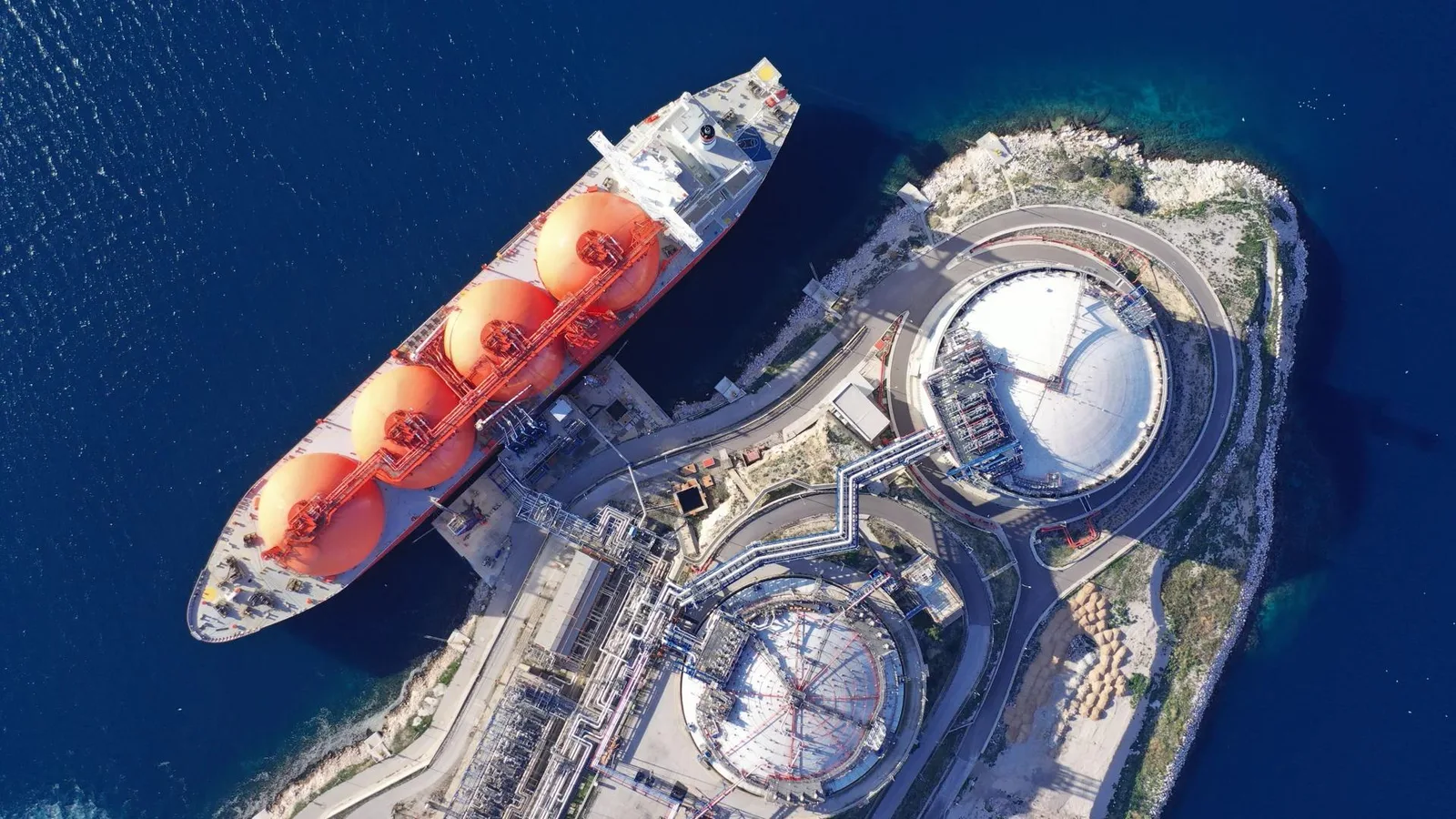
Unlike crude oil, which can be stored in relatively widespread facilities and transported by a large maritime fleet, LNG depends on a highly specialised industrial chain.
Gas must be liquefied at extremely low temperatures, loaded onto specialised carriers, transported to terminals capable of receiving it and then regasified before entering distribution networks.
Each stage requires considerable investment and equipment that cannot be replaced quickly.
In 2025, more than 110 billion cubic metres of natural gas in liquefied form passed through the Strait of Hormuz. Exports from Qatar and the United Arab Emirates together represented nearly one-fifth of global LNG trade, according to the IEA.
The vulnerability is therefore twofold. A maritime disruption can immobilise liquefaction capacity located in the Gulf, while importing countries may lack sufficient alternative terminals, vessels or contracts to replace lost cargoes.
The flexibility of the global LNG market has increased with the development of spot trading, floating terminals and import infrastructure. It nevertheless remains constrained by the physical availability of equipment and by contractual commitments.
A cargo originally destined for Europe can sometimes be redirected towards Asia, but that substitution does not create additional gas molecules. It merely changes their distribution among consumers.
When several regions simultaneously seek replacement supplies, competition can translate into higher prices and the exclusion of buyers with less purchasing power.
Gas security therefore depends not only on the volume of contracts signed. It also rests on the diversification of liquefaction facilities, the availability of LNG carriers, storage capacity and the interconnection of networks.
The existence of an alternative supplier does not guarantee that a country can receive its gas within the necessary timeframe.
The End of Permanent Optimisation
For several decades, much of the global energy system developed according to a logic of economic efficiency.
Reducing inventories, optimising shipping rotations, concentrating infrastructure and intensively using existing capacity helped limit the capital tied up in supply chains.
This organisation implicitly depended on the relatively predictable availability of trade routes and the possibility of rapidly restoring flows after a disruption.
The multiplication of geopolitical crises is challenging those assumptions.
Lower inventories improve financial efficiency under normal conditions but reduce the period during which a system can function without new supplies. Terminals operating close to maximum capacity reduce unit costs but leave little room for rerouting flows during emergencies.
Similarly, concentrating refining activities in particular industrial hubs can generate economies of scale while increasing consumer markets' dependence on imports of finished petroleum products.
The current pressure on diesel illustrates this vulnerability.
Crude oil cannot be used directly to power most vehicles, industrial equipment or transportation infrastructure. It must be processed in refineries whose capacities, technical configurations and product yields vary.
An increase in crude oil availability therefore does not guarantee an immediate increase in diesel supply.
If refineries capable of producing the required grades are operating at capacity, are geographically distant or lack access to certain feedstocks, the market can experience a shortage of refined products even while oil remains available elsewhere.
This situation explains the growing importance attached to inventories of finished products and refining capacity located close to consumption centres.
It also reveals a broader economic trade-off: infrastructure that remains unused under normal conditions can become indispensable during a crisis.
Its value lies not only in the volumes it transports each day, but in the losses it can prevent when conventional supply routes cease to function.
The Return of Storage as a Strategic Instrument
The response to emerging energy vulnerabilities cannot be limited to the indiscriminate accumulation of reserves.
Building additional storage capacity can extend a country's autonomy, but the effectiveness of this strategy depends on the nature of the products stored, their location and their accessibility.
Crude oil inventories primarily protect systems with operational refining capacity. Diesel, jet fuel and gasoline reserves address more immediate needs but require facilities adapted to each product.
Gas storage presents different constraints, particularly in countries without suitable geological formations or sufficiently interconnected networks.
Location is therefore becoming almost as important as volume.
A strategic reserve situated near a major maritime terminal may be effective under normal conditions but lose part of its usefulness if that terminal becomes inaccessible. Conversely, the geographical distribution of inventories can improve resilience while increasing operating and maintenance costs.
Building energy reserves increasingly follows a logic comparable to protecting critical infrastructure: identifying potential points of failure, limiting concentration and organising alternatives.
This approach also requires distinguishing between the theoretical duration of import coverage and the actual autonomy of essential sectors.
A country may report several weeks of petroleum reserves without possessing the products necessary to sustain transportation, agriculture, hospitals or certain industrial activities over an extended period.
Energy security must consequently be assessed according to the needs actually covered rather than aggregate volumes alone.
A New Geography of Investment
The transformation of storage and transportation policies could reshape investment priorities for producers, importing governments and energy companies.
Infrastructure capable of bypassing vulnerable maritime passages is acquiring increasing strategic value. Transcontinental pipelines, ports located outside conflict-prone areas, decentralised storage facilities and alternative energy terminals are becoming instruments of economic continuity.
For Gulf producers, this development strengthens the appeal of overland corridors and maritime outlets providing direct access to international markets.
For Asia's major importing economies, it highlights the need to diversify not only supply origins but also routes, contracts and receiving infrastructure.
For Europe, it raises questions about the balance between strategic reserves, industrial capacity, energy interconnections and supply diversification.
For emerging economies, the challenge is particularly acute. Maintaining substantial inventories can be financially difficult, while increases in transportation costs and refined-product prices rapidly affect trade balances, public finances and household purchasing power.
This new geography of energy security nevertheless contains a contradiction.
Multiplying bypass infrastructure and storage capacity requires considerable capital. Yet these facilities may remain partly unused for long periods precisely because they are intended to respond to exceptional circumstances.
When markets prioritise immediate profitability, private operators do not always have sufficient incentives to finance these precautionary capacities independently.
The question therefore becomes institutional: what share of energy resilience should be financed by companies, what share should fall to governments, and which international mechanisms could help distribute the costs of securing flows?
Supply security increasingly appears to be a collective good whose benefits extend beyond the direct owners of infrastructure.
Measuring Security at the Point of Delivery
The current crisis ultimately calls for a reassessment of the indicators used to measure a country's energy resilience.
Proven reserves, production capacity, export volumes and inventory levels remain indispensable. But none of these indicators, considered in isolation, can establish whether an economy will continue receiving the energy it needs during a major disruption.
A more comprehensive assessment should incorporate the quantity of energy that can actually be delivered under different crisis scenarios, the duration for which inventories can sustain consumption, alternative transportation capacity, opportunities to substitute suppliers and the time required to restore damaged or interrupted infrastructure.
Such an approach would reveal substantial differences between countries with otherwise comparable energy balances.
Two economies holding the same number of days of reserves may face very different levels of vulnerability depending on the geographical distribution of their stocks, port infrastructure, refining capacity and dependence on a handful of maritime corridors.
Similarly, two producers with equivalent underground reserves do not necessarily possess the same ability to guarantee exports when geopolitical conditions deteriorate.
The concept of energy capacity should therefore incorporate a temporal and logistical dimension: not only what can be produced, but what can be delivered, where, at what rate and for how long.
This shift does not render traditional reserves obsolete. It changes their meaning.
An inventory provides protection only if it can be mobilised. Production capacity provides assurance only if output can be transported. An alternative route constitutes a solution only if all its infrastructure can absorb the expected flows.
The true safety margin lies in the combination of these capabilities.
Energy Security Beyond Abundance
ADNOC's statements come at a time when energy markets are rediscovering the economic cost of logistical vulnerability.
Declining inventories, rising transportation expenses and difficulties substituting between corridors expose the limitations of a system long organised around cost optimisation and the presumed availability of international trade.
The response will not necessarily consist of producing ever more energy. It will also involve maintaining reserve capacity, diversifying infrastructure, locating certain industrial activities closer to consumer markets and accepting the cost of systems that may only be fully utilised under exceptional circumstances.
This transformation could permanently reshape the hierarchy of energy investments. Assets capable of ensuring the continuity of flows may acquire strategic importance comparable to that of oil and gas fields and production facilities.
Global energy security is thus entering a phase in which resource abundance is no longer sufficient to guarantee availability.
For decades, energy power was measured by the quantity of oil and gas a country could extract. Increasingly, it will depend on its ability to ensure that energy reaches its destination, even when conventional routes no longer function.
The next decisive indicator of energy security may no longer be the number of barrels available, but the number of barrels that can still be delivered when the system is put to the test.
Atlas Limits Research Desk
Atlas Limits’ editorial and analytical desk.