Foreign direct investment is rising sharply in 2026, yet new industrial facilities, infrastructure projects, and investment commitments in developing economies are declining. Behind this statistical divergence lies a deeper transformation of globalization: international capital is becoming increasingly concentrated in a limited number of countries, companies, and strategic sectors, without necessarily generating a corresponding expansion in productive capacity.
The global economy is displaying an increasingly difficult paradox to ignore. International capital continues to circulate in substantial volumes, major mergers and acquisitions reach extraordinary valuations, and digital infrastructure projects attract unprecedented financial commitments. Yet indicators measuring the creation of new economic activities are moving in the opposite direction.
According to the Global Investment Trends Monitor No. 51, published on October 25, 2026, by the United Nations Conference on Trade and Development (UNCTAD), global foreign direct investment increased by 37% in the first half of 2026 compared with the average half-year level recorded in 2025.
At first glance, this increase suggests a vigorous recovery in international investment.
But the report's other findings reveal a considerably more complex reality.
The number of announced greenfield investment projects, involving the establishment of new operations or facilities, declined by 15%. International project finance deals fell by 11% in number. Cross-border mergers and acquisitions recorded a 23% contraction in transaction volume, even as their aggregate value increased by 57%.
The divergence was particularly pronounced in developing economies, where new greenfield project announcements fell by more than 20%, while projects associated with the Sustainable Development Goals declined by more than 25%.
These figures do not demonstrate an overall contraction in global production. They do, however, reveal weakening momentum in several mechanisms through which international investment has traditionally contributed to the development of new economic capacity.
The distinction is fundamental.
The world continues to mobilize enormous amounts of capital. But an increasing share of that financial activity does not necessarily translate into more factories, infrastructure, jobs, or productive facilities.
This development raises questions about the very nature of contemporary globalization.
A Financial Recovery Concealing Weaker Investment Activity
Understanding this paradox requires distinguishing the value of investments from the number of transactions.
During the first nine months of 2026, cross-border mergers and acquisitions reached $494 billion in value, an increase of 57%, according to UNCTAD.
Over the same period, the number of transactions declined by 23%.
This divergence indicates that financial growth is being driven more by the size of individual transactions than by an expansion in deal activity.
A relatively small number of major acquisitions can therefore substantially increase aggregate investment statistics even when fewer companies are participating in international transactions.
Mergers and acquisitions are, of course, a legitimate form of strategic investment. They can reorganize value chains, accelerate industrial integration, transfer technologies, and support the financing of new productive capacity.
But they do not automatically create additional economic activity.
The acquisition of an existing company may simply transfer ownership of assets that are already operating. Corporate consolidation can also involve rationalizing facilities, combining administrative functions, or reducing excess capacity.
Conversely, some acquisitions lead to substantial industrial investment programs.
Their economic consequences depend on what happens after the transaction.
The distinction between ownership transfers and capacity creation is therefore essential when interpreting international investment statistics.
It becomes even more important because foreign direct investment encompasses several categories of financial flows, including equity transactions, reinvested earnings, and debt instruments between affiliated companies.
These flows do not all have the same immediate impact on the real economy.
An increase in FDI cannot therefore be mechanically equated with a proportional increase in productive investment.
The Decisive Role of Financial Centers
The global increase observed during the first half of 2026 was largely driven by developed economies.
Foreign direct investment flows into these economies increased by more than 70% compared with the average half-year level of 2025.
Two factors explain much of this development: financial flows passing through the Benelux countries and a substantial increase in investment recorded in the United States.
The first factor illustrates a longstanding difficulty in measuring financial globalization.
Belgium, the Netherlands, and Luxembourg occupy important positions in the international ownership, financing, and corporate structures of multinational enterprises.
Capital can pass through these jurisdictions as part of transactions that do not necessarily involve the construction of productive facilities within their territories.
Intragroup restructuring, changes in financial domicile, and transfers between affiliated companies can consequently generate substantial fluctuations in recorded FDI flows.
Such transactions have genuine economic and legal significance. They may change ownership structures, financing arrangements, and relationships between subsidiaries.
But their contribution to the creation of industrial capacity differs from that of a new factory or energy infrastructure project.
It is therefore possible to observe a sharp increase in recorded international investment without a corresponding expansion in productive facilities.
This is not a statistical anomaly. It reflects how international investment is structured and measured.
Nevertheless, it requires analysts to avoid confusing the movement of capital with its transformation into new economic capacity.
The financial geography of globalization does not always coincide with its productive geography.
The Decline in New Projects Is the More Troubling Signal
Greenfield investment provides a complementary perspective.
Unlike acquisitions of existing assets, greenfield projects involve establishing new operations or facilities.
They therefore serve as a leading indicator of companies' geographical expansion and their willingness to commit resources to new productive capacity.
Yet the number of announced greenfield projects worldwide declined by 15% during the period examined by UNCTAD.
Their announced value also fell by 10%.
This simultaneous contraction suggests that the weakness is not limited to a reduction in smaller projects.
It also affects the financial volume of newly announced investments.
In manufacturing, the number of projects declined by 5% globally.
The contraction reached 10% in developing economies.
The latter figure is particularly significant.
For several decades, international manufacturing investment has been one of the principal mechanisms of economic transformation in emerging markets.
The establishment of foreign enterprises has contributed, with widely varying outcomes across countries, to export development, industrial skills, supplier networks, and technological capabilities.
The expansion of production facilities has also helped integrate certain economies into global value chains.
When new manufacturing project announcements decline, this mechanism of economic diffusion may lose momentum.
It would be excessive to interpret this as evidence of global deindustrialization.
Existing facilities may continue increasing output through modernization, automation, or productivity improvements.
Companies may also expand investment in operating facilities without announcing new greenfield projects.
Nevertheless, the decline in project numbers indicates fewer new opportunities to host international investment.
For economies still seeking to establish an industrial base, this represents a strategic risk.
Artificial Intelligence Is Reshaping the Destination of Capital
Another major transformation is emerging in the sectoral concentration of investment.
In the United States, AI-related activities account for more than 40% of the announced value of greenfield investment, according to UNCTAD.
This proportion illustrates the extraordinary weight digital infrastructure and technology industries have acquired in investment strategies.
Data centers, semiconductors, computing equipment, electricity networks, and associated facilities now attract financial commitments of exceptional magnitude.
Artificial intelligence does not depend exclusively on software or algorithmic models.
It requires extensive physical infrastructure.
AI systems need computing capacity, specialized buildings, cooling equipment, high-speed connectivity, and reliable electricity supplies.
They also depend on complex industrial supply chains, extending from semiconductor manufacturing to electricity transmission and distribution infrastructure.
This physical dimension helps explain why technology investments can reach such extraordinary financial levels.
It also demonstrates why their geographical concentration is becoming a major strategic issue.
Territories capable of combining capital, energy, connectivity, specialized skills, and regulatory certainty possess decisive advantages.
Conversely, economies facing high energy costs, inadequate networks, or financing constraints risk being progressively excluded from major investment programs.
UNCTAD reports a $32 billion decline in the announced value of greenfield data center investments in developing economies.
This does not mean that digital infrastructure has stopped expanding in these countries.
It indicates that newly announced commitments are contracting while major developed economies continue attracting strategic projects.
Changes in financing structures must also be considered. Some large digital infrastructure projects may increasingly be financed through project finance arrangements rather than conventional greenfield investment structures.
Statistical developments therefore cannot be interpreted independently of these shifts.
Nevertheless, the broader trend remains concerning.
Artificial intelligence could reinforce the international concentration of capital precisely when emerging economies are seeking to expand their participation in the digital economy.
A More Capital-Intensive Economy, but Not Necessarily a More Inclusive One
The expansion of AI infrastructure raises another question: the relationship between investment value and economic spillovers.
A major data center can require several billion dollars in capital expenditure.
It can generate substantial demand for construction companies, equipment suppliers, energy operators, and specialized service providers.
Yet its permanent operations do not necessarily require employment levels proportional to the capital invested.
This characteristic distinguishes certain digital infrastructures from labor-intensive manufacturing activities.
It does not mean that digital investments are economically less valuable.
Their contributions may take other forms, including productivity gains, computing capabilities, service development, improved industrial processes, and the creation of technological ecosystems.
However, their wider economic impact depends heavily on their integration into the local economy.
A data center connected to domestic businesses, research institutions, and local suppliers can contribute to the development of a productive ecosystem.
A facility operating primarily as an isolated infrastructure asset may generate more limited spillovers.
This distinction becomes essential when governments commit public resources to attracting major technology projects.
Tax incentives, energy infrastructure, and land-related investments should be assessed against the economic benefits actually generated.
The announced value of a project is not, by itself, a measure of its contribution to development.
In a global economy where individual investments can represent tens of billions of dollars, the distinction between capital intensity and economic diffusion becomes increasingly important.
Developing Economies Face a Dual Vulnerability
UNCTAD's figures show that developing economies have not been entirely excluded from the global increase in capital flows.
Foreign direct investment into these economies increased by 8% during the first half of 2026 compared with the average half-year level of 2025.
But this increase contrasts with the contraction in newly announced projects.
The number of greenfield projects declined by more than 20%.
Announcements in sectors associated with the Sustainable Development Goals fell by more than 25%.
These developments affect areas essential to economic and social transformation, including infrastructure, energy, healthcare, food systems, and basic services.
They expose a structural difficulty.
Developing economies often need to mobilize greater amounts of international capital to finance infrastructure and diversify economic activity.
Yet they are also more exposed to high financing costs, interest rate fluctuations, exchange rate risks, and geopolitical uncertainty.
As investors become more selective, projects involving higher risks or longer investment horizons may be postponed.
Energy infrastructure, transport networks, and certain public facilities are particularly sensitive to these conditions.
The problem is therefore not simply the global availability of capital.
It also concerns the terms on which that capital can be mobilized.
An economy may have enormous investment requirements without being able to transform them into financially viable projects.
This divergence between economic needs and financing capacity represents one of the central limitations of the international investment system.
It can also reinforce inequalities between countries.
Economies with deep financial markets, credible public guarantees, and advanced infrastructure can attract investors more easily.
Others frequently face higher financing costs for projects that are nevertheless indispensable to their development.
The Energy Transition Faces a New Financial Constraint
Renewable energy illustrates this divergence particularly clearly.
According to UNCTAD, international renewable energy project finance activity declined by approximately one-third in developing economies.
In developed economies, the corresponding contraction was limited to around 4%.
The difference is significant.
It demonstrates how financial and institutional conditions influence the international distribution of energy projects.
Renewable energy infrastructure generally requires substantial upfront capital expenditure.
Its profitability subsequently depends on factors such as financing costs, power purchase agreements, grid connection capacity, and regulatory stability.
In economies where interest rates are high and financial guarantees are limited, a technically competitive project can become financially difficult to implement.
Declining technology costs are therefore not always sufficient to offset more expensive capital.
This creates another paradox.
Some countries with exceptionally favorable solar or wind resources may encounter greater difficulties financing installations than economies with less advantageous natural conditions but easier access to credit.
The energy transition is consequently becoming increasingly dependent on the international financial architecture.
Technology deployment does not depend exclusively on technical performance or industrial costs.
It also depends on the ability of governments, financial institutions, and investors to allocate and mitigate risks.
If this divergence persists, it could slow energy development in regions that nevertheless possess considerable renewable resources.
Geopolitical Tensions Are Increasing Investor Selectivity
UNCTAD also highlights the impact of tensions in the Middle East on investment decisions.
In Western Asia, new greenfield project announcements declined by 52% during the first half of 2026 compared with the same period in 2025.
Globally, tourism project announcements fell by 28%, while those involving transport and storage declined by 22%.
These developments are consistent with increasing uncertainty, logistical costs, and risks associated with long-term investment.
However, attributing all these contractions to a single conflict would be excessive.
Investment decisions also reflect macroeconomic, financial, and sector-specific conditions.
Nevertheless, geopolitical tensions can rapidly alter corporate investment calculations.
International industrial projects depend on stable supplies, predictable trade relationships, and the ability to transport goods at acceptable costs.
When these conditions deteriorate, companies may postpone decisions, prioritize investment in existing facilities, or concentrate resources in territories considered less risky.
Strategies aimed at securing value chains can also encourage companies to relocate certain production capabilities closer to consumer markets or politically trusted jurisdictions.
This reorganization does not necessarily signify the end of globalization.
Rather, it reflects a change in the criteria governing its organization.
Production costs remain important, but they are no longer the sole determining factor.
Economic security, supply-chain resilience, and access to strategic infrastructure are becoming increasingly influential in investment decisions.
The Gulf Illustrates the New Strategic Allocation of Capital
Investors from Gulf Cooperation Council countries occupy a distinctive position in this transformation.
Their financial resources and economic diversification strategies allow them to play an important role in financing international infrastructure.
In 2025, announced commitments by Gulf investors to international renewable energy and infrastructure projects exceeded $93 billion.
However, during the second quarter of 2026, the value of their overseas project finance investments declined by more than half compared with both the same period of the previous year and the preceding five-year average.
At the same time, domestic project finance investment more than tripled year on year.
This domestic increase must nevertheless be interpreted carefully: it was largely attributable to a single real estate and urban development project worth nearly $55 billion, announced by developer Emaar in Dubai.
The example illustrates precisely why global investment statistics require careful interpretation.
One exceptional transaction can transform the apparent trajectory of a market without indicating a generalized expansion in investment.
It also reveals an important strategic question.
When regional tensions increase, major investors may be encouraged to prioritize domestic requirements, infrastructure resilience, or the security of their assets.
Such a rebalancing could temporarily reduce the capital available for certain international projects.
African and Asian economies that depend on external financing to develop infrastructure could be particularly sensitive to this evolution.
This does not imply a permanent withdrawal by Gulf investors.
Their international strategies remain significant, and future decisions will depend on multiple factors.
But the 2026 figures demonstrate how quickly financial flows can be redirected when strategic priorities change.
A Globalization That Concentrates More Than It Diffuses
The trends observed in 2026 extend a transformation already visible in the previous year's data.
In its World Investment Report 2026, UNCTAD estimated that global foreign direct investment increased by 6% in 2025, reaching approximately $1.6 trillion.
But the recovery was highly concentrated.
The twenty largest recipient economies attracted more than 80% of global FDI flows.
Sectoral concentration was also increasing.
Strategic sectors accounted for 44% of the global announced value of greenfield projects in 2025, compared with 16% in 2020.
These figures do not establish that all investments are now directed toward a handful of companies or technologies.
They nevertheless show that the structure of international investment is changing.
Major technology projects, digital infrastructure, energy-related activities, and selected strategic industries are occupying a growing share of financial commitments.
This transformation can generate substantial economic benefits.
It can encourage innovation, accelerate technological development, and strengthen industrial capabilities.
But it also raises a distributional question.
When investment concentrates in territories that already possess advanced infrastructure, existing advantages can become self-reinforcing.
Economies capable of hosting major projects attract additional capital, allowing them to improve their infrastructure and competitiveness further.
Conversely, less-developed territories may find it increasingly difficult to participate in this process.
The risk is a form of globalization in which capital concentration becomes cumulative.
Investment follows existing infrastructure, which then attracts additional investment.
The international diffusion of productive capacity could consequently advance more slowly than the financial value of capital being mobilized.
Africa Faces the Challenge of Converting Capital Flows into Productive Capacity
For African economies, this transformation raises a fundamental question.
International competition for investment can no longer be assessed solely through the amount of capital announced.
It must also be evaluated according to the nature of projects, their actual implementation, and their economic spillovers.
Africa has substantial investment requirements in energy, logistics, digital infrastructure, and industry.
It also possesses natural resources, expanding markets, and significant opportunities for productive transformation.
But these advantages do not automatically attract capital.
International investors increasingly emphasize energy availability, infrastructure quality, regulatory stability, and the ability to secure financing.
In this environment, investment attraction policies must go beyond the pursuit of headline announcements.
They must focus on building ecosystems capable of transforming financial commitments into sustainable economic activity.
For Morocco, this question is particularly important.
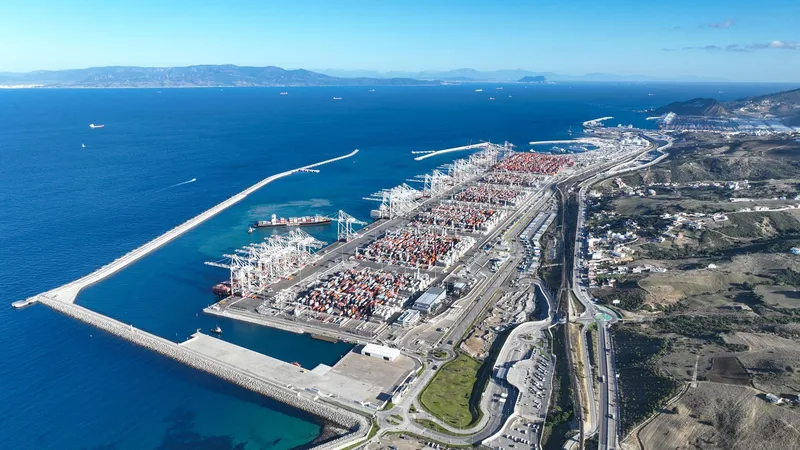
The development of port infrastructure, logistics platforms, energy capacity, and industrial value chains can strengthen the country's attractiveness.
But the challenge extends beyond attracting international projects.
It involves increasing their contribution to the transformation of the domestic economy.
This requires developing local suppliers, strengthening skills, encouraging technology transfers, and supporting industrial upgrading.
A high-value foreign investment does not necessarily generate proportional benefits across the wider economy.
Conversely, a series of smaller projects can contribute substantially to development when they support domestic entrepreneurship, skilled employment, and productive diversification.
The quality of economic integration therefore becomes as important as the volume of capital attracted.
In a more selective international environment, governments capable of building complementarities between infrastructure, education, financing, and industrial policy may acquire an increasingly important competitive advantage.
The Real Challenge Is Measuring What Investment Actually Produces
The divergence between financial flows and new projects ultimately invites a reassessment of how international investment performance is measured.
FDI volumes remain an essential indicator.
They help measure the intensity of financial relationships between economies and identify major changes in multinational corporate strategies.
But they are insufficient to evaluate investment's contribution to development.
A more comprehensive assessment must distinguish several dimensions.
The first concerns the actual creation of new productive capacity.
The second involves investment in existing facilities, which may improve productivity or increase output.
The third concerns economic spillovers: employment, skills, innovation, exports, and supplier development.
The fourth relates to the financial and operational sustainability of projects.
Finally, the fifth concerns their contribution to economic resilience and diversification.
These dimensions cannot be reduced to a single financial figure.
An announced project may be delayed, scaled back, or abandoned.
An acquisition may profoundly reshape an industry without immediately creating new facilities.
Investment in digital infrastructure may generate significant productivity benefits despite relatively limited direct employment.
A new factory, by contrast, may produce lasting industrial spillovers when its activities become integrated into local supplier networks and skills ecosystems.
The challenge is therefore to move beyond a simplistic opposition between finance and the real economy.
The two are deeply interconnected.
Financial capital is an essential condition for productive investment, but mobilizing it does not automatically guarantee the expected economic outcomes.
The decisive question concerns the mechanisms through which capital is transformed into productive capacity, technology, and value added.
Toward a New Hierarchy of Economic Power
UNCTAD's findings do not describe a collapse in global investment.
Rather, they reveal a transformation in its composition, geography, and financing structures.
International capital continues to support major transactions.
Large corporations are pursuing acquisition, consolidation, and expansion strategies.
Digital infrastructure and strategic technologies are attracting substantial commitments.
Yet these developments coexist with a decline in the number of new projects, a contraction in manufacturing announcements in developing economies, and weaker international financing activity in several essential sectors.
Globalization is not disappearing.
It is potentially becoming more concentrated, more capital-intensive, and more selective.
This transformation could permanently alter the foundations of economic power.
For several decades, international integration enabled certain economies to develop their industrial base by attracting foreign investment and participating in global value chains.
In the emerging environment, access to these opportunities increasingly depends on the ability to combine several strategic resources: energy, infrastructure, technology, financing, and skills.
Competition is therefore no longer based solely on production costs.
It increasingly concerns the ability of territories to provide a comprehensive environment for the most demanding investments.
Advanced economies often possess significant advantages in this competition.
But the transformation also creates opportunities for countries capable of developing competitive infrastructure and coherent industrial strategies.
The objective is not merely to attract more capital.
It is to convert that capital into lasting economic capabilities.
Financial Prosperity Does Not Guarantee Productive Prosperity
The 37% increase in global foreign direct investment during the first half of 2026 could be interpreted as evidence of continued dynamism in financial globalization.
But it should not obscure the contractions observed in new industrial projects, infrastructure financing, and investment announcements in developing economies.
These developments do not yet establish a generalized decline in global productive activity.
They do, however, indicate that growth in international capital flows is not necessarily accompanied by a comparable expansion in new economic facilities.
That divergence is precisely what deserves attention.
An economy's strength does not depend exclusively on its ability to attract or mobilize large financial amounts.
It also depends on its capacity to transform those resources into production, skills, infrastructure, and innovation.
In a global economy increasingly shaped by exceptionally large transactions and highly concentrated technology investments, this distinction could become one of the principal criteria for evaluating national economic strategies.
The question is no longer simply how much the world invests. It is where capital goes, who controls it, and what economic capabilities it actually helps build.
Atlas Limits Research Desk
Atlas Limits’ editorial and analytical desk.