With €12.75 billion in announced agreements and a further €15 billion investment ambition, the United Arab Emirates is strengthening its economic presence in Greece. Beyond the financial commitments lies a broader strategy: turning the Eastern Mediterranean into a platform for industrial expansion across Europe.
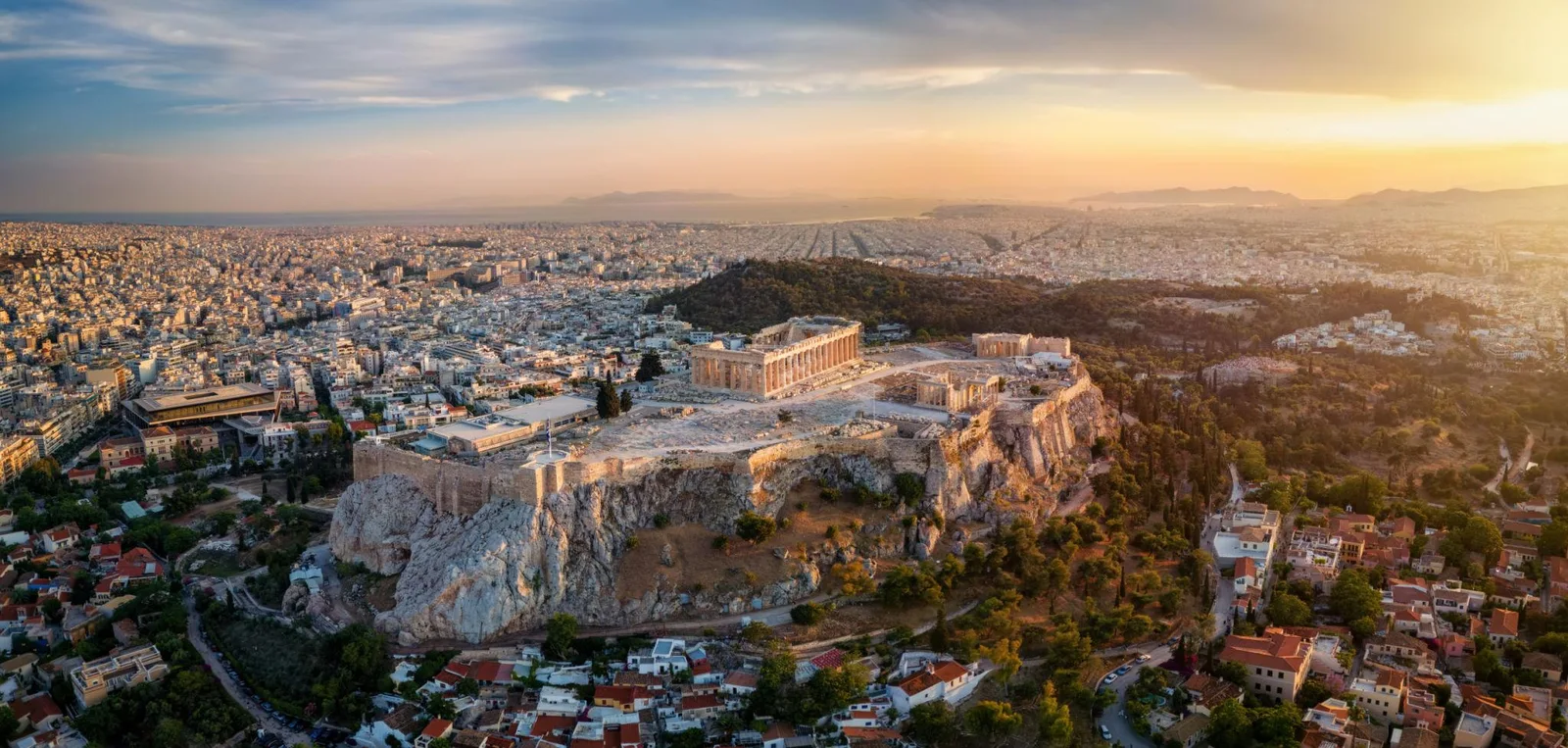
Athens became the setting for another demonstration of Emirati capital's international ambitions on October 22, 2026. At a strategic forum bringing together political leaders, financial institutions and businesses from both countries, the United Arab Emirates and Greece presented 18 agreements, memoranda of understanding and commercial partnerships with a combined announced value of €12.75 billion.
Alongside these agreements, Abu Dhabi announced its intention to allocate an additional €15 billion to investments in Greece. The bilateral discussions reflected a determination to deepen economic relations across several sectors, including energy, infrastructure, advanced technologies and healthcare.
Yet the significance of the announcement extends beyond its financial scale. It lies in the changing nature of the relationship between the two economies. Greece, long regarded as a peripheral European market, is increasingly emerging as a gateway to the European Union's infrastructure, energy systems and industrial activities.
For Abu Dhabi, this expansion forms part of a broader strategy of international diversification. For Athens, it offers an opportunity to attract long-term capital into sectors where financing requirements frequently exceed the resources available from domestic investors.
From Financial Cooperation to an Industrial Presence
Economic cooperation between the two countries did not begin with the announcements of October 2026.
In 2022, the United Arab Emirates and Greece had already launched a €4 billion bilateral investment initiative. The framework was designed to facilitate joint transactions and strengthen connections between institutional investors in both countries.
Four years later, the relationship appears to be entering a more ambitious phase. Energy, infrastructure, advanced technologies and healthcare are among the sectors covered by the latest commitments.
These activities share a defining characteristic: they require substantial capital, operate over long investment horizons and increasingly occupy a central position in national economic sovereignty strategies.
However, the financial instruments announced in Athens must be carefully distinguished.
The €12.75 billion represents the aggregate announced value of arrangements of different kinds. Some may involve commercial contracts, while others consist of memoranda of understanding or investment projects whose implementation remains conditional.
The additional €15 billion constitutes a separate investment intention. At this stage, the publicly available information does not provide a sufficiently detailed breakdown to establish a disbursement schedule or identify all the intended beneficiaries.
Combining the two figures to present €27.75 billion in definitively completed transactions would therefore misrepresent the actual financial position.
This distinction does not diminish the strategic importance of the announcement. Rather, it helps establish its proper significance: the two governments are seeking to build a lasting portfolio of economic partnerships, whose individual transactions will need to be assessed as they materialize.
Masdar–Terna Energy: The Precedent That Changes the Perspective
The clearest illustration of this strategy is already visible in Greece's energy sector.
In November 2024, Masdar, the Emirati renewable energy company, acquired a 70% stake in Terna Energy before completing its acquisition of the company in April 2025.
The transaction was based on a price of €20 per share, corresponding to an equity valuation of approximately €2.4 billion and an enterprise value of €3.2 billion.
The acquisition is particularly significant because it went beyond a passive minority investment. Masdar gained control of a Greek company with operational assets, development capabilities and an established regional presence.
At the time, Terna Energy had a renewable energy generation portfolio of 1,224 megawatts, including facilities in Greece, Poland and Bulgaria. The company was also developing the Amfilochia pumped-storage hydropower project, with a planned capacity of 680 megawatts.
The acquisition therefore provided Masdar with an industrial platform already established across several European markets.
This distinction is fundamental. Acquiring an existing company provides more than ownership of physical assets. It also gives the investor access to technical expertise, experienced personnel, regulatory permits and a portfolio of development projects.
Such transactions can transform a foreign financial presence into lasting industrial influence.
The agreements announced in October 2026 should be examined against this precedent, without automatically being interpreted as additional completed acquisitions.
Greece's Strategic Position Between Three Economic Regions
Geography remains one of Greece's most important economic advantages.
Located at the intersection of continental Europe, the Balkans and the Eastern Mediterranean, the country occupies a position that connects several regional economic systems.
Its ports provide access to Mediterranean shipping routes. Its energy networks can support regional electricity and gas exchanges. Membership in the European Union gives Greece access to the single market and a common regulatory framework.
For investors from the Gulf, this combination offers particular advantages.
Establishing a presence in Greece can provide a foundation for investments in other European economies, especially when acquired companies already operate subsidiaries or projects abroad.
The opportunity therefore extends beyond the Greek domestic market. It also includes the potential for regional expansion through assets and businesses established within the country.
This logic is especially evident in energy, where electricity networks, storage facilities and generation assets increasingly operate within systems that extend beyond national borders.
It could also apply to digital infrastructure, technology services and selected healthcare activities, depending on how the newly announced agreements are implemented.
For Athens, this international opening offers two potential benefits. It can help finance the modernization of the country's productive capacity while strengthening its position as a regional economic platform.
Yet it also raises a broader structural question: to what extent can foreign capital strengthen domestic industrial capabilities without reducing national decision-making autonomy over strategically important assets?
The Changing Role of Gulf Capital
For decades, a substantial share of the international investments made by the Gulf's oil-producing economies was directed toward financial diversification.
Sovereign wealth funds built global portfolios of equities, bonds, real estate and stakes in major international corporations.
This function remains essential. But it now increasingly coexists with a more explicit industrial strategy.
Some Emirati investors are seeking assets that can contribute directly to their country's economic transformation, facilitate the acquisition of expertise or support the development of international operating platforms.
Investment consequently becomes an instrument of industrial development as well as a means of generating financial returns.
From this perspective, Greece offers an attractive combination of specialized companies, established infrastructure and a geographical position connecting multiple markets.
The acquisition of Terna Energy illustrates this evolution. The Greek company is not simply an income-generating asset. It also provides an operational base from which additional energy capabilities can be developed.
It would nevertheless be premature to assume that every agreement announced on October 22 follows this same strategy.
Their significance will depend on the companies involved, the governance rights granted to investors and the contractual obligations ultimately undertaken.
These are the factors that will determine the true depth of the economic relationship.
Europe and the New Geography of Global Capital
The expansion of Emirati investment comes at a time when Europe faces substantial financing requirements.
The energy transition demands new generation capacity, storage facilities and transmission networks. Digital transformation requires computing infrastructure, connectivity and technological investment. Strategic industries must simultaneously modernize their equipment and secure their supply chains.
Across many of these sectors, access to patient, long-term capital represents a significant competitive advantage.
Sovereign wealth funds and institutional investors from the Gulf can help meet some of these financing needs, particularly when they are prepared to accept extended investment horizons.
At the same time, however, the European Union has been strengthening its scrutiny of foreign investment in sensitive sectors.
These parallel objectives create a structural tension: attracting international capital while preserving control over essential infrastructure and technologies.
Transactions involving non-European investors may therefore face regulatory examination, particularly when they concern energy, telecommunications, data infrastructure or other critical assets.
Such mechanisms do not imply that Emirati investments are inherently problematic. They reflect the need to distinguish the financial contribution of an investor from the control rights that may accompany an acquisition.
For the 18 instruments announced in Athens, this distinction remains central. No generalized new transfer of corporate control can be established solely from the aggregate value disclosed.
From Announcements to Execution: The Real Test
The success of the Greek-Emirati economic partnership will not ultimately be measured by the headline value presented at the forum.
It will depend on the gradual conversion of memoranda of understanding into definitive contracts, actual investment decisions, the mobilization of financing and the completion of projects.
Several factors will be decisive: asset profitability, financing conditions, regulatory approvals and the ability of the partners to execute complex industrial operations.
The allocation of financial risk will also be an important indicator.
An investment financed entirely through equity does not have the same implications as a project relying heavily on debt, public guarantees or long-term purchase commitments.
Similarly, an industrial partnership without a transfer of control produces different consequences from a majority acquisition accompanied by extensive governance rights.
As the details of the agreements become public, it should become possible to distinguish genuinely transformative projects from commitments that remain largely declaratory.
The experience of Masdar and Terna Energy nevertheless demonstrates that economic relations between Abu Dhabi and Athens have already moved beyond diplomatic intentions.
The question now is whether that industrial transformation can be replicated in other sectors.
Influence Built Over Time
The announcements of October 22, 2026, reflect an evolution in relations between Greece and the United Arab Emirates. They form part of a broader movement toward the international diversification of Gulf capital and the search for new industrial partners in Europe.
For Greece, the challenge is to convert these commitments into productive investment, technological capabilities and lasting infrastructure.
For Abu Dhabi, the objective is to consolidate economic positions capable of generating financial returns while opening new opportunities for regional development.
The ultimate significance of this strategy will not depend on the number of agreements signed or their nominal value. It will become visible through the companies actually developed, the assets constructed, the technologies mastered and the economic decisions made over the coming years.
Economic influence cannot be measured solely by the capital announced. It is built over time, when investment becomes industrial capability and partnerships permanently reshape the position of their participants within the global economy.
Atlas Limits Research Desk
Atlas Limits’ editorial and analytical desk.