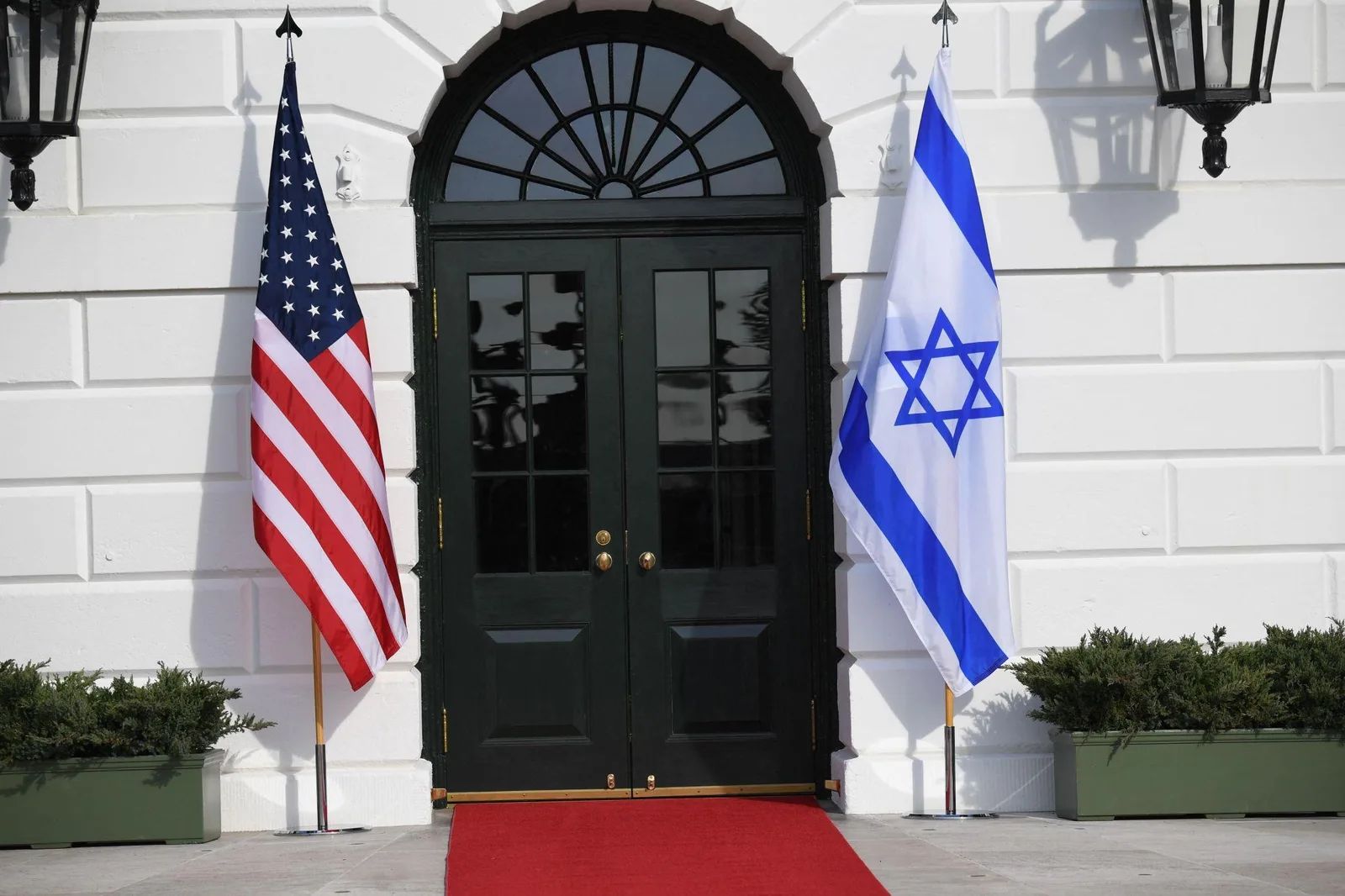
By announcing the early termination of annual US military assistance to Israel, Donald Trump is challenging a framework that has shaped bilateral relations for decades. Yet behind the $3.8 billion figure lies a deeper transformation: the possible transition from an alliance sustained by financial grants to one increasingly organized around defense industries, technology and military power.
On November 3, 2026, as Americans went to the polls for the midterm elections, Donald Trump announced that the United States would stop providing Israel with approximately $3.8 billion in annual military assistance by the end of the year. The announcement, made during an interview with Fox News, departed from the timetable established under a bilateral agreement originally intended to remain in effect through September 2028. More significantly, it came at a moment when the relationship between Washington and Israel, long regarded as one of the most enduring commitments of American foreign policy, has become an increasingly contested issue in domestic politics.
The announced decision, however, does not mean the end of the alliance or the suspension of American arms deliveries. Trump explicitly indicated that Israel could continue purchasing US military equipment and receive assistance if circumstances required it. He also claimed to have reached an agreement with Benjamin Netanyahu several months earlier, although the legal and budgetary arrangements governing its implementation have not been made public.
This distinction is essential. What may disappear is not necessarily American military support itself, but one of its most visible financial instruments. An alliance supported for decades by public transfers could evolve toward a structure in which arms purchases, industrial cooperation and joint technological programs assume greater importance.
Behind the announcement of potential budgetary savings therefore lies a more consequential question: is the United States seeking to reduce its commitment to Israel, or merely to change the terms under which that commitment is maintained?
A Relationship Built on Military Assistance
American assistance to Israel is not an ordinary cooperation program. It forms part of a strategic relationship that became progressively institutionalized during the second half of the twentieth century, as the United States emerged as Israel's principal arms supplier and central diplomatic partner.
That relationship strengthened particularly after the Arab–Israeli wars of 1967 and 1973. Washington gradually shifted from diversified economic assistance toward predominantly military support, designed to preserve Israel's technological and operational advantage within its regional environment.
The American rationale was never limited to protecting an ally. It also served broader strategic objectives: maintaining influence in the Middle East, sustaining a technologically advanced military partner and shaping regional balances without bearing the full costs of a permanent military presence.
In September 2016, under President Barack Obama, the two governments signed a memorandum of understanding covering fiscal years 2019 through 2028. The framework provided for $38 billion over ten years, including $33 billion in foreign military financing and $5 billion for missile defense programs.
The frequently cited annual average of $3.8 billion therefore encompasses two distinct components: approximately $3.3 billion in grants primarily intended for military procurement and $500 million allocated to missile defense cooperation.
This mechanism helped stabilize the relationship across changes in American administrations. Governments could change, diplomatic disagreements could multiply, but the financial framework remained relatively predictable.
It is precisely that predictability which the November 2026 announcement now calls into question.
American Money Was Never Simply a Transfer
Describing the $3.8 billion as money taken from American public finances and freely spent by Israel would provide an incomplete picture of the arrangement.
A substantial share of this assistance operates through the Foreign Military Financing program, which enables partner countries to purchase American defense equipment and services. Much of the funding consequently returns to the United States through contracts awarded to its defense industry.
American manufacturers benefit from this structure, which supports production chains, weapons programs and long-term industrial relationships. Contracts concluded today can generate deliveries, maintenance requirements and modernization programs extending over many years.
Historically, Israel also benefited from a special arrangement allowing it to spend part of its assistance within its domestic defense industry. The 2016 memorandum established the gradual elimination of that privilege by 2028, reinforcing the American destination of the funds.
Military assistance therefore performed several functions simultaneously: a security instrument for Israel, an industrial outlet for the United States and a mechanism for technological integration between the two countries.
This circulation of financing explains why its termination could have consequences considerably more complex than a straightforward reduction in federal expenditure.
If Israel continues purchasing the same equipment using its own resources, a significant share of American defense orders could be preserved. Conversely, if budgetary pressures lead to reduced procurement, postponed programs or the development of domestic alternatives, American manufacturers could also experience the effects.
The question is therefore not simply who pays for the weapons. It is also who manufactures them, who controls their technologies and who determines their availability.
Why Trump Chose This Moment
The timing of the announcement is as significant as its substance.
Donald Trump chose November 3, 2026, the day of the American midterm elections, to announce the early termination of military assistance. He explicitly connected the decision to criticism directed at Republicans over the financing of Israel, referring in particular to the campaign of Democratic candidate Abdul El-Sayed in Michigan.
This justification introduces a different political dimension into the alliance: assistance to Israel is no longer defended exclusively through the language of strategic consensus, but is increasingly assessed in terms of its domestic electoral consequences.
For several decades, American support for Israel enjoyed particularly strong bipartisan backing. Disagreements existed over peace negotiations, settlements, military operations and relations with successive Israeli governments, but they rarely challenged the general principle of military assistance.
The war in Gaza, regional military operations and confrontations involving Iran have contributed to a changing political environment. Debates over the humanitarian consequences of Israeli operations, the use of American military equipment and Washington's responsibilities have made the issue increasingly visible.
Within the Democratic Party, criticism has intensified, while some elements of the American right advocate reducing overseas commitments in favor of domestic budgetary priorities.
It would nevertheless be misleading to interpret these developments as evidence of a broad consensus in favor of abandoning Israel. Support for the alliance remains substantial within American institutions, and positions differ considerably among elected officials, constituencies and security policymakers.
Trump appears instead to be attempting to separate two questions that have long been closely associated: supporting Israel as a strategic partner and directly financing part of its military establishment.
This distinction allows him to present reduced assistance as an exercise in fiscal discipline without declaring a diplomatic rupture.
It could also allow Netanyahu, should the agreement described by Trump be confirmed, to portray Israel as a sufficiently developed power to assume a greater share of its defense expenditure.
The two leaders may therefore pursue different domestic political objectives through the same financial transformation.
Can Israel Really Afford to Lose $3.8 Billion?
Trump's argument rests on Israel's relative prosperity. The country possesses an advanced economy, a developed technology sector, a significant defense export industry and substantial military capabilities.
Yet the overall economic capacity of a state should not be confused with its immediate budgetary ability to absorb additional expenditure.
The $3.8 billion represents a relatively modest amount compared with the size of the Israeli economy, but it becomes considerably more significant when measured against defense procurement budgets, acquisition programs and multiyear military commitments.
Since October 2023, military operations have generated exceptional expenditure, mobilized reservists and increased demand for ammunition, protective systems and equipment replacement.
An abrupt interruption of American financing would require Israel to choose among several responses: allocating additional budgetary resources to defense, increasing public borrowing, redirecting other government spending or modifying procurement schedules.
These options are not equivalent.
Higher military expenditure can place pressure on infrastructure, education, healthcare and civilian investment. Greater borrowing can increase future financing costs. Reduced procurement, meanwhile, may affect the operational readiness of the armed forces.
The problem becomes more complex because modern weapons systems are not goods purchased once and then used indefinitely without external support. They require spare parts, software, upgrades, ammunition, training and continuous maintenance.
Possessing military equipment does not therefore guarantee complete autonomy in operating it.
Israel may have sufficient financial resources to purchase more weapons without possessing all the industrial capabilities required to manufacture and sustain them.
Much of the strategic significance lies precisely in this gap between budgetary autonomy and technological independence.
Dependence Extends Beyond Financial Transfers
Israeli military power rests on a combination of domestic capabilities and foreign systems, predominantly American.
Israel possesses an established defense industry, particularly in drones, electronic systems, surveillance technologies, missiles and certain missile defense architectures.
Its air force nevertheless operates major American platforms, including the F-15, F-16 and F-35, whose production chains, components and support functions depend on industrial ecosystems beyond Israel's borders.
This interdependence does not disappear when a government stops receiving grants.
Even if Israel finances its acquisitions entirely from domestic resources, Washington retains considerable influence through export authorizations, equipment availability, technology transfers and access conditions governing military programs.
American power therefore lies not only in its ability to provide financial assistance. It also lies in its capacity to supply, authorize, maintain and, under certain circumstances, restrict access.
Israel, however, is not a passive industrial partner. Its companies develop technologies integrated into international programs, while missile defense cooperation illustrates a relationship extending beyond the straightforward supply of weapons.
The alliance consequently rests on asymmetric interdependence: Israel relies heavily on certain American capabilities, while the United States benefits from technological cooperation, industrial demand and a regional partner possessing extensive operational experience.
The potential disappearance of grants would not eliminate this architecture. It might even make it more central, shifting the relationship toward joint programs and industrial contracts.
Congress and the Limits of Presidential Authority
A presidential announcement does not, by itself, establish that payments will actually cease on December 31, 2026.
The 2016 memorandum of understanding covers American fiscal years through 2028. It constitutes a bilateral political commitment, but its financing depends on appropriations approved by Congress.
This legal distinction is fundamental.
A memorandum of understanding does not carry the same legal force as a budgetary statute. Conversely, a president cannot necessarily cancel previously appropriated funds freely when statutory obligations and spending restrictions apply.
Implementing an early termination therefore requires clarification of several issues. Will Congress reduce future appropriations? Will previously committed financing remain available? Will missile defense programs be treated separately? Will existing contracts retain their original schedules?
As of November 4, 2026, the detailed terms of the agreement described by Trump have not been made public. The American president has announced a political intention, but the precise scope of the financing affected and the mechanism for terminating it remain uncertain.
This uncertainty matters particularly because military commitments do not necessarily follow the annual rhythm of political announcements.
A procurement contract may be signed across several fiscal years, financed through separate appropriations and executed over an extended period. Ending new funding does not automatically cancel previously approved orders.
It is therefore necessary to distinguish budgetary appropriations, contractual obligations, actual payments and physical deliveries.
Without this distinction, an announced termination could incorrectly be interpreted as the immediate suspension of all military assistance.
From Financial Assistance to a Commercial Relationship
One of the most important consequences of the decision could be a transformation in Israel's economic position within the bilateral relationship.
Under the traditional model, Washington finances part of Israeli military procurement, with much of the spending benefiting American manufacturers. Under a more commercially oriented model, Israel would purchase equipment using its own resources while the United States retained its role as a strategic supplier.
The change appears straightforward, but its implications are substantial.
For Israel, it would mean greater budgetary responsibility and increased exposure to the actual costs of its procurement choices. For Washington, it could reduce the political visibility of direct transfers while preserving close commercial and military relationships.
American defense companies could retain significant markets, provided Israel possesses the financial resources to continue its acquisitions.
Yet such a transition could also encourage Israeli authorities to strengthen domestic production, diversify selected sources of supply and prioritize technologies capable of reducing their most sensitive dependencies.
Financial assistance can sustain an industrial relationship. Its disappearance can encourage the recipient to seek greater autonomy.
That process, however, would be neither immediate nor complete. The most complex industrial capabilities require considerable investment, decades of technological accumulation and production volumes sufficient to make them economically viable.
There is consequently a tension between the political objective of independence and the economic advantages of integration into American industrial supply chains.
The Regional Dimension: Israeli Autonomy and American Influence
The potential transformation of military assistance comes at a time when strategic balances across the Middle East remain unstable.
Confrontations involving Israel, Iran and various regional actors have demonstrated that national military capabilities do not always guarantee complete operational autonomy.
Missile defense systems, intelligence capabilities, logistical networks and ammunition availability play decisive roles in determining the conduct and duration of military operations.
Within this environment, the United States remains a central military actor.
Even if Washington reduces direct financial transfers, its power projection capabilities, technological resources and relationships with regional governments will continue to influence Israeli strategic calculations.
The announcement could nevertheless alter regional perceptions.
Some governments may interpret it as evidence of an American desire to reduce the fiscal cost of its alliances. Others may see it as a financial restructuring designed to preserve the partnership while responding to domestic criticism.
These interpretations matter. In the Middle East, the credibility of American commitments depends as much on the perception of political willingness to deploy capabilities as on the capabilities themselves.
A reduction in assistance could be interpreted as weakening American support if accompanied by operational restrictions. Conversely, regional military balances might remain largely unchanged if arms sales, technological cooperation and security commitments continue.
The decisive indicator will therefore not simply be the amount recorded in American budgets, but the actual evolution of military capabilities available to Israel.
A Possible Transformation of the American Alliance Model
Trump's announced decision potentially extends beyond the Israeli case.
For decades, the United States has combined security guarantees, military presence, financial assistance and industrial cooperation to organize its alliances.
These instruments serve different purposes. Security guarantees reassure partners, military bases enable power projection, financial transfers support selected capabilities and arms sales help integrate allied forces into American military systems.
The Trump administration has repeatedly favored a more transactional interpretation of international relations, under which partners are expected to assume a greater share of their own security costs.
Applied to Israel, however, this approach has a particular significance: it concerns a partner enjoying an exceptional political and military relationship with Washington.
If the announced reduction were implemented, it could establish a precedent in American debates over the financing of other strategic partners.
This would not mean that identical mechanisms would immediately be applied elsewhere. Agreements, economic capacities and legal obligations differ considerably across alliances.
But the underlying political principle could gain influence: the strategic value of an ally does not necessarily justify the indefinite continuation of direct financial support.
Such an evolution would change the central question surrounding American alliances. The debate would no longer concern only which partners should receive support, but also the financial, industrial and technological conditions under which that support should be organized.
A Budgetary Break, Not Yet a Strategic Rupture
Three broad trajectories can now be envisaged.
The first would involve a rapid and effective termination of grants, accompanied by continued arms sales and military cooperation. Israel would absorb part of the additional financial burden, while Washington retained its principal instruments of influence.
The second would involve a negotiated transition in which selected funding streams were gradually reduced or replaced by joint industrial and technological programs. Such an arrangement could limit budgetary and contractual disruption while giving practical substance to the objective of greater autonomy.
The third would involve partial or delayed implementation as a result of legislative constraints, existing commitments and operational requirements. The announcement would retain considerable political significance without immediately eliminating the financial framework.
At this stage, none of these outcomes can be treated as certain.
The next decisive developments will include American budget proposals, congressional decisions, official clarifications from the Israeli government and any industrial agreements intended to replace portions of the assistance.
Nevertheless, the November 3 announcement represents a significant shift in American political language. Within the existing framework, the early termination of regular military assistance has now been publicly presented by the US president as a decision agreed upon with the Israeli government.
The change is important enough to be taken seriously, but its implementation remains insufficiently documented to be considered an accomplished rupture.
Conclusion — Dependence Changes Its Form
For decades, the $3.8 billion in annual assistance symbolized the durability of the alliance between the United States and Israel. Its potential termination would alter that representation without necessarily transforming the underlying strategic relationship to the same extent.
The relationship between the two countries cannot be reduced to a financial transfer. It rests on weapons systems, industrial supply chains, technologies, political commitments and regional interests that do not disappear when a budgetary allocation is withdrawn.
For Washington, reducing grants could lower the visible political and financial cost of the alliance while preserving considerable influence. For Israel, the change could represent an assertion of autonomy, but it might also expose the limits of independence measured solely in budgetary terms.
The paradox is that a country can stop receiving financial assistance while remaining dependent on the power that supplies equipment essential to its security.
The decisive question, therefore, is not whether Israel can survive without $3.8 billion in American assistance. It is how far Israel can translate financial autonomy into strategic independence.
If the termination of aid materializes, it will not necessarily mark the end of dependence. It may simply make the mechanisms of that dependence less visible.
Principal Sources
- Congressional Research Service, U.S. Foreign Aid to Israel: Overview and Developments since October 7, 2023, Report RL33222. Historical assistance, the 2019–2028 memorandum of understanding and military financing mechanisms.
- Reuters, November 3, 2026, As Americans vote, Trump says US will stop $4 billion in aid to Israel. Presidential statements, announced timetable and implementation uncertainties.
- Associated Press, November 3, 2026, US will halt $4B in aid to Israel as the Mideast ally weans itself from American dependence. Political reactions, congressional authority and industrial implications.
- Fox News, November 3, 2026, Trump says Israel will stop receiving $4B in US aid by year's end, can still buy weapons. Presidential interview and direct statements.
- PolitiFact, November 3, 2026, Trump's Election Day surprise: End US aid to Israel. But other strong financial ties would remain. Assessment of the financial framework and the announcement's limitations.
Methodological note: This analysis distinguishes the reported presidential announcement, documented institutional commitments and prospective scenarios. As of November 4, 2026, the effective termination of assistance on the announced date remains subject to budgetary, legal and operational uncertainties.
Atlas Limits Research Desk
Atlas Limits’ editorial and analytical desk.