Positioned between Russia and China, at the intersection of European, American and Asian strategic interests, Kazakhstan is emerging as one of the pivotal territories in the transformation of the international order. The world's largest uranium producer, a major oil exporter and an essential link in Eurasia's evolving trade networks, the country possesses considerable strategic advantages. Yet behind its growing geopolitical importance lies a fundamental contradiction: Kazakhstan has become indispensable to several major powers without fully acquiring the industrial, technological and institutional capabilities required for genuine economic autonomy. Its future will depend on whether it can transform its natural resources and exceptional geography into lasting instruments of sovereignty.
A Power That Geography Has Placed at the Center of Eurasia
Some countries derive their strategic importance neither from population size nor military strength, nor even from their share of global economic output. Their influence rests on a more subtle combination of geography, natural resources, infrastructure and the ability to navigate relationships among competing powers.
Kazakhstan belongs to this category.
Covering approximately 2.7 million square kilometers, it is the world's ninth-largest country and the largest landlocked state. Its population of slightly more than 20 million inhabits an immense territory of steppes, mineral-rich basins, deserts and mountain ranges.
Russia stretches along its northern and western borders. China lies to the east. The other Central Asian republics occupy its southern frontier. To the west, the Caspian Sea provides a connection to Azerbaijan, the Caucasus, Turkey and European markets.
At first glance, such geography might appear to condemn Kazakhstan to permanent dependence on its powerful neighbors.
Instead, it has become the foundation of the country's international strategy.
Since gaining independence in December 1991, Kazakhstan has pursued a foreign policy built around the diversification of its partnerships.
Moscow remains a major historical and security partner. Beijing represents an indispensable commercial, industrial and financial power. The European Union is a crucial destination for Kazakhstan's hydrocarbon exports. The United States maintains an important role in energy investment and strategic relations.
Turkey, the Gulf states and other Asian economies have also become increasingly relevant partners, offering investment, technology and access to additional markets.
This approach, traditionally described as a multi-vector foreign policy, has allowed Kazakhstan to preserve a degree of strategic autonomy in a region dominated by considerably larger powers.
But the international environment in which this doctrine developed has fundamentally changed.
The war in Ukraine has transformed relations between Russia and the West. US-China competition is reshaping global supply chains. Energy security has returned to the center of strategic planning. Critical minerals have become instruments of national power. Railway corridors, ports and logistics infrastructure are increasingly treated as matters of sovereignty.
Against this background, Kazakhstan's position has acquired a new significance.
The country is no longer simply a territory located between major powers. It has become a strategic space to which each of them seeks to preserve access.
This centrality represents a historic opportunity.
It also raises a defining question: how can Kazakhstan benefit from competition among major powers without becoming an instrument of that competition?
I. The Soviet Legacy and the Construction of Pragmatic Sovereignty
Understanding Kazakhstan's present ambitions requires examining the conditions under which it became independent.
When the Soviet Union collapsed, Kazakhstan inherited an enormous territory, considerable natural resources, significant industrial infrastructure and an economy deeply integrated with Russia.
It also inherited major structural constraints.
Its railway networks, energy installations, commercial relationships and industrial supply chains had been designed within a centralized Soviet economic system.
Political independence therefore did not immediately produce economic autonomy.
Kazakhstan had to establish its own institutions while preserving the infrastructure and economic relationships necessary for the country to function.
Under President Nursultan Nazarbayev, who remained in power until 2019, the government pursued a strategy centered on political stability, foreign investment and the development of extractive industries.
Major international oil companies participated in the exploitation of Kazakhstan's energy resources. Chinese capital gradually financed infrastructure and energy projects. Relations with Russia remained close, particularly in security, trade and logistics.
This strategy supported a substantial economic transformation.
Kazakhstan became one of Central Asia's largest economies. Oil revenues financed infrastructure, urban development and the accumulation of public financial assets.
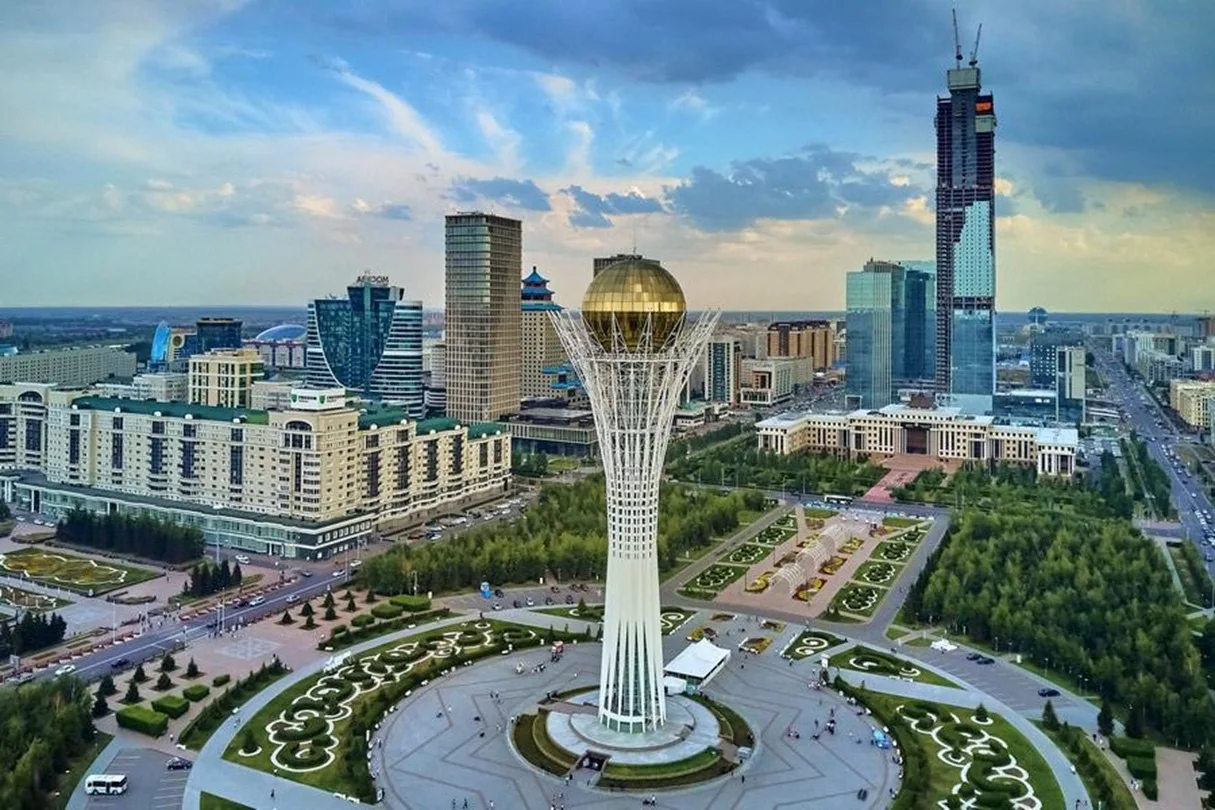
The construction of Astana, which became the capital in 1997, symbolized the ambition to establish a new political and administrative center distinct from the institutional geography inherited from the Soviet era.
Yet the model contained an underlying contradiction.
International openness generated considerable wealth without necessarily producing a comparable diversification of domestic production.
The state retained a dominant position in strategic sectors. Large extractive companies absorbed a substantial share of investment. Higher-value manufacturing activities remained relatively limited.
Kazakhstan gradually acquired the financial resources associated with independence without eliminating the structural dependencies embedded in its participation in the global economy.
That distinction remains central to understanding the country's present challenges.
II. Russia: When Interdependence Becomes Vulnerability
Relations with Russia constitute one of the principal foundations of Kazakhstan's foreign policy.
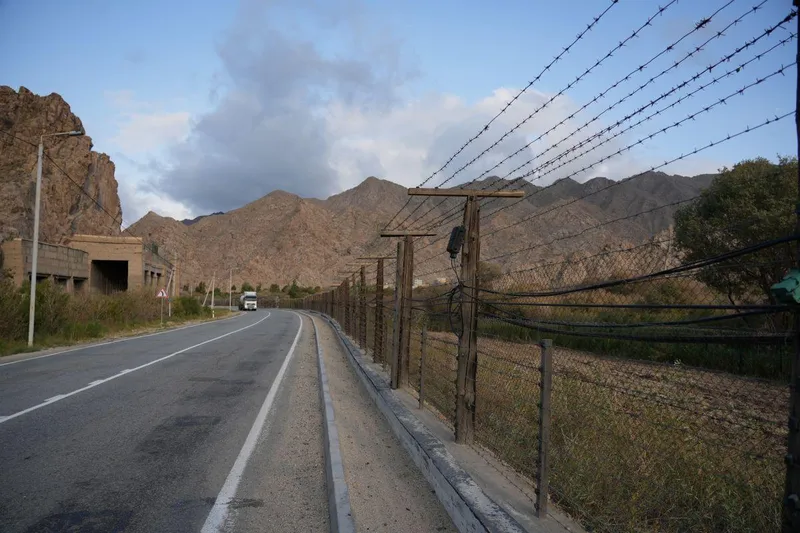
The two countries share more than 7,500 kilometers of land border, infrastructure inherited from the Soviet period and extensive human, linguistic and economic connections.
Kazakhstan belongs to the Eurasian Economic Union and the Collective Security Treaty Organization, two institutions in which Moscow plays a central role.
These commitments reflect profound interdependence.
They do not, however, imply identical strategic interests.
Russia's invasion of Ukraine in February 2022 confronted Astana with a particularly sensitive contradiction.
Kazakhstan cannot disregard its historical relationship with Moscow. But neither can it accept a principle under which a powerful state may alter the internationally recognized borders of a neighboring country through force.
For a country that became independent in 1991 and shares an immense frontier with Russia, territorial integrity is a vital national interest.
Kazakh authorities have consequently maintained their recognition of Ukrainian sovereignty and refused to recognize Russia's claimed territorial annexations.
This position does not amount to a rupture with Moscow.
Rather, it reflects an attempt to distinguish strategic cooperation from political alignment.
President Kassym-Jomart Tokayev has sought to preserve that distinction while avoiding direct confrontation with the Kremlin.
The difficulty becomes particularly evident in the oil sector.
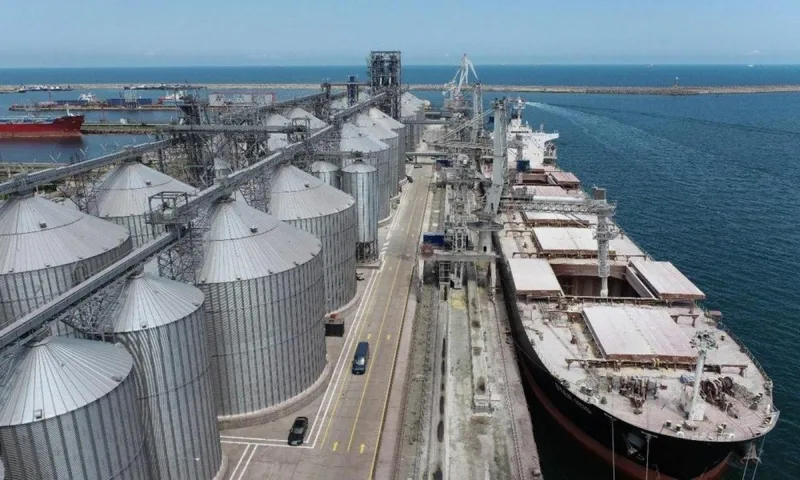
A predominant share of Kazakhstan's crude oil exports moves through the Caspian Pipeline Consortium, which connects major Kazakh oilfields to the Russian Black Sea terminal of Novorossiysk.
This infrastructure is one of the country's most important economic arteries.
It enables Kazakhstan to export substantial volumes to international markets, but it also places a significant portion of the country's export revenues in a position of dependence on a corridor crossing Russian territory.
Technical disruptions, regulatory restrictions, security threats or geopolitical tensions can therefore have immediate economic consequences for Astana.
The issue extends beyond energy.
It illustrates the distinction between legal sovereignty and operational sovereignty.
A country may control its natural resources while remaining dependent on foreign infrastructure to commercialize them.
This reality explains Kazakhstan's growing interest in diversifying its export routes.
The objective is not necessarily to replace Russia as a partner.
It is to reduce the strategic costs associated with excessive dependence on a single transport system.
III. China: An Industrial Opportunity and a New Risk of Dependence
If Russia represents Kazakhstan's historical inheritance, China embodies a significant part of its economic future.
Relations between Astana and Beijing have developed around three priorities: energy supplies, transport infrastructure and commercial integration.
Kazakhstan occupies a distinctive place in the history of China's modern Silk Road strategy.
In September 2013, President Xi Jinping chose Astana to introduce the Silk Road Economic Belt, which subsequently became a central component of the Belt and Road Initiative.
The choice reflected Kazakhstan's importance in China's continental connectivity strategy.
Beijing seeks to diversify access to resources and international markets. Kazakhstan offers a continuous land connection toward Central Asia, Russia, the Caspian Sea and ultimately Europe.
The Khorgos logistics facilities along the Chinese-Kazakh border symbolize this transformation.
They facilitate the transfer of freight between Chinese and Kazakh railway systems, which operate on different track gauges.
The facilities have become important nodes in overland trade between China and western Eurasia.
Chinese investment also extends to hydrocarbons, industrial facilities, energy infrastructure and manufacturing.
For Kazakhstan, these partnerships provide capital and technological capabilities.
But they also raise a fundamental question.
Participation in a major international trade network does not guarantee an equitable distribution of economic value.
A country can host railways, logistics platforms and foreign investment while remaining primarily a supplier of raw materials and a transit territory.
China possesses industrial, financial and technological capabilities vastly greater than those of Kazakhstan.
This asymmetry does not invalidate cooperation, but it requires a national strategy capable of shaping its economic benefits.
Astana's challenge is therefore not simply to attract more Chinese investment.
It is to encourage projects that develop domestic expertise, local suppliers, processing capacity and internationally competitive Kazakh enterprises.
The distinction is decisive.
Infrastructure can expand trade without fundamentally transforming the economy through which that trade passes.
Industrialization requires Kazakhstan to become a center of production rather than merely a corridor connecting the productive capacities of other countries.
IV. Uranium: An Extractive Power at the Center of Global Nuclear Security
Kazakhstan possesses an exceptional strategic advantage in uranium.
It is the world's largest uranium producer, accounting for approximately two-fifths of global mined output in recent years.
This position gives the country considerable importance in the supply chain supporting civilian nuclear power.
As governments seek to strengthen energy security, extend the operating lives of existing reactors and develop new nuclear capacity, uranium availability has become an increasingly strategic consideration.
The national company Kazatomprom occupies a leading position in the global industry.
But Kazakhstan's extractive strength must be understood within the broader nuclear fuel cycle.
Mining is only the first stage.
Producing usable nuclear fuel requires additional specialized processes, including conversion, isotopic enrichment and the fabrication of fuel assemblies.
These activities depend on technologies, infrastructure and expertise distributed across several countries.
Russia retains an important position in parts of the nuclear fuel cycle. China continues to expand its industrial capabilities. The United States and European countries are seeking to diversify supplies and reduce certain strategic dependencies.
Kazakhstan therefore occupies a paradoxical position.
It provides a raw material essential to global nuclear electricity generation without independently controlling all the technologies required to transform that material into usable fuel.
The country already participates in certain processing activities and industrial partnerships, including cooperation with China.
Nevertheless, moving further up the value chain remains complex.
It requires substantial investment, specialized technical expertise, rigorous regulatory systems and long-term international partnerships.
The uranium market also presents constraints.
Prices can fluctuate significantly. The availability of certain chemical reagents affects production costs and volumes. Expanding mining operations can require lengthy development periods.
Growing demand for nuclear power does not therefore guarantee a corresponding increase in export revenues.
For Kazakhstan, the strategic question is not simply how much additional uranium it can produce.
It is how much of the industrial value associated with uranium can eventually be generated within its own economy.
That question extends far beyond the nuclear sector.
It concerns the foundations of Kazakhstan's development model.
V. Oil and Gas: The Resource Wealth That Built Prosperity
Oil remains one of the foundations of Kazakhstan's economic prosperity.
The major Tengiz, Kashagan and Karachaganak fields play a decisive role in national hydrocarbon production and exports.
Their development involves enormous investments, sophisticated technologies and partnerships with major international energy companies.
These projects have contributed substantially to Kazakhstan's economic transformation since independence.
Oil revenues have supported public finances, facilitated the accumulation of financial reserves and financed major infrastructure programs.
The National Fund of Kazakhstan, supported in part by extractive revenues, plays a role in managing this wealth and stabilizing public finances.
Yet resource income also generates structural vulnerabilities.
When hydrocarbon prices rise, export earnings and fiscal revenues generally increase.
Conversely, a prolonged decline in prices or disruption to export infrastructure can affect economic activity, government finances and the balance of payments.
Exposure to commodity cycles complicates the implementation of a long-term industrial strategy.
Manufacturing industries require consistent investment, durable skills and reliable infrastructure.
They cannot develop sustainably if their financing depends entirely on fluctuations in oil revenues.
Resource abundance can also reinforce imbalances between economic sectors.
Extractive industries attract capital and generate substantial income, while other activities struggle to improve productivity and competitiveness.
Kazakhstan therefore faces a difficult transition.
Abandoning a major comparative advantage prematurely would make little economic sense.
But treating that advantage as a permanent foundation of national prosperity would be equally risky.
The strategic function of oil revenues should be to finance the conditions under which the economy becomes progressively less dependent on them.
That requires investment in electricity, transport, technical education, digital infrastructure, research and productive activities capable of generating income independently of hydrocarbons.
A sovereign wealth fund can support this transformation.
It cannot substitute for it.
VI. The Trans-Caspian Corridor: The Competition for Eurasia's Trade Routes
The deterioration of relations between Russia and the West has increased interest in trade routes connecting China and Europe without crossing Russian territory.
Kazakhstan stands at the center of this development.
The Trans-Caspian International Transport Route, commonly known as the Middle Corridor, combines railway, maritime and overland connections linking China, Kazakhstan, the Caspian Sea, Azerbaijan, Georgia and European markets.
Turkey also plays an important role in certain configurations of the network.
For Kazakhstan, the corridor represents more than commercial infrastructure.
It offers a potential instrument of strategic diversification.
Additional transport routes can reduce dependence on northern corridors, strengthen economic relations with the Caucasus and Europe, and increase Kazakhstan's attractiveness to international investors.
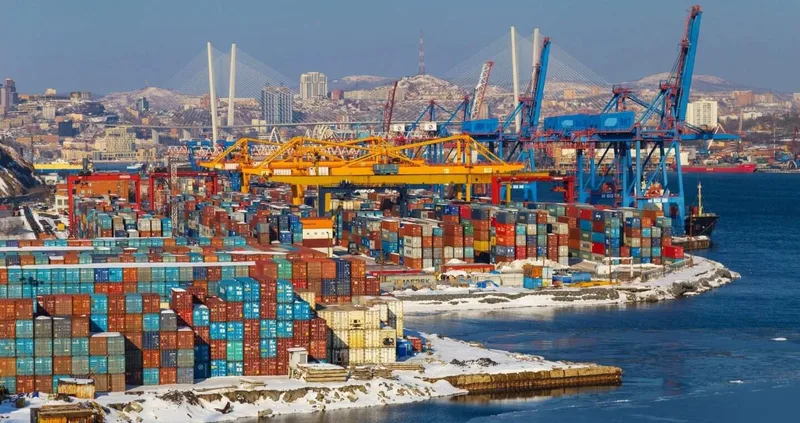
The Kazakh ports of Aktau and Kuryk are important components of this strategy.
But the corridor's potential should not be confused with its actual competitiveness.
Trans-Caspian transport involves multiple cargo transfers, maritime crossings, different railway systems and customs procedures administered by several countries.
Each operation can increase costs, extend delivery times and introduce additional uncertainty.
Port capacity, vessel availability, terminal efficiency, timetable coordination and regulatory harmonization are therefore critical.
The World Bank has emphasized that developing the Middle Corridor requires both physical investment and operational reform.
Improved infrastructure will not be sufficient if cargo continues to face administrative delays or high transshipment costs.
Reliability is the central issue.
International companies do not organize supply chains solely around geopolitical considerations.
They evaluate costs, transit times, operational risks and delivery predictability.
An alternative corridor may be strategically attractive without automatically becoming the most economically competitive route.
Nevertheless, the Middle Corridor creates a significant opportunity for Kazakhstan.
It could support the development of logistics services, distribution centers, industrial maintenance facilities and new manufacturing activities along major trade arteries.
But such a transformation is not automatic.
The prosperity of a transit economy depends on its ability to retain a meaningful share of the value generated by the goods moving through its territory.
Kazakhstan must therefore avoid becoming merely a platform for transporting Chinese merchandise toward Western markets.
Its larger ambition should be to build an industrial system capable of producing and exporting goods of its own.
VII. Europe and the United States: Strategic Partners Without Exclusive Alignment
Western interest in Kazakhstan rests on several overlapping considerations.
The first concerns hydrocarbons.
The European Union is an important destination for Kazakh oil and has a strategic interest in maintaining diversified energy supplies.
The second concerns critical minerals.
The energy transition, transport electrification, electricity networks and the requirements of certain defense industries are increasing the importance of secure raw-material supply chains.
The third concerns infrastructure.
Developing commercial routes that bypass Russia is consistent with European objectives of logistics diversification and economic resilience.
The United States, meanwhile, retains significant interests in energy investment, supply-chain security and Central Asian stability.
For Astana, these relationships provide opportunities to diversify investment sources and technological partnerships.
But Kazakhstan is not seeking to replace dependence on Russia or China with exclusive alignment with the West.
Such an approach would be difficult to reconcile with its geography and economic interdependencies.
Instead, Kazakhstan's strategy is based on maintaining functional relationships with competing powers while expanding the range of available partners.
The rationale is clear.
Diversification enables the country to negotiate with multiple investors, compare competing proposals and reduce the risks associated with excessive dependence on any single partner.
But this strategy has limits.
Geopolitical competition may increase foreign interest in Kazakh resources without necessarily encouraging their domestic processing.
Major industrial economies frequently seek to secure access to raw materials while preserving higher-value production activities within their own territories.
The objectives of foreign investors and those of Kazakhstan's industrial development are therefore not always identical.
Astana must seek partnerships in which access to resources is accompanied by skills development, local supplier integration and the creation of domestic industrial capabilities.
The objective is not to restrict foreign investment.
It is to increase its contribution to national economic development.
VIII. Industrialization: The Real Test of Economic Power
Industrial development is the central challenge facing Kazakhstan's long-term economic strategy.
The country possesses energy resources, mineral wealth, financial capital, infrastructure and a favorable geographic position.
Yet these advantages do not automatically produce a competitive manufacturing economy.
The Soviet legacy left industrial capabilities in metallurgy, chemicals, mechanical engineering and energy production.
Some remain significant.
Others require extensive modernization.
The challenge is to develop activities capable of operating in a competitive international environment without relying permanently on public subsidies or administrative protection.
Several conditions are essential.
The first is energy.
Metallurgical, chemical and manufacturing industries require reliable electricity at competitive prices.
The second is logistics.
A landlocked country must compensate for its distance from ocean ports through exceptionally efficient transport infrastructure.
The third is technology.
Modern industrialization depends on the ability to integrate sophisticated equipment, master production processes and train a specialized workforce.
The fourth is institutional quality.
Investors need predictable taxation, transparent administrative procedures, effective competition and reliable mechanisms for resolving disputes.
The fifth is finance.
Domestic enterprises require access to long-term capital to fund equipment, expansion and productivity improvements.
These conditions are interconnected.
A modern factory cannot remain competitive if electricity supplies are unreliable.
An export-oriented company cannot expand sustainably if logistics costs are unpredictable.
A technology-intensive industry cannot emerge without engineers, technicians, researchers and continuous training systems.
Kazakhstan has several sectors in which industrial upgrading could be pursued.
Metals processing, petrochemicals, energy equipment, agribusiness, specialized logistics and activities linked to strategic minerals all offer possibilities.
But their development must be based on rigorous assessments of production costs, market demand and competitive advantages.
Industrial policy cannot be reduced to announcing investment projects or establishing special economic zones.
It must create conditions under which enterprises can produce efficiently, innovate and compete internationally.
That is the standard by which the transformation of a resource-based economy into an industrial power should be measured.
IX. Electricity, Nuclear Power and Water: The Physical Limits of Development
Kazakhstan's abundant energy resources might suggest that the country faces few structural constraints in electricity supply.
The reality is more complicated.
A substantial share of national electricity generation has historically depended on coal-fired power stations.
This system supported the development of Kazakhstan's industrial regions, but parts of the infrastructure require significant modernization.
Electricity demand is increasing alongside urbanization, industrial activity and the gradual electrification of economic processes.
Energy security is therefore becoming a central component of national industrial strategy.
Nuclear power occupies an increasingly important place in this discussion.
In an October 2024 referendum, a majority of votes cast supported the construction of a nuclear power plant.
The paradox is striking.
The world's largest uranium producer has yet to establish modern domestic nuclear electricity generation capacity.
This illustrates a broader economic principle: possessing a raw material does not automatically confer mastery over the technologies required to use it.
Constructing a nuclear power plant involves financial, technical and geopolitical decisions that can shape national policy for decades.
Reactor suppliers, financing arrangements, workforce training, maintenance, fuel procurement and nuclear safety obligations all carry strategic implications.
Nuclear energy could help diversify electricity generation and alleviate certain supply constraints.
But it could also introduce new technological dependencies unless Kazakhstan simultaneously develops domestic expertise.
Water represents another major challenge.
Kazakhstan faces significant water constraints, particularly in arid regions and transboundary river basins.
Irrigated agriculture, mining, electricity generation and urban consumption place increasing pressure on available resources.
Climate change could intensify these challenges by affecting precipitation patterns, glacier melt and river flows.
Relations with neighboring states are consequently essential to managing several shared water systems.
Industrial development must therefore recognize a fundamental reality: energy, water and infrastructure are not secondary variables in economic growth.
They are its material foundations.
A country may possess enormous mineral reserves without being able to process them domestically if electricity, water or transport capacity becomes insufficient.
Kazakhstan will need to incorporate these constraints into its long-term investment decisions.
X. Political Institutions: Stability and the Limits of Centralized Power
Kazakhstan's economic trajectory cannot be separated from its political organization.
For nearly three decades, Nursultan Nazarbayev dominated the country's institutions.
The political system was characterized by a highly centralized executive, an administrative structure closely connected to presidential authority and complex relationships between political and economic elites.
Kassym-Jomart Tokayev's accession to the presidency in 2019 initiated a period of transition.
But the change in leadership did not immediately transform the underlying structure of power.
The events of January 2022 marked a major rupture.
Protests initially triggered by rising fuel prices developed into a nationwide political crisis accompanied by violence and a deadly crackdown.
The temporary intervention of forces from the Collective Security Treaty Organization, at the request of the Kazakh authorities, also demonstrated the international dimension of the country's security arrangements.
The crisis accelerated a redistribution of power within the political establishment.
Tokayev subsequently introduced constitutional and political reforms presented as efforts to rebalance the institutional system.
These changes must nevertheless be assessed according to their practical effects.
Executive concentration, political competition, judicial independence and freedom of information remain important issues.
For the economy, these questions are not solely matters of democratic governance.
They directly influence investment, innovation and productivity.
A centralized political system may facilitate the rapid implementation of major projects.
But it can also encourage economic concentration, restrict competition and increase the risk of inefficient capital allocation.
Private enterprises require predictable rules and institutions capable of enforcing contracts independently of political relationships.
Kazakhstan will therefore need to strengthen governance quality if it intends to attract more sophisticated industrial and technological investment.
Political stability can be an advantage.
It becomes a durable source of economic development only when accompanied by legal and institutional predictability.
XI. Central Asia: The Emergence of a Regional Economic Space
Kazakhstan cannot develop its international strategy without considering its regional environment.
Central Asia comprises five former Soviet republics whose economies possess potentially complementary characteristics.
Kazakhstan has substantial energy and mineral resources, financial capacity and transport infrastructure.
Uzbekistan has a larger population and a developing productive base.
Kyrgyzstan and Tajikistan possess significant hydropower potential, while Turkmenistan holds major natural gas reserves.
This diversity could support deeper regional economic integration.
Electricity trade, transport networks, industrial investment and supply chains could all benefit from stronger coordination.
But considerable obstacles remain.
Infrastructure is unevenly developed. Regulatory frameworks differ. Border procedures can delay trade. Water management periodically generates tensions.
Economic integration therefore requires institutional mechanisms capable of moving beyond immediate national interests.
For Kazakhstan, a more coherent regional market would offer important strategic advantages.
A more integrated economic space would provide additional markets for industrial enterprises, increase investment attractiveness and reduce exclusive dependence on major external powers.
It could also strengthen Central Asian countries' collective bargaining position in negotiations with Russia, China, the European Union and other partners.
This prospect does not imply the imminent emergence of an economic union comparable to the European Union.
Political, economic and institutional differences remain substantial.
Nevertheless, it highlights an important transformation.
Central Asia could gradually become more than an arena of competition among external powers.
It could develop its own mechanisms of cooperation and collective economic interests.
Kazakhstan has the resources to play a major role in that transformation, provided it prioritizes projects that generate tangible benefits for its regional partners.
XII. Middle Powers and the End of Automatic Alignment
Kazakhstan's trajectory illustrates a broader transformation in international relations.
In a global system increasingly shaped by great-power rivalry, some states are seeking to preserve freedom of action by diversifying partnerships rather than joining exclusive geopolitical blocs.
This strategy does not constitute absolute neutrality.
It is based on the pragmatic management of interdependence.
Kazakhstan cooperates with Russia through regional institutions, expands economic relations with China, welcomes Western investment and develops partnerships with Turkey and the Gulf states.
These relationships are not always fully compatible.
But maintaining them simultaneously provides the country with strategic options.
This diplomacy becomes particularly important as major powers increasingly employ economic instruments in their rivalries.
Sanctions, technological restrictions, industrial policies, export controls and supply-chain security measures are reshaping the conditions of international commerce.
For middle powers, the challenge is to prevent economic interdependence from becoming strategic vulnerability.
Kazakhstan possesses certain advantages in this competition.
Its resources are sought by multiple partners. Its territory provides opportunities to diversify trade routes. Its geographic position gives it an importance that major powers cannot easily disregard.
But its negotiating capacity remains constrained by unequal economic relationships.
China can mobilize enormous industrial and financial resources.
Russia retains significant logistics and security leverage.
The United States and the European Union control or influence technologies, markets and financial systems essential to the global economy.
Kazakhstan cannot compete directly with these powers.
It can, however, seek to organize their interests around projects that strengthen its own national capabilities.
That is the distinction between a diplomacy of balance and a strategy of power.
The first seeks to avoid exclusive dependence.
The second requires the development of economic capabilities that progressively reduce dependence itself.
XIII. Kazakhstan in 2040: Three Possible Futures
By 2040, Kazakhstan could follow several economic and geopolitical trajectories.
The first would involve progressive industrial upgrading.
Under this scenario, extractive revenues would finance electricity modernization, logistics infrastructure and improvements in technical education.
Foreign investment would contribute to the emergence of new manufacturing activities and greater domestic processing of natural resources.
Kazakhstan would gradually strengthen its ability to export industrial products rather than primarily raw materials.
Such a trajectory would require effective governance, selective industrial policy and sustained investment in infrastructure and human capital.
The second scenario would involve continued resource-based prosperity.
Kazakhstan would retain an important position in oil, uranium and strategic mineral markets.
The development of international trade corridors would increase logistics revenues.
Foreign investment would continue to support economic growth.
However, the productive structure would remain dominated by extractive industries and transit activities.
The country could remain relatively prosperous without achieving industrial autonomy proportionate to its geopolitical importance.
The third scenario would involve progressive economic and strategic fragility.
Disruptions to export infrastructure, prolonged geopolitical tensions, energy constraints or institutional weaknesses could discourage investment and reduce economic flexibility.
Insufficient diversification would increase exposure to commodity cycles.
These scenarios are not forecasts.
They identify the structural choices likely to shape the country's future.
Kazakhstan cannot control the evolution of relations between Washington and Beijing, Russian foreign policy or international hydrocarbon prices.
It has greater influence over public investment, institutional quality, industrial priorities and education policy.
Those are the areas in which the foundations of its future power will be established.
XIV. The Kazakh Paradox: Indispensable to Others, Dependent on Their Infrastructure
Kazakhstan's international importance rests on a fundamental contradiction.
The country supplies resources essential to several major economies while remaining dependent on technologies, markets and infrastructure located largely beyond its borders.
Its uranium contributes to global nuclear energy security, but the entire industrial nuclear fuel chain is not located within Kazakhstan.
Its oil supplies international markets, but a predominant share of exports depends on a corridor crossing Russia.
Its geography places it at the center of Eurasian trade routes, but the principal flows of merchandise are determined by production and demand in other economies.
Its mineral resources attract international investors, but transforming them into sophisticated industrial products requires technologies and expertise that are not yet fully available domestically.
Kazakhstan therefore occupies a strategic position within economic systems over which it exercises only partial control.
This situation is not unique.
It characterizes many resource-rich economies whose importance in global supply chains exceeds their capacity to capture industrial value.
But Kazakhstan's geographic position makes the contradiction particularly visible.
The country lies between two major continental powers while maintaining extensive economic relations with the West.
It possesses resources to which several international actors seek secure access.
It therefore has genuine negotiating leverage.
The question is how to convert that leverage into lasting economic capabilities.
Multiplying international partnerships is not sufficient.
A country can diversify its customers without diversifying its production.
It can attract numerous investors without developing internationally competitive domestic enterprises.
It can host major trade corridors without mastering the technologies that structure global commerce.
Economic sovereignty therefore cannot be reduced to diplomatic diversification.
It depends on the capacity to produce, finance, transport, process and innovate.
That is precisely the transformation Kazakhstan must undertake.
Conclusion — Geography Creates Strategic Position; Industry Creates Power
Kazakhstan possesses a combination of advantages rarely concentrated within a single country.
An immense territory, substantial energy and mineral resources, a central position in Eurasian trade and a diplomatic tradition capable of engaging competing powers.
These characteristics give it growing international importance.
But they do not guarantee autonomy.
Economic history demonstrates that natural resource abundance can sustain prosperity without necessarily producing deep industrial transformation.
Similarly, geographic centrality can generate transit revenues without creating a competitive productive economy.
Kazakhstan stands at the intersection of these two development models.
It can continue to prosper as a supplier of raw materials and a logistics platform connecting major powers.
Or it can use that position to build a more diversified economy, develop technological capabilities and strengthen its institutions.
The first trajectory would extend a model that has already enabled the country to accumulate considerable wealth since independence.
The second could fundamentally alter its position in the global economy.
The challenge is not to sever ties with Russia, restrict relations with China or systematically favor Western partners.
It is to ensure that each international relationship contributes more effectively to the development of national capabilities.
The objective is less to choose among major powers than to progressively reduce the necessity of depending on any single one of them.
In a world where natural resources, technologies, infrastructure and supply chains are becoming instruments of geopolitical competition, Kazakhstan faces a historic opportunity.
But that opportunity will translate into lasting power only if the country gradually derives less of its international importance from what it possesses and where it is located, and more from what it can produce.
Kazakhstan's true sovereignty will not be measured solely by its ability to maintain a balance between Moscow, Beijing, Washington and Brussels. It will be measured by its ability to transform that balance into an instrument of economic development.
Geography has placed Kazakhstan at the heart of Eurasia.
Its remaining challenge is to turn that position into power.
Sources and Reference Material
World Nuclear Association — World Uranium Mining Production and Uranium and Nuclear Power in Kazakhstan. Data on global uranium production, Kazatomprom's position and the development of Kazakhstan's nuclear sector.
International Monetary Fund — Kazakhstan Article IV Consultation reports. Assessments of economic growth, public finances, inflation, the role of the state and structural diversification challenges.
World Bank — Middle Trade and Transport Corridor: Policies and Investments to Triple Freight Volumes and Halve Travel Time by 2030 (2023). Analysis of infrastructure requirements, logistics costs and the development prospects of the Trans-Caspian corridor.
European Bank for Reconstruction and Development — Reports and assessments concerning Kazakhstan's economic transition, infrastructure development and private sector.
International Energy Agency — Research on Kazakhstan's energy system, electricity generation and energy transition challenges.
European Commission — Documents relating to the EU–Kazakhstan strategic partnership on sustainable raw materials, batteries and renewable hydrogen.
Asian Development Bank — Studies on regional connectivity, infrastructure and economic cooperation in Central Asia.
Atlas Limits — Country Dossier | Geopolitical and Geoeconomic Analysis | October 20, 2026
Atlas Limits Research Desk
Atlas Limits’ editorial and analytical desk.