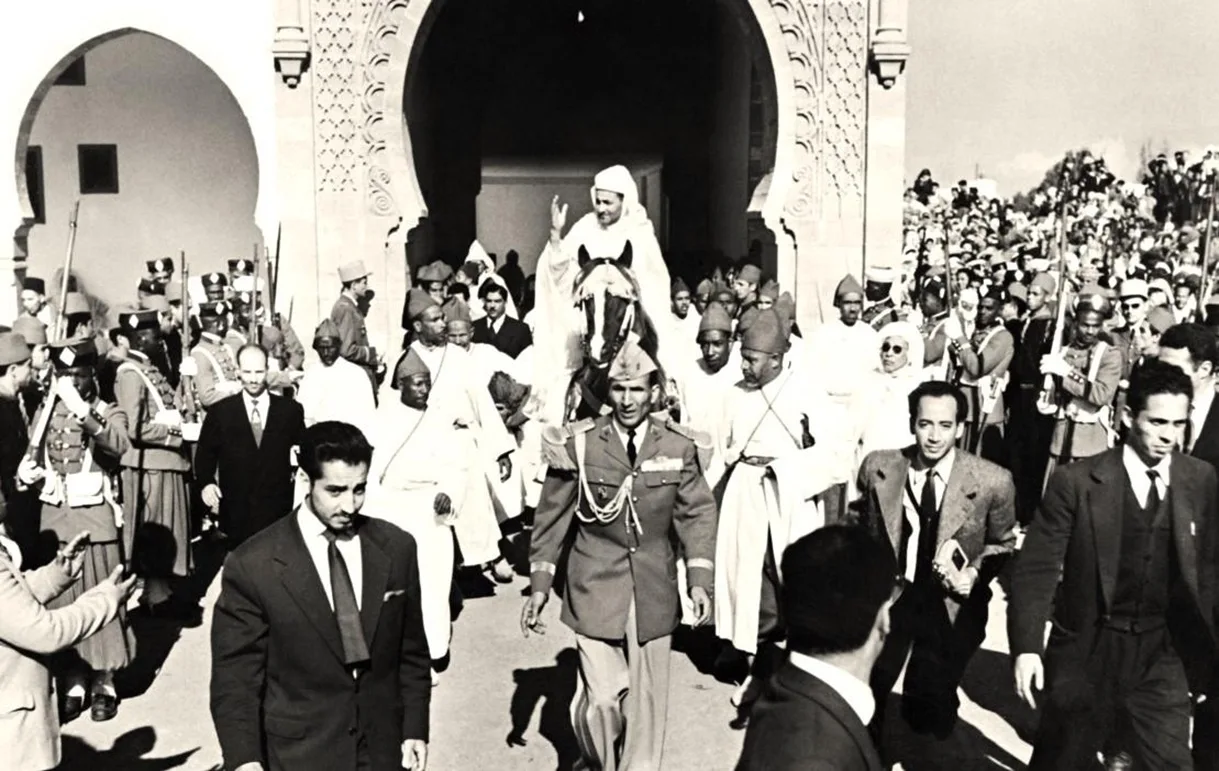
November 18, 1955, marked a turning point in Moroccan history. After forty-three years under French and Spanish protectorates, the return of Sultan Mohammed V opened the way to the restoration of independence. Yet behind this foundational date lies a longer history of resistance, political transformation, international negotiations, and state reconstruction. Moroccan independence represented more than the end of colonial domination. It initiated the complex recovery of a sovereignty whose territorial, institutional, and economic dimensions would continue to evolve over subsequent decades.
Morocco Before 1912: An Ancient Sovereignty Confronted by European Ambitions
The history of Moroccan independence did not begin in 1955. Its origins lie in the transformation of the Mediterranean balance of power during the nineteenth century, when European economic and military expansion increasingly challenged the autonomy of North African states. Morocco occupied a distinctive position. Unlike Algeria, conquered by France beginning in 1830, or Tunisia, placed under French protection in 1881, the kingdom retained its sovereign institutions, ruling dynasty, and independent diplomacy until 1912, despite mounting foreign pressure.
This political continuity did not, however, insulate Morocco from international power struggles. Morocco's defeat by France at the Battle of Isly in 1844, followed by the war against Spain in 1859–1860, exposed the widening disparity between the kingdom's military capabilities and those of European powers. The indemnities imposed after these conflicts, expanding commercial penetration, and growing external indebtedness progressively constrained the financial autonomy of the Makhzen, Morocco's traditional governing establishment.
The Moroccan question subsequently became an arena of competition among Paris, Madrid, London, and Berlin. The Algeciras Conference of 1906, formally intended to organize reforms while preserving the sultan's sovereignty, effectively increased international intervention in Moroccan affairs. The Moroccan crises of 1905 and 1911 illustrated this transformation: the kingdom's political future was increasingly negotiated among European powers, while Moroccan authorities found themselves progressively excluded from determining the conditions of their own sovereignty.
The Treaty of Fez, signed on March 30, 1912, formalized this evolution by establishing the French protectorate. A Franco-Spanish agreement concluded on November 27 of the same year organized Spanish control over several territories, primarily in northern and southern Morocco. Tangier retained a separate status that would subsequently evolve into an international administrative regime.
Morocco did not legally cease to exist as a state. The sultan remained at the head of the kingdom, and traditional institutions were formally preserved. Effective power, however, was fundamentally redistributed. French authorities controlled the principal administrative, military, financial, and diplomatic decisions within their zone, while Spain exercised authority over the territories assigned to its protectorate.
The distinction between the legal continuity of the Moroccan state and the loss of its effective decision-making authority is central to understanding modern Moroccan history. Independence in 1956 did not create an entirely new state. It enabled an existing political entity to recover the internationally recognized attributes of sovereignty. 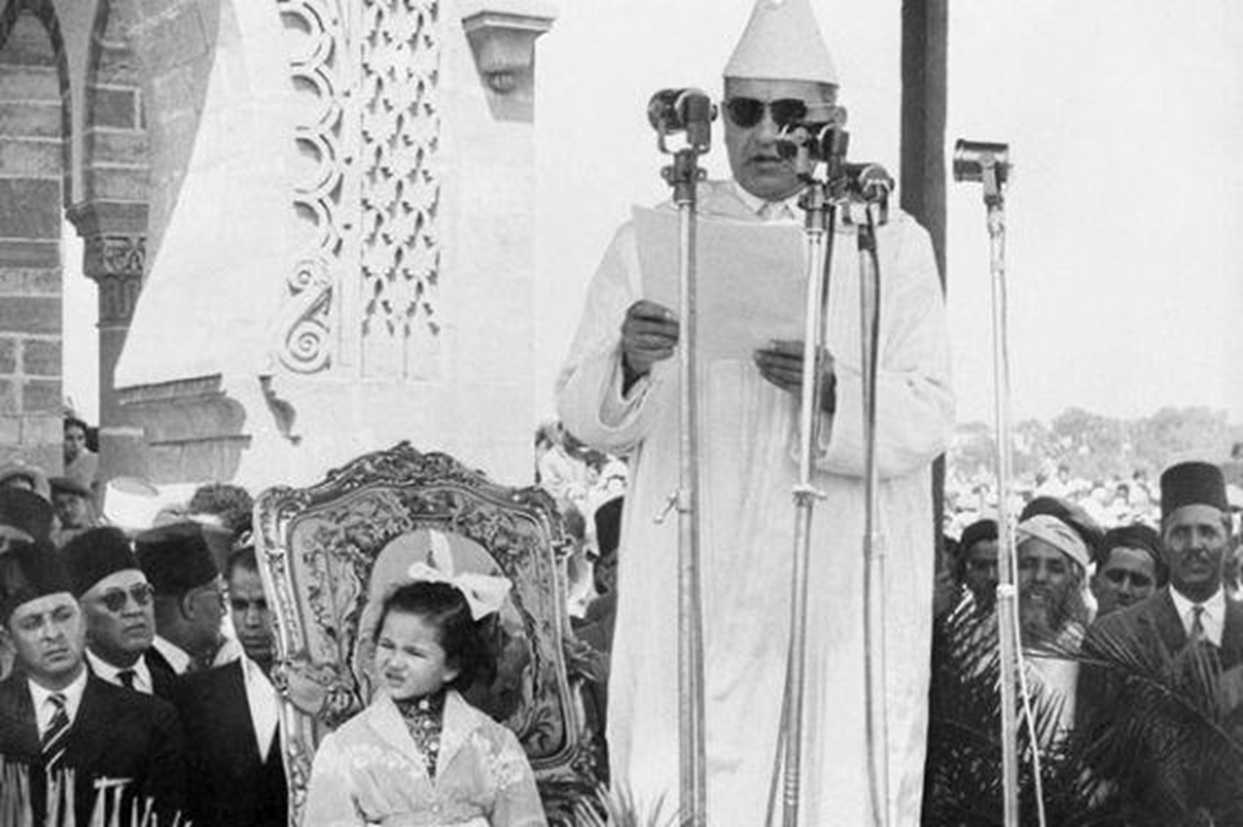
Resistance: From Military Confrontation to National Political Organization
The establishment of the protectorates did not bring Moroccan resistance to an end. Across several regions, colonial expansion encountered prolonged military opposition. Fighting in the Middle Atlas, particularly the Battle of El Hri in November 1914, demonstrated the ability of tribal forces to mobilize against French advances.
In the Rif, resistance led by Abdelkrim El Khattabi acquired exceptional significance. The Spanish defeat at Annual in July 1921 transformed the regional military balance. Abdelkrim subsequently established an autonomous political and military organization, generally known as the Republic of the Rif. His resistance ended only in 1926, following a major Franco-Spanish military intervention.
These movements did not yet constitute a unified nationalism extending across the kingdom. Their motivations combined territorial defense, local autonomy, opposition to occupation, and rejection of colonial authority. Nevertheless, they contributed to a broader historical experience of resistance that would gradually become integrated into Morocco's national independence narrative.
From the 1930s onward, opposition increasingly assumed an organized political character. A new generation of activists, emerging particularly from educated urban circles, religious networks, and reformist elites, began developing structured political movements. Controversies surrounding the decree of May 16, 1930, commonly known as the Berber Dahir, contributed to this mobilization. Nationalists denounced what they regarded as a colonial policy of legal and identity-based fragmentation.
Initial demands focused primarily on administrative reform, respect for the commitments associated with the protectorate, and greater Moroccan participation in public affairs. Yet continuing political restrictions and changes in the international environment gradually pushed the nationalist movement toward a more fundamental objective: the termination of colonial rule.
The Second World War accelerated this evolution. The Allied landings in North Africa in November 1942 and the Casablanca Conference of January 1943 placed Morocco within the broader strategic transformations of the emerging postwar order. The growing international prominence of self-determination, together with the relative weakening of European colonial empires, created a more favorable environment for nationalist demands.
On January 11, 1944, the presentation of the Independence Manifesto marked a decisive political rupture. The nationalist movement no longer demanded merely the reform of colonial administration. It explicitly called for Moroccan independence under Sultan Mohammed Ben Youssef and for the country's integration into an international order based on the recognition of sovereign states.
The Moroccan question consequently acquired a different dimension. It was no longer primarily a debate over how the protectorate should be administered, but an increasingly direct confrontation over the legitimacy of colonial domination itself. 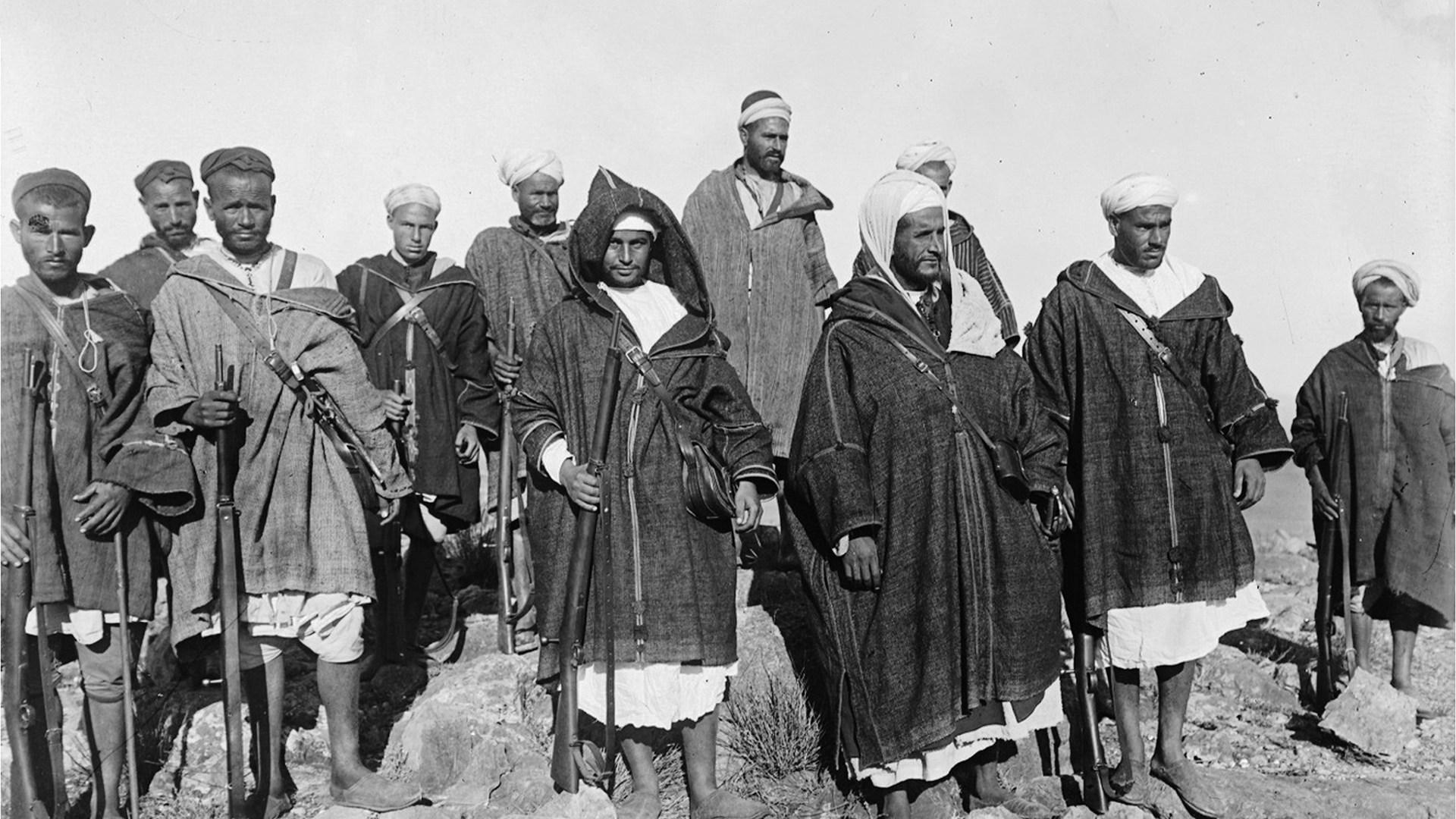
Mohammed V: The Monarchy at the Center of the National Movement
The transformation of Mohammed V's political role was among the most consequential developments of this period. Having ascended the throne in 1927, the sovereign initially exercised his functions within a system in which the French residency-general controlled most instruments of government. The evolution of Moroccan nationalism, however, progressively altered his position.
The rapprochement between the Palace and nationalist forces gave the independence movement a distinctive institutional foundation. Unlike other decolonization processes in which revolutionary organizations sought to overthrow both colonial rule and pre-existing political structures, the Moroccan movement could draw upon dynastic continuity as a source of legitimacy.
Mohammed V's speech in Tangier on April 9, 1947, marked an important stage in this evolution. Speaking in a city governed under an international regime, the sovereign affirmed Morocco's unity and situated its future within the prospect of national sovereignty. The significance of the speech extended beyond its immediate wording: it made the growing political distance between the Palace and the protectorate authorities increasingly visible.
This convergence did not eliminate differences among nationalist actors. Political parties, resistance networks, urban elites, and the monarchy did not always share identical institutional objectives. The future position of the sovereign, the nature of the political system, and the distribution of authority remained unresolved questions.
Nevertheless, the sultan's growing association with national aspirations transformed him into a symbol of the Moroccan state's continuity. The monarchy was no longer merely an institution preserved within the protectorate system. It became one of the principal centers around which opposition to that system could organize.
This transformation largely explains the political significance of the crisis that erupted in 1953.
August 20, 1953: The Exile That Transformed the Colonial Crisis
On August 20, 1953, French authorities deposed Mohammed V and sent him into exile with his family, initially to Corsica and subsequently to Madagascar. They supported his replacement by Mohammed Ben Arafa, backed notably by the pasha of Marrakech, Thami El Glaoui.
The decision was intended to resolve an increasingly difficult political crisis. Instead, it produced the opposite effect.
By removing the sovereign, the French administration failed to isolate the nationalist movement. On the contrary, it strengthened the association between Mohammed V, monarchical legitimacy, and the demand for independence. The dynastic substitution was rejected by substantial sections of the population and nationalist forces, while demonstrations, clandestine operations, and violent confrontations multiplied.
The exile thus transformed a dispute over the powers exercised under the protectorate into a crisis of political legitimacy. The central question was no longer simply which reforms France might concede, but whether it could continue governing Morocco against a mobilization organized around the deposed sovereign.
Armed resistance and underground organizations acquired growing importance. These tensions unfolded within an increasingly unstable regional environment. In November 1954, the outbreak of the Algerian War of Independence confronted France with the prospect of prolonged conflict across several North African territories.
French policy in Morocco became increasingly costly in security, diplomatic, and strategic terms. Maintaining the protectorate no longer depended solely on French military capabilities. It also required the reconstruction of a political authority capable of securing sufficient acceptance within Moroccan society.
Mohammed V's exile therefore helped accelerate the very process it had been intended to prevent. The sovereign progressively returned to the center of any negotiated settlement, while his restoration became an essential condition for resolving the crisis.
1955: The Diplomatic Turning Point
During 1955, French authorities began reconsidering their Moroccan policy. The Aix-les-Bains talks, which opened on August 22, brought together French representatives and several Moroccan political figures in an attempt to identify a way out of the crisis.
The discussions nevertheless revealed the limitations of intermediate solutions. Mohammed V's restoration increasingly appeared indispensable, while the prospect of internal autonomy alone proved insufficient to satisfy nationalist aspirations.
The reversal of position by certain Moroccan supporters of the colonial administration, notably El Glaoui, contributed to the collapse of the dynastic arrangement imposed in 1953. Ben Arafa relinquished the throne in late October.
On November 6, 1955, the declaration of La Celle-Saint-Cloud opened a new phase. It provided for Mohammed V's return and the formation of a Moroccan government responsible for negotiating the country's transition toward independence. France nevertheless sought to organize future relations around the concept of interdependence, particularly in economic, diplomatic, and strategic affairs.
This concept exposed one of the central issues of decolonization. For Paris, the objective was to preserve privileged relations with a territory in which France had developed substantial administrative, economic, and military interests. For Moroccan nationalists, the priority was to secure effective recognition of sovereignty as the necessary foundation for any freely negotiated bilateral relationship.
The Moroccan process was distinguished by the speed of its transformation. Within a matter of months, the prospect of reorganizing the protectorate gave way to the establishment of an independent state. This evolution resulted from simultaneous pressures: national mobilization, the crisis of colonial governance, the collapse of the arrangement imposed in 1953, and France's need to reorganize its strategic priorities in North Africa.
November 18, 1955: The Sovereign's Return and the End of a Political Order
On November 16, 1955, Mohammed V returned to Morocco after more than two years in exile. His arrival was greeted by an extraordinary popular mobilization. It represented both the restoration of the legitimate sovereign and the political victory of a national movement that had resisted the attempted reorganization of monarchical authority under colonial control.
Two days later, on November 18, the Throne Speech acquired particular historical significance. Mohammed V announced the opening of a new era for the kingdom and confirmed its movement toward independence.
The date gradually assumed a central place in Morocco's national memory. It symbolized the reunion of three elements that the colonial crisis had separated: the sovereign, the national movement, and the exercise of sovereignty.
It is nevertheless important to distinguish the political significance of November 18, 1955, from the subsequent international legal recognition of independence. The decisive agreement ending the French protectorate was concluded on March 2, 1956. Spanish recognition followed on April 7.
November 18 therefore commemorates the political turning point that made independence irreversible, rather than a single legal act that immediately terminated every colonial arrangement.
This distinction does not diminish the date's importance. It helps explain its particular place in the kingdom's history. Independence was not merely the outcome of diplomatic negotiations. It also involved the restoration of political legitimacy around which national mobilization had been organized. 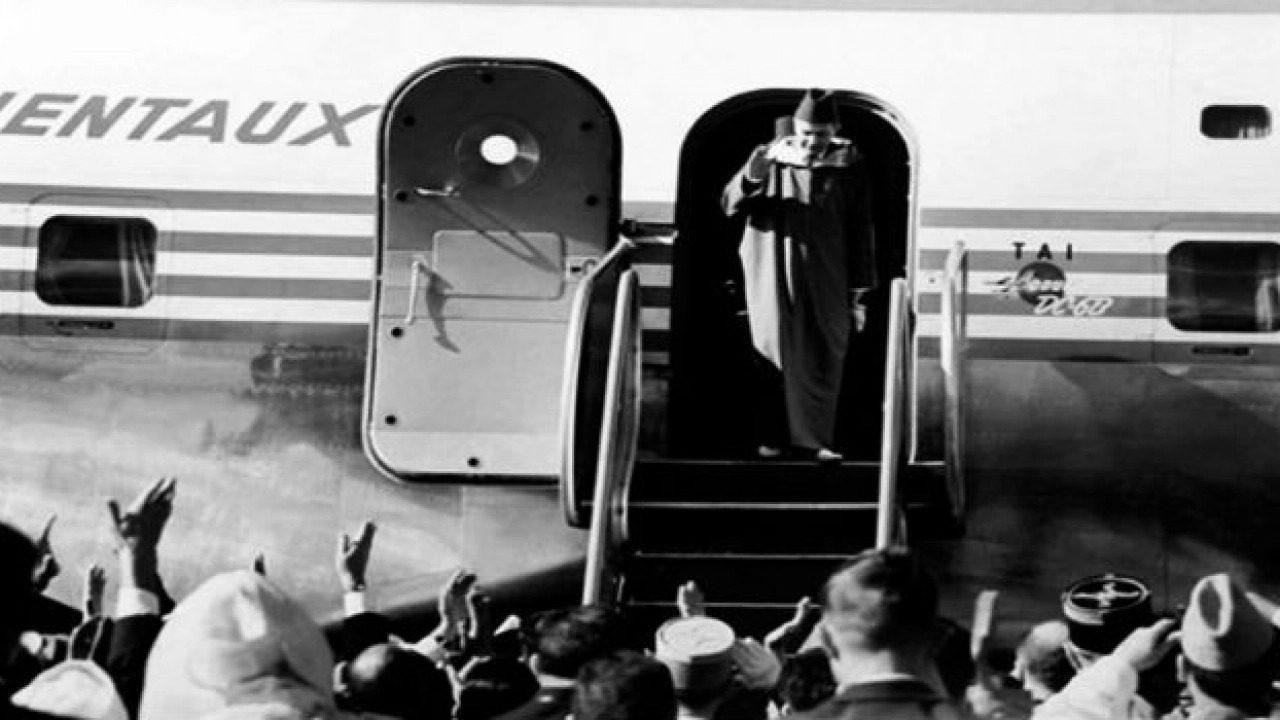
1956: From Political Victory to International Sovereignty
On March 2, 1956, France formally recognized Moroccan independence. The Franco-Moroccan declaration established that the Treaty of Fez of 1912 could no longer govern relations between the two countries. It recognized the essential attributes of Moroccan sovereignty, including the conduct of an independent foreign policy and the establishment of national armed forces.
On April 7, 1956, Spain likewise recognized Moroccan independence and ended its protectorate regime in the northern zone it had administered. Tangier's international status was abolished several months later following international negotiations.
The year 1956 thus represented a succession of legal and institutional transformations rather than a single isolated event. Sovereignty had to be restored through several agreements, each addressing a different aspect of the territorial organization inherited from colonial rule.
International recognition immediately opened another major undertaking: the construction of the effective instruments of an independent state. Morocco now had to manage its own diplomatic representation, organize its armed forces, progressively assume control over its administration, and establish the institutions necessary to exercise its newly recovered powers.
The Royal Armed Forces were established in May 1956. The development of a national diplomatic service and the reorganization of public administration contributed to Morocco's transformation into a sovereign actor within the international system.
Political independence, however, did not immediately eliminate the dependencies inherited from the protectorate. The economy remained deeply shaped by infrastructure, commercial networks, investment patterns, and financial structures developed during the colonial period. Technical and administrative expertise also had to be progressively transferred and consolidated.
The challenge facing independent Morocco was therefore to transform diplomatic recognition into a durable capacity for autonomous decision-making. Possessing the right to govern was no longer sufficient. The country had to develop the practical means to exercise that right.
Territorial Unification: Independence as a Prolonged Process
The end of the protectorates did not immediately resolve every territorial question inherited from European colonial expansion.
The Tarfaya region returned to Morocco in 1958, while Spain transferred Ifni in 1969. These developments illustrate the gradual nature of territorial reintegration following independence.
The Western Sahara question belongs to this longer historical context but has a distinct international legal status. Morocco regards the territory as an integral part of its national territory and connects its claim to the historical continuity of the Moroccan state and the broader process of decolonization. Nevertheless, Western Sahara remains on the United Nations list of Non-Self-Governing Territories, and its final status continues to be the subject of an international dispute.
The Green March of November 1975 and Spain's withdrawal in 1976 opened a new phase in this question, which cannot be legally equated with the agreements terminating the French and Spanish protectorates in 1956.
This historical sequence demonstrates that sovereignty has several dimensions. International recognition of a state, the effective exercise of its authority, and the determination of its territorial boundaries do not necessarily occur simultaneously.
Moroccan independence therefore belongs to a historical process extending beyond the single year of 1956.
Independence and the Construction of Modern Morocco
One of the most consequential legacies of independence concerns the configuration of Morocco's political system.
The national movement had brought together actors with different orientations around a common objective. The monarchy, nationalist parties, trade unions, resistance networks, and various regional elites had participated, to differing degrees, in the struggle against the protectorates. Once independence had been achieved, the distribution of political authority among these components became a central question.
The legitimacy Mohammed V acquired during exile and the independence struggle substantially strengthened the monarchy's position. At the same time, parties emerging from the nationalist movement claimed a role in organizing the new state, establishing political representation, and determining its economic and social priorities.
The first years of independence were consequently marked by tensions over the nature of the political system, the functioning of institutions, and the place of different political forces. They demonstrated that unity against colonial rule did not automatically produce agreement over the exercise of power.
These dynamics contributed to shaping the institutions of contemporary Morocco. The monarchy progressively consolidated its central position, while debates over political representation, civil liberties, economic development, and public participation continued to structure national political life.
Economically, independence also initiated a period of transformation. Training national administrative and technical personnel, developing infrastructure, organizing public policy, and expanding productive capabilities became long-term priorities. The challenge was to move beyond an economic system whose organization had been substantially determined by the requirements of colonial administration.
Sovereignty consequently acquired a meaning extending beyond diplomatic independence. It required the ability to finance public action, control strategic resources, develop necessary expertise, and determine national development priorities.
These questions extended, in different forms, the debates that had emerged in 1956.
November 18: National Memory and the Continuity of the State
Seventy-one years after the events of November 1955, Independence Day remains one of the principal reference points of Morocco's historical memory.
It recalls, first, that the kingdom's sovereignty was not simply granted through an administrative decision. It emerged from a complex process combining military resistance, political mobilization, diplomatic action, changes in the international environment, and the restoration of monarchical legitimacy.
It also recalls that independence did not erase the legacies of the protectorates. Institutions, economic structures, social relationships, and territorial arrangements continued to evolve long after international recognition in 1956.
The Moroccan experience is distinctive in this respect. The restoration of independence drew upon the continuity of an established monarchical institution, but it was also driven by a diverse national movement whose constituent forces contributed to bringing colonial rule to an end. The interaction between institutional continuity and popular mobilization profoundly influenced the kingdom's subsequent political development.
November 18 therefore commemorates more than the return of a sovereign or the announcement of impending independence. It marks the moment when a system of domination established in 1912 definitively lost its political legitimacy and the restoration of Moroccan sovereignty became the organizing principle of a new national order.
The history of this independence also demonstrates that sovereignty is not a static condition. It is a political, institutional, and economic capacity that must be built, consolidated, and adapted to changes in the international environment.
In 1955, Morocco secured the political possibility of recovering control over its national destiny. In 1956, that possibility received international legal recognition. The following decades would be devoted to giving it institutional, territorial, and economic substance.
The historical significance of November 18 lies in this succession of struggles, negotiations, and transformations: not merely the memory of independence regained, but the beginning of a new chapter in the long continuity of the Moroccan state.
Principal Sources
[1] Susan Gilson Miller, A History of Modern Morocco, Cambridge University Press, 2013. View link
[2] André de Laubadère, “Le statut international du Maroc depuis 1955,” Annuaire français de droit international, 1956. View link
[3] University of Perpignan, Indépendance du Maroc, declarations of 1955 and 1956. View link
[4] United Nations, Treaty Series, Vol. 1339, Spanish-Moroccan declaration of April 7, 1956. View link
[5] U.S. Department of State, Foreign Relations of the United States, 1955–1957, Vol. XVIII. View link
[6] United Nations, Non-Self-Governing Territories, documentation on Western Sahara. View link
Atlas Limits — Independent Global Analysis | November 18, 2026
Atlas Limits Research Desk
Atlas Limits’ editorial and analytical desk.