
For several decades, North African military power was measured primarily by the size of national arsenals, defense budgets and the quality of relationships maintained with the world's leading arms exporters. The region's capitals purchased the instruments of their security from Washington, Moscow, Paris, Beijing or Berlin, without necessarily possessing the industrial capabilities to reproduce, adapt or independently manage their technological evolution.
This architecture is beginning to change. Defense manufacturing is increasingly becoming an instrument of industrial policy, technological sovereignty and economic competition. Egypt, Algeria and Morocco are nevertheless pursuing different trajectories, shaped by their economic structures, institutional legacies and international alliances.
The Moroccan roadmap presented on November 18, 2026, during a working session chaired by King Mohammed VI, introduces a new dimension to this regional transformation. The Kingdom is no longer seeking merely to reduce its dependence on military imports. It intends to establish an industry capable of participating in global defense value chains and generating most of its revenues from international markets.
If realized, this ambition could reshape the industrial geography of North African defense by 2035.
Morocco: From Acquisition to Industrial Accumulation
The November 18 announcement rests on three quantified objectives: creating approximately 50,000 direct and indirect jobs, meeting around 40% of the requirements of the Royal Armed Forces and security agencies, and generating more than 65% of the future defense industrial and technological base's revenues through exports.
The Hassan II Fund for Economic and Social Development is expected to contribute four billion Moroccan dirhams, equivalent to approximately $400 million, toward implementing the strategy.
This contribution does not represent the program's total cost. It constitutes a catalytic financing mechanism intended to mobilize additional public and private capital and support the establishment of domestic and international industrial operators.
The institutional architecture reflects this ambition. A specialized strategic agency will support investors and oversee the implementation of national policy. An industrial holding company will be responsible for structuring the various sectors, mobilizing capital and encouraging the emergence of Moroccan companies capable of securing meaningful positions within this ecosystem. A specialized academy will complement these institutions by developing the necessary skills.
The existing industrial zones of Nouaceur and Sidi Yahya will be supplemented by those of Benguerir and Benslimane. This territorial organization is intended to bring manufacturing activities closer to research infrastructure, educational institutions and established industrial ecosystems.
Six priority areas underpin the roadmap: drones and autonomous systems, land systems, naval systems, defense electronics, cyber defense and artificial intelligence.
The selection of these sectors reflects the transformation of the global defense industry. An increasing share of the economic value of military equipment lies in software, sensors, communications, data processing capabilities and the integration of complex systems. The boundaries between civilian technology companies and military suppliers are becoming progressively more porous.
Morocco intends to capitalize on this convergence rather than replicate in their entirety the military-industrial complexes developed during the previous century.
The Existing Industrial Capital
The principal distinguishing feature of Morocco's approach lies in its connection with the industrial transformation initiated in the early 2000s.
The development of automotive manufacturing around Renault and Stellantis, the integration of international suppliers, the establishment of aerospace companies such as Safran, Airbus Atlantic and Collins Aerospace, and the expansion of electronics and logistics activities have contributed to creating a manufacturing environment from which the defense industry could benefit.
These companies do not automatically become weapons manufacturers. Their presence has nevertheless facilitated the accumulation of expertise in engineering, industrial management, quality control, traceability and the coordination of international supply chains.
This capital constitutes a structural advantage. A foreign company establishing a new manufacturing facility in Morocco can potentially draw upon existing suppliers, proven logistics infrastructure and a workforce familiar with the requirements of export-oriented industries.
The inauguration of Tata Advanced Systems' manufacturing facility in Berrechid in September 2025 illustrates this development. The Indian company is establishing armored vehicle manufacturing activities in partnership with the Kingdom. Morocco's industrial relationships are thus expanding beyond its traditional Western suppliers.
Meanwhile, Moroccan Military Industry, or MMI, reflects the emergence of domestic operators in certain segments of the land defense industry.
Relationships with the United States, France, India, Israel and Turkey offer additional opportunities for cooperation. Their realization remains contingent upon concluded contracts, export authorizations and the depth of the technology transfers granted.
In November 2026, Moroccan authorities referred to a portfolio of approximately twenty defense industrial projects. This figure reflects investment momentum but should not be interpreted as twenty operational factories.
The distinction is essential: announcing an investment, constructing a facility, commencing production and achieving domestic technological mastery represent four different stages. 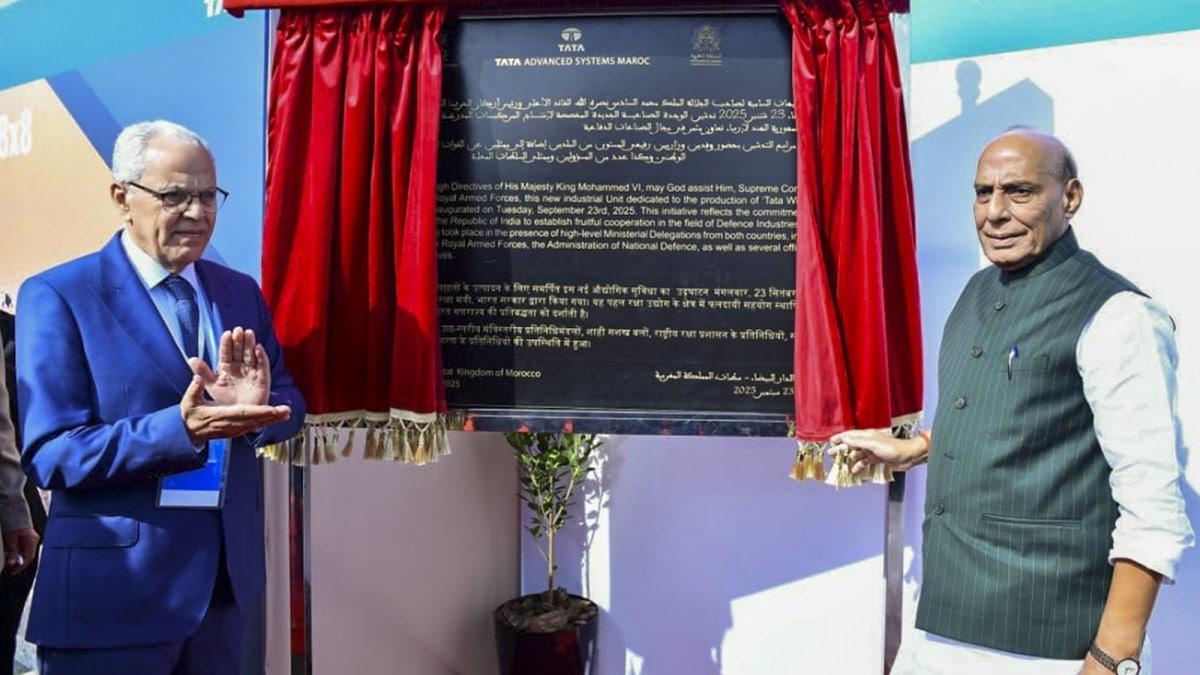
Algeria: The Power of Public Procurement
Algeria approaches this transformation from a substantially different position.
With military expenditure estimated by the Stockholm International Peace Research Institute at $25.4 billion in 2025, Algeria remains by far Africa's largest military spender. This expenditure represented approximately 8.8% of its gross domestic product and nearly a quarter of public spending.
Morocco, with military expenditure of $6.3 billion under the same methodology, stood at roughly one-quarter of Algeria's level.
This financial asymmetry provides Algeria with considerable procurement and industrial financing capacity. It also enables the country to sustain domestic demand sufficient to justify the localization of certain manufacturing activities.
Unlike Morocco, whose military industrial ecosystem is undergoing accelerated development, Algeria has operated specialized industrial establishments for several decades, primarily under the authority of its military institutions.
The Khenchela industrial complex, the Seriana establishments, the naval construction and repair enterprise, and the vehicle manufacturing facilities in Rouiba constitute different components of this industrial base.
Cooperation with German companies, particularly in commercial and military vehicle manufacturing, has also contributed to the development of domestic capabilities. Historical relationships with Russia, complemented by those maintained with China and several European suppliers, underpin a significant part of Algeria's technological environment.
This model offers several advantages. Institutional centralization facilitates coordination between military procurement authorities and manufacturing establishments. The scale of public procurement provides relatively predictable demand. Hydrocarbon revenues, when international energy market conditions are favorable, enable the rapid mobilization of substantial financial resources.
This architecture nevertheless presents limitations. Fiscal dependence on hydrocarbons exposes military investment to energy market cycles. The dominance of public procurement may also weaken incentives to pursue international commercial opportunities and continuously improve corporate competitiveness.
Another question concerns the relationship between the military industry and the wider Algerian economy. The existence of specialized manufacturing facilities does not necessarily guarantee the emergence of an extensive network of private suppliers, technology companies and research centers capable of participating in international value chains.
Licensed production can contribute to the acquisition of manufacturing expertise without necessarily transferring comprehensive rights to design, modify or commercialize the equipment concerned.
Algeria therefore possesses an established military industrial base and exceptional financing capacity by regional standards. The challenge lies in converting these resources into technological autonomy, productivity and industrial diversification. 
Egypt: The Depth of the Military-Industrial Complex
Egypt constitutes the third major center of this regional industrial geography.
Its military industry possesses a longer history and considerable manufacturing diversification. The Arab Organization for Industrialization, established in 1975, and the enterprises operating under the Ministry of Military Production form the two historical pillars of this ecosystem.
Alexandria Shipyard, the Abu Zaabal establishments, Kader Factory and Benha Electronics contribute to an industrial environment encompassing several areas of land, naval, electronic and aerospace manufacturing.
American military cooperation has played a major role in developing Egyptian capabilities. It has gradually been complemented by partnerships with French, German, Chinese and other international suppliers.
In the naval sector, cooperation with Naval Group and the activities of Alexandria Shipyard illustrate Egypt's ability to integrate complex industrial programs involving foreign partners.
Egyptian experience constitutes an advantage that neither Algeria nor Morocco can immediately replicate. It rests on decades of accumulated expertise, infrastructure, institutional relationships and manufacturing experience.
It nevertheless operates within a distinctive economic framework characterized by the extensive presence of military enterprises across numerous civilian sectors.
The International Monetary Fund has highlighted the scale of this presence and the difficulties that may arise from institutional advantages granted to certain state-owned or military enterprises when competing with private operators.
For Egypt, the challenge therefore extends beyond increasing production. It also involves improving the productivity of existing industrial capital, attracting additional technological investment and developing commercial opportunities sufficient to sustain the modernization of its establishments.
Macroeconomic constraints, financing costs, foreign currency requirements and exchange rate fluctuations complicate this transformation.
In September 2026, officials from the Ministry of Military Production and the Arab Organization for Industrialization reaffirmed their intention to strengthen industrial integration, localize technologies and increase exports.
Egypt is therefore not standing still in the face of emerging regional ambitions. It, too, seeks to transform a substantial industrial legacy into an instrument of contemporary competitiveness. 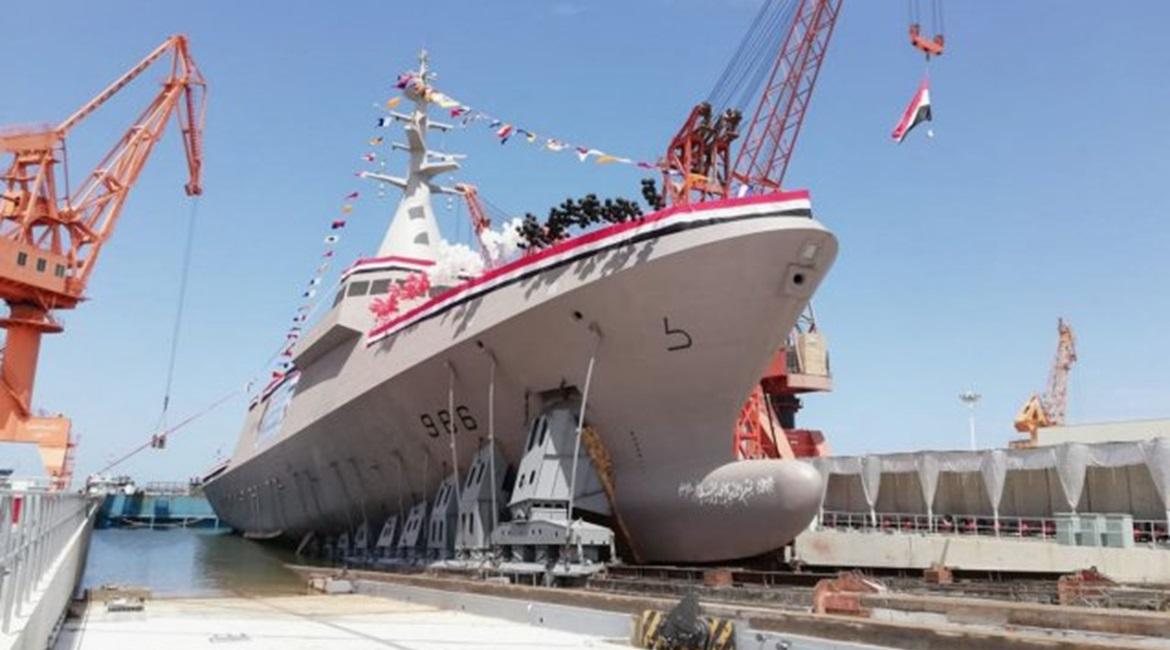
Three Political Economies of Defense
The differences between the three principal actors cannot be reduced to their respective levels of military development.
Algeria favors a model in which the state finances, organizes and absorbs a substantial share of production. Egypt relies on a historical network of public and military enterprises whose capabilities extend across numerous civilian activities. Morocco intends to combine domestic procurement, private capital, foreign investment and international markets.
These architectures determine how industrial capital is accumulated, deployed and renewed.
In a model primarily oriented toward the domestic market, the profitability of an industrial facility may be secondary to the objective of ensuring national equipment availability. The state may accept elevated production costs to preserve a strategic capability considered indispensable.
In an export-oriented model, companies must pay greater attention to unit costs, certification requirements, delivery schedules and international competition.
Morocco will therefore have to subject its industrial ambitions to more demanding commercial discipline. The objective of generating more than 65% of revenues through exports implies that domestic procurement cannot constitute the industry's sole economic foundation.
This orientation may encourage economies of scale, attract investment and accelerate the acquisition of expertise. It also exposes Moroccan companies to fluctuations in international demand, regulatory restrictions and political decisions made by countries controlling the technologies incorporated into their products.
An export-oriented industry is not necessarily an independent one.
Foreign Suppliers and Regional Competition
North Africa's industrial transformation also holds strategic significance for major international companies.
American and European manufacturers possess advanced technologies, substantial research capabilities and privileged access to Western certification systems. Chinese, Turkish and Indian companies are simultaneously seeking to expand their international presence by offering industrial partnerships, competitive commercial terms and, depending on contractual arrangements, opportunities for localization.
For groups such as Tata Advanced Systems, Rheinmetall, Naval Group and major American aerospace companies, North Africa represents both a destination market and a potential manufacturing location.
Regional industrial development may enable these companies to reach new customers, diversify their geographical footprint and distribute certain manufacturing activities across multiple jurisdictions.
North African states, for their part, are seeking to transform procurement contracts into instruments of industrial localization.
These negotiations concern the distribution of added value, intellectual property rights, engineer training and access to international markets.
The interests of the parties do not necessarily converge. An international supplier may wish to establish a local manufacturing presence while retaining control over its most sensitive technologies. The purchasing country may, by contrast, regard the gradual acquisition of independent capabilities as the genuine return on its procurement expenditure.
The actual depth of technology transfers will therefore constitute one of the principal indicators of the success of North African industrial strategies.
Tunisia, Libya and the Limits of Regional Integration
Tunisia occupies a more modest position within this environment. Its industrial fabric nevertheless possesses expertise in electrical components, electronics, software, precision engineering and certain aerospace activities.
These capabilities could enable Tunisian companies to participate in specialized subcontracting chains without requiring the establishment of a comprehensive military-industrial complex.
Libya faces obstacles of a different nature. Institutional fragmentation, political rivalries and weak national economic coordination constrain its ability to establish a coherent military industrial policy.
Mauritania, whose military expenditure reached approximately $322 million in 2025, remains primarily a market for procurement and services rather than a regional manufacturing center.
Genuine North African industrial integration could theoretically enable countries to pool investment, expand markets and distribute manufacturing specializations across national borders.
Political tensions, particularly between Morocco and Algeria over Western Sahara, considerably diminish this prospect.
The region may consequently develop several competing industrial ecosystems, more closely integrated with their respective external partners than with one another.
Africa as a Destination Market
The export dimension of these strategies extends beyond the Mediterranean.
The security requirements of African states, maritime surveillance, critical infrastructure protection and the modernization of military institutions constitute potential markets for North African manufacturers.
Morocco benefits from diplomatic, financial and economic networks developed across several regions of the continent. Egypt possesses historical relationships with African and Arab countries, while Algeria maintains a significant diplomatic and security presence in the Maghreb and the Sahel.
Commercial competition, however, will not be determined solely by geographical or political proximity.
Procurement financing, spare parts availability, training, maintenance, equipment reliability and the ability to support customers over several decades will prove decisive.
A military export contract often establishes a long-term institutional relationship. It can strengthen diplomatic ties between the states concerned while simultaneously creating new forms of dependence for purchasing countries.
From this perspective, the defense industry becomes an extension of foreign policy as much as an instrument of economic diversification.
The Real Test of 2035
Should Morocco achieve its announced objectives, its defense industry could become a significant new component of its export economy, alongside automotive manufacturing, aerospace and electrical industries.
The creation of 50,000 direct and indirect jobs would contribute to expanding the domestic market for technological expertise. The mobilization of private capital could encourage the emergence of specialized companies and the development of new research activities.
Yet the program's success cannot be measured solely by the number of factories inaugurated.
Locally assembled equipment may remain heavily dependent on imported components, proprietary software and authorizations issued by foreign governments. Domestic added value may remain limited even as manufacturing volumes increase.
It will therefore be necessary to distinguish between the proportion of national requirements met domestically, local industrial content, the added value actually generated in Morocco and the share of technologies owned by Moroccan companies.
The same analytical framework must be applied to Algeria and Egypt. Military expenditure, the age of industrial establishments and the quantity of equipment produced are useful indicators, but insufficient measures of technological sovereignty.
By 2035, Algeria could retain its budgetary advantage, Egypt its historical manufacturing depth, and Morocco could acquire a significant position within international production chains. These trajectories may coexist without producing a definitive industrial hierarchy.
Their evolution will depend on each country's ability to finance research, attract skilled professionals, master critical technologies and build companies capable of surviving beyond the public programs that initially brought them into existence.
North Africa is thus entering a new phase in its strategic economy. Competition is no longer confined to the equipment each state can acquire, but increasingly concerns the knowledge, companies and industrial capabilities it can accumulate over time.
Buying weapons delivers immediate power. Knowing how to design, manufacture and master their evolution represents another form of power, whose effects are measured in generations rather than fiscal years.
Atlas Limits Research Desk
Atlas Limits’ editorial and analytical desk.