Disruptions to fuel oil exports from the Middle East and Russia are creating new pressures on marine fuel markets. Behind these shortages lies a deeper transformation of the global oil industry: crude oil availability no longer guarantees access to refined products, while traders, refiners and shipping companies reorganize their supply networks around increasingly fragmented energy markets.
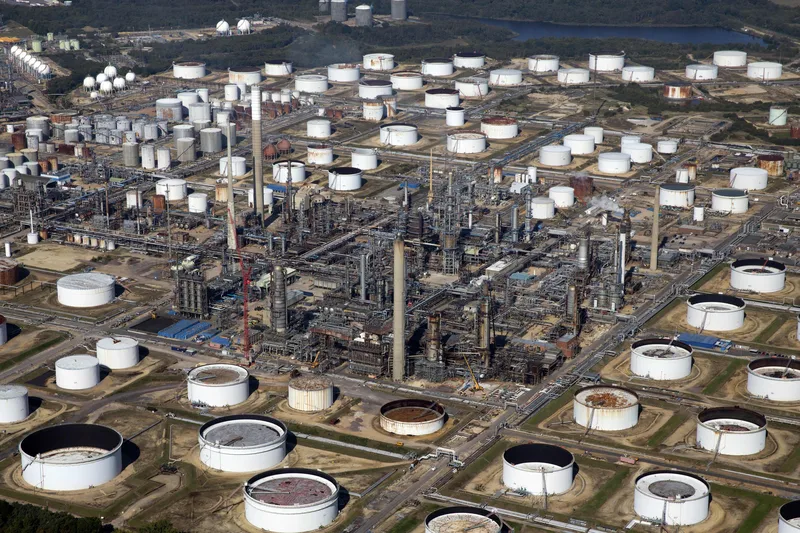
In Singapore, one of the world's largest marine fuel supply hubs, the energy crisis is taking a different form from the disruptions traditionally associated with oil markets. The immediate problem is not the overall availability of crude oil but the supply of a particular refined product: high-sulfur fuel oil, which remains essential to part of the global merchant fleet and is also used as feedstock in certain industrial facilities. Disruptions to Middle Eastern exports, attacks on Russian refineries and changing consumption patterns across Asia have progressively destabilized this market, exposing tensions that conventional oil indicators do not always capture.
At the international marine fuels conference held in Singapore from October 13 to 15, 2026, executives from energy trading company Vitol described a market facing persistent supply constraints. According to Kieran Gallagher, the group's head of Asian operations, high-sulfur fuel oil exports passing through the Strait of Hormuz remain at least 800,000 metric tons per month below their February levels. Attacks on Russian refining infrastructure are estimated to have removed approximately another million tons from monthly supplies.
These figures, provided by Vitol, illustrate the scale of the disruption without constituting a comprehensive assessment of global trade flows. Nevertheless, they point to a significant development: geopolitical tensions are no longer transmitted exclusively through the availability of crude oil. They are increasingly affecting the composition of refined petroleum products accessible to industrial and maritime consumers.
Prices already reflect this transformation. In the market for 380-centistoke high-sulfur fuel oil, spot premiums approached $50 per metric ton in mid-October, compared with $5.10 on February 27, according to LSEG data reported by Reuters. This sharp increase does not represent an equivalent rise in the total price of the fuel. Rather, it reflects a substantial increase in the value attached to immediate availability. In a market where supplies cannot easily be replaced in the short term, the ability to deliver a specific product, at a particular location and time, becomes increasingly valuable.
A Less Uniform Oil Market Than It Appears
Oil is generally described as a global commodity whose price is determined by the balance between production and consumption. This representation remains useful for understanding broad energy trends, but it conceals a much more complex industrial reality. Crude oil must be transformed into fuels that meet different technical specifications, regulatory requirements and consumption patterns. Gasoline, diesel, jet fuel, naphtha and residual fuel oils are not interchangeable without significant technical constraints.
Marine fuel provides a particularly revealing example of this diversity. High-sulfur fuel oil, generally known as HSFO, continues to be used by vessels equipped with exhaust gas cleaning systems, commonly called scrubbers. Ships without such equipment generally need to use fuels that comply with sulfur limits established by the International Maritime Organization, including very-low-sulfur fuel oil, or VLSFO.
This regulatory distinction creates two markets whose supply-demand balances can evolve differently. Greater availability of low-sulfur fuel does not automatically compensate for shortages of high-sulfur fuel oil. Differences in prices, engine characteristics, onboard equipment and storage capacity limit the possibilities for immediate substitution.
This divergence is particularly visible in October 2026. While the HSFO market faces significant supply pressures, low-sulfur marine fuels remain relatively better supplied, supported partly by Chinese exports and deliveries from Nigeria's Dangote refinery. The latter is contributing to changes in international refined-product flows without necessarily resolving imbalances affecting other fuel categories.
The global oil market is therefore not experiencing a uniform shortage. It is facing a series of differentiated imbalances whose intensity depends on product specifications, refinery configurations, port infrastructure and commercial routes.
Hormuz and Russia: Two Disruptions Reinforcing Each Other
The contraction in marine fuel supplies partly reflects the convergence of two geographically distinct sources of disruption.
The first is located in the Middle East, where military tensions surrounding the Strait of Hormuz are affecting petroleum product exports. This strategic passage connects Gulf energy infrastructure with international markets. Its importance extends beyond the volume of crude oil passing through it to include substantial shipments of refined products destined for Asian consumers.
According to Kpler data reported during the Singapore conference, high-sulfur fuel oil exports through Hormuz averaged approximately 3.7 million metric tons per month between January 2025 and February 2026. A reduction of at least 800,000 tons per month therefore represents a substantial disruption to this commercial corridor. However, it remains smaller than the losses of approximately two million tons recorded in May, suggesting that flows have partially recovered without returning to their previous configuration.
The second source of disruption concerns Russia, where refining capacity has been affected by repeated attacks on petroleum infrastructure. Unlike interruptions to crude production, damage to refining facilities directly changes both the volume and composition of products available for export.
Vitol's estimate of an additional reduction of approximately one million metric tons per month in Russian fuel oil supplies should be treated as a commercial assessment rather than a definitively established measurement. Nevertheless, it highlights the vulnerability of a market in which several major exporting regions are simultaneously facing constraints.
These disruptions do not translate mechanically into equivalent shortages at every port. Fuel specifications, destinations, storage capacity and opportunities to redirect cargoes vary considerably. Their coexistence nevertheless reduces traders' room for maneuver and increases the economic value of logistical flexibility.
Geopolitics consequently intervenes at several levels. It affects production facilities, refineries, shipping routes, insurance premiums and commercial conditions. Even when a cargo remains physically available, transporting it may become sufficiently expensive or uncertain to change its economic attractiveness.
Asian Refineries Begin Competing With Ships
Perhaps the most revealing transformation concerns demand.
Under normal conditions, part of the residual fuel oil produced during refining is directed toward marine consumption, while other volumes supply industrial facilities or serve as feedstock for more advanced conversion units. The balance between these outlets depends on relative crude oil and refined-product prices.
Disruptions to Saudi crude exports through the Red Sea have altered this equilibrium. Some North Asian refineries are now using larger quantities of high-sulfur fuel oil in conversion units as a partial substitute for crude oil. According to Vitol, more than one million metric tons of HSFO are expected to be directed toward these industrial applications in November.
This development creates unusual competition between two categories of buyers. Shipping companies require fuel to maintain commercial operations, while certain refineries are purchasing the same product to sustain industrial activity despite disruptions to their traditional feedstock supplies.
The phenomenon demonstrates both the adaptability of the petroleum system and its limitations. A technically feasible substitution within a refinery can shift pressure toward another market segment. By absorbing additional residual fuel oil, industrial facilities reduce the quantities available to marine fuel suppliers, helping sustain commercial premiums.
The oil economy therefore operates as a network of interdependent markets in which solving a local supply problem can create constraints elsewhere.
This interdependence explains why an increase in global crude production does not necessarily produce an immediate easing of refined-fuel markets. Refineries must have appropriate processing capabilities, their output must correspond to consumer requirements, and logistical infrastructure must allow products to reach their destinations.
Shipping Confronts a New Geography of Costs
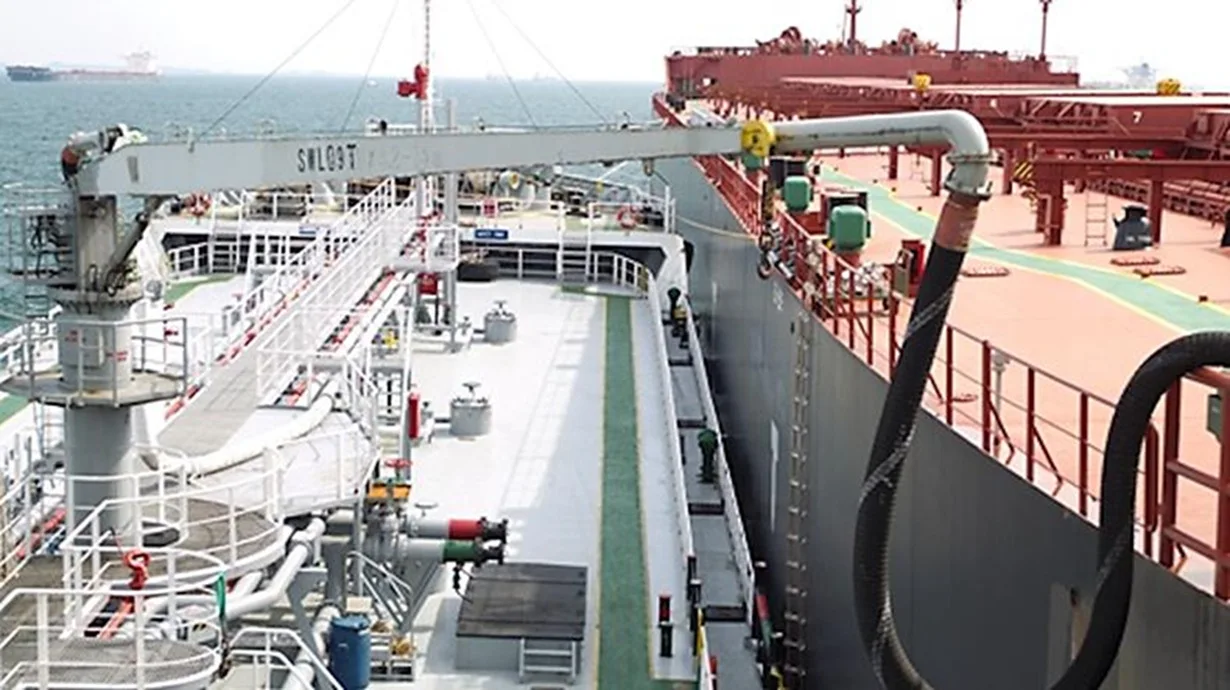
For shipping companies, fuel availability is a strategic variable. Bunkering, the process of supplying vessels with fuel, influences operating costs, route selection and port-call planning.
Middle Eastern disruptions have already changed commercial practices. According to industry executives interviewed by Reuters, shipowners are increasingly favoring spot purchases and shorter-term contracts to limit exposure to price volatility. Some are reducing the quantities purchased at individual ports to preserve the option of refueling elsewhere.
This adjustment provides immediate flexibility but reduces visibility for suppliers and complicates supply planning. Contracts previously negotiated for six months or a year may now cover only a few months or even several weeks.
By mid-October, marine fuel prices remained more than 70% above levels observed before the war involving Iran, according to commercial data cited by Reuters. This broader increase should not be confused with changes in HSFO spot premiums, which measure a different component of market pricing.
The consequences for international transport depend on several variables. Fuel represents a significant component of vessel operating expenses, but freight rates also depend on ship availability, voyage distances, commercial demand, insurance costs and port congestion.
An increase in bunkering costs can therefore put upward pressure on transport rates without automatically producing a proportional rise in merchandise prices. Freight contracts, hedging strategies and competition between carriers influence how these costs are transmitted.
The principal economic risk lies in the persistence of simultaneous constraints. When vessels must follow longer routes, pay more for fuel and make additional refueling stops, logistical expenses can accumulate.
Energy fragmentation then becomes another dimension of commercial fragmentation.
From Fujairah to Gwadar, Ports Reorganize Their Roles
Supply difficulties are producing more than price adjustments. They are also changing the geography of maritime services.
For decades, major bunkering centers developed around their strategic locations, storage capacity and proximity to important shipping routes. Singapore, Fujairah and Rotterdam consequently occupy central positions in supplying the global merchant fleet.
Middle Eastern disruptions are now encouraging traders to diversify their delivery points.
Vitol began developing bunkering operations at Pakistan's Gwadar port in July 2026, seeking to provide an additional option for vessels operating around the Gulf. This location offers an alternative to some operations traditionally conducted at Fujairah in the United Arab Emirates, where activity has been affected by regional tensions.
Gwadar's geographical position gives this development particular significance. Located on Pakistan's coastline near major Indian Ocean shipping routes, the port could contribute to the diversification of regional energy services. Its development as a bunkering center will nevertheless depend on reliable supplies, adequate infrastructure, security conditions and its ability to attract shipping companies over time.
Other ports are also attracting renewed interest. Port Louis in Mauritius, Colombo in Sri Lanka and Salalah in Oman are among the facilities receiving greater attention from operators seeking to reduce their dependence on traditional supply routes.
This redistribution does not necessarily mean that established hubs will lose their importance. Rather, it suggests the emergence of a more dispersed supply network in which shipping companies seek to maintain several refueling options.
Such diversification can improve system resilience, but it may also increase costs. Expanding infrastructure, distributing inventories and maintaining delivery capabilities across multiple ports require additional investment.
Security of supply is consequently becoming an economic objective distinct from the simple minimization of operating costs.
Singapore Prepares for a Multi-Fuel Maritime Market
The transformation of bunkering concerns not only geography but also the types of fuel being supplied.
In Singapore, maritime authorities are pursuing a strategy designed to develop several energy pathways simultaneously. Liquefied natural gas, liquefied biomethane, methanol, ammonia and other alternatives are progressively attracting investment, technical standards and regulatory frameworks.
According to the Maritime and Port Authority of Singapore, LNG bunkering sales reached 487,100 metric tons between January and September 2026, an increase of more than 21% compared with the same period a year earlier. This growth must be considered within a maritime fuel market still overwhelmingly dominated by petroleum products. Nevertheless, it indicates that energy diversification is beginning to generate commercially significant volumes.
Vitol plans to expand its LNG delivery capabilities in Singapore, with a first bunkering vessel expected in November and two additional vessels in 2027. The company is also examining opportunities associated with bio-LNG.
Singaporean authorities have simultaneously announced initiatives involving floating LNG storage, safety standards for ammonia and fuel-quality verification procedures. Eight new LNG bunkering licenses were awarded in 2026, while additional storage capacity is being considered.
These developments respond to two objectives that are related but not identical.
The first concerns energy security. By increasing the range of available fuels, ports seek to reduce their dependence on a single supply chain. The second involves the environmental transition, which is gradually requiring maritime transport to reduce emissions.
Both objectives can reinforce each other, but they involve different constraints. LNG remains a fossil fuel, and its climate performance depends partly on methane emissions throughout the supply chain. Alternative fuels also require investment in vessels, terminals, safety equipment and production facilities.
Diversification therefore does not provide an immediate solution to shortages of conventional fuel oil. It represents a longer-term industrial transformation capable of gradually changing the structure of maritime energy demand.
The End of an Era of Oil Market Fluidity
The current crisis highlights a broader evolution in global energy markets.
For several decades, the expansion of international trade encouraged the development of relatively integrated petroleum supply networks. Major trading companies could arbitrage between producing and consuming regions, while transport and storage infrastructure facilitated the movement of cargoes.
This integration never eliminated differences between products or local constraints. Nevertheless, it allowed part of the regional imbalances to be compensated through the redirection of commercial flows.
Geopolitical tensions, trade restrictions, refining disruptions and changing industrial requirements are now complicating these adjustment mechanisms.
Cargo availability no longer depends exclusively on price or distance from the consumer. It may also be conditioned by the military risks associated with a shipping route, refinery processing capabilities, regulations governing a particular fuel, or access to insurance and financing.
The oil market retains its global dimension, but its individual segments are becoming increasingly sensitive to specific constraints.
This fragmentation can produce apparently contradictory situations: crude oil remains available while particular fuels are scarce; some ports are relatively well supplied while others face elevated premiums; and refineries absorb products traditionally intended for maritime transport.
It is also transforming the role of major commodity traders. Their competitive advantage no longer rests solely on purchasing and reselling cargoes. It increasingly depends on infrastructure control, supply diversification and geopolitical risk management.
Companies capable of rapidly mobilizing inventories, vessels and port facilities across several regions possess flexibility whose economic value rises with uncertainty.
This evolution could encourage greater concentration in certain activities around groups with sufficient financial and logistical resources. It could also support the emergence of new regional hubs, provided they can guarantee reliable and competitive services.
Is Fragmentation Becoming Permanent?
It would be premature to interpret current marine fuel tensions as evidence of a permanent structural shortage. A recovery in Middle Eastern exports, normalization of Russian refining capacity or changes in Asian industrial demand could rapidly ease pressure in certain market segments.
The commercial premiums observed in October reflect specific supply and demand conditions. Their current levels do not necessarily indicate how they will evolve over the medium term.
However, the decisions being made by market participants could have more lasting consequences.
When a trader invests in new bunkering infrastructure, a shipping company diversifies its refueling ports, or a maritime authority develops multi-fuel facilities, these decisions commit resources and progressively reshape the organization of trade.
Market fragmentation can therefore outlast the disruptions that initially produced it.
Perhaps the most significant change concerns how companies evaluate their supply chains. Securing the cheapest fuel is no longer sufficient. Price considerations must increasingly be balanced against actual product availability, route security, contractual stability and the ability to change suppliers quickly.
This transformation extends beyond maritime transport. It parallels developments in critical minerals, electronic components and energy infrastructure, where supply security is gaining importance in industrial decision-making.
Oil nevertheless retains one essential characteristic: its markets remain deeply interconnected, even as their imbalances become more differentiated. A disruption to Russian refining can influence Asian bunkering prices. Difficulties exporting Saudi crude can alter fuel oil consumption at North Asian refineries. Shortages of marine fuels can encourage investment in new port infrastructure across the Indian Ocean.
Together, these relationships form a global system whose connections remain powerful but whose adjustment mechanisms are becoming more expensive.
The marine fuel crisis therefore reveals a fundamental transformation in the petroleum economy. The central question is no longer simply how many barrels the world can produce, but which fuels it can manufacture, where they can be delivered and under what conditions.
In this emerging energy geography, oil abundance no longer guarantees the smooth functioning of petroleum trade. Supply security increasingly depends as much on refineries, ports and maritime routes as it does on underground reserves.
Main Sources
Reuters — October 16, 2026. Global fuel oil market stays tight as conflicts hit Mideast, Russia supplies, Vitol says. Commercial data on fuel oil exports, HSFO premiums and Vitol's supply adjustments.
Reuters — October 16, 2026. Mideast war alters global bunker buying patterns, industry executives say. Changes in marine fuel procurement contracts, port diversification and the impact of regional tensions on purchasing strategies.
Reuters — October 15, 2026. Bunker Holding expects marine fuel sales to dip in 2026 as war fragments market. Changes in bunkering volumes and the geographical restructuring of demand.
Maritime and Port Authority of Singapore — October 14, 2026. Singapore Strengthens Multi-Fuel Bunkering Capabilities and Digitalisation at SIBCON 2026. Development of multi-fuel infrastructure, technical standards and storage capacity.
Maritime and Port Authority of Singapore — July 30, 2026. Singapore Awards New LNG Bunkering Licences to Strengthen Singapore's Multi-Fuel Bunkering Hub. Award of eight LNG bunkering licenses and expansion of port capabilities.
Kpler and LSEG — Market data cited by Reuters, October 2026. Fuel oil export volumes through the Strait of Hormuz and changes in HSFO commercial premiums.
Atlas Limits Research Desk
Atlas Limits’ editorial and analytical desk.