The Arab world shares a language, historical legacies, cultural references and a political memory extending from the Atlantic Ocean to the Gulf. Yet this vast region, comprising 22 member states of the Arab League, has never succeeded in establishing a lasting political union. Attempts at state unification have been short-lived, common institutions have remained limited, and national rivalries have repeatedly prevailed over collective ambitions.
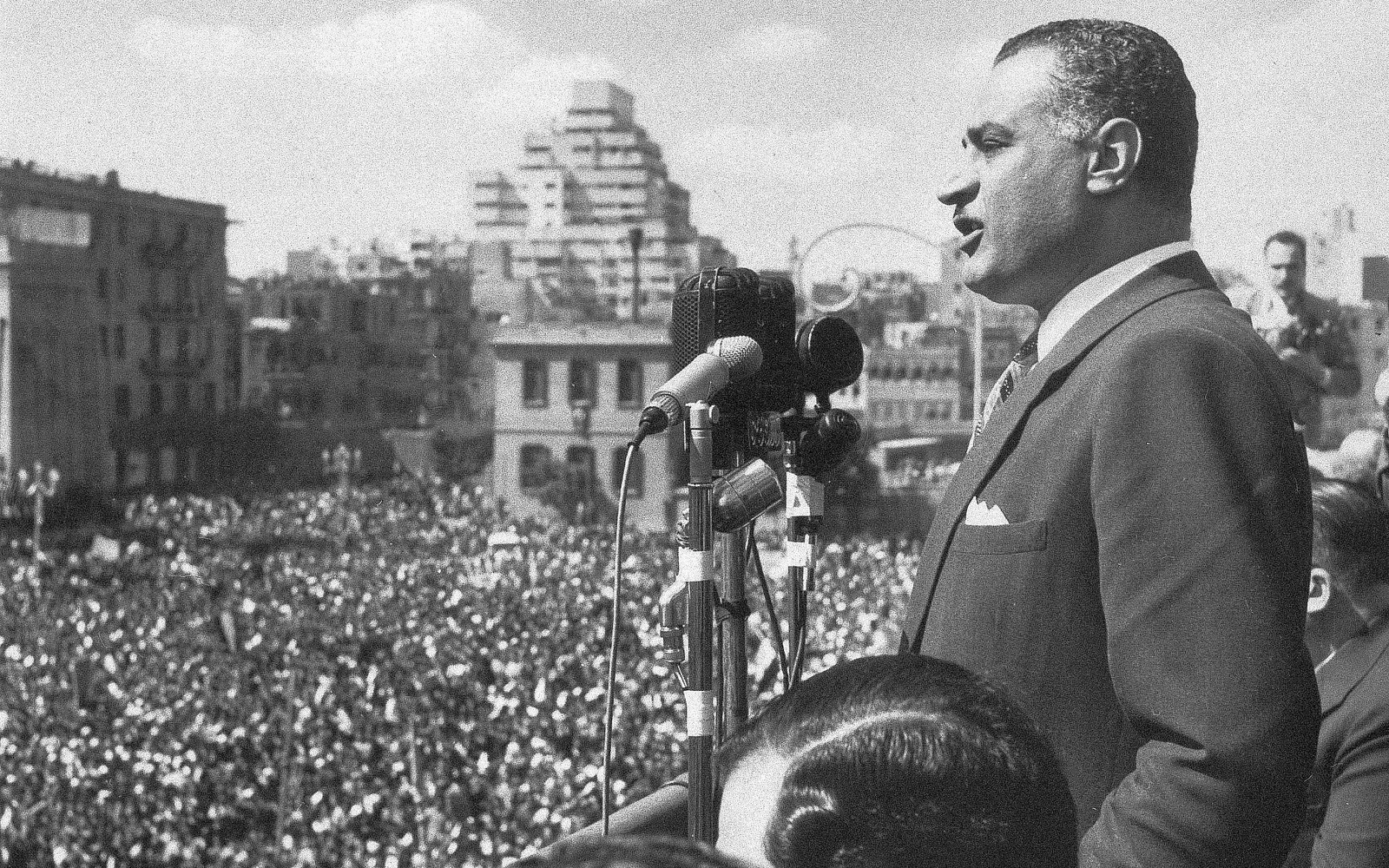
This contradiction lies at the heart of pan-Arabism. Emerging from the Arab intellectual renaissance and the transformation of the Ottoman Empire, strengthened by colonial domination and eventually brought to its political height by Gamal Abdel Nasser, the project of Arab unity profoundly shaped the twentieth century. It contributed to the overthrow of monarchies, the formation of republican regimes, the mobilisation of societies and the redefinition of relations between the Middle East, North Africa and the major powers.
Its fundamental ambition, however, was never fully realised. Transforming a historical and linguistic community into a sovereign political entity proved considerably more difficult than mobilising populations around a shared identity.
Pan-Arabism encountered a reality more durable than the ideology itself: the emergence of states with their own institutions, strategic interests, political elites and increasingly consolidated national identities.
The movement has not entirely disappeared. It has changed in character. Where it once sought to transcend or eliminate national borders, it now survives primarily through popular solidarities, cultural representations and selective forms of diplomatic cooperation.
Its history therefore offers an essential perspective on a broader geopolitical question: why does the Arab world remain a recognisable political and cultural space without constituting a unified geopolitical actor? 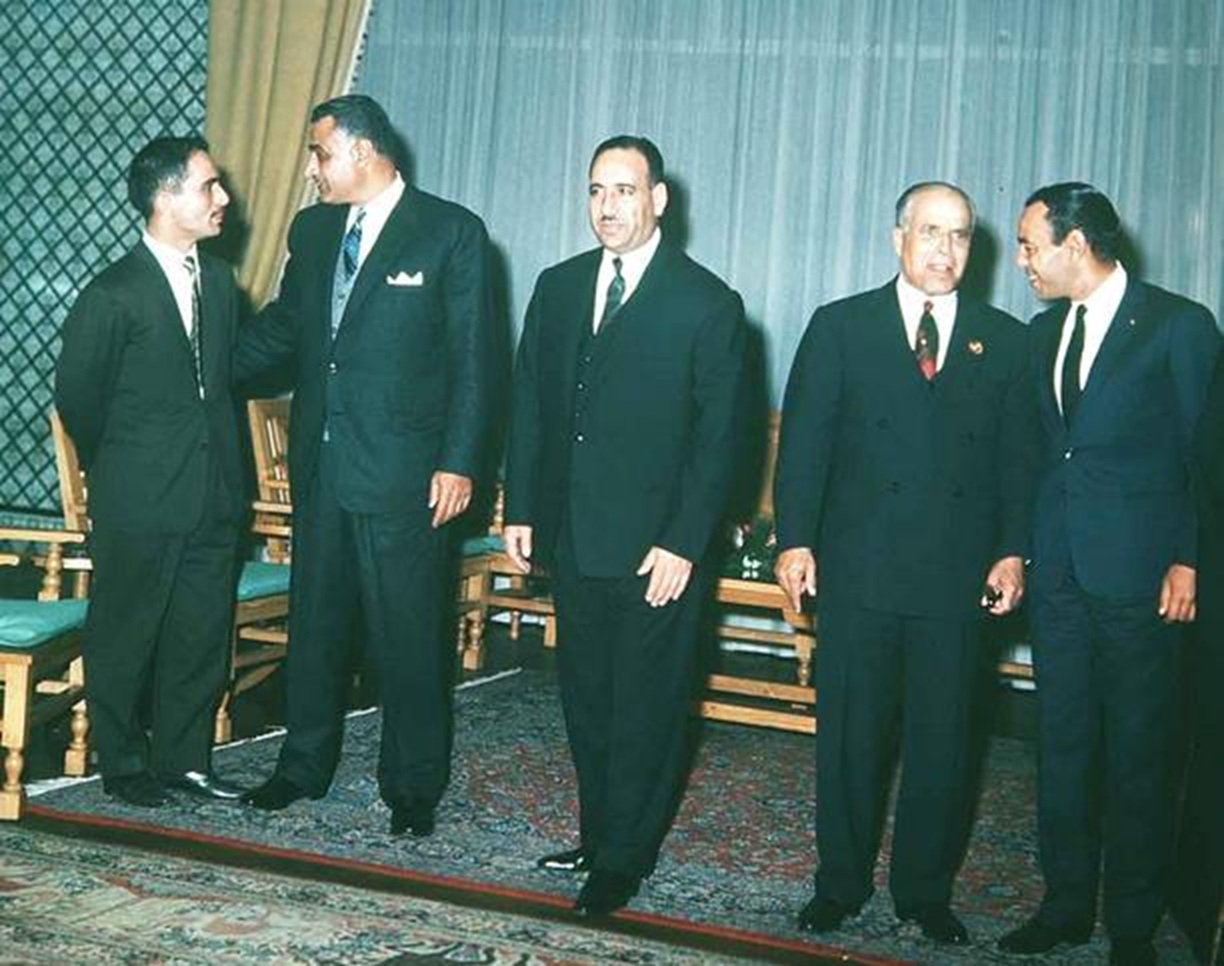
A Nation Imagined Before the Modern States
The origins of pan-Arabism predate the independence movements of the twentieth century. They can be traced to the Nahda, the Arab intellectual and cultural renaissance that developed during the nineteenth century, particularly in the Levant and Egypt.
Intellectuals, writers and reformers sought to renew the Arabic language, modernise education and reconsider the position of Arabic-speaking societies within a changing imperial environment.
This intellectual revival did not initially amount to a coherent programme of political separation. Many of its participants advocated linguistic recognition, administrative reform or greater autonomy within the Ottoman Empire rather than immediate independence.
The concept of an independent Arab nation emerged progressively, particularly as imperial centralisation and the political tensions of the early twentieth century encouraged nationalist aspirations.
The First World War accelerated this transformation.
The Arab Revolt of 1916, led by Sharif Hussein of Mecca with British support, encouraged expectations that the collapse of Ottoman authority might produce a large independent Arab political entity.
The outcome was fundamentally different.
European diplomatic arrangements, the postwar mandate system and the fragmentation of former Ottoman territories created separate political frameworks across the region.
Syria, Lebanon, Palestine, Transjordan and Iraq followed distinct institutional trajectories, while Egypt and the territories of North Africa experienced their own forms of foreign domination, nationalist resistance and state formation.
For Arab nationalists, this fragmentation became a central political grievance. The emerging borders were interpreted as the consequences of an imperial order that had prevented the expression of a supposedly pre-existing national unity.
Yet this interpretation contained an important historical difficulty.
Arabic-speaking societies shared significant cultural and linguistic foundations without necessarily having constituted a single, homogeneous political community before the modern period.
Their dynastic histories, social structures, religious traditions and relationships with political authority were highly diverse.
Pan-Arabism was therefore not simply an attempt to restore a previously existing unified state. It was a project to construct a new political nation from overlapping historical and cultural affiliations.
Independence Was Not Enough: The Ambition of Unity
After the Second World War, decolonisation transformed Arab nationalism into one of the most influential political forces in the region.
European imperial control gradually receded, but territorial independence did not fully satisfy the ambitions of nationalist movements.
For pan-Arabists, the independence of individual countries represented only the first stage of emancipation.
Political fragmentation would continue to limit the Arab world's economic, military and diplomatic capabilities. Only some form of unification could provide sufficient strategic weight to resist foreign intervention and collectively control regional resources.
This argument reflected a structural interpretation of international power.
A divided Arab world would remain vulnerable to external decisions, while a unified political entity combining its population, energy resources, maritime positions and productive capacities could potentially emerge as a major pole of the international system.
The establishment of the League of Arab States in 1945 represented an early institutional expression of this shared political consciousness.
Yet the organisation was founded on a compromise that anticipated the limits of the broader project.
Its members sought to coordinate their policies without surrendering national sovereignty.
Cooperation prevailed over integration.
This distinction became decisive. Arab governments could recognise common interests while refusing to establish a superior authority empowered to impose decisions on individual states.
Pan-Arabism consequently acquired considerable ideological legitimacy without developing the institutional mechanisms required to achieve its central ambition.
Nasser and the Transformation of Arab Unity into a Project of Power
The Free Officers' Revolution in Egypt in 1952 opened a new political era.
Gamal Abdel Nasser gradually emerged as the leading representative of revolutionary Arab nationalism, combining political independence, state-led economic development, social reform and opposition to Western domination.
The nationalisation of the Suez Canal in 1956 marked a turning point.
The subsequent British, French and Israeli military intervention, followed by the withdrawal of the invading forces under international pressure, substantially strengthened Nasser's political prestige.
The significance of the episode extended far beyond Egypt.
For millions of Arabs, Suez demonstrated that a regional state could challenge former imperial powers and assert sovereignty over a strategically vital infrastructure asset.
Nasser understood that this symbolic victory could be transformed into political influence.
Radio broadcasting, particularly the Voice of the Arabs service, carried Egyptian revolutionary messages across the region. Cairo became an intellectual, media and diplomatic centre of Arab nationalism.
The Nasserist project went beyond cultural solidarity.
It envisaged a transformation of the regional balance of power through an Arab political formation capable of exercising influence in a world dominated by the United States, the Soviet Union and the former European colonial powers.
This ambition developed within the geopolitical environment of the Cold War.
Nasser's commitment to non-alignment did not mean the absence of relations with major powers. It represented an attempt to preserve strategic autonomy while exploiting the opportunities created by their rivalry.
Pan-Arabism thus became simultaneously an ideology of liberation, a model of state-led development and an instrument of Egyptian regional power projection.
The final dimension generated resistance.
For other Arab governments, unification could also mean the subordination of their institutions and political authority to Cairo.
The project of Arab unity therefore contained an unresolved tension between collective emancipation and competition for regional leadership.
The United Arab Republic: The Decisive Experiment
In February 1958, Egypt and Syria proclaimed the United Arab Republic.
For the first time, two independent Arab states merged into a common political structure explicitly presented as the foundation of a wider unified Arab nation.
The event carried exceptional symbolic significance.
It appeared to demonstrate that pan-Arabism could move beyond political rhetoric and produce an institutional reality.
Yet the difficulties emerged rapidly.
Egypt and Syria possessed different political structures, social balances and administrative traditions.
The centralisation of authority around Nasser, the dissolution of political parties and the economic transformations introduced under the union generated growing dissatisfaction among sections of the Syrian political and military establishment.
An arrangement intended to transcend national sovereignty instead exposed the difficulty of distributing power between its constituent territories.
In September 1961, a military coup in Damascus brought the political union to an end.
Egypt retained the official name United Arab Republic until 1971, but the experiment in unification had collapsed.
The implications extended well beyond the separation of two governments.
The experience demonstrated that linguistic and cultural proximity was insufficient to establish a functioning political community.
Durable integration required mechanisms of representation, an accepted distribution of authority, institutions capable of resolving disputes and political legitimacy extending beyond the popularity of a single leader.
The United Arab Republic attempted to establish political unity before constructing the institutional foundations necessary to sustain it.
It remains one of the clearest historical examples of the limitations of state integration imposed from above.
Baathism and the Rivalry Between Arab Nationalisms
Nasserism was not the only expression of pan-Arabism.
The Baath Party, established in the 1940s around intellectual figures including Michel Aflaq and Salah al-Din al-Bitar, also advocated the creation of a unified Arab nation, combining national renaissance, freedom and socialism.
Baathism became particularly influential in Syria and Iraq.
Yet its political history revealed another contradiction: regimes claiming allegiance to the same ideology of Arab unity eventually became strategic adversaries.
The Syrian and Iraqi branches developed into rival political organisations associated with separate national military and security establishments.
Under Hafez al-Assad in Syria and Saddam Hussein in Iraq, references to Arab unity coexisted with an extreme concentration of power within distinct states.
Arab nationalism was no longer exclusively a programme for political unification.
It had also become an instrument for legitimising national regimes.
This development fundamentally altered its political function.
An ideology originally designed to transcend national borders increasingly served to consolidate the very state structures it had sought to unite.
Competition between Arab capitals was therefore not merely ideological.
It reflected the emergence of autonomous state interests capable of surviving the rhetoric of common nationality.
1967: The Strategic Rupture
The June 1967 war marked a decisive turning point.
The military defeat of Egypt, Syria and Jordan by Israel produced a profound political and psychological shock across the Arab world.
The Egyptian armed forces, presented as one of the principal instruments of Arab resurgence, suffered a rapid defeat.
Israel occupied the Sinai Peninsula, Gaza Strip, West Bank, East Jerusalem and Golan Heights.
Nasser retained considerable personal prestige, but the strategic credibility of his political project was severely weakened.
The war exposed the distance between ideological mobilisation and effective military capability.
It also revealed deficiencies in coordination between Arab states despite their shared political language.
Nasser's death in 1970 accelerated the transition to a different regional order.
Under Anwar Sadat, Egypt gradually redirected its foreign policy.
The 1973 war opened a diplomatic sequence that culminated in the Camp David Accords of 1978 and the Egyptian-Israeli peace treaty of 1979.
The agreement represented the prioritisation of Egyptian national interests over a collective Arab position.
The state that had most powerfully embodied pan-Arab ambitions demonstrated that it could pursue its security and territorial objectives through an independent diplomatic strategy.
Egypt's temporary suspension from the Arab League following the peace treaty did not alter the underlying reality.
Regional institutions lacked the capacity to determine the strategic decisions of their members.
The sovereignty of the nation-state had prevailed over the aspiration to a unified Arab political order.
National Sovereignty as the Fundamental Obstacle
The decline of pan-Arabism is frequently attributed to foreign intervention, ideological divisions or rivalries between political leaders.
These factors were important, but they do not fully explain the persistence of political fragmentation.
The more fundamental obstacle was the consolidation of the states themselves.
Following independence, Arab governments developed national administrations, armed forces, education systems, economic policies and distinct historical narratives.
Borders progressively became frameworks for political socialisation, institutional loyalty and resource distribution.
Institutions generated interests that favoured their own continuity.
Political union would necessarily require decisions about the control of armed forces, taxation, monetary policy, natural resources and foreign relations.
It would also raise fundamental questions concerning population representation and the distribution of wealth between territories with very different economic structures.
Arab states displayed considerable demographic and economic disparities.
Some possessed extensive energy resources and relatively small populations. Others had large domestic markets but faced more substantial fiscal, employment and social pressures.
Political integration would have required credible redistribution mechanisms, guarantees of representation and strong supranational institutions.
Such conditions never emerged on a sufficiently broad scale.
The problem was therefore not simply an absence of commitment to Arab unity.
It was the difficulty of reconciling that ambition with the institutional structures, economic interests and political incentives of existing states.
The Maghreb and the Plurality of National Identities
The experience of North Africa provides a particularly revealing illustration of the limitations of a uniform conception of Arab identity.
Morocco, Algeria, Tunisia, Libya and Mauritania participate in the Arab political and cultural sphere, but their historical trajectories cannot be reduced to that affiliation.
Amazigh heritage, dynastic formations, trans-Saharan relationships, Mediterranean exchanges and distinct colonial experiences contributed to the emergence of different political identities.
In Morocco, national identity rests in part on dynastic continuity, a long history of state formation and a plurality of cultural and linguistic components.
The 2011 Constitution recognises Arabic and Amazigh as official languages and affirms the diversity of the country's national identity.
Membership in the Arab world is therefore one dimension of Moroccan identity rather than its exclusive definition.
Algeria developed a national political legitimacy strongly associated with its war of independence, while Tunisia followed a distinct institutional trajectory.
Libya experienced several attempts at political union under Muammar Gaddafi, none of which produced a durable unified state.
The establishment of the Arab Maghreb Union in 1989 reflected the ambition of regional cooperation.
Yet political tensions, particularly between Morocco and Algeria, have largely paralysed its functioning.
The example is significant.
Even within a geographically continuous region possessing substantial economic complementarities and deep historical connections, sovereignty disputes can prevent the establishment of an integrated regional space.
Shared identity does not eliminate conflicts of interest.
The Maghreb demonstrates that regional integration depends less on cultural proximity than on political arrangements capable of managing strategic disagreements.
The Gulf Monarchies and the Emergence of a Different Model
The economic development of the Gulf monarchies progressively shifted the centre of gravity of the Arab world.
Saudi Arabia, the United Arab Emirates, Qatar, Kuwait, Bahrain and Oman accumulated financial and energy resources that enabled them to exercise influence far beyond their demographic weight.
The Gulf Cooperation Council, established in 1981, became one of the more structured regional cooperation frameworks in the Arab world.
Its underlying logic, however, differed from revolutionary pan-Arabism.
Its members primarily sought to coordinate security, economic policies and selected regulatory frameworks while preserving their respective political systems.
Integration remained selective.
The proposed common currency did not materialise, and diplomatic rivalries periodically produced major crises, notably the confrontation between Qatar and several neighbouring states from 2017 to 2021.
The Gulf consequently illustrates the emergence of pragmatic regionalism organised around converging interests rather than the ambition of political fusion.
The growing economic influence of Gulf states has also transformed internal Arab power relations.
Regional influence increasingly depends on financial capabilities, international investments, infrastructure, technology and global partnerships.
The language of Arab unity survives, but economic and strategic competition between states plays an increasingly important role in determining regional policies.
In this environment, the ability to mobilise capital, develop advanced industries and establish international partnerships can be more consequential than ideological claims to regional leadership.
Palestine: The Last Major Transnational Arab Cause?
The Palestinian question occupies a distinctive position in the history of pan-Arabism.
Since 1948, it has represented one of the principal sources of political mobilisation across the Arab world.
It transcends differences between monarchies and republics, between North African and Middle Eastern societies, and between ideological movements that otherwise hold conflicting political positions.
The Arab-Israeli wars, the displacement of Palestinian populations, territorial occupation and successive cycles of violence have embedded the issue in a shared transnational political memory.
Yet popular solidarity and diplomatic convergence do not necessarily translate into a common strategy.
Arab states maintain different relationships with Israel, the United States, Iran and Palestinian political organisations.
The peace agreements concluded by Egypt and Jordan, followed by normalisation initiatives undertaken by several other Arab countries, illustrate the diversity of national approaches.
The events in Gaza since October 2023 renewed public mobilisation and returned the Palestinian question to the centre of regional political debate.
They also demonstrated the difficulty Arab governments face in transforming a broadly shared political position into collective strategic capacity.
Palestine thus reveals the persistence of a common Arab political consciousness while exposing the institutional limitations of its expression.
Solidarity can cross borders without producing common sovereignty.
The distinction is essential to understanding the contemporary Arab political environment.
Pan-Islamism and the Decline of Grand Ideologies
From the 1970s onward, pan-Arabism also faced growing competition from political movements organised around Islamic references.
Pan-Islamism proposed a different framework of collective belonging.
Where Arab nationalism emphasised the language and historical experience of Arab peoples, pan-Islamism prioritised the global Muslim community, extending far beyond the Arab world.
The two ideological traditions could converge on certain objectives, particularly solidarity with Palestinians or opposition to foreign domination.
But they rested on different foundations and competing conceptions of political legitimacy.
The development of Islamist movements, the Iranian Revolution of 1979, transformations within Saudi Arabia and the political upheavals following 2011 contributed to the changing ideological environment.
Yet the decline of pan-Arabism did not simply mean that pan-Islamism replaced it.
Contemporary Middle Eastern and North African states remain shaped by powerful territorial nationalisms, distinct economic interests and competing security priorities.
The dominant development has been the multiplication of political affiliations and strategies rather than the straightforward substitution of one unifying ideology for another.
The Arab world has become an arena in which national, religious, cultural and geopolitical identities coexist, overlap and sometimes compete.
The 2011 Uprisings: A Political Community Without Common Leadership
The protests that began in Tunisia in late 2010 and spread across several Arab countries in 2011 revealed another dimension of regional interconnectedness.
Demands concerning dignity, social justice, corruption and political representation circulated rapidly between societies.
Images, slogans and methods of mobilisation crossed national borders through transnational media and digital platforms.
This diffusion demonstrated the existence of a shared political communication space.
Yet the uprisings did not produce a revival of classical pan-Arabism.
The movements were primarily directed toward transforming national political systems rather than merging them into a unified state.
Their subsequent trajectories diverged sharply.
Some countries experienced changes of government, while others entered civil wars, faced foreign intervention or witnessed authoritarian restoration.
The transnational circulation of political aspirations did not produce a common institutional trajectory.
The events of 2011 therefore highlighted a fundamental distinction.
The Arab world can operate as an interconnected political space without becoming a unified political community under a common government.
Its societies may influence one another profoundly while remaining embedded in separate state structures.
From Political Unity to Fragmented Power
In the twenty-first century, the central question is no longer whether all Arab states can realistically be brought under a single authority.
It is why a region possessing substantial strategic resources struggles to convert its complementarities into collective influence.
The Arab world occupies an exceptional geographical position.
It connects the Atlantic, the Mediterranean, the Red Sea, the Indian Ocean and the Gulf.
It includes major hydrocarbon producers, international financial centres, essential maritime corridors and large demographic markets.
This geography provides considerable potential power.
But potential power is not the same as collective capability.
Arab economies display different specialisations, their commercial relationships remain extensively oriented toward external partners, and their security policies depend on alliances that are sometimes mutually competitive.
Major investments in energy, logistics, digital infrastructure and artificial intelligence are strengthening individual national economies without necessarily generating regional integration.
Political fragmentation also allows external powers to develop differentiated bilateral relationships with states across the region.
The United States, China, Russia, the European Union, Turkey and Iran engage with this environment through varying combinations of trade, security, energy, technology and diplomacy.
These relationships are not uniform.
Some Arab states prioritise American security partnerships, others pursue extensive economic engagement with China, while several seek to diversify their international relationships without committing exclusively to a single geopolitical bloc.
The resulting landscape is one of overlapping partnerships rather than unified strategic alignment.
The Arab world therefore does not lack resources of power.
It lacks sufficiently developed institutions and sustained strategic convergence to mobilise those resources collectively.
This distinction explains why substantial national capabilities do not automatically translate into regional geopolitical weight.
Is Pan-Arabism Definitively Obsolete?
The failure of twentieth-century unification projects does not mean that all forms of Arab integration are impossible.
It suggests instead that political unity cannot be established simply by invoking a shared cultural identity.
Durable cooperation requires sufficiently convergent interests, credible decision-making mechanisms, reciprocal commitments and institutions capable of resolving disputes.
From this perspective, economic, energy, logistical and technological integration may produce more tangible results than the former ambitions of immediate political fusion.
Cross-border electricity interconnections, trade corridors, port infrastructure, payment systems and regional investment networks offer practical opportunities for cooperation.
Such projects can create mutual economic benefits without requiring states to surrender their sovereignty.
However, their long-term effectiveness depends on political continuity.
Infrastructure cannot generate regional integration if diplomatic crises repeatedly interrupt trade, investment or regulatory coordination.
The history of pan-Arabism demonstrates that regional projects become vulnerable when their political ambitions consistently exceed the institutional capacity available to implement them.
It also demonstrates that collective identities do not necessarily disappear with the ideologies that once sought to organise them.
Arab identity remains a plural linguistic, cultural and political reality.
It does not automatically imply the existence of a single sovereign nation-state.
The more relevant contemporary question is therefore whether Arab governments can establish forms of functional integration that preserve national sovereignty while creating genuine collective capabilities.
Such an approach would represent a fundamental departure from classical pan-Arabism.
Rather than attempting to construct one state from a common identity, it would seek to construct shared interests among already established states.
A Cultural Community, Enduring Sovereignties
Pan-Arabism was one of the twentieth century's most ambitious attempts to transform a historical community into a unified geopolitical actor.
Its influence extended far beyond its institutional achievements.
It contributed to decolonisation, reshaped political legitimacy, inspired governments and structured relations between Arab states for several decades.
Yet it encountered a contradiction that it never resolved.
The states expected to form a common nation were simultaneously developing distinct political institutions, strategic interests and national identities.
The failure of pan-Arabism cannot therefore be explained solely by military defeats, external intervention or rivalries between political leaders.
It reflected the inability to transform historical solidarity into a durable political architecture.
Today, the Arab world is neither a homogeneous entity nor a region without meaningful coherence.
It constitutes a community of cultural references, political interactions and economic interdependencies, traversed by national interests that sometimes converge and sometimes conflict.
Its future influence will depend less on reviving an ideal of total political unity than on establishing institutional cooperation compatible with the continued existence of sovereign states.
The fundamental question left unresolved by pan-Arabism is not whether a shared Arab identity exists.
It is how that identity can be translated into effective political and strategic cooperation.
A community can share a history without sharing a state. But can it transform that common heritage into collective power without surrendering national sovereignty?
That tension between belonging and power continues to shape the geopolitical future of the Arab world.
Principal Sources
- League of Arab States — Pact of the League of Arab States, 22 March 1945, and institutional documentation.
- United Nations — General Assembly Resolution 181 (1947), Security Council Resolutions 242 (1967) and 338 (1973), and historical documentation on the Arab-Israeli conflicts.
- Constitution of the Kingdom of Morocco (2011) — Preamble and Article 5.
- Gulf Cooperation Council — Founding Charter (1981) and institutional documentation.
- James Jankowski and Israel Gershoni (eds.), Rethinking Nationalism in the Arab Middle East, Columbia University Press, 1997.
- Adeed Dawisha, Arab Nationalism in the Twentieth Century: From Triumph to Despair, Princeton University Press, 2003.
- Rashid Khalidi et al. (eds.), The Origins of Arab Nationalism, Columbia University Press, 1991.
- Malcolm H. Kerr, The Arab Cold War: Gamal Abd al-Nasir and His Rivals, 1958–1970, Oxford University Press, 1971.
- Michael Barnett, Dialogues in Arab Politics: Negotiations in Regional Order, Columbia University Press, 1998.
Atlas Limits Research Desk
Atlas Limits’ editorial and analytical desk.