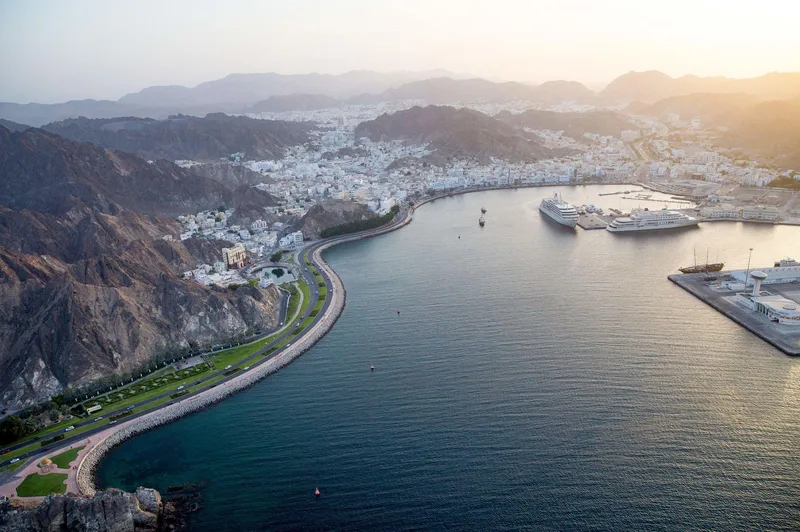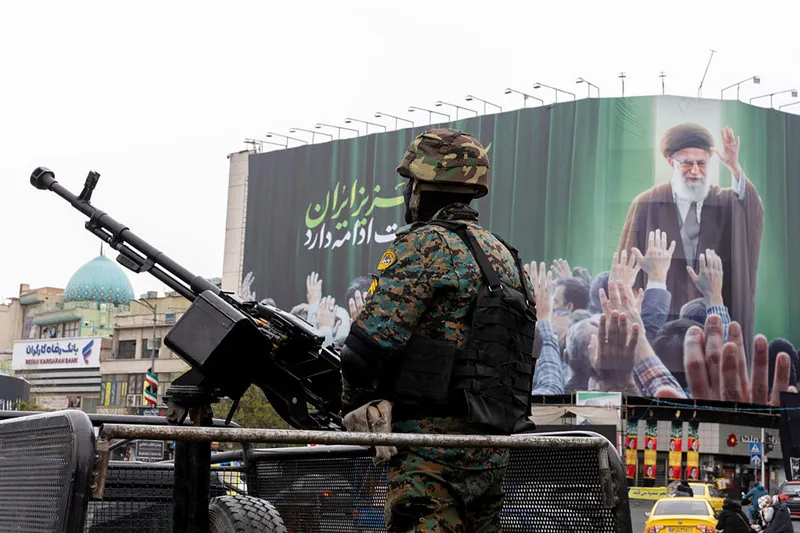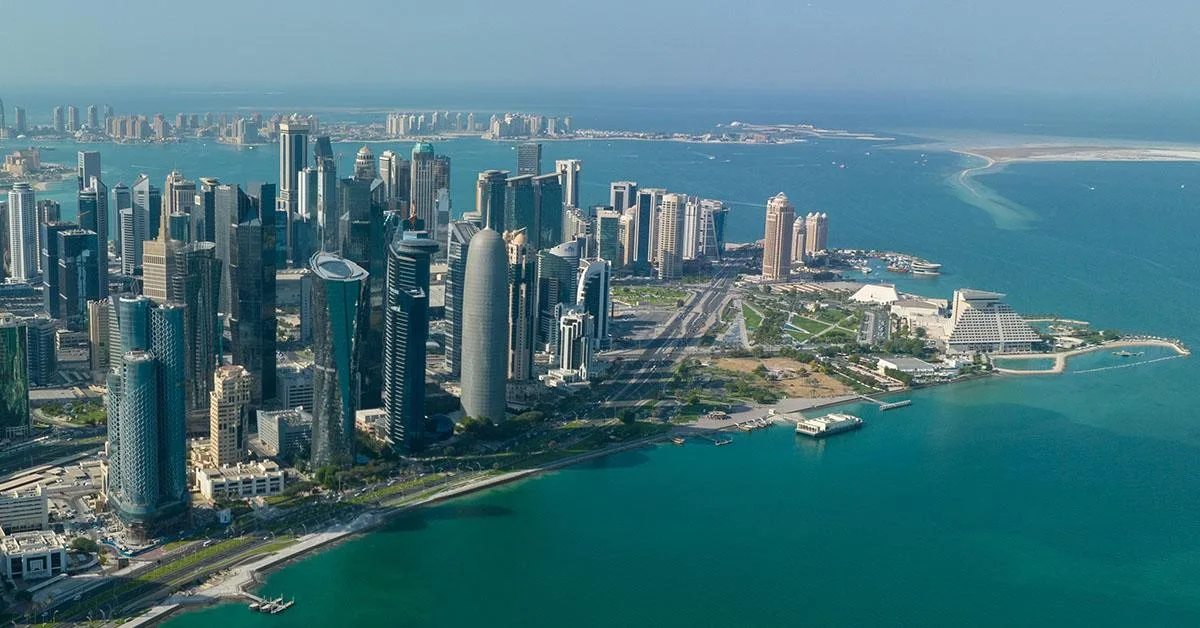
A glance at a map of the Persian Gulf is enough to reveal the paradox. A peninsula covering approximately 11,600 square kilometres, extending into the warm waters of the Gulf, bordered by Saudi Arabia and separated from Iran by a narrow maritime space. A territory smaller than many European administrative regions, without strategic depth, without a substantial hinterland, and historically dependent on its neighbours for essential supplies. Nothing in this geography suggested that Qatar was destined to become a significant international actor.
Yet Doha hosts negotiations on which ceasefires may depend, invests in major Western corporations, supplies natural gas to Asian and European economies, accommodates one of the most important American military installations in the Middle East, and operates one of the world's most internationally connected airlines. The country has become an actor whose influence can no longer be measured by its territorial size.
This transformation is not simply the story of extraordinary enrichment. It reveals a distinctive strategy of power: compensating for territorial limitations by multiplying the dependencies that the rest of the world maintains with Qatar.
Qatar did not seek to become large. It sought to become indispensable.
Gas, or the Transformation of a Geographic Constraint
Qatar's contemporary history effectively begins beneath the sea.
Discovered in 1971, the North Field constitutes the Qatari portion of an immense natural gas reservoir shared with Iran, where it is known as South Pars. The field contains exceptional quantities of natural gas. Historical estimates commonly referred to more than 900 trillion cubic feet of recoverable gas, while subsequent assessments have substantially increased the estimated resource base. QatarEnergy's November 2025 presentation referred to more than 2,000 trillion cubic feet of confirmed reserves, reflecting the importance of distinguishing between successive estimates and reserve classifications.
This extraordinary concentration of resources transformed the country's economic trajectory. But the existence of natural gas was not sufficient. Unlike oil, which can be transported relatively easily by tanker, natural gas historically required expensive infrastructure, pipelines, or industrial processing that would allow it to travel across long distances.
Qatar made liquefied natural gas, or LNG, the foundation of its development. Cooled to approximately −162°C, natural gas occupies a volume roughly 600 times smaller than in its gaseous state. It can then be loaded onto specialised carriers, transported across oceans, and delivered to regasification terminals thousands of kilometres away.
This technology fundamentally changed the economic significance of Qatar's geography. A country isolated on a peninsula became capable of supplying major industrial economies without depending on an extensive overland transportation network.
The industrial city of Ras Laffan, in the country's north, became the physical centre of this transformation. It concentrates liquefaction facilities, port infrastructure, processing plants, and some of the most strategically important installations in the national economy.
For years, Qatar's nominal LNG production capacity stood at approximately 77 million tonnes annually. The North Field expansion programme is designed to increase this capacity to 126 million tonnes and subsequently to 142 million tonnes per year by the end of 2030, according to QatarEnergy's announced objectives.
The scale is considerable. A capacity of 142 million tonnes would represent an increase of approximately 84% compared with the historical level of 77 million tonnes.
This strategy rests on a conviction: even in a world committed to decarbonisation, natural gas will continue to occupy an important position in electricity generation, industrial production, and the energy security of numerous economies.
The wager is not without risks. Gas projects require investments running into tens of billions of dollars and must be amortised over several decades. They expose the country to price fluctuations, changes in Asian demand, American competition, and the climate policies of major importing countries.
Qatar is therefore building its power on an exceptional resource, but also on a long-term assumption about the future organisation of global energy.
Wealth as an Instrument of Continuity
Natural gas financed an economic transformation whose speed remains exceptional.
Qatar has approximately three million residents, with fluctuations linked to foreign labour movements. Qatari citizens represent a minority of the population. This demographic structure fundamentally distinguishes the country from major industrialised states: a relatively small national population benefits from revenues generated by an economy that mobilises a considerable international workforce.
Nominal gross domestic product has exceeded $200 billion in recent years, although its value fluctuates with hydrocarbon prices and economic conditions. Relative to its resident population, Qatar ranks among the world's highest-income economies.
But the essential question is not simply the level of wealth. It is how that wealth is organised.
Established in 2005, the Qatar Investment Authority, or QIA, has become one of the world's major sovereign wealth funds. Its assets are generally estimated at several hundred billion dollars, although their exact value and detailed composition are not disclosed with the completeness associated with a publicly listed company.
The fund's underlying logic is straightforward: converting an exhaustible underground resource into financial and productive assets capable of generating income long after the original deposits have been exploited.
This conversion involves investments in infrastructure, real estate, banking, industrial corporations, technology, and services.
Qatar has invested in companies and assets including Barclays, Volkswagen, Heathrow Airport, London real estate, and numerous international businesses. These holdings do not all have the same structure, significance, or profitability. Nevertheless, they reflect a common strategy: embedding Qatari capital in sectors on which advanced economies depend.
International investment consequently serves several purposes. It diversifies income, protects part of national wealth against energy-market fluctuations, and multiplies economic relationships with countries possessing considerable diplomatic and military influence.
Qatar's wealth does not remain in Doha. It circulates through financial centres, infrastructure networks, and corporations around the world.
This movement gives the country an economic presence far greater than its demographic weight.
It also contains a contradiction. The more Qatar internationalises its assets, the more it becomes exposed to foreign regulations, sanctions, geopolitical tensions, and changes in the economic policies of the countries in which it invests.
Diversification reduces certain dependencies while creating new ones.
The Diplomacy of the Intermediary
Qatar's distinctive position becomes even clearer in its foreign policy.
Doha has developed a diplomatic approach based on maintaining relationships with actors who, elsewhere, sometimes refuse to speak to one another. This approach does not amount to absolute neutrality. Qatar belongs to alliances, maintains privileged partnerships, and defends its own interests. But it seeks to preserve diplomatic channels across lines of confrontation.
The country hosts Al Udeid Air Base, one of the principal American military installations in the Middle East and a major component of the United States' regional military posture.
At the same time, Qatar maintains working relations with Iran, its maritime neighbour and geological partner in the exploitation of the enormous shared gas reservoir.
This coexistence might appear contradictory. In reality, it reflects a strategic necessity.
For Doha, completely severing relations with Tehran would be difficult to reconcile with its geography and energy interests. Abandoning American protection, conversely, would expose the country to a regional environment whose military risks it could not manage alone.
Qatari diplomacy therefore consists of maintaining several relationships simultaneously, even when the interests of those partners do not fully coincide.
This method became particularly visible during negotiations concerning Afghanistan. Qatar hosted the Taliban's political office and facilitated discussions between the United States and the Afghan movement, including those that led to the Doha Agreement of February 2020.
The country has also participated in mediation efforts involving prisoner exchanges, regional crises, and negotiations between Israel and Hamas, frequently in coordination with Egypt and the United States.
These initiatives do not guarantee successful negotiations. They expose Doha to conflicting criticism: some partners object to its relations with controversial movements, while others rely precisely on those relationships to transmit messages or explore possible compromises.
Qatar's diplomatic value lies in this capacity for communication.
It does not possess the military capabilities of a great power, but it can provide a political infrastructure for dialogue that parties directly involved in a conflict may no longer possess.
Its influence depends less on its ability to impose a settlement than on its capacity to make negotiations possible.
The Saudi Neighbour and the Lesson of the Blockade
This strategy faced a major test in June 2017.
Saudi Arabia, the United Arab Emirates, Bahrain, and Egypt severed relations with Qatar and imposed diplomatic, commercial, and transportation restrictions. Their governments accused Doha of pursuing destabilising regional policies, maintaining relations with certain Islamist movements, and developing excessively close ties with Iran. Qatar rejected the accusations.
The crisis exposed the material vulnerability of a country whose only land border is with Saudi Arabia.
Supply chains had to be reorganised. Air routes were modified. Businesses sought alternative suppliers. Qatari authorities accelerated certain domestic production programmes, particularly in food.
Iran and Turkey played roles in maintaining and reorganising supply networks. Turkey's military presence in Qatar also acquired particular political significance.
The episode demonstrated that enormous financial wealth did not eliminate the physical constraints of strategic isolation.
But the blockade also produced unexpected consequences.
Qatar developed additional logistics infrastructure, strengthened the capabilities of Hamad Port, and diversified several commercial relationships. Above all, it demonstrated an ability to withstand a prolonged regional shock without abandoning the essential foundations of its diplomatic autonomy.
The Al-Ula Declaration of January 2021 opened the way to reconciliation between Qatar and the countries that had participated in its isolation.
This normalisation did not eliminate disagreements among the Gulf monarchies. It nevertheless demonstrated that a lasting regional equilibrium could not easily exclude Doha.
The 2017 crisis therefore marked a turning point. Qatar learned that sovereignty could not be measured solely by available financial resources, but also by infrastructure resilience, supplier diversification, and the capacity to maintain alternative partnerships.
Building a Global Presence
Qatar's influence does not operate exclusively through governments and energy markets.
It also depends on institutions and corporations that project the country's name into the daily lives of millions of people.
Qatar Airways is among the most visible instruments of this strategy. From Doha, its network connects major regions of the world through an international transfer model centred on Hamad International Airport.
The airline allows a country with a limited domestic market to become an important transit point in global passenger flows.
The same principle applies to Al Jazeera, established in 1996. The broadcaster profoundly altered the Arab media landscape by offering international coverage and political debates that long contrasted with the dominant models of state television in the region.
Its expansion gave Qatar media visibility entirely disproportionate to its size. It also generated controversies concerning editorial independence, coverage decisions, and the relationship between the broadcaster and Doha's diplomatic priorities.
Sport extended this strategy of visibility.
The acquisition of Paris Saint-Germain by Qatar Sports Investments in 2011, investments in broadcasting rights, and the organisation of the 2022 FIFA World Cup placed Qatar firmly within the global sports and entertainment industry.
The World Cup represented a particularly revealing moment.
For the first time, an Arab country hosted the men's tournament. Qatar could present its infrastructure, organisational capabilities, and international ambitions to a global audience.
But that exposure also brought scrutiny of migrant working conditions, social rights, individual freedoms, and the environmental consequences of major infrastructure projects.
Qatari authorities introduced several labour-market reforms, including changes to employment mobility and the establishment of a minimum wage. The International Labour Organization acknowledged progress while continuing to identify difficulties in implementation and worker protection.
The strategy of visibility therefore carries a political cost: the more a country seeks international attention, the more visible its internal contradictions become.
Qatar has acquired a remarkable international presence. It has not acquired the ability to control entirely how the world perceives it.
A Society Built on Asymmetry
Demography remains one of the defining characteristics of the Qatari model.
Most residents are foreign nationals employed in construction, services, transportation, energy, healthcare, hospitality, and numerous other sectors.
This arrangement allows the country to mobilise a substantial workforce without transforming the size of its citizen population in the same proportions.
It also creates a profound separation between nationality, residence, and participation in economic life.
Qatari citizens benefit from a system of redistribution and public services largely supported by hydrocarbon revenues. Foreign workers experience very different circumstances depending on their qualifications, employers, remuneration, and administrative status.
Highly paid international executives and low-wage workers inhabit very different economic worlds, even when they contribute to the functioning of the same metropolis.
This asymmetry raises a fundamental question: how can a diversified and innovative economy be built when the majority of those who sustain it do not enjoy the same prospects for permanent integration?
The issue extends beyond working conditions.
It concerns skills transfer, education, productivity, entrepreneurship, and the capacity to develop an economy based on knowledge rather than the mobilisation of imported capital and labour.
Qatar invests in higher education, research, technology, and scientific institutions. Education City, in particular, hosts several international universities and research centres.
But a knowledge economy cannot be built simply by financing campuses. It requires a network of businesses, mechanisms for technological diffusion, domestic expertise, and the capacity to convert research into production.
This distinction is particularly important for a country whose wealth allows it to import almost every resource required for development.
Purchasing technology and mastering its production over the long term are two different achievements.
Water, Food, and the Material Boundaries of Wealth
Qatar's vulnerability is not limited to military security.
The country has an arid climate, extremely limited natural freshwater resources, and agricultural potential constrained by its geography.
Drinking-water supplies depend heavily on seawater desalination, an activity requiring industrial facilities, energy, and reliable distribution infrastructure.
Energy abundance makes this dependency economically manageable. It does not eliminate it.
A prolonged disruption to coastal facilities, electricity networks, or logistics chains could have disproportionate consequences for a highly urbanised country dependent on complex technical systems.
Food presents a comparable vulnerability.
Following the 2017 crisis, Qatar developed certain forms of domestic production and strengthened its reserves and import networks. These efforts improve resilience without making complete food self-sufficiency a realistic objective.
Geography therefore imposes limits that capital can mitigate but cannot abolish.
This reality gives infrastructure exceptional strategic importance.
Ports, airports, gas terminals, power plants, desalination facilities, and digital networks constitute the vital organs of a highly concentrated national system.
Qatar is wealthy because it possesses an energy resource of global importance. It remains vulnerable because that wealth depends on a relatively limited number of locations, routes, and technical systems.
The Energy Transition as a Test of the Model
Economic diversification has become an official priority under Qatar National Vision 2030.
The objective is to develop non-energy activities, strengthen skills, attract investment, and prepare the economy for a future in which hydrocarbons can no longer constitute its sole engine of growth.
The country possesses genuine advantages: abundant capital, modern infrastructure, international connectivity, competitive energy costs, and the ability to finance long-term projects.
But diversification should not be confused with simply multiplying investment sectors.
An economy can possess hotels, airlines, banks, universities, and technology companies while remaining fundamentally dependent on the energy revenues financing their development.
The real transformation occurs when new activities become capable of generating value, exporting, and investing independently of hydrocarbon income.
This distinction is essential to understanding Qatar's future.
The development of artificial intelligence, data centres, advanced petrochemicals, financial services, and digital infrastructure offers new possibilities. Access to abundant energy can provide a competitive advantage in several of these industries.
But such sectors require specialised expertise, appropriate regulation, sufficiently open markets, and innovative capabilities that cannot be purchased in their entirety.
The country must also navigate international climate commitments and changes in the energy policies of its customers.
Natural gas generally produces less carbon dioxide than coal when burned to generate comparable quantities of electricity. This relative advantage does not eliminate CO₂ emissions or the risks associated with methane leakage throughout the production and transportation chain.
Qatar is therefore attempting to consolidate its position in hydrocarbons while preparing an economy expected eventually to survive beyond them.
It is pursuing two trajectories simultaneously, whose compatibility will depend heavily on changes in global demand.
The Security of an Exposed Country
Qatar occupies an exceptionally sensitive geographic position.
Its energy installations are located in a region shaped by military rivalries, diplomatic tensions, and risks to commercial navigation.
The Strait of Hormuz is one of the principal maritime passages for global hydrocarbon trade. Qatari LNG exports depend heavily on shipping routes passing through this strategic corridor.
A major disruption to navigation could simultaneously affect national revenues, international energy contracts, and the security of supply of several importing countries.
The American presence at Al Udeid contributes to Qatar's strategic protection, but it also embeds the territory within regional military balances.
Qatari security consequently rests on a complex arrangement: cooperation with Washington, relations with neighbouring monarchies, dialogue with Tehran, partnership with Ankara, and the continuous pursuit of international diplomatic relevance.
This system does not eliminate risks. It seeks to make their materialisation more costly for other actors.
Qatari power possesses a distinctive characteristic here: it depends on the country's ability to maintain several strategic relationships without being entirely absorbed by any one of them.
This relative autonomy requires exceptionally active diplomacy.
It becomes more difficult when regional rivalries intensify and major powers demand that their partners clarify their alignments.
The Price of Being Indispensable
Qatar has constructed a distinctive model of power.
It transformed a geological resource into a global industry, energy revenues into an international financial portfolio, a vulnerable geographic position into a transportation platform, and the diplomacy of a small state into a capacity for mediation between adversaries.
This strategy profoundly changed its place in the world.
But it rests on several fragile balances.
The first is energy-related: the country must continue selling sufficient quantities of gas, under profitable conditions, to finance its transformation and preserve its investment capacity.
The second is diplomatic: it must maintain relationships with powers and movements whose interests may become incompatible.
The third is social: it must transform an economy dependent on a predominantly foreign population without undermining the foundations of its national organisation.
The fourth is security-related: it must protect infrastructure concentrated within a small territory at the centre of a region exposed to recurrent crises.
The fifth is economic: it must demonstrate that diversification can generate autonomous prosperity rather than merely extend the distribution of gas revenues in different forms.
These challenges do not mean that the Qatari model is destined to fail. They simply indicate that past success does not automatically guarantee its continuation.
Qatar's geography has not changed. Its territory remains small, its citizen population limited, and its regional environment complex.
What has changed is the position the country occupies within the systems on which the rest of the world depends.
Qatar understood that a small state could not always prevent great powers from confronting one another. It could, however, seek to become a partner they would find difficult to do without.
Its entire recent history can be understood through this transformation.
But indispensability is never permanently secured. It must be renewed as markets, alliances, and technologies change.
For Qatar, the real question is therefore no longer how such a small territory managed to acquire so much influence. It is how long that influence can continue to compensate for what geography denies it.
Main Sources
- QatarEnergy — North Field East, North Field South, and North Field West: production capacities, expansion programmes, and industrial data.
- International Monetary Fund (IMF) — Qatar Article IV Consultations and World Economic Outlook: growth, public finances, diversification, and macroeconomic indicators.
- World Bank — World Development Indicators: GDP, demographics, and structural economic indicators.
- Qatar Planning and Statistics Authority / National Planning Council — Demographic, economic, and social statistics.
- Qatar Investment Authority (QIA) — Institutional publications, investment strategy, and publicly disclosed portfolio holdings.
- International Labour Organization (ILO) — Reports on Qatar's labour-market reforms, implementation, and worker protection.
- International Energy Agency (IEA) — Gas Market Reports and global LNG market outlooks.
- U.S. Energy Information Administration (EIA) — Natural gas exports, Strait of Hormuz shipping flows, and energy infrastructure.
- Qatar Ministry of Foreign Affairs — Documentation concerning diplomatic initiatives and mediation efforts.
- Gulf Cooperation Council (GCC) — Al-Ula Declaration and documentation concerning the 2021 regional reconciliation.
- Qatar National Vision 2030 — National development and economic diversification objectives.
Atlas Limits Research Desk
Atlas Limits’ editorial and analytical desk.