On the Cape York Peninsula, in the far north of Queensland, Australia, the future of one of the world's major bauxite-producing regions is taking shape just a few kilometres from existing mining operations. As ageing deposits approach the end of their productive lives, Rio Tinto is committing $1.9 billion to developing Kangwinan, a new mining operation designed to secure the long-term future of the Weipa industrial complex. Behind the investment announced on October 23 lies a broader transformation: the geographical consolidation of mining assets, the integration of logistics infrastructure, and the protection of raw material supplies essential to the global aluminium industry.
The project is designed to deliver annual production capacity of 20 million tonnes of bauxite, with first production expected in 2029 and full capacity anticipated by 2032. Once operational, the annual capacity of Rio Tinto's Weipa operations is expected to reach approximately 44 million tonnes, compared with current production of around 38 million tonnes. This net increase of roughly 6 million tonnes, equivalent to nearly 16%, reveals an important industrial reality: much of the new capacity will replace ageing production rather than generate additional output.
The Andoom mine, near Weipa, is approaching the end of its operating life. Further west, in Australia's Northern Territory, Rio Tinto also plans to close its Gove bauxite operations in 2029. Kangwinan therefore addresses two closely related challenges: preventing a decline in available production and maintaining the continuity of an industrial supply chain connecting Australian mines to alumina refineries, aluminium smelters, and international markets.
The investment illustrates a fundamental characteristic of extractive industries. Maintaining an established position requires the continuous renewal of productive resources, even when existing output remains substantial.
A New Industrial Geography Around Weipa
Rio Tinto's strategy follows a relatively straightforward principle: develop new deposits close to existing infrastructure rather than construct entirely new industrial complexes in remote locations.
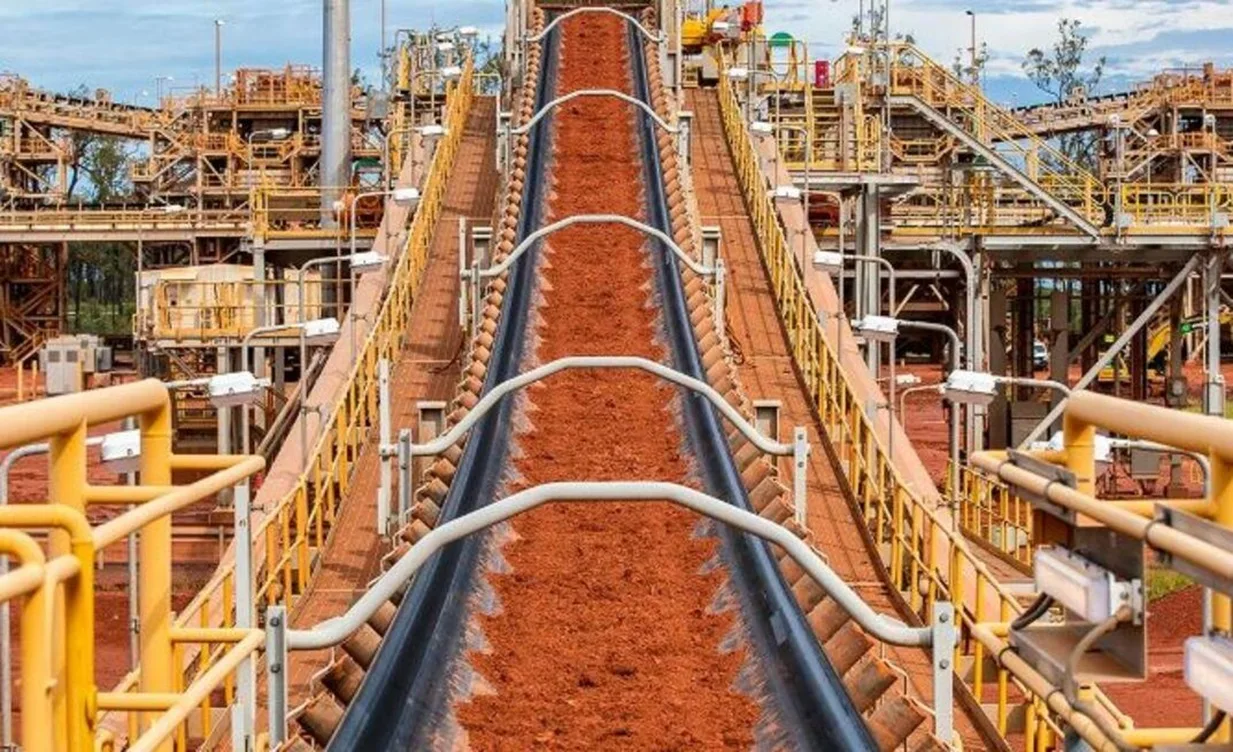
Kangwinan will be located approximately 15 kilometres southeast of the Amrun mine, itself situated around 40 kilometres from Weipa. Ore will be transported through a 15-kilometre conveyor system to expanded storage facilities at Amrun and subsequently shipped through its existing port infrastructure. The terminal will be upgraded to accommodate larger Capesize bulk carriers, enabling substantial volumes of bauxite to move along major international shipping routes.
This configuration offers several economic advantages. Shared infrastructure reduces the need for entirely new facilities, while the geographical concentration of operations simplifies logistics, maintenance, and workforce management. Expanded port capacity should also improve maritime transport efficiency, an important component of Australian bauxite's competitiveness in Asian markets.
The choice of Kangwinan therefore reflects more than geological availability. It represents a model of territorial industrial organisation in which mines, conveyors, storage facilities, and ports operate as an interconnected production system.
The strategy extends several decades of investment in Cape York. Commercial bauxite mining began in the region in 1963, while Amrun, which entered production in 2018, required an investment of approximately $1.9 billion. Nearly eight years later, Rio Tinto is committing a comparable amount to renew part of its productive infrastructure.
The company is not simply opening another mine. It is progressively reorganising the architecture of a mining region expected to remain central to its operations for decades.
This transformation is accompanied by a second strategic development. In September 2026, Rio Tinto reached an agreement to acquire the neighbouring Aurukun bauxite project, owned 70% by Glencore and 30% by Mitsubishi. The transaction remains subject to the necessary regulatory approvals.
If completed, the acquisition would allow Rio Tinto to incorporate another major deposit into an industrial area already structured around Amrun and Kangwinan. The company estimates that the combination of these three assets could sustain Weipa's bauxite operations well beyond the middle of the century.
The significance of this potential acquisition extends beyond additional mineral reserves. It would strengthen the geographical continuity of Rio Tinto's operations and provide greater flexibility in determining the sequence and timing of future extraction.
In an industry where investment decisions are measured over decades, control over the production calendar represents a substantial strategic advantage.
Capital Investment to Preserve Production
The announced $1.9 billion represents productive industrial investment rather than a corporate acquisition. It includes $150 million allocated to preliminary works, which had already received approval in 2025.
The project forms part of Rio Tinto's medium-term capital expenditure forecasts. Based on the market assumptions used by the company in the fourth quarter of 2026, Kangwinan is expected to generate an internal rate of return of approximately 22%.
That projection is significant, but it remains forward-looking. Its achievement will depend on future bauxite prices, construction costs, operational performance, and transport conditions. It should not be interpreted as a guaranteed financial return.
The expected profitability must also be considered in light of the project's industrial purpose. Kangwinan is both a replacement investment and a capacity expansion within an established mining complex. Part of its economic value therefore comes from preserving activities that would otherwise be affected by the depletion of existing deposits.
This distinction matters. In mining, investments worth billions of dollars do not necessarily produce proportional increases in output. They may instead be essential to maintaining production volumes, supporting downstream processing facilities, and extending the operating life of an industrial system.
Construction activity is expected to intensify from 2027, generating more than 1,300 jobs during the development phase. Over the longer term, the project will help sustain approximately 1,500 residential jobs in the western Cape York region.
These figures demonstrate the territorial importance of an industry whose economic influence extends far beyond mining installations. In relatively isolated regions, extractive investment also supports transport infrastructure, local businesses, public services, and residential economic activity.
Rio Tinto's challenge is to preserve this industrial ecosystem while controlling the costs of an increasingly necessary renewal process.
Bauxite at the Foundation of a Global Industry
The strategic importance of Kangwinan becomes clearer when bauxite is placed within the broader aluminium production chain.
Bauxite is the principal raw material used to produce alumina, an oxide subsequently converted into aluminium metal through electrolysis. Depending on ore quality and processing methods, several tonnes of bauxite are generally required to produce one tonne of alumina, while approximately two tonnes of alumina are needed to obtain one tonne of primary aluminium.
This sequence creates structural interdependence between three distinct industries: mining, refining, and metallurgy.
It also explains why natural resources alone do not determine a country's industrial power.
Australia possesses extensive bauxite deposits, decades of mining expertise, and substantial alumina refining capacity. It also operates aluminium smelters, although their competitiveness depends heavily on electricity prices and the security of energy supplies.
Rio Tinto occupies a particularly important position within this system. Its Australian operations include bauxite mines, alumina refineries, and aluminium production facilities, directly employing more than 5,000 people nationwide.
Bauxite extracted at Weipa supplies facilities including the Yarwun and Queensland Alumina Limited refineries in the Gladstone region, alongside international customers, particularly in Asia.
This integration allows Rio Tinto to connect part of its mining resources to its own processing capacity while maintaining exposure to global commodity markets.
It does not, however, eliminate the economic constraints affecting each stage of production. Mining depends on extraction and logistics costs, refining requires reliable industrial equipment and thermal energy, and primary aluminium production consumes substantial quantities of electricity.
The competitiveness of the entire chain therefore rests on a combination of geological resources, infrastructure, energy availability, and capital investment.
As aluminium remains essential to electricity networks, transport systems, industrial equipment, and energy technologies, control over these interconnected stages assumes increasing strategic importance.
Yet this importance does not automatically guarantee higher prices or profitability. Changes in demand, recycling capacity, competing investments, and energy costs will continue to shape the industry's economic balance.
Australia and the Changing Geography of Bauxite
Rio Tinto's decision comes at a time when the geographical structure of the global bauxite market has undergone considerable change.
Australia remains one of the world's leading producers, but it now shares this position with Guinea, whose exports have expanded dramatically following the development of large mining and port complexes.
Guinea's emergence has reshaped international supply routes, particularly those serving China.
As the world's largest producer of primary aluminium, China operates enormous refining and smelting capacities. Yet its industry depends heavily on imported ore to meet a substantial share of its requirements.
This industrial structure has encouraged the development of maritime bauxite trade connecting major African and Australian mining regions with Chinese processing facilities.
The two producing regions possess different competitive characteristics.
Guinea benefits from abundant resources and considerable opportunities for further mining expansion. Its industrial development nevertheless remains closely tied to railway and port infrastructure, energy availability, and the evolution of its regulatory environment.
Australia, by contrast, possesses established infrastructure, a mature industrial organisation, and relative geographical proximity to major Asian markets. It must also contend with high labour costs, significant environmental requirements, and the progressive ageing of certain deposits.
Competition therefore extends beyond the volume of ore available. It also concerns delivery reliability, mineral quality, logistics costs, operational stability, and the ability of producers to guarantee supplies over several decades.
Within this environment, Kangwinan represents an Australian response to the changing geography of global bauxite production.
By modernising the Weipa complex, Rio Tinto aims to preserve the competitiveness of a historically important mining region against the expansion of new international capacity.
This does not mean Australia is attempting to replace Guinea or systematically reduce China's dependence on imported bauxite. Rather, the objective is to maintain a significant position in a market where several major production regions are likely to coexist.
Geographical diversification also serves the interests of refiners, allowing them to reduce exposure to production disruptions, logistical constraints, and country-specific risks.
The future of the bauxite industry will therefore depend not only on competition between producing regions but also on their ability to provide reliable, economically viable supplies to increasingly interconnected processing industries.
Infrastructure as a Source of Industrial Power
One of Kangwinan's defining characteristics is the importance assigned to logistics infrastructure.
The 15-kilometre conveyor, expanded storage facilities, and port upgrades are not merely supporting installations. They directly determine Rio Tinto's ability to transform geological resources into commercially available production.
Bauxite is generally transported in large volumes and has a relatively low value per tonne compared with many refined metals.
Handling, storage, and transportation costs consequently play an important role in project economics.
Access to a terminal capable of receiving large bulk carriers can significantly improve the competitiveness of a mine located thousands of kilometres from its principal customers.
This consideration is particularly important for trade with Asia, where importing refineries seek to secure substantial volumes while controlling their raw material costs.
Rio Tinto's strategy is therefore to concentrate more production around an integrated logistics system rather than multiply independent facilities.
The economic rationale is clear: infrastructure shared by several deposits can improve the overall efficiency of the mining complex.
Such concentration nevertheless creates a potential vulnerability. When several mines depend on the same conveyors, port installations, or energy networks, a major disruption can simultaneously affect a substantial share of production.
Industrial resilience then depends as much on the reliability of shared infrastructure as on the abundance of mineral resources.
Cost optimisation and risk diversification do not always advance in the same direction.
Environmental and Territorial Constraints
Kangwinan is also being developed in a region where mining operations must coexist with significant environmental and cultural considerations.
Cape York contains sensitive ecosystems and is home to Indigenous communities whose relationships with the land long predate industrial mining.
The name Kangwinan was selected at the request of the Wik Waya Traditional Owners. It refers to a protective figure within their cultural traditions and is associated with the female black crow totem.
Rio Tinto states that the project benefits from environmental approvals previously granted under the South of Embley assessment process, which received authorisation from the relevant Queensland and Australian federal authorities.
These approvals do not eliminate the continuing obligations associated with cultural heritage protection, water management, biodiversity, and engagement with local communities.
The company has indicated that consultations will continue throughout construction and operations.
The issue is particularly relevant because any future development of Aurukun may require separate environmental assessment and approval procedures.
Over the longer term, the success of Rio Tinto's regional strategy will therefore depend not only on financial and operational performance but also on its ability to maintain sustainable relationships with affected communities.
This dimension extends far beyond Australia. Across many mining regions, industrial supply security increasingly depends on territorial governance, consultation mechanisms, and the distribution of economic benefits.
Access to mineral resources alone is no longer sufficient to guarantee uninterrupted production.
An Industrial Strategy Extending Beyond 2050
The $1.9 billion investment comes as major mining companies face increasingly complex decisions about capital allocation.
They must renew existing deposits, develop new resources, contain operating costs, finance energy transitions, and preserve returns on invested capital.
For Rio Tinto, Kangwinan addresses an immediate requirement to replace ageing production capacity. Its potential combination with Aurukun, however, gives the strategy a much longer horizon.
The company is seeking to establish a succession of deposits capable of supplying its industrial infrastructure for several decades.
This approach could also provide greater flexibility in adapting production volumes to changes in the global aluminium market without relying exclusively on isolated new developments.
It reflects a broader logic of industrial consolidation, in which the value of a mining asset depends not only on its reserves but also on its integration into an existing production system.
Nevertheless, several uncertainties remain.
The development schedule must be maintained to prevent disruption as Andoom approaches depletion, Gove prepares for closure, and Kangwinan gradually reaches full capacity. Construction costs must remain compatible with initial financial assumptions. The Aurukun acquisition must obtain the necessary regulatory approvals, while future market conditions will determine the actual profitability of the new production capacity.
The energy transition of Australia's aluminium industry will represent another important variable.
Even with secure bauxite supplies, alumina refineries and aluminium smelters will continue to face challenges involving energy prices, electricity availability, and decarbonisation.
Control over bauxite resources is therefore a necessary, but insufficient, condition for maintaining the competitiveness of the wider aluminium industry.
This is precisely what gives Kangwinan its strategic significance.
The project demonstrates that industrial power does not rest solely on discovering new deposits or announcing major investments. It depends on the ability to organise the continuity of resources, infrastructure, expertise, and markets over time.
In Australia, Rio Tinto is not merely seeking to extract more bauxite. It is preparing to replace one generation of mines with another while strengthening the integration of an industrial region developed over more than sixty years.
At the global level, the decision illustrates a broader transformation of extractive industries: competition for raw materials increasingly takes place through control of infrastructure and value chains as much as through ownership of the resources themselves.
Geological wealth remains essential. But over several decades, the capacity to transform that wealth into reliable industrial production is what ultimately determines lasting industrial power.
Main Sources
- Rio Tinto, “Rio Tinto to invest $1.9 billion to develop the Kangwinan bauxite project in Western Cape York, Queensland,” October 23, 2026. Official announcement covering investment, production capacity, development schedule, expected returns, and infrastructure.
- Reuters, “Australia's Rio Tinto to invest $1.9 billion in Queensland bauxite project,” October 22, 2026, 22:07 UTC. Reporting on the investment decision, Weipa restructuring, and production outlook.
- Rio Tinto, “Rio Tinto to start early works and final studies to increase Amrun mine's bauxite production,” May 22, 2025. Project background, preliminary works, and integration with existing operations.
- Rio Tinto, “Kangwinan.” Official project information covering infrastructure, employment, environmental considerations, and engagement with Traditional Owners.
- Rio Tinto, “Weipa Operations.” Overview of the mining and logistics infrastructure supporting the Weipa industrial complex.
Atlas Limits Research Desk
Atlas Limits’ editorial and analytical desk.