Since the outbreak of the war in Ukraine, Western energy sanctions have rested on a relatively straightforward principle: reduce the revenue Russia derives from its exports without triggering an uncontrolled disruption of global markets. This policy has always contained an inherent contradiction. Russian hydrocarbons are simultaneously a source of financial resources for Moscow and an important component of international energy supply. For several years, Washington and its partners have attempted to manage this contradiction through trade prohibitions, price caps, exemptions, and monitoring mechanisms. The American decision of October 9, 2026, reveals just how difficult that balance has become to maintain.
The Office of Foreign Assets Control, the US Treasury agency responsible for enforcing economic sanctions, issued General License 135, temporarily authorizing certain transactions involving diesel of Russian origin. The measure covers operations necessary for its sale, delivery, unloading, and importation, including into the United States. The authorization is scheduled to expire on April 7, 2027, unless subsequently amended or extended.
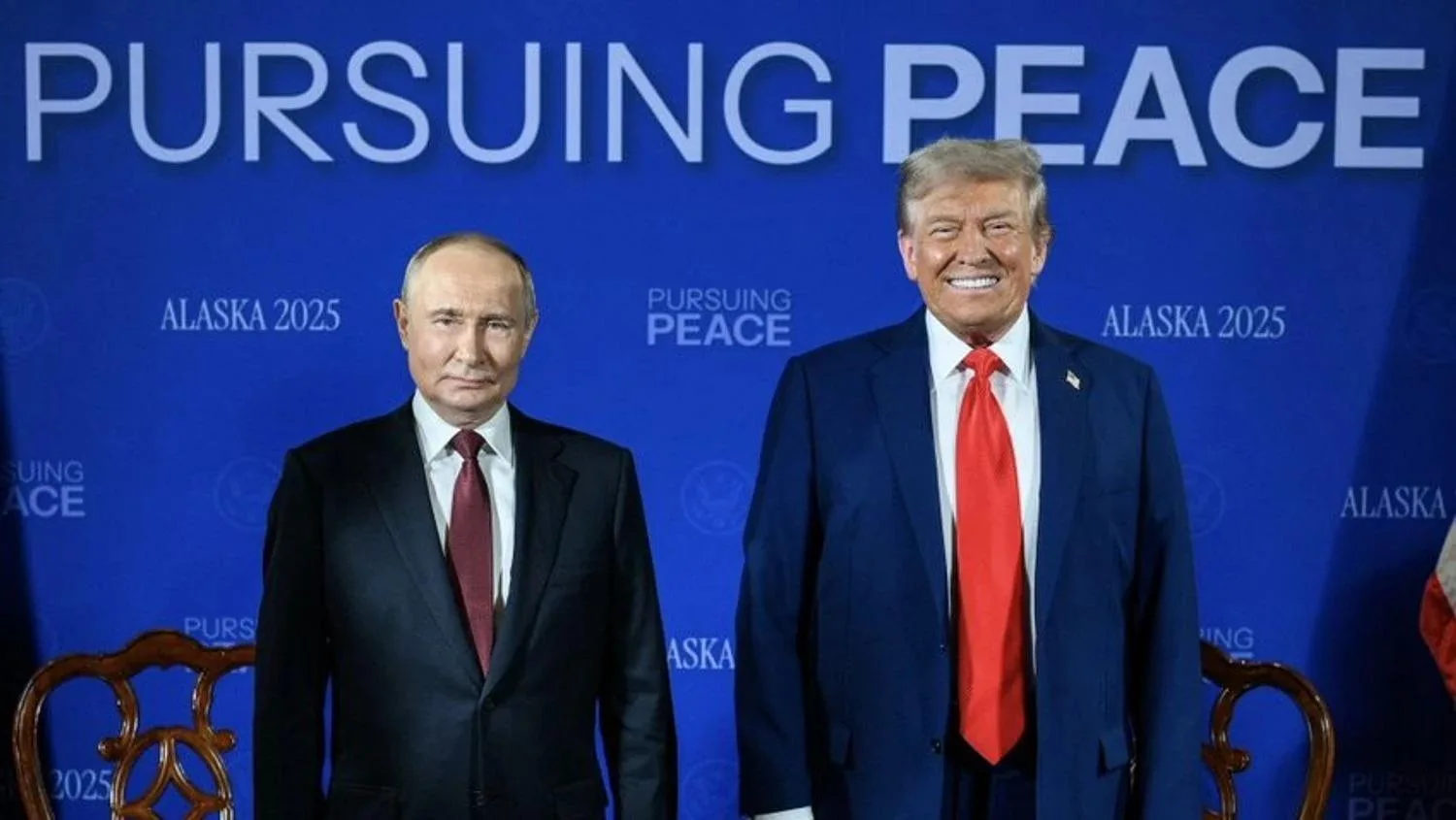
The decision followed a conversation between Donald Trump and Vladimir Putin, against a backdrop of particularly severe tensions in international refined fuel markets. It immediately prompted a reaction from Ukrainian President Volodymyr Zelensky, who warned that the measure could increase the economic resources available to sustain Russia's war effort.
The significance of this change should neither be understated nor exaggerated. Washington is not abolishing the sanctions imposed on Moscow, nor is it restoring unrestricted energy trade. The license contains limitations, including restrictions involving certain transactions with Russian sovereign financial institutions. Nevertheless, it opens a commercial channel previously subject to prohibitions. More importantly, it demonstrates that the United States may regard the availability of a particular energy product as sufficiently important to justify an exception to its own economic pressure framework.
This shift deserves an analysis extending well beyond the diesel market itself.
The Fuel the Economy Cannot Easily Replace
Diesel occupies a distinctive position in the functioning of industrialized economies. Unlike gasoline, which is primarily associated with personal mobility, diesel is directly involved in freight transportation, agriculture, construction, mining, certain industrial operations, and part of emergency electricity generation. Its price therefore feeds into numerous value chains.
A sustained increase in diesel prices affects more than trucking companies. It raises distribution costs for retailers, agricultural production expenses, industrial operating costs, and ultimately the prices paid by consumers. In economies characterized by long transportation distances, this transmission can be particularly significant.
The United States possesses a substantial oil industry and an extensive refining system. It is also a major exporter of refined petroleum products. Yet this industrial strength does not entirely insulate the country from international imbalances.
Crude oil and refined fuels are not interchangeable. Refineries require appropriate equipment, feedstocks compatible with their technical specifications, and sufficient operational capacity. Increasing domestic oil production therefore does not guarantee an immediate and proportional increase in available diesel supplies.
Refined product markets are also interconnected through international trade. When a major refinery stops operating, a maritime route becomes more dangerous, or an exporting country reduces deliveries, the effects can quickly spread to distant regions.
Conflicts affecting Russian energy infrastructure, tensions in the Middle East, and disruptions to maritime transportation have intensified these vulnerabilities. The problem is not necessarily a physical disappearance of available oil from the global market. It may instead result from insufficient processing capacity, an unfavorable geographical distribution of refined products, or higher costs of transporting them to consumers.
Under such conditions, an additional cargo of diesel can acquire an economic importance greater than its volume alone would suggest.
This is precisely what gives the American decision its strategic significance. Washington is not merely seeking to secure an energy supply. It is accepting a temporary modification to sanctions designed to exert pressure on a geopolitical adversary.
A Sanctions Policy Built on Compromise
Since 2022, the United States, the European Union, and their partners have progressively transformed their energy relationships with Russia. Restrictions on imports, maritime services, insurance, and certain financial transactions were intended to reduce Russian revenues while preserving sufficient hydrocarbon flows to prevent a global price surge.
The price cap mechanism applied to Russian oil illustrated this approach. Its objective was not to prevent every Russian export, but to limit the revenue Moscow could obtain by conditioning access to certain Western services on compliance with established price ceilings.
This distinction is essential. Energy sanctions have never constituted a comprehensive global embargo. Russia continued exporting oil and petroleum products to markets that did not participate in Western restrictions. Trade flows were redirected, new intermediaries emerged, and logistics networks adapted.
India, China, and other economies assumed increasingly important roles in this reorganization. Maritime transportation, commodity trading, and refining activities gradually incorporated the new regulatory constraints. Russia consequently retained substantial export capacity, even when commercial and financial conditions became less favorable.
Western sanctions therefore transformed energy trade routes rather than completely excluding Russia from the global market.
The October 9 decision introduces a different dimension. It is no longer simply a matter of tolerating certain Russian exports to third countries in order to preserve global market stability. The authorization explicitly permits certain transactions involving the importation of Russian diesel into the United States.
The distinction is politically significant. The American market, whose restrictions carried considerable symbolic weight, can once again receive an energy product originating from the sanctioned economy.
It remains to be determined whether this authorization will generate substantial imports or primarily facilitate the international circulation of diesel. These possibilities would not have identical commercial consequences, but both reflect the same underlying logic: making sanctions sufficiently flexible to accommodate an energy constraint.
Moscow Regains a Negotiating Instrument
For Russia, the value of such an easing extends beyond the potential revenue generated by a limited number of cargoes.
Since the beginning of the war, Moscow has sought to demonstrate that Western economies cannot permanently dispense with every Russian resource. This strategy rests on a structural reality: Russia remains a major producer of oil, gas, refined petroleum products, raw materials, and other commodities essential to international trade.
Sanctions can make transactions more expensive, reduce margins, complicate payments, and restrict access to certain technologies. They do not immediately eliminate production capacity or the needs of potential buyers.
The American authorization may therefore be interpreted by Moscow as a practical acknowledgment of this interdependence.
This does not mean that Russia has secured a general economic victory. Its exports remain exposed to multiple restrictions, additional logistical costs, and financial risks. The existence of a license guarantees neither substantial sales volumes nor favorable payment conditions.
Nevertheless, it establishes a diplomatic precedent.
In international negotiations, the lifting or easing of sanctions normally represents a potential concession. It may be linked to a ceasefire, military withdrawal, security guarantees, or a broader political agreement.
When restrictions are relaxed before a settlement has been reached, part of that potential concession may be granted without necessarily obtaining an equivalent commitment in return.
This reasoning nevertheless requires caution. General License 135 is temporary, targeted, and legally reversible. It does not constitute a normalization of Russian-American economic relations. Its importance will depend on actual trading volumes, additional revenues received by Russian companies, and any diplomatic conditions accompanying its implementation.
The issue is therefore less about declaring a definitive rapprochement between Washington and Moscow than identifying the emergence of an economic negotiating space within the sanctions regime itself.
Ukraine Confronts a Western Contradiction
Ukraine's reaction follows a clear strategic logic. Since 2022, Kyiv has regarded the reduction of Russian energy revenues as an essential component of efforts to weaken Moscow's financial capacity.
This position reflects the importance of hydrocarbons to the Russian economy and public finances. Even when oil revenues cannot be directly traced to a specific military expenditure, they contribute to the overall economic and budgetary resources available to the state.
However, the actual effect of the new license on financing the war cannot be established from its publication alone. It depends on completed transactions, selling prices, transportation costs, intermediary margins, and the proportion of revenue ultimately received by Russian entities.
An increase in exports can generate additional commercial income. But if the volumes involved are small or prices are heavily discounted, the budgetary effect may remain limited.
For Kyiv, the problem is also political.
Western sanctions serve an economic purpose, but they also perform a diplomatic function. They express the determination of the governments imposing them to maintain a cost for the continuation of the war. Their consistency is therefore part of their credibility.
Each exception may be justified by particular circumstances. Their accumulation, however, can alter perceptions among the parties involved regarding the willingness and ability of sanctioning countries to sustain restrictions over time.
Ukraine must consequently contend with a fundamental asymmetry. It depends heavily on Western support for its security, while its partners must simultaneously protect their own economies from the indirect consequences of the conflict.
These two objectives can converge, but they are not always perfectly compatible.
The American decision of October 9 makes this tension particularly visible.
Washington and the Return of Domestic Constraints
The Trump administration must manage a situation in which energy prices constitute an economic, industrial, and political challenge simultaneously.
In the United States, fuel costs influence household expenditure, transportation costs, inflation expectations, and the competitiveness of numerous businesses. Diesel plays an especially important role in the movement of goods and productive activities.
The proximity of the midterm elections adds a political context to the decision. It does not, however, establish that the license was adopted for electoral reasons. Such a conclusion would require additional evidence concerning the administration's internal deliberations.
The economic rationale is nevertheless substantial.
A foreign policy based on trade restrictions can become increasingly costly for the country implementing it when international markets experience shortages or major disruptions.
Governments then face several options: maintain restrictions while accepting part of the domestic cost, mobilize alternative supplies, intervene through available inventories, or introduce exemptions.
The American license belongs to the last category.
It demonstrates that sanctions do not operate independently of the material conditions of the economy. Their sustainability depends on governments' ability to absorb their consequences and persuade their populations that strategic objectives justify the costs incurred.
This question is not unique to the United States. Europe has also had to adapt its energy policies since 2022 by developing new import infrastructure, diversifying suppliers, and sometimes accepting higher procurement costs.
Yet the American decision carries an additional dimension: it comes from the power occupying a central position in the financial and legal architecture of international sanctions.
When an actor of this importance introduces an exception, the potential consequences extend beyond its domestic market.
The Precedent of Reversible Sanctions
Economic sanctions are frequently presented as instruments occupying the space between traditional diplomacy and military force. They allow states to impose costs without directly engaging in armed conflict.
Their effectiveness, however, depends on several conditions: the ability to control the transactions concerned, participation by international partners, the availability of commercial alternatives, and the economic resilience of the countries enforcing them.
The American exemption particularly highlights the last of these conditions.
A sanctions regime can be legally robust and politically ambitious while becoming increasingly difficult to enforce when domestic economic costs rise.
This does not mean sanctions are ineffective. They can restrict access to technology, increase financing costs, reduce certain revenues, and complicate commercial operations. Their effectiveness cannot be measured exclusively by their ability to produce an immediate change in foreign policy.
But their credibility also depends on predictable enforcement.
A temporary license can be interpreted as a pragmatic adjustment to exceptional circumstances. It can also encourage businesses and governments to anticipate further exemptions whenever economic constraints become sufficiently severe.
The risk, therefore, lies in changing expectations.
If sanctioned actors believe that restrictions will gradually be relaxed under market pressure, they may have an incentive to wait rather than modify their behavior. Conversely, if exemptions remain limited, closely monitored, and readily reversible, they may help preserve the political viability of a broader sanctions framework.
The significance of this precedent will therefore depend on how Washington implements the license and whether it can maintain a credible distinction between an energy exception and economic normalization.
A Geopolitics Governed by Material Constraints
The American decision forms part of a broader transformation in international relations.
For several years, major powers have sought to reduce their strategic dependencies. They have developed reindustrialization policies, secured supply chains, tightened scrutiny of foreign investment, and attempted to protect critical infrastructure.
At the same time, successive crises have demonstrated that global interdependencies remain profound.
States may wish to reduce their exposure to a particular supplier without immediately possessing the capacity to replace it. They may seek to relocate production without being able to rapidly reconstruct the corresponding industrial supply chains. They may attempt to isolate an adversary economically while continuing to depend on certain resources that adversary produces.
Russian diesel provides a concrete illustration of this contradiction.
Geopolitical power is not measured solely by the ability to impose sanctions. It also depends on the capacity to endure their consequences over time.
Domestic economic security is therefore becoming a direct component of international strategy. Refining infrastructure, fuel inventories, port capacity, and maritime routes can influence diplomatic decisions as much as official declarations.
This development is bringing two fields traditionally treated separately into closer alignment: energy policy and security policy.
Control over resources, industrial capabilities, and logistical flows is no longer merely an economic issue. It is becoming a condition of states' strategic freedom of action.
What the Coming Months Will Reveal
General License 135 opens a particularly important period of observation.
The first indicator will be commercial. It will be necessary to establish which traders, refiners, or distributors actually use the authorization, what volumes are contracted, and what proportion of shipments reaches the American market.
The second indicator will be financial. Payment arrangements, intermediary institutions, transaction prices, and revenues actually received by Russian exporters will help determine the economic significance of the exemption.
The third will be energy-related. If additional volumes help ease diesel market pressures, Washington may present the measure as a targeted response to a supply problem. If its impact on prices remains limited, the political significance of the decision could appear disproportionate to its economic results.
The fourth indicator will be diplomatic. It will be important to determine whether the license remains an isolated measure or precedes further easing involving petroleum products, transportation services, financial transactions, or certain Russian commercial activities.
Finally, the April 7, 2027, expiration date will provide a test. Whether the authorization expires, is extended, or is modified will indicate whether this adjustment was exceptional or reflects a more lasting change in policy.
At this stage, none of these future developments can be treated as established.
The Price of Strategic Consistency
The American decision of October 9 does not mark the end of sanctions against Russia. Nor does it demonstrate that Washington has abandoned its diplomatic objectives concerning Ukraine.
It nevertheless reveals an important limitation of economic coercion.
Sanctions depend on a state's willingness to accept present costs in pursuit of a future strategic outcome. When those costs become too high or too visible, the political calculation can change.
Diesel is an ordinary commodity, indispensable to everyday economic activity. Yet its role in transportation, industry, and supply chains gives it an influence extending far beyond its immediate market.
By authorizing certain transactions involving Russian diesel, Washington implicitly acknowledges that maintaining the stability of its energy supply may require adjustments to its sanctions policy.
For Moscow, the decision creates a commercial and diplomatic opportunity whose actual value remains to be measured. For Kyiv, it raises questions about the consistency and durability of Western economic pressure. For markets, it confirms that supply constraints can alter regulatory frameworks originally designed to pursue strategic objectives.
The central question, therefore, is not whether a few diesel cargoes can independently transform the balance of the war.
It is how far a major power can use economic interdependence as an instrument of coercion without eventually confronting the limits imposed by that same interdependence.
On October 9, 2026, the United States did not abandon its sanctions policy. It demonstrated that its implementation could be adjusted to accommodate the requirements of its own economy.
It is in this trade-off, more than in the volume of the first shipments, that the geopolitical significance of the decision lies.
Principal Sources
- US Department of the Treasury — Office of Foreign Assets Control, General License 135, October 9, 2026. Regulatory text and conditions governing authorized transactions involving diesel of Russian origin.
- US Department of the Treasury — OFAC, official publication and register of sanctions actions dated October 9, 2026.
- Reuters, reporting on the American announcement, Trump–Putin discussions, and Ukrainian President Volodymyr Zelensky's response.
- G7 and Price Cap Coalition, documentation concerning the sanctions framework applied to Russian crude oil and petroleum products.
- International Energy Agency, Oil Market Report, for the structural context of petroleum markets and refining capacity.
Atlas Limits Research Desk
Atlas Limits’ editorial and analytical desk.