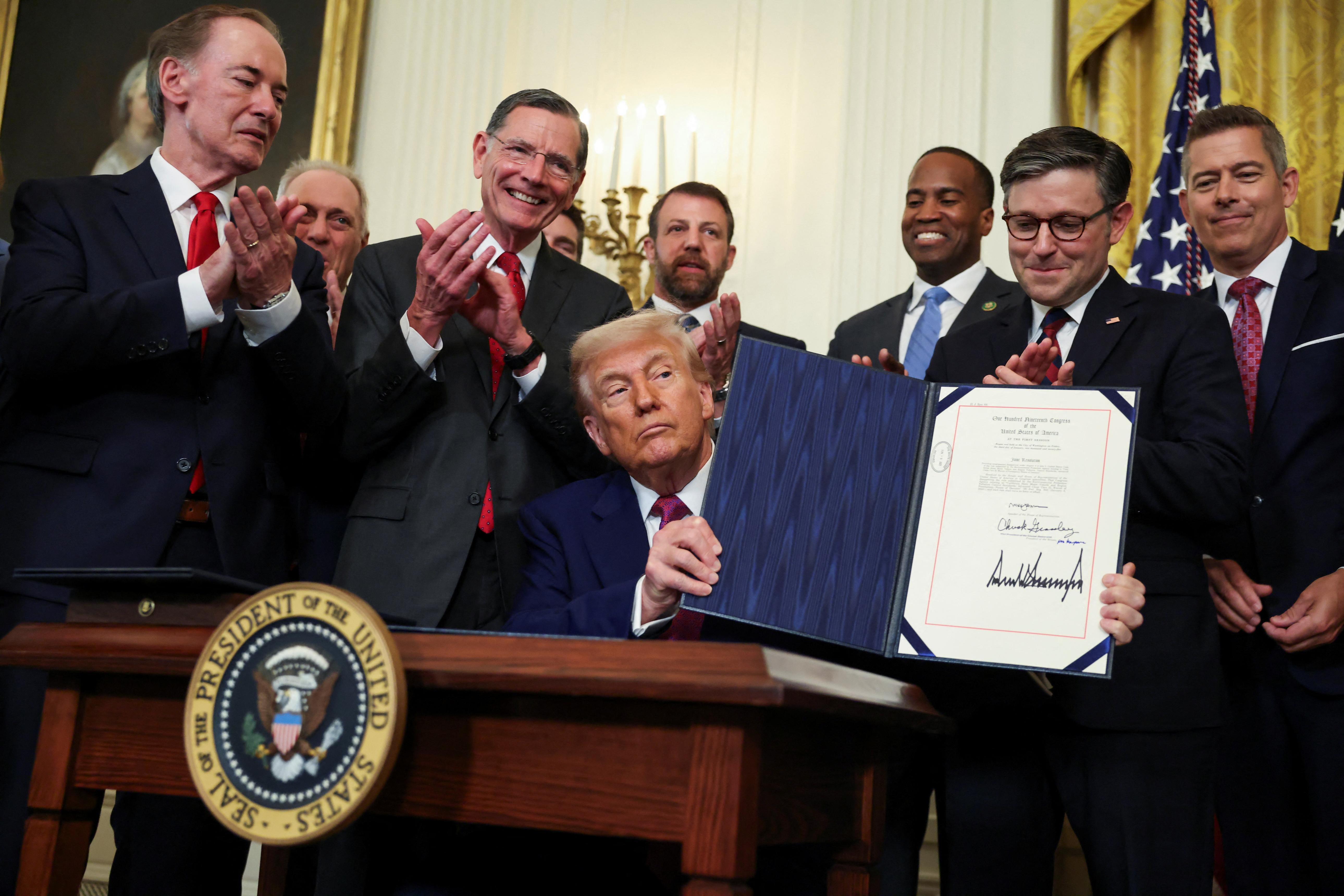
On September 18, 2026, Donald Trump signed the Lindsey O. Graham Sanctioning Russia and Iran Act of 2026. Passed by the Senate in August and by the House of Representatives on September 16 by a vote of 262 to 159, the legislation does more than strengthen sanctions against the Russian economy. It creates a mechanism allowing tariffs to be imposed on all goods originating from major countries that continue to purchase Russian oil or gas.
The distinction is significant. Until now, much of the Western sanctions architecture has sought to reduce Moscow’s revenues directly through embargoes, the oil price cap, financial restrictions, and sanctions targeting companies and vessels involved in Russian energy trade. The new US law introduces a different logic. It seeks to alter the behavior of Russia’s customers by linking their access to the American market to their energy relationship with Moscow.
Thirty days
The most consequential change lies in the wording of the law itself.
Within thirty days of its enactment, the president must increase tariffs on goods originating from countries that meet the criteria established by the legislation. The additional tariff can reach 100 percent and is imposed on top of other duties, taxes, or trade measures already in force.
The mechanism therefore does not target only the oil or gas involved. Once a country is designated, it can affect the full range of that country’s exports to the United States.
The legislation notably covers countries that rank among the largest importers of Russian-origin oil or gas and continue making new purchases after the period specified by the law. It also reaches major jurisdictions in which actors facilitate the circumvention of Russian oil sanctions, including through financing, transportation, or the use of the so-called shadow fleet.
The mechanism is then subject to regular reassessment. Within 180 days of the initial implementation, and every 180 days thereafter, the US Trade Representative, in consultation with the Departments of State and Energy, must identify the five largest importers of Russian oil and the five largest importers of Russian gas over the preceding twelve months and apply the tariff mechanism to the countries concerned.
China and India naturally appear among the economies most exposed because of their role in purchasing Russian hydrocarbons. But the legislation does not designate them by name. A congressional attempt to insert a specific list of countries directly into the bill was not retained.
That distinction matters. Washington now possesses the mechanism, but the precise geography of its application will depend on determinations made by the executive branch.
From financial sanctions to commercial coercion
Since 2022, Russia has demonstrated that a sanctioned economy can redirect a substantial share of its energy flows.
Oil that once moved toward Europe found alternative destinations. Trading intermediaries, transit jurisdictions, alternative payment systems, and an aging fleet of tankers gradually allowed Moscow to reconstruct the geography of its exports.
The new American approach seeks to act on that geography itself.
The choice facing Russia’s customers becomes more costly: continuing to purchase certain Russian energy resources can now affect the conditions under which all of their products enter the US market.
A barrel purchased from Russia could therefore have consequences far beyond the oil sector. Automobiles, electronics, textiles, pharmaceuticals, industrial machinery, and consumer goods could theoretically be affected if their country of origin falls within the scope of the mechanism.
That is precisely what gives the legislation its extraterritorial reach.
Washington cannot control the energy imports of Beijing, New Delhi, or other capitals. It can, however, change the price of their access to the American economy.
Considerable power, but not automatic
The constraints imposed on the executive do not mean that the White House has lost all room for maneuver.
The legislation establishes a ceiling of 100 percent but leaves latitude over the rate ultimately imposed. The USTR can subsequently adjust tariffs according to changes in Russian energy purchases. The law also provides for specific exceptions, including in certain circumstances involving natural gas, as well as broader waiver authority.
The president can suspend the application of a tariff if the administration certifies to Congress that doing so is in the national interest of the United States and provides the reasons for that determination.
The architecture therefore does not turn the president into a mechanical executor. Instead, it gives the White House an unusually powerful negotiating instrument.
A country could face a graduated choice: reduce its purchases from Russia, negotiate an exemption, or accept greater exposure of its exports to the US market.
The threat of tariffs may therefore produce effects even before the maximum duties are imposed.
India faces the first dilemma
India represents one of the most sensitive cases.
Since the beginning of the war in Ukraine, New Delhi has sharply increased its purchases of Russian crude, benefiting in particular from discounts offered by Moscow. The policy reflects considerations of energy security and import costs for an economy whose oil consumption continues to grow.
At the same time, India has become a major strategic partner of the United States in the Indo-Pacific.
The new legislation now places those two relationships on the same plane.
Washington can seek to reduce Russian oil revenues while trying to avoid damaging a relationship it considers important to the Asian balance of power. New Delhi, meanwhile, will have to navigate between the cost of its energy supplies, its longstanding relationship with Moscow, and its access to the American market.
China presents a different problem. Maximum use of the mechanism against Beijing could transform a policy intended to weaken Russian revenues into another major episode of US-China trade confrontation.
Secondary sanctions would then become inseparable from the broader trajectory of American trade policy.
A new architecture of coercion
The legislation extends well beyond tariffs.
It strengthens sanctions against Russian officials, financial institutions, actors connected to the energy, military, and transportation sectors, and networks used to circumvent Western restrictions. It also targets vessels involved in transporting Russian hydrocarbons outside traditional commercial channels.
Measures against Iran are extended in parallel, including a five-year extension of several existing sanctions provisions.
But the most structurally important element may be the connection the legislation establishes between sanctions and trade.
The United States has long used access to the dollar and the American financial system as instruments of foreign policy. The new law more explicitly adds another asset to that arsenal: access to the US market itself.
For major exporting economies, the question will therefore no longer be only whether a transaction with Russia risks being sanctioned. It may increasingly become: how much of our economic relationship with the United States are we prepared to expose in order to preserve that transaction?
The power of the threat
One crucial uncertainty nevertheless remains.
The law is now in force, but it does not yet reveal how aggressively the administration will use the mechanism. At the time of enactment, no definitive tariff schedule or complete set of country designations had been published.
The difference between a limited tariff accompanied by negotiated waivers and a duty approaching 100 percent imposed on a major economy is enormous.
In the first scenario, Washington would primarily possess a negotiating instrument designed to accelerate reductions in Russian energy purchases. In the second, the mechanism could provoke commercial retaliation, redirect supply chains, and affect strategic relationships extending far beyond the war in Ukraine.
That is where the central question now lies.
Congress has transformed the possibility of secondary trade sanctions into a legislative architecture and imposed a timetable on the executive branch. Yet the White House retains enough latitude to determine whether that architecture functions primarily as a threat, a negotiating instrument, or an actual trade barrier.
Washington has therefore changed the potential price of doing business with Russia.
The next thirty days will show how far it intends to make others pay it.
Main sources
- H.R. 5334, Lindsey O. Graham Sanctioning Russia and Iran Act of 2026, final enacted text, Sections 112–117
- US House Committee on Rules, legislative record and adopted text
- White House, Statement of Administration Policy on H.R. 5334
- Reuters, congressional passage and Russia sanctions provisions
- US and international press reporting confirming enactment on September 18, 2026
Atlas Limits Research Desk
Atlas Limits’ editorial and analytical desk.