In Irkutsk, Siberia, the death of a 28-year-old employee at an institute specializing in infectious diseases was enough to bring back a word that seemed to belong to history books: plague.
For now, the reality is considerably less certain. The young woman, an employee of the Irkutsk Anti-Plague Institute, died on October 2, 2026, after developing severe pneumonia. Russian authorities have described the illness as “pneumonia of unknown etiology” and say that no case of plague has been confirmed. Conflicting reports have nevertheless circulated, including the possibility of exposure following an incident involving a pathogen. Nearly 200 contacts were placed under medical surveillance before Russian authorities reported negative results.
The World Health Organization is following the case. The European Centre for Disease Prevention and Control has reported neither known secondary cases nor evidence of sustained human-to-human transmission.
It would therefore be premature to state that plague escaped from a Russian laboratory. It would be even more speculative to infer the existence of a biological weapons program.
But the Irkutsk episode raises a much larger question: why, in the twenty-first century, do laboratories continue to preserve and handle some of the most dangerous pathogens known to humanity?
The answer leads into a territory where public health, scientific research, national security and military strategy meet without ever being completely separable.
A MEDIEVAL DISEASE THAT NEVER DISAPPEARED
The first mistake is to assume that plague is extinct.
Yersinia pestis is not a virus but a bacterium. It continues to circulate among wild animal populations, particularly certain small mammals and the fleas that parasitize them. Humans are merely occasional hosts in an ecological system far older than humanity itself.
Human cases continue to occur. The Democratic Republic of the Congo and Madagascar are among the principal contemporary centers of plague, but infections have also been recorded elsewhere in Africa and Asia, as well as occasionally in the Americas. Plague has therefore not been eradicated. Its status has changed.
It has gone from being a disease capable of devastating continents to a zoonosis generally contained through epidemiological surveillance, antibiotics, improved living conditions and the ability of modern health systems to identify and isolate patients rapidly.
The distinction is enormous. Bubonic plague, the best-known form, generally develops after the bite of an infected flea. Septicemic plague spreads through the bloodstream. Pneumonic plague affects the lungs and can be transmitted directly between people during close contact through respiratory particles emitted by an infected patient.
Without treatment, pneumonic plague can progress extremely rapidly. With sufficiently early diagnosis and appropriate antibiotics, the equation changes dramatically.
It is precisely this combination — high biological danger but modern capacity for control — that explains why health systems continue to monitor Yersinia pestis.
Irkutsk is therefore not a laboratory studying a ghost. It is monitoring a disease that still exists.
WHY PRESERVE SOMETHING THAT CAN KILL?
A laboratory responsible for fighting an infectious disease must first be capable of recognizing it.
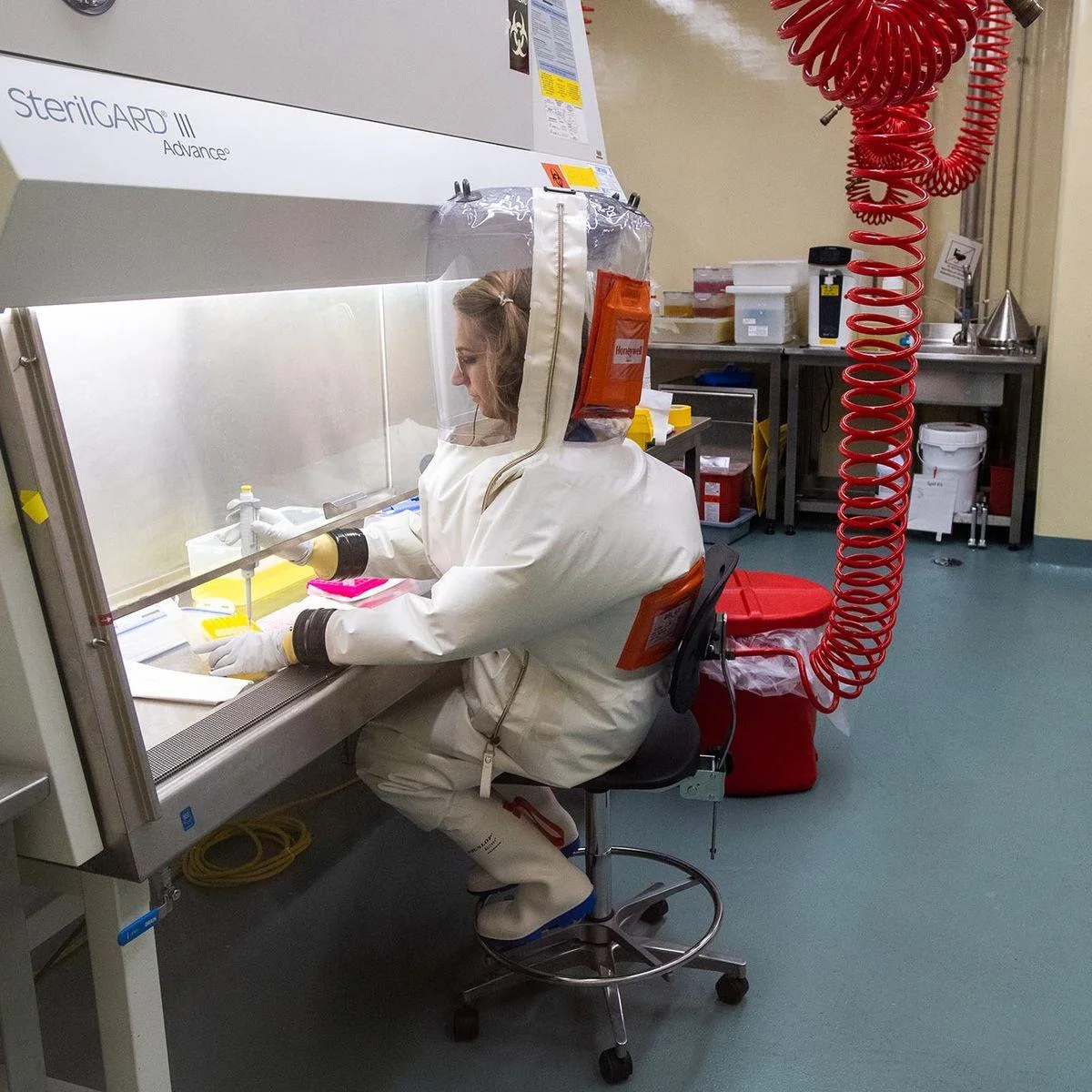
That requires reference collections, validated diagnostic procedures, genetic characterization capabilities, research into susceptibility to treatments and personnel trained to work with the relevant agents under appropriate containment conditions.
The logic resembles that of a defense system: it is difficult to build a mechanism capable of identifying a threat whose signature and characteristics are unknown.
Reference laboratories therefore perform several functions. They distinguish dangerous pathogens from closely related but harmless microorganisms, rapidly confirm infections, monitor genetic evolution, identify potential drug resistance, develop diagnostics, vaccines or treatments and maintain the capacity to respond when a disease reappears.
The most striking example, however, is not plague. It is smallpox.
SMALLPOX IS DEAD. ITS VIRUS IS NOT
Smallpox represents one of the greatest achievements in the history of public health.
After killing hundreds of millions of people over the centuries, the disease was eliminated through a global vaccination campaign. The World Health Organization officially declared smallpox eradicated in 1980.
Natural transmission disappeared from the planet. And yet the virus responsible for the disease officially continues to exist.
Stocks of Variola virus are maintained at two authorized facilities: the Centers for Disease Control and Prevention in Atlanta, United States, and the VECTOR center in Koltsovo, near Novosibirsk, Russia.
For decades, the same question has repeatedly emerged: should the remaining stocks finally be destroyed? The answer is less straightforward than it appears.
Destroying them would eliminate an obvious source of risk. Preserving them, however, allows certain research on diagnostics, treatments and countermeasures that might become necessary should the virus ever reappear, whether accidentally or deliberately.
Smallpox therefore illustrates one of the fundamental paradoxes of modern biosecurity: humanity sometimes preserves what it has successfully eliminated in order to remain capable of defending itself against it.
FROM PUBLIC HEALTH TO BIODEFENSE
This is where the grey zone begins.
A microbiologist studying a particularly dangerous pathogen may seek to understand how it spreads, how it can be detected, how it can be neutralized and how a population can be protected.
A biodefense program seeks some of the same information. And some of that knowledge may also be relevant to an offensive biological program. The distinction does not therefore necessarily lie in the microorganism being studied. It lies in the objective pursued, the nature of the research, its governance and its use. This is the problem of dual use.
Knowledge that allows a disease to be fought more effectively can also have military relevance. A technology capable of rapidly detecting a microorganism may simultaneously belong to civilian medicine and national defense. A laboratory working on anthrax may be studying a naturally occurring zoonosis, developing a vaccine for exposed personnel or helping a state prepare for a biological attack.
The presence of Bacillus anthracis or Yersinia pestis in a laboratory therefore provides absolutely no proof of a biological weapons program.
The contradiction nevertheless remains: to defend itself against certain biological threats, a state must possess extensive knowledge of the agents capable of producing them. And that knowledge is difficult to observe from the outside.
BIOLOGICAL WEAPONS AND THE PROBLEM OF INTENT
The Biological Weapons Convention prohibits the development, production and stockpiling of biological agents or toxins intended for hostile purposes. But the biological problem differs fundamentally from the nuclear one.
Building a nuclear weapon requires specific fissile materials, considerable industrial infrastructure and facilities that are generally difficult to conceal completely.
Biology works differently. Much of the equipment used to study a dangerous microorganism is also necessary for medicine, pharmaceutical research, epidemiology or biodefense.
A genetic sequencer does not reveal the intentions of the person operating it. A fermenter is not inherently military. A collection of dangerous bacteria may be indispensable to a reference laboratory. Research into pathogen resistance may be conducted precisely to identify the treatment capable of defeating it.
The boundary between medical research, defensive military preparedness and prohibited activity therefore depends largely on the purpose of the program.
That ambiguity considerably complicates international verification. It also explains why incidents involving sensitive laboratories can almost immediately generate a geopolitical reaction disproportionate to the number of people actually infected.
The question is no longer simply: which microorganism is inside the laboratory? It becomes: why is it there, what exactly is being done with it, and who can verify it?
THE SOVIET LEGACY
Russia occupies a particular place in this history.
The Soviet Union built an extensive infrastructure for microbiology, epidemiology and infectious disease control across a vast territory containing natural reservoirs of plague and other zoonotic diseases.
That infrastructure responded to genuine public-health requirements. But during the Cold War, the Soviet Union simultaneously developed a vast clandestine offensive biological weapons program despite its adherence to the Biological Weapons Convention.
Facilities, scientific institutes and thousands of researchers participated, directly or indirectly, in this apparatus. Some research concerned pathogens known for centuries; other programs focused on particularly dangerous viral diseases.
This history explains some of the suspicion that accompanies any biological incident in Russia today. It does not, however, constitute evidence about Irkutsk.
Conflating the historical existence of a Soviet program, the contemporary presence of specialized institutes and the incident currently under investigation would turn a sequence of facts into causality without evidence.
The geopolitical significance lies elsewhere: the legacy of the Cold War is now encountering the age of biotechnology.
THE LABORATORY HAS BECOME STRATEGIC INFRASTRUCTURE
The Covid-19 pandemic reminded governments of something that military budgets had sometimes obscured: a few weeks of advantage in detecting a pathogen can be worth more than certain conventional military capabilities.
Genomic sequencing, epidemiological surveillance, biological repositories, vaccine platforms, pharmaceutical manufacturing capacity, containment laboratories, hospital systems and international early-warning networks have become components of national power.
Biological security is therefore no longer simply about keeping microorganisms behind several locked doors. It requires an entire chain: detection, identification, sequencing, information sharing, diagnosis, treatment and the large-scale production of necessary countermeasures.
The pandemic demonstrated how rapidly that chain could become geopolitical. When masks became scarce, states restricted exports. When vaccines appeared, domestic manufacturing capacity became an instrument of power.
When active pharmaceutical ingredients, reagents, medical equipment and production components became scarce, the geography of pharmaceutical supply chains became a national-security issue.
A country unable to produce tests, medicines or vaccines rapidly becomes dependent on foreign suppliers precisely when every other country is seeking the same products.
The pathogen then becomes an industrial question. Biosecurity meets sovereignty.
THE MORE ORDINARY DANGER: AN ACCIDENT
The collective imagination naturally gravitates toward biological weapons. The everyday risk can be much more mundane.
Human error. A procedure incorrectly followed. Equipment failure. An undetected contamination. Occupational exposure. A breach somewhere in the containment chain.
No human installation offers zero risk. This is why the possibility of a laboratory incident in Irkutsk — if it were eventually established — would matter independently of any military hypothesis.
The relevant questions would concern containment procedures, disclosure of the incident, identification of contacts, speed of testing and international transparency.
At present, that possibility remains exactly that: a possibility. Russian authorities maintain that no plague case has been confirmed. No publicly available evidence currently establishes the existence of an offensive biological program behind the incident.
That distinction is essential. Biosecurity cannot function sustainably if every accident is automatically treated as proof of a military program. But neither can it function if states refuse to document incidents that could have cross-border consequences. Trust itself therefore becomes part of public-health infrastructure.
PATHOGENS DID NOT DISAPPEAR WITH THE EPIDEMICS OF THE PAST
Plague ultimately offers a deeper lesson.
We tend to imagine the history of infectious disease as a succession of victories.
Plague belongs to the Middle Ages. Smallpox belongs to the twentieth century. Ebola belongs to remote regions. Great pandemics are historical anomalies that modern medicine has gradually pushed aside. Microbiology tells a much less comfortable story. Pathogens do not respect our chronology.
Some persist in animal reservoirs. Others periodically re-emerge. Some cross species barriers. Others evolve. A few are deliberately preserved because we need to understand them.
The World Health Organization therefore maintains a list of priority pathogen families with significant epidemic potential for which research and preparedness need to be accelerated.
Ebola is among them. Different ebolaviruses can cause severe hemorrhagic disease. African outbreaks over recent decades have demonstrated their capacity to produce very high mortality while also revealing the progress made in vaccines, treatments and outbreak response.
Marburg belongs to the same viral family. Rare but formidable, it can cause severe hemorrhagic disease and remains under surveillance in Africa because of its animal reservoirs and capacity to produce localized outbreaks.
Nipah virus represents another category of threat. Its natural reservoir is associated particularly with certain fruit bats. Human infections have been observed in South and Southeast Asia, sometimes through intermediate animals or contaminated food. Some outbreaks have also demonstrated person-to-person transmission. Severe cases can produce encephalitis and respiratory disease.
Lassa fever remains endemic across parts of West Africa. Its animal reservoir is a widely distributed rodent, making eradication extraordinarily difficult.
Crimean-Congo hemorrhagic fever covers an even larger geographical area. Transmitted primarily by ticks, it circulates across parts of Africa, the Balkans, the Middle East and Asia.
Coronaviruses have become a family that can no longer be ignored. SARS-CoV-1 demonstrated in 2003 that an animal coronavirus could generate an international health emergency. MERS-CoV continues to circulate, particularly in association with dromedary camels and the Arabian Peninsula. SARS-CoV-2 demonstrated on a global scale what can happen when a new coronavirus acquires efficient human-to-human transmission.
Influenza viruses constitute another permanent front.
Avian influenza, particularly H5 viruses, circulates through enormous populations of wild and domestic birds. Recent transmission events involving different mammalian species explain why global surveillance remains intensive. The strategic danger is not that avian influenza viruses exist — they have existed for a very long time — but that evolutionary changes could eventually alter their capacity for sustained transmission among humans.
Alongside these viruses remain ancient bacterial threats. Yersinia pestis, responsible for plague. Bacillus anthracis, responsible for anthrax. Francisella tularensis, responsible for tularemia.
Biological toxins such as botulinum toxin also command particular attention in biosecurity because of their exceptional toxicity.
And then there is smallpox. It occupies an almost unique category: the human disease has disappeared from natural circulation, yet its virus remains preserved inside highly secured facilities.
These agents obviously do not possess the same transmissibility, mortality or pandemic potential.
Ebola can be extraordinarily lethal, but transmission generally requires close contact with infected bodily fluids.
Pneumonic plague can spread between humans, but effective antibiotics exist when treatment begins rapidly.
Nipah is concerning because of its severity and zoonotic potential, but it does not currently possess the sustained human transmissibility of a pandemic respiratory virus.
Animal influenza viruses may cause relatively limited disease in their natural reservoirs yet receive intense surveillance precisely because evolution could alter the equation.
The danger posed by a pathogen therefore cannot be reduced to its fatality rate.
It is determined by a much more complex equation: transmissibility, lethality, incubation period, the possibility of transmission before symptoms appear, animal reservoirs, availability of treatments, population immunity, diagnostic capacity and the ability to manufacture countermeasures rapidly.
The deadliest microorganism is not necessarily the one with the greatest pandemic potential.
DISEASE X
This is precisely why the World Health Organization uses a strange expression: “Disease X.” It is not the name of a known virus hidden somewhere inside a laboratory. Disease X represents the unknown. It expresses the possibility that a serious international epidemic could one day be caused by a pathogen not currently known to cause major human disease.
That idea fundamentally changes the logic of preparedness. It is no longer sufficient to manufacture one vaccine against every known virus. Technologies must be built that can adapt rapidly to the pathogen that is not yet known.
Vaccine platforms, rapid sequencing, animal surveillance, epidemiological intelligence, flexible industrial capacity and international laboratory networks then form something resembling a technological immune system for the world.
The next major biological threat may be neither Ebola, nor plague, nor Nipah.
It may already be circulating silently within an animal species without yet having acquired the properties necessary for efficient human transmission. It is precisely because we do not know its name that laboratories exist.
WHAT THE WORLD KEEPS
The Irkutsk incident ultimately returns plague to its proper place. Neither a medieval relic nor, by itself, evidence of a biological weapon. It belongs to the vast library of dangerous life with which modern societies have learned to coexist.
Some pages of that library still circulate in nature. Others are locked inside laboratories. Some are studied to produce medicines. Others are monitored because they may cross an ecological boundary tomorrow. A few also possess strategic significance precisely because they are dangerous.
That ambiguity will not disappear. As biotechnology advances, humanity will become increasingly capable of rapidly understanding a new pathogen, sequencing it, developing diagnostics and manufacturing countermeasures.
But the same scientific power will simultaneously make the question of dual use more important.
The challenge of the twenty-first century will therefore probably not be to choose between studying dangerous pathogens and ceasing to study them.
We can no longer afford to ignore them. The real question will be who studies them, under what conditions, with what safeguards, under whose supervision and with what degree of international transparency.
For centuries, the power of states was measured by what they could build: fortresses, arsenals, fleets, factories, nuclear power stations.
Part of their security now also depends on what they know how to contain. Inside a small number of laboratories scattered around the world are microorganisms capable of evoking some of the deadliest episodes in human history. They are preserved there not because humanity has forgotten their danger, but precisely because it remembers.
Plague never truly left our world. We merely learned how to keep it at a distance.
Main sources
World Health Organization (WHO) — Plague; work on priority pathogens and “Disease X”; research involving live variola virus; documentation on Ebola, Marburg, Nipah, Lassa and other priority emerging diseases.
World Health Organization — Weekly Epidemiological Record, international plague surveillance.
European Centre for Disease Prevention and Control (ECDC) — monitoring of the health event associated with the death at the Irkutsk Anti-Plague Institute, October 2026.
Centers for Disease Control and Prevention (CDC) — documentation on Yersinia pestis, Bacillus anthracis, high-risk biological agents and preparedness for biological emergencies.
Biological Weapons Convention — treaty provisions and documentation concerning the prohibition of the development, production and stockpiling of biological weapons.
Associated Press; Reuters; Financial Times — reporting on the death of an employee of the Irkutsk Anti-Plague Institute, the surveillance measures implemented in Russia and international requests for information.
Atlas Limits Research Desk
Atlas Limits’ editorial and analytical desk.