The global redistribution of manufacturing does not necessarily imply a redistribution of economic power. Across Southeast Asia, the expansion of battery, electric vehicle and clean energy technology industries reveals a fundamental contradiction in contemporary globalization: production capacity is becoming more geographically dispersed, while technological, financial and strategic control may remain concentrated in the hands of the same industrial players. A report published by the International Energy Agency on October 26, 2026, sheds light on this transformation and raises a critical question about the effectiveness of global industrial diversification strategies.
A New Industrial Geography Is Emerging
Southeast Asia has become one of the most important regions in the restructuring of global manufacturing.
Trade tensions between Washington and Beijing, efforts to reduce strategic dependencies, the search for competitive production costs and the expansion of regional energy markets are encouraging companies to establish manufacturing operations in Vietnam, Thailand, Indonesia, Malaysia and other Southeast Asian economies.
This transformation is commonly described as supply chain diversification.
Its underlying rationale is straightforward: reducing the geographical concentration of manufacturing capacity can limit exposure to geopolitical tensions, trade restrictions and logistical disruptions.
Yet geography alone provides an incomplete picture of the changes underway.
A factory located in Indonesia may belong to a Chinese company, operate using technologies developed in China, import critical components from Chinese suppliers and depend on investment decisions made at corporate headquarters outside Indonesia.
Similarly, a manufacturing facility in Vietnam may supply the American market without Vietnamese companies necessarily controlling the technologies, brands or commercial networks associated with its production.
The diversification of manufacturing locations does not automatically translate into a diversification of decision-making power.
This distinction lies at the heart of the issues examined in the International Energy Agency's report, Energy Technology Supply Chains in Southeast Asia, published on October 26, 2026.
The study describes a region gaining an increasingly important position in global clean energy technology supply chains while remaining exposed to several forms of external dependence.
Its implications extend well beyond the energy sector.
The central question is no longer simply where products are manufactured, but who owns industrial capacity, controls the technologies and determines how production is organized.
Electrification Is Transforming the Foundations of Regional Growth
Southeast Asia's industrial expansion is taking place alongside a profound transformation of its energy system.
According to the IEA, regional electricity demand has increased by more than 70% since 2015, reflecting annual growth of approximately 6%.
Several structural developments are driving this expansion: urbanization, manufacturing growth, rising incomes, the spread of electrical equipment and the electrification of transportation.
Electric vehicles have become one of the most visible drivers of this transformation.
By the end of the third quarter of 2026, electric vehicles accounted for more than one in four new cars sold across the region.
The transition has been particularly pronounced in certain markets.
In Vietnam and Singapore, electric vehicles represented approximately 40% and 45%, respectively, of new passenger car sales in 2025.
These developments are reshaping demand for batteries, electronic components, charging infrastructure and electrical equipment.
They are also transforming energy policy.
Southeast Asia remains significantly exposed to imported hydrocarbons and fluctuations in international energy markets.
Electrification therefore offers opportunities to reduce certain forms of oil dependence, provided that electricity systems can accommodate growing demand under economically and technically sustainable conditions.
However, this transition introduces a new strategic challenge.
Reducing dependence on imported fossil fuels may increase reliance on batteries, components and industrial technologies manufactured or controlled abroad.
Energy security does not disappear as an economic concern.
Its underlying structure changes.
Where energy security was once primarily organized around access to fossil fuel resources, it increasingly depends on equipment availability, technological capabilities, resilient electricity networks and the ability to maintain critical infrastructure.
The energy transition is shifting part of the world's strategic dependencies from fuel markets toward industrial value chains.
A Regional Market That Could More Than Triple by 2035
The expansion of clean energy technologies gives this transformation considerable economic significance.
According to the IEA, Southeast Asia's market for major clean energy technologies was worth approximately $5 billion in 2020.
By 2025, it had reached around $25 billion.
This fivefold increase over five years illustrates the speed at which regional markets are evolving.
The agency expects further growth, although the trajectory will depend heavily on government policies.
Under its Announced Pledges Scenario, the market could exceed $80 billion by 2035.
Under a scenario based on policies already in place, it would reach approximately $55 billion.
The difference of roughly $25 billion highlights the importance of regulation, public infrastructure, investment incentives and industrial policy.
It also reveals a defining characteristic of these markets.
Their development depends not only on technological innovation and corporate competitiveness, but also on government decisions concerning electric vehicles, electricity networks, taxation, technical standards and market access.
Governments therefore retain considerable influence over the development of new industrial capacity.
Yet attracting investment does not guarantee that the economic value generated will remain within host economies.
The decisive question concerns how industrial benefits are distributed among production territories, investors, technology providers and corporate owners.
Manufacturing Investment Is Slowing but Shifting Toward New Industries
The expansion of Southeast Asia's clean energy market has not been accompanied by uninterrupted growth in manufacturing investment.
According to the IEA, investment in clean energy technology manufacturing peaked at approximately $8.5 billion in 2023.
By 2025, it had declined to less than $5 billion.
This contraction does not necessarily indicate that Southeast Asia is losing its industrial attractiveness.
Rather, it reflects changing investment cycles across different technologies, particularly solar photovoltaics.
The regional solar industry previously benefited from substantial manufacturing expansion, supported by growing global demand and export-oriented production strategies.
However, excess manufacturing capacity, intense price competition and changes in trade policies have progressively weakened incentives for additional investment.
Electric vehicles and batteries have followed a different trajectory.
In 2025, these two sectors still attracted approximately $3 billion in manufacturing investment.
This shift points to a reorientation of regional industrial development.
After establishing itself as a major solar manufacturing platform, Southeast Asia is increasingly seeking a stronger position in electric mobility and energy storage supply chains.
However, moving from one industrial specialization to another is not automatic.
The required skills, supply structures, capital requirements and technologies differ considerably.
Developing a competitive battery industry requires capabilities in materials processing, industrial chemistry, cell engineering, electronic management systems and quality control.
It also requires sufficient demand to sustain commercially viable production.
Industrial competitiveness therefore depends on a much broader set of conditions than labor costs alone.
China Is Relocating Production Without Necessarily Relinquishing Control
One of the report's most significant findings concerns the role of Chinese companies in Southeast Asia's manufacturing expansion.
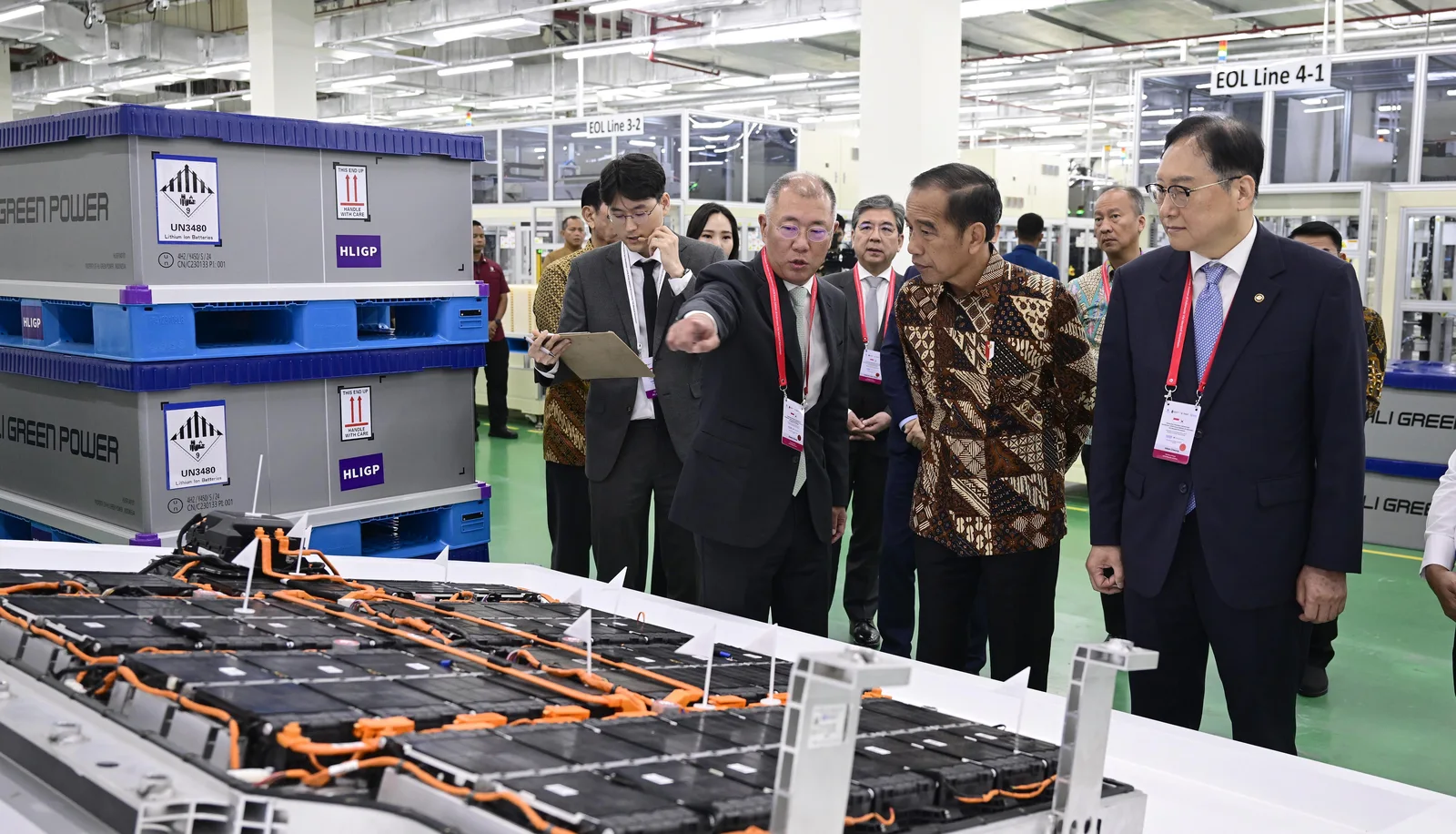
According to IEA estimates, companies headquartered in China controlled slightly more than half of the region's installed battery cell manufacturing capacity in 2025.
That share could approach three-quarters by 2030 if all announced projects materialize.
Regional installed battery cell manufacturing capacity stood at approximately 40 gigawatt-hours in 2025.
Projects currently identified could increase that figure to more than 100 gigawatt-hours by 2030.
These figures reveal two simultaneous developments.
The first is the geographical expansion of manufacturing.
The second is the potential increase in the concentration of industrial ownership among Chinese companies.
Southeast Asia could therefore host more factories while an increasing proportion of its manufacturing capacity remains controlled by foreign corporations already dominant in global value chains.
This does not mean that foreign investment provides no benefits to host economies.
International investment can create employment, develop infrastructure, increase exports, improve workforce skills and stimulate local supplier networks.
It can also accelerate the emergence of industrial ecosystems that would otherwise require considerably more time and domestic capital to establish.
However, immediate economic benefits should not be confused with the acquisition of strategic autonomy.
A foreign corporation may retain control over its patents, critical equipment, financing decisions, supply networks and commercial strategy.
The host country may consequently possess substantial manufacturing capacity without controlling all the decisions that determine its future.
This distinction is particularly important in technology-intensive industries.
The physical location of manufacturing facilities represents one dimension of industrial power.
Ownership, technological expertise and control over production networks represent others.
Relocating a factory does not necessarily relocate the power that governs it.
The Contradictions of the China+1 Strategy
The strategy commonly known as China+1 has become increasingly influential in international investment decisions.
It involves complementing manufacturing capacity located in China with production facilities established in other countries.
The approach serves several objectives.
It can reduce geographical concentration risks, bring production closer to emerging markets, provide access to local economic advantages and, under certain circumstances, alter companies' exposure to trade restrictions.
Yet China+1 can describe fundamentally different strategies.
For a European, Japanese or American company, opening a factory in Southeast Asia may represent an effort to diversify a supply chain previously concentrated in China.
For a Chinese company, establishing the same type of facility may represent the international expansion of its existing manufacturing network.
In the first case, the objective may be to reduce dependence.
In the second, it may be to extend the geographical reach of an established industrial system.
Both developments can occur simultaneously.
The result is geographical diversification that does not necessarily produce an equivalent diversification of ownership or technological control.
However, concentrated ownership should not automatically be equated with systemic vulnerability.
A Chinese-owned factory operating in Thailand does not necessarily face the same operational risks as a factory located in China.
It may rely on local suppliers, employ a national workforce, operate under a different legal framework and develop certain activities independently.
Conversely, a factory owned by a non-Chinese corporation may remain heavily dependent on Chinese materials, components or manufacturing equipment.
Corporate nationality is therefore only one indicator among several.
A meaningful assessment of industrial resilience must also examine suppliers, technologies, substitution possibilities, logistical infrastructure and commercial decision-making.
The challenge is to distinguish between different forms of diversification that do not necessarily produce the same strategic outcomes.
The United States: A Major Market and a Source of Vulnerability
Southeast Asia's industrial dependencies are not limited to Chinese corporate ownership.
They are also visible in the structure of regional exports.
According to the IEA, the United States accounted for more than half of Southeast Asia's clean energy technology exports in 2025.
This concentration reveals another dimension of global economic interdependence.
Some industries established in Southeast Asia depend simultaneously on Asian technology or capital and American demand.
The region therefore occupies an intermediate position between major centers of economic power.
This configuration can support industrial development when international trade remains relatively open.
It can also create vulnerabilities when major economies change their trade policies.
Solar photovoltaics provide a particularly revealing example.
Regional solar module manufacturing capacity reached approximately 106 gigawatts in 2023 before declining to around 82 gigawatts in 2025.
The IEA projects a further reduction to approximately 72 gigawatts by 2030.
This contraction reflects, among other factors, global manufacturing overcapacity and changes in access to the American market.
It demonstrates that geographically diversified manufacturing does not necessarily protect producers against decisions made in their principal export destinations.
Companies may relocate production without sufficiently diversifying their customers.
Dependence then reappears at another stage of the value chain.
Control over demand becomes as strategically important as control over production.
An economy may possess manufacturing infrastructure without controlling the commercial conditions that determine its profitability.
Indonesia, Vietnam, Thailand and Malaysia Are Following Different Industrial Paths
Southeast Asia should not be treated as a homogeneous industrial space.
Its major economies possess different resources, industrial specializations and development strategies.
Indonesia benefits from substantial nickel resources, an important input for certain battery chemistries.
This position creates opportunities in mineral processing and the production of intermediate battery materials.
However, possessing natural resources does not automatically confer mastery over processing technologies or downstream manufacturing.
Indonesia's strategic challenge is therefore to transform its mineral advantages into sustainable industrial capabilities.
Vietnam possesses a diversified manufacturing base and extensive experience integrating into international supply chains.
It also has domestic companies active in electric mobility, notably VinFast.
The presence of national industrial players creates opportunities to develop local decision-making capabilities, although international competitiveness and dependence on certain suppliers remain important challenges.
Thailand benefits from decades of experience in automotive manufacturing.
Its supplier networks, infrastructure and industrial expertise provide a foundation for the transition toward electric vehicles.
The challenge is to transform this ecosystem without losing the advantages accumulated in conventional automotive production.
Malaysia, meanwhile, possesses manufacturing and electronics capabilities that may support its position in selected stages of battery and electric vehicle value chains.
These differences demonstrate why industrial diversification cannot follow a single model.
Countries with mineral resources, electronics expertise or established automotive industries do not necessarily pursue identical objectives.
Their ability to capture greater economic value will depend on the alignment between productive advantages, public policies and industrial partnerships.
Cost Competitiveness Alone Does Not Create Industrial Power
The IEA highlights the growing cost competitiveness of several Southeast Asian manufacturing activities relative to China.
Estimated production cost differences are below 1% for certain battery materials, approximately 4–6% for electric vehicles and wind towers, and between 10% and 30% for battery cells and selected photovoltaic manufacturing activities.
These figures suggest that Southeast Asia possesses a competitive foundation for attracting additional manufacturing investment.
However, cost competitiveness alone does not determine whether a country can become an autonomous industrial actor.
A company may manufacture products at low cost while relying on a single foreign supplier for critical equipment.
It may employ a skilled workforce without owning the intellectual property underlying the technologies it uses.
It may export substantial volumes without controlling brands, distribution networks or final commercial margins.
Domestic value creation therefore depends on the actual depth of industrial integration.
It cannot be measured solely by the physical presence of production facilities.
This distinction explains why industrial policies must extend beyond foreign investment targets and employment creation.
They must also address domestic supplier development, engineering capabilities, research, technical skills and the emergence of local companies capable of expanding beyond subcontracting relationships.
Attracting investment is one stage of industrial development.
Building an industrial ecosystem capable of making its own strategic decisions is another.
Industrial Control Has Multiple Dimensions
The broader strategic significance of Southeast Asia's transformation lies in the distinction between different forms of power within industrial value chains.
The first is territorial control.
It concerns the location of factories, infrastructure and employment.
The second is ownership.
It concerns corporate property rights and shareholders' ability to influence investment decisions.
The third is technological control.
It depends on mastery of patents, industrial processes, software, equipment and critical expertise.
The fourth is commercial control.
It concerns access to customers, markets and distribution networks.
The fifth is financial control.
It depends on access to capital, the ability to withstand industrial cycles and the capacity to finance expansion.
The sixth is institutional control.
It reflects the role of public policies, regulations, technical standards and trade agreements in determining how industries operate.
These dimensions can be distributed across several countries.
A battery may be manufactured in Indonesia by a Chinese company using technologies developed abroad, equipment imported from another market and materials supplied through an international network.
The final product may then be delivered to an automotive manufacturer operating in a third country.
The location of production alone does not reveal who ultimately controls the value chain.
Industrial sovereignty should therefore be understood as a combination of capabilities rather than an attribute automatically associated with national territory.
This framework also avoids an overly simplistic opposition between domestic manufacturing and foreign investment.
An industry open to international capital can develop meaningful autonomy when it possesses domestic expertise, diversified suppliers and credible substitution options.
Conversely, a nationally owned industry can remain highly dependent on foreign technologies and equipment.
The relevant question is whether an economy can maintain, adapt and expand production when international conditions change.
Announced Capacity Is Not the Same as Actual Production
The IEA's projections remain subject to several uncertainties.
Not all announced manufacturing projects represent investments that have received final approval.
Some have reached final investment decisions or entered construction.
Others remain at the announcement stage.
Their realization will depend on demand, financing conditions, trade policies and expected profitability.
The agency also uses assumptions about capacity utilization to estimate future production.
These assumptions should not be confused with actual output.
A theoretical manufacturing capacity of 100 gigawatt-hours does not necessarily imply annual production of 100 gigawatt-hours.
Facilities may operate below their nominal capacity, particularly during commissioning or periods of insufficient demand.
The projected increase in Chinese ownership concentration should therefore be interpreted as a conditional trajectory rather than an established outcome.
There is also an important analytical limitation.
Data concerning manufacturing capacity and corporate nationality cannot fully capture technology transfers, intellectual property ownership, subcontracting relationships or the distribution of profits.
These dimensions require additional research.
The report provides strong evidence of the expanding manufacturing presence of Chinese companies across several regional industries.
It does not, by itself, demonstrate that every new investment increases dependence across all dimensions of industrial power.
This distinction is essential when assessing both opportunities and risks.
Lessons for Europe and Emerging Economies
The transformation underway in Southeast Asia has implications far beyond the region.
It concerns every economy seeking to strengthen its position within strategic global value chains.
Europe, facing intense Chinese competition in batteries, electric vehicles and solar photovoltaics, is also pursuing industrial diversification objectives.
However, attracting foreign-owned factories to European territory does not automatically create independent European technologies.
Similar questions arise across emerging economies, particularly in Africa.
Several countries are seeking to transform mineral resources into manufacturing activities, develop industrial zones and attract investment in energy technologies.
These strategies can support employment creation and economic diversification.
Yet their long-term impact will depend on governments' ability to develop domestic expertise, strengthen local suppliers and negotiate greater participation in higher-value industrial activities.
Morocco, for example, possesses an established automotive manufacturing base and is pursuing industrial development in battery-related activities and electric mobility.
The Southeast Asian experience illustrates why the challenge extends beyond attracting additional production facilities.
It also involves strengthening national capabilities in engineering, research, industrial certification and supplier development.
For emerging economies, participation in global value chains represents a major economic opportunity.
But participation can take very different forms.
Some economies become primarily assembly platforms.
Others gradually develop domestic companies, technologies and decision-making capabilities.
The difference depends as much on industrial policy as on the volume of investment received.
Globalization Is Changing Its Geography Faster Than Its Structure
Southeast Asia's experience illustrates a fundamental transformation of the world economy.
International corporations are seeking to diversify manufacturing locations.
Governments want to reduce strategic vulnerabilities.
Investors are searching for new markets and competitive production environments.
Yet these strategies do not necessarily produce an equivalent redistribution of industrial power.
Manufacturing networks may become more geographically dispersed while ownership, technology and decision-making remain concentrated.
Globalization is not disappearing.
It is being reorganized.
Production is becoming more internationalized, while dominant corporations seek to preserve control over the assets, knowledge and markets that determine their competitiveness.
This transformation challenges an understanding of industrial sovereignty based primarily on the location of manufacturing capacity.
Building a factory, attracting investment or increasing exports can represent meaningful economic progress.
But none of these indicators, considered independently, provides a complete measure of industrial autonomy.
A resilient economy must be able to access alternative suppliers, develop domestic expertise, adapt technologies and preserve market access when international conditions deteriorate.
It must also be capable of transforming foreign investment into lasting productive capabilities rather than relying exclusively on decisions made by the corporations that originally established those facilities.
Southeast Asia is therefore becoming a laboratory of the new industrial geoeconomy.
It demonstrates that diversification strategies can improve geographical resilience without necessarily reducing the concentration of economic power.
It also shows that foreign investment can accelerate industrialization while leaving unresolved questions concerning technological control and value capture.
The objective is not to treat foreign capital and national sovereignty as inherently incompatible.
It is to understand the conditions under which their combination can create durable industrial capabilities.
The next phase of global industrial competition will not be determined solely by where factories are located. It will be shaped by who owns the technologies, controls investment decisions, governs supply chains and possesses the capacity to determine future industrial development.
Southeast Asia is securing a larger place on the world's industrial map. The unresolved question is how much industrial power it will ultimately be able to claim.
Atlas Limits Research Desk
Atlas Limits’ editorial and analytical desk.