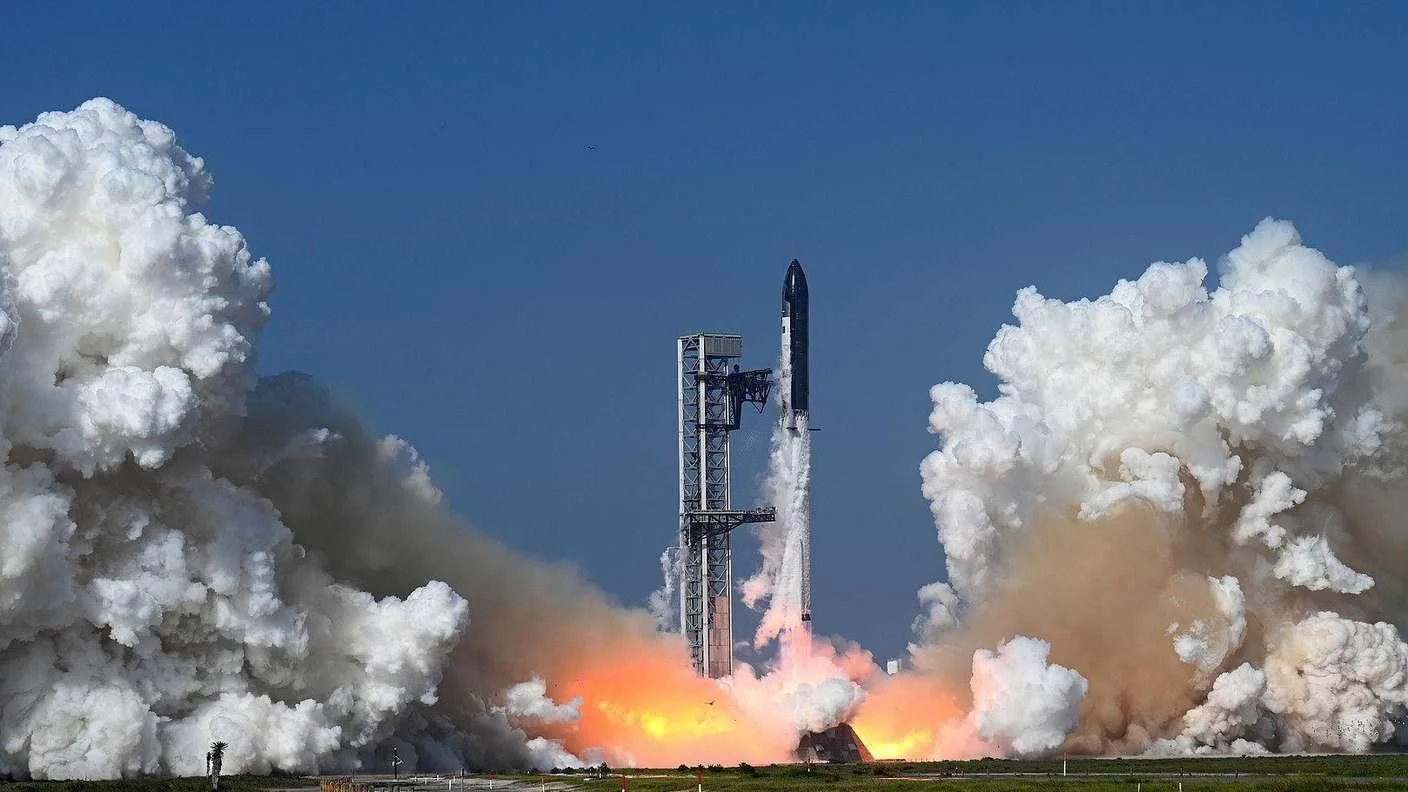
The launch looked much like the ones before it. A tower, a 124-meter stainless-steel vehicle, thirty-three engines beneath its first stage, and a few minutes during which SpaceX still had to demonstrate that its enormous rocket could survive what was being asked of it. But on September 28, 2026, something changed above Texas: Starship did not simply travel farther. For the first time, it had something to deliver.
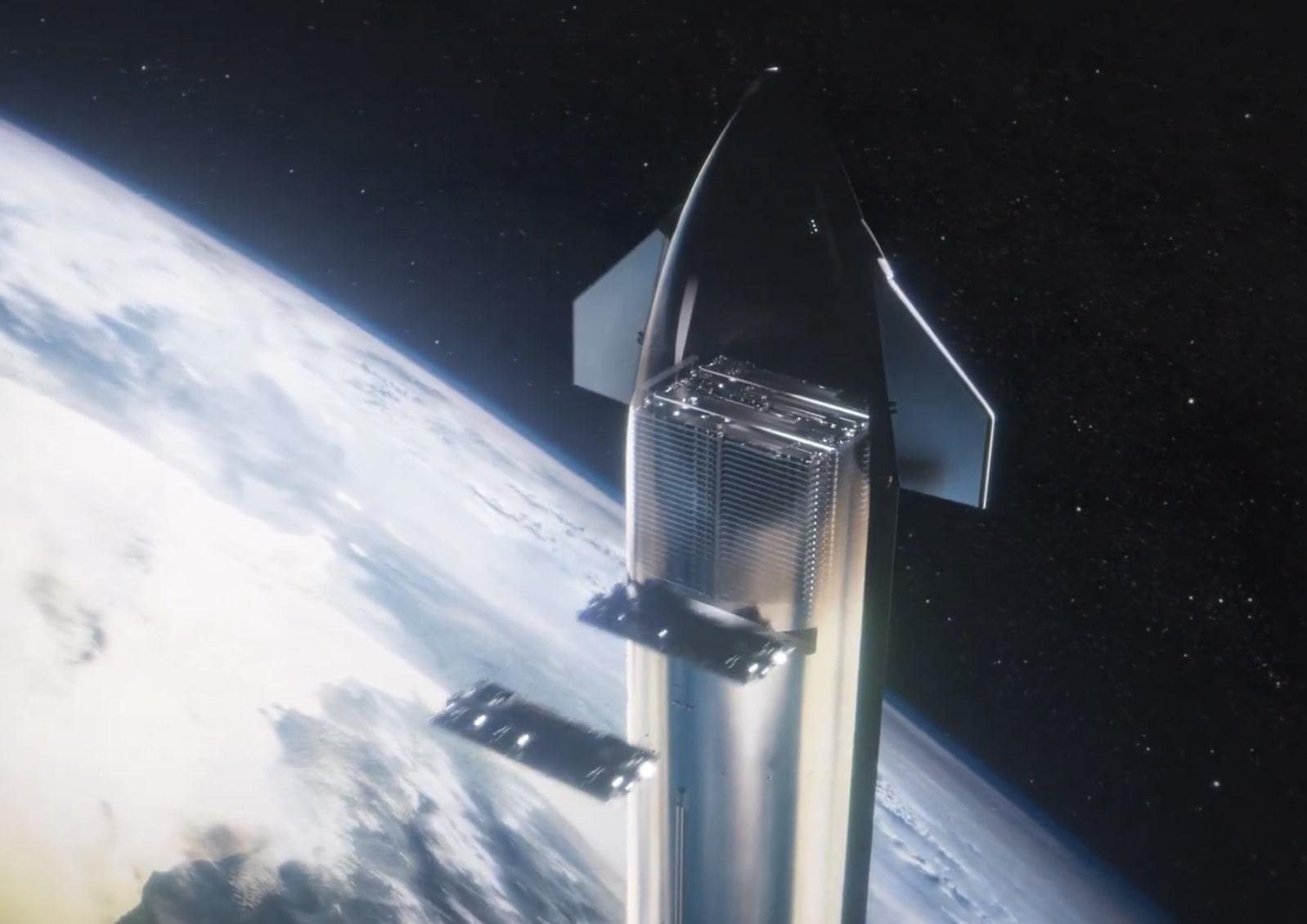
Starship’s fourteenth integrated flight reached Earth orbit and deployed 26 Starlink V3 satellites. The previous thirteen integrated flights of the Starship-Super Heavy system had deliberately remained on suborbital trajectories. This time, the upper stage continued around the Earth and began performing a function that until now had belonged more to the project than to the vehicle itself: carrying a payload intended to remain in space.
The distinction may appear technical. It is primarily economic.
From testing to transportation
Since the first integrated flight in 2023, Starship’s history has been defined by a succession of demonstrations. Launch. Separate the two stages. Control Super Heavy during descent. Keep Starship flying. Test its heat shield. Survive atmospheric reentry. Each mission added another capability, sometimes at the cost of losing the vehicle.
Flight 14 introduced a different logic. Starship was now carrying a useful payload into an operationally relevant orbit.
The 26 satellites aboard the vehicle belong to the third generation of Starlink. SpaceX says each V3 satellite is designed to add roughly 1 terabit per second of capacity to the constellation, meaning the spacecraft carried on this mission could eventually provide around 26 terabits per second once operational. The satellites must first deploy their antennas and solar arrays, establish communications and progressively raise their orbits before entering service.
The choice of Starlink is not incidental. It exposes one of the defining characteristics of the SpaceX model: the company can become its own first customer.
Falcon 9 made it possible to build Starlink. Starlink can now provide Starship with enough internal launch demand to support its transition toward higher flight rates. The launcher, the constellation and the telecommunications service are no longer simply complementary businesses. They are beginning to operate as different layers of the same infrastructure.
A change in scale
Starlink V3 gives this integration another dimension.
SpaceX has said Starship could eventually carry as many as 60 V3 satellites on a single mission. For this first orbital deployment, the company limited the payload to 26 spacecraft.
If that capability can be reproduced at high frequency, the relevant metric will no longer be simply the number of launches. It will increasingly become the amount of telecommunications capacity that each launch can add to the network.
This is where Starship could alter Starlink’s economics. Falcon 9 remains an exceptionally capable and extensively reusable launch vehicle, but the V3 generation was designed to take advantage of Starship’s much greater capacity. A vehicle able to carry substantially more mass and volume can reduce some of the constraints imposed on satellite design while accelerating the deployment of new generations of the constellation.
The industrial loop SpaceX has been building is therefore becoming visible: a global constellation creates enormous launch demand; that demand supports the utilization of a new launch system; and the new launch system, in turn, allows the constellation to expand its capacity more rapidly.
Few actors in the space industry possess such an internal loop.
Orbit does not yet make a system
The September 28 flight, however, does not resolve the main uncertainties surrounding Starship.
One Raptor engine on the upper stage shut down during ascent. The vehicle nevertheless continued its mission, reached orbit and deployed the satellites. SpaceX subsequently shortened a flight profile that had originally been expected to include roughly six orbits and nearly ten hours in space. Starship ultimately reentered the atmosphere and completed a controlled splashdown in the Pacific after approximately three hours of flight.
More importantly, SpaceX did not attempt to recover both stages for reuse. Super Heavy conducted a controlled descent toward the Gulf of Mexico, while Starship ended its mission in the ocean.
That distinction is essential.
SpaceX intends Starship to become a fully and rapidly reusable transportation system. Flight 14 demonstrates orbital capability and satellite deployment. It does not yet demonstrate the economics promised by that architecture.
To turn this achievement into an industrial disruption, SpaceX will have to repeat orbital missions, recover the vehicles, return them to flight rapidly and demonstrate that the entire system can operate frequently enough to reduce the cost of orbital transportation on a sustained basis.
The distance between those two stages remains considerable.
The Moon behind Starlink
 Another institution is necessarily watching this progression: NASA.
Starship provides the basis for the Human Landing System selected to carry astronauts between lunar orbit and the Moon’s surface under the Artemis program. Reaching Earth orbit is therefore a necessary step, but it does not validate the considerably more complex operations required for a lunar mission.
SpaceX still has to demonstrate the transfer of large quantities of cryogenic propellant between vehicles in orbit, the operational assembly of an architecture requiring multiple launches, operations around the Moon, lunar landing and departure from the surface.
Flight 14 therefore reduces one uncertainty without eliminating the others.
That is precisely what makes it significant.
The real threshold
For three years, the spectacular images produced by Starship have sometimes made it difficult to distinguish technical progress from industrial promise. A rocket could explode while still producing useful engineering data. An atmospheric reentry could constitute an experimental success even when the vehicle ultimately ended in the ocean. In a development program, failure and progress could coexist.
Orbit introduces a different measure.
It is now possible to ask not only what Starship is learning, but what it can transport, how frequently it can do so, at what cost and with what degree of reusability.
The potential consequences extend well beyond Starlink. If SpaceX succeeds in making very large amounts of orbital capacity available at high frequency, satellites may be designed differently. Infrastructure currently constrained by launch mass or volume could become feasible. Military, scientific and commercial architectures — and eventually infrastructure assembled directly in orbit — could adapt to this new constraint, or rather to its relaxation.
But that world still depends on capabilities that have yet to be demonstrated.
September 28 was therefore not the day Starship became a fully operational rocket. It may have been something more precise: the day it began to deserve judgment as transportation infrastructure, rather than merely as an experiment.
Main sources
SpaceX — Starship Flight 14 and official Starship information SpaceX — Starlink V3 specifications and deployment objectives Spaceflight Now — orbital flight and deployment of the 26 Starlink V3 satellites Spaceflight Now — Starship atmospheric reentry and splashdown
Atlas Limits Research Desk
Atlas Limits’ editorial and analytical desk.