From the mine to the laboratory, from agricultural fields to semiconductors, global wealth is built through successive stages of transformation. Yet value is not distributed equally between those who possess resources, those who process them, and those who control technology. Behind every product lies a geography of economic power.
A smartphone fits in the palm of a hand. Yet its production requires minerals extracted across several continents, refining facilities, research laboratories, component factories, software companies, logistics networks, and financial systems. Between the raw material and the finished object, dozens of companies and territories contribute, each providing a particular capability.
The product is merely the visible outcome of an industrial organization whose essential structures remain largely unseen.
This organization is the value chain. It encompasses all the activities required to design, produce, transform, transport, market, and maintain a good or service. It may begin in a mine, a field, or an oil well. It can extend into data centers, software, patents, and associated services.
The fundamental question is therefore not simply where resources are located. It is where value is created, who manages to capture it, and how that capacity becomes an instrument of power.
Raw Materials: The Beginning of Wealth, but Not Necessarily of Control
Every industrial economy rests, directly or indirectly, on a material foundation. Metals support infrastructure and machinery. Hydrocarbons provide energy and molecules essential to the chemical industry. Agricultural products become food, textiles, materials, or industrial ingredients. Silica sand, copper, lithium, nickel, and rare earth elements contribute to technological supply chains whose sophistication can sometimes obscure their material origins.
This dependence explains why the geography of natural resources continues to influence international relations.
The Democratic Republic of the Congo occupies a major position in cobalt extraction. Chile and Australia are important lithium producers. Guinea possesses enormous bauxite resources. Indonesia has become a decisive player in nickel production. Gulf countries concentrate substantial hydrocarbon capabilities.
Yet possessing a resource does not necessarily mean controlling the industry that depends on it.
Ore must be extracted, concentrated, refined, transformed into an industrial material, integrated into a component, and eventually incorporated into a product. Each stage requires different investments, technologies, skills, and markets.
A country may possess considerable reserves while importing the equipment required to exploit them. It may export raw materials and subsequently purchase, at much higher prices, the manufactured goods derived from those same resources.
This asymmetry remains one of the enduring characteristics of the global economy.
It does not mean that extraction is an activity without significant value. Certain mining and energy operations require sophisticated technologies, enormous capital expenditure, and highly specialized expertise. But ownership of a resource guarantees neither control over its subsequent transformation nor the capture of the total economic value it makes possible.
Transforming Materials, Building Industrial Capacity
Between a raw resource and a finished product lies an entire world of successive transformations.
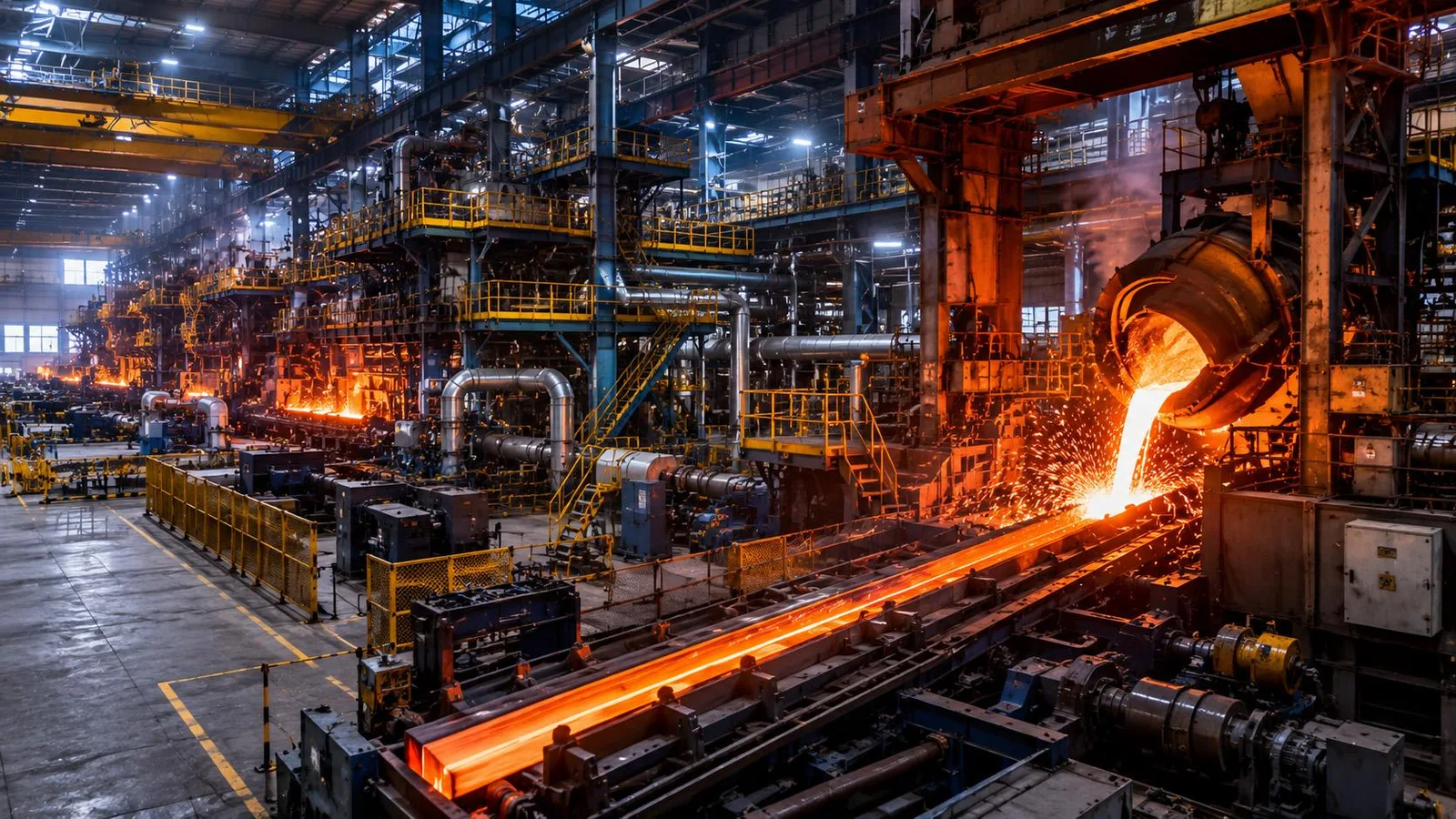
Oil becomes fuel, polymers, solvents, or petrochemical feedstock. Iron ore enters steel production, supplying buildings, machinery, vehicles, and infrastructure. Bauxite is processed into alumina and then aluminum, used in transportation, electricity, packaging, and aerospace.
These transformations change the economic nature of the resource.
They require industrial facilities, energy, chemical or metallurgical processes, transport infrastructure, and skilled labor. They also create interdependencies: a factory may be technically efficient but economically vulnerable if it depends on expensive electricity, a single supplier, or uncertain maritime access.
China built an important part of its manufacturing strength by simultaneously developing infrastructure, processing capacity, supplier networks, and industrial expertise. Its position in the refining of numerous critical minerals illustrates this approach.
Indonesia followed a different trajectory, notably using restrictions on nickel ore exports to encourage investment in domestic processing. This policy contributed to the expansion of industrial capacity while raising environmental, commercial, and foreign-investment dependency concerns.
Saudi Arabia, meanwhile, is seeking to extend its energy base into petrochemicals, materials, metallurgy, and new manufacturing activities.
These experiences demonstrate that industrial policy is not simply about producing more. Its purpose is to move an economy toward activities in which transformation, expertise, and technological control play an increasingly important role.
However, domestic processing does not automatically guarantee greater profitability. Industries further downstream may require more capital, consume more energy, and face more intense competition. Industrial upgrading must therefore be assessed through productivity, margins, market access, and the actual development of domestic capabilities.
The Decisive Transition Toward Technology
Complexity changes in nature when the value chain reaches advanced components, precision machinery, and integrated industrial systems.
The production of a modern semiconductor illustrates this transition.
Silicon originates from a relatively abundant raw material. Yet between that resource and an advanced electronic chip lie purification processes, wafer manufacturing, design software, lithography equipment, specialized materials, extraordinarily precise fabrication operations, and finally assembly, packaging, and testing.
Economic scarcity no longer resides primarily in the original material. It lies in mastering a complex and interdependent set of processes.
The United States occupies major positions in chip design and specialized software. Taiwan is central to advanced semiconductor contract manufacturing. The Netherlands possesses, through ASML, a particularly strategic capability in lithography equipment. Japan retains important positions in materials, equipment, and certain components.
None of these territories independently controls the entire chain.
Contemporary industrial power therefore depends less on absolute self-sufficiency than on possessing capabilities that are difficult to replace.
A company capable of manufacturing equipment essential to thousands of other industrial facilities may exercise considerable influence without producing the final goods itself.
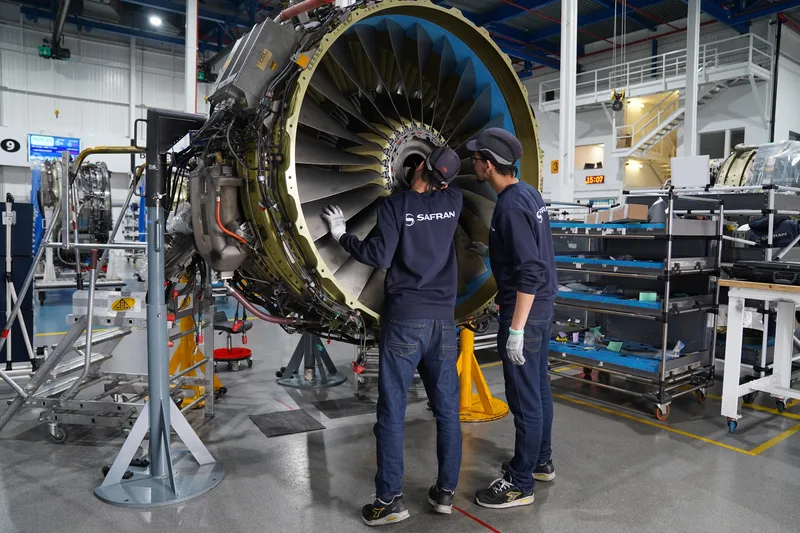
The same logic appears in aerospace, medical equipment, telecommunications, industrial robotics, and advanced energy systems.
As products become more sophisticated, value increasingly depends on research, accumulated expertise, manufacturing precision, certification, and the ability to coordinate specialized suppliers.
The boundary between industry and knowledge becomes progressively less distinct.
From Industrial Products to Intelligent Systems
Value chains no longer necessarily end when a product leaves the factory.
An aircraft generates value for decades through maintenance, spare parts, digital systems, upgrades, and operational services. Industrial machinery can generate revenue through the software controlling it, the data it produces, and services designed to improve its performance.
The automotive industry is undergoing a comparable evolution. Batteries, power electronics, sensors, and software increasingly shape the characteristics of vehicles.
Artificial intelligence extends this transformation.
Its operation depends on both material and intangible infrastructure: electricity generation, data centers, cooling systems, semiconductors, networks, software, data, models, and applications. An innovation presented as purely digital actually depends on considerable industrial and energy infrastructure.
This reality introduces an essential distinction between the visible sophistication of a product and the material conditions required for its existence.
An artificial intelligence model may be developed in a laboratory, but training and operating it at scale requires computing capacity, equipment, and reliable electricity.
Value is consequently distributed among several participants: component manufacturers, infrastructure providers, model developers, platform operators, and businesses integrating these technologies into their operations.
Biotechnology follows a comparable logic, although its constraints are different. Scientific discovery is only one stage. Clinical development, regulatory approval, manufacturing, intellectual property, and distribution collectively determine whether an innovation can become a sustainable economic activity.
In these industries, controlling an invention is not enough. It must also be possible to manufacture, finance, protect, certify, and commercialize it.
Where Is Value Really Concentrated?
It would be tempting to represent the value chain as a ladder on which each additional transformation mechanically increases the wealth captured.
Reality is more complex.
In some industries, design, branding, software, and services generate high margins, while final assembly remains intensely competitive. In others, a scarce resource or a production capability that is difficult to reproduce may become particularly profitable.
In economic terms, value added is the difference between the value of production and the cost of intermediate inputs. It is not synonymous with revenue, selling price, or profit.
This distinction is essential to understanding the international distribution of wealth.
A product assembled in one country may incorporate imported components representing most of its value. Export statistics then attribute a commercial flow to the assembly territory that does not entirely correspond to the value added created locally.
Conversely, a company that designs a component, owns a patent, or provides essential software may capture a substantial share of revenue without appearing as the principal exporter of the finished product.
Intellectual property, industrial assets, financing capacity, and access to consumers therefore become as important as the physical location of factories.
This organization favors economies capable of combining research, engineering, finance, specialized manufacturing, and companies operating in international markets.
It also explains why expanding manufacturing exports is not always sufficient to transform an economy fundamentally. If equipment, technologies, essential inputs, and strategic decisions remain largely controlled abroad, the value retained domestically may remain limited.
The decisive question becomes one of economic embeddedness: which skills, suppliers, assets, and decision-making capabilities develop sustainably within the territory?
Value Chains as an Architecture of Global Power
Industrial globalization has long been described as a search for efficiency. Companies distributed activities across territories according to costs, expertise, infrastructure, and market access.
This logic remains fundamental, but it now coexists with concerns about economic security.
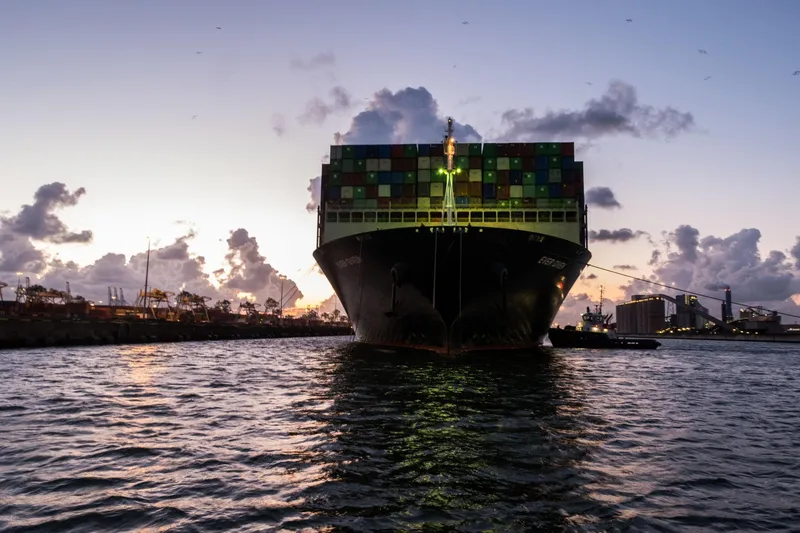
The COVID-19 pandemic, maritime transport disruptions, trade tensions, and technological restrictions exposed vulnerabilities created by certain forms of geographical concentration.
A value chain can be global while depending on a very limited number of facilities, companies, or trade routes.
Control over a strait, a manufacturing technology, a refining capability, or a specialized material can consequently acquire disproportionate importance.
Governments are seeking to identify these points of dependency.
The United States is deploying industrial support policies and restrictions on certain sensitive technologies. The European Union is developing instruments intended to strengthen its capabilities in semiconductors, critical raw materials, and strategic technologies. China continues its efforts to consolidate technological autonomy and industrial positions.
These policies do not necessarily imply the disappearance of international trade. Rather, they reflect a desire to reduce particular vulnerabilities and retain control over functions considered essential.
Competition increasingly concerns the structure of interdependencies as much as the volume of production.
Being indispensable to a global value chain can become a strategic advantage. Depending on a single supplier for a critical function can, conversely, constitute a major weakness.
The Challenge Facing Resource-Producing Economies
For countries possessing significant natural resources, the question of the value chain is particularly consequential.
Africa holds substantial mineral reserves, agricultural resources, energy potential, and a labor force expected to evolve considerably. Yet a significant share of its exports remains concentrated in primary or minimally processed products.
This situation reflects historical, financial, institutional, and industrial factors.
Resource exploitation can be organized around concessions, export infrastructure, and international markets without generating a diversified domestic manufacturing base.
Creating local industry requires more than a political decision. It demands competitively priced energy, logistics networks, technical training, financing capacity, predictable regulation, and sufficient market opportunities.
It also requires time.
Morocco offers an example of the gradual development of industrial capabilities in automotive manufacturing, aerospace, and fertilizers. South Africa possesses a diversified mining and industrial base, although it faces structural constraints. Several Gulf economies are seeking to use energy revenues to finance productive diversification.
These trajectories are neither identical nor directly transferable.
Nevertheless, they highlight a fundamental reality: integration into a value chain becomes a driver of sustainable development only when skills, suppliers, infrastructure, and economic decision-making gradually take root in the domestic economy.
The objective is not necessarily to manufacture every component of every product domestically. Such an ambition would often be costly and inefficient.
Rather, it is to identify segments in which a country can establish a lasting advantage, then strengthen complementary activities capable of increasing productivity and strategic autonomy.
Finance, Corporations, and Control of Strategic Assets
Value chains are also financial constructions.
A mine, refinery, semiconductor fabrication plant, or network of data centers requires capital whose scale and expected return horizons vary considerably.
Investment decisions therefore determine the future geography of industry.
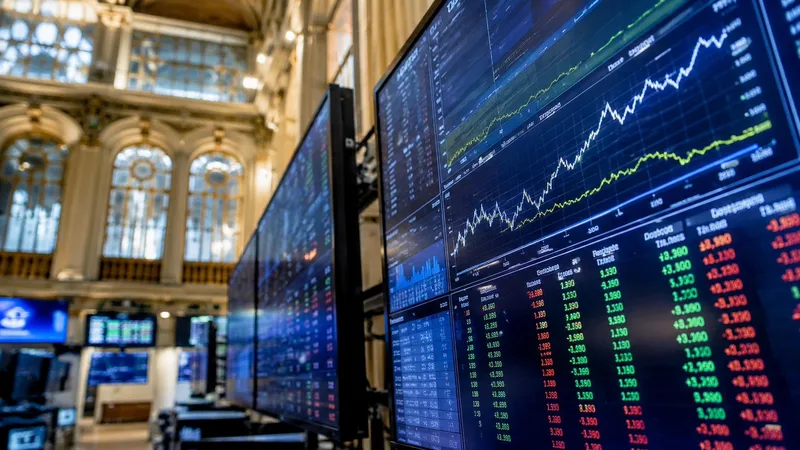
Banks, financial markets, sovereign wealth funds, private equity funds, and multinational corporations play essential roles in allocating these resources.
Mergers and acquisitions make it possible to combine technologies, secure supplies, acquire production capabilities, or enter new markets.
A company may pursue vertical integration to control several successive stages of its value chain. Alternatively, it may outsource certain functions to concentrate resources on activities it considers most strategic.
These choices alter the distribution of economic power.
An industrial acquisition may provide access to patents, engineering teams, customers, or distribution networks whose value far exceeds that of the physical assets involved.
Control over a value chain therefore does not depend exclusively on ownership of resources or factories. It may also result from contracts, equity holdings, technical standards, proprietary software, and dominant commercial positions.
This is why industrial analysis must be extended to corporate governance, capital structures, and the balance of power between suppliers and customers.
Toward a New Industrial Geography
The energy transition, automation, and artificial intelligence are simultaneously transforming several value chains.
Electrification increases the importance of certain metals, power grids, batteries, and power electronics. Digital investment strengthens demand for computing equipment and energy infrastructure. Robotics may alter comparative advantages associated with labor costs.
At the same time, environmental requirements are forcing companies to examine the entire life cycle of their products.
Extraction, water consumption, industrial emissions, transportation, repair, and recycling are becoming increasingly important economic and regulatory considerations.
The value chain is thus extending toward a circular model in which waste, used components, and recovered materials can become industrial inputs once again.
This transformation could change the position of certain territories.
Countries with competitive energy, industrial expertise, reliable infrastructure, and stable institutional environments will retain significant advantages. Others may develop specializations in recycling, advanced materials, maintenance, digital services, or industrial equipment.
But no technological development entirely eliminates geographical constraints.
Resources remain geographically concentrated. Infrastructure requires investment. Expertise takes time to develop. Industrial ecosystems are difficult to reproduce quickly.
Tomorrow's globalization may therefore be characterized less by the systematic dispersal of activities than by selective reorganization around industrial, technological, and energy hubs.
Wealth Is Measured by What an Economy Knows How to Do
The value chain reveals a fundamental distinction between possessing natural wealth and having the capacity to generate economic wealth sustainably.
A resource can produce considerable revenue. An industry can create jobs and exports. But productive power is built above all on the ability to transform knowledge, materials, equipment, and organizations into activities that are difficult to replace.
That ability rests on institutions, infrastructure, businesses, researchers, engineers, technicians, and workers whose skills complement one another.
It cannot be reduced to the quantity of raw materials available or the number of factories located within a territory.
Industrial history demonstrates that established positions can change. Countries without abundant natural resources have developed some of the world's most advanced industries. Others, richly endowed, have encountered persistent difficulties in diversifying their productive systems.
The difference lies less in an immutable hierarchy of nations than in their capacity to accumulate expertise, organize investment, and progressively master strategic functions.
In an increasingly interconnected global economy, the objective is neither to own everything nor to produce everything. It is to determine which dependencies to accept, which capabilities to develop, and which activities to retain under one's control.
For between the resource extracted from the ground and the technology that transforms the world, the true frontier of power lies not only in what nations possess. It lies in what they are capable of doing with what they possess.
Main Sources and Background References
- OECD — Trade in Value Added (TiVA): measurement of value added in international trade and participation in global value chains.
- World Bank — World Development Report 2020: Trading for Development in the Age of Global Value Chains: economic development, specialization, and productive integration.
- UNCTAD — World Investment Report: international investment, multinational corporations, and productive transformation.
- UNIDO — Industrial Development Report: industrialization, manufacturing capabilities, and technological development.
- International Energy Agency — Global Critical Minerals Outlook: extraction, refining, geographical concentration, and critical mineral supply chains.
- World Trade Organization — Global Value Chain Development Report: structure, transformation, and resilience of global value chains.
- European Commission — European Chips Act and Critical Raw Materials Act: industrial strategies and supply security.
Atlas Limits Research Desk
Atlas Limits’ editorial and analytical desk.