Washington is no longer simply easing the constraints imposed on power plants. The Trump administration is now seeking to durably reduce the federal government's ability to regulate their greenhouse gas emissions. Behind deregulation, a different American energy architecture is emerging—built around rising electricity demand, longer-lived fossil assets and regulatory authority increasingly fragmented among the states.
The move had been announced for more than a year. It has now become regulation.
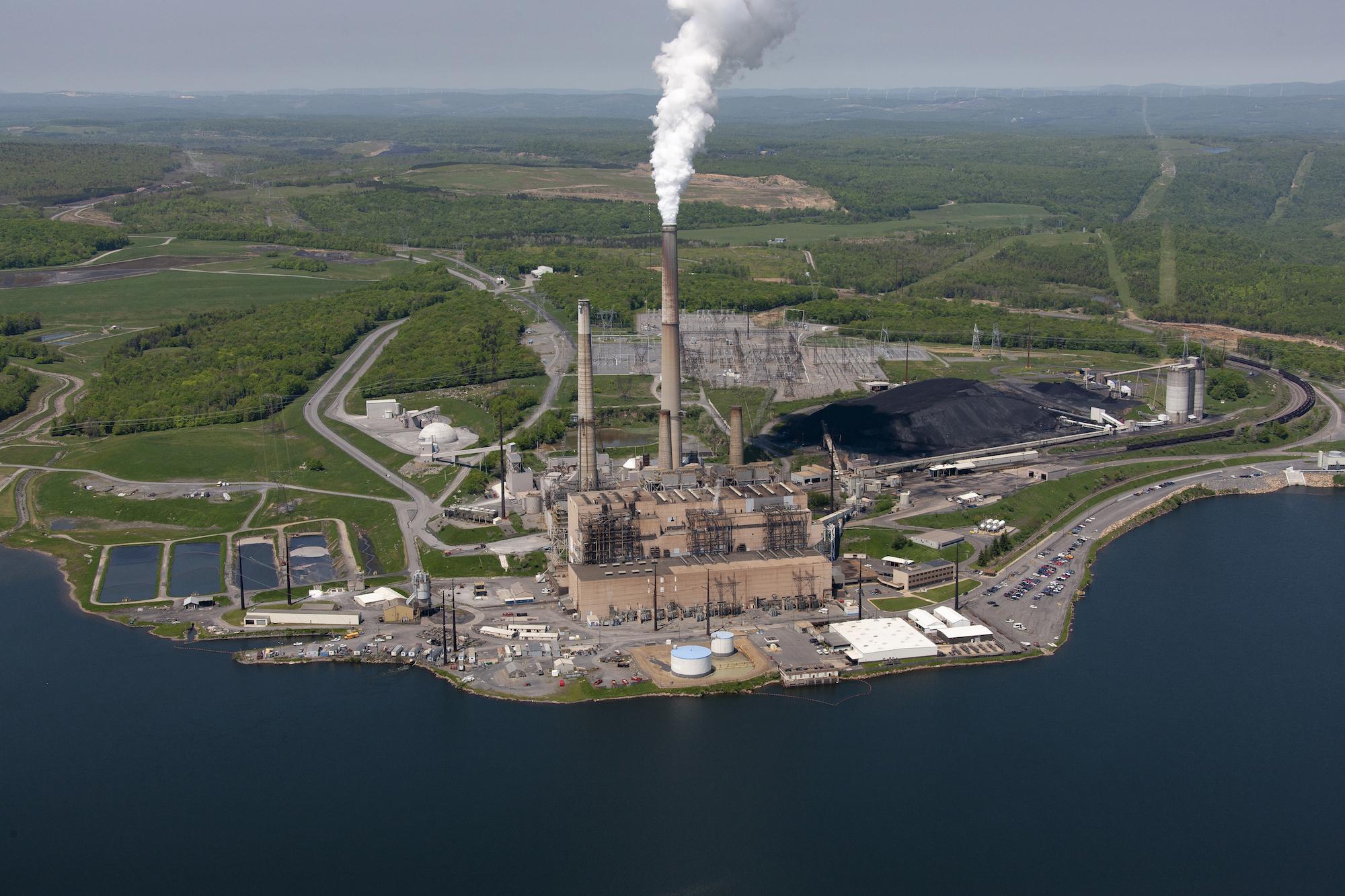
On September 14, 2026, the U.S. Environmental Protection Agency adopted a final rule repealing most of the federal greenhouse gas emission standards imposed in 2024 on coal- and gas-fired power plants.
Those standards had been one of the main instruments of the Biden administration's climate policy. They required existing coal plants and certain new gas plants to follow emission-reduction pathways stringent enough to lead, depending on the facility, either to the use of carbon capture and storage technologies or to the gradual cessation of operations.
Washington is now changing the underlying rationale.
The Trump administration argues that some of the technologies on which those requirements were based—particularly large-scale carbon capture—did not meet the criteria necessary to serve as the foundation for a federal standard. It also maintains that the EPA had exceeded the authority granted to it under the Clean Air Act.
The final rule will take effect according to the regulatory timetable following its publication in the Federal Register. But its implications already extend beyond the plants directly affected.
From an industrial standard to a legal battle
The September 14 decision did not emerge in isolation.
In June 2025, the EPA proposed repealing the standards adopted the previous year. In February 2026, the administration took a much broader step by withdrawing the federal greenhouse gas endangerment finding that had provided the foundation for climate regulation of motor vehicles.
The policy now being pursued in the power sector follows the same logic: not merely changing thresholds, deadlines or required technologies, but challenging the legal basis that allows the federal regulator to intervene.
Alongside the final rule, the EPA therefore issued a second proposal that remains subject to public consultation. It seeks to establish that Section 111 of the Clean Air Act does not permit greenhouse gas emissions from power plants to be regulated solely on the basis of their contribution to climate change.
The distinction is essential.
A regulation that has been repealed can potentially be restored by a future administration. A legal interpretation narrowing the EPA's authority seeks to make rebuilding such a framework considerably more difficult.
That is where the deeper change lies.
Coal gains time
For electricity producers, the disappearance of the 2024 standards immediately changes the economics of fossil-fuel assets.
A coal plant whose continued operation might have required major investment in carbon capture can now contemplate a longer operating life. A new gas-fired plant also faces lower federal regulatory risk if its owner no longer has to anticipate the future installation of expensive capture equipment.
That does not mean the United States will automatically experience a large-scale coal revival.
The American power system has already been profoundly transformed by abundant natural gas, falling costs for some renewable technologies, the development of energy storage and the gradual return of nuclear power to national energy strategies. The economics of an individual plant also depend on its age, operating costs, access to fuel, the grid to which it is connected and the regulations of the state in which it operates.
Federal energy projections themselves continue to point toward a declining share for coal in U.S. electricity generation despite rising overall consumption.
Deregulation therefore does not guarantee coal's return. It primarily removes a federal constraint that could have accelerated its disappearance.
That difference matters.
Electricity is becoming a capacity question again
The regulatory reversal comes as another transformation is reshaping the American electricity sector.
After years of relatively modest growth, electricity consumption is rising again. Data centers, artificial intelligence, new industrial capacity and the electrification of certain uses are increasing not only demand for generation but also the need for power that can be available continuously.
The U.S. Energy Information Administration now expects American electricity consumption to reach successive records in 2026 and 2027.
This new demand changes the political context surrounding the energy transition.
The question is no longer simply how to replace a fossil-fuel unit with lower-carbon capacity. The United States must simultaneously replace aging power plants, supply new data centers, reinforce transmission networks and preserve enough capacity to absorb peaks in consumption.
The Trump administration is using that tension to place electricity availability at the center of its energy policy.
Within this architecture, coal—and particularly natural gas—is no longer treated primarily as capacity whose retirement must be organized, but as dispatchable generation capable of contributing to the expansion of the system.
A less certain market for carbon capture
The decision could also have a less visible effect on an industry Washington had sought to develop: carbon capture and storage.
The 2024 standards created potentially substantial regulatory demand for these technologies. Operators of certain plants would have had to reduce emissions through carbon capture or fundamentally alter how their facilities operated.
Removing that requirement eliminates part of the captive market that might have emerged.
Carbon capture will not disappear. It retains potential applications in refining, chemicals, cement, hydrogen and industrial processes that are difficult to electrify. Federal tax incentives may also continue to support individual projects.
But its role in electricity generation becomes more dependent on its own economics than on regulatory obligation.
That is an important shift: a technology Washington had sought to turn into an instrument of climate compliance must now demonstrate more of its industrial competitiveness on its own.
One country, several electricity policies
The disappearance of the federal standard does not mean the disappearance of American climate policy.
States retain their own instruments.
California, New York and other jurisdictions committed to decarbonization can maintain significantly stricter constraints, while coal- or gas-producing states gain greater latitude to extend the life of fossil infrastructure.
The result could be an even more fragmented American electricity system.
The same generation technology may face a very different regulatory environment depending on where it is located. For investors, federal climate risk declines, but regulatory risk does not disappear: it shifts toward states, local utility commissions, regional electricity markets and the courts.
Litigation will, in fact, constitute the next stage.
Environmental organizations and several states are expected to challenge the administration's interpretation. Courts will have to determine how far the EPA can retreat from exercising climate-related authority that previous administrations derived from the Clean Air Act.
The stability of the new framework therefore remains uncertain.
The battle is now over the power to regulate
The figures advanced by both sides illustrate the scale of the methodological conflict.
The EPA presents its policy as a massive reduction in regulatory costs for the economy and electricity industry. The Biden administration, by contrast, estimated that its standards would have prevented roughly one billion tons of carbon emissions through 2047 and generated hundreds of billions of dollars in net benefits once climate and public-health effects were included.
These estimates do not measure exactly the same things and rely on different assumptions regarding the cost of carbon, public health, technological development and the future electricity system. Treating them as directly comparable assessments would therefore be misleading.
The real indicator will appear elsewhere: in the decisions made by producers.
The key questions are which coal plants actually postpone retirement, how much new gas-fired capacity secures financing, whether carbon-capture projects are abandoned and how individual states respond to the disappearance of the federal framework.
Washington can change a regulation. It cannot, by decree, simultaneously change natural-gas prices, solar costs, turbine availability, interconnection delays, grid constraints or the economics of an aging power plant.
Deregulation therefore changes the rules of the game without automatically determining the outcome.
What happened on September 14 is nevertheless more profound than another episode in America's recurring climate-policy pendulum.
After dismantling much of the regulatory framework built around greenhouse gas emissions, the administration is now seeking to reduce the ability of its successors to rebuild it.
The American battle over carbon is therefore shifting from emission targets toward a more fundamental question: who still has the power to regulate them?
Main sources
- U.S. Environmental Protection Agency (EPA), greenhouse gas standards and regulatory documentation for power plants, 2024–2026
- U.S. Environmental Protection Agency, withdrawal of the Greenhouse Gas Endangerment Finding, February 2026
- Reuters, September 14, 2026
- Associated Press, September 14, 2026
- U.S. Energy Information Administration, U.S. electricity consumption and generation outlook, September 2026
Atlas Limits Research Desk
Atlas Limits’ editorial and analytical desk.