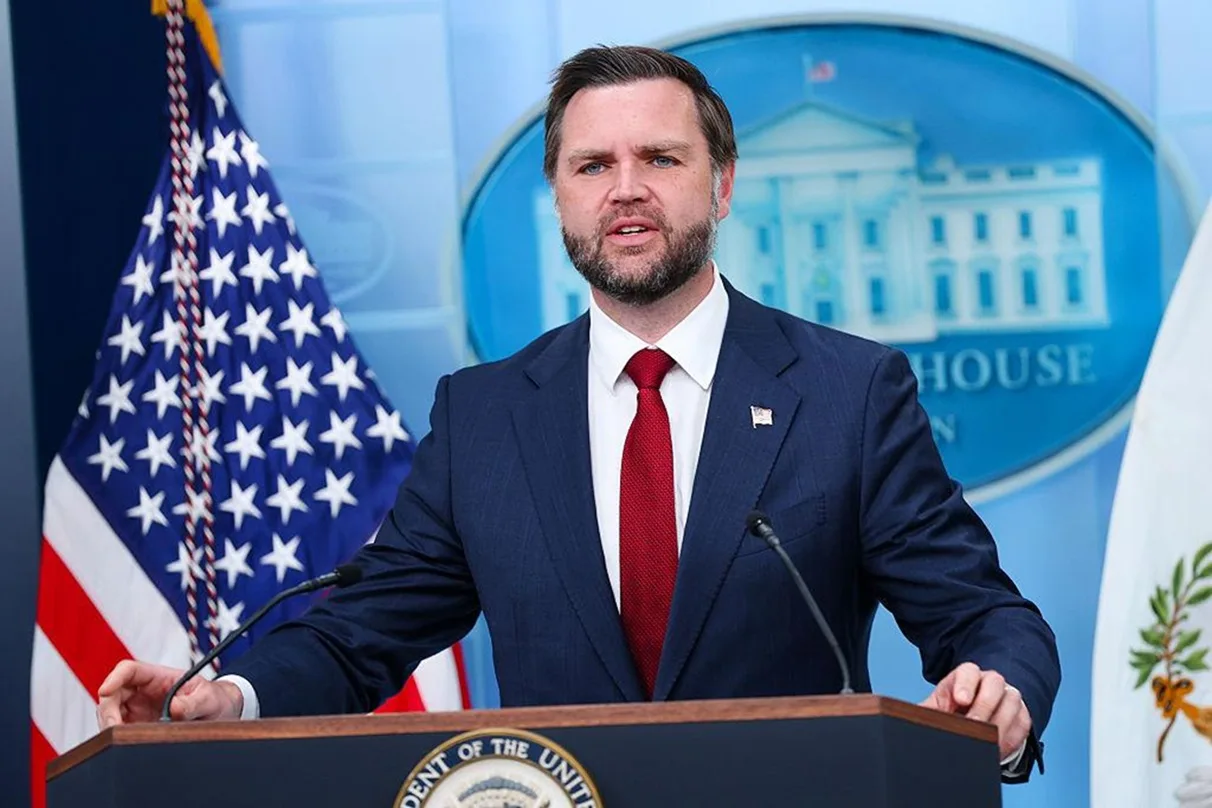
Washington has reminded America's technology giants that their freedom to organize a global workforce is no longer unconditional. On October 8, 2026, Vice President JD Vance announced the suspension of Microsoft from a federal certification program that allows companies to sponsor foreign skilled workers for permanent residency. Adobe and several major international IT services groups were also targeted. Behind an offensive presented as a crackdown on visa fraud lies a deeper transformation: the United States increasingly intends to subordinate the globalization of its technology industry to the priorities of its domestic labor market.
The confrontation reveals the contradictions running through the world's leading technological power. Microsoft is one of the principal instruments of American dominance in software, cloud computing, and artificial intelligence. Its infrastructure, investments, and technologies contribute directly to the United States' ability to maintain its advantage over competitors. Yet Washington has chosen precisely this company as a central target in its campaign against international recruitment practices.
The Trump administration is not challenging Microsoft's economic success. It is questioning the conditions under which that success should now be organized.
The message is straightforward in its formulation but considerable in its implications: a company can be American through its headquarters, capital, and technologies without its employment model necessarily being regarded as sufficiently beneficial to American workers.
The October 8 Break
The decision announced by JD Vance concerns the Permanent Labor Certification Program, commonly known as PERM. This mechanism is an essential stage in many employment-based immigration procedures through which foreign workers obtain permanent residency with the sponsorship of their employers.
To secure certification, an employer must normally demonstrate that no available, qualified, and willing American worker can fill the position and that hiring a foreign worker will not adversely affect the wages or working conditions of similarly employed workers.
The mechanism therefore rests on a longstanding compromise: companies may access the global labor market, but that openness must remain compatible with protecting domestic employment.
Washington now considers that certain companies have undermined this balance.
Alongside Microsoft and Adobe, the announced suspensions cover Cognizant, Infosys, Tata Consultancy Services, Wipro, HCL Technologies, and Capgemini. Labor Secretary Keith Sonderling indicated that his department would no longer accept new permanent labor certification applications involving these companies and would suspend the processing of pending cases.
The scope of the decision must be distinguished from a general prohibition on employing foreign nationals. It does not automatically cancel previously issued H-1B visas, nor does it independently revoke existing immigration status. It does, however, obstruct an important pathway toward permanent residency for affected employees.
This legal distinction matters. A foreign engineer may remain legally employed in the United States while facing considerably greater uncertainty over the future of their immigration status.
The suspension comes amid federal investigations and allegations of fraud. At this stage, government announcements do not constitute judicial proof that every company concerned unlawfully replaced American employees.
Nevertheless, the measures are already sufficient to alter the conditions under which these companies attract and retain international talent.
The Numbers Behind the Accusation
JD Vance placed Microsoft at the center of his argument by drawing a comparison between several figures. According to the data he presented, the company had eliminated approximately 6,000 American jobs while benefiting from 6,300 H-1B visas and nearly 3,000 green cards.
The vice president argues that technology companies use immigration programs to replace domestic employees with foreign workers who are more dependent on their employers.
The comparison carries considerable political weight. It does not, however, establish direct substitution.
Layoffs may affect different occupations, geographical areas, and qualification levels from those associated with foreign workers recruited or retained under visa programs. H-1B approvals may also include extensions and administrative changes involving employees already in the country rather than exclusively new hires. Permanent labor certifications and green cards, meanwhile, involve separate procedures that frequently extend over several years.
Microsoft has stated that 80% of its H-1B petitions during the most recent fiscal year concerned existing employees and that new hires under the program represented approximately 1% of its American workforce.
These clarifications do not rule out individual abuses or questionable employment practices. They do demonstrate that the equation presented by Washington cannot be treated as a direct measurement of the replacement of American workers.
The more fundamental question lies elsewhere: to what extent do international labor mobility programs allow companies to reduce labor costs, strengthen their bargaining position, and organize competition between workers whose legal status gives them different levels of negotiating power?
That question extends far beyond Microsoft.
Immigration Status as Economic Leverage
The H-1B system was designed to allow American employers to recruit foreign professionals temporarily for specialized occupations, particularly in computing, engineering, and research.
For decades, it has represented one of the principal entry points for international talent into the American technology economy.
Its importance cannot be measured solely by the number of visas issued. It also derives from the relationship of dependence that immigration status can create between employees and their employers.
An American worker generally enjoys professional mobility without their right to remain in the country depending on continued employment. For an H-1B visa holder, losing a job can trigger a limited period in which to find another sponsoring employer, change immigration status, or leave the United States.
This asymmetry can weaken an employee's ability to negotiate higher wages, challenge certain practices, or change companies quickly.
It creates a particular economic risk: a labor market in which two employees with comparable skills do not necessarily possess comparable bargaining power.
American regulations nevertheless impose wage obligations on employers sponsoring H-1B workers. The program does not legally authorize compensation below applicable wage requirements. But the existence of regulatory wage protections does not eliminate every form of dependence associated with immigration status.
This distinction lies at the center of part of Washington's political offensive.
The administration presents its intervention as a defense of American workers against competition organized by employers. Supporters of skilled immigration, by contrast, emphasize that these programs also address genuine skills shortages, sustain innovation, and indirectly generate additional employment.
Both mechanisms can operate simultaneously. Their relative significance depends on occupations, employers, compensation levels, and actual recruitment conditions.
An effective public policy must therefore distinguish documented abuses from legitimate skills requirements rather than treating international recruitment as a uniform phenomenon.
An American Industry Built by the World
Washington's offensive touches a historical paradox.
Silicon Valley became the global center of innovation by combining three resources: American capital, domestic scientific infrastructure, and an exceptional capacity to attract foreign talent.
American universities trained successive generations of international researchers. Technology companies subsequently transformed some of those skills into products, platforms, and businesses capable of dominating global markets.
Microsoft illustrates this history. Its chief executive, Satya Nadella, was born in India before pursuing his education and professional career in the United States. His trajectory was itself shaped by the American system of professional immigration.
The example is far from isolated. Sundar Pichai, chief executive of Alphabet and Google, was also born in India. Jensen Huang, Nvidia's founder and chief executive, was born in Taiwan. Their distinct careers nevertheless illustrate a shared characteristic of American technological capitalism: its ability to integrate skills developed abroad into companies that subsequently become instruments of national power.
America's competitive advantage has never rested exclusively on producing talent domestically. It has also depended on attracting people educated elsewhere.
The distinction is fundamental.
An economic system can remain national in its centers of decision-making while being deeply international in the human resources that sustain its operations.
Washington now seeks to change the terms of that balance without losing its benefits.
The challenge will be to preserve America's scientific and entrepreneurial attractiveness while strengthening the position of domestic workers in the most strategically important sectors.
From Free Movement to Productive Sovereignty
The October 8 decision is not an isolated episode. It belongs to a broader reorientation of American economic policy.
For several years, Washington has increasingly used tariffs, technology restrictions, industrial subsidies, export controls, and national security instruments to reshape its economic relationships with the rest of the world.
Semiconductors must be manufactured within supply chains considered secure. Critical minerals must be protected against dependencies judged excessive. Military equipment must be producible in sufficient quantities on American territory. Digital infrastructure must remain under strategic control.
Skilled labor is now joining the range of resources whose organization has become a matter of sovereignty.
This evolution marks a departure from the conception of globalization that prevailed after the Cold War.
Under that model, multinational companies were encouraged to seek the most efficient combinations of capital, labor, technology, and geographical location. Their international competitiveness was generally considered beneficial to the national economy, even when individual corporate decisions caused job losses in particular communities.
The emerging American doctrine introduces an additional condition.
A company's international success is no longer sufficient to justify its productive organization. That organization must also demonstrate its contribution to national objectives defined through political authority.
The distinction between corporate interests and state interests is becoming explicit once again.
Microsoft can increase its profits, invest heavily in artificial intelligence, and reinforce American dominance in cloud computing while simultaneously facing challenges from Washington over its recruitment policies.
The government no longer asks companies merely to remain competitive. It expects them to make that competitiveness compatible with a more demanding definition of the national interest.
The Outsourcing Model Comes Under Scrutiny
The inclusion of Infosys, Tata Consultancy Services, Wipro, Cognizant, HCL Technologies, and Capgemini reveals another dimension of the offensive.
The issue is no longer limited to direct recruitment by major American technology companies. Washington is also targeting the international IT services ecosystem that supports their operations.
Over several decades, multinational corporations have progressively outsourced parts of their technological functions: software development, application maintenance, IT support, data processing, cybersecurity, infrastructure management, and consulting.
This organizational model often combines services delivered remotely with employees temporarily assigned to clients' facilities.
India has occupied a central position in this transformation through its skilled workforce, extensive IT services industry, and ability to deliver large-scale operations.
American businesses have benefited from international access to specialized expertise, lower costs in certain activities, and greater flexibility in allocating personnel across projects.
For service providers, the model has enabled the emergence of global corporations, the creation of skilled employment, and the export of relatively high-value services.
Yet it has also made the distinction between knowledge transfer, productive outsourcing, and international labor-cost arbitrage increasingly complex.
The American decision therefore introduces a new risk for companies whose operations depend on professional mobility into the United States.
It may encourage them to recruit more American employees, transfer certain services to delivery centers outside the country, or automate functions previously performed by human teams.
This final possibility deserves particular attention.
A policy intended to protect domestic employment can accelerate investment in technologies that reduce labor requirements if companies conclude that automation is economically preferable to recruitment.
The outcome will depend on how businesses reorganize their operations, but also on the qualifications actually available in the American labor market.
Artificial Intelligence Complicates the Equation
The offensive comes at a moment when artificial intelligence is simultaneously transforming the demand for skills and the organization of technological work.
Major corporations are investing enormous sums in data centers, specialized processors, electrical networks, and the infrastructure required to train and operate AI models.
This transformation generates strong demand for particular profiles: researchers, machine-learning engineers, infrastructure specialists, semiconductor designers, and cybersecurity experts.
At the same time, automation tools are beginning to reshape software development, IT services, and certain administrative functions.
Companies may therefore reduce headcounts in some activities while seeking new expertise in others.
This is precisely why aggregate comparisons between layoffs and visa approvals are insufficient.
Eliminating a position in a commercial team or a traditional software function does not necessarily mean that an engineer specializing in AI model training could fill the same role, nor that the two decisions form part of a deliberate substitution strategy.
Technological transformation creates new requirements while reducing demand for certain existing skills.
Washington must therefore reconcile two objectives that may come into tension: strengthening domestic employment protection and allowing American companies to access the expertise required to preserve their technological lead.
If restrictions become too broad, some researchers and entrepreneurs may choose alternative destinations. If sufficiently targeted, they could instead encourage companies to invest more heavily in domestic training and recruitment.
The central issue will be the precision of the instruments employed.
Universities Enter the Confrontation
The extension of the offensive to universities confirms that Washington no longer regards immigration programs as a narrow human-resources issue.
On October 8, American authorities also announced investigations involving nine universities, including Harvard, Yale, and Stanford, over possible abuses associated with the J-1 visa program.
These visas facilitate academic exchanges, research activities, and various forms of international mobility.
The administration has raised concerns about potential circumvention of wage regulations, as well as foreign influence and the protection of federally funded research.
These allegations remain subject to examination through the announced procedures.
Their political significance is nevertheless substantial.
American universities are not merely institutions of higher education. They constitute a fundamental infrastructure of national scientific power.
They attract international students and researchers, sustain laboratories, contribute to fundamental research, and maintain close relationships with technology companies.
By increasing scrutiny of both corporations and universities, Washington is intervening at two successive stages of the same system: the international formation of skills and their integration into the American economy.
The risk is that part of the ecosystem responsible for America's scientific dominance could be weakened.
The issue is therefore not simply who may work for an American company, but who will be able to study, conduct research, establish businesses, and build professional careers in the United States.
An Alliance That Has Become Conditional
The relationship between Washington and its technology giants has long rested on a convergence of interests.
Companies benefited from an enormous domestic market, privileged access to capital, university research, and an environment favorable to innovation. In return, their international expansion strengthened American economic and technological influence.
That convergence remains, but it is no longer considered sufficient.
The government now intends to exercise more direct control over the conditions of corporate expansion.
The contradiction is visible in the treatment of Microsoft itself. While the administration announces a major suspension affecting permanent residency procedures for the company's foreign employees, its chief executive, Satya Nadella, is among the technology leaders whom Donald Trump is expected to honor for their contributions to American innovation.
Recognition of technological achievement thus coexists with challenges to particular labor and immigration practices.
This duality does not necessarily reflect inconsistency. It expresses a distinction Washington is seeking to establish: supporting American companies in global competition does not mean granting them unlimited autonomy over their organizational decisions.
The state intends to recover the ability to define the domestic conditions under which private success is achieved.
The unresolved question is how far that intervention can extend without compromising the mechanisms that produced such success.
Technology companies built their power on the international circulation of capital, data, knowledge, and skills. They must now contend with a political authority that increasingly regards some of these flows as vulnerabilities.
The confrontation could therefore extend well beyond immigration policy.
It concerns the distribution of power between the state and major corporations in an economy where technology is simultaneously a source of wealth, a military instrument, and an attribute of sovereignty.
The Cost of Nationalizing Priorities
The suspension affecting Microsoft and the other companies does not yet make it possible to measure the economic consequences of the new policy.
Its effects will depend on the duration of the restrictions, the findings of investigations, potential legal challenges, and the ability of companies to adapt their recruitment strategies.
Several indicators will be particularly important: wage developments in technology occupations, the share of domestic recruitment, investment in workforce training, the relocation of service activities, and the decisions of international researchers concerning where to establish their careers.
An increase in American hiring would not, by itself, demonstrate a lasting improvement in productivity. Likewise, a decline in foreign recruitment would not automatically establish a loss of competitiveness.
Any meaningful assessment must examine the productive system as a whole rather than relying on a single immigration indicator.
This is especially important because the United States is simultaneously seeking to strengthen its industrial capabilities, accelerate artificial intelligence development, and maintain its strategic advantage over China.
These ambitions require capital, energy, infrastructure, and skills. Not all these resources can be expanded immediately through political decisions.
Training an experienced engineer takes years. Building a world-class research capability requires even longer. And companies with established international networks can sometimes relocate activities more quickly than governments can develop the domestic expertise needed to replace them.
Productive sovereignty therefore cannot be achieved through restrictions alone. It also requires sustained policies for education, research, investment, and the development of national capabilities.
The economic effectiveness of the emerging American doctrine will depend on this balance.
For several decades, American technological power rested on a relatively simple principle: attract the world's best talent to build the world's most powerful companies.
Washington is now attaching a condition to that formula. American companies must continue to dominate international markets, but their success must translate more directly into benefits for American workers.
The question is no longer simply whether Silicon Valley can continue to conquer the world. It is how much of the value created by that global expansion must now return to the country where its leading companies were established.
The United States is not abandoning technological globalization. It is attempting to recover political control over its terms. But its ability to set those terms will also depend on preserving what made it powerful in the first place: attracting the world while continuing to build at home.
Main Sources
- Reuters, October 8, 2026 — Suspension of Microsoft, Adobe, and major IT services companies from the permanent labor certification program.
- Associated Press, October 8, 2026 — JD Vance's statements, employment and visa figures cited in relation to Microsoft, and allegations concerning worker substitution.
- The Washington Post, October 8, 2026 — The PERM framework, implications for employment-based immigration, and Microsoft's position.
- Business Insider, October 8, 2026 — Microsoft's response concerning its H-1B petitions and domestic recruitment.
- U.S. Department of Labor — Permanent Labor Certification Program and H-1B wage requirements.
- U.S. Citizenship and Immigration Services (USCIS) — H-1B specialty occupation regulations and employment-based permanent residency procedures.
Atlas Limits Research Desk
Atlas Limits’ editorial and analytical desk.