Sub-Saharan Africa is expected to grow by 4.5% in both 2026 and 2027, according to the International Monetary Fund's latest projections. Behind this resilience to global turbulence, however, lies a less reassuring reality: a regional economy that continues to expand without transforming its productive structures, public finances, and living standards quickly enough across much of the continent.
In October 2026, the International Monetary Fund published a forecast that might, at first glance, appear encouraging. Sub-Saharan Africa is expected to record economic growth of 4.5% this year and maintain that pace in 2027. The region had already expanded by 4.5% in 2025. Three consecutive years of relatively strong growth, even as geopolitical tensions, energy disruptions, and rising international financing costs continue to weigh on the global economy.
In April, the institution had still anticipated a slowdown to 4.3% in 2026. Six months later, it raised its forecast by 0.2 percentage points. The adjustment may seem modest, but it reflects an ability to adapt that successive crises have not entirely undermined. Export revenues in some economies have benefited from favorable conditions, international supply chains have partially reorganized, and several macroeconomic reforms introduced in previous years have helped stabilize public finances.
The figures therefore appear to confirm a degree of African economic resilience. Yet they conceal a much more consequential question. What does 4.5% growth actually mean in a region where the population continues to expand rapidly, infrastructure remains inadequate, much of employment is still concentrated in the informal economy, and governments devote a substantial share of their resources to servicing financial obligations?
The question is no longer simply whether sub-Saharan Africa can sustain growth. It is why that growth, although genuine, has not yet generated the economic and social transformation that its pace might suggest. 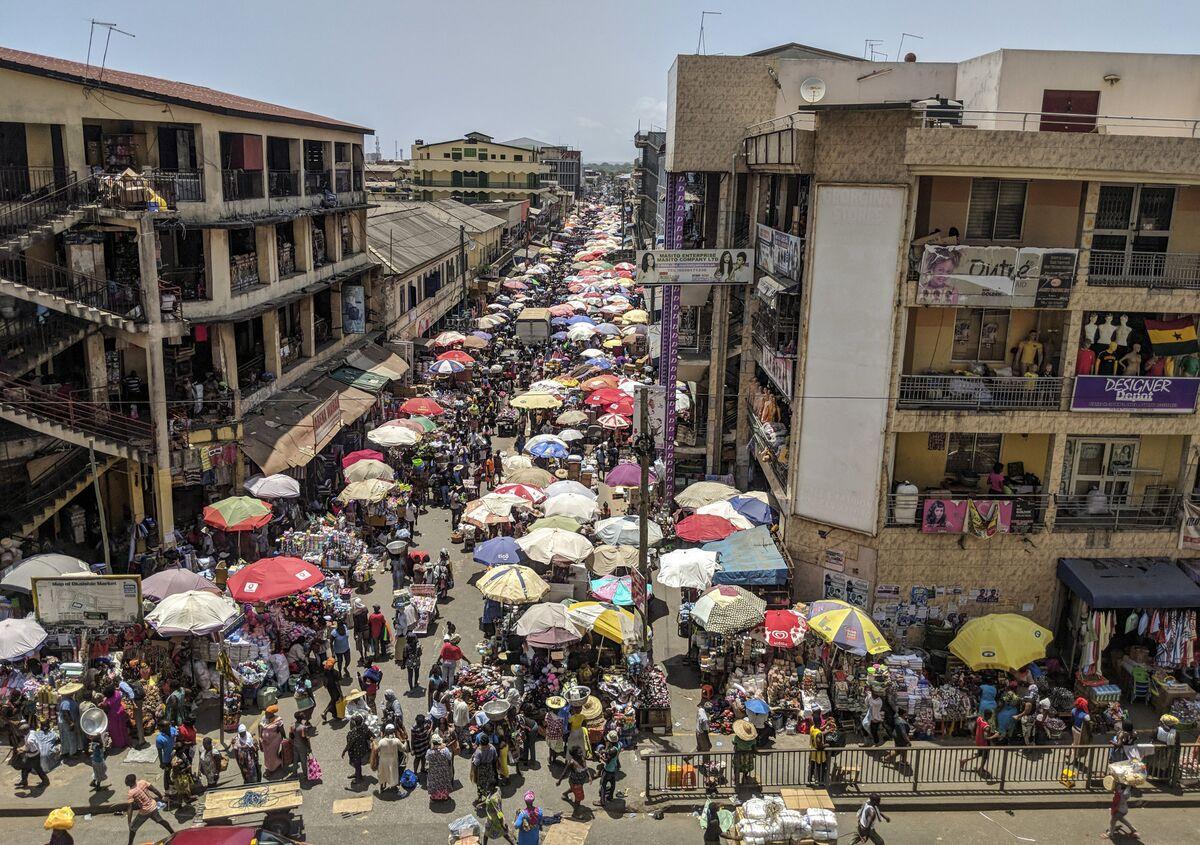
Growth That Withstands Crises
Since the beginning of the decade, sub-Saharan Africa has experienced a succession of disruptions that could have seriously compromised its economic trajectory. The pandemic disrupted trade and public finances. Rising global energy and food prices subsequently fueled inflation, while higher international interest rates made sovereign debt refinancing more expensive.
These pressures were compounded by disruptions associated with the war in the Middle East in 2026, particularly across oil markets, fertilizers, transportation, and supply chains.
Against this background, the apparent stability of regional growth represents an achievement that should not be underestimated. African economies have not remained passive in the face of external shocks. Several have adjusted monetary policies, reduced certain fiscal imbalances, reorganized supply arrangements, or benefited from additional export revenues.
The IMF notes that adjustment efforts undertaken before the latest disruptions helped reduce some debt ratios and strengthen macroeconomic stability. These improvements do not mean vulnerabilities have disappeared, but they demonstrate that the region is no longer confronting crises under precisely the same conditions as before.
This resilience, however, has one essential characteristic: it rests on very different economic mechanisms from one country to another.
In some oil-, mineral-, and precious-metal-exporting economies, higher external revenues can support growth, public expenditure, and foreign exchange reserves. Elsewhere, the same price movements increase production costs, import bills, and household expenditure.
Higher oil prices can improve the outlook for a producer while worsening conditions for an importer. Rising copper or gold prices can strengthen the export earnings of a mining economy without necessarily generating a comparable increase in industrial employment.
Regional growth of 4.5% is therefore a statistical aggregate, not a shared economic experience.
A Continent of Diverging Economies
One of the most important observations in the October report concerns precisely this divergence. The IMF finds that resource-intensive economies have maintained a degree of resilience, while growth has slowed in several countries less dependent on natural resources.
This development deserves attention because it does not necessarily mean that extractive economies possess a superior development model.
Revenues from oil, gas, copper, gold, and other commodities can accelerate economic activity and temporarily improve external accounts. But they depend on international markets over which African producers exercise limited influence. They can also be concentrated in highly capital-intensive sectors whose contribution to employment remains relatively small.
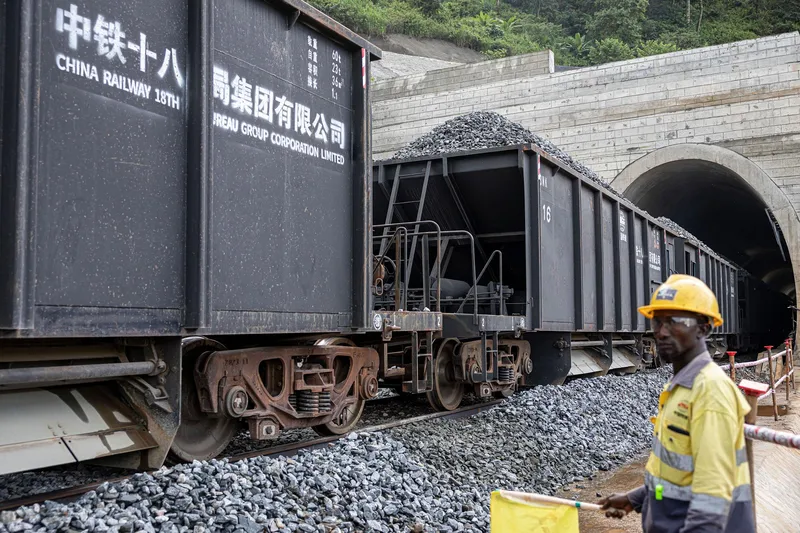
The exploitation of a major mineral deposit can significantly increase gross domestic product without producing a proportional improvement in the incomes of surrounding communities. Infrastructure built to export minerals can strengthen national logistics capacity, but it does not automatically create a diversified industrial base.
The distinction between extraction and processing becomes decisive.
Guinea possesses vast bauxite resources and is developing its iron ore export capacity. The Democratic Republic of the Congo occupies a central position in global copper and cobalt supply chains. Zambia is seeking to expand its mining output. Nigeria holds substantial oil and gas resources.
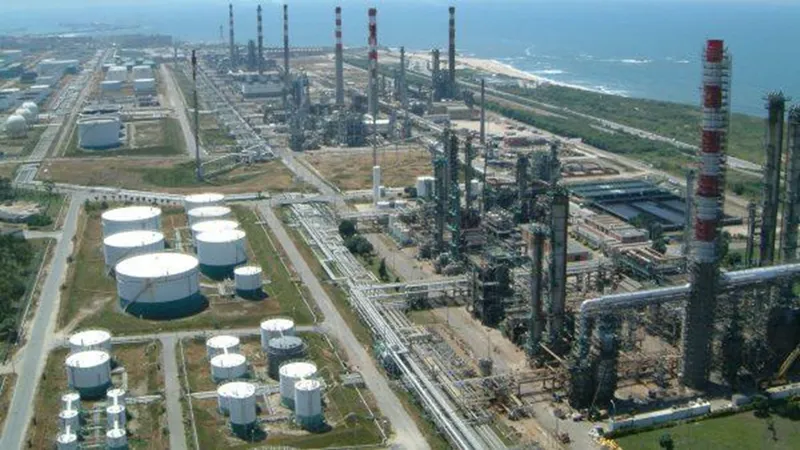
These endowments represent genuine economic advantages. Their capacity to generate sustainable development, however, depends on what is built around extraction: electricity generation, metallurgy, refining, transportation, technical training, industrial subcontracting, and market access.
A tonne of exported ore and a tonne of locally processed metal do not have the same effects on an economy's structure. The latter can mobilize more energy, industrial expertise, capital, and specialized services. It can also retain a greater share of value added, provided processing costs remain competitive.
The issue therefore extends beyond the volume of available resources. It concerns the ability of African economies to transform natural advantages into lasting productive capabilities.
This distinction helps explain why two countries recording similar growth rates can experience radically different developments in employment, productivity, and income.
The Quiet Weight of Demography
African growth has another characteristic frequently overlooked in international comparisons: it must be assessed against a rapidly expanding population.
An economy growing by 4.5% while its population increases by 2.5% does not generate a 4.5% improvement in average real income per person. In this illustrative example, the increase amounts to approximately 2%, even before considering income distribution.
The difference is fundamental.
In an economy where population remains relatively stable, growth of 4.5% can translate into a similar increase in output per capita. In an economy where population is expanding rapidly, part of the additional production must meet the needs of new inhabitants.
More housing, schools, hospitals, roads, and electricity networks must be built. Enough jobs must also be created to absorb new generations entering the labor market.
Growth must therefore perform two functions simultaneously: improve living standards for the existing population and finance the needs of a larger population.
This demographic pressure is not necessarily a disadvantage. It can become one of the continent's greatest economic strengths if accompanied by higher productivity, improvements in human capital, and large-scale job creation.
A young population represents a potential source of labor, consumption, innovation, and entrepreneurship. But that advantage depends on whether economies can provide the means for people to participate in increasingly productive activities.
Without such transformation, demographic dynamism risks diluting part of the gains generated by economic growth.
The true measure of development cannot therefore be limited to aggregate GDP growth. It must also encompass real income per capita, labor productivity, employment quality, access to essential services, and households' ability to accumulate wealth.
It is at this level that the limitations of the 4.5% figure become apparent.
Debt Is Consuming Part of the Future
The other major constraint is financial.
According to figures reported alongside the October regional outlook, interest payments absorb approximately 12% of government revenues across the region. This regional benchmark conceals substantial differences between countries, but it illustrates the pressure on public budgets.
For a government collecting $10 billion in annual revenue, interest payments equivalent to 12% would represent $1.2 billion devoted solely to interest, before any repayment of principal.
That amount does not directly finance a new power plant, railway network, university, or agricultural modernization program.
Debt servicing is not inherently an unjustified expense. It reflects obligations undertaken to finance previous needs, sometimes including essential investments. But when financing costs become excessively high, they reduce governments' capacity to prepare for future growth.
The problem intensifies when governments must borrow again to refinance maturing obligations.
Higher international bond yields, particularly in the United States, can increase the cost of new financing. Countries perceived as carrying greater sovereign risk must pay additional premiums, while exchange-rate fluctuations can increase the burden of debt denominated in foreign currencies.
Ghana, Zambia, and Ethiopia have undertaken debt restructuring processes that illustrate the difficulties arising when financial obligations exceed available repayment capacity. Such operations can restore a degree of sustainability, but their duration and complexity can prolong economic uncertainty.
Debt becomes particularly problematic when it creates a cycle of constraints: financial obligations limit public investment, insufficient investment restrains productivity, and weak productivity subsequently reduces the capacity to repay.
An economy can therefore continue growing while its public finances remain fragile.
The IMF's recommendation to rebuild fiscal buffers reflects this reality. But it also exposes a difficult trade-off: reducing deficits without undermining the investments essential to economic transformation.
Inflation and the Pressure on Households
Economic resilience does not necessarily mean that purchasing power is protected.
The IMF projects median inflation of 4.3% in 2026, compared with 3.4% at the end of 2025. This median measure should not be confused with a weighted average inflation rate for the entire region: it describes the country located at the midpoint of the distribution of national inflation rates.
Several mechanisms behind this development directly affect households.
Higher energy prices increase transportation costs, electricity generation expenses, and the operating costs of many industrial activities. More expensive fertilizers affect agricultural production costs. Logistics disruptions can feed into imported goods prices, while currency depreciation can amplify these effects.
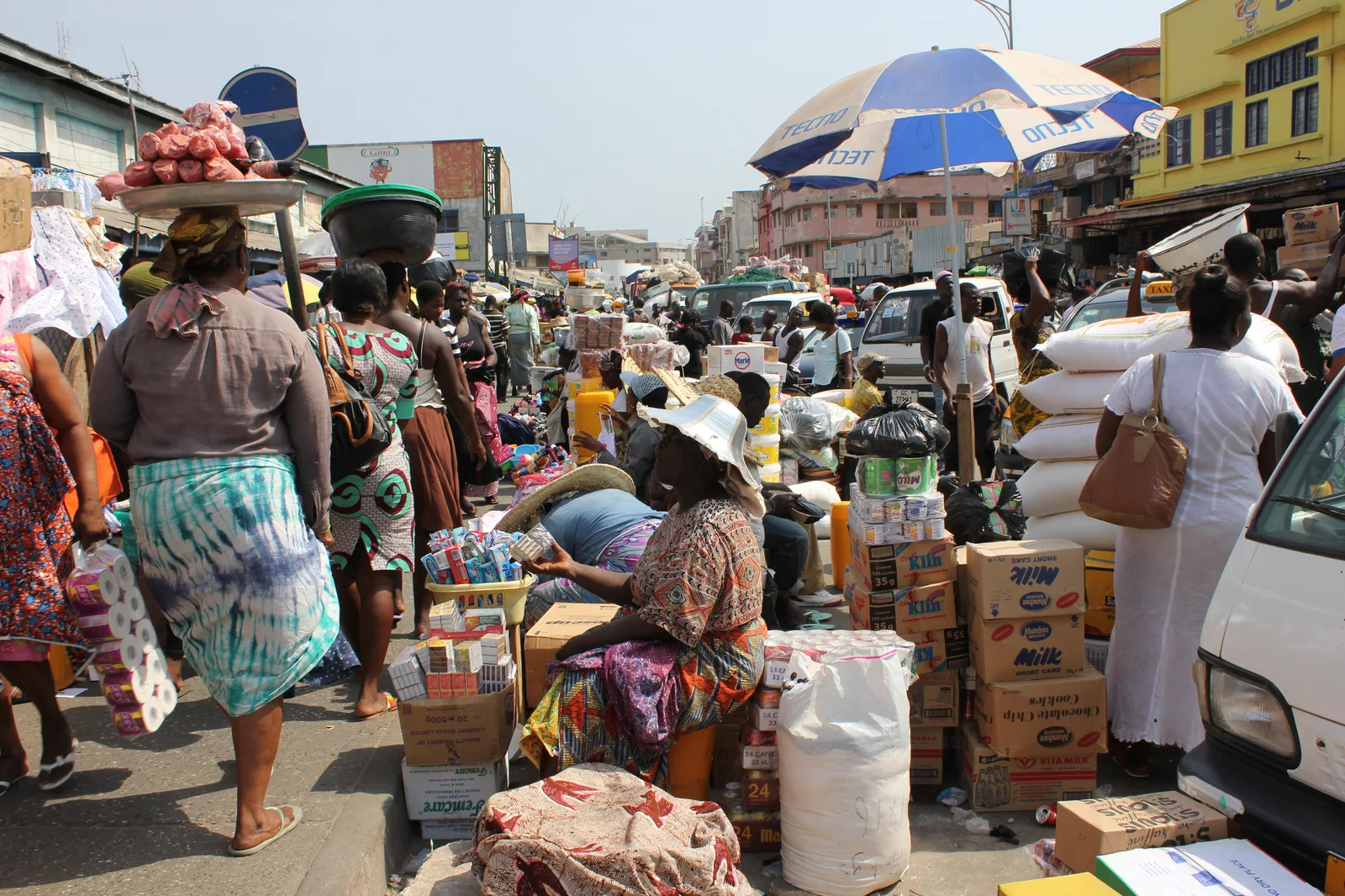
In economies where food accounts for a substantial proportion of low-income household budgets, price increases can quickly erode disposable real income.
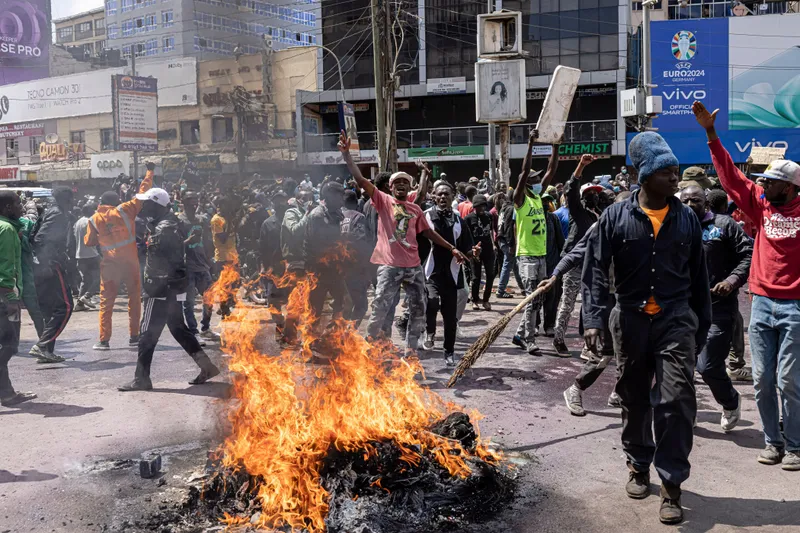
Inflation also has a social dimension that aggregate indicators capture imperfectly. Higher fuel prices do not affect an affluent urban household in the same way as a worker who depends on public transportation every day. Rising food prices weigh more heavily on families that devote most of their resources to immediate consumption.
Central banks can raise interest rates to contain inflationary pressures, but this response also increases borrowing costs for businesses and households.
Economic policy then faces a contradiction: stabilizing prices without suppressing the investment and consumption that sustain activity.
The IMF recommends protecting vulnerable households while continuing fiscal consolidation. Achieving that balance, however, depends on governments' ability to identify beneficiaries, finance support mechanisms, and prevent broad subsidies from disproportionately benefiting better-off groups.
The quality of public institutions thus becomes as important as the volume of resources mobilized.
International Aid Is Retreating at the Wrong Moment
These constraints are compounded by a development less dramatic than oil-price fluctuations but potentially more enduring: the decline in international development assistance.
The regional outlook published in April 2026 had already emphasized the particularly concerning nature of this contraction. Concessional financing, grants, and certain assistance programs play an important role in the budgets of several low-income countries, particularly in healthcare, education, and social infrastructure.
The reduction in these resources comes as financing needs are increasing and access to international capital markets remains expensive.
This development exposes a profound contradiction within the international financial architecture. The poorest economies are being encouraged to strengthen fiscal autonomy precisely when their least expensive financing sources are becoming less accessible.
Developing domestic tax revenues can gradually reduce this dependence. But such a transition requires sufficiently formalized economic activity, profitable businesses, and administrations capable of collecting taxes without discouraging production.
Increasing taxation on a narrow productive base can generate immediate revenues, but it can also discourage investment and reinforce informality.
The challenge is therefore not simply to extract more revenue from existing activities, but to sustainably expand the economic base on which public revenues depend.
In other words, fiscal sustainability also depends on productive transformation.
Electricity as the Foundation of Transformation
Energy infrastructure is probably one of the most important development frontiers facing African economies.
Industrialization requires electricity that is available, reliable, and competitively priced. A company may possess raw materials, workers, and commercial opportunities; if it must regularly interrupt production or finance expensive generators, its competitiveness deteriorates.
This challenge affects heavy industry, but also food processing, cold storage, agricultural transformation, digital services, and small manufacturing enterprises.
It becomes particularly important in mineral-rich countries.
Processing bauxite locally into alumina, and potentially into aluminum, requires complex industrial facilities and substantial quantities of energy. Developing copper metallurgy or certain stages of critical-mineral processing likewise requires reliable electricity and logistics infrastructure.
The existence of mineral resources is therefore not enough to guarantee local processing.
The industrial ambitions of Guinea, the Democratic Republic of the Congo, and Zambia confront an equation that extends far beyond mining investment. Electricity networks must be built, supply secured, transport corridors improved, and industrial skills developed.
These investments carry high initial costs, but their economic effects can extend well beyond the sectors they directly serve.
A transmission line supplying an industrial zone can also support local businesses. A railway built to transport minerals can facilitate other forms of trade if its operating arrangements permit shared use. A modernized port can reduce the cost of importing equipment needed for new industries.
Economic transformation thus depends on converting specialized infrastructure into integrated productive systems.
Without this connection, investment can increase exports without sufficiently diversifying the national economy.
The Decisive Question of Value Added
Global trade offers sub-Saharan Africa considerable opportunities, particularly in resources needed for electrification, batteries, energy networks, and advanced technologies.
But a country's position within a value chain matters as much as the volume of trade.
Exporting raw materials generates foreign exchange and tax revenues. Processing those materials can create additional activities in industrial maintenance, equipment manufacturing, transportation, technical services, and training.
Moving toward higher-value activities, however, is neither automatic nor always profitable. It depends on market size, the cost of capital, energy availability, infrastructure quality, and access to technology.
Requiring local processing without establishing these conditions can produce expensive and uncompetitive facilities.
Conversely, systematically abandoning processing means accepting that the most remunerative industrial stages will largely take place elsewhere.
The challenge is to identify the segments in which African countries can develop genuine comparative advantages, then establish the conditions for their expansion.
This strategy is not limited to minerals. It also applies to cocoa, cotton, agricultural products, hydrocarbons, and numerous manufacturing activities.
The objective is to move progressively from economies organized primarily around extraction, primary production, or imported consumption toward economies capable of producing more competitive goods and services.
GDP growth would then become the outcome of changing economic capabilities, rather than merely an increase in export volumes or expenditure.
Africa's Market Remains Fragmented
Industrial transformation also requires sufficiently large markets.
The African Continental Free Trade Area represents a structural ambition in this respect. It seeks to reduce trade barriers and facilitate the integration of African economies into a larger market.
But a trade agreement does not automatically eliminate physical and administrative constraints.
Distances, logistics costs, customs procedures, border infrastructure, divergent standards, and payment difficulties continue to restrict trade between many African economies.
An industrial company may theoretically have access to a large regional market while facing transportation costs and delays that significantly reduce its competitiveness.
Economic integration therefore depends on more than lower tariffs. It requires coordinated improvements in transportation, energy, payment systems, and the movement of goods.
This coordination is precisely where part of Africa's economic potential lies.
National markets that are sometimes too small to support certain industries could become considerably more attractive if connected through reliable infrastructure and predictable commercial rules.
Regional industrialization could also distribute activities according to each territory's advantages: energy production, mineral extraction, processing, assembly, logistics, or services.
Growth could then rely more heavily on trade and investment within the continent, reducing some dependence on external economic cycles.
Climate Risk Adds Another Layer of Uncertainty
The regional outlook remains exposed to another source of vulnerability: climate conditions.
Droughts, floods, and changes in rainfall patterns can simultaneously affect agricultural production, food prices, infrastructure, and hydroelectric generation.
Analyses accompanying the October outlook also highlight risks associated with an El Niño event. Under one adverse scenario examined by the IMF, such a shock could reduce regional growth by approximately 0.5 percentage points and add 2.6 percentage points to inflation in 2027. This is a risk scenario, not the baseline forecast.
This sensitivity reveals how closely macroeconomic performance remains connected to factors that economic policymakers can control only partially.
Climate adaptation is therefore not solely an environmental concern. It is an investment in economic stability.
Irrigation, water infrastructure, early-warning systems, stronger electricity networks, and improved storage capacity can reduce the economic losses associated with extreme weather.
These investments, however, compete with other budgetary priorities in countries already constrained by debt and social needs.
Climate change consequently reinforces the importance of public investment quality.
The Real Test of the Decade
The IMF's 4.5% projection describes neither an economic failure nor a sufficiently comprehensive success.
It shows that a region facing major international disruptions retains an appreciable capacity for growth. This resilience provides a foundation on which deeper transformations can be built.
But it also highlights the difficulty of converting aggregate growth into productivity gains, formal employment, and sustained improvements in income per capita.
The real test will not simply be whether sub-Saharan Africa can maintain 4.5% growth in 2027. It will be determining how much of that expansion comes from productive investment, higher domestic value added, export diversification, and the growth of businesses capable of sustainably employing an expanding workforce.
The difference between resilient growth and transformative growth lies precisely here.
The former allows economies to withstand crises, preserve a degree of stability, and sustain activity. The latter progressively changes their structure, increases productivity, and reduces vulnerability to external shocks.
These two forms of growth are not incompatible. Macroeconomic stability can create the conditions for investment, while productive transformation can, in turn, strengthen public finances and economic resilience.
But one does not automatically produce the other.
African governments must simultaneously stabilize their currencies, control deficits, finance infrastructure, improve public services, and create conditions for greater private investment. The difficulty is that these objectives often require immediate resources while their benefits emerge over several years.
International partners, meanwhile, cannot reduce the question of African development to fiscal discipline alone. Financial sustainability is necessary, but it cannot substitute for infrastructure, industrial capabilities, or the accumulation of skills.
The coming decade may therefore determine whether sub-Saharan Africa can use its current resilience to undertake a deeper transformation of its economies.
Otherwise, the continent could continue recording relatively high growth rates while the same structural constraints persist.
That is the paradox of 4.5%.
A figure high enough to demonstrate genuine economic dynamism, yet potentially too low, once measured against demographic growth and investment requirements, to deliver the expected transformation quickly.
Sub-Saharan Africa does not necessarily lack growth. Above all, it must ensure that every percentage point of growth generates greater productive capacity, higher incomes, and more opportunities for the next generation.
For an economy's development is measured not only by how fast it moves forward, but by what it becomes along the way.
Main Sources
International Monetary Fund (IMF) — Regional Economic Outlook for Sub-Saharan Africa, October 2026 — Resilient Growth but a Darkening Outlook, October 15, 2026. Primary source for regional projections and the analysis of macroeconomic vulnerabilities.
https://www.imf.org/en/Publications/REO/SSA/Issues/2026/10/15/regional-economic-outlook-for-sub-saharan-africa-october-2026
International Monetary Fund (IMF) — Regional Economic Outlook for Sub-Saharan Africa, April 2026 — Hard-Won Gains Under Pressure, April 16, 2026. Reference for comparing forecasts and assessing the effects of energy and financial shocks.
https://www.imf.org/en/publications/reo/ssa/issues/2026/04/16/regional-economic-outlook-for-sub-saharan-africa-april-2026
International Monetary Fund (IMF) — Regional Economic Outlook Database: Sub-Saharan Africa. Regional and national macroeconomic data.
https://data.imf.org/en/datasets/AFRREO
Reuters — Africa's economic resilience masks rising inflation threat and fragile buffers, IMF warns, October 15, 2026. Additional reporting on inflation, interest burdens, and climate risks.
https://www.reuters.com/world/africa/africas-economic-resilience-masks-rising-inflation-threat-fragile-buffers-imf-2026-10-15/
Methodological note: The 2026 and 2027 projections are estimates subject to revision. Regional averages do not describe individual national conditions. Illustrative calculations and the analysis of industrialization, demographic pressures, and value creation represent Atlas Limits' economic interpretation.
Atlas Limits Research Desk
Atlas Limits’ editorial and analytical desk.