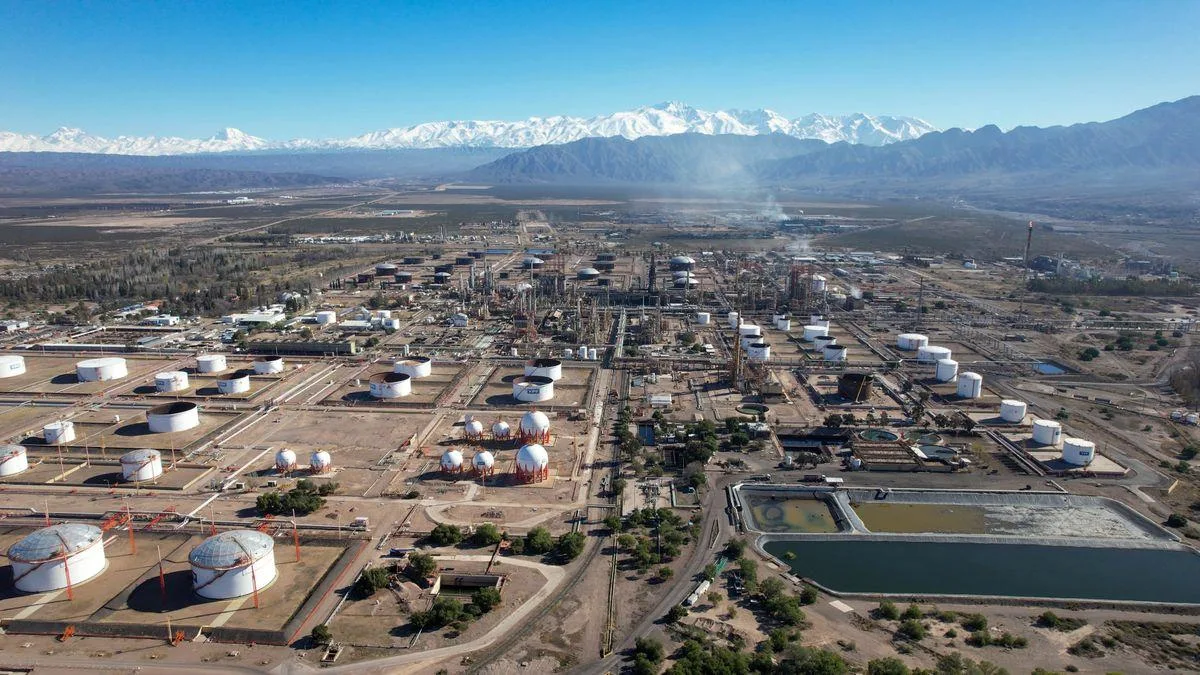
With a new $8.73 billion oil development project in the Vaca Muerta formation, Argentina is advancing its transformation into a major energy exporter. Yet behind the scale of the announced investment lies a more fundamental question: how can a country convert extraordinary geological wealth into lasting economic development when its financial and regulatory environment has long been marked by instability?
A New Stage in Argentina’s Energy Ambitions
Argentina has long possessed wealth that it has not always been able to fully translate into economic prosperity. Its agricultural lands have secured an important position in global trade, its mineral resources continue to attract international investors, and its subsurface contains some of the world's largest unconventional hydrocarbon resources. Yet this abundance stands in striking contrast to an economic trajectory repeatedly interrupted by currency crises, external imbalances, and persistent financing constraints.
It is within this contradiction that the development of Vaca Muerta must be understood. Located primarily in the Neuquén Basin in western Argentina, this vast geological formation has become the centre of an industrial ambition extending far beyond the oil and gas sector: to turn hydrocarbons into an instrument of external stabilisation, capital mobilisation, and economic transformation.
On October 30, 2026, Argentine energy company YPF announced that it had formally applied for its Bajo del Toro project to be admitted to the country's Large Investment Incentive Regime, known by its Spanish acronym, RIGI. Developed in partnership with Vista Energy, the programme represents a projected investment of $8.73 billion over its full development period.
The announcement does not constitute a final investment decision covering the entire amount, nor does it confirm that the requested regulatory incentives have been granted. It nevertheless marks an important step: the transition from an industrial ambition to a formal procedure intended to improve the project's economic and financial conditions.
Through Bajo del Toro, part of Argentina's broader energy strategy is gradually taking shape. With it comes the possibility of fundamentally altering the country's relationship with international markets.
Vaca Muerta: Geological Wealth That Requires an Industrial System
Vaca Muerta is not a recent discovery. Its geological potential has been recognised for decades, but large-scale exploitation depends on technologies, infrastructure, and financial conditions that have only more recently begun to converge.
Unlike conventional reservoirs, where hydrocarbons can flow relatively easily through the surrounding rock, shale formations generally require horizontal drilling and hydraulic fracturing. This distinction fundamentally changes the economics of production.
The value of the resource does not lie solely in the presence of oil or gas. It depends on the ability to repeat complex industrial operations, control costs, secure specialised equipment, and transport substantial volumes of production reliably.
The development of an unconventional basin therefore relies on a network of expertise and investment extending far beyond drilling itself. It involves oilfield services companies, equipment suppliers, construction businesses, logistics operators, electricity infrastructure, transportation networks, and processing facilities.
This industrial dimension explains why even abundant geological resources can never guarantee economic prosperity on their own.
The United States demonstrated this through its shale oil and gas revolution. That transformation was supported not only by favourable geological formations but also by deep financial markets, an extensive supplier ecosystem, developed infrastructure, and an institutional environment capable of sustaining successive investment cycles.
Argentina is seeking to reproduce part of this dynamic under considerably different conditions.
Its geological potential provides an initial advantage. Its ability to build a competitive industrial system around that potential will determine how much value the country can ultimately capture.
YPF and Vista Energy: Complementary Approaches to Capital
The Bajo del Toro project rests on an ownership structure that illustrates the diversity of participants involved in Argentina's energy development.
YPF holds a 65% interest and serves as the project's operator. The remaining 35% belongs to the Argentine subsidiary of Vista Energy, an independent energy company with an international corporate structure and access to capital markets.
The partnership brings together two complementary approaches.
YPF occupies a distinctive position in Argentina's economy. Although publicly listed, it is controlled by the Argentine state and represents both a major industrial operator and an instrument of national energy strategy. Its role therefore extends beyond that of a company seeking exclusively to maximise returns on its assets.
Vista Energy operates more directly within an investment and industrial development model shaped by capital markets. Its expansion in unconventional hydrocarbons relies on asset selection, productivity improvements, and the mobilisation of financing consistent with expected returns.
Their partnership combines operational experience, knowledge of the basin, financing capabilities, and the distribution of risks required for a programme of this magnitude.
It does not, however, eliminate the project's fundamental constraints.
The announced $8.73 billion represents projected investment over several years. It is not an amount immediately available for deployment, and the definitive financing arrangements have not been detailed in the information released.
The question of financial structure therefore remains essential.
A development of this scale may draw on several sources of capital: cash flows generated by existing operations, bank financing, bond issuance, equity contributions, or specialised mechanisms associated with industrial investment.
The cost of these resources depends on the financial strength of the participating companies, international credit conditions, and perceptions of Argentine sovereign risk.
It is precisely this final consideration that makes the regulatory framework so important.
RIGI: An Attempt to Rebuild Investor Confidence
The Large Investment Incentive Regime is one of the principal instruments of the economic policy pursued under President Javier Milei.
Its purpose is to attract large-scale capital by offering, subject to specific conditions, a more predictable tax, customs, and regulatory environment.
For an industrial investor, regulatory stability can matter as much as the immediate level of taxation.
An energy project develops over several decades. Initial investments are substantial, infrastructure is highly specialised, and assets are difficult to relocate. Once capital has been committed, the company becomes dependent on the host country's economic and institutional environment for an extended period.
This creates a fundamental asymmetry.
Before investing, a company retains a degree of freedom over where to allocate its capital. Once facilities have been constructed, a significant proportion of that capital becomes tied to the territory.
The credibility of public commitments is therefore central to investment decisions.
In Argentina's case, this issue carries particular significance. The country has experienced repeated episodes of foreign-exchange restrictions, capital controls, currency devaluations, and changes in its economic environment.
These experiences have contributed to higher financing costs and complicated the planning of long-term industrial projects.
RIGI seeks to reduce part of that uncertainty.
By applying for admission to the regime, YPF and Vista Energy are seeking more than a tax advantage. They are also attempting to improve the economic predictability of a programme whose profitability will depend on decisions taken and revenues generated over a particularly long period.
The implications extend beyond Bajo del Toro.
If the framework succeeds in attracting investment that is subsequently implemented, it could gradually alter international perceptions of Argentina's industrial risk.
But such a change cannot be achieved through legislation alone. It will depend on policy continuity, effective implementation, and the country's ability to preserve the conditions necessary for economic activity.
Investor confidence is built less through the promise of favourable rules than through evidence that those rules remain reliable over time.
Eight Billion Dollars to Prepare for Decades of Production
The projections associated with Bajo del Toro provide an indication of the industrial scale being contemplated.
According to figures communicated by YPF, the development could reach a stable production level of approximately 80,000 barrels of oil and three million cubic metres of natural gas per day between 2033 and 2040.
The company also estimates that the project could generate approximately $25 billion in cumulative exports between 2027 and 2055.
These figures require careful interpretation.
They represent industrial and commercial development scenarios, not production volumes already achieved or revenues guaranteed to materialise.
Their realisation will depend on investment schedules, well productivity, infrastructure availability, market conditions, and possible adjustments to the programme.
The distinction between investment, production, revenue, and profitability is particularly important in the energy sector.
A project may generate substantial exports without necessarily producing proportionate returns for its shareholders. Operating expenses, sustaining capital expenditure, financing costs, government levies, and fluctuations in international prices all directly influence its economic performance.
Unconventional hydrocarbons also possess an essential characteristic: production from individual wells generally declines relatively rapidly after they begin operating.
Maintaining a high level of output therefore requires continuous drilling and development activity.
In other words, the initial investment alone is insufficient to guarantee sustained production.
Vaca Muerta's competitiveness will depend on operators' ability to reduce unit costs, improve technical performance, and maintain an investment rhythm compatible with prevailing economic conditions.
The basin's value will ultimately be determined as much by the quality of its development as by the abundance of its resources.
Exports as a Response to Argentina's External Constraint
To understand the strategic importance of Vaca Muerta, it is necessary to return to one of Argentina's recurring economic problems: its difficulty in securing a stable supply of the foreign currency required to sustain economic activity.
The country has experienced several cycles in which economic expansion increased imports, intensified demand for dollars, and progressively weakened external balances.
This constraint has repeatedly limited investment capacity, fuelled monetary tensions, and contributed to recurring crises.
The development of an export-oriented energy industry could change part of this dynamic.
A sustained increase in international oil and gas sales could strengthen foreign-currency earnings, support the external accounts, and reduce certain macroeconomic vulnerabilities.
This prospect explains why Vaca Muerta occupies such an important place in Argentina's national economic strategy.
Energy could become an additional pillar of Argentine exports alongside agricultural products and, potentially, certain mineral resources.
But diversification of exports should not be confused with the automatic disappearance of economic imbalances.
Energy revenues remain exposed to fluctuations in international commodity prices. Their contribution to the domestic economy also depends on the imports required to develop projects, repayments on foreign financing, and arrangements governing the repatriation of profits.
Higher exports can improve foreign-currency availability without, by themselves, resolving fiscal, monetary, or institutional weaknesses.
The real challenge is therefore to transform energy revenues into a more diversified set of economic capabilities.
That transformation requires investment in infrastructure, skills, technologies, and associated industrial activities.
Otherwise, the country could merely replace some of its longstanding vulnerabilities with a new form of external dependence.
Infrastructure: The Decisive Condition for Creating Value
Hydrocarbon production generates its full economic value only when it can reach its markets.
For Vaca Muerta, this apparently simple principle represents a major industrial challenge.
Increasing production requires sufficient transportation, storage, processing, and export capacity.
In oil, the development of pipelines and port facilities must connect production areas with international markets.
Natural gas presents different constraints. Pipeline transportation can support domestic demand and regional trade, while access to more distant markets requires liquefaction infrastructure and an appropriate logistics chain.
These facilities involve substantial investments, often separate from those devoted directly to extraction.
They also require coordination among multiple companies, public authorities, financial institutions, and infrastructure operators.
An oil basin may possess exceptional geological potential while remaining constrained by inadequate transportation capacity.
Conversely, infrastructure developed too rapidly may become financially vulnerable if production volumes or market conditions fall short of expectations.
The success of Vaca Muerta will therefore depend on a delicate balance between developing the reservoirs and building the industrial networks required to exploit them.
It is at this level that individual projects acquire their broader significance.
Bajo del Toro is not merely an additional production programme. It is one component of an energy system whose coherence depends on the coordination and timing of investment.
An International Competition for Energy Capital
Argentina is not developing its resources in isolation.
Capital allocated to energy projects moves between regions and is distributed according to economic, industrial, and geopolitical considerations.
International companies can compare Vaca Muerta's prospects with those of basins in the United States, Canada, Brazil, the Middle East, or Africa.
This competition operates across several dimensions.
Resource quality is an initial consideration, but it is not sufficient.
Investors also examine production costs, infrastructure availability, regulatory stability, taxation, financing conditions, and opportunities for commercialisation.
Sovereign risk plays a particularly important role.
Where industrial characteristics are comparable, a project located in a country with a more predictable economic environment may benefit from more favourable financing conditions.
These differences directly influence capital-allocation decisions.
Argentina must therefore convince investors that Vaca Muerta's potential returns compensate for the risks associated with its economic environment.
RIGI forms part of this competition.
But the country's lasting attractiveness will also depend on its ability to develop competitive domestic suppliers, improve infrastructure, and stabilise its relationship with international financial markets.
The objective should not simply be to attract capital into a handful of particularly profitable projects.
It should be to create an environment in which those investments can contribute to the emergence of a broader industrial ecosystem.
Between Energy Sovereignty and Financial Dependence
The development of Vaca Muerta raises a central question for resource-rich economies: sovereignty.
The existence of substantial reserves gives a state a potential advantage. It does not automatically provide control over the technologies, financing, infrastructure, or markets required to turn those reserves into economic value.
This distinction is fundamental.
A state-controlled company may hold a major share of production while remaining dependent on foreign suppliers for equipment, international markets for financing, and industrial partners for specialised expertise.
Conversely, the participation of private companies and foreign capital does not necessarily imply a loss of sovereignty.
The outcome depends on the conditions under which investments are undertaken, the distribution of risks, the regulatory framework, and the economic benefits ultimately generated.
In Bajo del Toro, YPF retains operational control and a majority interest of 65%.
This position allows the company to play a central role in the project's development.
It does not, however, exempt the partners from meeting the economic requirements of a multibillion-dollar investment.
Energy sovereignty cannot therefore be measured solely through ownership percentages.
It also depends on a country's capacity to organise its industry over time, develop its expertise, and use resource revenues to strengthen its broader economic autonomy.
The challenge is less about choosing between domestic and foreign capital than determining how their combination can generate lasting value for the Argentine economy.
The Promise of a New Economic Cycle
With Bajo del Toro, Argentina is taking another step in an energy transformation that has been under way for several years.
The announced $8.73 billion illustrates the scale of capital required to develop Vaca Muerta's unconventional resources. The projected production and export figures demonstrate the basin's economic potential.
But the significance of the project does not lie solely in its financial dimensions.
It lies in what the development reveals about the trajectory Argentina is attempting to establish.
The country possesses a major geological advantage and is now seeking to combine it with a more favourable regulatory environment, industrial partnerships, and infrastructure capable of supporting sustained expansion.
This strategy could strengthen exports, improve the external position, and attract further investment.
It could also expose the economy more heavily to international energy cycles if the revenues generated are not accompanied by broader productive diversification.
Economic history shows that abundant natural resources can support development, but never guarantee it.
The outcome depends on institutions, investment decisions, infrastructure quality, and the ability to transform income from extractive activities into more durable economic advantages.
For Argentina, Vaca Muerta therefore represents far more than an oil-producing basin.
It is an opportunity to change the conditions under which the country finances its growth and participates in the global economy.
The filing of the RIGI application for Bajo del Toro marks a step towards that ambition, not its completion.
The next regulatory decisions, the financial commitments actually secured, and the construction of the necessary infrastructure will provide a clearer measure of the programme's strength.
For the essential question is not whether Argentina possesses sufficient resources to become a major energy power.
It is whether the country can finally establish the economic and institutional conditions required for that wealth to help it overcome the vulnerabilities that have constrained its development for so long.
Atlas Limits Research Desk
Atlas Limits’ editorial and analytical desk.